New Citroën C4 review
Category: Small SUV
The C4 has been facelifted for 2025 but remains focused on comfort and affordability


What Car? says...
From TikTok dances to the ice bucket challenge, social media loves trends – but it's rare that two combine successfully. However, the Citroën C4 we're reviewing here is giving it a shot by merging a couple of car trends in one model.
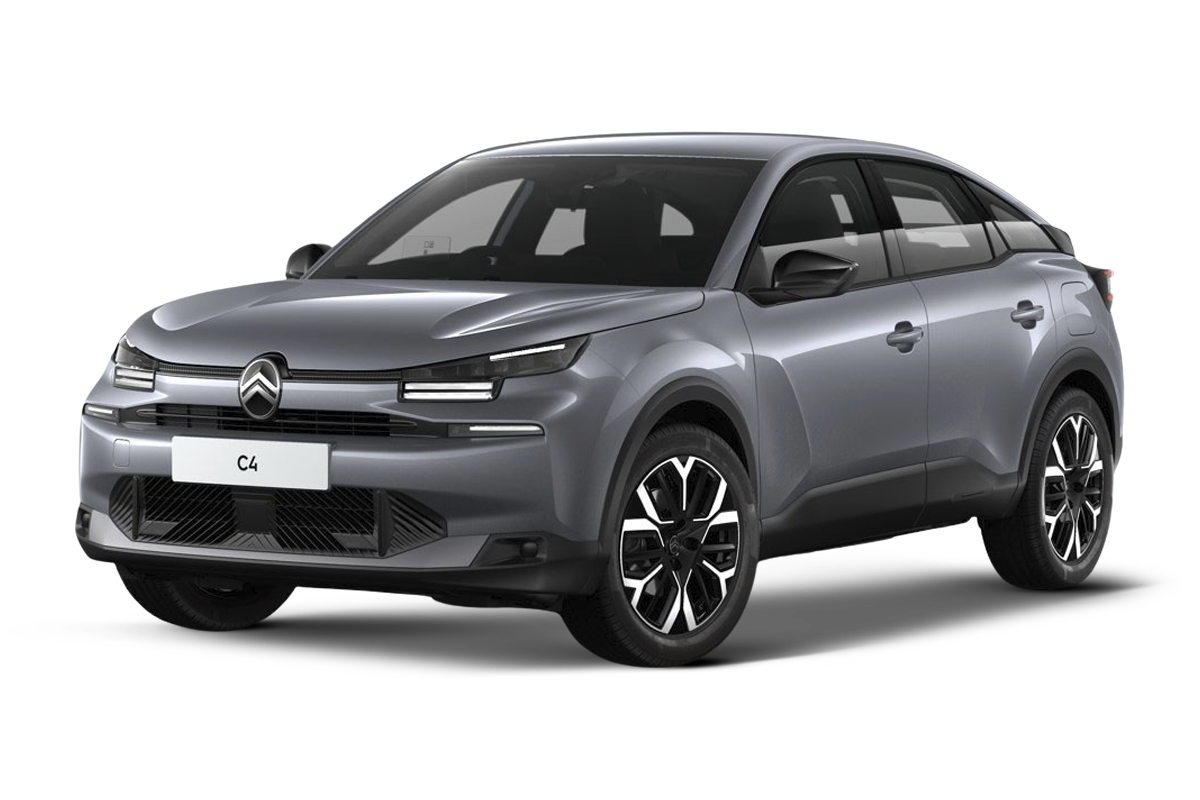
Let us explain... The C4 began life as a family car before making the transition to a small SUV in 2020 (or 2014 if you count the C4 Cactus). But as well as switching car class to follow what’s popular, it also adopted a sloping coupé-inspired roofline. You rarely see that on a small SUV: the coupé SUV trend was pioneered by the much bigger – and pricier – BMW X6.
Speaking of price, the C4 undercuts many of its own rivals, including the Mazda CX-30, the Skoda Kamiq and the VW Taigo. Plus, it's had a facelift for 2025, so it looks a little different at the front and rear, and has gained new infotainment software and Citroën’s Advanced Comfort Seats.
Is all of that enough to keep the Citroën C4 competitive against the best small SUVs or should you choose one of its rivals instead? Read on to find out...

What’s New?
- February 2025: Facelifted C4 arrives, with refreshed exterior design
- March 2024: More efficient 1.2-litre hybrid engine now available
- August 2023: Range simplified to You, Plus, Max
- April 2022: C-Series Edition trim joins line-up
- October 2021: Hybrid with 134bhp 1.2-litre petrol engine joins range
- April 2021: Entry-level Sense trim joins range
- February 2021: First cars delivered
- October 2020: C4 on sale. Three 1.2 Puretech petrol options (100, 130, 155bhp), plus 1.5 BlueHDi 110 and 130 diesels. Sense Plus, Shine, Shine Plus trims
Performance & drive
What it’s like to drive, and how quiet it is
Strengths
- +Comfortable ride
- +Little wind and road noise
- +Sprightly performance across all engines
Weaknesses
- -Noticeable body lean through bends
- -Numb steering
- -Hybrids can be jerky at slow speed
Engine, 0-60mph and gearbox
The Citroën C4 is available with a choice of three 1.2-litre petrol engines, starting with a mild hybrid called the Hybrid 110. This is our favourite engine for how well it blends performance and costs. While it has a modest 109bhp and gets from 0-62mph in 10.4 seconds, that's competitive with the entry-level engines in rival small SUVs. In practice it feels punchy enough in town and on faster roads, and it can also run on electric power for short bursts – as long as you're very gentle on the accelerator pedal.
The next engine up is the Petrol 130. It doesn't have hybrid tech but, with more power (129bhp), it feels a touch stronger than the Hybrid 110 in terms of straight-line pace. At the top of the range is the Hybrid 145, which has 143bhp. It's the quickest engine in the range (0-62mph in eight seconds dead) but, being a mild hybrid, it's more efficient than the Petrol 130.
One slight limitation is the automatic gearbox. Every C4 has one and it can be a bit slow to respond when you ask for a burst of acceleration.
It's worth noting that there's an all-electric version of the C4 available – to read about that see our Citroën ë-C4 review.
Suspension and ride comfort
Citroën makes some bold claims about the C4's comfort, and if you read the brochure that's all down to its standard Advanced Comfort Suspension. Mind you, all you want to know is whether it works, right? Well, the good news is yes, it does for the main part.
The C4's suspension is definitely on the softer side, allowing it to glide over large undulations and cushioning you well from general ruts and potholes. It’s one of the better-riding small SUVs, but it's still not perfect. When you hit a particularly vicious ridge it tends to thud a little, and you do get some slight shimmy on washboard surfaces. The soft setup also means you can feel your head swaying gently from side to side on uneven faster roads.
The VW Taigo has a slightly more controlled ride, being devoid of that sway and fidget, but one of the best-riding cars in the class is the Skoda Kamiq.

Handling
Since Citroën has made comfort its priority, sportiness has taken a back seat. For a sharper drive, there are many better alternatives: the Hyundai Bayon is one, but the best in class option is the Ford Puma.
By comparison, the C4 feels quite lax in the handling department. It's not particularly agile on country roads, with more pronounced body lean than in most small SUVs. The quicker you go, the more the steering weights up – a bit unnaturally so in our opinion – and doesn't offer much sense of connection to the front wheels, so you don't get an instinctive feel for how much grip there is. That said, there is actually a decent degree of grip, even when you're driving pretty spritely.
The C4 is more suited to town driving than quick country roads. At slower speeds, the C4's steering becomes much lighter and feels accurate enough for zipping around narrow streets.
Noise and vibration
The C4's engines are all three-cylinder units, and that kind of engine can sound a bit gruff. However, the C4's engines aren't too bad. At cruising speeds they settle into the background and it's generally when pulling away or when working them hard that you hear them thrumming away. What's more annoying is the jolt when the petrol engine cuts in and out at slow speed on Hybrid models.
On the move, there’s very little wind, road or suspension noise, making the C4 a more relaxing motorway companion than rivals like the Toyota Yaris Cross.
"I didn't find the Citroën C4 much fun on my favourite driving roads, but the handling is fine for a soft-riding small SUV" – Lawrence Cheung, New Cars Editor
Interior
The interior layout, fit and finish
Strengths
- +Easy-to-use physical air-con controls
- +Comfy seats
- +Competitive build quality
Weaknesses
- -Sub-par rear visibility
- -Slightly laggy infotainment software
Driving position and dashboard
You sit lower down in the Citroën C4 than in most SUVs, but you do notice that you're perched up a bit higher than you would be in a family car like the VW Golf.
Meanwhile, the driver's seat is jolly comfy. You're sat on what feels like memory foam cushions, which give and support you at the same time. You also get lumbar adjustment as standard, so for long motorway journeys, it's great – although the seat could do with more side support for twisty, country roads.
What's also great is that the C4 comes with physical knobs and buttons for controlling features like the climate controls. They make it much easier to adjust aspects such as the interior temperature when you're driving, compared with rivals that cram all the controls into the infotainment touchscreen. All C4s come with digital instruments as standard, which show key info clearly, and if you go for Plus trim, you get a head-up display that projects your speed into your line of sight.
Visibility, parking sensors and cameras
Seeing out of the front of the C4 at junctions is easy enough, but the same can’t be said for the view out of the back. As with most cars with coupé-like rooflines, the rear window is quite small. Not helping matters is the rear spoiler that runs across it.
Fortunately, all C4s come with rear parking sensors. Plus and Max trims add front parking sensors and a rear-view camera. A 360-degree camera is available as an option on Max trim.
All trims get automatic wipers and bright automatic LED headlights to increase visibility at night. Max trim adds auto' main beams as well.

Sat nav and infotainment
All C4s have a 10in infotainment touchscreen. It's mounted high up in the middle of the dashboard and is therefore easy to reach. That said, for ease of use, we much prefer the system in the Mazda CX-30 – it has the option of a rotary controller to scroll through menus, which is far less distracting to use while driving than a touchscreen. Also, the C4's infotainment software isn't as responsive as some of its rivals – the VW Taigo's is much snappier – but the menu layout is more intuitive than it is in the Toyota C-HR.
You get a long list of infotainment features, including DAB radio and Bluetooth, while wireless Android Auto and Apple CarPlay mean you can run your phone’s apps through the car’s touchscreen. That’s good because the entry-level 'You!' trim doesn't get sat-nav, so you can use an app like Google Maps instead. Plus and Max trims have built-in sat-nav, as well as a customisable home screen and natural speech voice control. Wireless phone charging is available as part of an option pack.
Quality
The C4 feels plush in places, with some squidgy materials used on the doors, armrests and dashboard. There are still plenty of scratchy grey plastics, though – that's to be expected in a budget-friendly option. So there's material quality, and the build quality (how well it's all screwed together) is pretty good relative to its price rivals as well. On the whole, it feels slightly plusher inside than the Hyundai Bayon, but you could pay more and get a truly premium alternative, such as the Mazda CX-30.
"It initially looks a little grey inside, but you soon realise that the Citroën C4 uses some soft-touch materials, which I found rather pleasing to the touch. I also love that there are physical controls for the air-con." – Steve Huntingford, Editor
Passenger & boot space
How it copes with people and clutter
Strengths
- +Height adjustable boot floor
- +Good amount of interior storage
Weaknesses
- -Smaller boot than most rivals
- -Rear seats aren’t the roomiest
Front space
The Citroën C4 has enough head and leg room in the front for six-footers to fit easily. There are roomier small SUVs – the Skoda Karoq being one – but they tend to cost quite a bit more.
There are some thoughtful storage touches, including a dedicated area for your smartphone. All the trims except entry-level 'You!' get a tray that slides out of the passenger’s side of the dashboard so you can clip a tablet computer to it. You also get some fold-out cup holders and a glovebox – albeit a small one.
Rear space
Two adults can fit in the back of the C4, but they'll find it more of a squeeze than in the back of a Skoda Kamiq or the coupé-styled VW Taigo. The Kamiq particularly – thanks to its boxier silhouette – offers more head room in the rear and has more leg room, too, although the C4 does have a good amount of foot space under the front seats.
Shoulder room in the back of the C4 becomes tight if you add a middle passenger, and there’s a good chance they will have to duck due to the slightly raised centre seat.
Storage options include quite small rear door bins and map pockets on the rear of the front seats, but only the top-spec Max trims gets a rear armrest with in-built cupholders. That's a bit stingy.

Seat folding and flexibility
The C4’s rear seats don’t do anything clever, such as sliding or reclining. The backrests fold in a 60/40 split – by pulling levers next to the outer rear head restraints – but the Hyundai Kona has more versatile 40/20/40 arrangement.
Once dropped, the backrests lie virtually flat, leaving you with a more or less uninterrupted load floor all the way to the front seats.
Boot space
The C4 has a 380-litre boot, which was big enough to take five carry-on suitcases when we tested it. For comparison, the Nissan Juke and Toyota C-HR each took six, and their boots aren't even class leading.
If you want a reasonably priced small SUV with a truly big boot, go for the Dacia Duster, which has up to 517 litres to play with. More positively, the C4's boot floor is height adjustable, with only a small lip to lift luggage over when it’s in its highest position.
"There was enough space in the Citroën C4 for me plus three adult passengers, but because of the car's coupé styling my rear passengers had their heads brushing the roof." – Dan Jones, Senior Reviewer
Buying & owning
Everyday costs, plus how reliable and safe it is
Strengths
- +Temptingly priced
- +Loads of standard kit
- +Efficient engines
Weaknesses
- -So-so warranty
- -More economical hybrids available
- -No alarm on entry-level trim
Costs, insurance groups, MPG and CO2
Most SUVs with coupé styling have premium badges – and premium prices. The Citroën C4, on the other hand, makes that combination more affordable. The entry-level C4 costs less than a Skoda Kamiq or VW Taigo and about the same as the Hyundai Bayon. There are even cheaper small SUVs, though. The Dacia Duster is one – and a good one at that.
The C4's engines are efficient, although you'll get better fuel economy behind the wheel of a Toyota Yaris Cross. The non-hybrid engine (the Petrol 130) officially averages around 50mpg, while the Hybrid 110 and Hybrid 145 manage over 60mpg officially – we managed around 50mpg in the real world.
If you're looking for a company car it's worth bearing in mind that you'll pay less BIK tax going for one of the Hybrid options, which lower the CO2 emissions considerably over a regular petrol. However, the all-electric Citroën ë-C4 is an even better option if you want to keep your BIK tax bills low.
Equipment, options and extras
Despite the tempting price tag, the entry-level C4 'You!' comes with plenty of standard equipment, including 18in alloy wheels, electrically heated and adjustable door mirrors, cruise control, dual-zone climate control and the features we've already mentioned, including LED headlights, 10in touchscreen infotainment system, and rear parking sensors. Bearing in mind the C4 is a value-focused buy, we'd stick to this trim to maximise value for money.
Upgrading to Plus trim doesn't cost a huge amount more, though, and does add quite a few extras: a larger driver’s display (from 5in to 7in), a head-up display, power-folding door mirrors, rear-view camera, sat-nav, and keyless entry and start.
Top-spec Max gets part-electrically operated front seats, heated front seats, a heated steering wheel and rear privacy glass.

Reliability
The C4 did not feature in our 2024 What Car? Reliability Survey but Citroën as a brand placed seventh out of 31 manufacturers – an impressive, confidence-inspiring result. It ranked above Ford and Skoda but was beaten by Suzuki and Toyota.
Citroën currently offers a three-year/60,000-mile warranty and a 12-year anti-perforation warranty. That’s fairly standard, and doesn’t come close to Hyundai’s five-year/unlimited-mileage warranty or Toyota’s warranty, which lasts up to 10 years if you service your car regularly at an official centre. Dacia also offers a warranty of up to seven years and 75,000 miles – as long as you use the Dacia dealer network for your servicing.
Safety and security
The C4 scored four stars out of five for safety when it was tested by Euro NCAP. It’s disappointing that it didn’t score the full five stars, but it at least proved pretty good at protecting adults in the front and children in the back. It was mainly let down by its so-so ability to protect vulnerable road users outside the vehicle.
The list of standard safety equipment includes automatic emergency braking (AEB), lane-keeping assist and speed-limit information. Plus trim upgrades the AEB system to one that can detect cyclists, while Max trim adds blind-spot monitoring. It's worth noting that 'You!' trim misses out on an alarm.
"There's no doubting the attractive pricing of the Citroën C4 and I was pretty impressed by the amount of standard equipment. It won't cost a fortune to run, either." – Will Nightingale, Reviews Editor
FAQs
Our favourite C4 is the entry-level You! Trim, which is only offered with the Hybrid 100 engine. By choosing it, you’re keeping buying costs below that of the C4’s rivals, yet you’re still enjoying a decent amount of kit.
No matter which engine you go for, the C4 is respectably efficient, easily managing north of 40mpg in pure petrol form and north of 50mpg in hybrid form.
| RRP price range | £24,815 - £28,975 |
|---|---|
| Number of trims (see all) | 2 |
| Number of engines (see all) | 2 |
| Available fuel types (which is best for you?) | petrol, petrol hybrid |
| MPG range across all versions | 50.7 - 62.1 |
| Available doors options | 5 |
| Company car tax at 20% (min/max) | £55 / £1,584 |
| Company car tax at 40% (min/max) | £110 / £3,168 |

