Fiat Grande Panda Electric review
Category: Electric car
The funky Grande Panda Electric is one of the cheapest electric hatchbacks around


What Car? says...
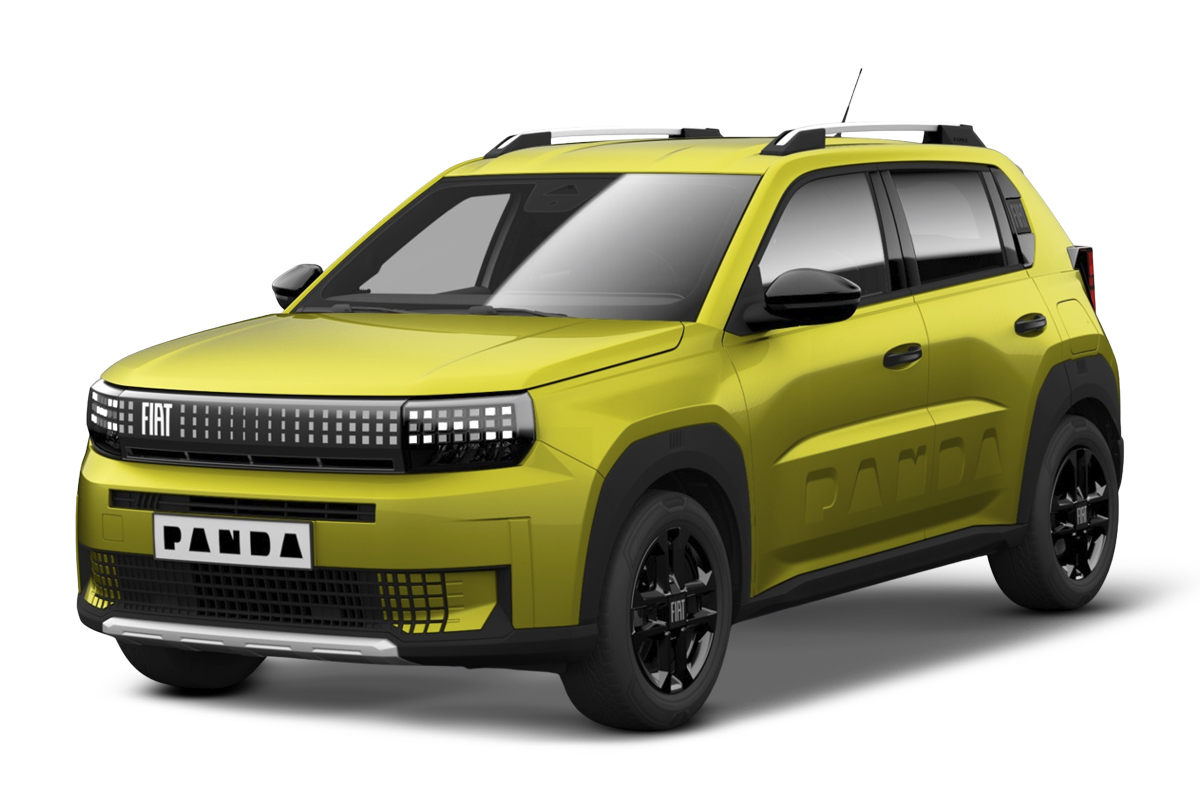
While the word “Panda” is written in big letters across its side, the new Fiat Grande Panda Electric is a far cry from Pandas of old. This new take on the famous nameplate is larger, more SUV-like and fully electric.
Mechanically speaking, the Grande Panda Electric is closely related to the Citroën ë-C3 and, like that model, you can have it as a petrol-sipping Fiat Grande Panda Hybrid, too. As such, if you’re hesitant to make the switch to fully electric motoring or want to save yourself some cash, you’re in luck.
The price jump from hybrid to electric is reasonable, though, and the electric Grande Panda is one of the cheapest electric cars on sale. It undercuts the Hyundai Inster and Renault 5. Sure, the ë-C3 and BYD Dolphin Surf are even cheaper buys, but not by much.
But is the Fiat Grande Panda Electric’s low pricing its only strength or is there more bamboo to chew, if you will? Here, we put it to the test against the best electric car rivals...
What’s new?
- April 2026: We attend the UK media launch of the Fiat Grande Panda

- September 2025: Orders open. Icon trim joins range
- January 2025: Prices announced. 44kWh battery, 112bhp electric motor. Red or La Prima trims
- June 2024: First pictures of Grand Panda Electric first shown
Performance & drive
What it’s like to drive, and how quiet it is
Strengths
- +Feels relatively agile
- +Nippy around town
- +Respectable range
Weaknesses
- -Rubbery feel to the steering
- -Ride can be a bit thumpy and jiggly
- -Only the one battery option
How fast is it and which motor is best?
The Fiat Grande Panda Electric has a 111bhp electric motor that drives the front wheels and provides a 0-62mph time of 11.0sec.
Those numbers are tame by electric car standards, but in reality the Grande Panda Electric is quick enough, certainly around town. For more performance, consider a Renault 5.
Is it agile and is the ride comfortable?
While Citroën chose a more comfort-focused approach with its Citroën ë-C3, Fiat wanted to provide its Grande Panda with more agility. As a result, the Grande Panda’s suspension is firmer than the ë-C3’s, meaning it feels slightly dartier, and it’s more composed on a twisty road.
However, we’d stop short of calling the Grande Panda sharp or fun to drive. The rubbery feel of the steering, somewhat weak-feeling brakes and noticeable body lean mean the Grande Panda is no dynamo in the bends. It’s safe and secure enough, but that’s the extent of it. If handling is a priority, you’ll be better off with an R5.
What’s more, the Grande Panda’s firmer suspension makes for a less forgiving ride than the ë-C3’s. It’s not uncommon to find yourself jiggled around in your seat while the car thumps over bumps and potholes.
True, it’s rarely jarring, but it’s something to keep in mind if you’re choosing between the two cars: do you want slightly better handling at the expense of some ride comfort? We suspect most people would side with the ë-C3.
Is it quiet and how easy is it to drive smoothly?
The Grande Panda Electric zips around smoothly and mostly silently, with just a faint whine from the electric motor.
Meanwhile, road and wind noise only creep into play during motorway driving – and neither ever reaches Dacia Spring levels of annoyance.
What’s the range and efficiency like, and how quickly can it charge?
The Grande Panda Electric’s 44kWh battery provides 199 miles of official range. That’s good at this price point, even if it's disappointing there's no larger battery option (like there is with the Renault 5). Still, you won’t get much more out of the BYD Dolphin Surf or Citroën ë-C3.
DC charging speeds for the Grande Panda Electric are up to 100kW, which is faster than an equivalent BYD Dolphin or Hyundai Inster but slower than an MG4. At that speed, you’ll see a 10-80% charge in a little more than half an hour. A standard 7kW home charger will charge the Grande Panda from 20-100% in about four hours.
“I have my niggles with how the Fiat Grande Panda Electric drives: it doesn’t feel as polished as a Renault 5.” – Oliver Young, Reviewer

Interior
The interior layout, fit and finish
Strengths
- +Bright, colourful design
- +Varied mix of materials
- +Physical air-con controls
Weaknesses
- -Build quality could be better
- -Plenty of hard, scratchy plastics
What does the interior look like and is it well made?
We prefer the Fiat Grande Panda Electric’s interior to the one in the Citroën ë-C3. The ë-C3 is fine, with its smart design and good use of fabrics, but it has a rather dark, almost old-fashioned look to it.
The Grande Panda is the opposite, with bright colours everywhere and a modern, stylish look. In some ways, it feels reminiscent of the excellent interior of the Renault 5 but with generally cheaper materials used and slightly less robust-feeling build quality.
Is the driving position comfortable and is it easy to see out?
You sit up higher in the Grande Panda than in your typical small car – a VW Polo, for example – so it feels a bit like a small SUV with a raised view out.
The seats are good for thigh support but a little lacking in side support, meaning you have to brace yourself when cornering even semi swiftly, otherwise you can feel as though you’re falling out of the seat. We wish the seats had a bit more padding, too; ë-C3’s are better for that.
Are the dashboard and infotainment system easy to use?
All Grande Pandas come with a 10.0in digital driver’s display, which is not very configurable but has more modern-looking graphics than the ë-C3’s display.
You also get a 10.25in infotainment touchscreen with intuitively laid-out menus and generally a good response time to your inputs. Plus, you can bypass the built-in software by using the standard Android Auto or Apple CarPlay phone mirroring.
In entry-level Pop trim, the Grande Panda comes with manual air-conditioning, while La Prima trim gets automatic air-con. Either way, you have a dedicated panel with physical controls, making them easy to operate while you're driving – unlike in the MG4, where you adjust air-con settings on the touchscreen.
“I think the Fiat Grande Panda Electric’s interior is one of its best qualities. It’s perhaps the definition of cheap and cheerful.” – Oliver Young, Reviewer

Passenger & boot space
How it copes with people and clutter
Strengths
- +Plenty of cubby space
- +Five people can fit fairly easily
- +Good-sized boot
Weaknesses
- -Rear leg room is a tad tight
- -No fold-down centre armrest in the back
How much space does it have for people?
People sitting in the Fiat Grande Panda Electric’s front seats have space to stretch, even if they’re both six-foot tall. Another pair of six-footers will be fairly comfortable in the back seats too, but their knees could be lightly touching the seatbacks. The Renault 5 is more cramped, although the Hyundai Inster is even roomier.
The Grande Panda is wide enough to fit a third person in the middle rear seat without too much discomfort, although it's not an ideal set-up for long journeys.
How much room does it have for luggage?
Rear-seat passengers don't get a central armrest, but there are large storage pockets on the front seatbacks, plus smaller ones for phones. In the front there are effectively two gloveboxes – one in the usual spot and one higher up. There’s also enough space in the door bins and central storage area for a few cans or bottles.
The Grande Panda's boot space has a volume of 361 litres. That's similar to the MG4, and more than the BYD Dolphin and Citroën ë-C3. Like with the ë-C3, there's no adjustable boot floor, and the rear seats don’t do anything clever, such as slide and recline like they do in the Hyundai Inster. They just split 60/40 to fold down.
“For your average family, I think the Fiat Grande Panda Electric offers more than enough space.” – Oliver Young, Reviewer

Buying & owning
Everyday costs, plus how reliable and safe it is
Strengths
- +Cheap list price
- +La Prima trim is well equipped
- +Decent charging speed
Weaknesses
- -No Euro NCAP safety rating yet
- -Fiat’s subpar reliability rating
How much does it cost and what equipment do you get?
The Fiat Grande Panda Electric is one of the cheapest electric cars there is. As we mentioned up top, the BYD Dolphin Surf and Citroën ë-C3 are even cheaper to buy (but not by much).
Entry-level Pop trim is quite basic – its white steel wheels are bound to divide opinion. Mid-range Icon trim gets a few more desirable features, such as alloy wheels, fabric trim on the front doors, a central armrest and third headrest in the back. The price premium is small and we think it’s worth paying.
La Prima is well equipped, getting luxuries such as a wireless phone-charger, heated steering wheel, heated seats, rear privacy glass and automatic climate control. It’s worth considering but the price jump puts the Grande Panda in Hyundai Inster and Renault 5 territory – and it loses that fight.
Is it reliable, and how long is the warranty?
In terms of reliability, Fiat underperformed in our 2025 What Car? Reliability Survey, finishing 28th out of 30 brands. That said, we don’t have specific data for the Grande Panda yet, so we’re still waiting to get the full picture.
Fiat gives you a standard three-year, 60,000-mile warranty on the Grande Panda. The Grande Panda Electric’s battery is covered for eight years and 100,000 miles.
How safe is it, and is it easy to steal?
The Grande Panda has not yet been tested by the safety experts at Euro NCAP but as standard it comes with lane-keep assist, speed-limit recognition, a driver attention alert system and automatic emergency braking (AEB).
The Grande Panda comes with modern security features, and even the most basic version gets an alarm.
“The Fiat Grande Panda Electric is a bargain, but I wouldn’t consider it a bargain-bin product.” – Oliver Young, Reviewer
Buy it if…
– You’re looking at EVs that are on the more affordable end of the spectrum
– You need a reasonably big boot
– You like bright, colourful, funky interiors
Don’t buy it if…
– You regularly do long journeys
– You want the best riding or handling EV
– You’d like lively acceleration
For all the latest reviews, advice and new car deals, sign up to the What Car? newsletter here

FAQs
If you’re thinking of the regular Fiat Panda then no, but the new Fiat Grande Panda is available as an electric car or a hybrid car.
The Grande Panda Electric’s 44kWh battery gives it a 199-mile official range. In the real world, that figure will be difficult to achieve – expect around 170 miles on a charge.
As of writing, the Fiat Grande Panda costs from £18,995 in mild-hybrid form and from £20,995 as a fully electric car – it’s one of the cheapest electric cars available.
The Panda small car is still in production but is not available to buy in the UK. If you want one, see our Fiat Panda used review.
| RRP price range | £18,995 - £24,345 |
|---|---|
| Number of trims (see all) | 3 |
| Number of engines (see all) | 2 |
| Available fuel types (which is best for you?) | petrol hybrid, electric |
| MPG range across all versions | 0 - 55.4 |
| Available doors options | 5 |

