New Hyundai i20 review
Category: Small car
Hyundai updated the i20 small car in 2024 and ditched the mild-hybrid engine option. Does it still hold up in 2025?


What Car? says...
As with Marvel movies, small cars like this Hyundai i20 aren’t quite as immensely popular as they once were but there’s still a big audience for them. Enough, in fact, for Hyundai to treat its second-smallest car to a mid-life facelift.
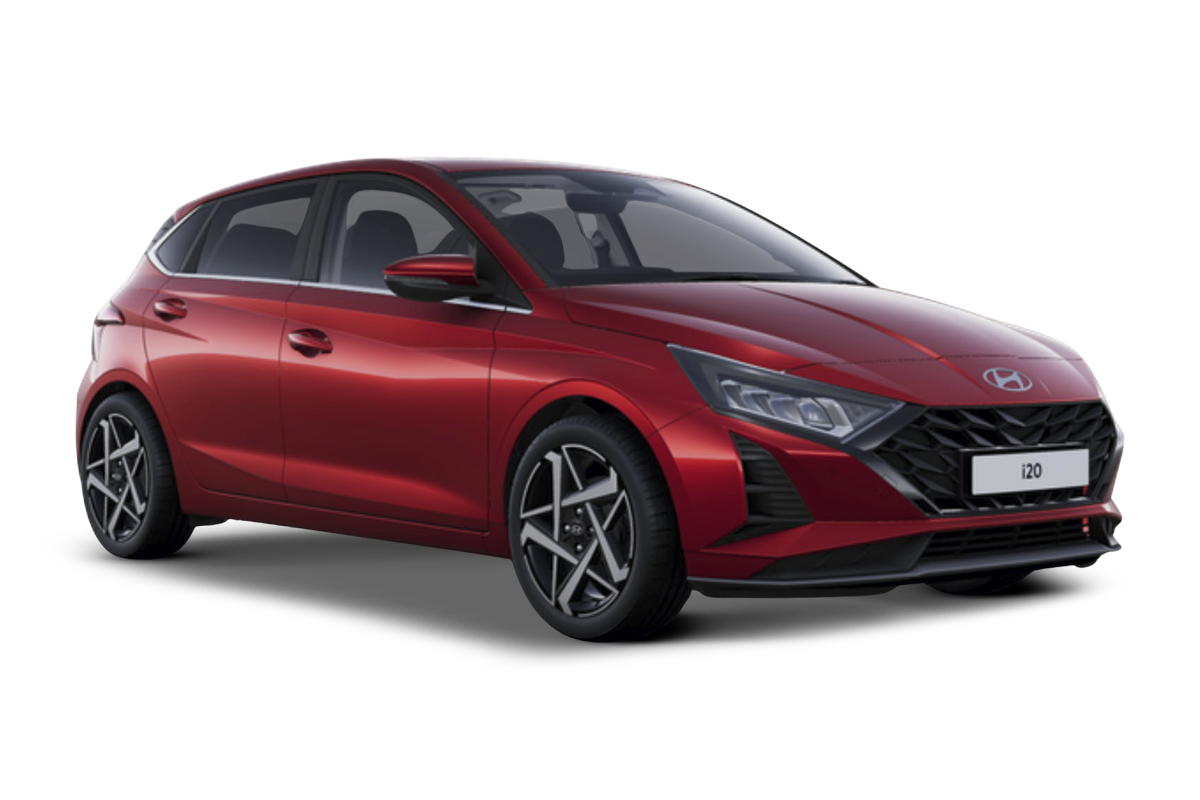
Looks wise, the refreshed i20 doesn't appear radically different to earlier versions. There's a tweaked front end, new wheels and a few other subtle exterior changes, but the interior is much the same.
The big news comes when we look at the engine specs. In what could be considered a rather odd move in today’s increasingly electrified world, Hyundai has rid the i20’s 1.0-litre petrol engine of its mild-hybrid technology.
Hyundai i20 video review
So is the latest – non-mild-hybrid – Hyundai i20 a worthy competitor to the best small cars out there, including the category winner at our Car of the Year Awards, the Renault Clio? Read on to find out...
What’s new
- December 2025: Revised line-up: now Element, Black Line, Tech Line
- February 2024: i20 N Line updated. New wheels, grille, extra paint colours, revised interior
- August 2023: Facelift brings more colour choices, revised trim levels, more standard equipment including extra driver assistance systems
- June 2021: i20 N debuts with 201bhp 1.6 T-GDi engine and six-speed manual gearbox
- March 2021: i20 N Line has i20 N styling cues, 119bhp 1.0-litre engine
- December 2020: i20 Mk3 arrives with 99bhp turbocharged 1.0-litre mild hybrid petrol engine. Six-speed automated manual or seven-speed dual-clutch auto gearboxes

Performance & drive
What it’s like to drive, and how quiet it is
Strengths
- +Punchy performance
- +Well-controlled ride
- +Better handling than most rivals
Weaknesses
- -A Seat Ibiza is even more fun to drive
- -Fair amount of wind and road noise
- -Mild-hybrid tech is no longer available
Engine, 0-60mph and gearbox
The Hyundai i20 is available with just one engine: a 1.0-litre three-cylinder petrol engine with 99bhp. The 118bhp unit you could get with the i20 N Line is no longer available – in its place is the N Line S, which has the same 99bhp as the entry-level i20.
The engine (badged 1.0T 100PS) is pretty peppy around 3,000rpm, and the 0-62mph sprint takes a respectable 10.4secs with a six-speed manual gearbox. That makes the cheapest i20 a couple seconds quicker than the Renault Clio 1.0 TCe 90.
Still, the i20 can feel a little lacklustre lower down the rev range, encouraging you to change gear a tad more than the Seat Ibiza 1.0 TSI 95. Fortunately, the gearshift, while not quite Ibiza slick, is easy and satisfying enough. You can also have a seven-speed automatic gearbox – although that results in a slower 0-62mph time (11.4 seconds).
The hot hatch variant of the i20 is no longer on sale, but would still make a great used purchase. Read our full Hyundai i20 N review.
Suspension and ride comfort
The i20’s ride is firmer and less forgiving than that of some rivals – including the Peugeot 208, Skoda Fabia and VW Polo – but it remains generally comfortable and smooths out a bit at motorway speeds.
What’s more, the i20 feels planted and well controlled on an undulating stretch of country road, and is less bouncy than the softer Citroën C3.

Handling
The i20 surpasses a fair few rivals in the handling department (including the Fabia and Polo), with its firm suspension helping to create good agility and minimal body lean. The steering is mostly sharp and precise but there's a noticeable vague spot around the centre point.
There’s plenty of grip to lean on, so fast and twisty roads can be tackled with confidence. The i20 can actually be quite fun through the corners, although the amazing poise and expert balance that makes the Ibiza so remarkable to drive isn’t quite replicated here.
Noise and vibration
Like pretty much every three-cylinder engine we’ve tested, the i20’s unit thrums a little and produces some slight vibrations, but it never becomes too coarse or annoying.
The accelerator and clutch pedals are pretty light and easy to use, with a brake pedal that’s easy to modulate.
Once you’re on a motorway, wind noise and road noise are noticeable, as they are in most of its rivals, with the exception of the hushed Polo.
“The i20 didn't blow me away but I found it to be a good midpoint between the sharper-handling Seat Ibiza and the cushier-riding Skoda Fabia.” – Steve Huntingford, Editor
Interior
The interior layout, fit and finish
Strengths
- +Comfortable driving position
- +Screens have crisp graphics
- +Good forward visibility
Weaknesses
- -No adjustable lumbar support
- -Lots of hard and scratchy grey plastic
- -Digital driver's display isn't very configurable
Driving position and dashboard
There’s very little wrong with the essentials in the Hyundai i20. The seat, pedals and steering wheel line up nicely, and there’s plenty of space for your left foot next to the clutch in manual gearbox versions. The steering wheel also has enough reach and height extension to cater for most people, and the driver’s seat bolsters stop you spilling over your passenger in tight bends.
There are a couple of issues: there's no lumbar adjustment, even as an option (although, to be fair, the lower back support is pretty good anyway). The backrest angle is adjusted using a lever that has a set number of positions, which offers less adjustment than a wheel.
The digital driver's display is clear but – unlike in the Seat Ibiza and VW Polo – it isn’t very customisable and cannot display things like a navigation map. Luckily, though, you do get physical controls for the air conditioning, making it easier to adjust on the move than using the touch-sensitive controls you get in some Polos.
Visibility, parking sensors and cameras
Thanks to relatively slim front window pillars, forward visibility is great and you won’t find yourself struggling to see out at junctions.
The rising window line and relatively shallow rear window makes visibility to the rear a little less stellar, but fortunately the decently sized quarter windows make life a bit easier.
Every i20 comes with rear parking sensors and a rear-view camera, while Premium trim and up also add front parking sensors. You’ll see plenty at night too, thanks to standard-fit bright LED headlights with automatic high beam.

Sat nav and infotainment
No matter which trim you go for, every i20 comes with a 10.3in infotainment touchscreen. There’s plenty of standard features, too, including DAB radio, Bluetooth, built-in sat-nav and Android Auto and Apple CarPlay functionality.
The infotainment system is good, with sharp graphics, a quick response to your prods and menus that are easy to navigate. Unlike previous versions, however, you no longer get physical shortcut buttons surrounding the screen, instead they’ve been replaced by touch-sensitive ones that are a little more fiddly.
The standard stereo has six speakers and is decent, but top-spec Ultimate and N Line S trim add a Bose system with a subwoofer and deeper sound. Those trims also add wireless phone-charging.
Quality
The i20 feels generally solidly made but isn’t as plush as the Audi A1 and Peugeot 208, both of which have more soft-touch materials dotted around their interiors.
Some appealingly textured plastics, the slatted design (on the dashboard and doors) and softly damped switches go some way to making the interior inviting. However, that's not enough to bring it up to the standards set by small car rivals (also including the Seat Ibiza and Skoda Fabia).
“I like the design of the i20's interior, which looks sharp and modern, but it’s a real shame there are so few soft-touch materials.” – Lawrence Cheung, New Cars Editor
Passenger & boot space
How it copes with people and clutter
Strengths
- +Lots of space in the front
- +Rear space is close to class-leading
- +Standard height-adjustable boot floor
Weaknesses
- -Interior storage could be more generous
- -Some rivals have bigger boots
Front space
The interior of the Hyundai i20 is reasonably wide for a small car so you’ll have some elbow room to spare, and there’s no issue with leg or head room if you’re over 6ft tall. In fact, you’ll find you have about the same space as in a Seat Ibiza or VW Polo.
The front door bins aren’t huge, taking a large bottle of water and little else, but there are a few spaces elsewhere, including a large glovebox, cubbies by the gearlever and under the front centre armrest (with Premium trim and above), as well as a couple of cup holders.
Rear space
The i20 isn’t quite at the level of the Honda Jazz for roominess in the rear, but it’s still super spacious next to most of its rivals. You can easily get two six-footers in the back seats, and adding a third person is doable (although shoulder room won’t be great).
The middle passenger gets more foot space than in many small cars because there's only a low hump on the floor in front of them. There’s very little in the way of storage space in the rear – just small rear door bins. They’ll fit a 500ml bottle but that’s all.

Seat folding and flexibility
Again, the Jazz is the king in this regard, with flexible rear seats that offer many more options than any of its key rivals to help you fit things on board. The i20’s 60/40 split-folding rear seats are merely par for the course, and you don't get a ski hatch.
The front passenger’s seat doesn’t get height or lumbar adjustment on any version.
Boot space
This is an area where removing mild-hybrid engine tech has actually improved the i20's performance – because it frees up some boot space.
You now get 352 litres on all versions, which is a close match for the Seat Ibiza (355) and VW Polo (351) but less than in the Skoda Fabia (380). We haven't done our carry-on suitcase test on an i20, but as a guide the Ibiza managed to take five cases.
The i20's standard height-adjustable boot floor adds an extra layer of usability, not just enabling you to create a separate storage area but also levelling out the boot floor when the rear seats are dropped and reducing the height of the internal loading lip.
“Upon sitting in the back of the i20, I was surprised by the abundance of space. It almost feels like a car from a class size up.” – Doug Revolta, Head of Video
Buying & owning
Everyday costs, plus how reliable and safe it is
Strengths
- +Reasonable buying and running costs
- +Good resale values
- +Five-year warranty
Weaknesses
- -Some rivals proved safer in crash tests
- -Top trims are quite expensive
Costs, insurance groups, MPG and CO2
Cash buyers will discover that the Hyundai i20 costs less than the Audi A1 and Honda Jazz, around the same as the Toyota Yaris and VW Polo, and more than the Renault Clio, Skoda Fabia and Suzuki Swift.
The i20 is predicted to hold on to a bigger chunk of its list price (after three years) than an Ibiza or Fabia, while the A1 is expdcted to depreciate at the same rate. That’s good news because it means PCP finance prices should remain competitive.
If you take it easy you should see around 50mpg from the i20’s 1.0-litre petrol engine, which aligns well with rival small cars. However, hybrid cars such as the Jazz and Yaris use even less fuel. In fact the Yaris averaged nearly 60mpg in our Real MPG tests.
Equipment, options and extras
The entry-level i20 is called Advance and gets all the basics, including air-conditioning, a leather steering wheel and gearlever, cruise control, electric windows and mirrors (including heating), as well as 16in alloy wheels.
Premium trim – which is our recommended version – adds some desirable luxuries, such as heated front seats, a heated steering wheel, climate control, privacy glass, power-folding door mirrors and the extra parking sensors that we mentioned earlier. On top of that, the wheels grow to 17in.
Ultimate gets you keyless entry and start, an electric sunroof and a premium Bose sound system, while range-topping N Line S has all of the above (minus the sunroof) plus sportier styling inside and out.

Reliability
The i20 placed well in the small car category of our 2025 What Car? Reliability Survey, sitting within the top 10, just below the Polo and above the rest of its included rivals.
Hyundai as a brand, meanwhile, claimed 14th place out of the 30 included manufacturers. That’s way below Suzuki and Toyota (3rd and 4th respectively) but above Audi, Ford, Renault, Seat, Skoda and Volkswagen.
You have the added peace of mind that all Hyundai car models come with a five-year, unlimited mileage warranty and five years of UK roadside assistance. That’s better than you’ll get with most rivals but it can’t match Kia’s seven-year cover or Toyota’s 10-year service-activated warranty.
Safety and security
When safety experts Euro NCAP tested the i20 in 2021, it was awarded four stars out of five. Looking deeper into the results, the i20 did well at keeping child occupants safe but didn’t score particularly well when it came to adults in the front.
The Fabia scored the full five stars, beating the i20 in every area, while the Polo also scored five stars but a year later in more stringent testing. Still, it could be worse – the Dacia Sandero has a two-star rating.
Regardless, the i20 comes with plenty of standard safety equipment, including the all-important automatic emergency braking (AEB) with car, bicycle and pedestrian monitoring, driver attention alert, eCall emergency assistance and lane-departure assistance. Ultimate trim adds blind-spot monitoring into the mix, too.
“The i20 is good on fuel, but some rivals are better. That pretty much sums up the i20 for me – it’s good but not quite the best.” – Will Nightingale, Reviews Editor
For all the latest reviews, advice and new car deals, sign up to the What Car? newsletter here
FAQs
The i20 finished in the top 10 of the small car category in the 2025 What Car? Reliability Survey. Hyundai itself placed 14th out of 30 manufacturers. So yes, it is reliable.
No – in fact as part of a 2024 update, it lost the mild-hybrid tech that was fitted to its petrol engine. Hyundai's smallest electric car is now the tiny Inster.
The 99bhp 1.0-litre petrol unit is the best engine option for the i10 – because it’s the only engine option. As for the trim levels, we’d recommend middle-of-the-range Premium trim, which comes with a good level of equipment without pushing the price too high.
While the i20 went off sale for a little while, it has not been discontinued. The i20 N hot hatch, though, has now gone off sale.
The i20’s interior has more cheap-feeling plastics than most of its rivals, plus less boot space. The higher trim levels can also get quite expensive.
While the i10 is a city car, designed mostly for entry-level drivers and those who just want something small and simple, the i20 is one size above. It’s more spacious, has more technology and a more spritely set of engines than the i10.
| RRP price range | £20,010 - £26,265 |
|---|---|
| Number of trims (see all) | 7 |
| Number of engines (see all) | 1 |
| Available fuel types (which is best for you?) | petrol |
| MPG range across all versions | 0 - 53.2 |
| Available doors options | 5 |
| Company car tax at 20% (min/max) | £1,210 / £1,808 |
| Company car tax at 40% (min/max) | £2,420 / £3,616 |

