Porsche 718 Cayman review
Category: Sports car
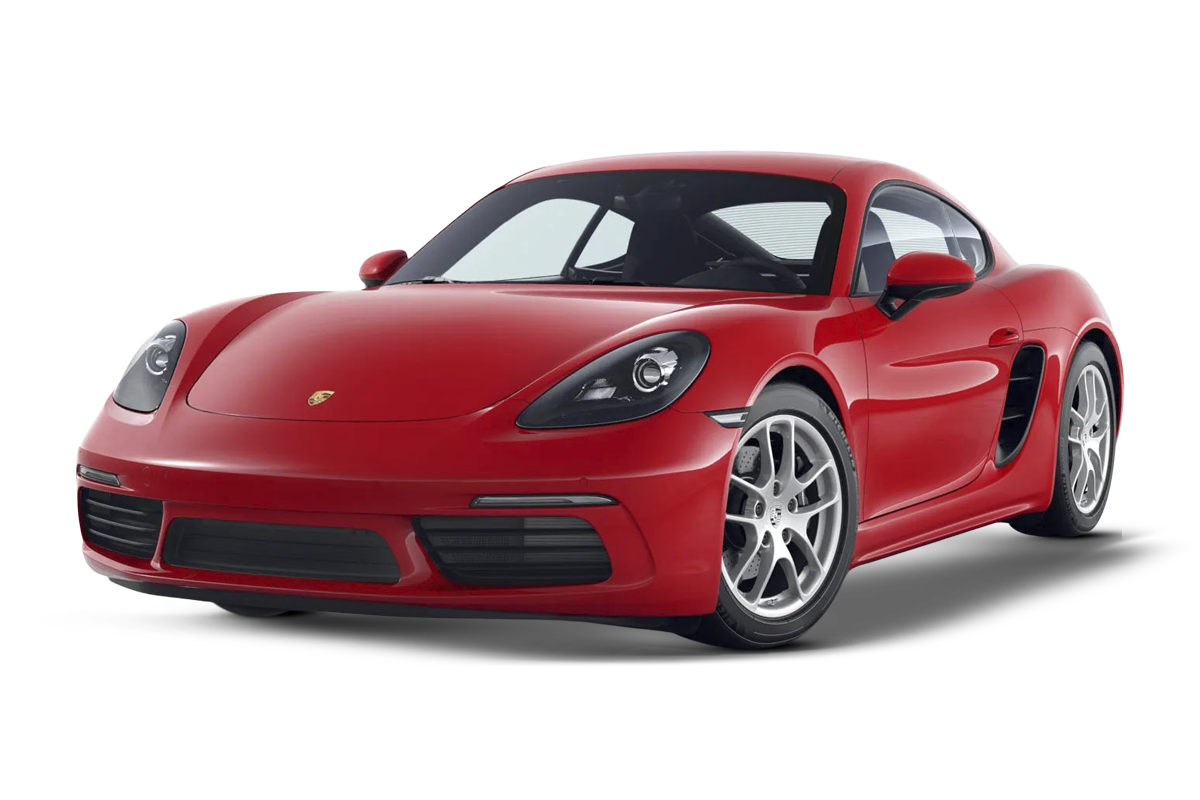
The Porsche 718 Cayman is one of the best sports cars on the planet


What Car? says...
With most car brands, if you go for the entry-level model you can expect a few compromises – but that's not the case with the Porsche 718 Cayman.
Porsche's least-expensive model has long been a five-star car, and while the Cayman is hardly what you'd call 'cheap', it's still incredible value for money by sports car standards. The way it balances performance and driving fun with everyday usability positions it perfectly for many buyers.
The 2.0-litre turbocharged four-cylinder engine in the entry-level Cayman has plenty of power, and can be upgraded to a 2.5-litre version in the mid-level Cayman S. Porsche also offers a 4.0-litre, six-cylinder in the GTS.
With the Audi TT and the Jaguar F-Type now off sale, competition in this class is dwindling, but rivals are hardly weak. If you're thinking of getting a Cayman, you'll also want to look at the Alpine A110 or BMW M2. There’s also the Toyota GR Supra (although not for much longer).
Read on and we'll tell you everything you need to know about the Porsche 718 Cayman, including how it stacks up against the best sports car for performance, handling and much more...

Performance & drive
What it’s like to drive, and how quiet it is
Strengths
- +4.0-litre engine in the GTS is fabulous
- +Agile, playful handling
- +Brilliant steering
Weaknesses
- -Plenty of tyre roar on the motorway
- -Four-cylinder engines are rather gruff
Engine, 0-60mph and gearbox
The entry-level Porsche Cayman 2.0 is a decent option. With 296bhp, it's really not slow – on a cold, damp day, we timed one fitted with the optional seven-speed PDK automatic gearbox sprinting from 0-60mph in 4.6 seconds.
That was without the optional Sport Chrono pack that Porsche says makes the car even quicker by adding launch control. It's not just its outright speed that impresses, but also the way its power builds. It gets really gutsy from around 2500 to 3000rpm then romps away ever more willingly to the 7500rpm red line.
In fact, the 2.0-litre Cayman is good enough that we'd say don't bother with the 2.5-litre S model. The S is quicker (officially 0-62mph takes as little as 4.2 seconds) but its engine isn't as sweet, with some more unpleasant flat spots as you rev it out.
Do, however, buy the Cayman GTS – if you can afford it. Its 394bhp 4.0-litre six-cylinder motor is an absolute gem. It’s happy to bumble around at low revs, but rewards you with explosive energy when you drive it enthusiastically near the 7800rpm rev limiter. We managed a 0-60mph time of 4.3 seconds, which is almost a match for a manual BMW M2.
The only potential drawback whichever Cayman engine you pick is the long gearing relative to rivals, which means you only get to make full use of the lower gears.
Suspension and ride comfort
Porsche's PASM adaptive suspension system – which offers two levels of softness – is standard on the Cayman GTS and optional on the other two versions.
The Cayman and Cayman S ride perfectly well on standard suspension, even if you option the chunky 20in alloys, so we don't think it's necessary to tick the PASM option box. The ride is firm but far from jarring around town, and smoothes out as you build up speed.
Overall, the Cayman is less lumpy around town than the BMW M2. The Alpine A110 and Toyota GR Supra are a little more comfortable at times, but there's not a huge difference.

Handling
Any sports car worth its salt needs to offer bags of handling excitement, and the Cayman doesn’t disappoint. Its steering is wonderfully precise and perfectly weighted to give you plenty of confidence. When you turn in to a bend, there’s virtually no body roll and it’s easy to sense how much grip is available (the limit is very high).
You could argue that the lighter Alpine A110, with its less grippy tyres and more prominent body lean, is a more playful car at regular road speeds, but the Cayman has much higher handling limits.
It also has a broad range of talents. It feels just as at home on fast, sweeping corners as it does pottering around town, and puts a bigger smile on your face than the M2.
Noise and vibration
There's no question which Cayman engine makes the best noise: the 4.0-litre, six-cylinder in the GTS. It's rich and soulful, which is exactly what you want from a sports car.
Compared with that glorious and addictive symphony, the four-cylinder engines sound disappointingly agricultural. The 2.0-litre in the entry-level Cayman is better than the 2.5-litre in the S, but neither offers much in the way of aural delights.
If your budget doesn't stretch to a GTS and you don't like the noise of other Caymans, try the Alpine A110 – its four-cylinder engine sounds much sweeter.
The standard six-speed manual gearbox has one of the slickest shift actions you’ll find on any car, and the smooth and snappy PDK automatic gearbox is equally adept. Wind and road noise are the biggest bugbears, with plenty of both on a motorway.
“The engine in the Porsche Cayman GTS needs plenty of revs before it delivers its best, but I think it’s far more rewarding than the turbocharged BMW M2, which delivers its power in one big thump.” – Lawrence Cheung, New Cars Editor
Interior
The interior layout, fit and finish
Strengths
- +Brilliant driving position
- +Surprisingly good visibility
- +Dashboard controls within easy reach
Weaknesses
- -Relatively small infotainment screen
- -Standard stereo lacks punch
Driving position and dashboard
The standard seats in the Porsche Cayman have handles for manually sliding them back and forth, plus a button for electrically adjusting the angle of the backrest. If you want adjustable lumbar support, you'll need to upgrade to the optional 14-way electric Sports Seats, or the 18-way Sports Seats Plus, which include adjustable side bolsters.
There's also the option of racing-style bucket seats, although these have fixed backrests and are a little on the firm side, which is worth bearing in mind if you plan to use your Cayman every day.
The rest of the driving position is spot on. The steering wheel has lots of adjustment, and while the relatively close spacing of the pedals might be a little awkward for a driver with wider feet, that’s a minor compromise.
The buttons on the Cayman's dashboard are easy to get to grips with. There are quite a few of them and the tall gearlever in manual cars can obstruct the view of those immediately ahead of it, but you quickly learn to find them by feel while driving.
Visibility, parking sensors and cameras
Sports cars are notoriously hard to see out of, with steeply angled windscreen pillars and a low-slung driving position, but the Cayman is better than many. It’s easy to judge the width of the car, and while the rear window is small, it still gives a decent view of what’s behind.
All-round parking sensors come as standard, and you can add a rear-view camera to help you avoid expensive parking dings (and make your Cayman easier to sell on in the future).
Automatic windscreen wipers come as standard, while a rear wiper is an option. The standard xenon headlights offer decent illumination, and you can upgrade them to lights that point in the direction you're steering to improve visibility through bends. Adaptive LED headlights that can be left on high beam without dazzling other drivers are also available as an option.

Sat nav and infotainment
As standard, the Cayman gets a 7in infotainment touchscreen with Bluetooth, DAB radio and sat-nav. There's also Apple CarPlay smartphone mirroring (but not Android Auto).
The touchscreen is within easy reach, quick to respond to your inputs and the menus are laid out in a reasonably logical way, with physical shortcut buttons to help you find the important functions.
True, the graphics could be sharper, but it's still better than the dreadful infotainment system in the Alpine A110. That said, the BMW M2 and Toyota GR Supra have rotary controller interfaces, so they're easier to use while you're driving.
The standard stereo is comparatively low-spec, with eight speakers and 150W of power. There’s plenty of bass but it struggles to drown out road noise. You can upgrade to a Bose system with 10 speakers and 505W, which sounds good and is worth the extra if you're into your tunes. There's also a 12-speaker, 821W Burmester setup, but that's a very pricey option.
Quality
Porsche has a reputation for smart and solid interiors and the Cayman doesn’t let the side down. As standard, high-quality buttons and switches, and everything feels as though it has been tightly screwed together. Plus, most surfaces you touch in the interior are covered in dense, soft-touch materials.
You can choose to have leather seats, a leather-covered dashboard and door panels, or go to town with extra faux-suede or wood finishes. Even without those, the Cayman feels far more special to sit in than an Alpine A110 or Toyota GR Supra.
“These days, most new cars come with a fully digital instrument panel, but I like the Cayman’s blend of racy analogue dials with a sharp-looking 4.6in screen for the trip computer and sat-nav.” – Dan Jones, Senior Reviewer
Passenger & boot space
How it copes with people and clutter
Strengths
- +More luggage space than Alpine A110
- +Plenty of head room
Weaknesses
- -No rear seats
- -Boot space is limited
Front space
Despite having its engine mounted in the middle of the car, the Porsche Cayman has more than enough room for a tall driver and passenger.
Head room is especially good and leg room is fine if you keep the backrest angle quite upright (if it's reclined, the seat hits the bulkhead behind before it reaches the full extension of the seat runners). The interior is broad enough to ensure that you never brush elbows with whoever's sitting next to you.
The Cayman has a lot more interior storage space than an Alpine A110. There's a decent-sized glovebox, a couple of cupholders that pop out from the dashboard, and several other cubbies, including one under the centre armrest big enough for a mobile phone. The door pockets are shallow, tricky to access and certainly not big enough for something chunky, like a bottle of water.
Rear space
The Cayman's mid-engined lay-out means there’s nothing but bulkhead behind the front seats. It's strictly a two-seater.
If you’re not too tall and can slide your seat forward, you can eke out a small gap behind your seat for maps (if you still use them). There are also hooks on the backs of the seats to hang jackets on.
Ultimately, if you want a more spacious car with a similar amount of performance to the Cayman, consider the BMW M2 – it's roomier and can (at a squeeze) carry up to four occupants.

Seat folding and flexibility
Aside from having an electrically adjustable backrest as standard, the Cayman’s seats don’t do anything clever to set them apart from those in other sports cars. You can add 14-way electric adjustment or 18-way seats, but that’s your lot.
Boot space
The Cayman gives you a choice of two boots for your bags: one in the nose and the other in the usual place, at the back of the car. While neither offers a huge amount of space, the front boot is deep and square, while the rear compartment is shallow but fairly wide.
In total, there's a bit more boot space than in a Toyota GR Supra and far more than in an Alpine A110. There's certainly enough space for a few soft weekend bags or a weekly shop.
Forget about golf clubs though – you’ll have to choose between those or a passenger. Also bear in mind that the rear boot is close to the engine so your luggage might get rather warm. If you need to carry anything bulky or long, the BMW M2 will make life easier, and its rear seat backs split 40/20/40 and fold down to give you a bigger load bay.
“There are a couple of storage cubbies by the rear side window, but I found it tricky to reach them from the Cayman's boot.” – Neil Winn, Deputy Reviews Editor
Buying & owning
Everyday costs, plus how reliable and safe it is
Strengths
- +Lots of options available
- +Should hold its value well
Weaknesses
- -Not as much standard kit as you'd hope
- -Disappointing on the safety front
Costs, insurance groups, MPG and CO2
It wears a Porsche badge, so naturally the Cayman requires a hefty initial investment – especially if you go for our favourite GTS model. If your budget doesn't stretch to the GTS, don't worry – the entry-level version is an excellent driver's car and you can have one for around the same price as an Alpine A110 or Toyota GR Supra.
That badge raises its head once again when it comes to servicing, which is likely to cost more than for a BMW M2 or GR Supra. Real-world fuel economy isn't brilliant, either, with the 2.0-litre Cayman averaging around 34.4mpg in our Real MPG tests.
The Cayman S 2.5-litre hit an average of roughly 28.4mpg, which isn't great when you consider that a carefully driven GTS 4.0-litre can manage 31mpg, and the M2 28.1mpg.
More positively, the Cayman will hold its value well, depreciating at about the same rate as the A110 but much more slowly than the GR Supra.
Equipment, options and extras
Porsche is notorious for being stingy with standard equipment and that certainly applies to the Cayman. Even the range-topping GTS model lacks the kind of kit you might expect as standard on a car costing such a serious wedge. You'll need to pay extra if you want keyless entry, or upgrade to two-zone climate control or adaptive cruise control.
So what do you get? Well, the standard Cayman comes with electric windows, air conditioning, ordinary cruise control, 18in alloys and part-Alcantara heated seats.
The Cayman S has with 19in wheels, while the Style Edition comes in a more vibrant colour finish with contrasting 20in white or black wheels, two-zone climate control, a heated steering wheel and leather upholstery.
The GTS brings 20in wheels, adaptive suspension and a sports exhaust. Whichever one you go for you'll want to add a fair few options.

Reliability
In the 2024 What Car? Reliability Survey, the Cayman finished joint top of the coupé, convertible and sports car class, alongside the mechanically similar Porsche 718 Boxster. Only 6% of cars suffered faults, and they were all fixed for free in a day or less.
Every Cayman comes with a three-year, unlimited-mileage warranty, but like most sports cars it will likely chew through consumables, such as tyres and brakes, if you drive it hard.
Safety and security
The Cayman hasn't been appraised for safety by Euro NCAP. All versions come with six airbags, but it's very disappointing that you can't have automatic emergency braking (AEB) or lane-keeping assistance. Isofix child-seat fittings cost extra and only higher-spec models offer blind-spot monitoring as an option.
Security experts Thatcham Research awarded the Cayman a maximum five-star rating for guarding against being stolen and four stars for resisting being broken into.
“I could spend hours customising the Cayman on Porsche's configurator. Even the entry-level model is available with loads of paint colours for the body and wheels, although most changes quickly push up the price.” – George Hill, Used Car Reporter
For all the latest reviews, advice and new car deals, sign up to the What Car? newsletter here
FAQs
Not yet – but the 718 Cayman will eventually be replaced by an all-electric Cayman. For now, if you want an electric Porsche, you have a choice between the Porsche Macan Electric or Porsche Taycan.
The cheapest Cayman costs about the same as an Alpine A110. You can check the latest prices on our New Car Deals pages.
Yes, the Cayman is a mid-engined two-seater sports car. There’s plenty of head and leg room for two six-footers, and the wide interior means they won’t be rubbing shoulders. The Porsche 718 Boxster has the same lay-out as the Cayman but is a convertible.
Absolutely. The Cayman is expensive by the standards of many 'normal' cars, but it offers all the fun and aural delights of some far more expensive machines, including Porsche's own 911.
| RRP price range | £57,275 - £131,245 |
|---|---|
| Number of trims (see all) | 4 |
| Number of engines (see all) | 3 |
| Available fuel types (which is best for you?) | petrol |
| MPG range across all versions | 21.4 - 31.7 |
| Available doors options | 2 |
| Company car tax at 20% (min/max) | £3,981 / £9,287 |
| Company car tax at 40% (min/max) | £7,962 / £18,574 |

