Porsche Panamera review
Category: Luxury car
The Panamera is a comfortable and superb-to-drive luxury car that's available as a PHEV


What Car? says...
Why should you compromise in life? If you have the funds to treat yourself to a luxury car but need four seats, you really can have sports-car performance, too. For proof of that, just take a look at the Porsche Panamera.
Underneath its sleek four-door exterior is a rather athletic frame, with a choice of V6 or V8 petrol engines and rear or four-wheel drive. Plug-in hybrid versions are also available, in case you want to reduce your fuel consumption, go very quickly – or both.
So how does the Porsche Panamera compare with its fully electric stablemate, the Porsche Taycan, as well as more direct luxury car rivals such as the BMW 8 Series Gran Coupé?
What’s new?
March 2025 - New version of Porsche Management System (PMS) infotainment system introduced, adding Amazon Alexa and Dolby Atmos audio
July 2024 - Panamera Turbo S E-Hybrid and GTS introduced, performance-focused versions which use 4.0-litre V8 petrol engine
February 2024 - Plug-in hybrid (PHEV) versions introduced, using V6 and V8 engines to produce up to 771bhp

Performance & drive
What it’s like to drive, and how quiet it is
Strengths
- +Blistering acceleration
- +PHEVs have a competitive electric range
- +GTS sounds great
Weaknesses
- -A lot of tyre noise on some roads
- -Turbo S E-Hybrid's slightly artificial engine note
- -Sports exhaust is optional
The Porsche Panamera’s engine line-up consists of V6s and V8s. They’re all petrol-powered, although some have plug-in hybrid (PHEV) electrical assistance.
The cheapest of the non-PHEVs is the 2.9-litre V6 in the rear-wheel-drive Panamera and the four-wheel-drive Panamera 4 models. With 348bhp, these are officially good for 0-62mph in 5.3 and 5.0sec respectively. The pricier 494bhp V8-engined GTS (also four-wheel drive) needs just 3.8sec.
As for the PHEVs, they use the standard engines as a starting point, before adding an electric motor to deliver even more power and stronger performance.
The entry-level Panamera 4 E-Hybrid – which features the V6 engine – produces a hefty 464bhp, which is enough for a 0-62mph sprint time of 4.1sec. Put your foot down and it doesn’t feel monstrously fast, but it does give you a very pleasant wave of instant torque for overtaking or accelerating up to motorway speeds with absolute ease.
As a bonus, it’s officially capable of covering up to 60 miles purely on electric power. The 4S E-Hybrid increases power and cuts the 0-62mph time to 3.7sec in exchange for a slightly shorter electric range (by only a couple of miles).
Then there’s the Turbo and Turbo S versions of the E-Hybrid, which use a V8 engine to help produce 671bhp and 771bhp, respectively. These are fast enough to embarrass some supercars (0-62mph takes them 3.2 and 2.9sec respectively). What’s more, they can still officially cover around 50 miles purely on electric power.
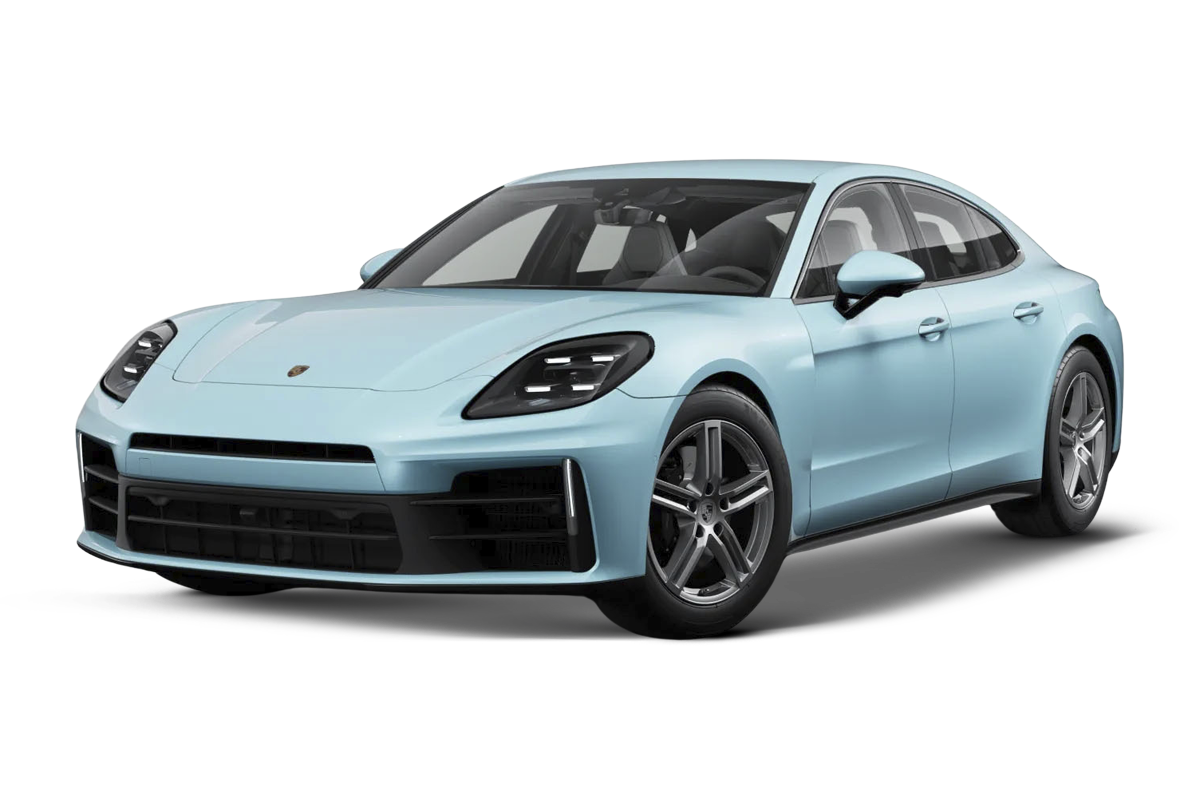
We’ve tried the Panamera GTS and the Panamera Turbo S E-Hybrid, both of which – unsurprisingly – feel more than quick enough, even though the GTS doesn’t pin you back in your seat when accelerating out of corners in the way the Turbo S E-Hybrid can.
On the other hand, it’s the GTS that sounds better, with a lovely woofing exhaust note, whereas the Turbo S E-Hybrid is more subdued, and what you do hear sounds a little artificial. You can add a sports exhaust to the Turbo versions that produce a subtle rumble in the background, but having to pay more than £2500 for it at this price level seems a bit mean.
Air suspension is standard across the Panamera range, but the GTS rides 10mm lower than lesser variants and features torque vectoring at the rear to help it turn into bends more eagerly. Sure enough, its handling is poised and precise, with minimal body lean and an excellent feeling of balance.
You never completely forget that this is a heavy car in the way that you do in the fully electric Porsche Taycan. However, the Panamera GTS does feel a degree or two lighter than the Turbo S E-Hybrid – which it is, according to Porsche's figures.
Don’t think that this has been achieved by giving the GTS an uncompromising ride, though. It’s firm but very well controlled across heavily undulating roads, and calmer than you might expect at motorway speeds.
So what of the Panamera Turbo S E-Hybrid? Well, that also comes with lots of kit that’s designed to improve agility, including four-wheel steering. It works, feeling more agile than the BMW M5. However, what makes this version stand out is its Porsche Active Ride active suspension.
In Normal mode, it helps turn the Panamera into a comfortable cruiser. Available as an option on other hybrid variants but standard here, it leans the car into bends and pitches it fore and aft to counteract the forces that would otherwise act on you as you slow, corner and accelerate again.
It’s the same system that you’ll find in various versions of the Taycan, but it feels much more prominent in the Panamera. Indeed, it takes some getting used to – for example, accelerate hard and the rear of the car lifts, instead of the front, before becoming flat again. It feels almost like you’re catching a wave on a surfboard.
True, even with the active suspension, the Panamera doesn’t waft over bumps as well as a Bentley Flying Spur or Mercedes-AMG E53, but it won’t jostle you around at low speeds as much as a BMW M5.
An eight-speed dual-clutch automatic gearbox is standard on all models, with no manual gearbox option available. It can be jerky when making low-speed manoeuvres, but is otherwise smooth under normal use, in addition to being capable of ultra-rapid shifts in the right circumstances.
The PHEVs have a regenerative braking system to recoup some electrical energy to top up the battery. However, unlike most PHEVs, you can’t adjust the strength of the regenerative braking system and it’s not very strong when you lift off the accelerator pedal. Instead, the car simply coasts to help the fuel economy figures creep up.
Wind noise is well contained, but the Panamera’s giant tyres do generate quite a bit of road roar, so it’s not the most peaceful luxury car around.
“I’m a big fan of the GTS’s exhaust tuning – it really does bring out the audible appeal of the Panamera’s V8 engine.” – Dan Jones, Senior Reviewer

Interior
The interior layout, fit and finish
Strengths
- +Brilliant seating position for the driver
- +Top-notch infotainment system
- +Excellent interior quality
Weaknesses
- -Lumbar support costs extra on some versions
- -Restricted rear visibility
- -Some fiddly touch-sensitive controls
The driver’s seating position in the Porsche Panamera is fabulous. The pedals and steering wheel line up well and the low-slung seat gives it a sports car feel. Once you’ve set the electrically adjustable steering wheel and seat to your liking, it’s wonderfully comfortable.
On lower-spec models, the driver’s seat comes with eight-way electric adjustment, but you’ll need the optional 14-way adjustable sports seats if you want adjustable lumbar support. On GTS trim and above, you get 18-way adjustment instead, which are even more supportive and come with adjustable side bolsters on the seat base to hold your legs in place when cornering.
Visibility out of the rear isn’t great, due to the sloping roofline and large rear pillars, but to help you judge the car’s extremities, front and rear parking sensors are included on all Panameras, combined with a 360-degree view parking camera. Powerful LED headlights are standard too, for confident night driving.
On the centre console, a row of physical switches makes adjusting the climate control temperature a cinch. However the surrounding controls for the ventilation system and heated seats are integrated onto a haptic panel. It looks good at first glance and you do get feedback to your prods, but, because it’s quite reflective and you have to look down often to see which function you’re aiming for, it proves problematic to use while driving.
The infotainment system itself is impressive. The 12.3in touchscreen is mounted high enough up on the dashboard that you can see it easily, and most icons are large enough to operate at a glance. Only when you dive deeper into the menus will you find smaller icons that are trickier to find while driving.
There’s also a 12.6in digital driver's display. It's not all that configurable but looks sharp, and a large head-up display is available.
An optional 10.9in touchscreen can be positioned ahead of your front passenger so they can change the radio station, for example, while you keep an eye on the sat-nav map. It also offers Netflix streaming, among other features, and is tinted so it can’t be seen from the driver’s seat.
A 14-speaker Bose sound system is standard and you can pay for an optional Burmester upgrade with 21 speakers. We’ve tried the latter and, while the surround sound function is good, there are more powerful and immersive systems out there (especially Bentley’s Naim setup) when you consider the near £5000 price.
Quality is very impressive throughout the Panamera. Everything feels beautifully put together and, depending on how much you want to spend, it’s possible to get virtually every surface covered in leather, Alcantara or a veneer of some sort.
“If your family is like mine and everyone’s phone always seems to be low on juice, the Panamera has been specced with you in mind, with a wireless charging pad in the centre console and four USB-C ports on board.” – Steve Huntingford, Editor

Passenger & boot space
How it copes with people and clutter
Strengths
- +Plenty of head and leg room
- +Wide-opening boot with decent capacity
- +Infotainment screen for rear-seat passengers
Weaknesses
- -Only two back seats
Front-seat occupants won’t have any complaints regarding space in the Porsche Panamera. Head and leg room are both more than adequate for anyone six feet tall or even higher.
Storage space is good, too. You get a square central cubby, a pair of cupholders, a big glovebox and door bins that can swallow a fair amount of clutter or a drinks bottle. On the centre console, there’s also a lidded storage area with a wireless charging pad and two USB ports for your phone, but the way it’s been arranged means you end up with trailing cables by your drinks or having to stuff them away in order to close the lid.
Is there enough space for the rear seat passengers, though? Yes, a surprising amount, as it happens. While there are only two rear seats, the head and leg room they offer is better than in the Audi e-tron GT and Porsche Taycan.
Indeed, a couple of six-foot-plus adults can sit contentedly behind tall adults in the front. Electrically adjustable rear seats are an option, but you don’t really need them because the standard ones are really supportive and comfortable. That said the Bentley Flying Spur, BMW M5 and Mercedes E53 have even more room to stretch out.
Meanwhile, in place of a middle seat is a narrow central console with air vents, two USB ports and a pair of cupholders. There’s also a fold down armrest, a small storage net on the back of the front seat and a reasonable-sized door bin that can hold a drinks bottle.
The 500-litre boot is big enough to swallow four carry-on suitcases, and the Panamera’s wide-opening hatchback-style powered tailgate lets you load bulky items with ease. The battery location of the plug-in hybrid (E-Hybrid) models raises the boot floor and reduces boot capacity to 405 litres (just a bit more than in the Volkswagen Golf).
There aren’t any levers integrated into the boot to fold down the rear backrest remotely, but at least the lever is easily accessible on the side of the rear headrests.
“The technology fest continues in the back of the Panamera, where your passengers can view a 7in screen, although I think a slightly bigger display would be better.” – Darren Moss, Deputy Digital Editor

Buying & owning
Everyday costs, plus how reliable and safe it is
Strengths
- +Good amount of safety kit
- +E-Hybrids bring down company car tax rate
Weaknesses
- -Adding a few options increases price considerably
- -Porsche's middling reliability record
- -No discounts available
No Panamera is cheap to buy, and Porsche dealers don’t do discounts. The E-Hybrids do at least keep costs down for company car drivers, although you’ll pay even less BIK tax with a fully electric Audi e-tron GT or Porsche Taycan.
The E-Hybrids also offer excellent official fuel economy figures. For example, the 4 E-Hybrid officially manages around 92mpg. In reality, you'll have to do a lot of electric-only driving and charge up regularly to get anywhere close. When we tested the Turbo S, a long motorway journey with a flat main battery saw figures in the high 20s.
All Panameras come with a reasonable amount of standard equipment, but nothing out of the ordinary for a luxury car at this price level. Yes, you get alloy wheels, dual-zone climate control, leather seats, cruise control and heated front seats, but you’ll need to pay for extras such as privacy glass, a really good stereo and keyless entry.
The 4S E-Hybrid, GTS and Turbo models add a sprinkling of extra luxuries, but you’ll still easily spend five-figures on options.
Porsche finished in 19th place out of 30 car makers in our 2025 What Car Reliability Survey. Unlike some brands, Porsche’s warranty isn’t limited by mileage, but it does end after three years unless you extend it at extra cost.
While Euro NCAP has not tested the Panamera for safety, it comes with a decent amount of driver aids, including adaptive cruise control, lane-keeping assist and automatic emergency braking (AEB).
“I always thought it was very stingy that Porsche charged extra for AEB in the Panamera, so it’s good to see that’s no longer the case.” – Will Nightingale, Reviews Editor
Buy it if…
- You want a luxury car with blistering acceleration
- An upmarket interior is important to you
- You’re looking for a plug-in hybrid with a lengthy EV range
Don’t buy it if…
- You’re hoping for a discounted price
- You want luxury car levels of refinement
- A long list of standard features is important to you
For all the latest reviews, advice and new car deals, sign up to the What Car? newsletter here

FAQs
Very. Even the slowest Panamera has 348bhp, 2.9-litre V6 petrol engine and can hit 62mph in 5.1sec. The top-of-the-range Turbo S E-Hybrid has more than double that power – 771bhp – dropping its acceleration time to a mere 2.9sec. The official top speed of that version is not far short of 200mph.
The Panamera is not available as an electric car. The closest fully electric model is the Porsche Taycan but you could also consider the Audi e-tron GT or, if it's the Panamera's pace rather than premium badge that appeals, a Tesla Model 3 Performance. There are three plug-in hybrid Panameras: the 4 E-Hybrid, the 4S E-Hybrid and the Turbo S E-Hybrid.
It depends which engine you choose. Non-hybrid Panameras have 500 litres of boot space, although because of its shape we could fit in only four carry-on suitcases. The E-Hybrid versions have less boot volume (405 litres) because of the PHEV battery pack under the floor.
| RRP price range | £92,875 - £175,520 |
|---|---|
| Number of trims (see all) | 6 |
| Number of engines (see all) | 4 |
| Available fuel types (which is best for you?) | petrol plug-in hybrid, petrol |
| MPG range across all versions | 24.4 - 92.4 |
| Available doors options | 5 |
| Company car tax at 20% (min/max) | £6,616 / £9,799 |
| Company car tax at 40% (min/max) | £13,231 / £19,598 |

