Skoda Fabia review
Category: Small car
The Fabia is a comfortable, practical and grown-up-feeling small car


What Car? says...
Some small cars are cheap and feel it while others have a premium price tag without giving you much extra for your money. And then there’s the Skoda Fabia.
The Fabia has always seemed to offer more than the sum of its parts, and that’s one reason why more than five million of these small hatchbacks have hit the roads since its original launch.
Why else are people drawn to the Fabia? Well, there are many reasons, including efficient engines and Skoda's Simply Clever philosophy, which aims to provide clever features to solve simple problems – including an umbrella stowed away in the driver’s door.
Skoda Fabia video review
So is the Skoda Fabia good enough to compete with the best small cars? After all, there are plenty of rivals, with low-cost entrants, such as the Citroën C3 and Dacia Sandero, mainstream alternatives including the Renault Clio and Seat Ibiza plus pricier choices such as the VW Polo.
What’s new?
- October 2025: high-spec Fabia 130 special edition marks 130 years of Skoda, and comes with a 174bhp petrol engine and a subtle bodykit
- September 2024: further spec upgrades for Fabia– an extra £1900 of kit with no price rise
- April 2024: enhanced equipment levels and more powerful 1.0 TSI engine for revised Fabia; all models now feature Traffic sign recognition, Wireless Smartlink and Care Connect (three-year subscription) as standard.
- February 2022: Fabia Monte Carlo trim launched with sporty touches such as black exterior highlights and red interior trim
- September 2021: fourth-generation Skoda Fabia breaks cover

Performance & drive
What it’s like to drive, and how quiet it is
Strengths
- +Wide range of petrol engines
- +Comfortable ride
- +Hushed cruiser
Weaknesses
- -Renault Clio and Seat Ibiza are more fun to drive
Engine, 0-60mph and gearbox
Unless you only drive around at low speeds (around town, for example) we’d avoid the Skoda Fabia’s underpowered 1.0 MPI 80 petrol engine and go straight for our favourite one: the turbocharged 94bhp 1.0 TSI 95.
In our tests, it managed a 0-62mph time of 10.7sec, which is swifter than the Renault Clio TCe 90 by a comfortable margin. Indeed, while you’ll have to change down a gear to overtake, it’s plenty fast enough for everyday driving. The 114bhp 1.0 TSI 116 adds a little extra oomph and is slightly more effortless to drive, but not by a big enough margin to justify the higher price.
The 1.5 TSI 150 represents a more significant boost in pace. With 148bhp to play with, it cuts the 0-62mph time down to 8.0sec, and feels much quicker than the other versions. It’s available on most trim levels, but there’s no manual option with it – you’ll get a DSG automatic gearbox (which is also available as an option with the 1.0 TSI 116).
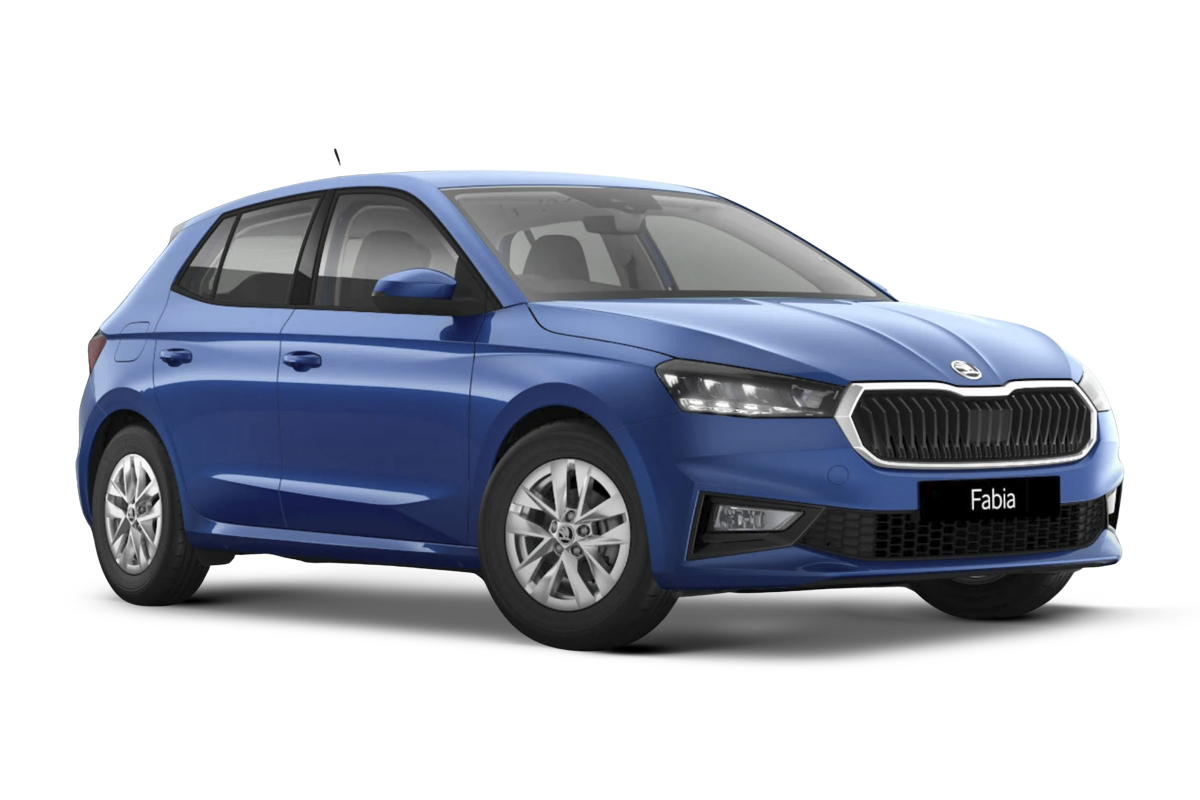
The limited-edition Fabia 130 goes a step further, winding the 1.5’s power figure up to 174bhp to make it the quickest Fabia available (0-62mph takes 7.4sec). The engine has a higher level of mid-range shove and feels less strained than other 1.5s used in other Skodas, but it ultimately doesn’t have the outright shove provided by the 2.0-litre-engined VW Polo GTI. The 130’s automatic gearbox isn’t as snappy as the Polo GTI’s, either, even in manual mode.
Suspension and ride comfort
Those who want a smooth, pampering ride will find the Fabia is one of the best options for this. It’s softer than the Renault Clio and the Seat Ibiza, and very similar to the Peugeot 208 for its ability to isolate you from lumps and bumps in the road.
Around town and on A-roads, the Fabia rides almost all dips and divots very well. The payoff is that it pitches around a bit, swaying your head from side to side, but the effect is gentle and better controlled than the Citroën C3. In this respect, it manages to just edge the Polo, which fidgets slightly more at slow speeds.

Handling
The Fabia’s steering is usefully light for city driving and tough to fault for accuracy, but it's worth using the Sport driving mode (optional as part of the Convenience Package) for more reassuring weighting when driving along faster, winding roads.
Either way, there’s plenty of grip in corners but also a fair amount of body lean. The Renault Clio and Seat Ibiza are better choices if you want a taut, agile small car that will put a smile on your face.
The Fabia 130 comes with a 15mm lowered ride height, sports suspension and slightly sharper steering. While this helps it feel a bit more composed, it isn’t especially sharp or fun in the corners. The Polo GTI is more precise and doesn’t cost much more.
Noise and vibration
The Fabia's five and six-speed (available if you go for the 1.0 TSI 116 engine) manual gearboxes are light and easy to use, if not as positive as equivalents in the Clio and Ibiza. The clutch and brakes respond consistently, making it an easy car to drive deftly in traffic.
In terms of engine noise, the 1.0 TSI engines boom and babble a bit, with small vibrations felt through the floor when you wind them up, but it’s no worse than in rivals. They’re hushed when you drive sedately, though, and you'll barely hear them at all when cruising on the motorway.
There's some suspension noise on broken roads but otherwise refinement is impressive and the Fabia is a quieter cruiser than the Clio and Ibiza.
“Personally, I'd spec the Fabia with the smallest, 16in wheels, which keep road noise to an absolute minimum and enhance the already impressive ride.” – Will Nightingale, Reviews Editor
Interior
The interior layout, fit and finish
Strengths
- +Comfortable driving position
- +Simple control layout
- +Great all-round visibility
Weaknesses
- -Some rivals use plusher materials
Driving position and dashboard
The Skoda Fabia’s driving position is excellent and it’s easy to set everything up just how you want it, with all trims offering height-adjustable front seats with manual lumbar adjustment, helping to keep your posture on long journeys. On top of that, the seat itself is comfortable and offers plenty of shoulder support.
Entry-level SE Edition trim comes with an 8.0in digital driver's display, while the rest of the trim levels get a larger 10.25in one that offers a wide range of layouts and customisation.
There are proper buttons and dials to control the air conditioning, so changing the interior temperature isn't too distracting (in the Peugeot 208 you have to use small icons on the infotainment touchscreen).
Visibility, parking sensors and cameras
The Fabia is much easier to see out of than in the 208 and Vauxhall Corsa. For starters, the windscreen and middle pillars are much thinner than they are in those rivals, so you have a clearer view out at junctions and roundabouts.
The rear glass area is larger than on most small cars – including the Renault Clio – while all trim levels have rear parking sensors to help make parking easier. SE L Edition trim and above get a rear-view camera, while Monte Carlo and 130 models also get front parking sensors (they’re both optional as part of the Convenience Package on cheaper trims).
Basic LED headlights are fitted to all versions for good visibility at night. Full LED headlights are optional on all models and standard on Monte Carlo Edition and 130.

Sat nav and infotainment
Cheaper Fabias come with an 8.25in infotainment touchscreen that’s slightly better than the setups in most small cars. SE L Edition gets a larger, 9.2in screen that looks sharp and responds quickly enough to inputs, but you end up losing the physical rotary dials (for volume and scrolling down menus).
All Fabias have wireless Android Auto and Apple CarPlay smartphone mirroring, which is especially helpful because only the larger system comes with sat-nav.
You also get DAB radio, Bluetooth and a punchy six-speaker stereo. There are USB-C sockets in the front, and for a small charge you'll get a couple more in the back and one under the rear-view mirror (for windscreen-mounted devices). Wireless phone-charging is available as an option.
Quality
The Fabia’s interior is far from plush, but neither is it at all offensive. It's smarter than the Hyundai i20 interior for example, and not far behind the Seat Ibiza and VW Polo – although both those cars have a much nicer feeling soft-touch dashboard, while the Fabia's is rock hard.
If you want a small car that’s smarter inside, have a look at the Renault Clio – its interior uses a wider range of soft materials and trim finishers.
You do get some fabric covered areas on the dashboard to add a bit of variety, but otherwise it’s tad bland. Top-spec Monte Carlo Edition adds some red decorative elements to the dashboard. There’s a strip of ambient lighting on the dash, but the Polo has more on the dash and doors to make it more appealing in the dark.
“You get some really useful and thoughtful features in the Fabia. Car iced up and you don't have an ice scraper? No worries, there’s one stored in the petrol flap. Raining outside? There’s an umbrella in the driver’s door.” – Dan Jones, Senior Reviewer
Passenger & boot space
How it copes with people and clutter
Strengths
- +Plenty of head and leg room up front
- +Impressive boot
- +More rear space than a Renault Clio
Weaknesses
- -A Honda Jazz has more versatile rear seats
Front space
The Skoda Fabia offers plenty of space for those sitting in the front. You don't get quite as much as you do in the Honda Jazz but there’s still oodles of head and leg room for anyone over 6ft tall. You won’t feel pinched at the sides, either, thanks to the generous width (for the class) between the doors.
There’s storage space to match, including well-sized door bins, trays, cubbies and a massive glovebox.
Rear space
The rear space in the Fabia isn’t quite up to the standards set by the Jazz. It matches the Seat Ibiza, though, and is far more accommodating than the back of the Renault Clio.
As long as the front seats are not slid all the way back, you’ll be able to carry two tall rear passengers without them moaning. It’s a tighter squeeze for three adults, while a hump on the floor hampers foot space for the person in the middle. That said, three children will fit just fine. If you need a bit more all-round space, consider the Skoda Kamiq small SUV.
There are some handy touches in the back, including pockets on the backs of the front seats for maps and mobile devices.

Seat folding and flexibility
This is where the Fabia falls behind the Jazz, which rules the roost here thanks to its flip-up rear seat bases that create more storage options.
Skoda gives you 60/40 split folding rear seats, which is par for the course among small cars and isn’t as versatile as the 40/20/40 split in slightly larger – and admittedly more expensive – family cars such as the Mercedes A-Class.
For even more flexibility, such as sliding rear seats, you’ll want to look at small SUVs including the Renault Captur or VW T-Cross.
Boot space
The Fabia has a 380-litre boot, and we managed to fit six carry-on suitcases below the parcel shelf. That’s impressive for the class, beating all of its rivals and matching the Dacia Sandero. It’s one more than the VW Golf, which sits in the class above.
There are lots of accessories available to add versatility. If you pay extra for the Simply Clever Package, you'll get nets to stop items sliding around and clip-on devices to divide up the boot.
There's a pronounced drop down from the opening to the boot floor, but this can be mitigated by adding an optional height-adjustable boot floor – it’s not hugely expensive, but it is something you get as standard on the Renault Clio.
“My wife often rides in the back of cars with our daughter, and reckons it can get really stuffy when there aren't rear air vents. Fortunately, these are fitted to higher-spec Fabias.” – Steve Huntingford, Editor
Buying & owning
Everyday costs, plus how reliable and safe it is
Strengths
- +Good standard equipment levels
- +Competitive pricing
- +Good fuel economy
Weaknesses
- -Hybrid rivals will be more efficient
Costs, insurance groups, MPG and CO2
As a cash purchase, the entry-level Skoda Fabia is competitive, closely matching the Seat Ibiza, undercutting the VW Polo and costing only slightly more than the Peugeot 208 and Vauxhall Corsa. A Renault Clio is cheaper, though, while the Dacia Sandero manages to seriously undercut the Fabia on price, as it does with all small cars.
Meanwhile, if you’re buying on PCP finance, you’ll be happy to know that the Fabia is predicted to hold its value pretty well, depreciating at the same rate as the Polo and slower than all of its other rivals except the Honda Jazz. That can help to keep monthly payments down.
Our chosen 1.0 TSI 95 engine managed a real world fuel efficiency figure of 45.7mpg, which is pretty good but slightly less than the Clio TCe 90 (46.3mpg). You can’t have the Fabia with hybrid tech, like you can the Jazz and Toyota Yaris, so it won’t be as economical as those rivals, especially around town.
Equipment, options and extras
Entry-level SE Edition is the trim level we’d go for because it keeps costs down but still gives you plenty of standard kit. That features list includes 15in alloy wheels, keyless engine start, dual-zone air conditioning, cruise control, automatic LED headlights, wipers and other goodies.
Design Edition adds larger 16in wheels and the larger digital driver's display, but if you want more kit, the SE L Edition makes a more notable difference. It's not much more expensive and adds electrically adjustable, heated and folding door mirrors, a rear-view camera and an upgraded infotainment system.
Top-of-the-range Monte Carlo trim gives everything a sportier edge, introducing 17in alloy wheels into the mix, alongside sportier styling, artificial leather and fabric sports seats, and carbon-fibre-style details on the dashboard.
The 130 gets all of the above, except it has 18in wheels, sporty twin exhaust pipes and an extended black rear spoiler. It’s not really worth the price premium, though, even considering the extra performance and rarity – only 650 Fabia 130s are coming to the UK.

Reliability
Skoda came 16th out of 30 manufacturers in the latest What Car? Reliability Survey. That’s a decent showing, and puts the Czech brand above Ford, Seat and Volkswagen. Toyota and Vauxhall did even better, though.
You get a three-year, 60,000-mile standard warranty with your Fabia, but that isn’t all that special among small cars, matching the Jazz, Ibiza and Polo. It certainly has nothing on the five-year, unlimited mileage warranty you get with the Hyundai i20 or up to 10 years with a Toyota Yaris.
Safety and security
When it comes to safety, the latest Fabia was awarded five stars out of five when it was tested by Euro NCAP in 2021, so it should do a good job of protecting you and your occupants if an accident proves unavoidable.
Both the Ibiza and Polo also scored five star ratings, but it’s impossible to directly compare them with the Fabia’s result, as they were both tested in 2022 under stricter testing.
Either way, you get plenty of standard safety equipment with the Fabia, including automatic emergency braking (AEB), lane-keeping assist, traffic-sign recognition and driver drowsiness detection.
“The optional Safety Package is worth considering because it brings a knee airbag for the driver and rear side airbags.” – Claire Evans, Consumer Editor
Buy it if…
- You want a small car with a bit more boot space
- A comfortable ride is important to you
- You prioritise affordability
Don’t buy it if…
- You’re looking for a small car that’s fun to drive
- A high-quality interior is a high priority
- You want hybrid tech that boosts fuel efficiency
For all the latest reviews, advice and new car deals, sign up to the What Car? newsletter here
FAQs
Skoda placed a respectable 16th out of the 30 manufacturers included in our 2025 What Car? Reliability Survey. If anything does go wrong, you get a three-year/60,000-mile standard warranty.
We’d go for the 1.0 TSI 95, because it best balances performance and costs. What’s more, it should be pretty efficient, managing 45.7mpg in our real-world tests.
While Volkswagen is Skoda’s parent company, meaning they share some parts, the Fabia and Polo are different cars.
The Fabia is one of the best small cars on sale, offering a spacious interior with a big boot and good value for money.
| RRP price range | £21,070 - £30,010 |
|---|---|
| Number of trims (see all) | 5 |
| Number of engines (see all) | 2 |
| Available fuel types (which is best for you?) | petrol |
| MPG range across all versions | 51.7 - 56.5 |
| Available doors options | 5 |
| Company car tax at 20% (min/max) | £1,076 / £1,458 |
| Company car tax at 40% (min/max) | £2,151 / £2,916 |

