Slideshow
The most and least reliable family cars
In our annual Reliability Survey, we ask readers to rate the dependability of cars aged up to five years old. Here we list the most and least reliable family cars in the UK...

Claire Evans
Updated: 12 June 2026
What Car? Reliability Survey: Most and least reliable family cars
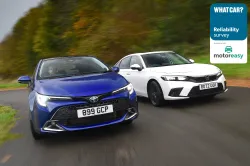
Family hatchbacks are the bread and butter of the car world. They remain popular with private buyers and company car drivers alike, despite the rise in demand for SUVs.
That means there are plenty of used examples to choose from, but as our Reliability Survey data shows, not all family cars will provide problem-free motoring. In fact, this class had one of the lowest average scores of all the classes in this year's survey, with a score of 91.1% for cars aged up to five years old.
The good news is that there are also some highly dependable models, including the previous generation Skoda Octavia and the BMW 1 Series. And, if you're after a hybrid model, the Mercedes A-Class and Hyundai Ioniq should be on your shortlist.
The most common problems suffered by family cars are electrical issues, in particular problems with the infotainment systems, so it's worth checking this out if you're looking at buying a used model.
For this story, we've pulled out all the data is for family cars aged up to five years old.
Slideshow story: please click the right-hand arrow above to continue, or simply scroll down if you’re reading on your mobile
advertisement
scroll for more
10: Kia Ceed (2018-present)
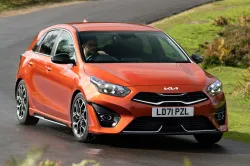
Reliability rating 94.6%
The regular Ceed is almost as bulletproof as its slightly rugged sibling, the XCeed, which is in seventh place in our family hatchback class, with a score of 95.6%. Both cars are good value for money, and have plenty of room for four adults and a roomy boot.
Owners told us 20% of their Ceeds went wrong, with problems occurring with the engine, gearbox and interior trim. Problem areas included the 12-volt battery, bodywork and non-engine electrical systems including the sat-nav/infotainment system. Although all remedial work was done for free, three-quarters of faulty cars spent more than a week in the workshop.
- Most common faults: engine 10%, gearbox/clutch 5%, interior trim 5%
- Average repair cost: £0
- Typical time off road: 75% more than a week
9: Ford Focus petrol (2018-present)
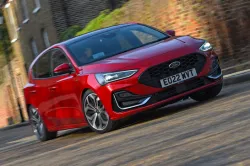
Reliability rating 94.9%
It may be one of the most common family cars, but the Focus is also one of the best drivers' cars in this class, with entertaining handling and a range of punchy engines. It's also a practical proposition, with lots of space and a large boot.
Pick a petrol model if you're after a reliable Focus: petrol models have a 9% fault rate compared with 33% for diesels. Problem areas included the 12-volt battery, bodywork and non-engine electrical systems including the sat-nav/infotainment system. All faulty cars could still be driven, but 53% spent more than a week in the workshop. At least all remedial work was done for free.
- Most common faults: sat-nav/infotainment system 7%, 12-volt battery 5%, bodywork 5%, non-engine electrics 5%
- Average repair cost: £0
- Typical time off road: 53% more than a week
8: Mini Clubman (2015-2024)
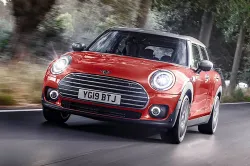
Reliability rating 95.5%
The Clubman estate version of the Mini isn't the most roomy family car, but it's fun to drive and most cars were highly specced when new, so there should be lots of well-equipped secondhand examples to choose from.
The bodywork was the only area that gave Clubman owners any cause for concern, with 15% of them saying they'd had problems. While all cars were fixed in less than a week, two-thirds of them in a day or less, Mini wasn't up there with the best brands for covering the cost of repairs. Mini paid for 33% of remedial work, but owners whose cars weren't fixed for free were asked to pay between £50 and £500.
- Most common faults: bodywork 15%
- Average repair cost: 33% £0, 67% up to £500
- Typical time off road: 66% less than a week
7: Kia XCeed (2019-present)
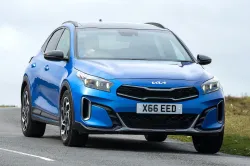
Reliability rating 95.6%
The XCeed is a slightly chunkier, SUV-styled version of Kia's Ceed family car. It shares the Ceed's engines and other mechanical parts, and benefits from the brand's seven-year new car warranty.
Bodywork issues were the main complaint from the 21% of XCeed owners who reported a fault with their car. There were also some concerns about the 12-volt battery and sat-nav/infotainment system. All cars were fixed in less than a week, a third of them were rectified in a day or less. While Kia paid for the work on 67% of cars, the remaining owners were asked for up to £200 to get their cars fixed.
- Most common faults: 2-volt battery 4%, sat-nav/infotainment system %
- Average repair cost: 67% £0, 33% up to £200
- Typical time off road: one day to a week
6: Toyota Corolla (2018-present)
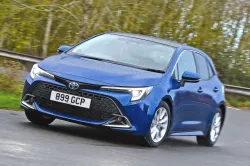
Reliability rating 96.4%
The Corolla is an unusual family car because it's only available as a regular hybrid rather than a mild hybrid or plug-in hybrid. That means it's more efficient than a conventional petrol model, but it doesn't have to be charged up to maintain the lowest running costs. It'a also comfortable, well-equipped and comes with lots of standard kit.
Electrical and bodywork issues and problems with the 12-volt battery were the main bugbears of the 15% of Corolla owners who told us their car had gone wrong. They told us that 84% of cars were fixed for free and none of the remaining bills exceeded £200. The primary disappointment is that nearly a third of cars were rendered undriveable by faults and 28% were out of action for more than a week.
- Most common faults: 12-volt battery 5%, bodywork 3%, non-engine electrics 3%
- Average repair cost: 84% £0
- Typical time off road: 64% one day or less, 28% more than a week
5: Hyundai Ioniq hybrid (2016-2022)
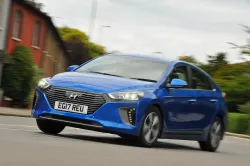
Reliability rating 96.5%
The Ioniq was the first car to be offered on sale with three forms of electrification: there was a hybrid (HEV) model that combined a petrol engine with an electric motor, a plug-in hybrid (PHEV) version with a bigger battery that you could charge externally, and an electric vehicle (EV).
The hybrid version is the most rewarding to drive, and it's also more robust than the electric model: 20% of Ioniq hybrids went wrong, but 47% of electric models had a problem. The bodywork, brake system and sat-nav/infotainment system were the main headaches for hybrid owners. The good news is that 75% of cars were fixed in a day or less, Hyundai paid for 88% of repairs, and those who had to pay weren't asked for more than £200 each.
- Most common faults: sat-nav/infotainment system 13%, bodywork 7%, brake system 7%
- Average repair cost: 88% £0
- Typical time off road: 75% less than a day
4: Honda Civic (2022-present)
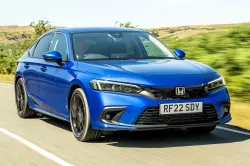
Reliability rating 97.6%
Honda has a longstanding reputation for building robust cars that soldier on for many years with hardly any issues, and the latest Civic is a prime example of one of its highly dependable models. The Civic drives well, sips fuel slowly and is roomy enough for a family of four.
The latest Civic has suffered with far fewer faults than its predecessor, according to owners: 8% of new models went wrong, compared with 27 of previous generation examples. Issues with the steering system was the only area they highlighted. Although Honda covered the cost of all repairs, all faulty cars were off the road for more than a week.
- Most common faults: steering 8%
- Average repair cost: £0
- Typical time off road: more than a week
3: BMW 1 Series (2019-2024)
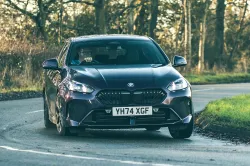
Reliability rating 98.6%
Don’t discount the 1 Series because it’s BMW’s cheapest model. It's a great compact family hatchback that's good to drive and has a real premium feel inside and out. Whichever version you choose, you'll also get one of the best, and easiest to use, infotainment systems.
The recently replaced 1 Series is also the brand's most dependable. Only 8% of owners encountered hiccups, with mainly non-engine electrical gremlins. All cars remained driveable, and two-thirds were fixed in less than a week. Eighty-three percent of repairs were done gratis; 17% of owners paid up to £100.
-
- Most common faults: non-engine electrics 4%, air-con 1%, bodywork 1%, brakes 1%, engine 1%
- Average repair cost: 83% £0
2: Mercedes A-Class hybrid (2018-present)
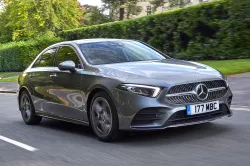
Reliability rating 98.7%
The A-Class is the smallest and most affordable Mercedes you can buy, but it's a good choice because it's classy, comfortable, good to drive and loaded with lots of useful, cutting-edge technology.
Hybrid versions of the A-Class go wrong less often than petrols (11% versus 21%), and when they do, they’re quicker and cheaper to fix. The only area to give any cause for concern was the interior trim. All faulty hybrids were fixed for free in a day or less, whereas some petrol cars cost up to £300 and took more than a week to put right.
- Most common faults: interior trim 11%
- Average repair cost: £0
- Typical time off road: less than a day
1: Skoda Octavia petrol (2013-2020)
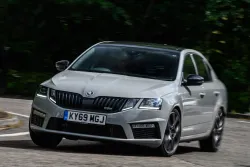
Reliability rating 99.3%
Although this generation of the Octavia is only available used, it's still worth considering if you want a family hatchback that's comfortable, well kitted out and extremely spacious. It's also cheap to buy and pretty affordable to run, especially if you opt for a diesel model or the fairly recent 1.0 TSI 115 three-cylinder petrol engine, which has an official economy figure of 58.9mpg.
Petrol versions of the previous-generation Octavia gain a near-perfect reliability rating. This makes it a much better bet than the latest version (see below), with just 6% suffering glitches. All issues were inconsequential, too, because they didn’t cause any breakdowns and were put right in less than a day. Plus, all work was done for free.
Owner’s view: “I love my Octavia’s dependability; it never lets me down.”
- Most common faults: fuel system 6%
- Average repair cost: £0
- Typical time off road: less than a day
Least reliable family cars - 3: Skoda Octavia (2020-present)
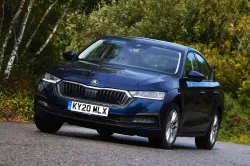
Reliability rating 80.3%
The latest Octavia has many strong points: it's well-priced, practical and comes with a choice of sprightly engines. However, If you're after a dependable Octavia, you may want to seek out a previous generation model, rather than the latest one because the former has far less issues.
Problems with non-engine electrical systems, in particular sat-nav/infotainment, blighted the latest Octavia, accounting for 52% of all reported faults. Overall, 35% of cars had a problem; most could still be driven, but 52% were out of action for more than a week. Skoda stumped up for 97% of repairs, though.
- Most common faults: sat-nav/infotainment 29%, non-engine electrics 23%, air-con 10%, bodywork 10%, 12-volt battery 3%, engine 3% gearbox/clutch 3%, steering system 3%
- Average repair cost: 97% £0
- Typical time off road: 52% more than a week
Least reliable family cars - 2: Seat Leon (2020-present)
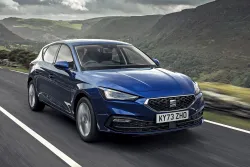
Reliability rating 74.2%
What went wrong?
The Leon is a great all-rounder: it's rewarding to drive, well equipped and roomy, especially for back seat passengers. Although it shares its underpinnings and engines with the Volkswagen Golf, it trumps its sibling in many areas.
However, a high fault rate puts the Leon in the bottom three: 58% of the cars reported on went wrong, most with sat-nav/infotainment problems. These were slow to resolve, with 62% of cars sitting in workshops for more than a week. However, Seat covered the cost of 97% of fixes, easing some of the pain.
- Most common faults: Sat-nav/infotainment 44%, non-engine electrics 22%, bodywork and interior trim 11%, engine electrics 7%, gearbox/clutch 7%, battery 4%
- Average repair cost: 97% £0
- Typical time off road: 62% more than a week
Least reliable family cars - 1: Volkswagen Golf diesel (2020-present)
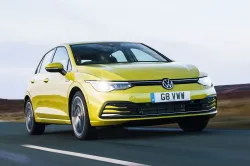
Reliability rating 70.4%
In many ways the Golf is a highly recommendable family car: it has tidy handling, a range of strong and frugal engines and the latest cars have an upgraded interior that is better than many rivals.
However, the Golf has been plagued by issues with infotainment and other electrical systems, with diesels also suffering gearbox glitches. Thirty percent went wrong, a third taking at least a week to fix. Only 41% were fixed for free; 11% of owners faced bills of £1000 or more.
Owner's comment: "A lot of the electrical technology has been very unreliable and took several updates to work properly."
- Most common faults: Gearbox/clutch 11%, sat-nav/infotainment 11%, non-engine electrics 11%, air-con 8%, bodywork 8%, brakes 5%, engine 5%
- Average repair cost: 41% £0, 11% more than £1500
- Typical time off road: 35% one day to a week, 33% more than a week
advertisement
scroll for more
News and advice
Sponsored
The 10 fastest-depreciating electric cars
News
Complete the What Car? EV charging survey
News
Deal of the Day: Lease a BMW iX2 from £294 per month
Best of

Cheapest electric cars: the UK's 10 most affordable EVs ranked
News

What Car? Reader Award: vote for the most exciting new car of 2027
News