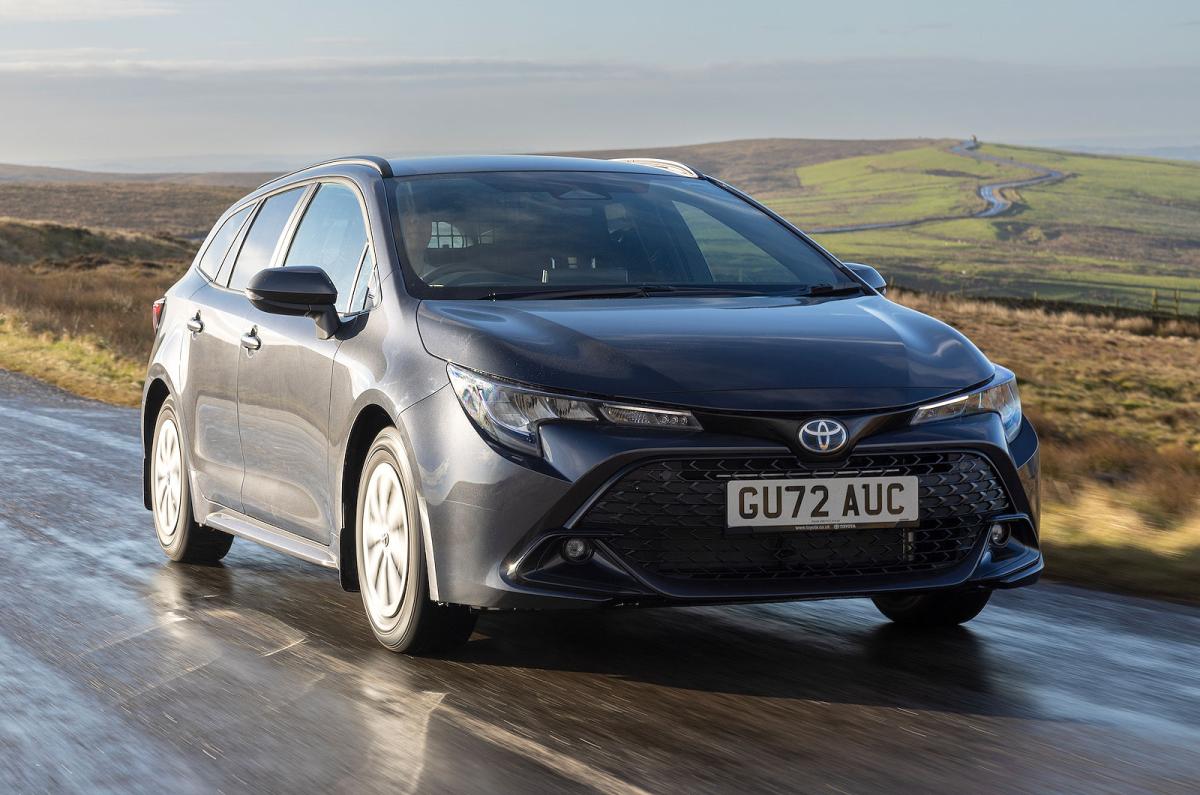
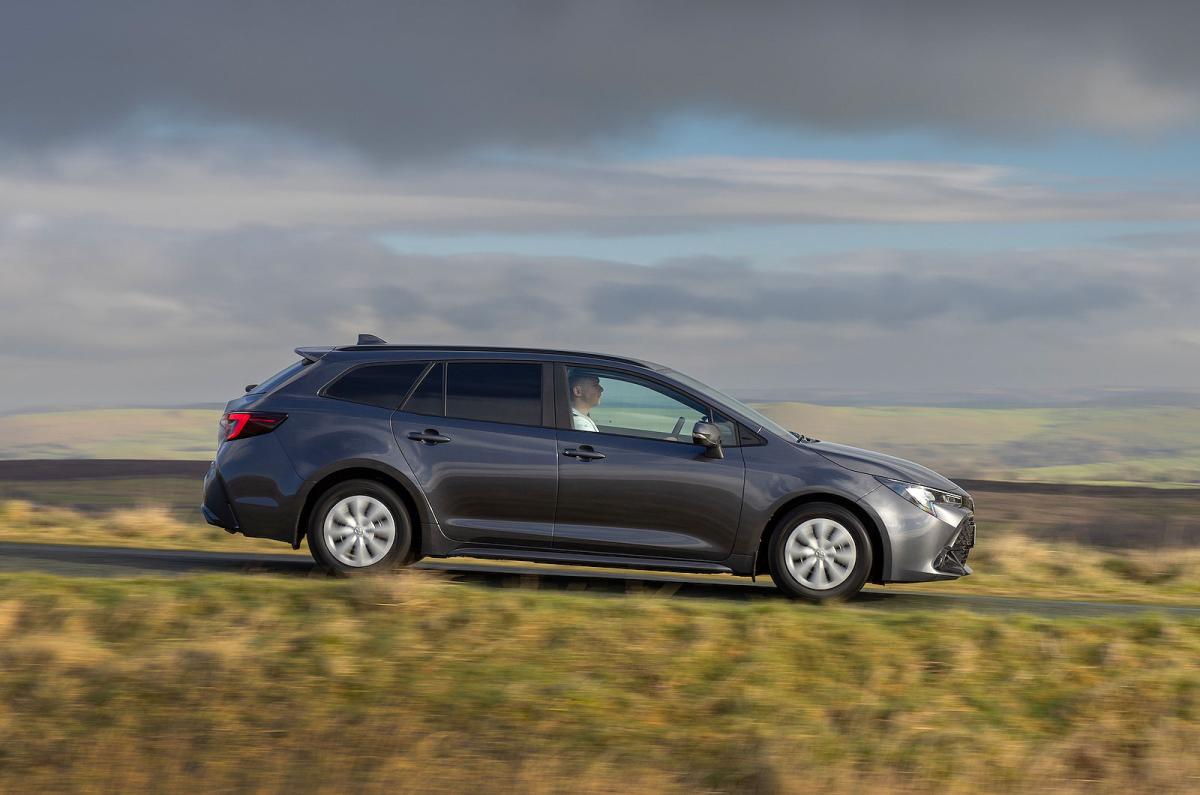
- Toyota Corolla Commercial front right tracking
- Toyota Corolla Commercial right tracking
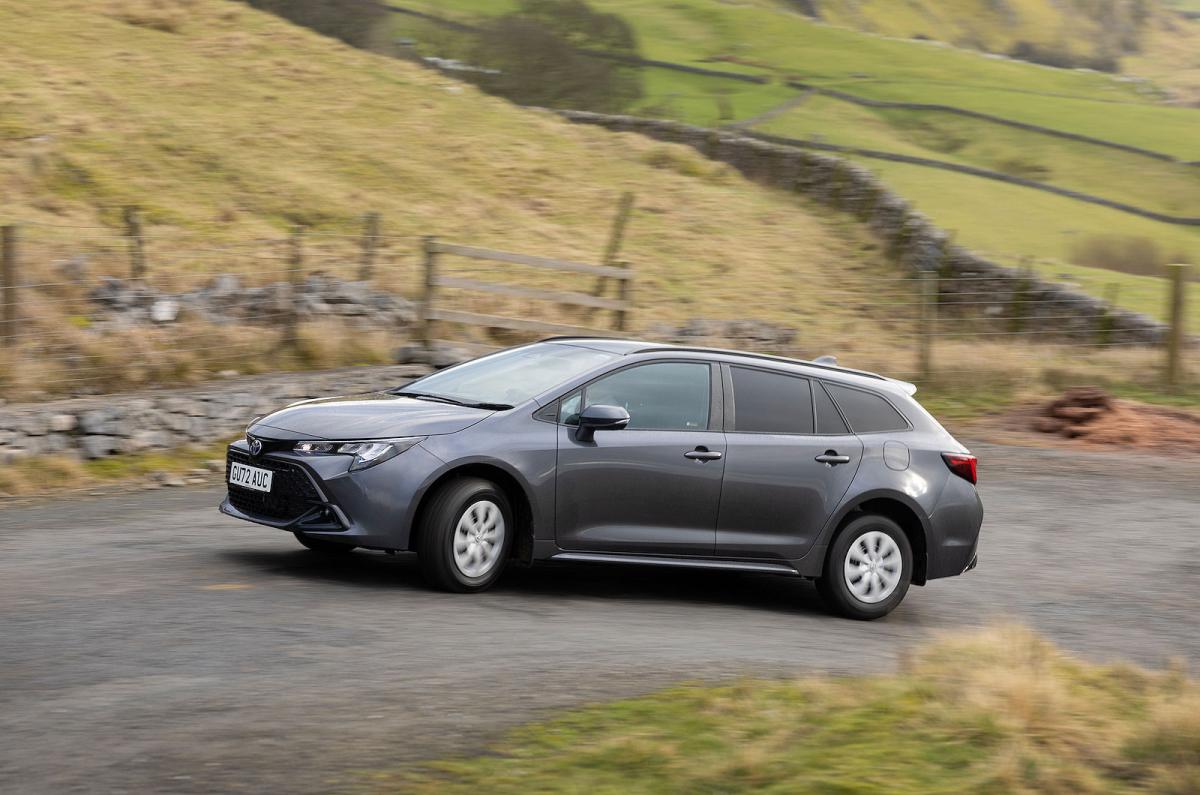
- Toyota Corolla Commercial front cornering
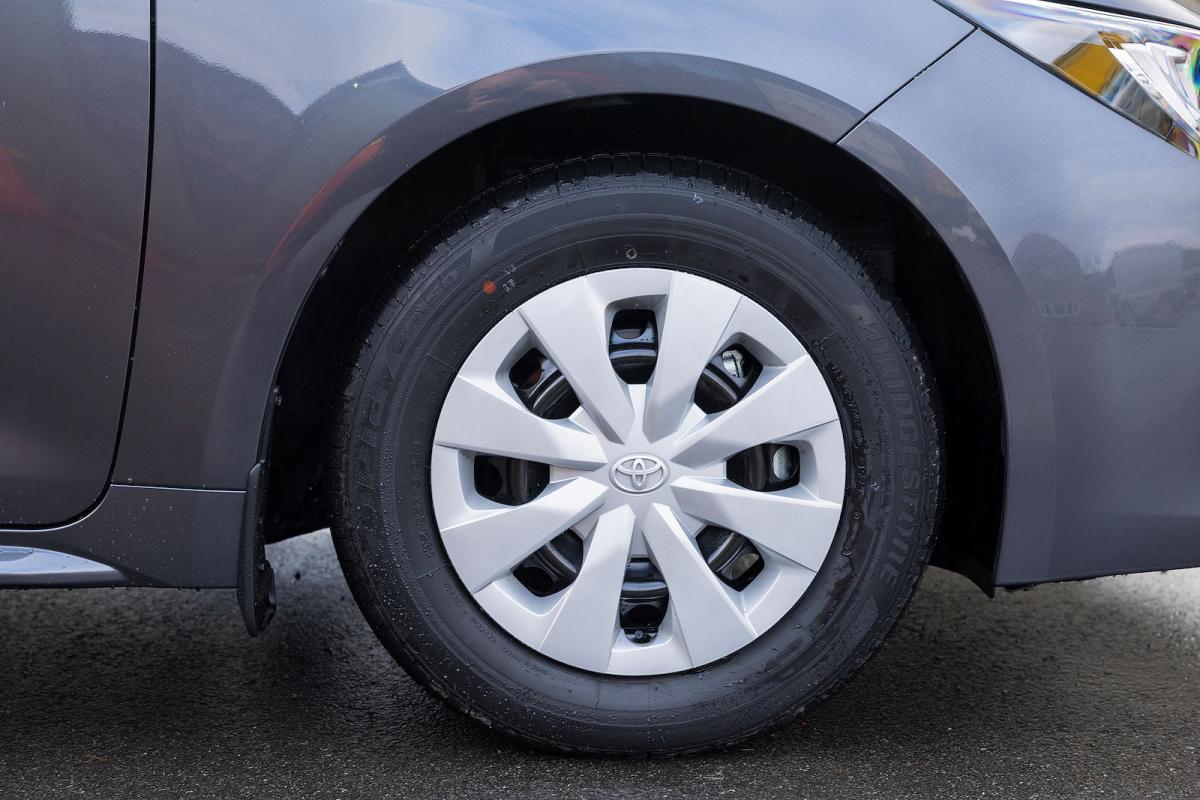
- Toyota Corolla Commercial wheel detail
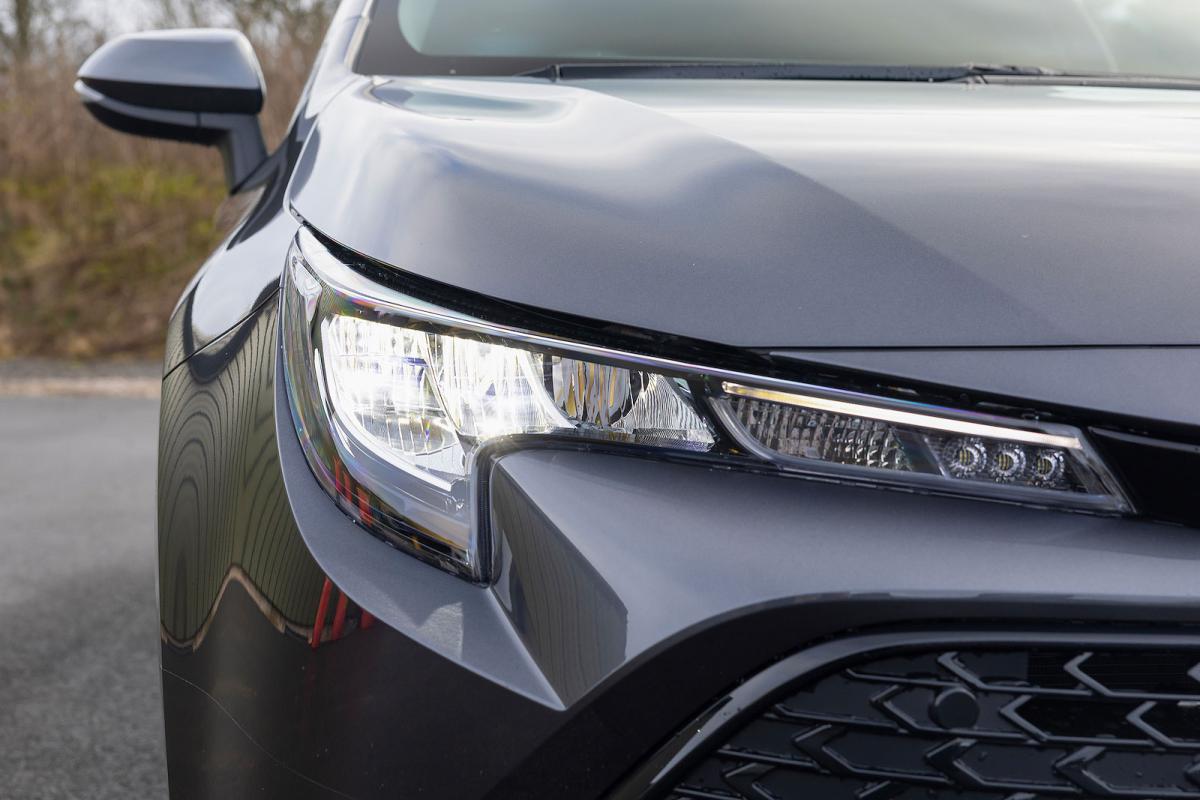
- Toyota Corolla Commercial headlights detail
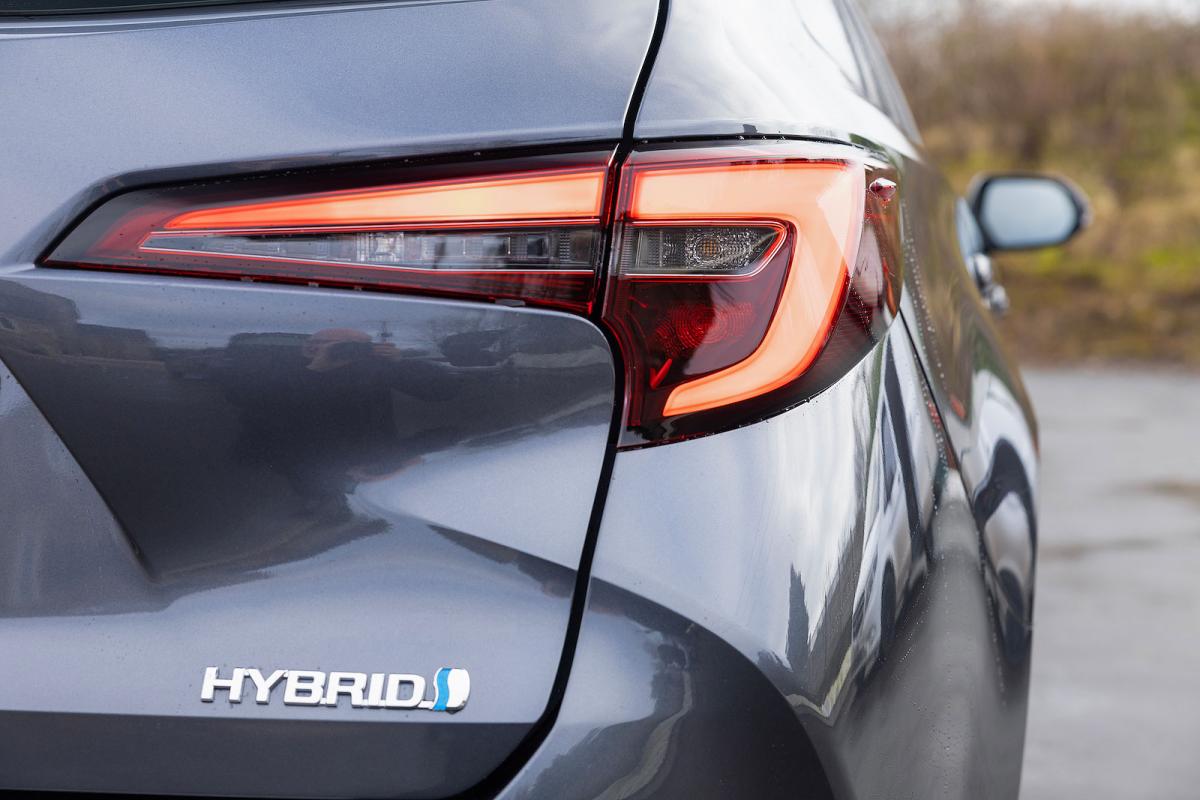
- Toyota Corolla Commercial rear lights detail
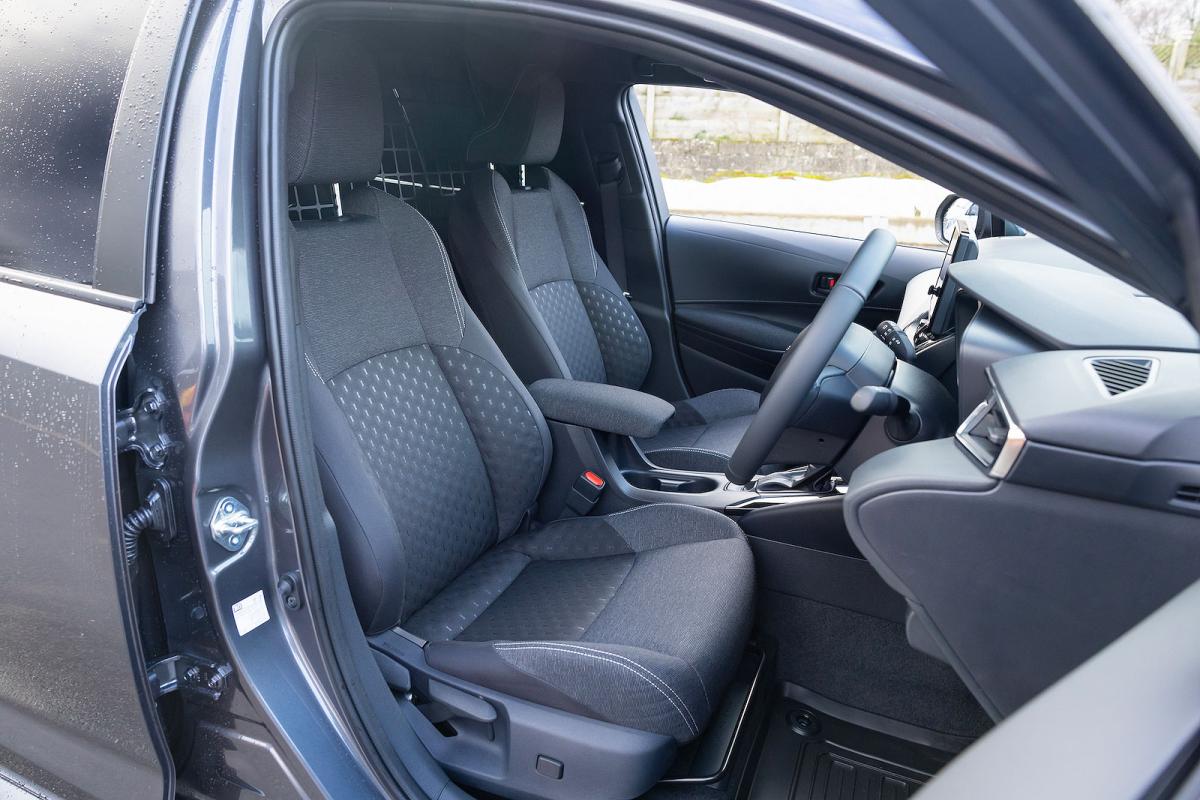
- Toyota Corolla Commercial interior front seats
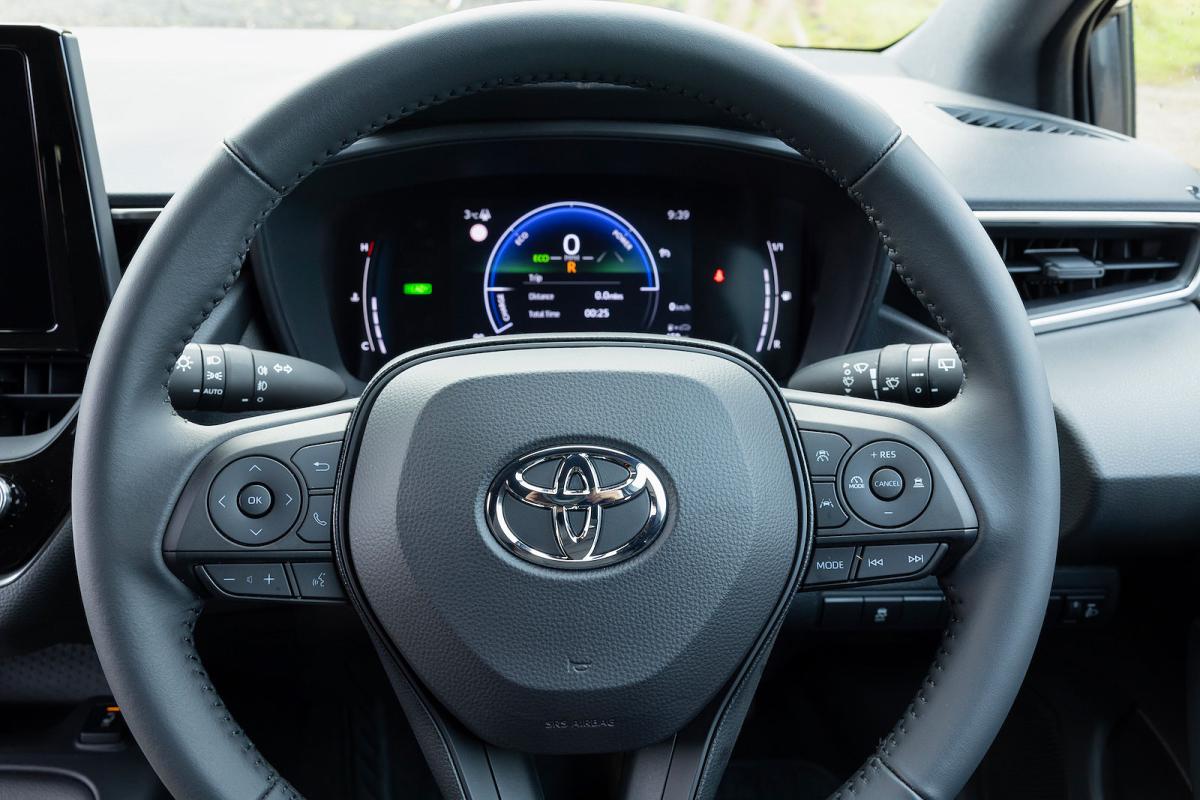
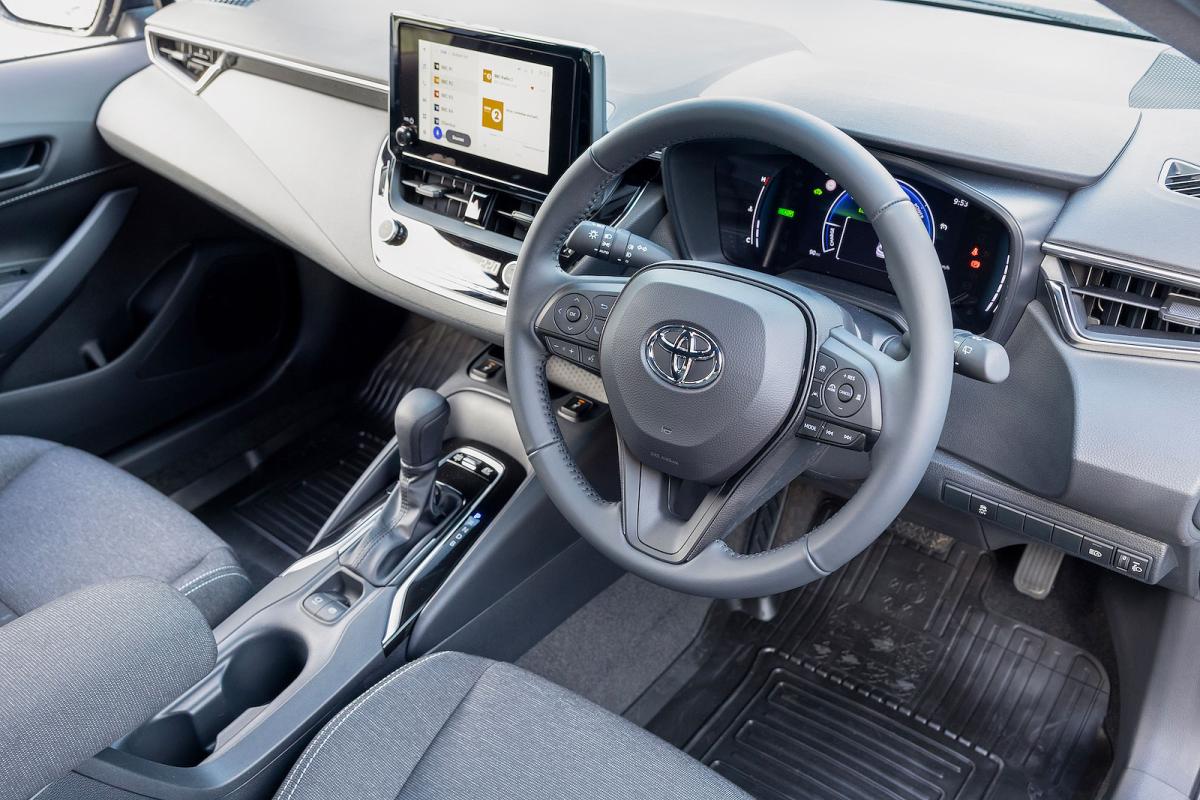
- Toyota Corolla Commercial interior steering wheel detail
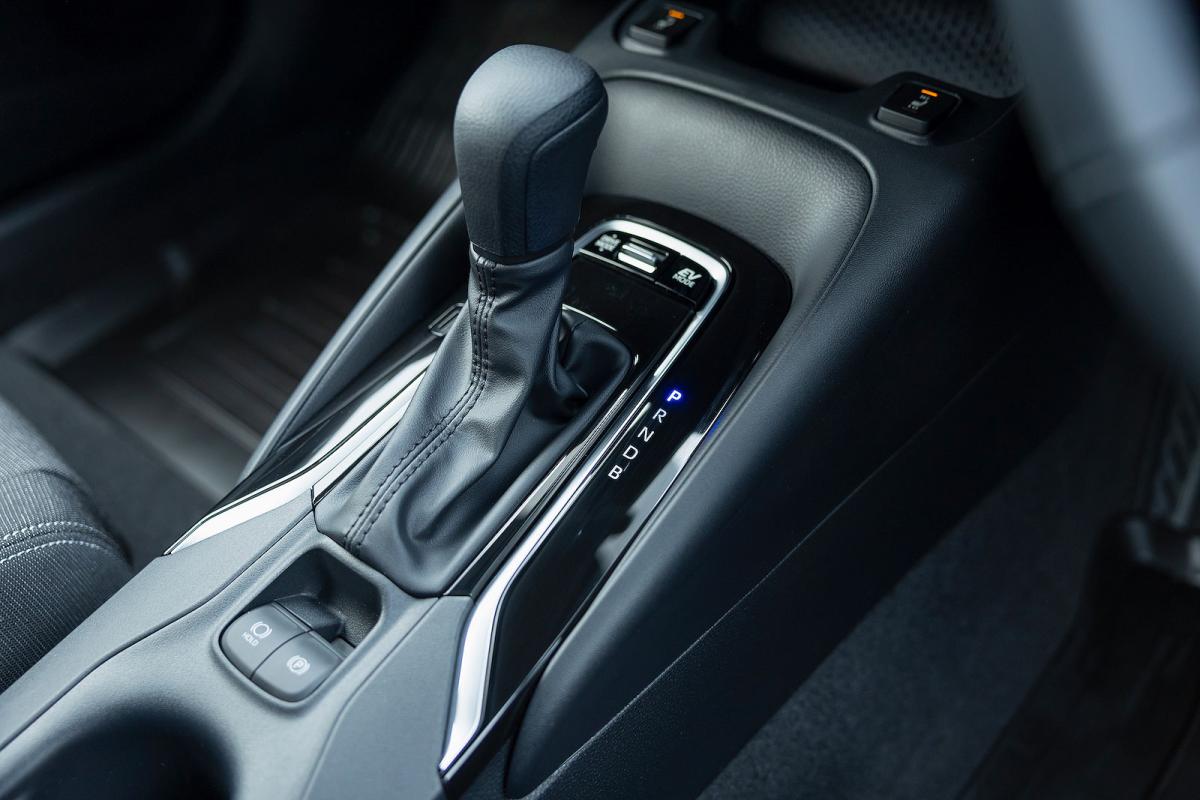
- Toyota Corolla Commercial interior detail
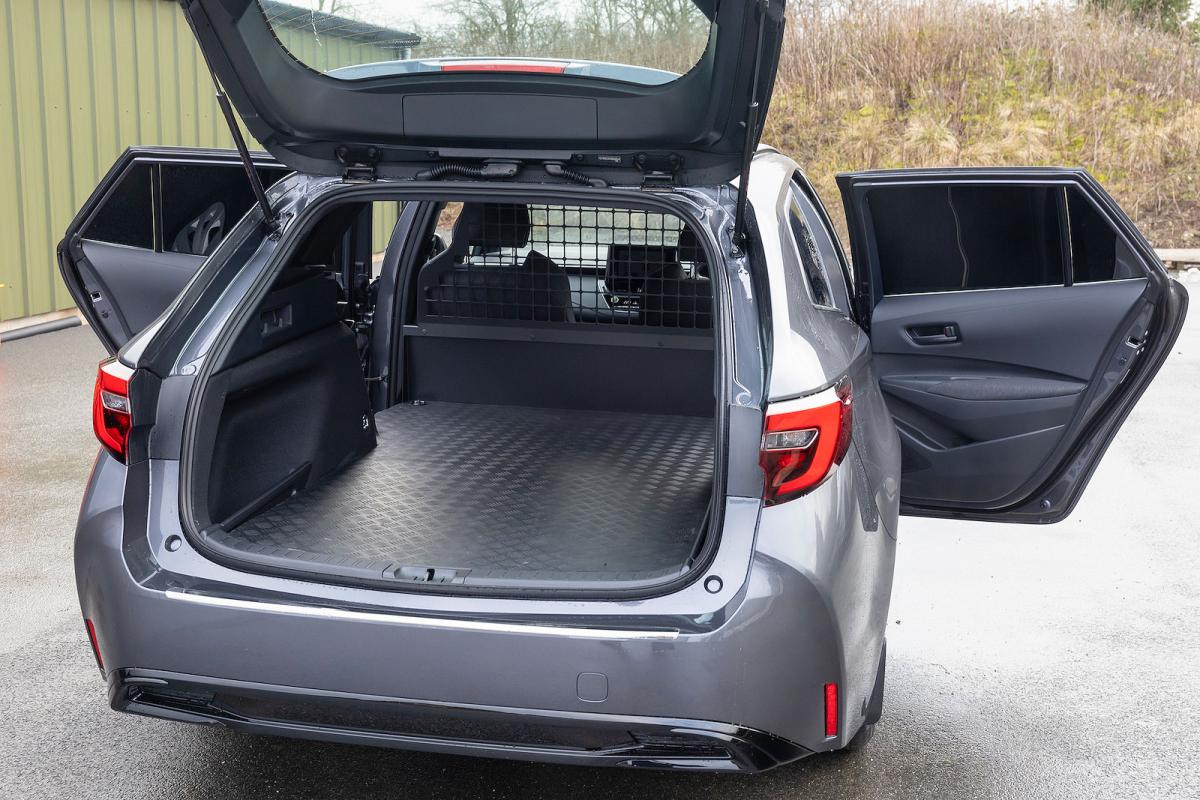
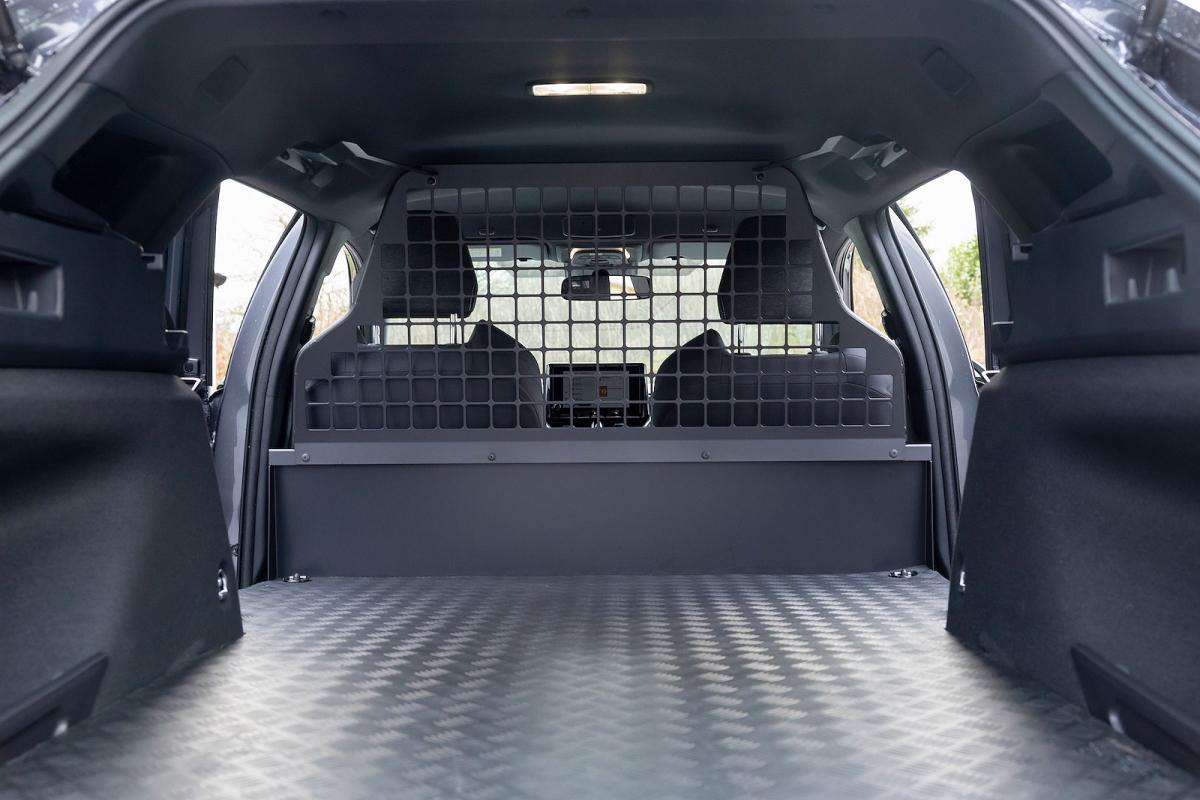
- Toyota Corolla Commercial load bay
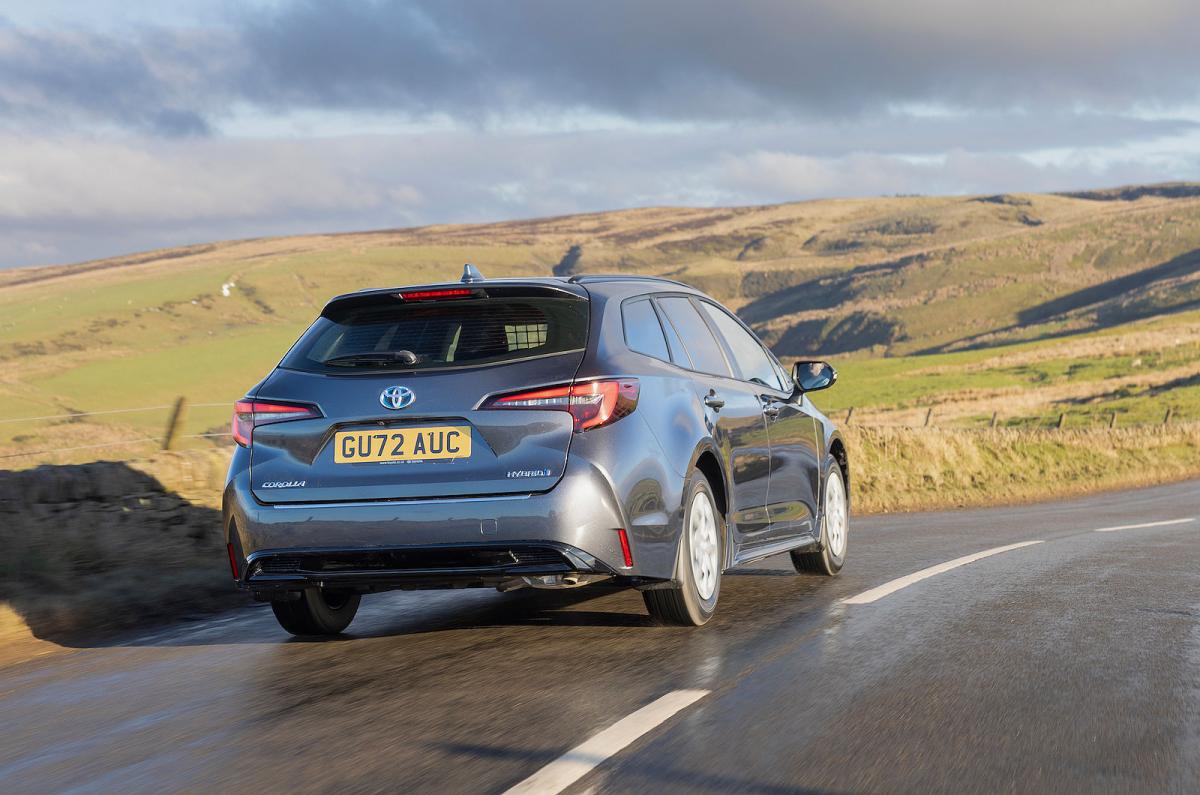
- Toyota Corolla Commercial rear cornering
- Toyota Corolla Commercial interior dashboard
- Toyota Corolla Commercial load bay
- Toyota Corolla Commercial interior infotainment


What is What Car? best price?
The What Car? best price shows you the cheapest way to buy your new car, whether it's by choosing an in-stock car through our partner Autotrader or placing a factory order.
Available now from: £29,500
RRP from: £30,845
About our price indicator
What Car? indicative Personal lease example (subject to status)
1.8 VVT-h Icon Hatchback 5dr Petrol Hybrid CVT Euro 6 (s/s) (140 ps)
| Expected annual mileage | 5000 |
| Term months | 48 |
| Deposit months | 12 |
| Monthly payment | £274.53 |
| Initial payment | £3,294.36 |
Step-by-step
Leasing works a bit like a long-term rental. You drive it, but you don’t own it.
- Choose your car, pick your terms and apply for lease credit online
- Pay monthly rental payments for your chosen term length
- Drive it, enjoy it, then give it back at the end
What you get
When you lease with Autotrader you get all of this:
- Full manufacturer’s warranty
- Road tax and roadside assistance included
- No admin fees
- Free returns within 30 days*

- Lower total monthly cost than PCP/HP
- No balloon payments
- Road tax included
Figures for 1.8 VVT-h Icon CVT Euro 6 (s/s) 5dr
Introduction
It's wise to wear boots with steel toe caps on building sites for added protection and practicality – and you could argue that the Toyota Corolla Commercial van is a steel toe capped equivalent of the estate car it's based on.
You see, the Corolla Commercial is a Toyota Corolla Touring Sports that's had the rear seats removed to make way for a flat rubberised loading bed. Its car origins should make it more comfortable to use every day than other vans, but where does that place it against rivals?
What is What Car? best price?
The What Car? best price shows you the cheapest way to buy your new car, whether it's by choosing an in-stock car through our partner Autotrader or placing a factory order.
Available now from: £29,500
RRP from: £30,845
About our price indicator
What Car? indicative Personal lease example (subject to status)
1.8 VVT-h Icon Hatchback 5dr Petrol Hybrid CVT Euro 6 (s/s) (140 ps)
| Expected annual mileage | 5000 |
| Term months | 48 |
| Deposit months | 12 |
| Monthly payment | £274.53 |
| Initial payment | £3,294.36 |
Step-by-step
Leasing works a bit like a long-term rental. You drive it, but you don’t own it.
- Choose your car, pick your terms and apply for lease credit online
- Pay monthly rental payments for your chosen term length
- Drive it, enjoy it, then give it back at the end
What you get
When you lease with Autotrader you get all of this:
- Full manufacturer’s warranty
- Road tax and roadside assistance included
- No admin fees
- Free returns within 30 days*
- Lower total monthly cost than PCP/HP
- No balloon payments
- Road tax included
Well, currently the Corolla Commercial's closest rivals are passenger estate cars, such as the Ford Focus Estate and Skoda Octavia Estate. You might also be looking at small vans based on cars, including the Dacia Duster Commercial and the VW Caddy Cargo.
What also distances it from rivals is that Toyota has given it a 'self-charging' hybrid engine set-up like the one in the Toyota Corolla. Most vans have a conventional or mild-hybrid petrol or diesel engine, although there are also increasing numbers of electric vans coming on to the market now.
On paper, then, the Toyota Corolla Commercial looks like a unique offering. But does it go far enough to tempt buyers away from an estate car, or one of the more comfortable vans on the market? That's what we'll tell you over in this review.
We've put it through its paces and rated it in all the important areas, including practicality, performance and comfort. We’ll tell you how it scored, and also have a look at how it stacks up against the rivals you might be considering.
Read more: How we test vans

Our pick
Pros
- Well-equipped
- Comfortable to drive
- Economical thanks to hybrid engine
Cons
- Van rivals are more practical
- The CVT gearbox spoils refinement
- Unintuitive infotainment system
Our pick
Trims available
Performance & drive
What it's like to drive, and how quiet it is

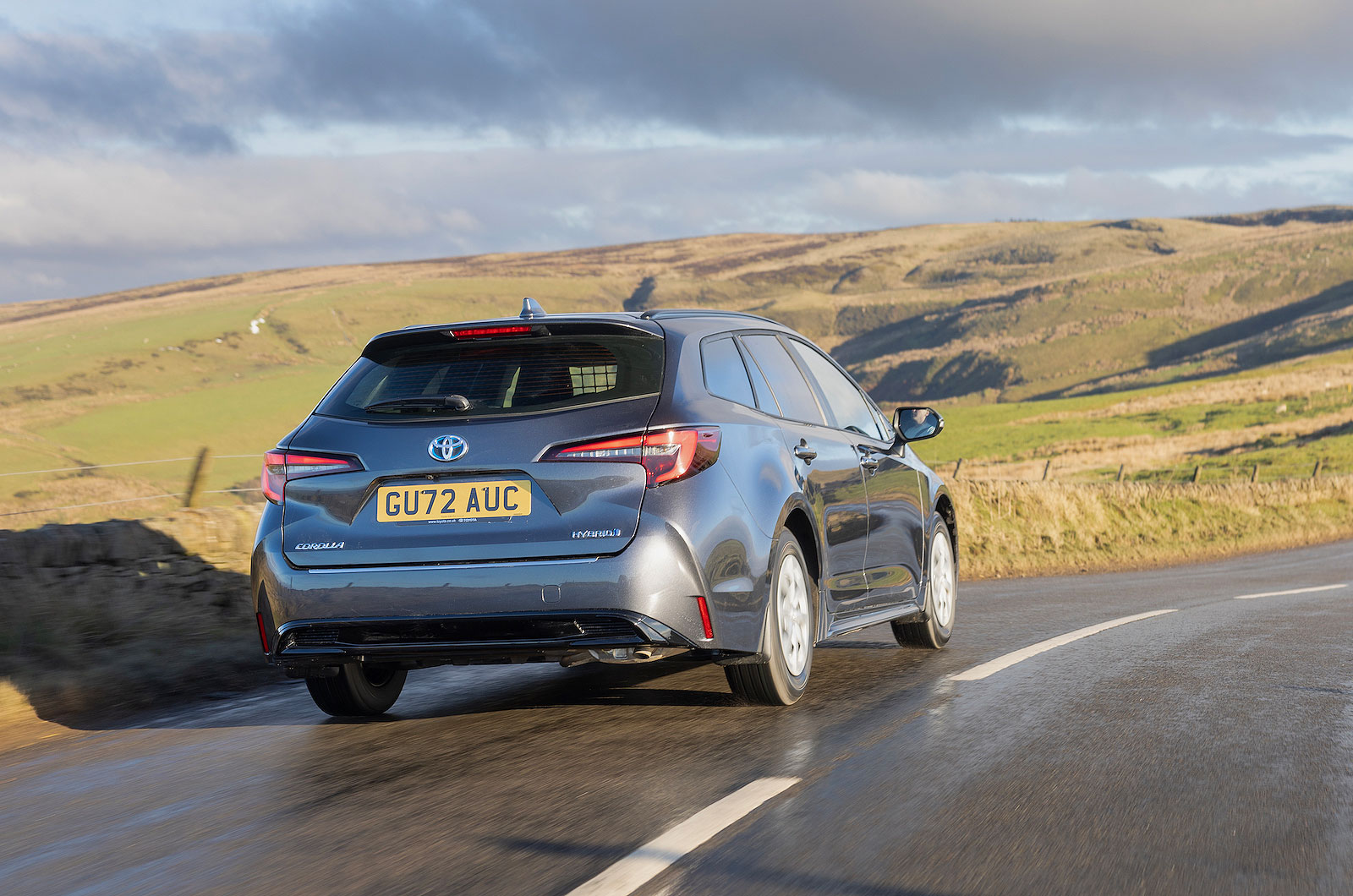
The only engine available in the Corolla Commercial is a 1.8-litre petrol hybrid, as found in the entry-level Toyota Corolla Touring Sports. This fifth-generation version of the engine pushes out a respectable 138bhp, which is adequate for most situations, and has a bit more oomph for overtaking than earlier models.
Toyota has improved the power control unit, and also redesigned the transaxle motor to make it more efficient and responsive. Those changes are noticeable when you jab the accelerator, and the latest Commercial responds more keenly and with greater urgency than previous generations.
The net result of more power and greater responsiveness is a drop in the 0-62mph time from 11.1sec to 9.4sec.
When it comes to ride quality, the Commercial sets itself apart from rivals because it’s very supple and well controlled. Even without any cargo (and with no rear seats to add weight, remember), it doesn't feel too bouncy or uncomfortable. The standard steel wheels are 15in, which is on the small side, but they don’t get swallowed up by large potholes.
The Commercial has fairly accurate and light steering, and is easy to place on the road at higher speeds. It’s devoid of feel, though, so it wouldn’t be as fun to drive every day as the much larger Ford Transit Custom PHEV. Still, manoeuvring around town is very easy.
In fact, the model is most at home in urban areas and at low speeds, and that’s thanks in part to the hybrid engine set-up, which allows it to run on electric power alone for short distances (in stop-start traffic, for example). When it does so, the interior is very hushed, and even when the engine does kick in, you hardly even notice it at low speeds.
On faster roads and at higher speeds, engine noise becomes much more intrusive. The blame lies with the CVT automatic gearbox because it keeps the engine’s revs high under hard acceleration until you reach cruising speed.
The Commercial has a braked towing capacity of up to 750kg, which is less than the Dacia Duster Commercial and the VW Caddy Cargo – they both have a capacity of 1500kg.
Driving overview
Strengths Keen performance; supple, well-controlled ride; hybrid setup for urban streets
Weaknesses Rivals can tow more; obtrusive engine sound at higher speeds; CVT automatic gearbox
Interior
The interior layout, fit and finish
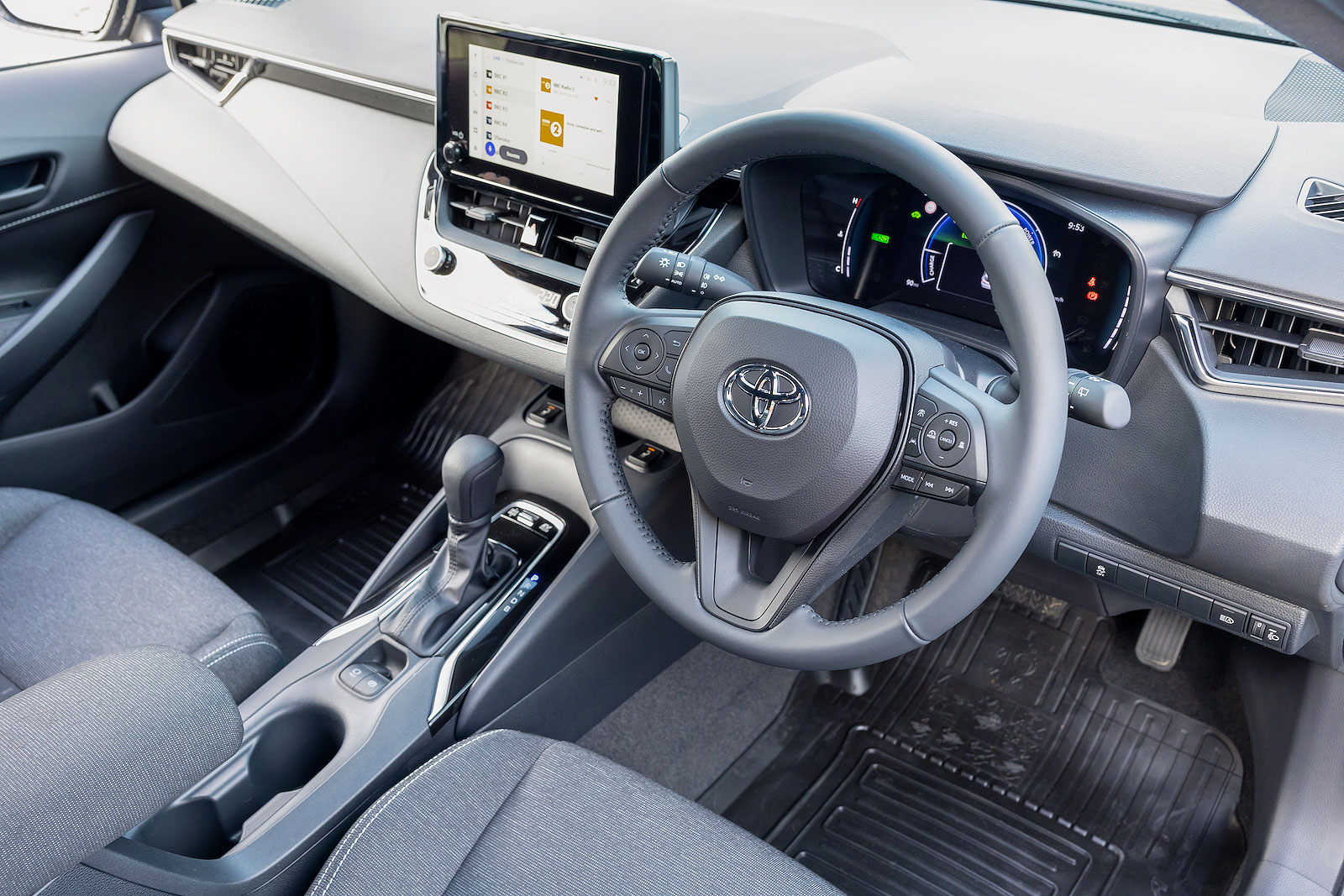
The beauty of the Corolla Commercial is that much of the car is identical to the Toyota Corolla Touring Sports. For a start, that makes finding a comfy driving position very easy. There's plenty of adjustment for the seat and steering wheel, which adjusts for both height and reach.
Indeed, looking forwards, you never really notice that you’re in what is effectively a small van. The main giveaway is the more utilitarian plastic on the steering wheel and door handles.
When you look behind you, it’s a very different story. Visibility to the sides is non-existent because of the black opaque film that covers the rear windows, creating big blind-spots. Many vans have extra side mirrors to help with this, but the Commercial doesn't, so you have to look very carefully when you're getting ready to change lanes on a motorway.
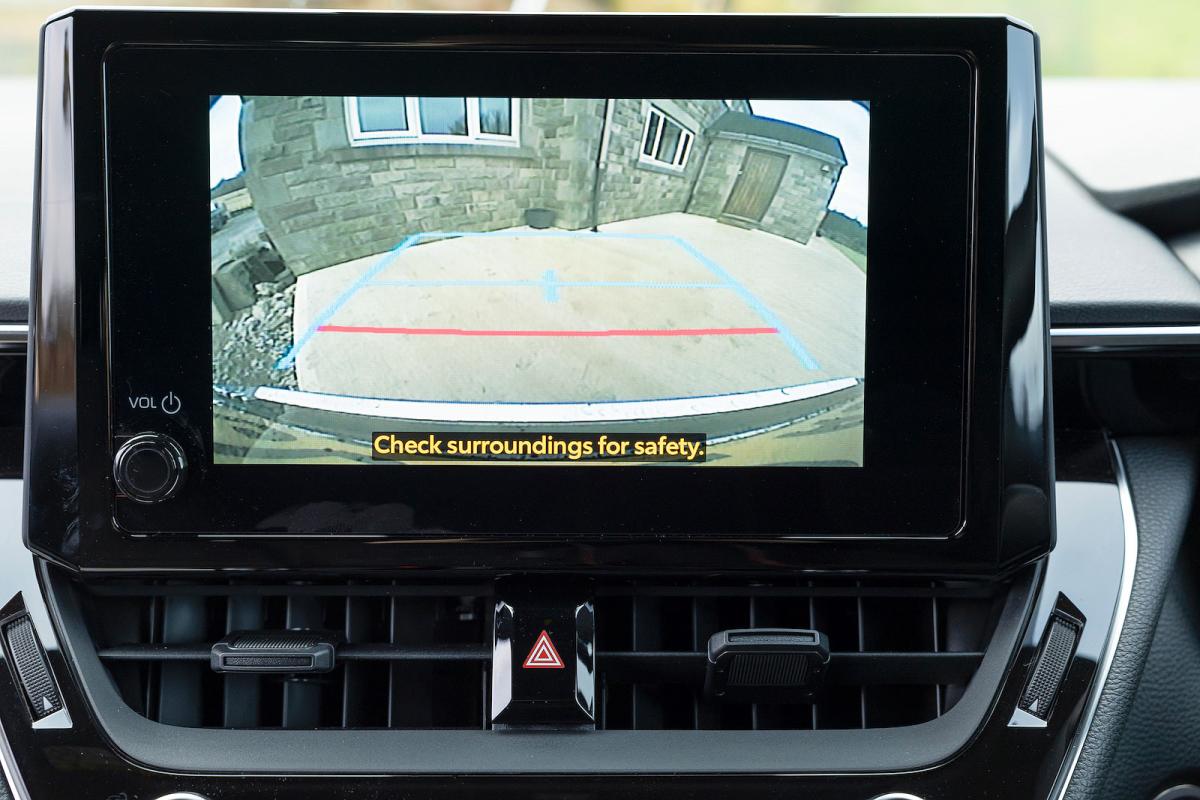
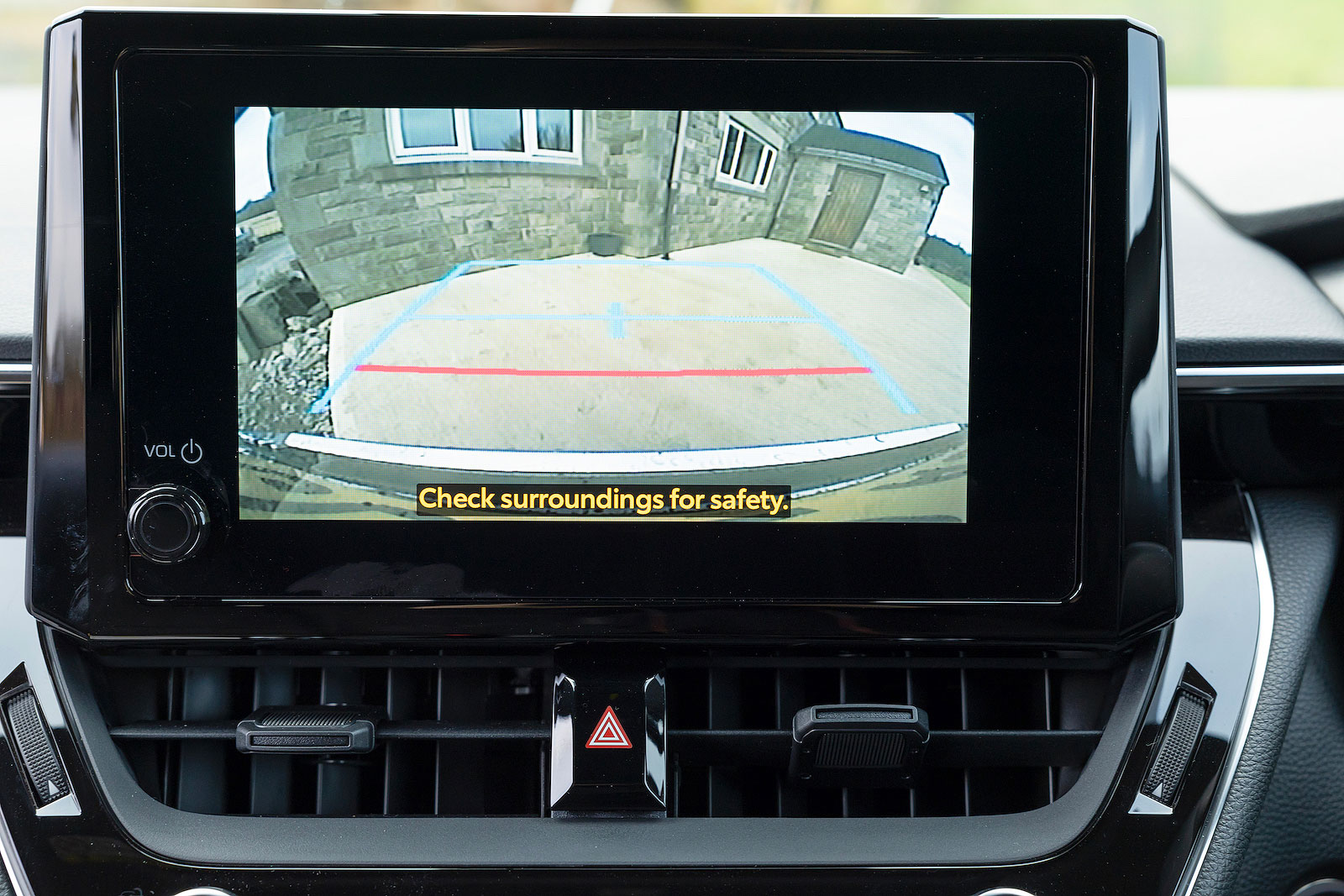
Visibility directly behind you isn't too bad (assuming the cargo bay isn't loaded up to the roof, of course), although it's slightly reduced by a mesh guard that's fitted to the top of the steel bulkhead. To help out, you get a reversing camera as standard, and front and rear parking sensors are available as an option.
The interior quality is impressive, with everything from the materials on the doors to the dashboard feeling very sturdy and well screwed together. The dashboard feels soft to the touch, but it would be good to have softer door tops for resting your arm on.
One benefit of the utilitarian approach is that most of the functions are operated using buttons and dials rather than fiddly touch-sensitive buttons and sliders. That means it's easy to adjust the climate controls while you're driving – even if you've forgotten to take your work gloves off.
The 8.0in infotainment screen is surrounded by physical shortcut buttons, which make it much easier to operate simple functions than it is in, for example, the VW Caddy Cargo. It's also positioned well so you don't have to take your eyes far from the road when using it.
On the other hand, the infotainment system isn’t the best. It’s quite slow to respond to inputs, the screen resolution isn't great, and the menus are not particularly intuitive. You get voice assistant activated by the phrase “Hey Toyota” but, like the screen interface, it’s not particularly responsive.
Fortunately, you can run your smartphone apps through the screen using Android Auto and Apple CarPlay. Plus, the built-in operating system is likely to be improved over time with over-the-air updates.
Interior overview
Strengths Comfy driving position; interior feels built to last; physical shortcut buttons for infotainment
Weaknesses Material quality could be better; infotainment system can be sluggish
Passenger & boot space
How it copes with people and clutter
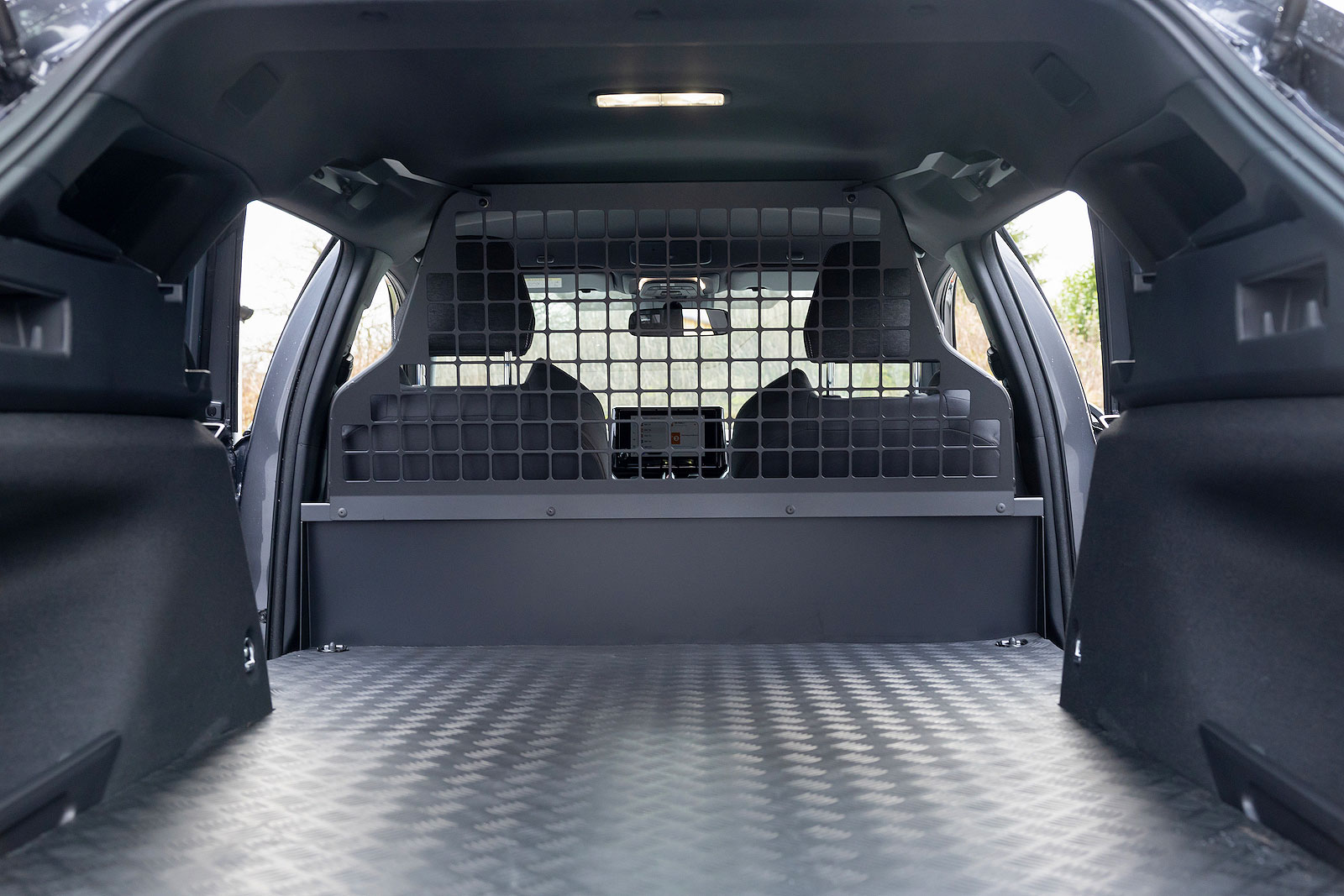
In most instances, estate cars are brilliant load-luggers, so a car-based van that started out as an estate can only build on this. And unsurprisingly, the Toyota Corolla Commercial does.
Behind the bulkhead, it's a very different animal to the passenger car it's based on, and that’s mostly because there’s a long, flat rubberised load bed in place of the back seats. It stretches across the full length and width of the cargo area.
In total, the loading space is 1326 litres in capacity with a volume of 1.3m3. That’s less than the Ford Tourneo Courier (2.3m3). The payload is rated at up to 425kg, which is more than in the Renault Zoe Van (387kg), but less than the Dacia Duster Commercial (503kg) and VW Caddy Cargo (700kg).
The space itself offers decent practicality, with four tie-down hooks on the bed itself and four extra hooks for hanging other items (two on each side). The anchor points that hold the rear seats in place on the passenger car are also present and could be used as extra tie hooks.
Under the loading bed, there’s a storage space where the spare tyre would be. It's useful, but we found the grab holes used to access it a bit small.
When it comes to loading your Commercial, you'll find the rear doors open wide and the boot opening is a square shape, with no lip to lift things over. Automatic courtesy lights would be helpful because the blacked-out windows make the cargo area quite dark. There are some lights on the headlining but you have to switch them on manually.
You and your passenger (just the one, of course, because there are no back seats) get plenty of head and leg room. You'll also have storage areas for odds and ends around you. They include a large door bin on each door with a slot for a water bottle, two cup holders and a central armrest cubby. There’s also a small space between the bulkhead and seats for smaller items.
There’s one USB port under the dashboard for charging a device and a 12V power outlet in the armrest cubby.
Practicality overview
Strengths Comfy driving position; boot's shape makes loading easy; good head and leg room
Weaknesses Some rivals can carry more; more interior lighting would be helpful
Buying & owning
Everyday costs, plus how reliable and safe it is
The Toyota Corolla Commercial's 1.8-litre petrol hybrid engine means it should be cheap to run, and the official (WLTP) fuel economy figure is an impressive 64.2mpg.
We've managed to get very close to that figure in real-world driving (in both the Commercial and the Toyota Corolla Touring Sports), which is an impressive result for a small van.
Ways to buy
Official CO2 emissions for the Commercial are fairly low at 100g/km, which places it in one of the lowest benefit-in-kind tax bands – and that helps keep costs right down if you get one as a company car.
There's only one trim level, which gets you the 8.0in infotainment screen (with Android Auto and Apple CarPlay), a reversing camera, heated and power adjustable door mirrors, dual-zone climate control, heated seats and powered lumbar adjustment.
You also get plenty of safety equipment as standard, including adaptive cruise control, pre-collision warning, lane-departure warning, lane-keep assist, automatic high beam and road-sign assist. New pre-collision systems fitted to the latest model include intersection collision avoidance, emergency steering assist, lateral collision avoidance and curve speed reduction.
Toyota has an excellent reputation for reliability. In our 2023 What Car? Reliability Survey it finished second out of 32 car makers. The only brand that did better was its own luxury arm, Lexus.
The Commercial comes with a three-year or 60,000-mile warranty. After that, you can extend it by 12 months or 10,000 miles by having your vehicle serviced at an authorised dealer, up to a maximum 10 years.
Costs overview
Strengths Good levels of equipment; lots of safety kit; Toyota's reliability record
Weaknesses Could be useful to have more options
For all the latest reviews, advice and new car deals, sign up to the What Car? newsletter here
Similarly priced cars

If you're interested in finding a Toyota Corolla Cross, or any of the other car-based van cars mentioned here, head over to our Cars available now pages to find new cars listed for sale at great prices.
FAQs
Toyota Corolla specifications
Our pick
RRP price range
MPG range across all versions
Available fuel types (which is best for you? )
Available colours
Number of engines (see all)
Number of trims (see all)
Company car tax at 20% (min/max)
Company car tax at 40% (min/max)
What is What Car? best price?
The What Car? best price shows you the cheapest way to buy your new car, whether it's by choosing an in-stock car through our partner Autotrader or placing a factory order.
Available now from: £29,500
RRP from: £30,845
About our price indicator
What Car? indicative Personal lease example (subject to status)
1.8 VVT-h Icon Hatchback 5dr Petrol Hybrid CVT Euro 6 (s/s) (140 ps)
| Expected annual mileage | 5000 |
| Term months | 48 |
| Deposit months | 12 |
| Monthly payment | £274.53 |
| Initial payment | £3,294.36 |
Step-by-step
Leasing works a bit like a long-term rental. You drive it, but you don’t own it.
- Choose your car, pick your terms and apply for lease credit online
- Pay monthly rental payments for your chosen term length
- Drive it, enjoy it, then give it back at the end
What you get
When you lease with Autotrader you get all of this:
- Full manufacturer’s warranty
- Road tax and roadside assistance included
- No admin fees
- Free returns within 30 days*
- Lower total monthly cost than PCP/HP
- No balloon payments
- Road tax included
Cars available now
About the writer

More Toyota Corolla
Used reviews
New reviews
Longterm reviews
Reliability
- What Car? Reliability Survey: Most and least reliable family cars
- What Car? Reliability Survey: Most and least reliable hybrid cars
- What Car? Reliability Survey: Most and least reliable car brands
- Are Toyota models reliable? Most and least reliable models revealed
- Most and least reliable used cars: family cars