News
2027 Kia PV7: electric medium-sized van and MPV to offer up to nine seats and 285-mile range
New electric van and people carrier offers plenty of space, competitive range and fast charging
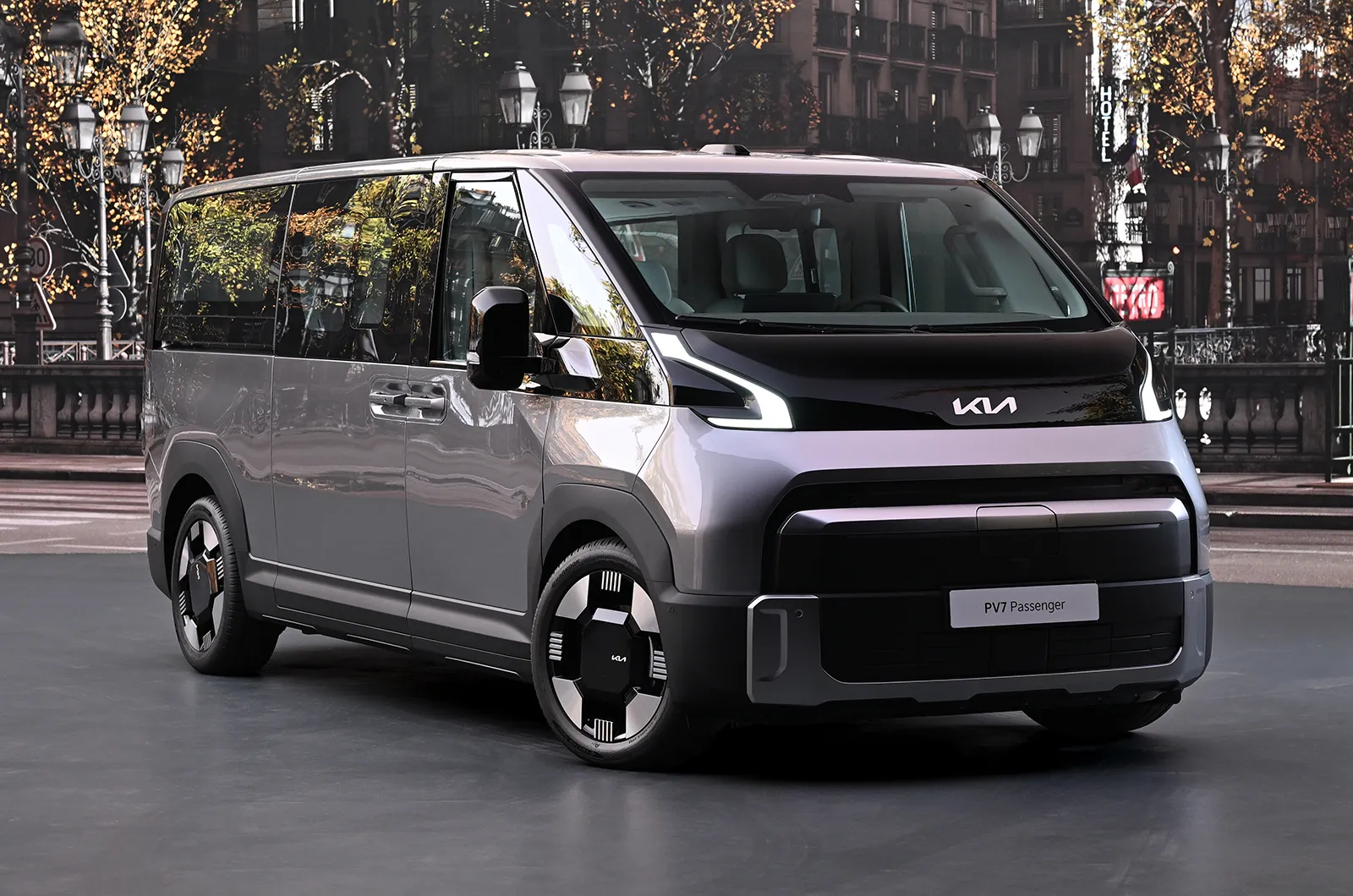
On sale Late 2027 Price from £50,000 (est)
If you’re a singer lucky enough to have a best-selling album, it’s only natural that you’d want to capitalise on that success by following it up with something a little more ambitious, showing off a broader range of your talents. That’s certainly the case for the Kia PV7.
advertisement
scroll for more
You see, the Kia PV5 might have been the company’s first serious attempt at a van, but it has already exceeded sales expectations in the UK, and has even been named What Car? Van of the Year. What’s more, it’s also our reigning MPV of the Year, offering plenty of passenger and boot space at a price that significantly undercuts the rival Volkswagen ID Buzz.
Now, Kia is entering the even more competitive medium-sized van market with the PV7. Although it shares a lot of its underpinnings with the PV5, it’s as much as 655mm longer and 135mm wider than its smaller counterpart.

Jack Mortimer
Updated: 14 September 2026
Car reviews
Kia EV5
Kia EV4
Kia EV6
View all new car reviews
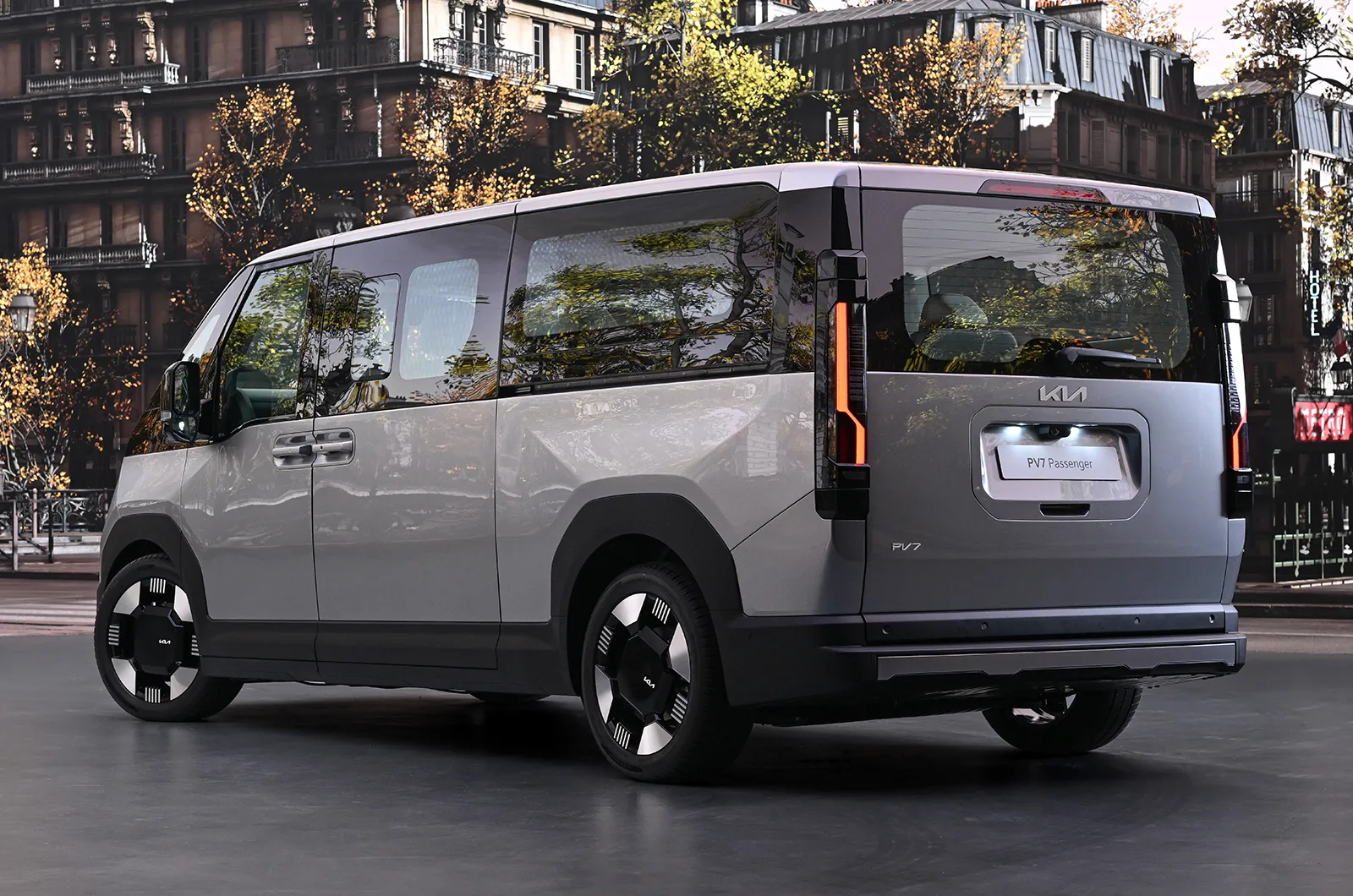
Like the PV5, the PV7 will be offered as a van – badged the Cargo – which will rival the Ford E-Transit Custom and electric Renault Trafic, or as an MPV with a choice of seven or nine seats. That version of the PV7 will compete with the Ford E-Tourneo Custom, Peugeot e-Traveller and – perhaps most crucially – ID Buzz LWB (long wheelbase).
advertisement
scroll for more
Two battery options will be available from launch, with the cheaper PV7 Standard Range versions featuring the same 67kWh (usable capacity) unit as some PV5s, and the Long Range using a new 96.2kWh (total capacity) battery. While Kia is yet to share how far any passenger version can travel between charges, the PV7 Cargo Long Range can officially manage 286 miles; farther than any version of the E-Transit Custom (228 miles) or e-Traveller (219 miles) promises.
With a maximum charge rate of 350kW, the PV7 takes less time than average at the charger. As a result, topping up the battery from 10 to 80% takes as little as 20 minutes. What’s more, buyers can opt for a second AC charging port towards the rear of the PV7 for better flexibility.
From launch, every Kia PV7 will feature a 268bhp electric motor that drives the front wheels. The company is yet to share how quick this makes any version of the PV7, but the passenger version will need to be capable of reaching 62mph in around eight seconds to compete with the ID Buzz LWB. Later down the line, a more powerful version of the PV7 will also be available, featuring four-wheel drive.
advertisement
scroll for more
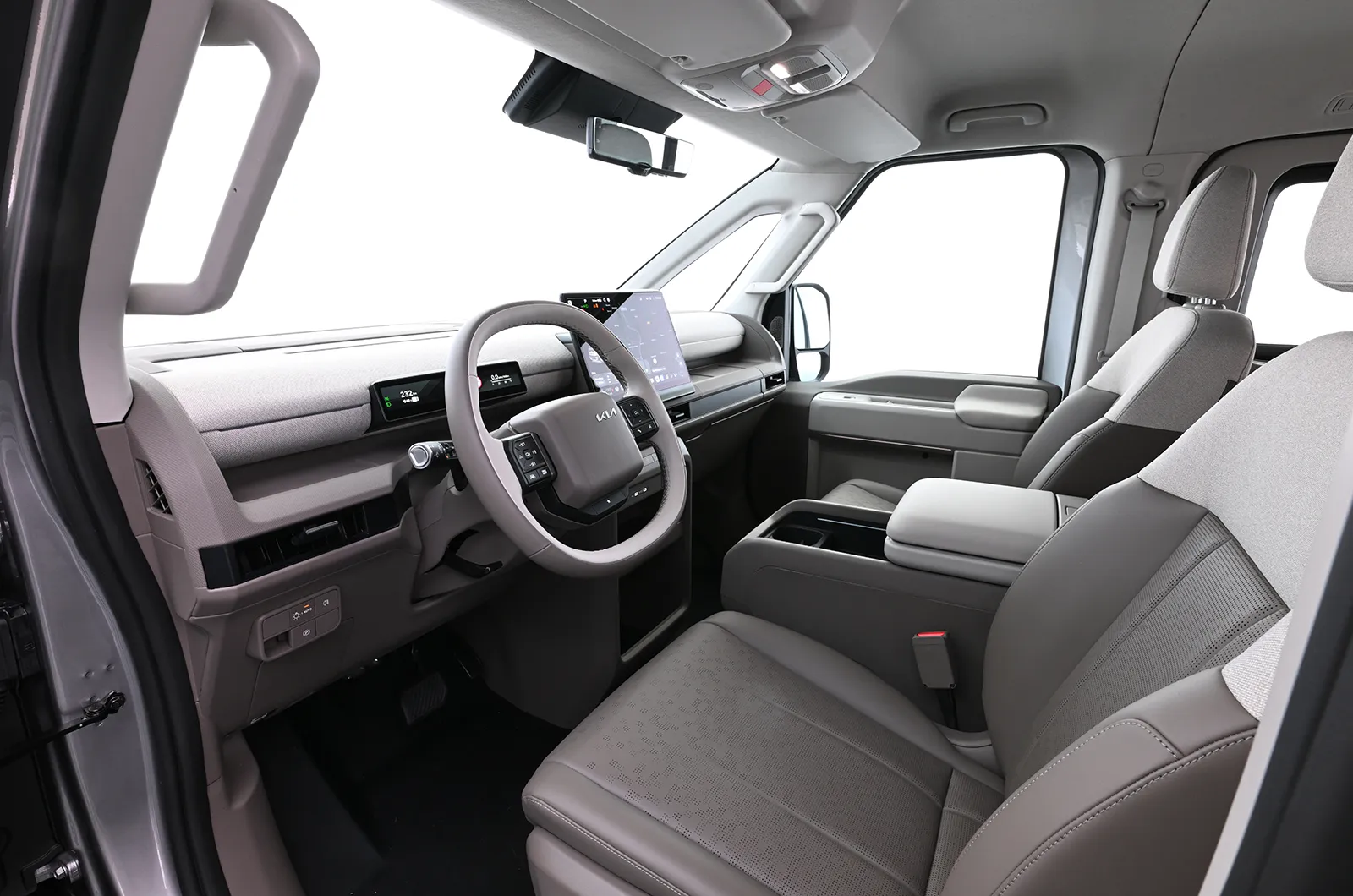
While, unsurprisingly, the PV7’s interior is decidedly less car-like than in seven-seat SUVs, such as the Kia EV9, it feels reasonably plush and is offered in a range of colour schemes – including beige on the passenger version, and navy blue and orange on the Cargo van – are available to liven things up. As is the case in the smaller PV5, physical controls are few and far between, with the interior climate being controlled via the 12.9in (or 14.6in on higher-spec versions) infotainment touchscreen.
UK customers will be able to buy the PV7 as a seven- or nine-seater; the latter being available with three or four rows of seats. As a seven-seater, the PV7 has two seats in the middle row with a gap for the three third-row occupants to enter and exit without having to fold any seatbacks, as is often the case in seven-seat SUVs.
Every seat inside this version of the PV7 slides individually, and there’s enough adjustability for six-footers to feel comfortable in all rows. These seats can also be folded or removed entirely to maximise boot space.
advertisement
scroll for more
Meanwhile, the PV7 isn’t lacking in interior storage compartments. These include a couple of lidded cubbies on top of the dashboard, a tray for your smartphone, a shelf above the driver and – as an optional extra – a raised centre console which doubles as a front armrest and a tray table between the front seats.
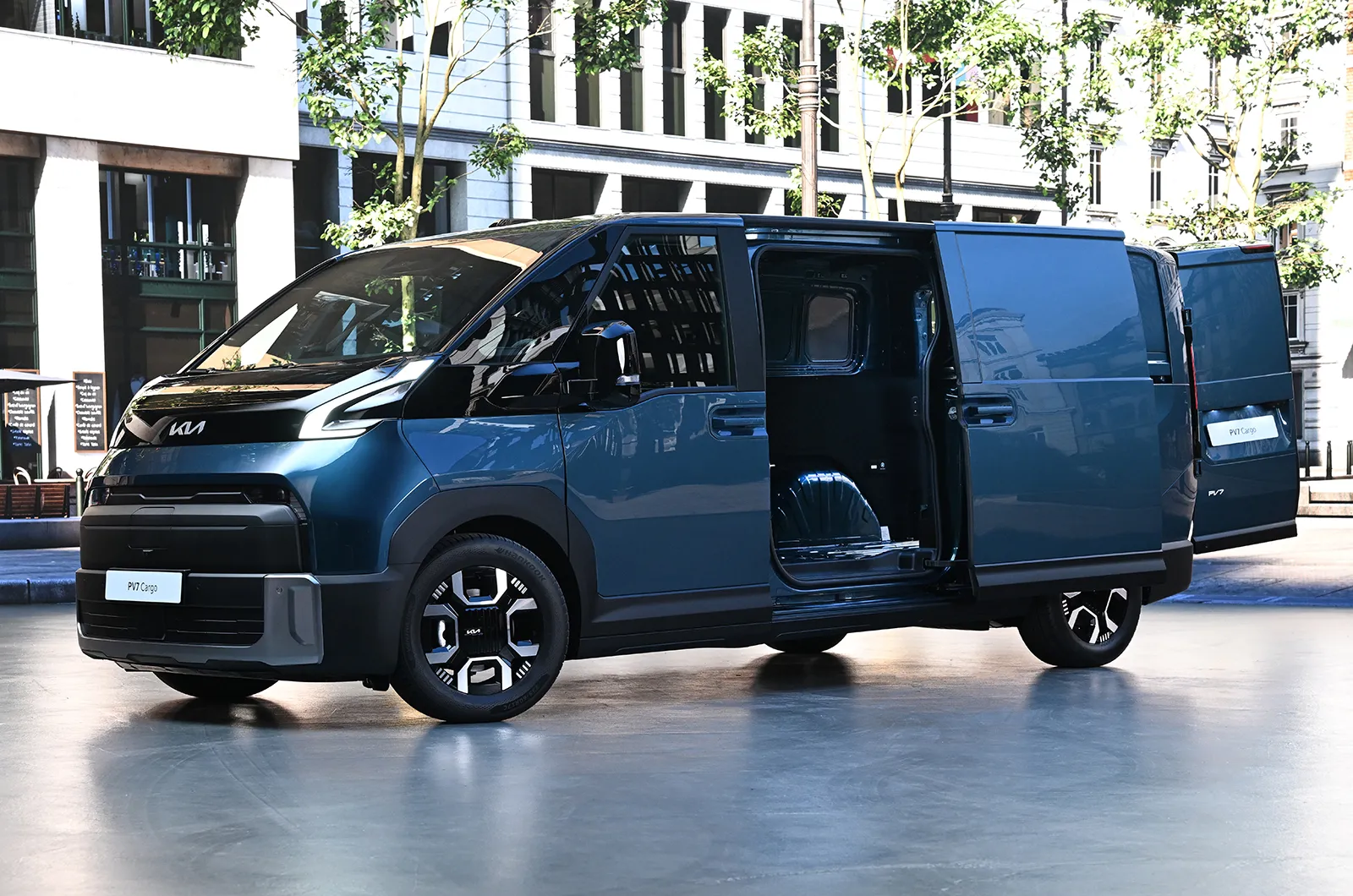
Van buyers can choose between four versions of the PV7 Cargo, with the cheapest ‘Compact’ version offering a maximum payload of 2000kg; that’s significantly more weight than any version of the E-Transit Custom (1327kg) or electric Trafic (1222kg) can carry. More expensive PV7 Cargos have a longer wheelbase – the distance between the front and rear wheels – and have enough load space to accommodate three Euro pallets. A chassis cab version of the PV7 Cargo will also be offered for more specialist applications.
The first UK deliveries for the Kia PV7 are set to take place in late 2027. Official prices are yet to be confirmed; however, since the smaller PV5 undercuts many of its rivals, it’s likely that the PV7 will be a cheaper cash purchase than the Ford E-Tourneo Custom (£57,083) and Volkswagen ID Buzz LWB (£59,933). What’s more, like the PV5, it’s likely that the PV7 will qualify for the lower band of the Government’s EV grant, which would cut £1500 off the list price.
advertisement
scroll for more
For all the latest reviews, advice and new car deals, sign up to the What Car? newsletter here
Read more: Best MPVs and people carriers 2026 – reviewed and rated >>
News and advice
Best of
Best-selling cars 2026: new car market grows in October
News
Renault Trafic E-Tech van to offer 292-mile range for £38k
Feature
Best tyres 2026: the safest tyres reviewed and rated
Feature
BMW iX3 long-term test
News
Dacia Sandero and Sandero Stepway gain new full hybrid power
News