Used Honda CR-V 4x4 1997 - 2002 review
It's a fine family car - just stick to the Tarmac


- Honda CR-V 4x4 (97 - 02)

What's the used Honda CR-V like?
Along with the Toyota RAV4, the CR-V was one of the first so-called soft-roaders - cars with the looks and image of an off-roader, but which were set up more for on-road use.
In fact, never mind low-ratio gears, the CR-V doesn't even have permanent four-wheel drive. Normally, it drives just the front wheels, and four-wheel drive only kicks in when the system detects the front wheels slipping.


Pros
- The CR-V drives well on the road
- It's also very reliable and spacious inside
Cons
- It has limited off-road ability, and there's too much grey plastic in the cabin

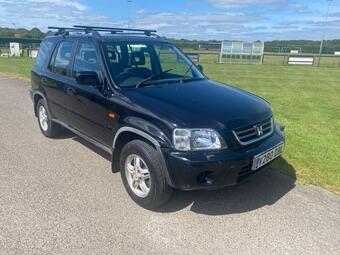
As such, the CR-V has only very limited ability away from Tarmac, but on the road it's one of the best of its type, with good handling and a decent ride.
As far as practicality goes, the CR-V makes a fine case as an alternative to an estate car. Apart from using too much drab plastic, the cabin is hard to fault, with good space in the front and more rear legroom than in a RAV4.
Our recommendations
Which used Honda CR-V should I buy?
Honda keeps things nice and simple when it comes to engine choice in this original CR-V - there's only a 2.0-litre petrol engine. However, you're better off buying a model from after March 1999 (T-reg), when a new version of the engine, with more power and slightly better fuel economy, was introduced.
As the same time, a higher-spec trim (ES Executive) was also introduced, with a CD multichanger and leather upholstery as standard. However, this trim remained on sale for a little over two years before being dropped, leaving the base LS or ES trims.
We'd always favour the cheaper, better-selling LS over the dearer ES as the extra kit (including alloys and heated mirrors) isn't worth the extra money. Again it's worth buying a model from after March 1999, as air-con (previously an option) became standard from then on.
Tips & Advice
How reliable is the Honda CR-V ?
About the writer