Company cars
Search our reviews
Select makeAIONAbarthAlfa RomeoAlpineAston MartinAudiBMWBYDBentleyCUPRAChanganCheryCitroenDS AUTOMOBILESDaciaFiatFordGWMGeelyGenesisHondaHyundaiINEOSIsuzuJAECOOJeepKGMKiaLand RoverLeapmotorLepasLexusLotusMAXUSMGMINIMaseratiMazdaMcLarenMercedes-BenzMitsubishiNissanOMODAPeugeotPolestarPorscheRenaultRolls-RoyceSEATSkodaSkywellSmartSubaruSuzukiTeslaToyotaVauxhallVolkswagenVolvoXPENG
Select model
advertisement
scroll for more
Company car calculator
Select from the drop downs below to calculate the cost of your company car.
Select MakeAbarthAionAlpineAudiAxiamBMWBYDBentleyCadillacCaterhamChanganCheryChevroletCitroënCupraDaciaFarizonFerrariFiatFordGWMGeelyGenesisHondaHyundaiIneosIsuzuIvecoJaecooJeepKGMKiaLEVCLamborghiniLeapmotorLepasLexusLotusMANMGMaseratiMaxusMazdaMcLarenMiniMitsubishiMorganNissanPeugeotPolestarPorscheRenaultRolls-RoyceSeatSeresSkodaSmartSubaruSuzukiTeslaToyotaVauxhallVolkswagenVolvoXPENGalfa-romeoaston-martinds-automobilesland-rovermercedes-benzomoda
Select Model
Select Version
Select Tax Year
Latest company car news & advice
Best of
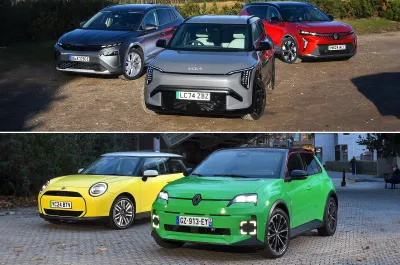
The best company cars you can get in the UK
A company car can be a great perk, but how do you decide which model to pick? Here we list our top 10 recommendations to help you get a great car while minimising your tax bill
Advice

How to calculate company car tax PLUS official BIK tax rates from 2025 to 2030
In this company car tax guide we explain how benefit-in-kind (BIK) rates work in the UK and list all the BIK tax bands…
Advice

Is it good to buy an ex fleet car – and what should I look out for?
If you’re in the market for a used car, it could be worth looking at an example that began life as a fleet vehicle. We…
Sponsored

Looking for your next company car? Meet the electrified Renault family
Renault’s fleet-friendly lineup offers style, space and tech by the bucketload...
Advice

Which car finance option is best for my company car fleet? Options explained
We take a closer look at business leasing, contract hire, contract purchase, leaseback and employee car ownership…
Latest company car reviews
See All Latest Reviews

Volkswagen Golf
Used Kia Niro 2022-2026

BMW i3

BMW 3 Series

Used Porsche Taycan 2020-present
FAQs
What does getting a company car mean?
A company car is a car provided to you by your employer, which is available for you for business and personal use. In most cases, it’s seen as a taxable benefit, which means you’ll have to pay Benefit-in-Kind (BIK) tax for the privilege.
Most company cars will include servicing, maintenance, insurance and road tax. But while you’ll be able to claim for fuel used for business trips, you’ll have to pay for fuel used during personal journeys – including the commute to work.
You will usually be able to choose from a list of models – meaning you’ll be able to select something suitable for your business and personal needs.
Is it worth having a company car?
A company car can be a very cost-effective alternative to buying a car outright, although you should always fully understand your tax affairs before you make any decisions – or seek professional advice if you’re unsure.
Company cars attract Benefit-in-Kind (BIK) tax because they are considered a perk paid on top of your salary. The amount of BIK is calculated based on the car’s price, fuel type and CO2 emissions, and your income tax band.
But it’s a price you might consider worth paying, because you could well be able to drive a more expensive or higher-specification model with the latest technology than you might otherwise. Plus, there’s no depreciation to worry about, and most company car schemes include servicing and maintenance, plus insurance and breakdown cover.
A huge range of models might be available to you, but our feature details the best company cars to choose right now.
Are electric cars the best company cars?
Certainly, if you’re choosing a company car based purely on the amount you’ll pay each month, it’s very hard to look beyond an electric car. That’s because Benefit-in-Kind (BIK) rates remain extremely low for electric cars: for the 2025/26 tax year they are set at 3%, compared with up to 37% for a petrol or diesel car.
That means a £40,000 Tesla Model 3 will currently cost a 20% payer £20 per month, while 40% taxpayers will need to fork out just £40. Contrast that with a similar £41,000 BMW 3 Series (320i Sport), which would cost £238 or £475 per month for 20% and 40% taxpayers respectively.
What’s more, you might not have to pay for the electricity your car consumes: HMRC provides an advisory rate of 8p per mile for home charging and 14p per mile for public charging. Employers can also make other arrangements, which could include a monthly charging allowance in your pay, a reimbursement for every kilowatt-hour (kWh) used when charging at home or a company credit card for public charging.
Your employer may be prepared to bear the cost of installing a home EV charger for your electric company car as well, and this is BIK-free.
How much do you pay if you have a company car?
The amount you’ll pay to drive a company car will vary depending on the cost of the car, its fuel type, how much carbon dioxide (CO2) it emits, and how far it can go purely on electric power. There are two rates of Benefit-in-Kind tax depending on whether you’re a 20% or 40% tax payer.
Electric cars are the cheapest company cars to run, with the Dacia Spring small electric car costing 20% taxpayers just £8 per month or £15 for 40% taxpayers. The cheapest petrol-powered car is the Dacia Sandero, costing £69/£138.
At the other end of the scale, a Bentley Bentagya will cost a 40% taxpayer a hefty £2632 every month.
Do I need to inform HMRC if I get a company car?
In short, yes. HMRC demands your employer tells it about any cars available for personal use. But somewhat confusingly, it’s also your responsibility to ensure your company has processed the correct paperwork. Inevitably, there are significant fines if something goes awry. HMRC also needs to know when you change your car.
But if you use a pool car, you’re off the hook, because different rules apply.
What does salary sacrifice mean?
Salary sacrifice is an arrangement where you reduce your pre-tax salary in exchange for a non-cash benefit, such as a car. That means you won’t pay income tax or National Insurance on it, but the car will still be considered a benefit, so may be subject to company car tax.
Unlike company car schemes, eligibility for which can hinge on seniority or a business need to travel, salary sacrifice is open to any employee as long as you earn above the minimum wage after the salary sacrifice.
‘Sal sac’ is generally considered to be beneficial, but in reducing your take-home pay, you might also impact your pension contributions and mortgage eligibility. And as with any other car lease, you’re generally tied in for the duration of the agreement, subject to mileage limits, and there’s no option to own the car at the end of the agreement.
Can I use my company car for personal use?
You can use your company car for personal use – but you will have to pay tax if you do. These personal journeys include commuting to and from work.
How to avoid company car tax?
If you have a company car and use it for personal journeys, you’ll have to pay company car tax.
However, you can opt to take a company car allowance, or use a pool car during working hours. You can, of course, reduce your company car tax bill by choosing an electric car, because these are the cheapest to run by a considerable distance.
Is it better to have a company car or an allowance?
A company car allowance is effectively a bit of extra cash paid to you by your employer, which you can then use to buy or lease a car, and cover some of the running costs. To all intents and purposes, the car you choose is entirely your decision.
It is still a taxable benefit, though, and will be taxed at the same rate as your salary – increasing your income tax and National Insurance payments. However, you won’t pay Benefit-in-Kind tax as you would on a company car.