Sponsored
In partnership with Autotrader
Used test: Nissan Qashqai vs Skoda Karoq
Buy either of these family SUVs at four years old and you'll save yourself more than £10,000, but which is the better all-rounder? We have the answer
The Contenders
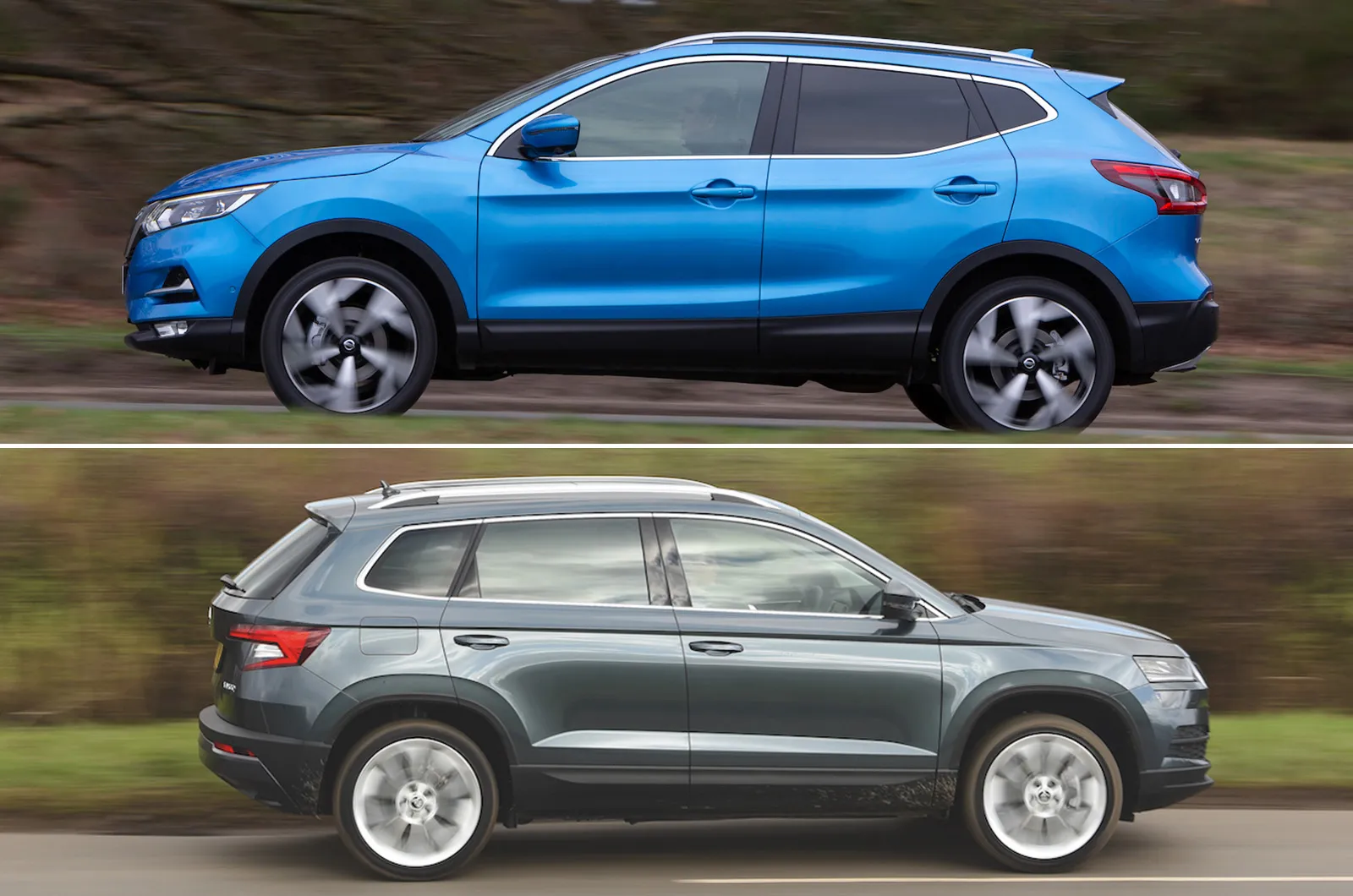
Nissan Qashqai 1.6 DIG-T 163 Tekna+
List price when new £29,250
Price today £15,000*
Available from 2014-present
advertisement
scroll for more
An ever-popular family SUV, but has the Qashqai met its match?
Skoda Karoq 1.5 TSI 150 Edition
List price when new £27,110
Price today £17,000*
Available from 2017-present
Though slightly pricier than its rival, the Karoq is refined and capable
*Price today is based on a 2018 model with average mileage and full service history, correct at time of writing
The Nissan Qashqai is the iPhone of family SUVs – it seems like everyone has one. It's been this way for a while, with the model being 16 years old (as of writing) and a best-seller all throughout its life. Many rivals aim to challenge its dominance, mind you. The Skoda Karoq is but one of them.
It's a compelling proposition, too. The Karoq ticks many boxes, including being good to drive and impressively practical. Pick one up at four years old and you can save a little more than £10,000 compared with what you'd pay when new.

Steve Huntingford
Updated: 21 October 2022
Car reviews
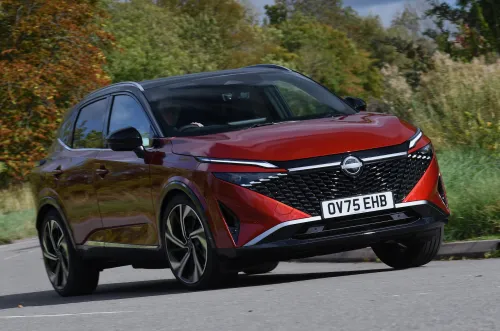
Nissan Qashqai
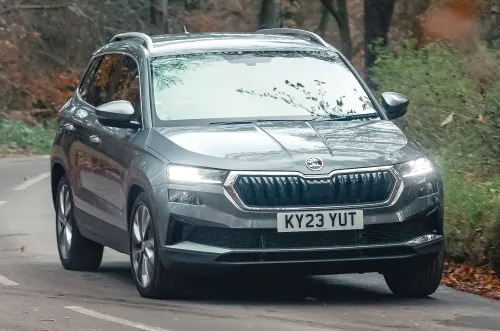
Skoda Karoq
View all new car reviews
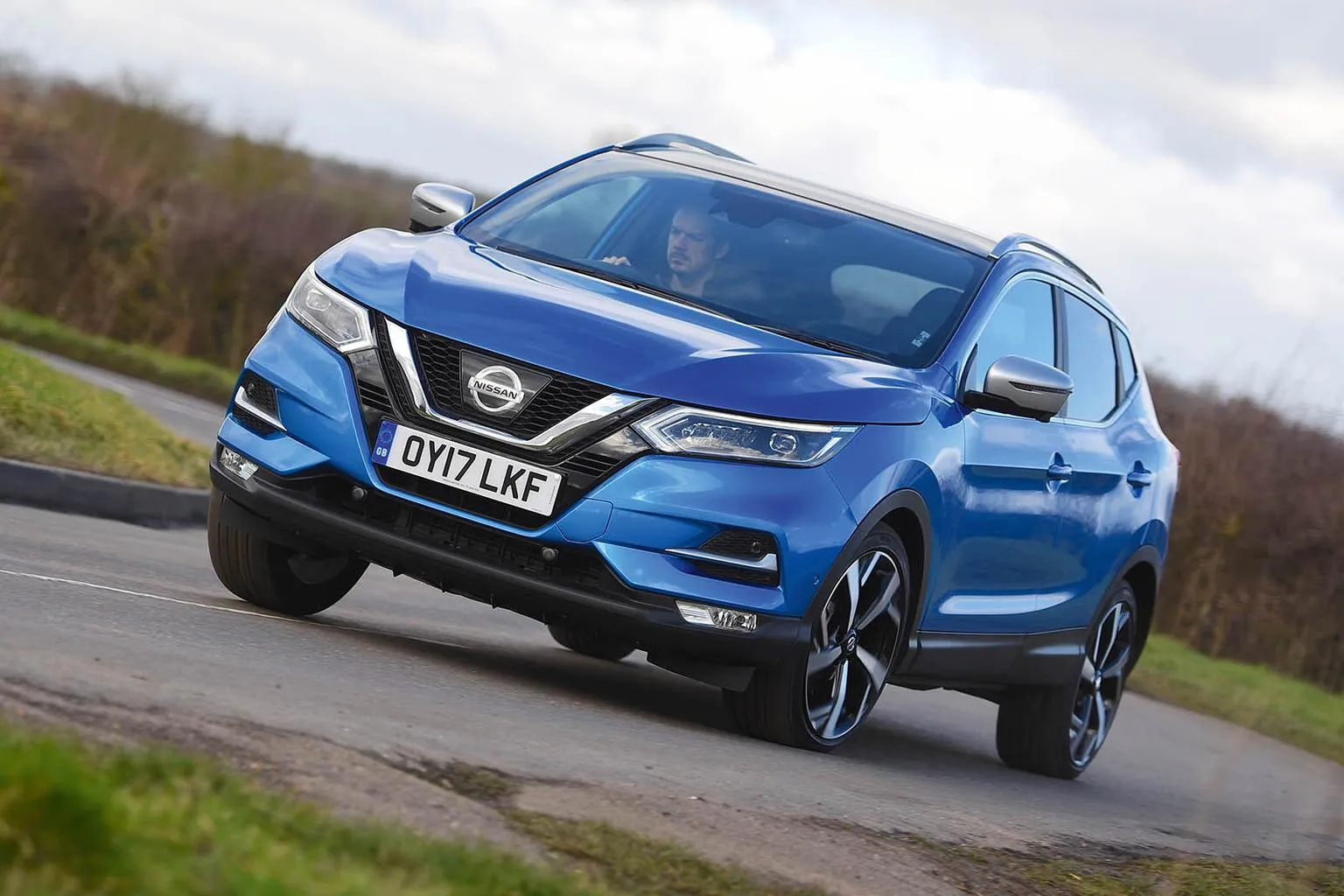
The equivalent Qashqai offers even more savings, though. Your wallet will definitely thank you after you save it around £14,000 off new. So, should you stick with your iPhone or go for its rival? Let's find out.
advertisement
scroll for more
Driving
Performance, ride, handling, refinement
With 161bhp on tap from its 1.6-litre petrol engine against the 1.5-litre Karoq’s 148bhp, it’s not surprising the Qashqai is the quicker car of the two. The Qashqai’s shorter gearing also helps it build speed swiftly from low revs in the higher gears. However, the Karoq has a smoother power delivery than the Qashqai and is therefore much easier to drive, especially around town. Having said that, the Karoq’s gear shift is a bit stiff, while the Qashqai’s has a longer throw but is generally more effortless and precise.
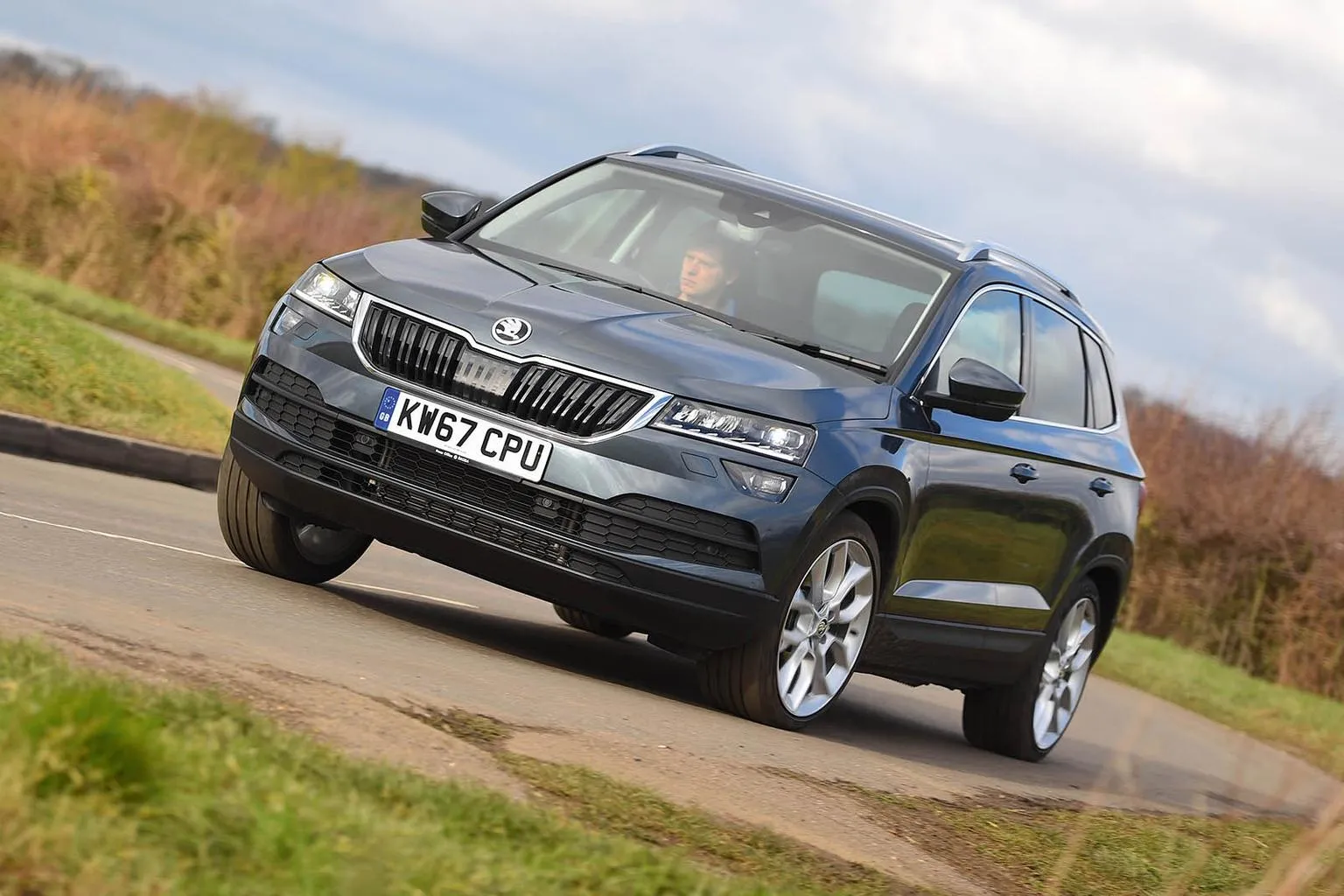
The Karoq is the stand-out car in terms of handling and is easily the most agile of these two. This is helped by quick, precise steering, good grip and tidy body control through corners. Meanwhile, the Qashqai sways about more and behaves more like a traditional SUV along winding roads. Its steering isn’t as accurate, either.
On top of that, in Tekna+ trim, the Qashqai becomes annoyingly unsettled at higher speeds on its standard 19in wheels. This range-topping Karoq also rides on 19in wheels as standard, so it’s firmer than we’d like at low speeds, but it’s still the least fractious of the two.
advertisement
scroll for more
Head out onto the motorway and the Karoq is nicely refined, whereas the Qashqai’s increased road noise makes it the louder car at speed.
Next: What are they like inside? >>
Page 1 of 4
Used
Used car group tests
News and advice
News
Kia PV5 Cargo and Chassis to be eligible for Plug-in Van Grant
Sponsored
The 10 fastest-depreciating electric cars
News
New Lotus hybrid supercar to arrive in 2028 powered by 671bhp V8 engine
News
Peugeot 208 and 2008 gain new mid-spec Envy trim for £23k
Feature
20 years of Qashqai: the model that started the family crossover revolution
Feature