Caterham Seven review
The Caterham Seven is unadulterated fun on the right road, but it’s also pricey and cramped, and you really wouldn't want to have a crash.


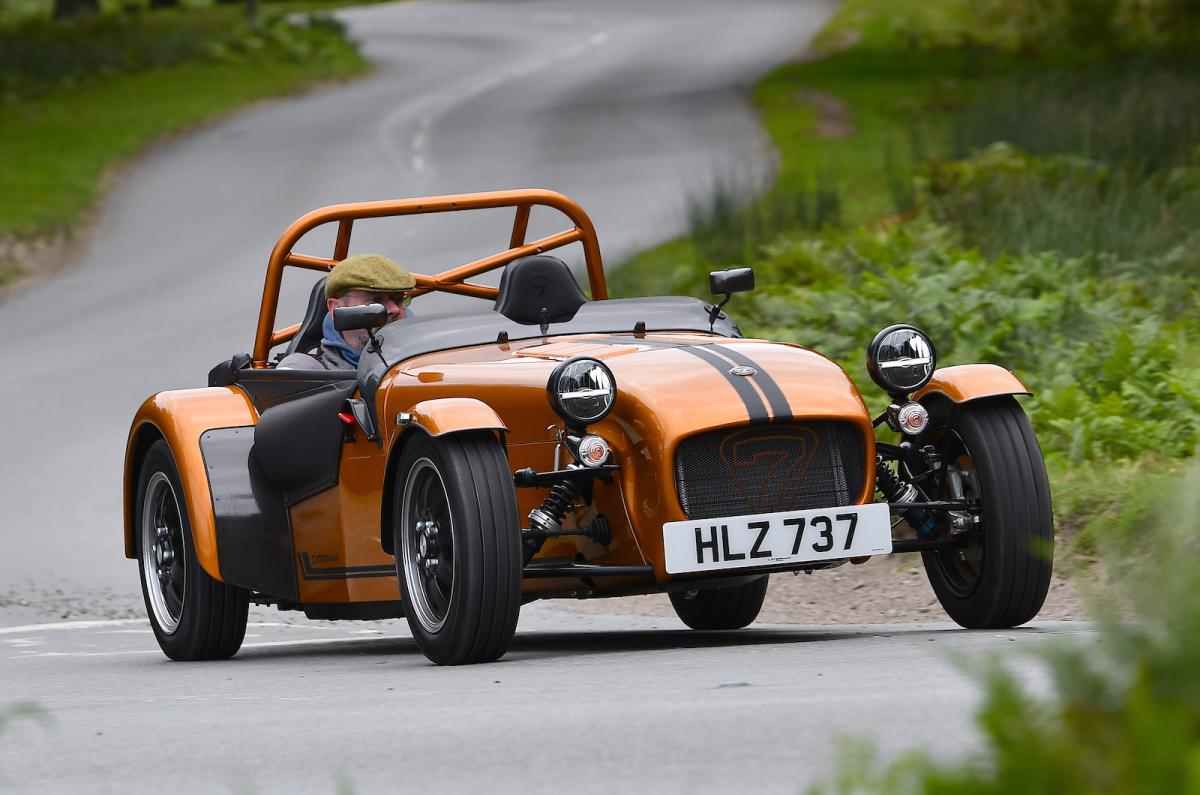
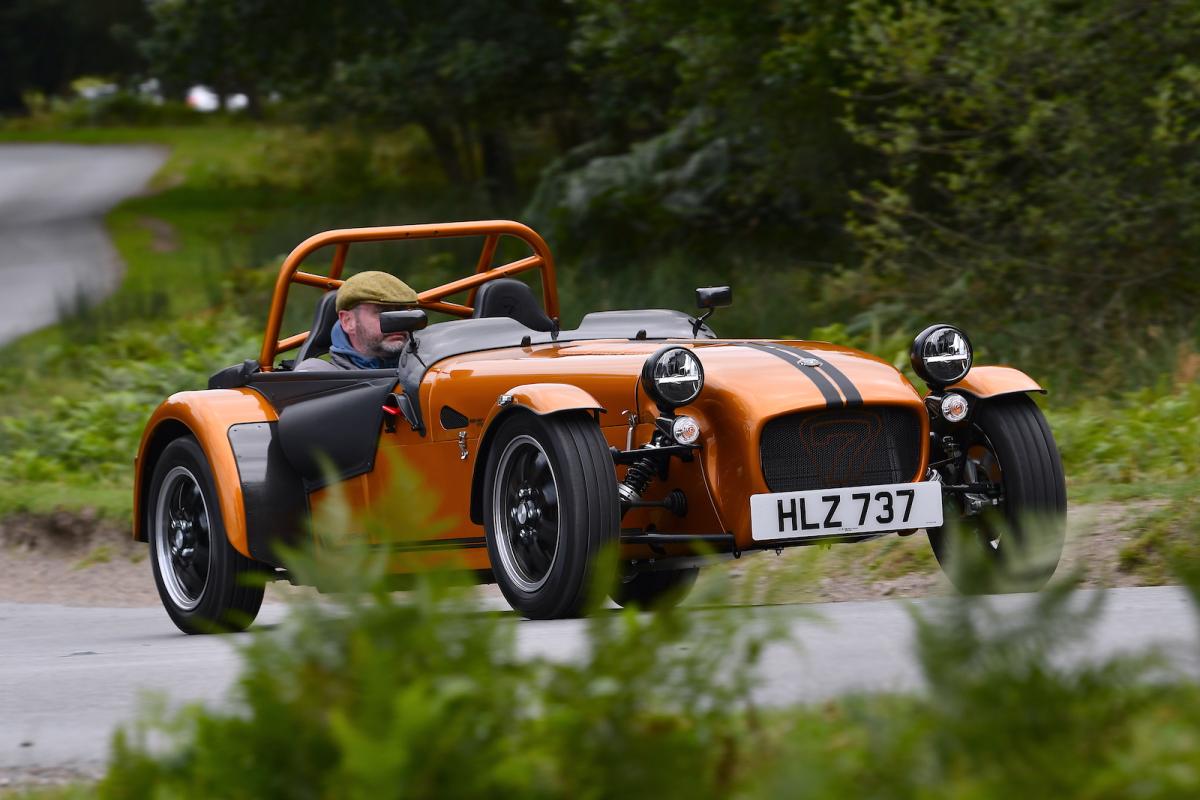
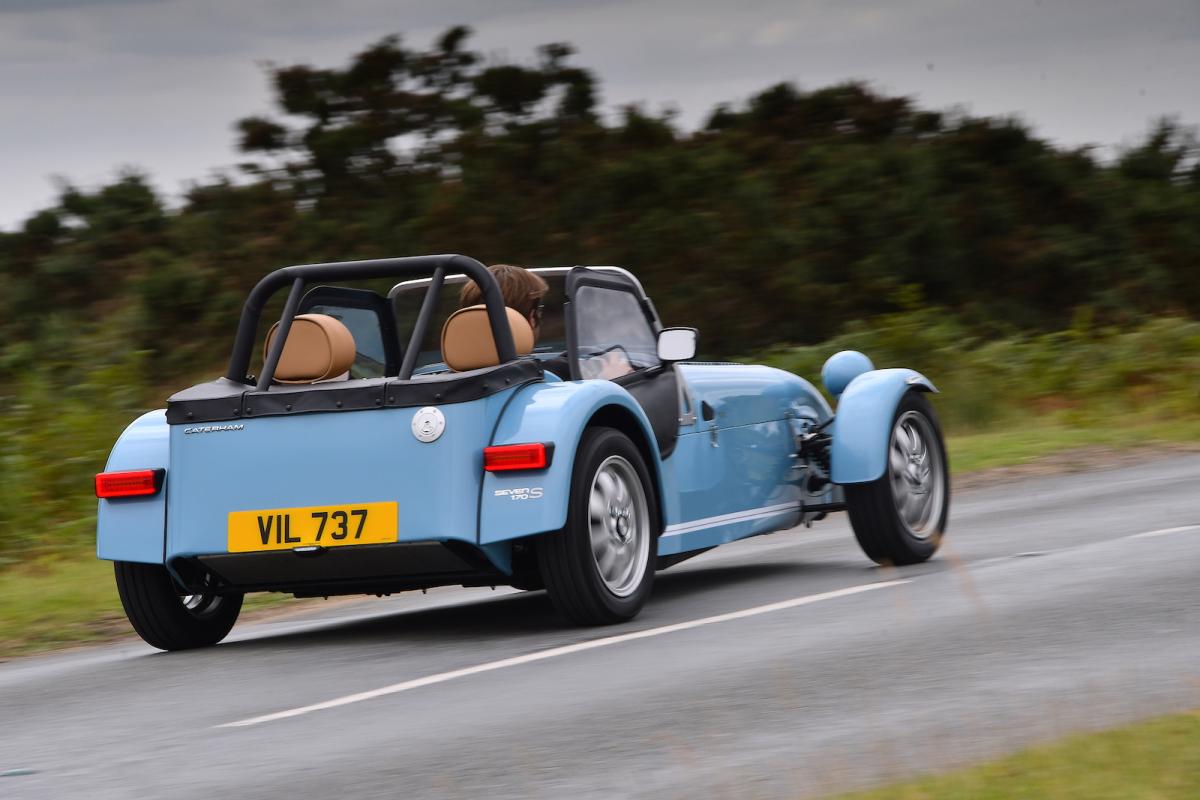
- Caterham Seven 170 R front right cornering
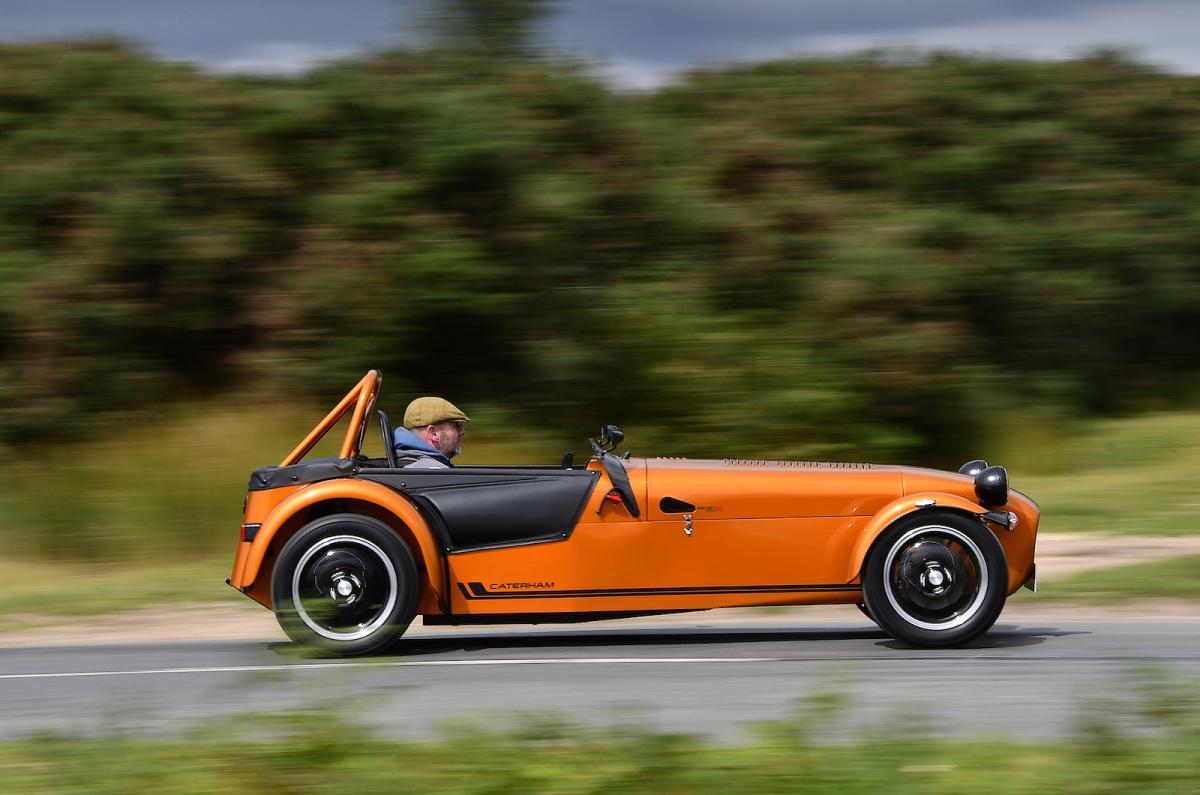
- Caterham Seven 170 R right tracking
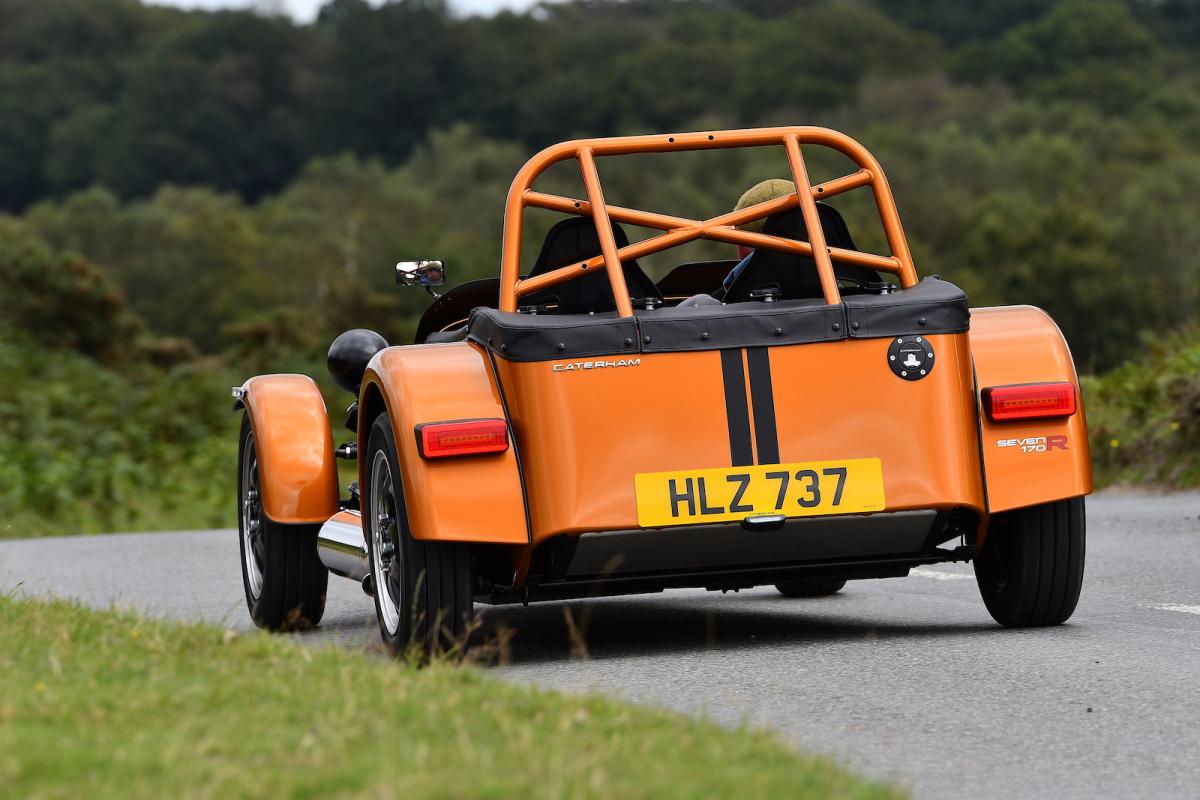
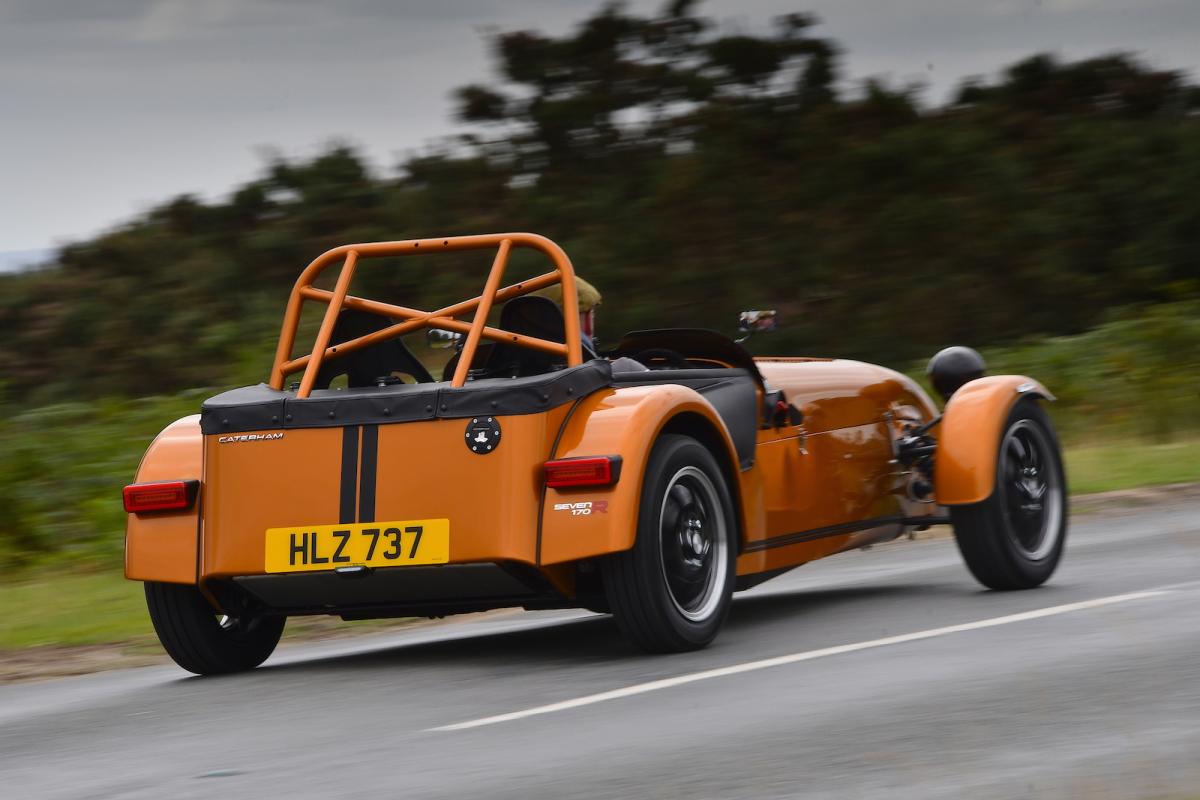
- Caterham Seven 170 R rear tracking
- Caterham Seven 170 R front right tracking
- Caterham Seven 170 R rear right tracking
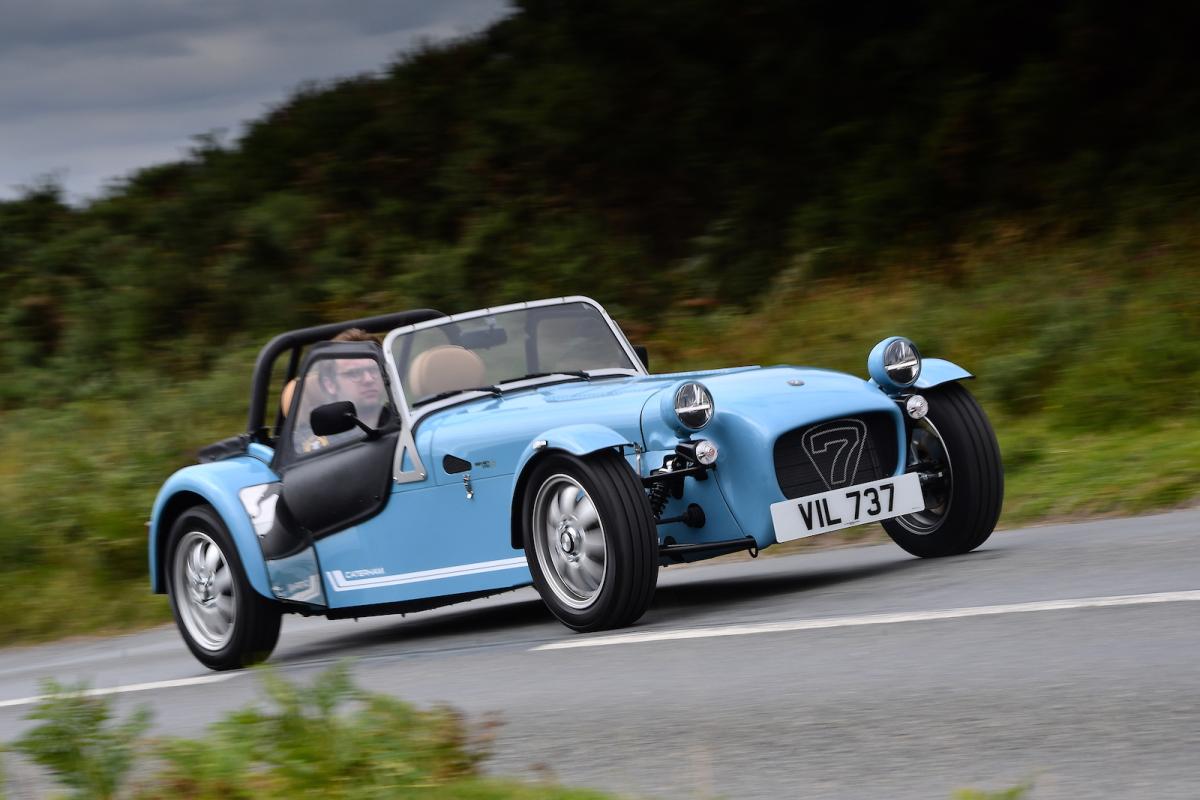
- Caterham Seven 170 S front right tracking
- Caterham Seven 170 S rear right tracking
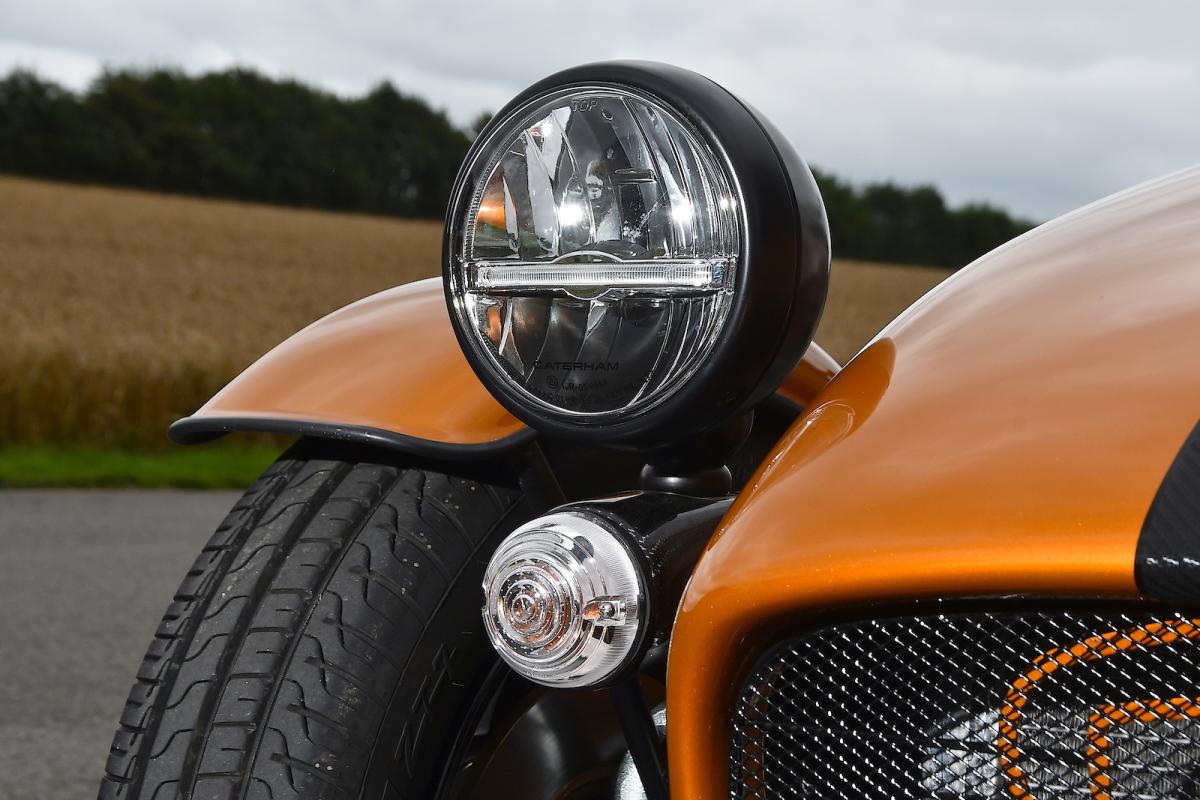
- Caterham Seven 170 R headlight detail
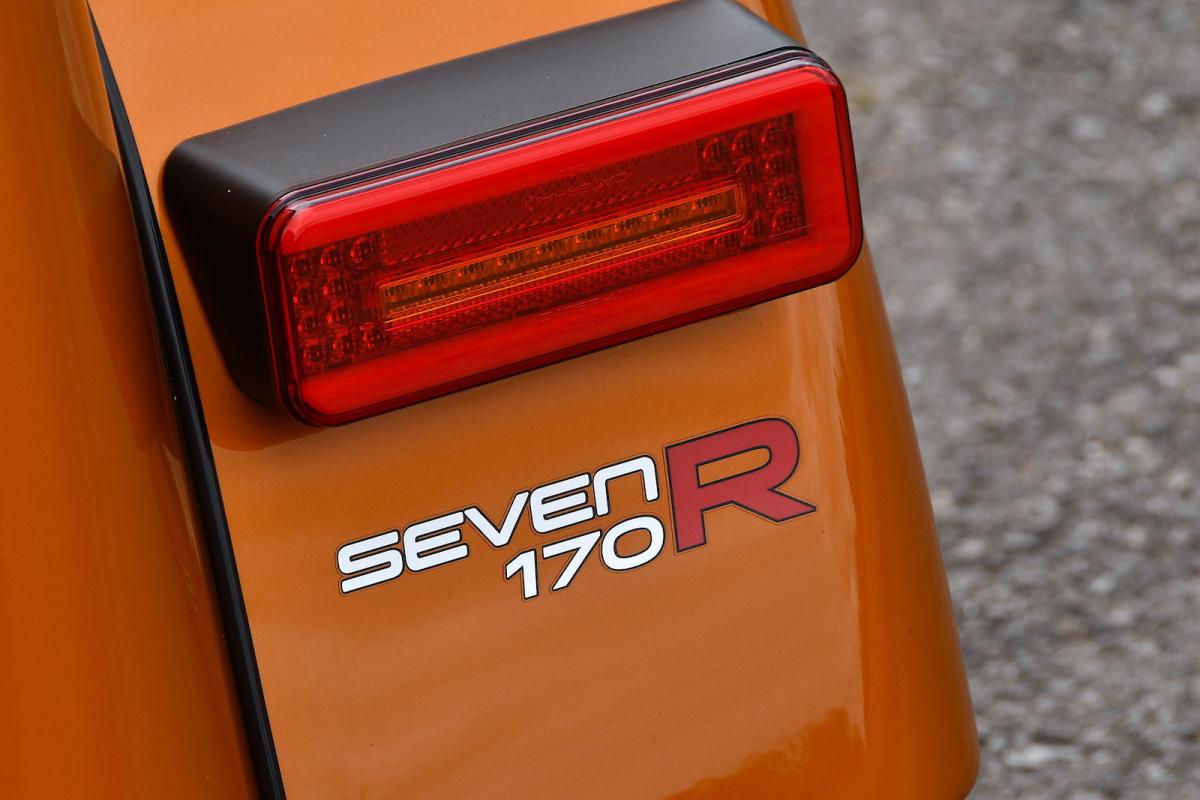
- Caterham Seven 170 R rear light detail
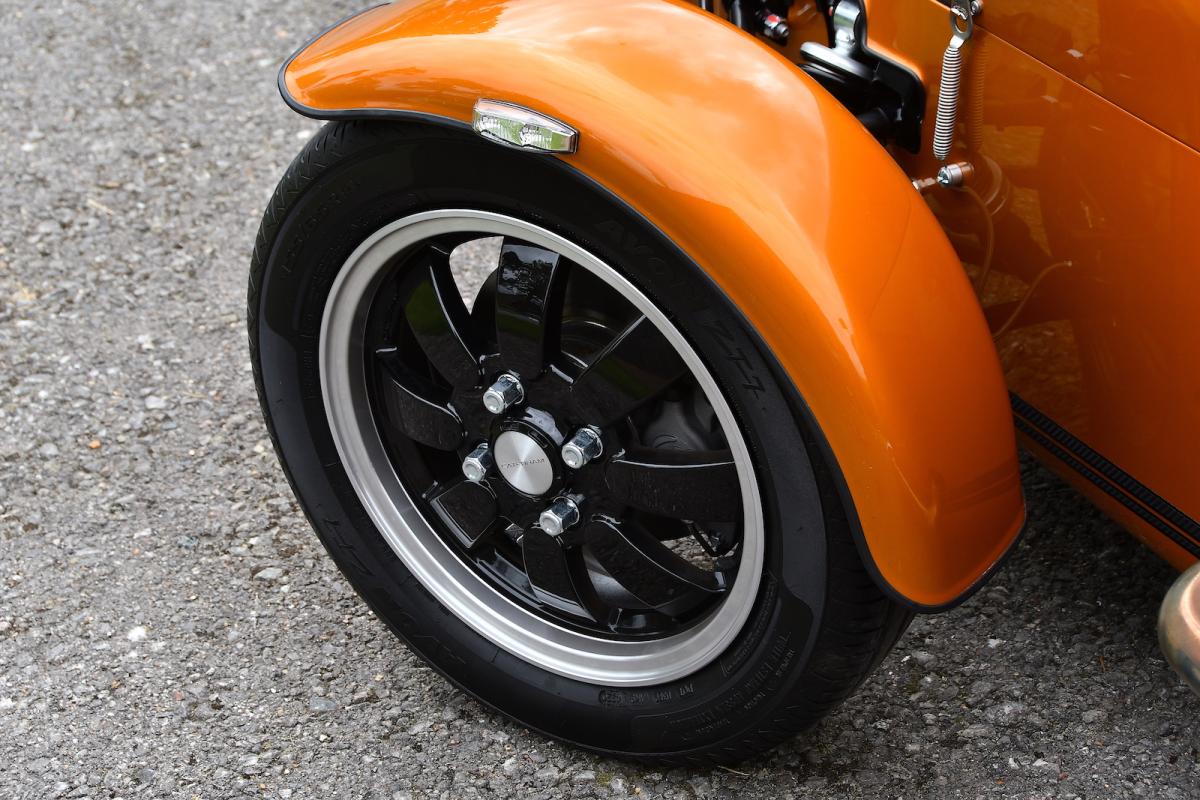
- Caterham Seven 170 R wheel detail
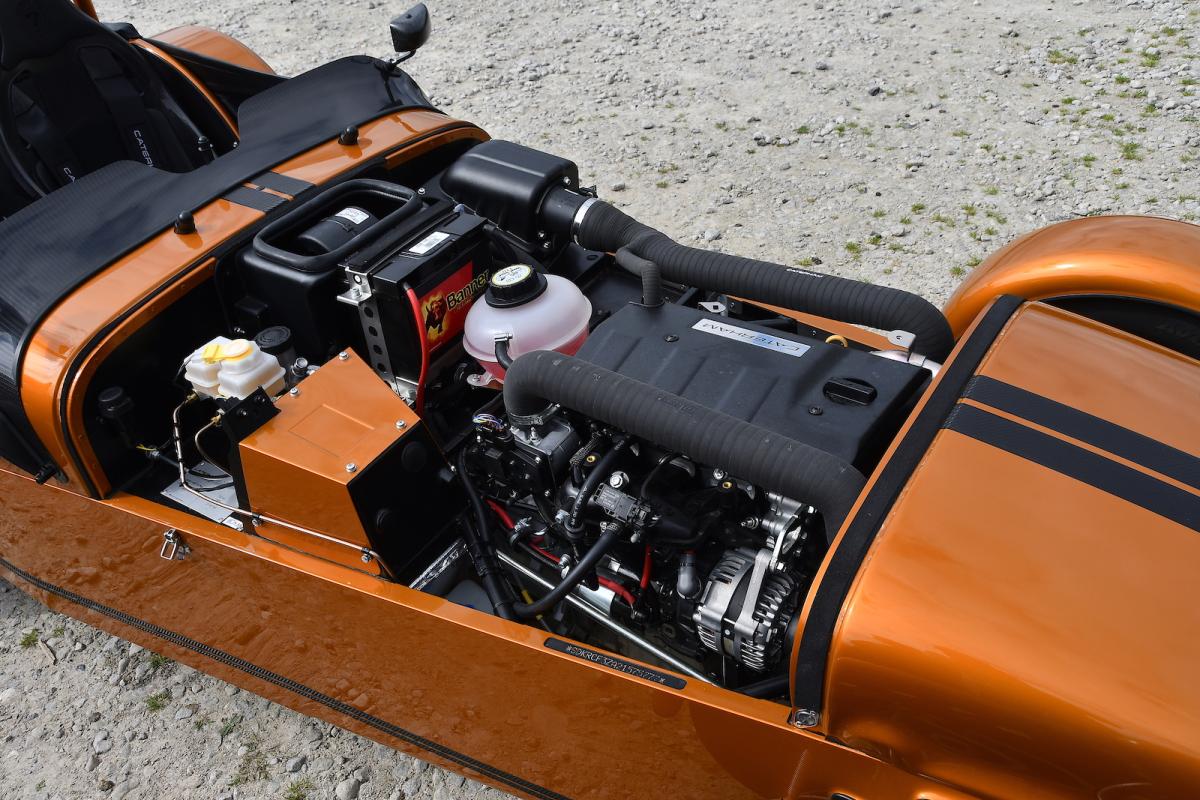
- Caterham Seven 170 R engine
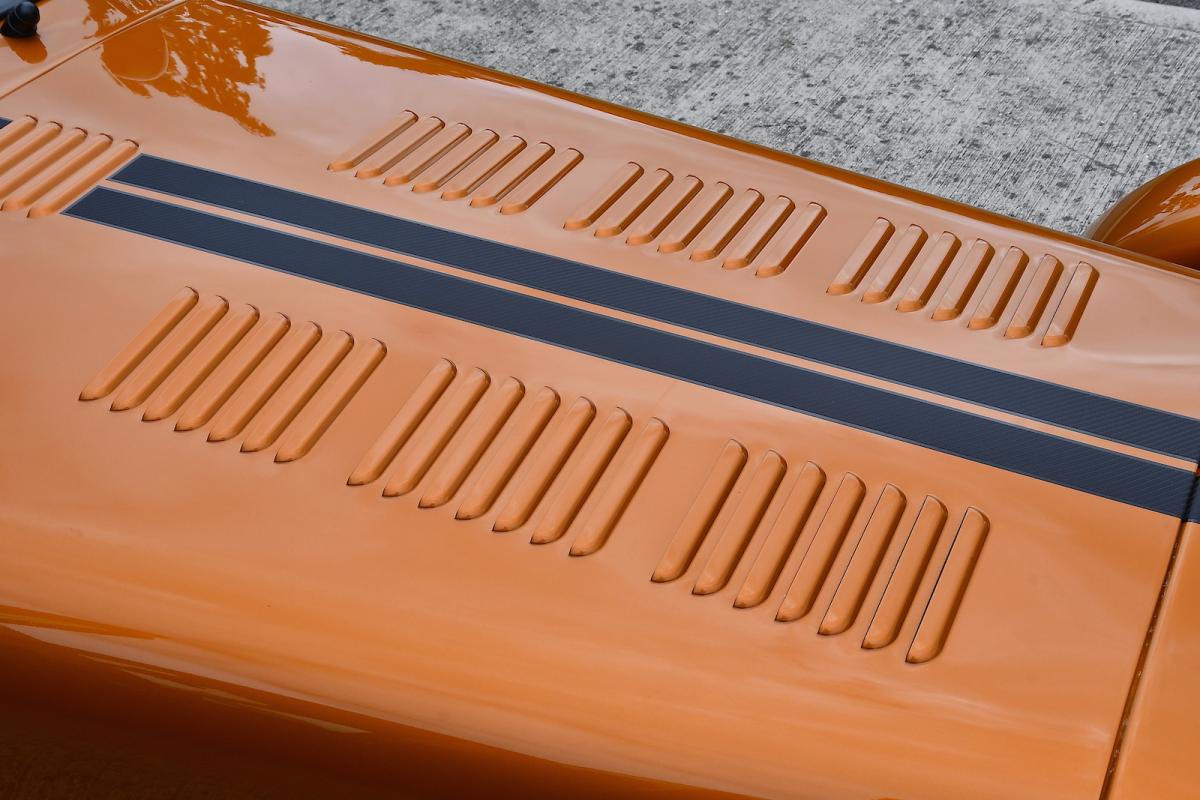
- Caterham Seven 170 R bonnet detail
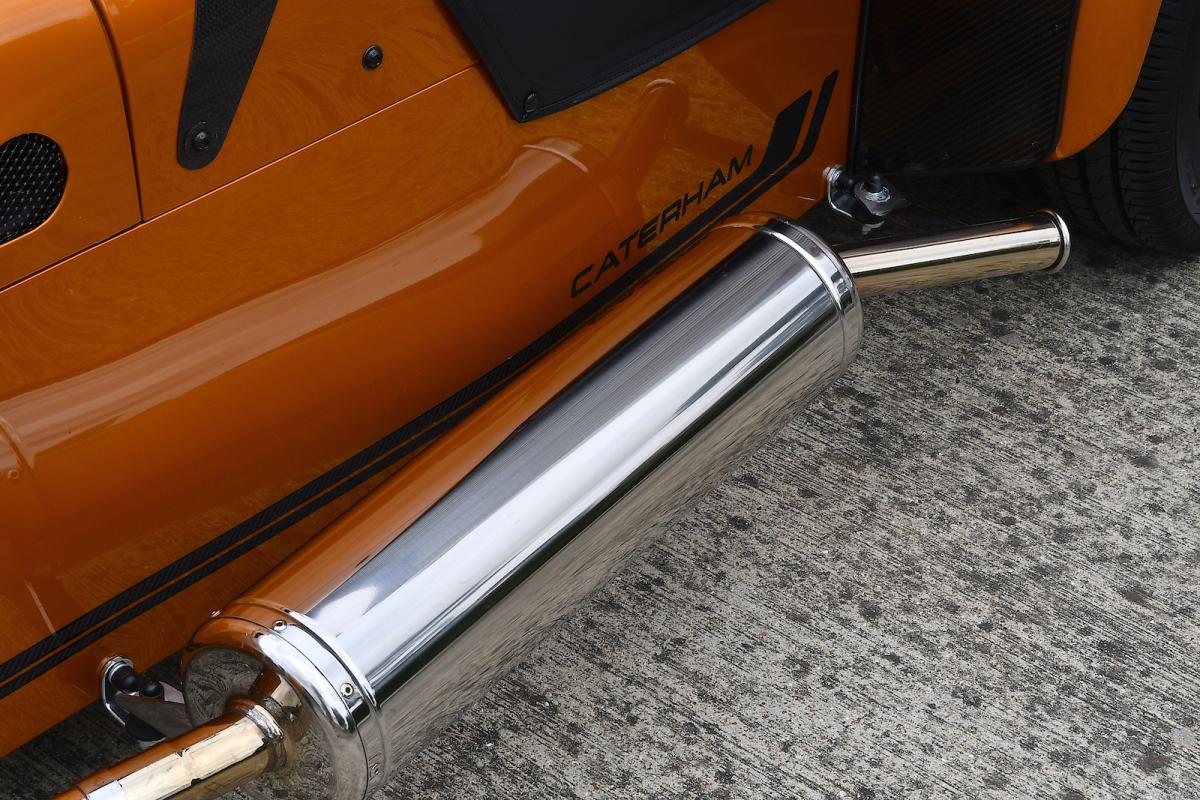
- Caterham Seven 170 R exhaust detail
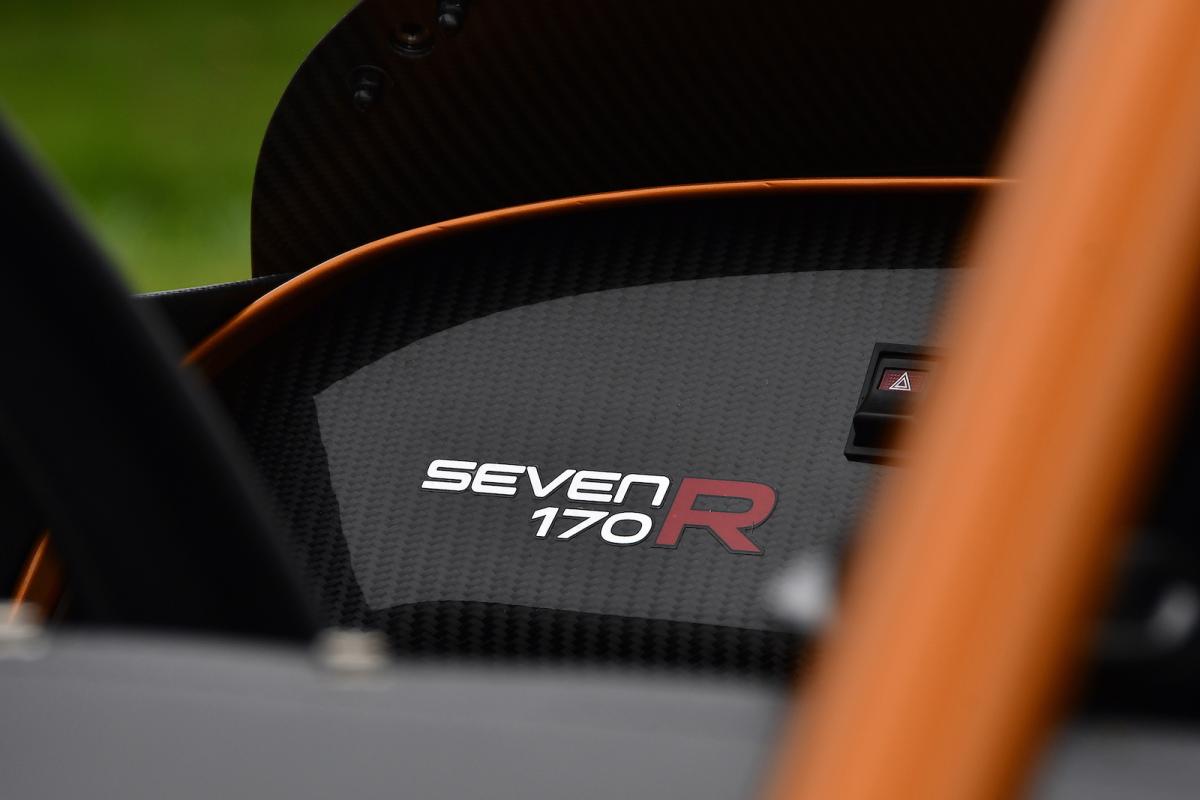
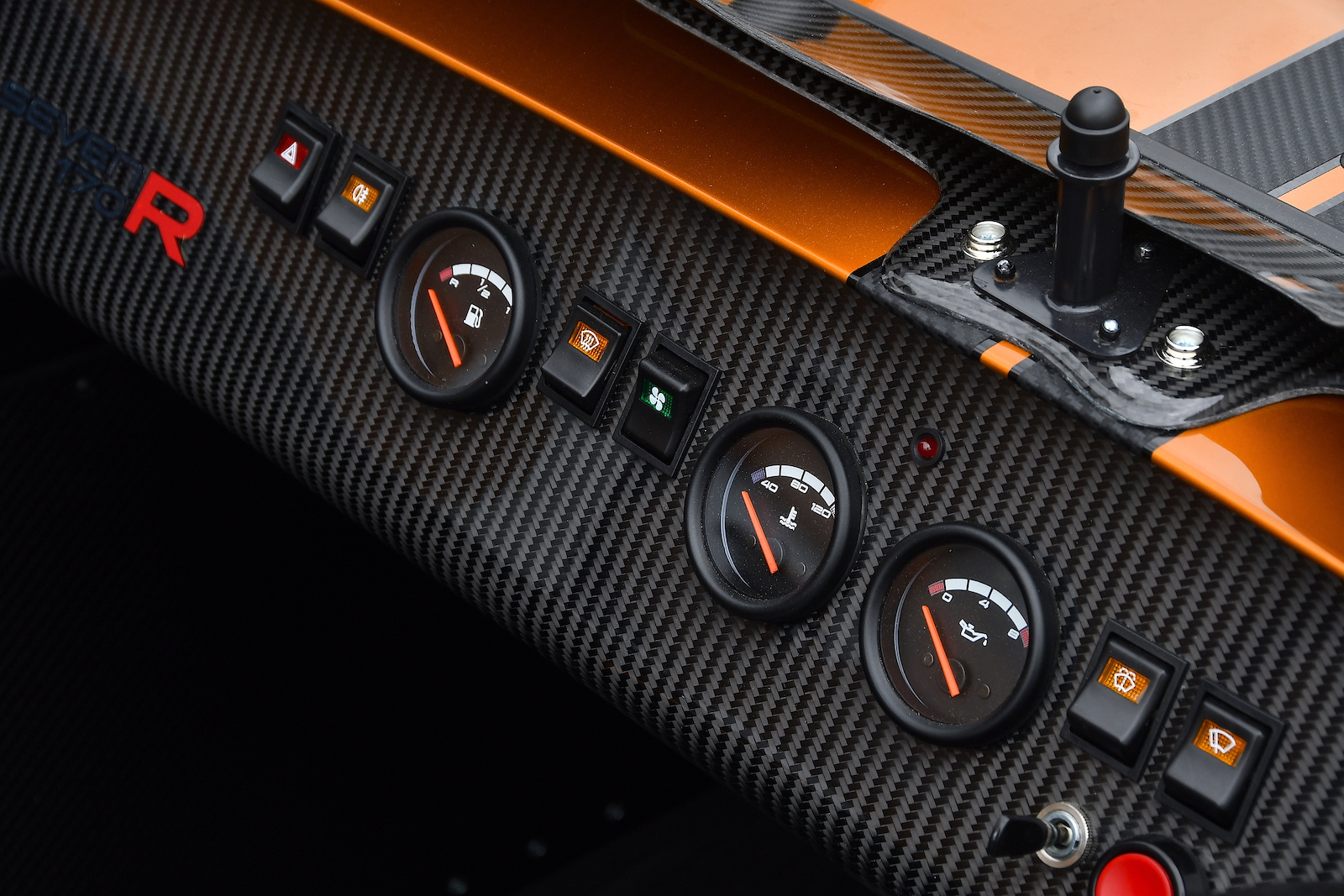
- Caterham Seven 170 R interior detail
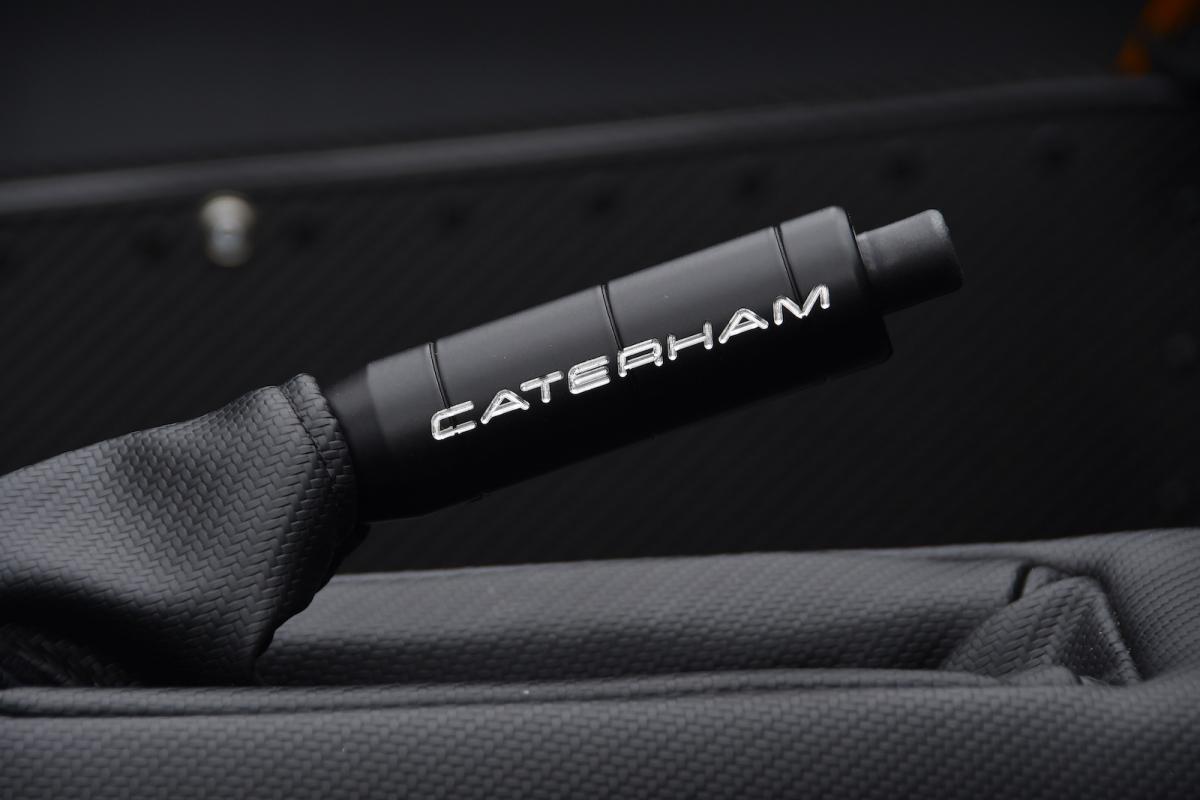
- Caterham Seven 170 R interior handbrake detail
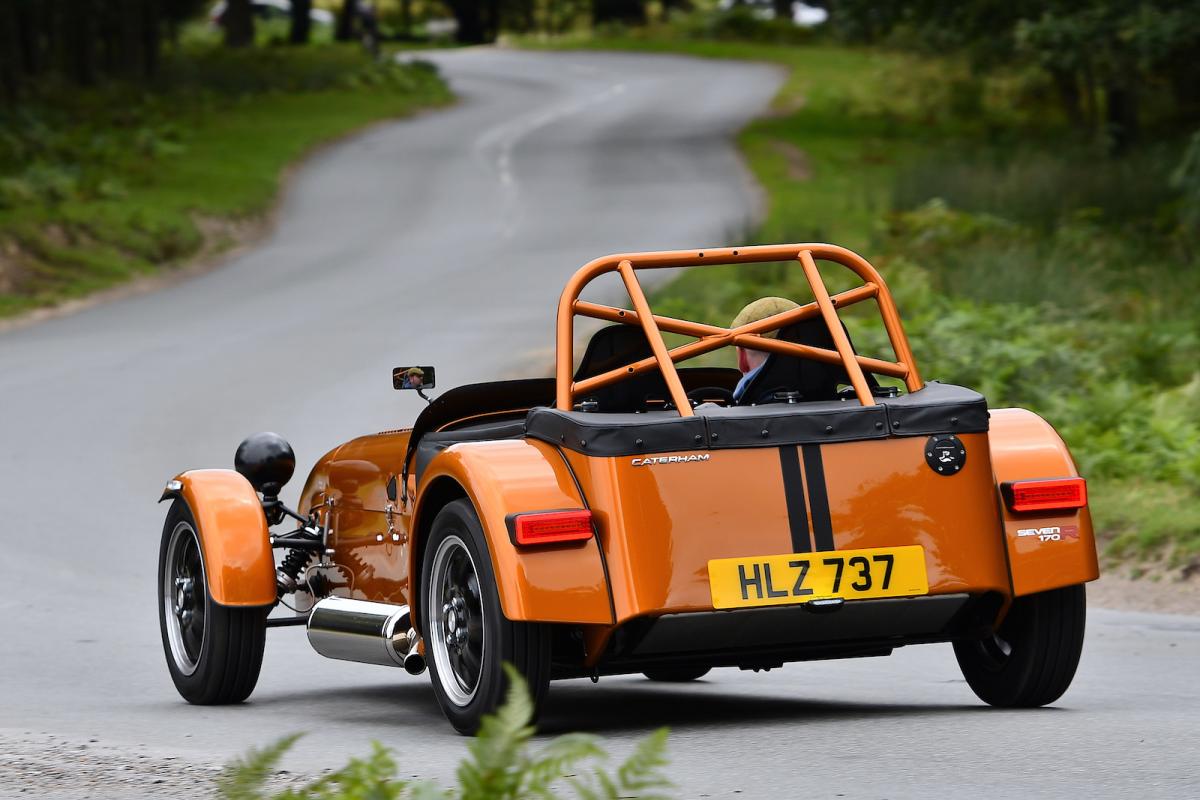
- Caterham Seven 170 R rear cornering
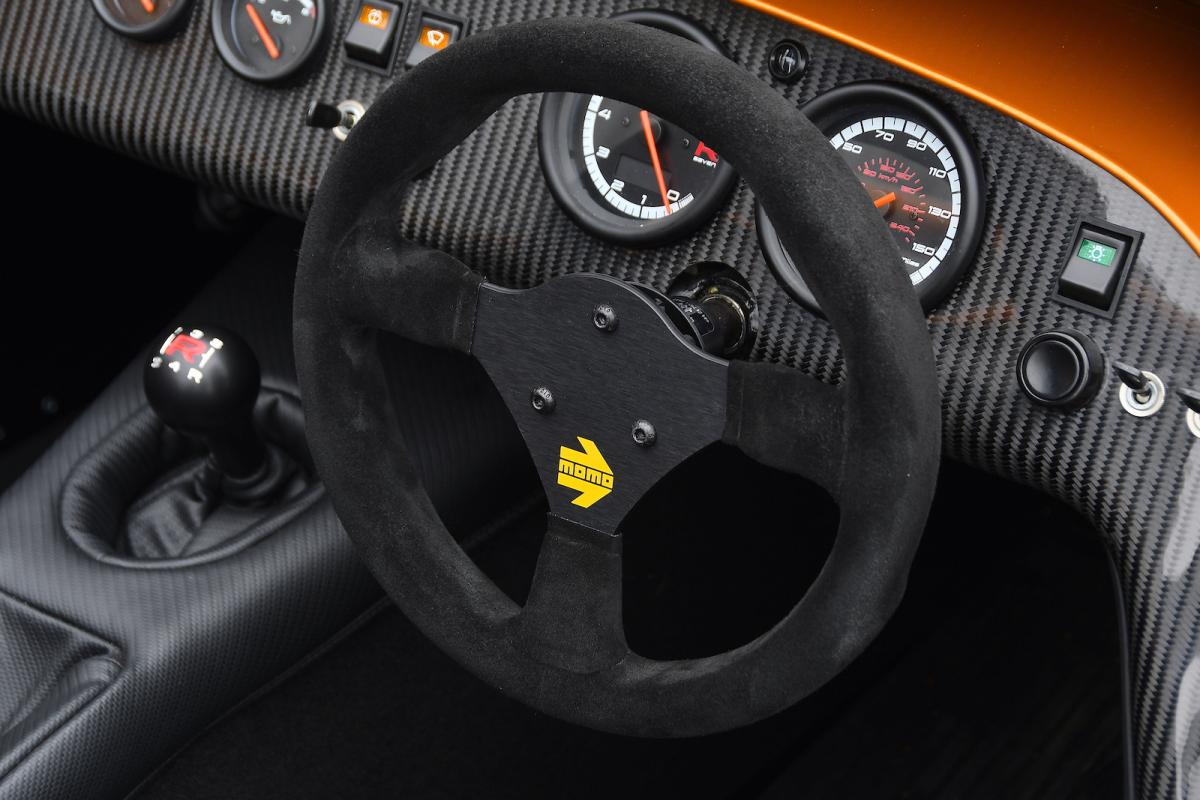
- Caterham Seven 170 R interior dashboard
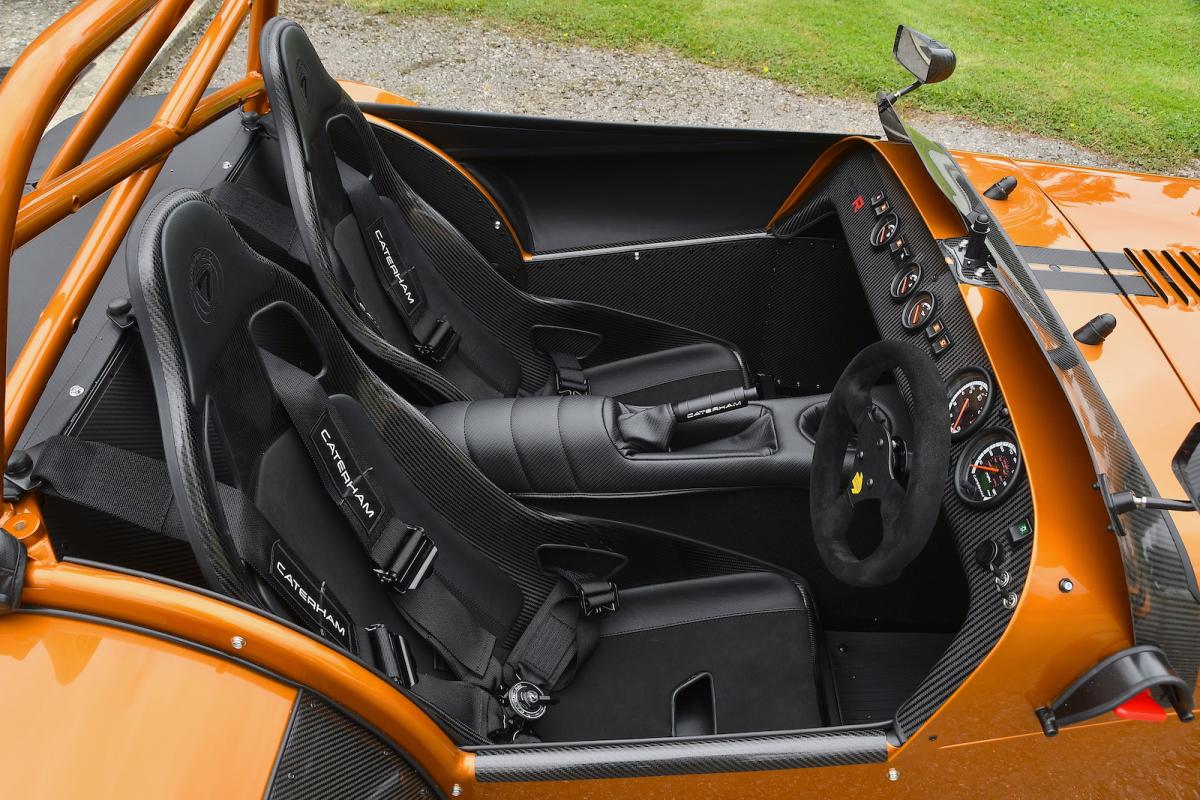
- Caterham Seven 170 R interior seats
- Caterham Seven 170 R interior dashboard


What is What Car? best price?
The What Car? best price shows you the cheapest way to buy your new car, whether it's by choosing an in-stock car through our partner Autotrader or placing a factory order.
Available now from: £54,490
RRP from: £18,005
Introduction
Sports cars don’t come much more old school than the Caterham Seven – as you can see from these photographs.
It’s based on a super-lightweight design by Lotus – the Lotus Seven – which was built from the late Fifties and into the Seventies. Caterham's version doesn’t actually share any parts with the original, but it does look a lot like it – and many people would argue that that’s to its credit.
What is What Car? best price?
The What Car? best price shows you the cheapest way to buy your new car, whether it's by choosing an in-stock car through our partner Autotrader or placing a factory order.
Available now from: £54,490
RRP from: £18,005
Today, though, you’ll find some thoroughly modern engines under the bonnet – although don’t go expecting a hybrid version any time soon (or ever, perhaps).
The cheapest Caterham 7 is powered by a tiny 660cc three-cylinder engine that drives the rear wheels through a five-speed manual gearbox. It’s surprisingly sprightly, but the track-focused 620 that sits at the other end of the range is in an altogether different performance league, and will out-accelerate some Ferraris.
Most versions are available in kit form – it really does turn up in boxes and you build it yourself. That gives buyers the option of saving cash and, assuming they have a certain amount of engineering know-how, getting stuck into the oily bits.
For a reasonable premium Caterham will sell you a fully built one. While you could argue that the pricing structure is pretty punchy for a pared-back sports car, the flip side is that few cars will hold on to their value against depreciation as well as the Seven
Read on over the next few pages of this review to find out all you need to know about the Caterham 7, including which versions make the most sense, what it's like to drive, how comfortable (or otherwise) it is inside, and whether we’d recommend buying one.


Pros
- Raw, old-school driving experience
- Slow depreciation
- Incredible acceleration in top versions
Cons
- Expensive
- Extremely cramped inside
- You really won't want to hit anything
Performance & drive
What it's like to drive, and how quiet it is
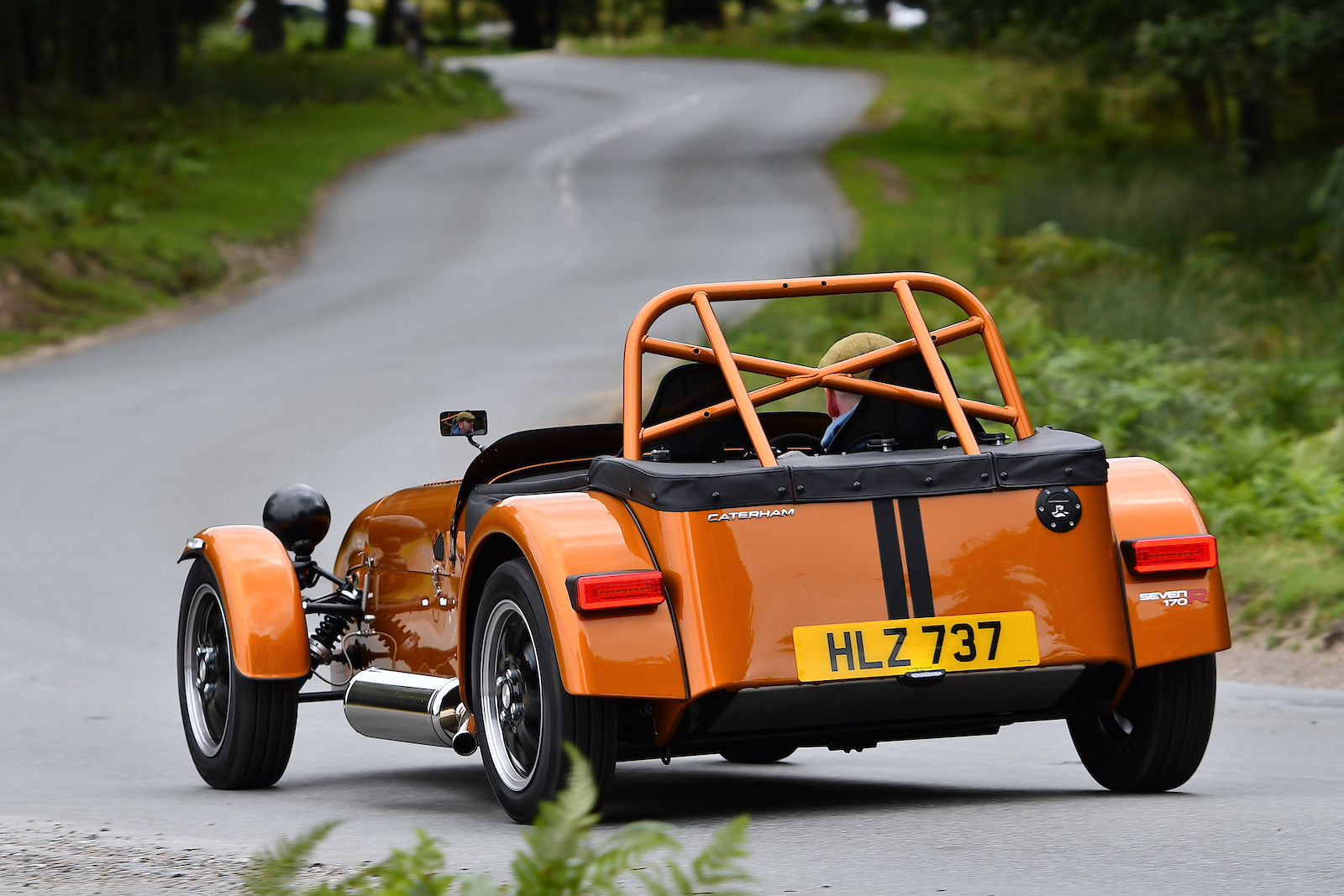
The Caterham Seven range starts off with two models that share the same 660cc, three-cylinder turbocharged engine: the road-oriented 170S and the track-focused 170R. It produces 84bhp at 6500rpm and 86lb/ft of torque at 4000-4500rpm.
That might not sound like an awful lot of power in a world of 1000bhp supercars, but it’s important to remember that each Seven weighs less than half a tonne. In fact, the stripped-back 170R is technically the lightest production car currently on sale, weighing in at a featherweight 440kg.
That means acceleration is pleasingly brisk, with a 0-62mph time of 6.9 seconds. The little 660cc engine is turbocharged, so it pulls surprisingly strongly in the mid-range. On a typical give-and-take B-road, you can simply leave it in third and fourth gear, relying on the impressive tractability of the engine to power you from corner to corner.
As the entry-level engine isn’t particularly racy, we feel it makes the most sense in the more laid-back 170S rather than the super-focused 170R.
In the S, with its retro styling and standard fit heater, carpets and weather gear, you don’t ever find yourself lusting after more power – you’re simply happy to bumble around in what feels like a nicely rounded classic car. In the R, with its limited-slip differential and sports suspension pack (which lets you adjust the ride height), you can’t help craving a bit more punch so you can exploit the chassis more easily.
So which Seven should you buy if you want a sports car that's fun on a Sunday morning blast but is also suitable for the occasional track day?
Well, we’d point you in the direction of the 152bhp, 1.6-litre four-cylinder 310R. With a 0-62mph time of just 4.9 seconds and a top speed of 127mph it feels like the Goldilocks model in the Caterham range – not too mad, but not too subdued either. It’s just right.
Indeed, the 310R’s natural territory is on twisting, undulating B-roads. That's where the Seven revels in brief blasts of acceleration followed by a dab on the brakes before it dives for the perfect line through corners. There’s a real joy to be had snicking the tiny gearlever up and down at speeds below the national limit, listening to the side-exit exhaust roaring away.
The steering is super-sharp, requiring only the merest hint of movement to make the car change direction. There’s loads of feedback too, so you’re acutely aware of exactly how well the front tyres are gripping as they bob up and down in the periphery of your vision.
All Sevens become a little more hard work in an urban environment. There's no power steering, so the steering wheel is quite heavy at low speeds, and the tiny pedals make stop-start stuff a real exercise in delicate footwork. We found ourselves constantly wishing we'd worn smaller shoes.
The motorway is also way out of the Seven’s comfort zone because the car is incredibly noisy and tends to wander around as the front tyres try to follow cambers in the road. The ride isn’t too bumpy on the more sedate versions, but if you go for a track-focused model, you’ll wince over every pothole.
Interior
The interior layout, fit and finish
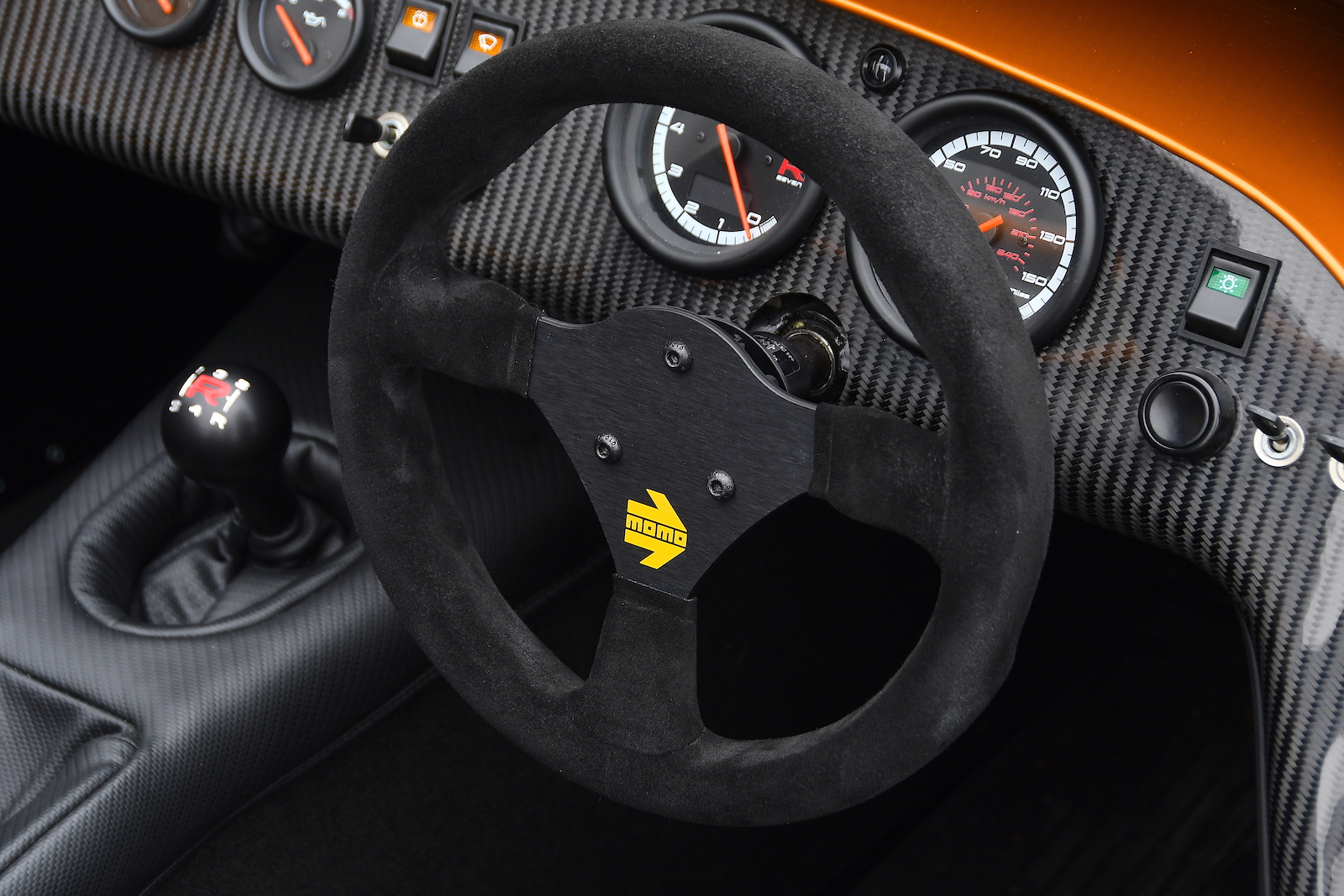
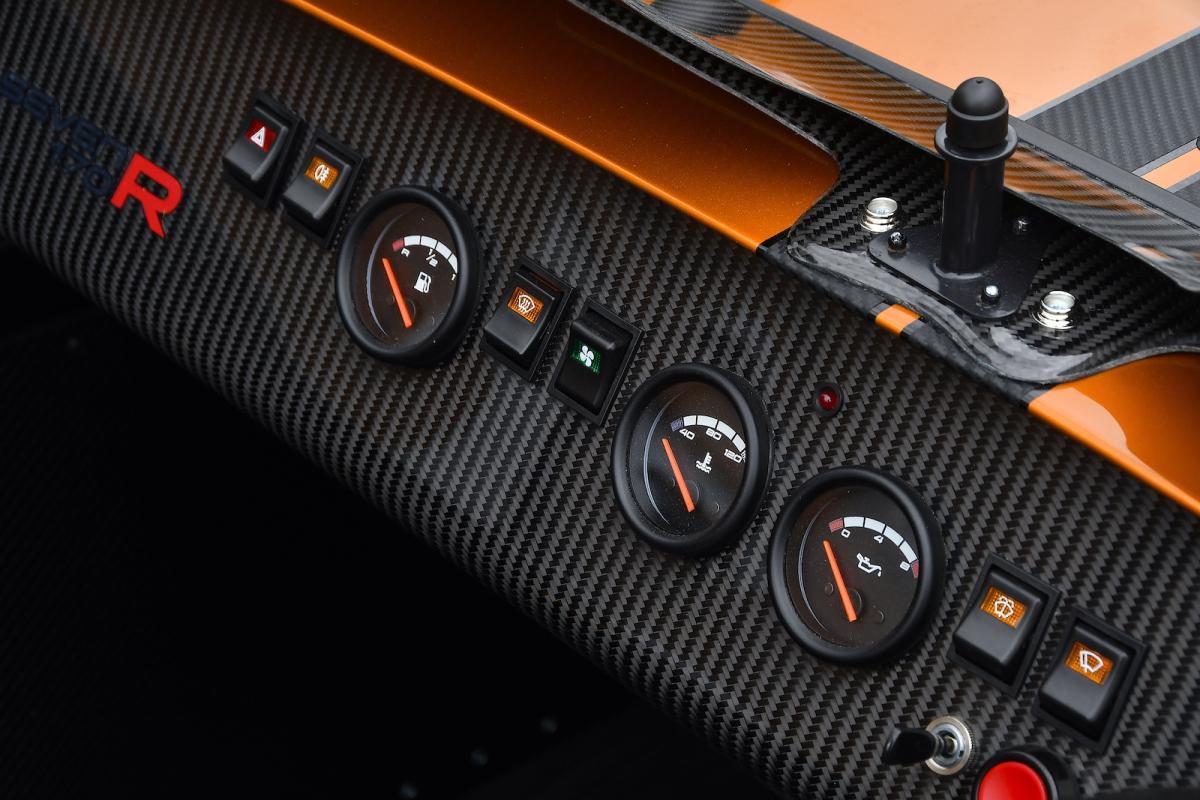
Let’s just say the Caterham Seven has everything you need, but not everything you'd want. There’s a steering wheel, a couple of sports seats, a couple of seatbelts, a smattering of dials and switches and a handbrake. That really is it.
If you’ve managed to get into the driver’s seat (not easy if you’re more than about 5ft 5), you will at least be held securely, and the seat is reasonably supportive in all the right areas.
The stubby gearlever is conveniently positioned close to where your left hand naturally falls, although the fact that you have to activate the indicators by flicking a switch on the dashboard takes some getting used to.
Fancy one of those modern luxuries, such as carpet? That’ll be extra. And if you're looking for the infotainment touchscreen, you'll be looking for a very long time. You even have to pay for a windscreen and hood. A luxury sports car the Caterham Seven is not.
Passenger & boot space
How it copes with people and clutter
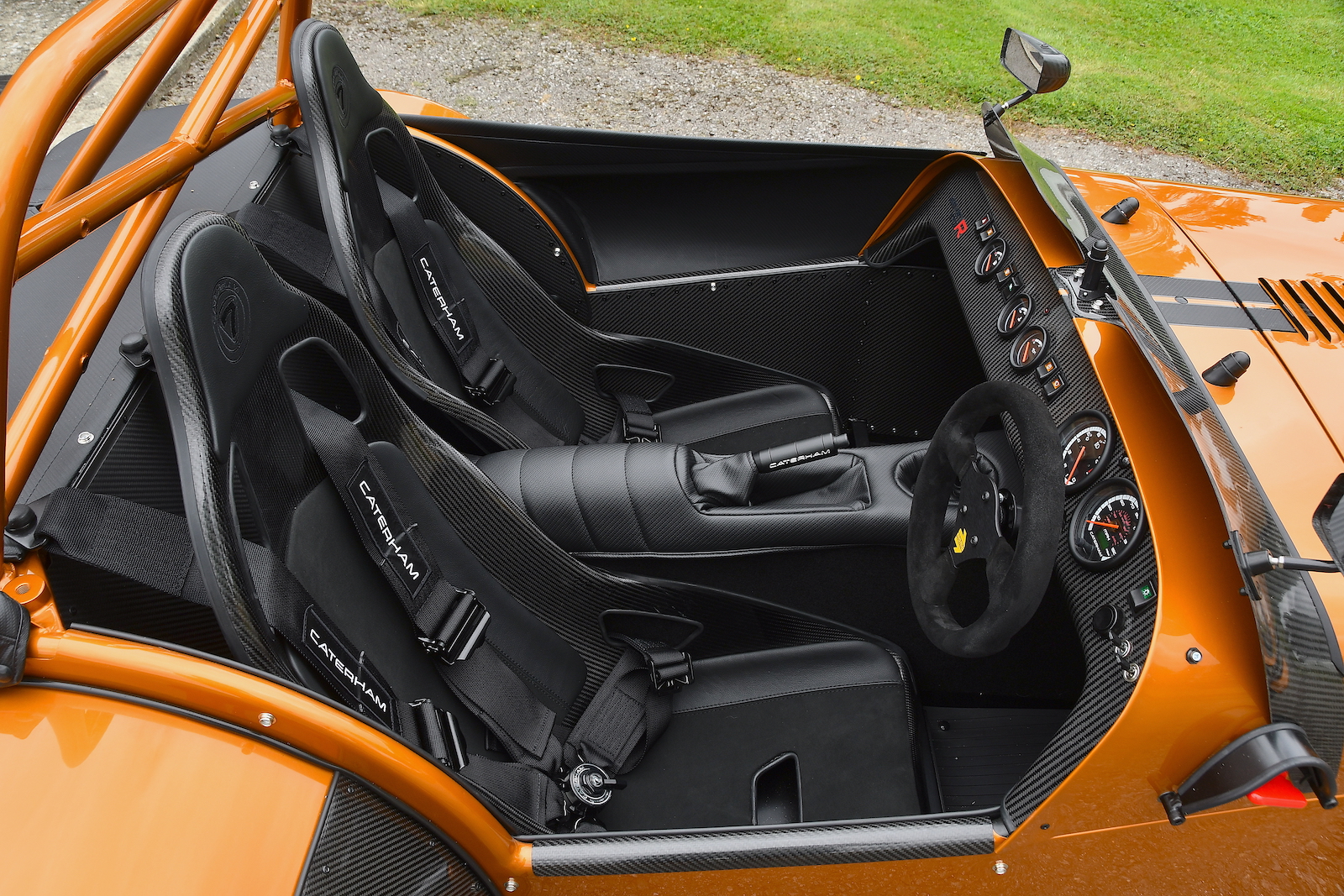
It appears that people really were smaller back in the Fifties because you need snake hips to fit into the Caterham Seven. The pedal area is extremely tight too, so even once you’ve managed to twist yourself inside, there’s no space to rest your clutch foot.
The Seven is very narrow, so you’ll find yourself rubbing shoulders with your passenger, although the more expensive versions are available in wide body ‘SV’ form, which give you a bit more room to breath. Interior storage space remains practically non-existent, though.
As for boot space, well there isn’t much at all. A couple of small, soft overnight bags will just about fit. We wouldn’t recommend leaving your Caterham Seven unattended with anything valuable inside because it will be very easy to pinch. 'Breaking in' simply involves unpopping some buttons.
Buying & owning
Everyday costs, plus how reliable and safe it is
If you add up the value of all the parts used to build the Caterham Seven, it seems hideously expensive. You could buy a Ford Fiesta ST for less cash than even the cheapest Seven 270, for example – and that's before you’ve forked out extra to equip it with a roof and a windscreen.
The Seven is a very different animal to a modern hot hatch, though. In fact, the Morgan 3-Wheeler is one of the only other new cars that offer a similarly raw and back to basics driving experience, and that’s a much more expensive option.
Ways to buy
What’s more, Sevens hold on to their value better than the vast majority of modern sports cars so you can bank on getting back a lot of your investment if you sell. Building your Seven yourself is the cheapest option, but most buyers choose to pay a bit extra to have Caterham take care of that.
Options worth adding include the windscreen and all-weather kit (hood and doors), plus you’ll also want a heater and a 12-volt socket. If you plan to drive your Seven at a track day, we’d also recommend ticking the box for the ‘R’ pack, which adds go-faster goodies.
For all the latest reviews, advice and new car deals, sign up to the What Car? newsletter here
Tips & Advice
Caterham Super Seven Convertible specifications
RRP price range
Available fuel types (which is best for you? )
Number of engines (see all)
Number of trims (see all)
Company car tax at 20% (min/max)
Company car tax at 40% (min/max)
What is What Car? best price?
The What Car? best price shows you the cheapest way to buy your new car, whether it's by choosing an in-stock car through our partner Autotrader or placing a factory order.
Available now from: £54,490
RRP from: £18,005

About the writer