New Nissan X-Trail vs Hyundai Santa Fe: practicality
Space and practicality
Front space, rear space, seating flexibility, boot
Even six-footers won’t struggle for space in the front seats of these cars. Both have plenty of head, leg and shoulder room and storage space for bottles, keys and phones on the centre console, with a secondary tray beneath, but the Hyundai Santa Fe just edges it with larger door cubbies and an additional area ahead of the passenger.
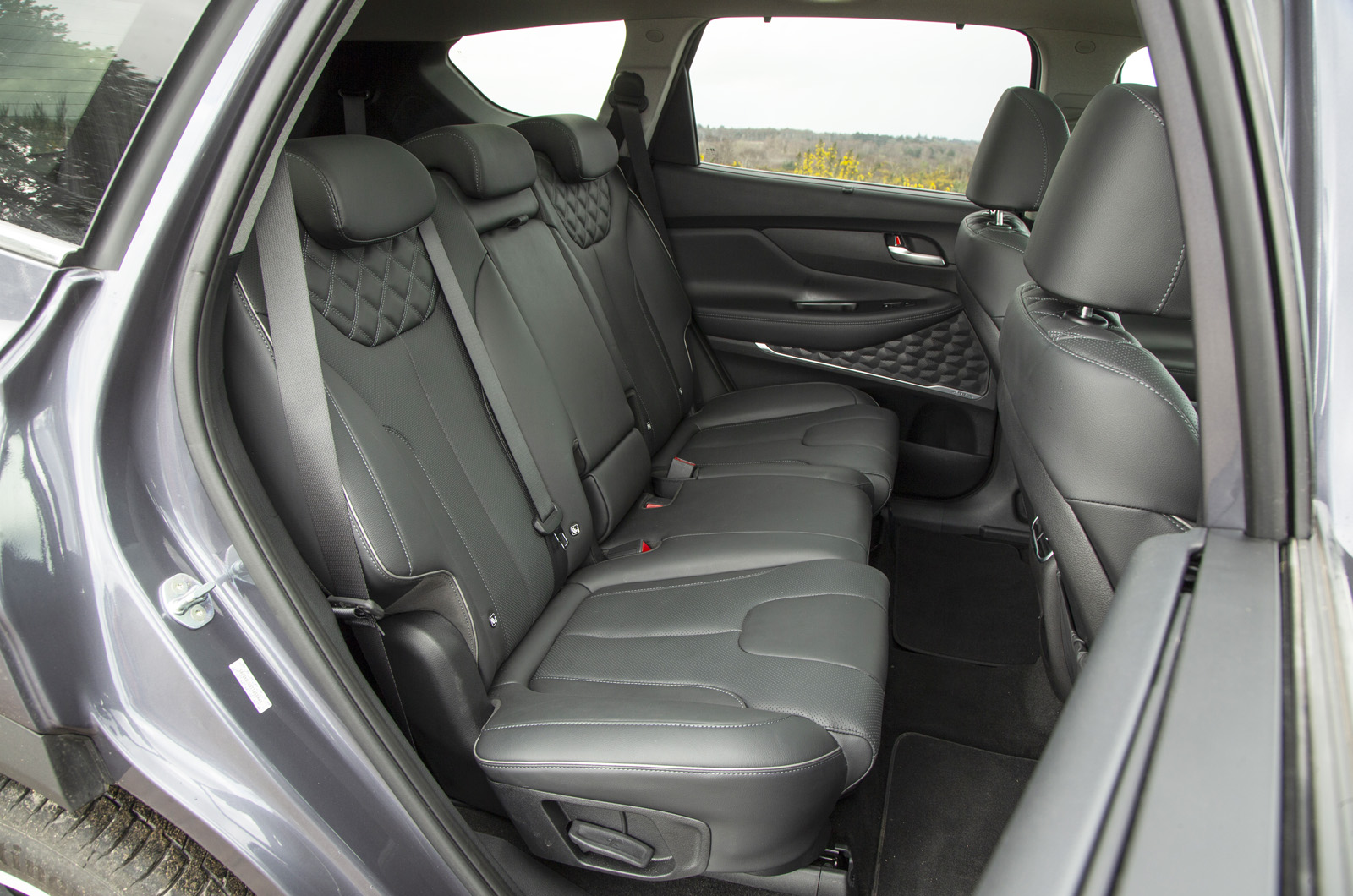
Despite having panoramic glass roofs, which usually encroach on head room, there’s enough for six-footers in the second rows of both cars, although their hair will touch the ceiling. Second-row leg room is more generous in the Santa Fe, though, and, for even more room, it also has buttons to slide or tilt the front passenger seat forward if it’s vacant. With longer-legged occupants so well served for space, they’re more likely to be willing to sacrifice some to free up leg room in the third row – easily done by sliding the second row forward.


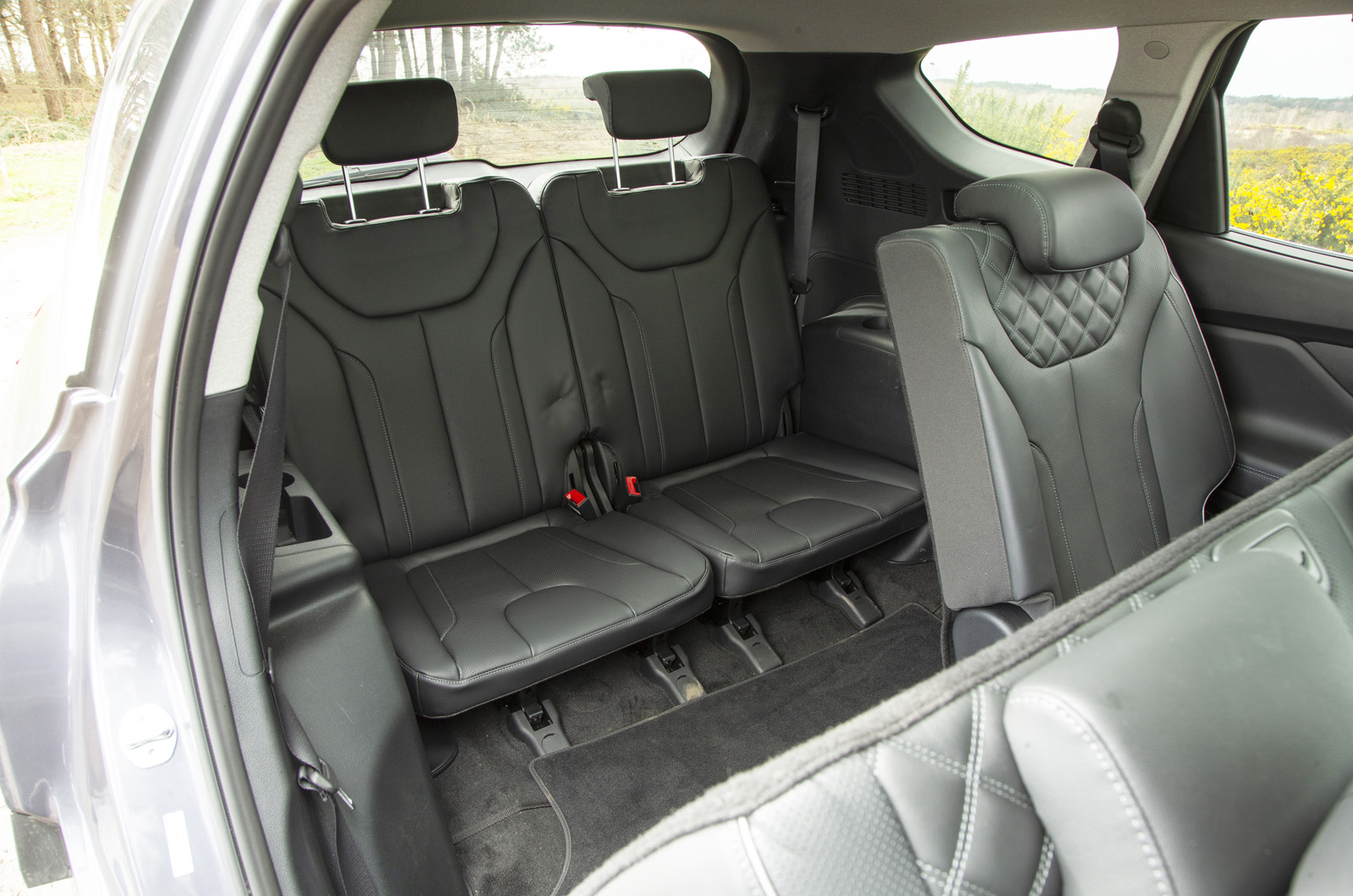
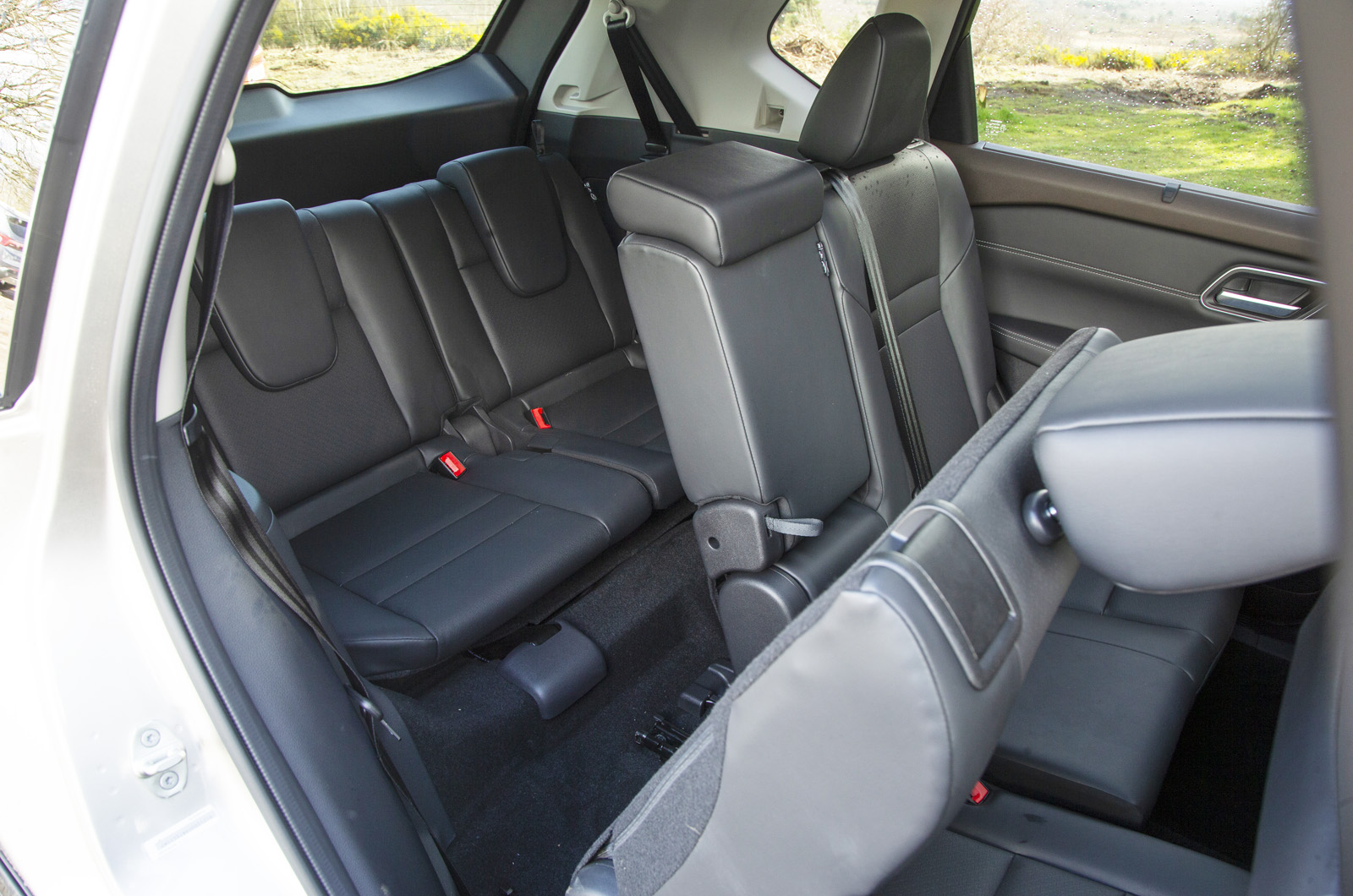
That’s one reason why the Santa Fe is better if you need space for seven adults. Another is that while the third rows of both cars place their occupants very close to the floor, forcing their knees up, there’s more head room in the Santa Fe. All of this means the Nissan X-Trail’s rearmost seats are really only suitable as overflow seating for very short trips.
When it comes to seating flexibility, both cars’ second-row benches slide in a 60/40 split, and you can recline their backrests for added comfort. However, the Santa Fe has extra touches that make family life a little easier. Its kerbside second-row seat, for example, slides and folds forwards at the press of a button, allowing quick and easy access to the rearmost seats, and the opening is much broader, so larger occupants will have much less of a struggle to get in. In contrast, the X-Trail brings the added complication of having to manually pull a latch to release the backrest before sliding the seat base out of the way.
The Santa Fe also has buttons conveniently placed next to the third-row seats to remotely fold the second-row backrests flat if you need load space more than room for passengers.
When it comes to boot space with the first two rows of seats in place, the X-Trail has room for eight carry-on cases below the load cover; that’s enough for a family’s holiday luggage, but it trails the Santa Fe, which can hold 10.
There’s very little underfloor storage space in either car, but both boots have low loading lips and flat floors when the rearmost seats are folded. The X-Trail gains a point with its more versatile 40/20/40 second-row backrests, enabling you to fold the middle seat down so longer items can be carried while the two outer seats are occupied.
When all seven seats are in use, neither car has masses of space left for luggage, but the Santa Fe will still take a couple of cases. The shorter boot in the X-Trail struggles to accommodate more than a couple of shopping bags.
Boot space
Nissan X-Trail
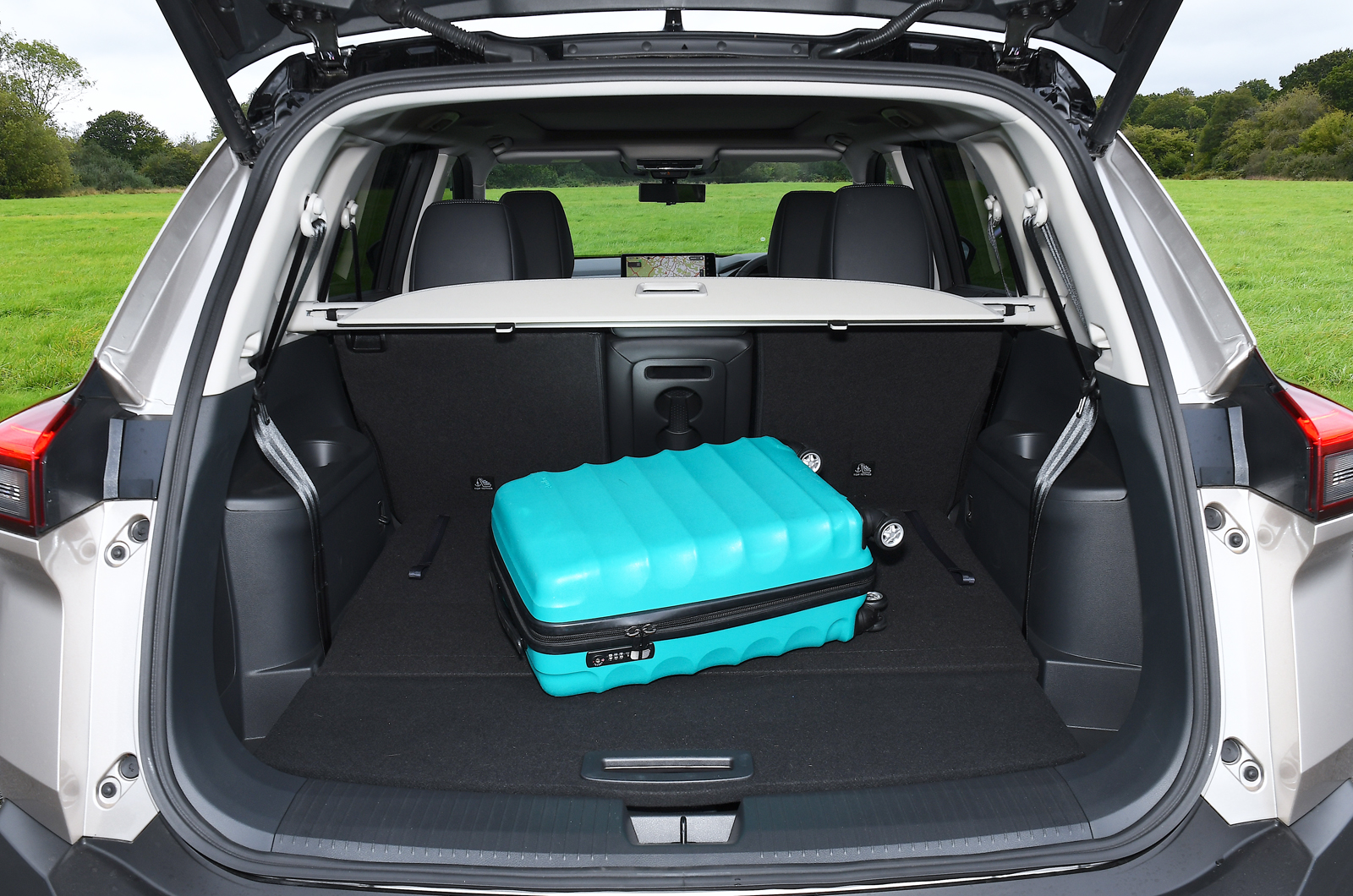
Boot 485-1298 litres Suitcases 8
Hyundai Santa Fe
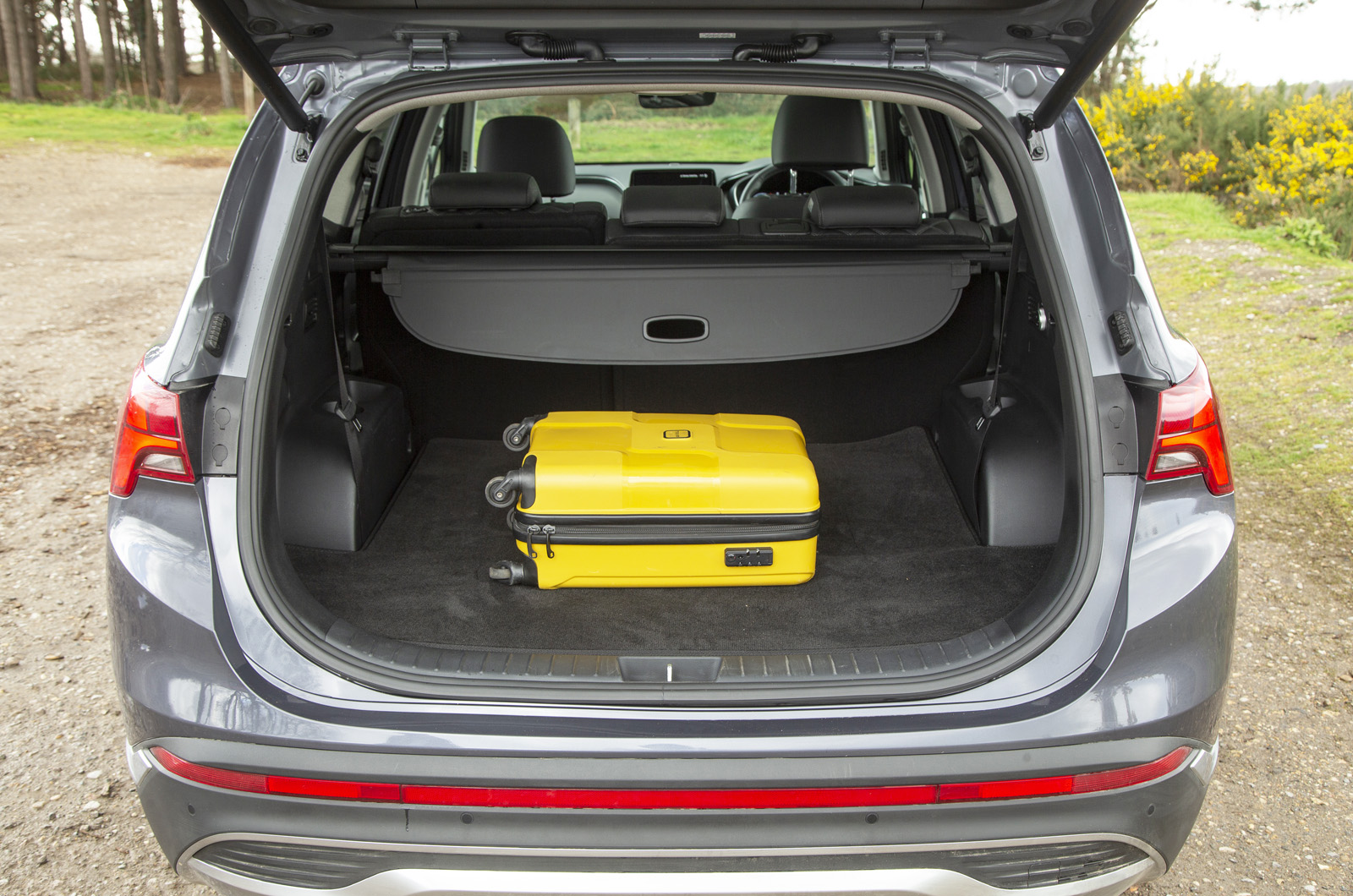
Boot 571-1649 litres Suitcases 10
<< Previous | Next: How much will they cost to run? >>
Page 3 of 5