Ford Explorer Van review
Category: Van
The Explorer Van is a commercial version of Ford's electric family SUV


What Car? says...
The Ford Explorer Van isn’t a conventional van, but that should be obvious from the moment you look at it. Instead, it’s a two-seat commercial conversion of the Ford Explorer electric SUV, with the rear passenger area replaced by a flat load bay, bulkhead, lashing points and movable divider panels.
It’s a niche idea — so niche that there’s only one direct rival, the Skoda Enyaq Cargo — but it could make sense for the right business. Not every van user needs the space of a Ford E-Transit Courier or Citroën ë-Berlingo Van, with Ford aiming the van at drivers who carry tools, parts or technical equipment rather than bulky loads. Think engineers, surveyors, utility fleets and mobile support teams who spend more time travelling between jobs than loading and unloading at them.
It should also appeal to those wanting long electric range and car-like comfort, as it retains all of the SUV’s running gear.
Of course, being comfortable and efficient is only useful if the Explorer Van is practical enough to work as a van. So, does Ford’s SUV-based electric commercial make sense?

Performance & drive
What it’s like to drive, and how quiet it is
Strengths
- +Strong electric performance
- +Excellent motorway refinement
- +Load had little effect on ride or performance
Weaknesses
- -Weight is noticeable if you press on
- -Ride a bit firm especially in urban areas
- -Can move around under maximum acceleration
Every Ford Explorer Van comes with a 77kWh (usable capacity) battery for an official range of 374 miles. With a real-world efficiency figure of 3.8 miles per kWh, it’s more efficient than a proper electric van, which means you can cover more miles for less money; we reckon 270 to 300 miles in real-world conditions.
In cheapest RWD guise, the Explorer Van uses a single electric motor producing 282bhp. A more powerful AWD version which uses a 335bhp twin-motor four-wheel-drive setup is also available.
It’s the same basic set-up used in the passenger-carrying Ford Explorer SUV, and that tells you most of what you need to know about how it drives.
Unsurprisingly, it feels like an electric SUV. That’s a good thing if you’re spending a lot of time behind the wheel.
Performance is strong. The rear-wheel-drive Explorer SUV is capable of 0-62mph in around 6.4sec. That’s more than enough for most commercial use, but if you want to move cargo even more quickly, the AWD version does the same sprint in 5.3sec.
Those figures mean it’s got plenty of power for joining motorways, overtaking slower traffic, or climbing hills with a load on board. It’s possible to lose the rear end slightly if you demand full power in the wrong conditions, though.
Around town, the Explorer Van is simple to place and easy to manage. The steering is light and accurate, and the driving position gives you a good view ahead. It’s larger and heavier than old car-derived vans such as the Ford Fiesta Van or Vauxhall Corsavan, but it doesn’t feel cumbersome in normal use.
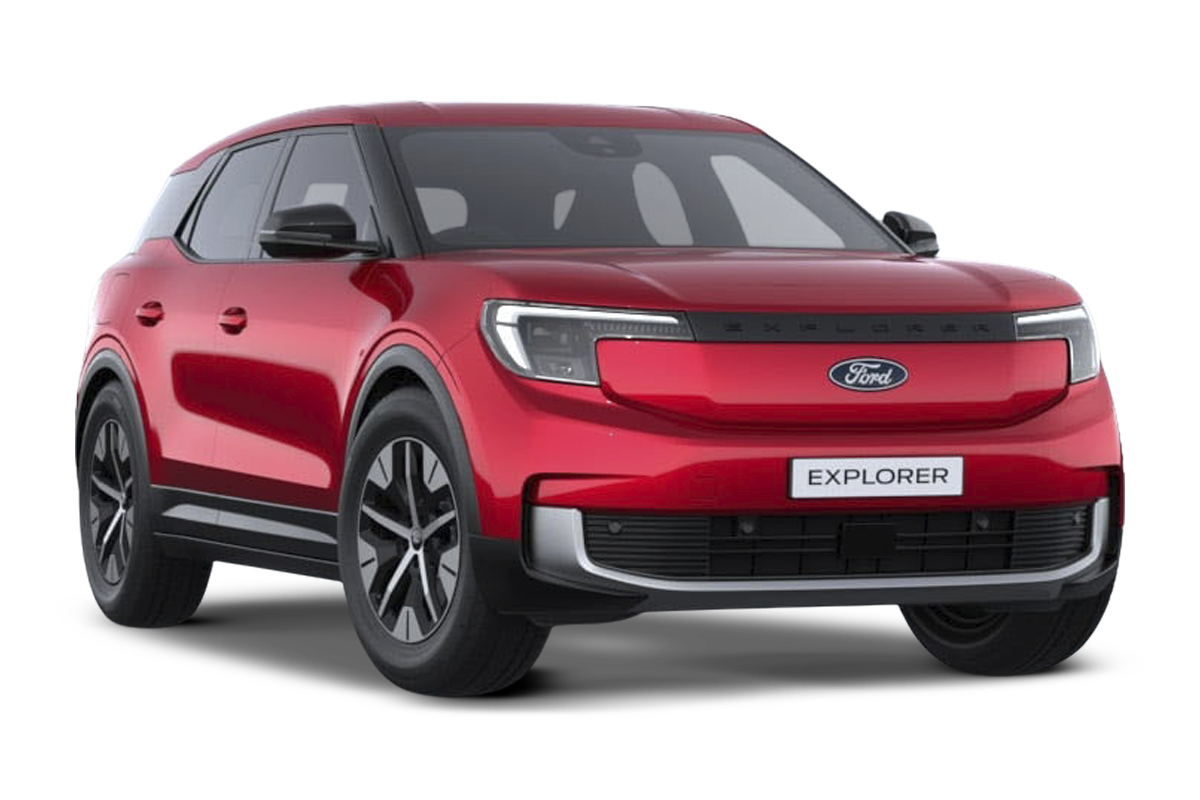
It’s better still on faster roads. Motorway refinement is excellent, with low noise levels and a settled ride that make the Explorer Van feel well-suited to longer journeys.
Braking is typical of a modern EV. Regenerative braking does much of the work in everyday driving, and the system is easy enough to get to grips with.
The ride is generally comfortable, though you can feel the weight that comes with that large battery pack. Broken urban roads can make it feel firm at times, but it is much more composed and refined than most small electric vans. It doesn’t feel especially agile, but that won’t matter to most buyers.
We carried roughly 350kg for much of our time with the van, and the extra weight had very little effect on how the Explorer Van drove. If anything, it made the ride feel slightly softer and more settled, but there was no obvious penalty in acceleration, refinement or body control.
The vehicle’s weight becomes more noticeable if you drive quickly, but the Explorer Van is at its best when driven smoothly.
Its weight of 2090kg also brings it into van territory for speed limits. Despite being based on a car, you’ll face lower limits on A-roads than in the SUV version.
“The Explorer Van is smooth, quiet and quick enough to make long working days feel easy. Just keep an eye on the speed limit!” – Phil Huff, Van reviewer

Interior
The interior layout, fit and finish
Strengths
- +Comfortable driving position
- +Smart SUV-style cabin
- +Excellent rear visibility by van standards
Weaknesses
- -Touch-sensitive controls are irritating
- -Sliding screen feels more clever than essential
- -Some SUV leftovers have not been fully tidied up
The Ford Explorer Van’s cab is carried over almost entirely from the passenger-carrying Ford Explorer SUV, and that gives it a much more upmarket feel than you’ll find in most compact vans.
You sit lower than you would in a typical commercial vehicle, but the driving position is comfortable and easy to settle into. The front seats are supportive, forward visibility is good, and the dashboard has the same wraparound design, 5.3in digital driver display and 14.6in portrait infotainment screen as the SUV. If you’re spending hours driving between jobs, it feels like a much nicer place to be than a conventional van.
Storage is decent, too. There’s space for phones, drinks, paperwork and the usual everyday clutter, while the hidden compartment behind the sliding centre screen adds another useful place to keep valuables out of sight. The screen itself is one of the Explorer’s more unusual features, because it can be moved up and down to suit the driver or reveal the storage area behind it.
It’s a clever idea, but not an essential one. Most drivers will probably find a position they like and leave it there.
The bigger issue is the control layout. The Explorer Van inherits plenty of Volkswagen influence from the passenger SUV, and not all of it is welcome. The touch-sensitive steering wheel controls are particularly frustrating, because they’re easy to brush accidentally, especially when manoeuvring, and lack the certainty of proper buttons. Too many basic functions also rely on the touchscreen.
There are also a few reminders that this is a converted SUV rather than a clean-sheet van. The most obvious is the window switch arrangement. The Explorer SUV uses one set of switches for the front and rear windows, with a separate button to toggle between them. That button still works in the Van, even though the rear windows no longer operate because the rear passenger area has been turned into load space, meaning no windows open when it’s in the wrong position. It’s not a serious problem, but it feels like a detail that should have been tidied up.
The bulkhead behind the front seats is much more convincing. It’s a solid metal item with a mesh section, so you still get a useful view through the rear-view mirror. That makes the Explorer Van feel less claustrophobic than many conversions, and rear visibility is excellent by van standards.
“The Explorer Van’s cabin feels far more like an electric SUV than a small van, but that brings interface problems you tend not to get in simpler commercial vehicles.” – Phil Huff, Van reviewer

Passenger & boot space
How it copes with people and clutter
Strengths
- +Flat, usable load floor
- +Movable dividers
- +Decent towing capacity
Weaknesses
- -Limited load volume
- -No sliding side doors
- -Rear side glass may worry some operators
The Ford Explorer Van’s load area is where it has to prove it’s more than just an SUV with the rear seats removed. Fortunately, the conversion is more convincing than that, even if it can’t match a proper panel van for outright load space or access.
Behind the two front seats, the rear passenger area has been replaced by a flat load floor, a solid bulkhead, lashing points and movable divider panels. The dividers can also be removed, so you can either section off smaller items or free up more of the load bay when needed.
Ford quotes a maximum payload of up to 650kg, which is pretty respectable. Like the Skoda Enyaq Cargo’s 690kg payload, it’s well short of a one-tonne payload you might find on traditional compact vans, but it’s likely enough for the sort of users the Explorer Van is aimed at.
There are some limitations, though. The tailgate is inherited from the SUV, so it needs space behind the vehicle to open fully, and leaves it a little compromised if you’re trying to squeeze in a big box. The original rear side doors remain, which can be useful for reaching items at the front of the load area, but they’re not as big or practical as a proper van side door for loading or unloading larger items.
The rear side glass is obscured, but it’s still glass, and those carrying expensive equipment may prefer the reassurance of a fully panel-sided van. The Explorer Van looks more discreet than a traditional commercial vehicle, though, passing as the SUV at a glance, but that won’t suit every fleet.
Towing capacity is useful rather than exceptional. The rear-wheel-drive model can tow up to 1000kg, while the all-wheel-drive version raises that to 1200kg.
The Explorer Van works best if your idea of practicality is carrying a modest amount of valuable kit over long distances in comfort. If you need maximum space, easy access or a really hard-wearing load bay, a conventional electric van will be a better fit.
“The Explorer Van won’t replace a proper panel van, but it’s surprisingly practical and won’t attract attention in the same way a van would.” – Phil Huff, Van reviewer

Buying & owning
Everyday costs, plus how reliable and safe it is
Strengths
- +Strong real-world efficiency
- +Useful long-distance range
- +Lower servicing needs than diesel
Weaknesses
- -High purchase price
- -Limited load space for the money
- -Public rapid charging can reduce savings
The Ford Explorer Van isn’t the cheapest way into an electric van. Ford is treating it as a fleet-order product rather than a normal retail van, so pricing isn’t quite as straightforward as it is with something like a Ford E-Transit Courier. However, expect prices to start from around £40,000 plus VAT.
That makes the van expensive, as a more conventional small van, like the E-Transit Courier, will give you more room for less money.
Charging costs will depend heavily on where the van is plugged in. If you can charge at a depot, workplace or home on a competitive tariff, the Explorer Van should be much cheaper to run than an equivalent diesel vehicle. Of course, if drivers rely heavily on public rapid chargers, that advantage will shrink quickly.
Servicing costs should also be lower than for a diesel van, because there are fewer moving parts, no oil changes and less brake wear thanks to regenerative braking. Tyre wear will need watching, though, because this is a relatively heavy and powerful electric vehicle.
The Explorer Van also benefits from commercial vehicle status, meaning it qualifies for VAT reclamation, LCV rates of vehicle excise duty, and low-rate benefit in kind (BIK).
“The Explorer Van is expensive for the amount of load space you get, but its efficiency, long range and commercial vehicle status could make it a strong fit for high-mileage specialist fleets.” – Phil Huff, Van reviewer

FAQs
Ford quotes an official WLTP range of up to 373 miles for the Explorer Van. In our testing, with roughly 350kg onboard for most of the time, it returned 3.8 miles per kWh. That suggests close to 300 miles should be possible in real-world conditions, although speed, temperature, payload and charging habits will all affect the final range.
The Ford Explorer Van has a maximum payload of up to 650kg. That is less than you’ll get from a conventional compact van, but it should be enough for tools, parts, survey equipment, diagnostic kit or most other specialist work gear.
That depends on what you need. The Ford E-Transit Courier is cheaper, more van-like, and likely to be more practical for urban work or bulky loads — all good reasons why it won the best small van title in the What Car? Van of the Year Awards 2025. The Explorer Van is more refined, has a longer driving range and is better suited to high-mileage drivers carrying modest amounts of valuable kit.

