Ineos Grenadier Commercial review
The Ineos Grenadier Commercial is a van with off-road credentials


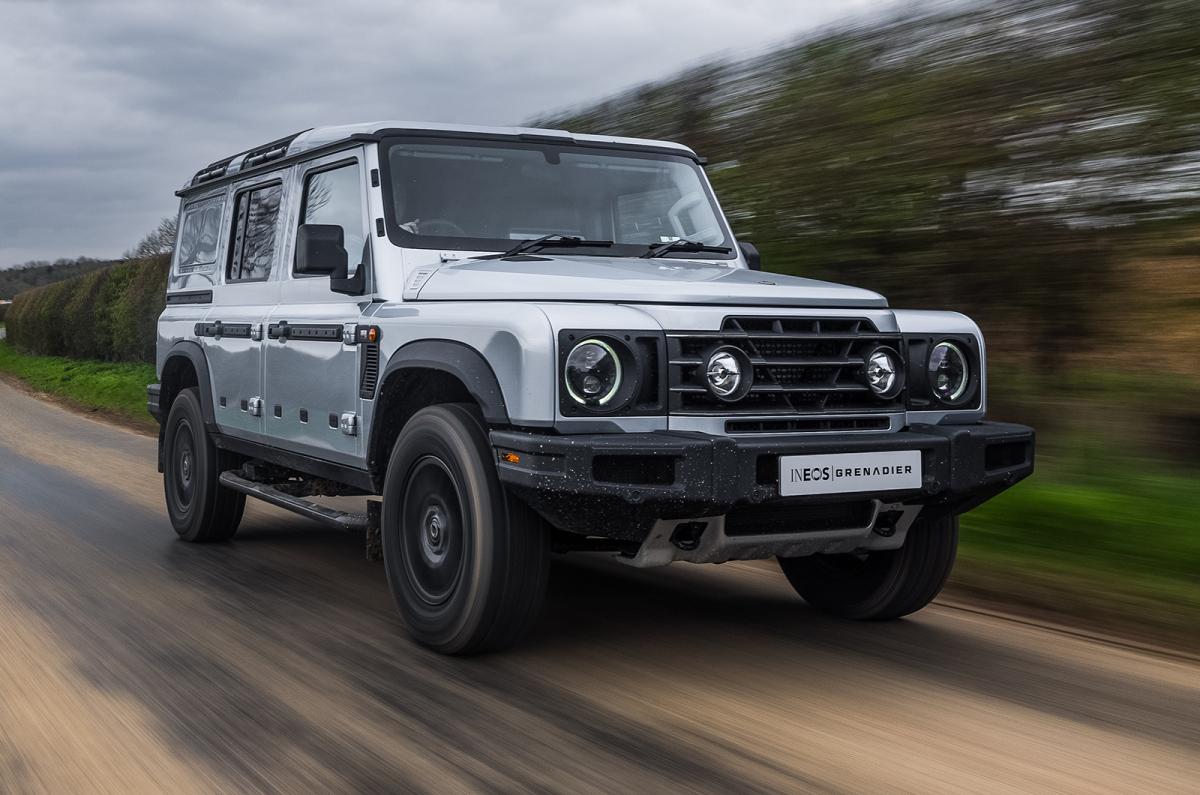
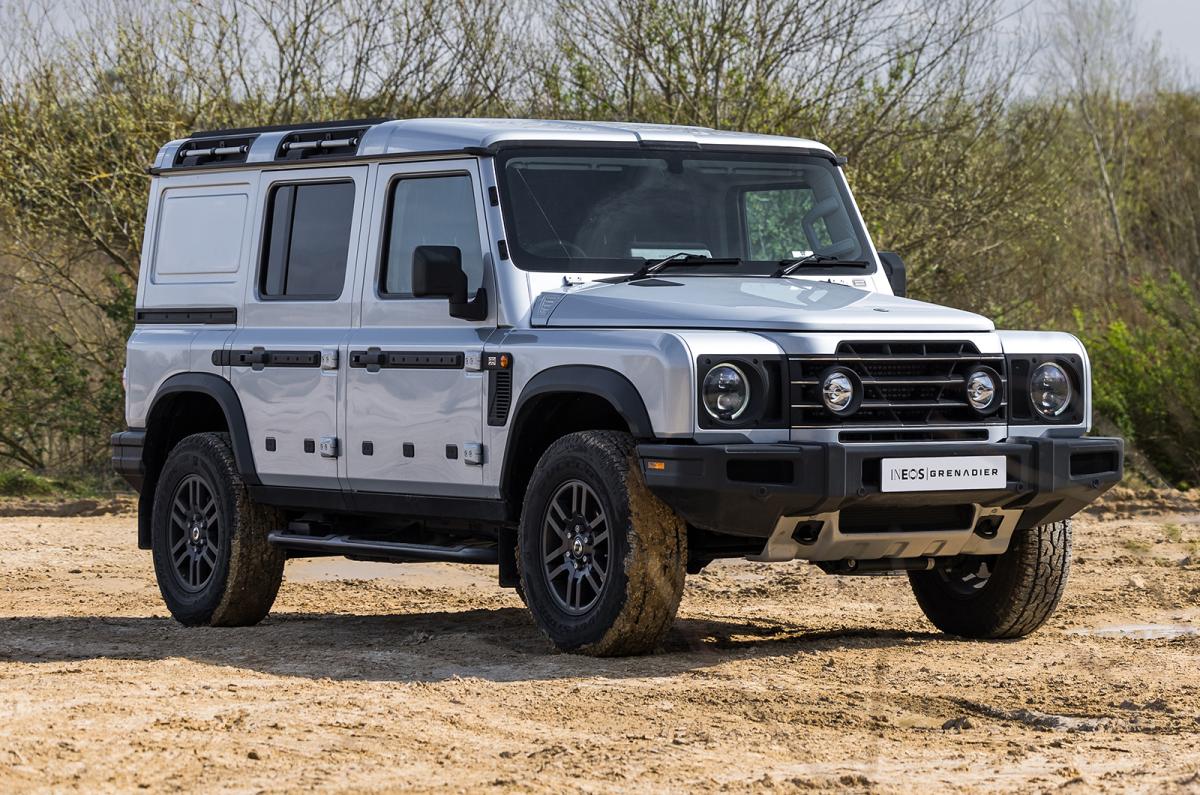
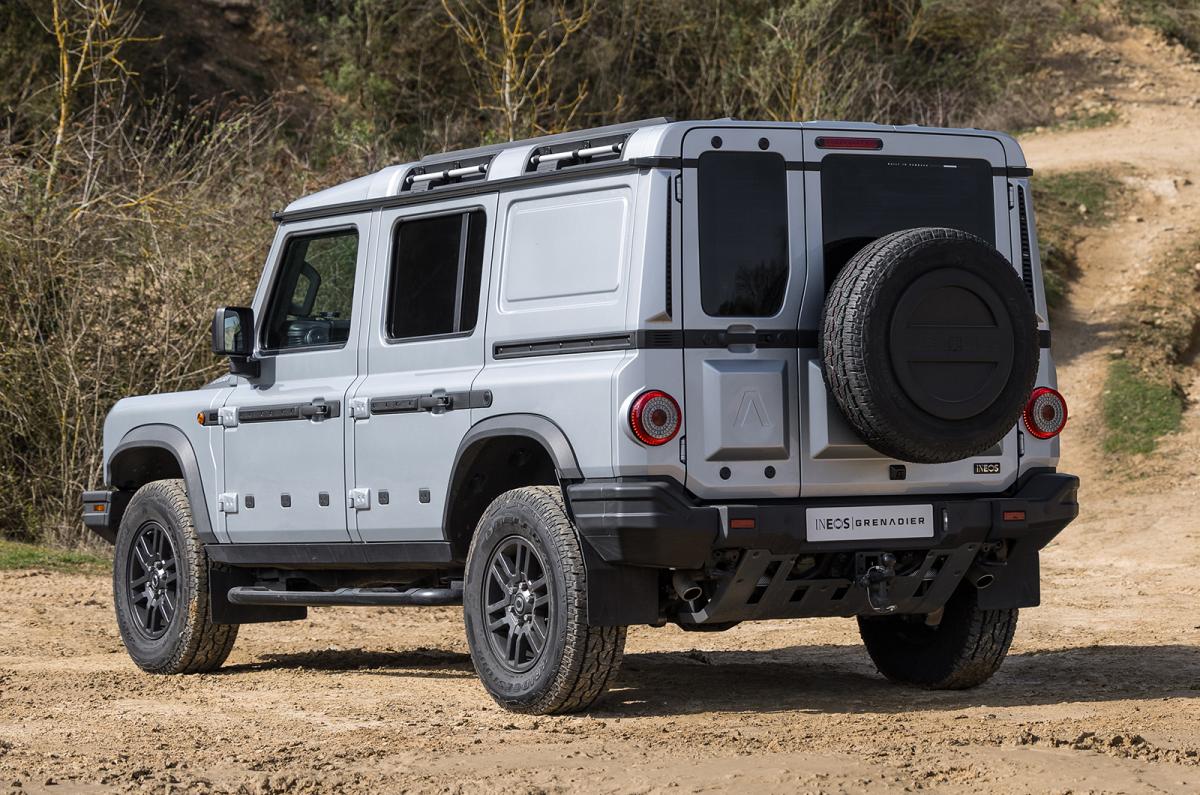
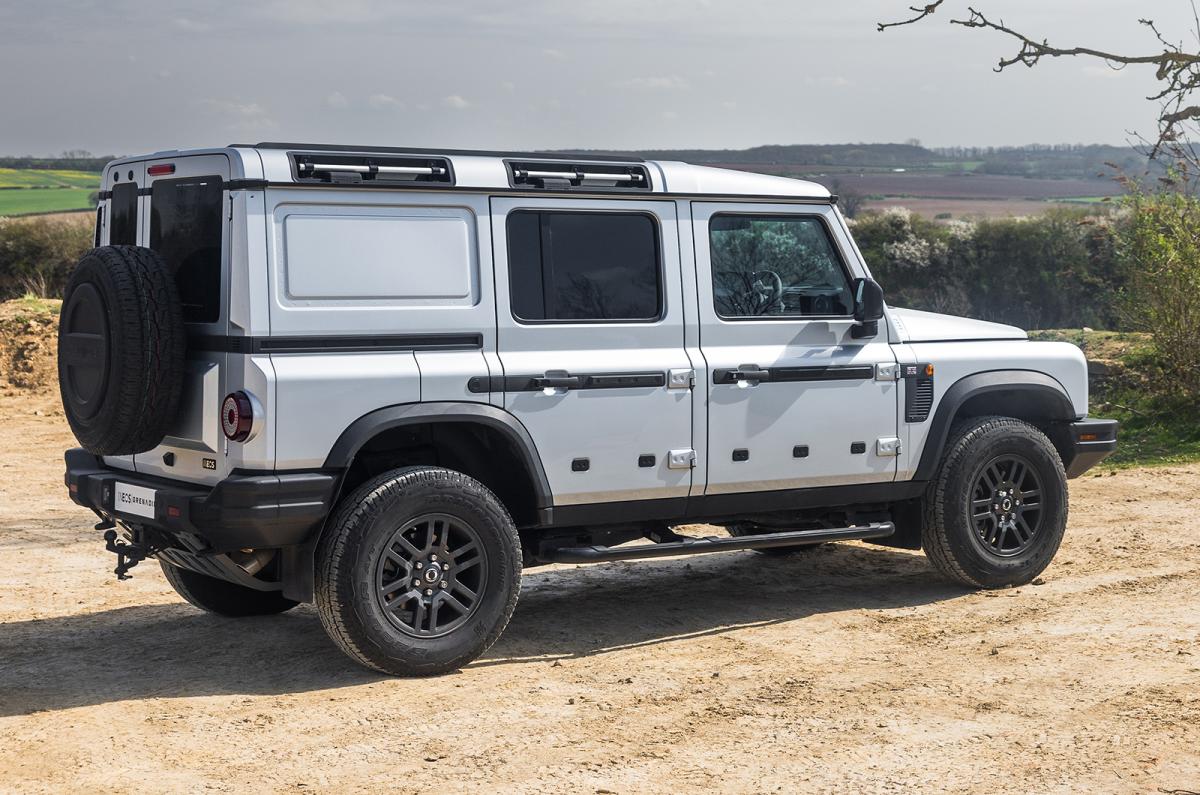
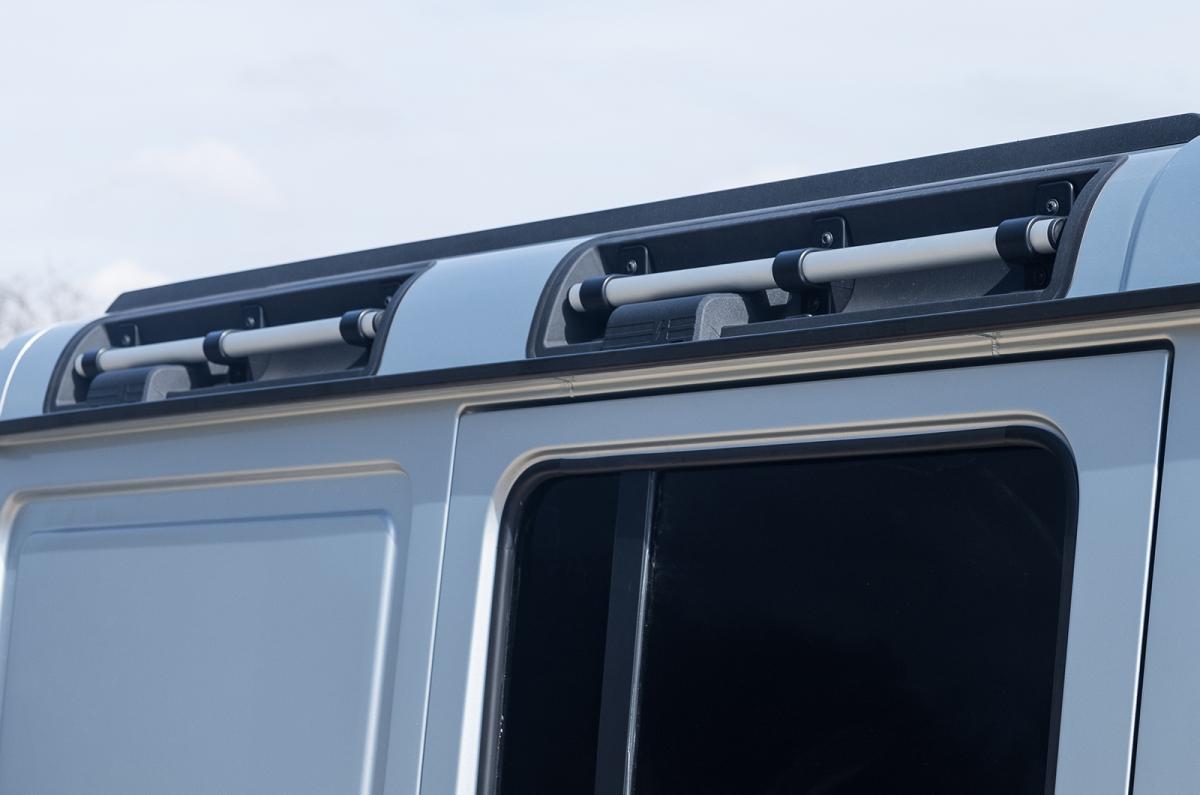
- Ineos Grenadier Commercial driving front right
- Ineos Grenadier Commercial static front right
- Ineos Grenadier Commercial static rear left
- Ineos Grenadier Commercial static rear right
- Ineos Grenadier Commercial grab handle
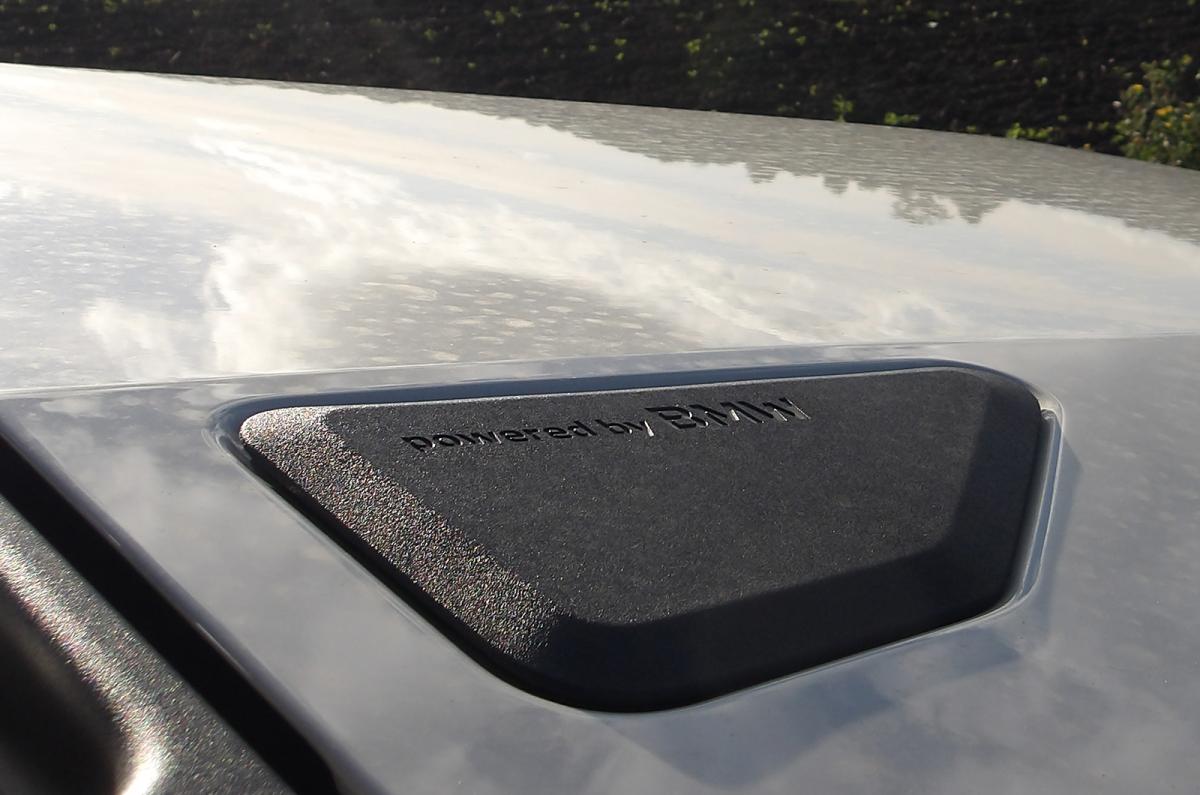
- Ineos Grenadier Commercial bonnet detail
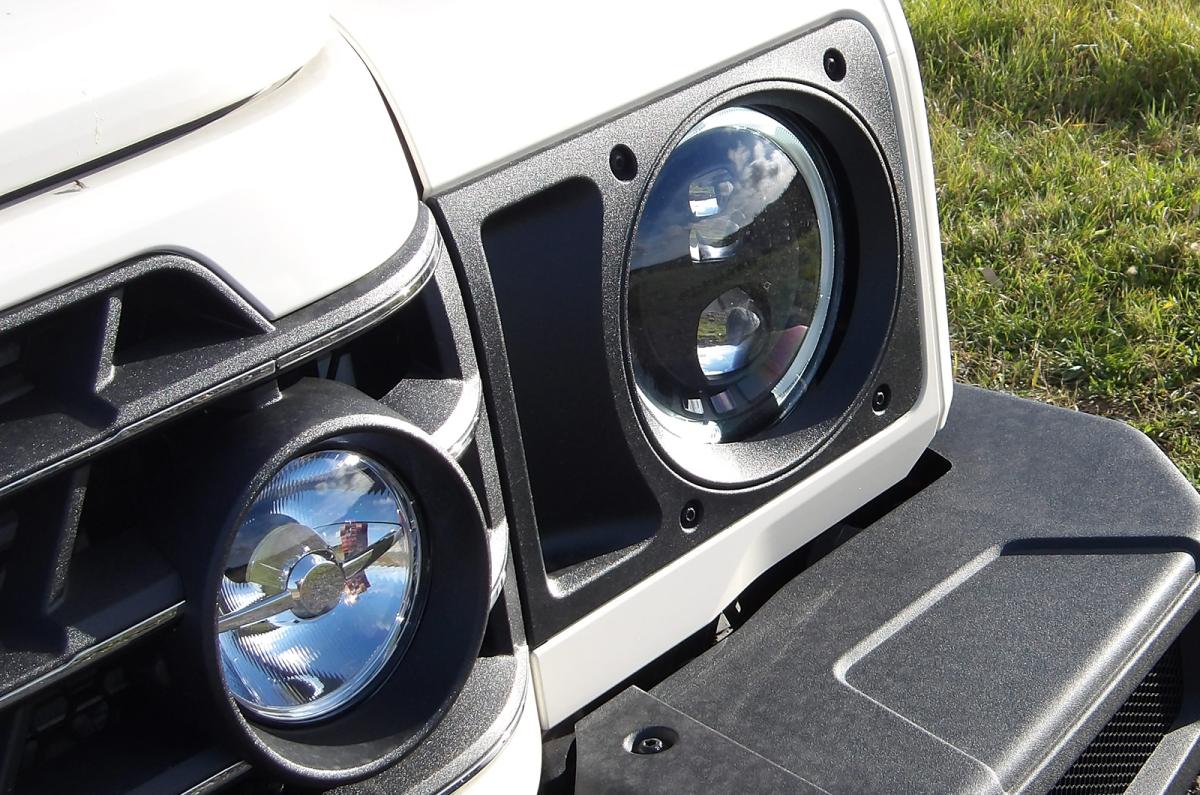
- Ineos Grenadier Commercial headlight detail
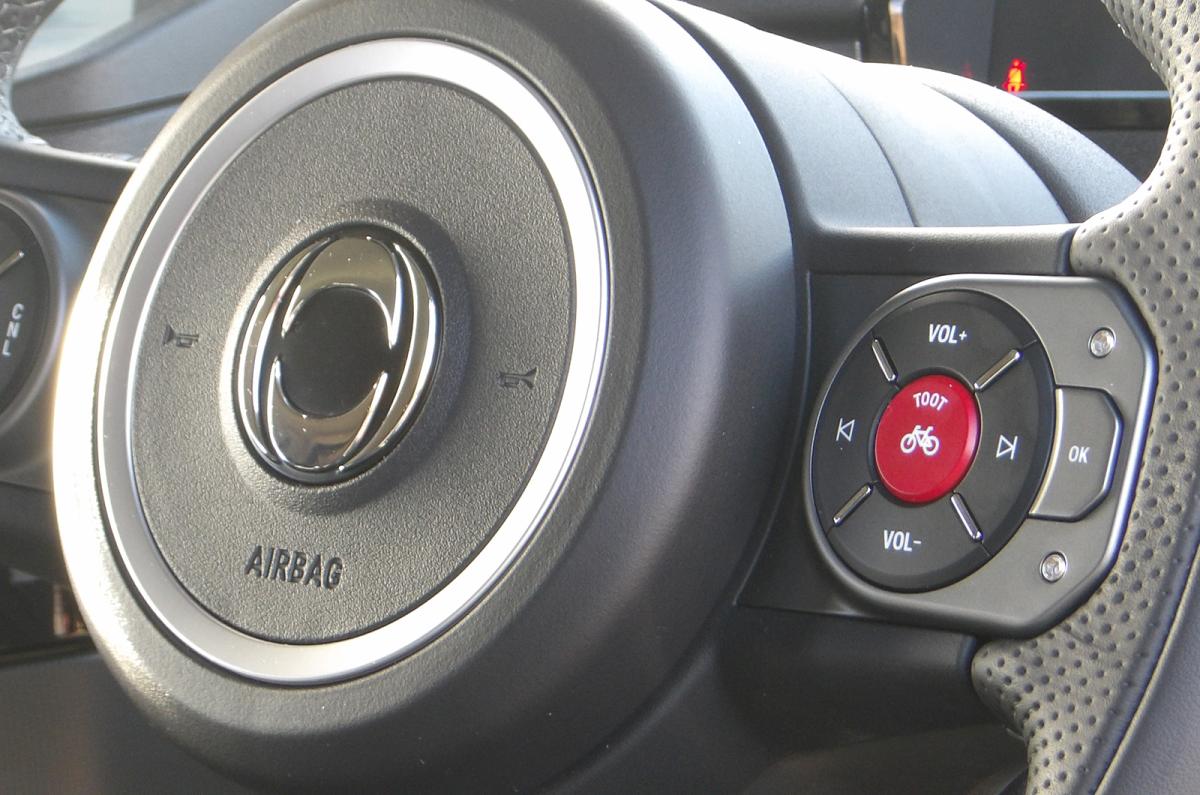
- Ineos Grenadier Commercial steering wheel detail
- Ineos Grenadier Commercial load bay side
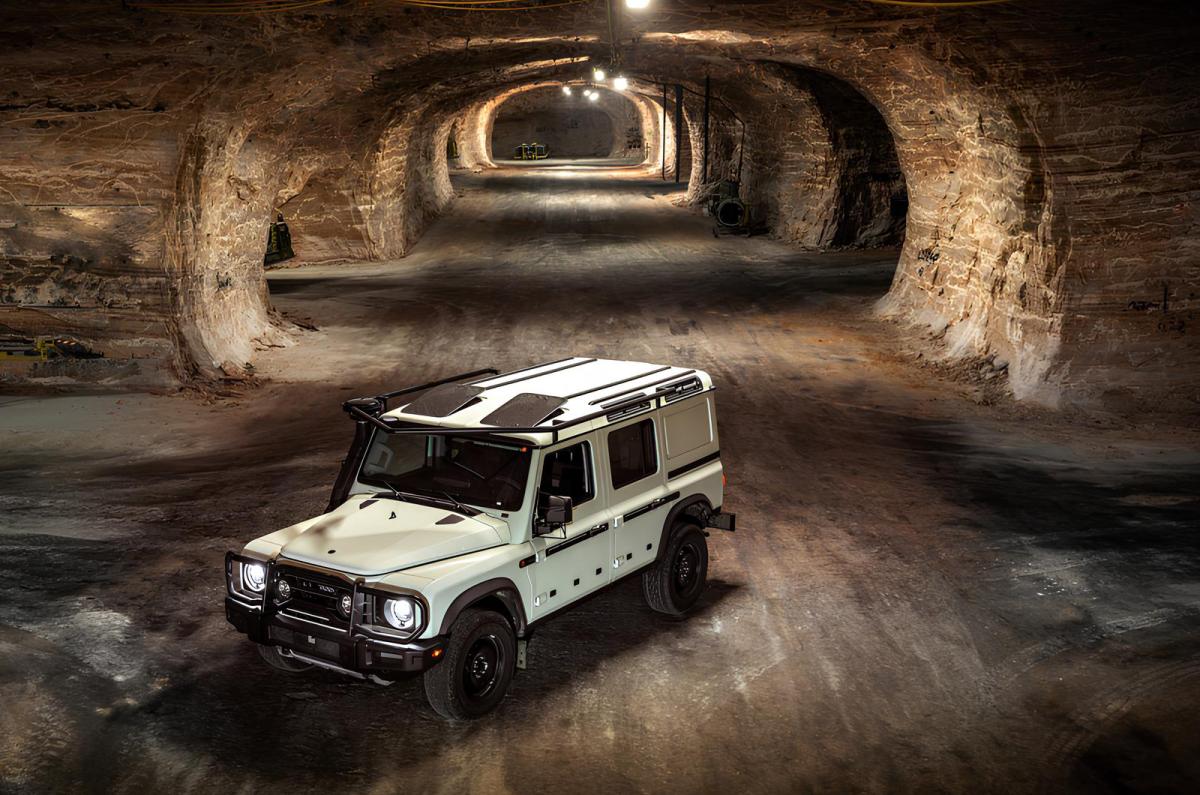
- Ineos Grenadier Commercial inside cave
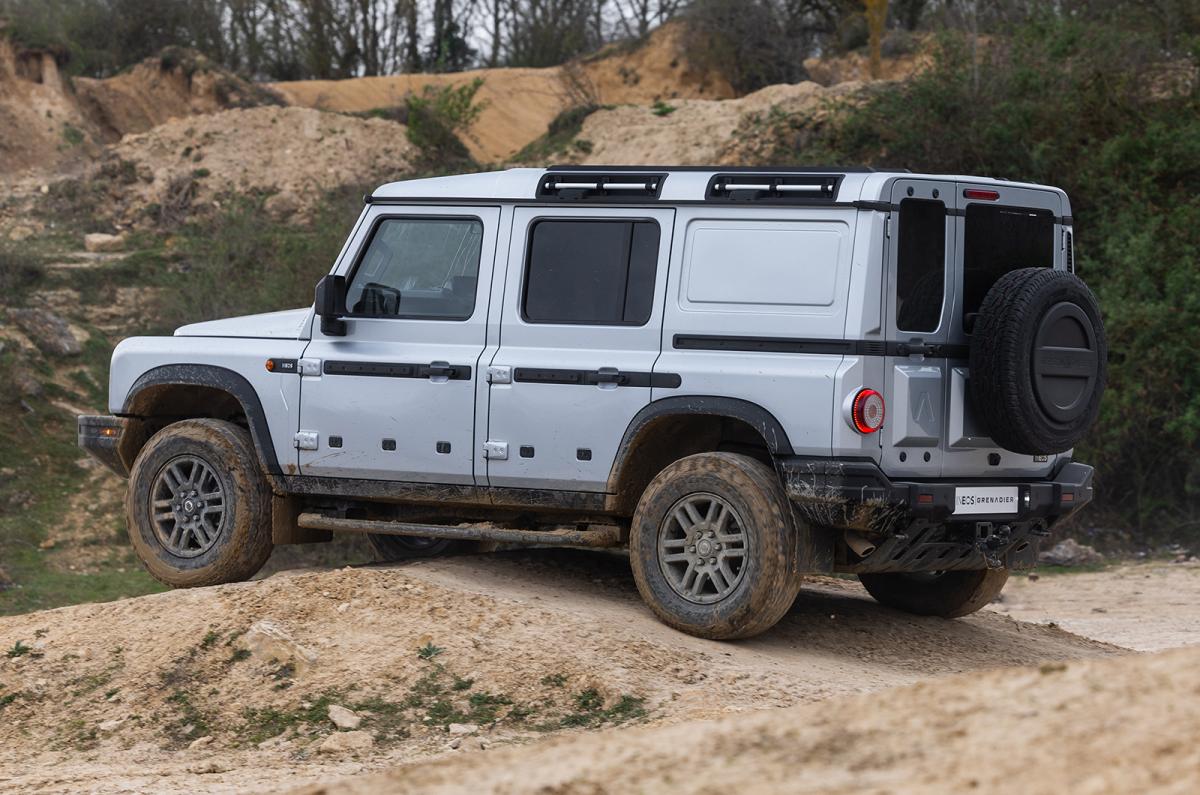
- Ineos Grenadier Commercial off-roading
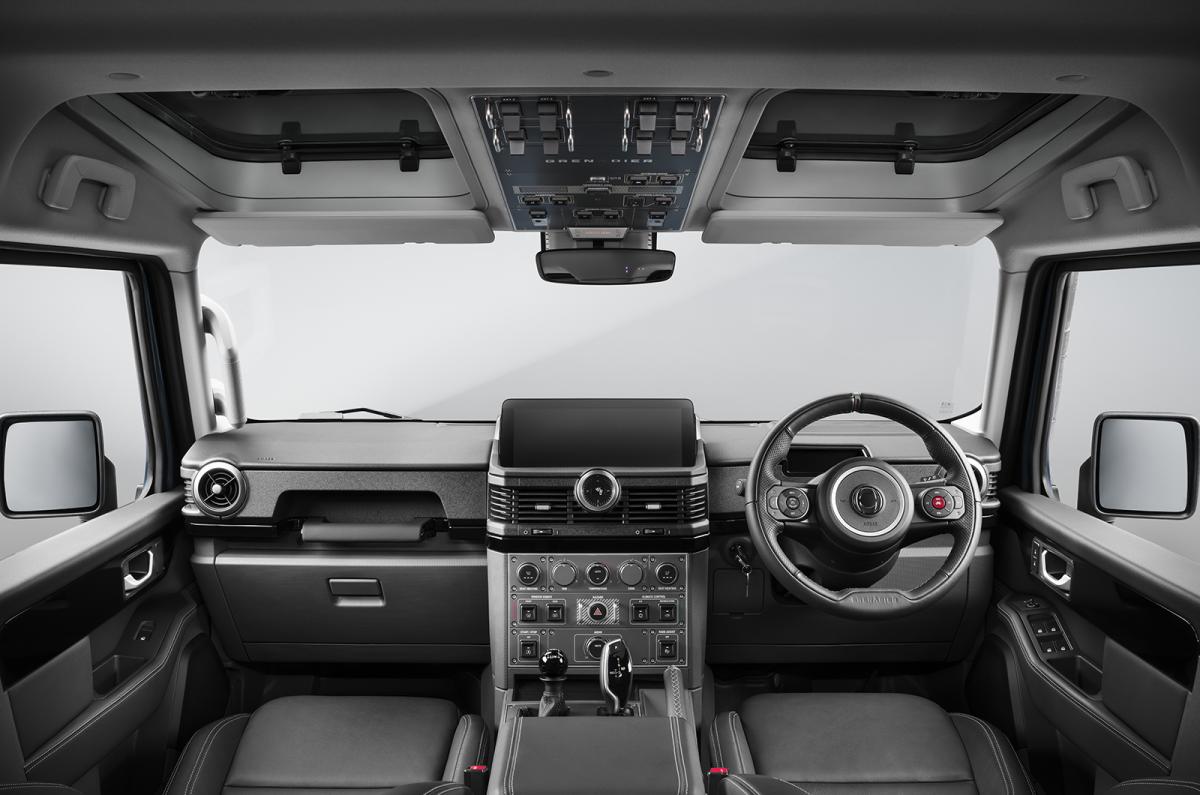
- Ineos Grenadier Commercial dashboard
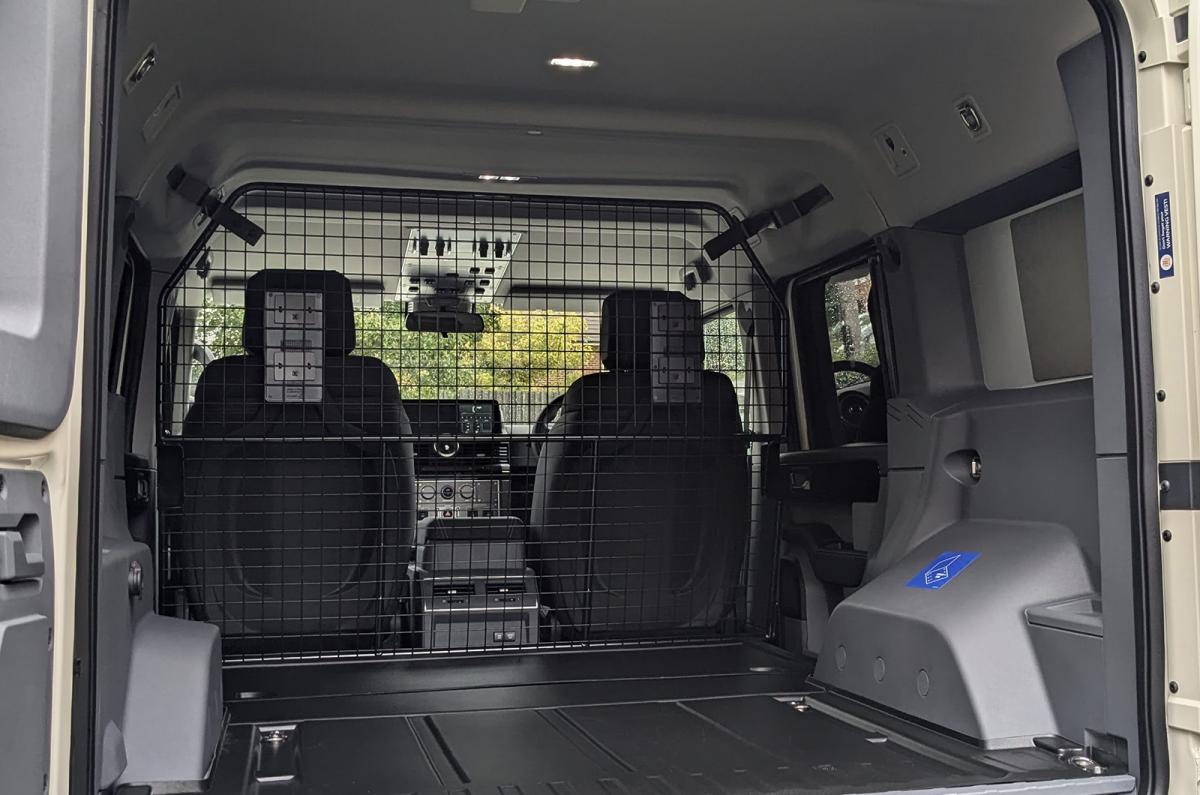
- Ineos Grenadier Commercial load bay
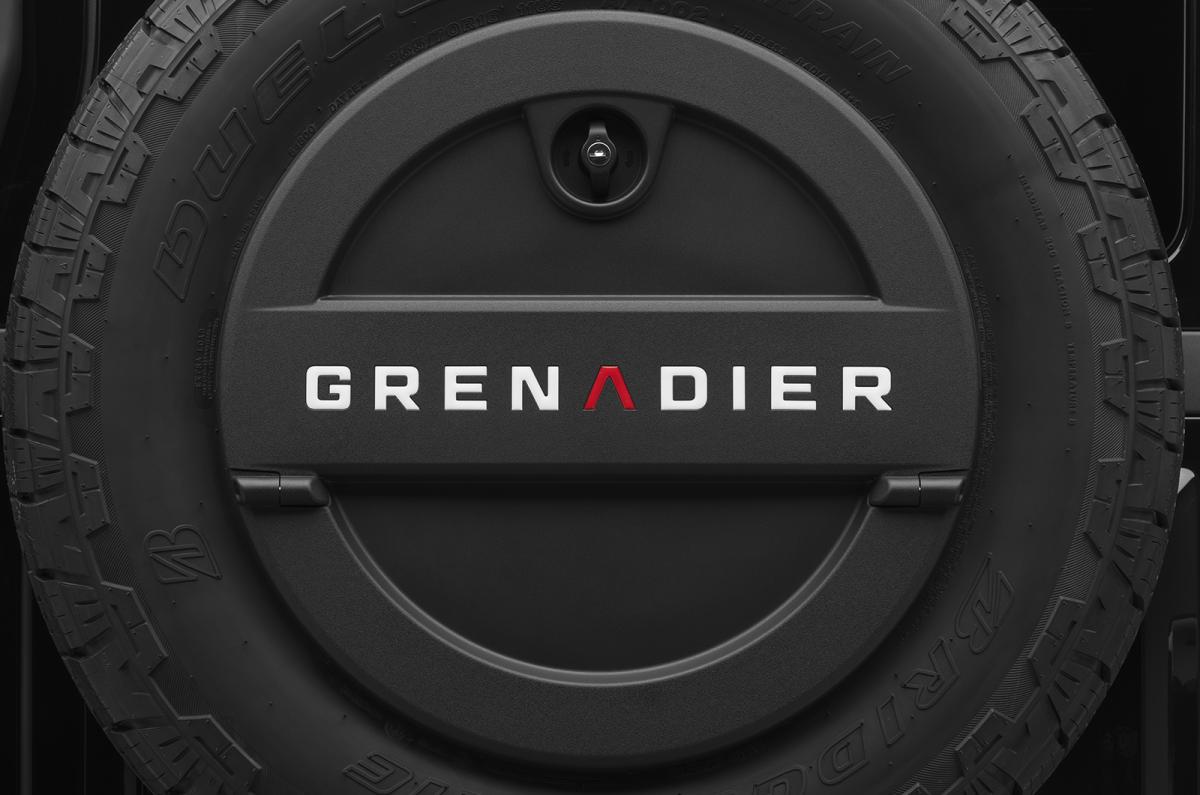
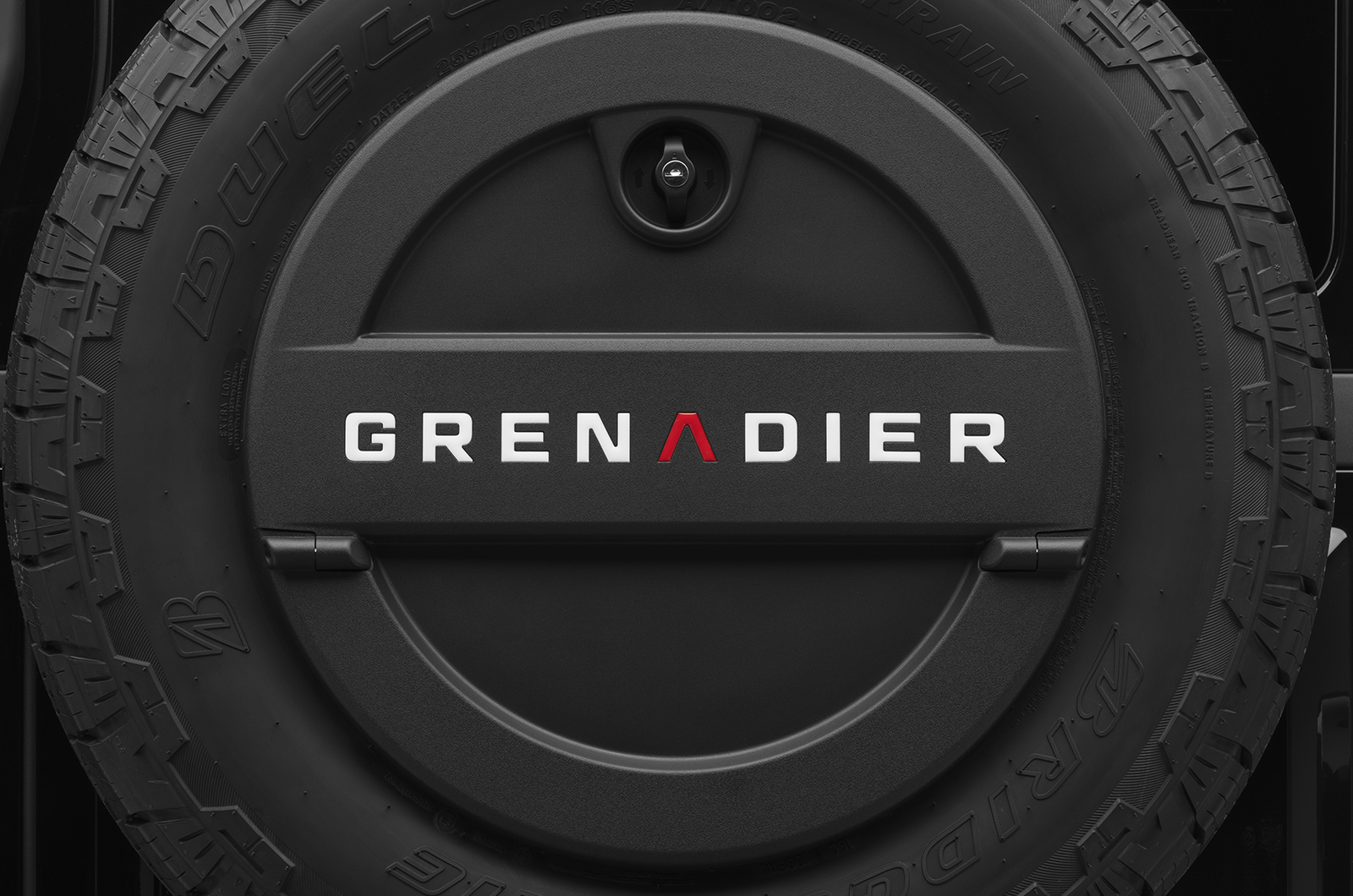
- Ineos Grenadier Commercial spare wheel

Introduction
The Ineos Grenadier Commercial is, arguably, the most unusual light commercial vehicle on sale in the UK. Where most vans and pickups prioritise efficiency, versatility and on-road comfort, the Grenadier takes a very different approach, focusing almost entirely on durability, off-road ability and long-term robustness.
Based on the Ineos Grenadier Utility Wagon, the Commercial is a UK-specific model converted to meet full light commercial vehicle requirements. The rear seats have been removed entirely and replaced with a purpose-built load area, allowing businesses to reclaim VAT and benefit from lower running taxes compared with passenger versions.
The Grenadier Commercial is unapologetically old-school. It uses a separate ladder-frame chassis, solid axles, and a mechanical four-wheel-drive system usually associated with heavy-duty off-roaders rather than modern vans.
This approach gives the Grenadier Commercial capabilities few rivals can match, particularly away from tarmac, but it also brings compromises in terms of comfort, fuel economy and price. It’s not without competition: the KGM Rexton Commercial, Land Rover Defender Hard Top, and Toyota Land Cruiser Commercial all target similar buyers. The difference is that the Grenadier leans harder into extreme off-road work than any of them.


Pros
- Outstanding off-road capability
- Heavy-duty construction designed for long service life
- Strong towing performance and robust drivetrain
Cons
- High purchase price and running costs
- Poor fuel economy compared with vans
- Demanding on-road driving experience
Performance & drive
What it's like to drive, and how quiet it is
Strengths
- Exceptional off-road ability
- Strong diesel engine well suited to towing
- Robust mechanical layout designed for longevity
Weaknesses
- Heavy, slow-feeling steering on the road
- Modest fuel economy
- Less comfortable and refined than most rivals
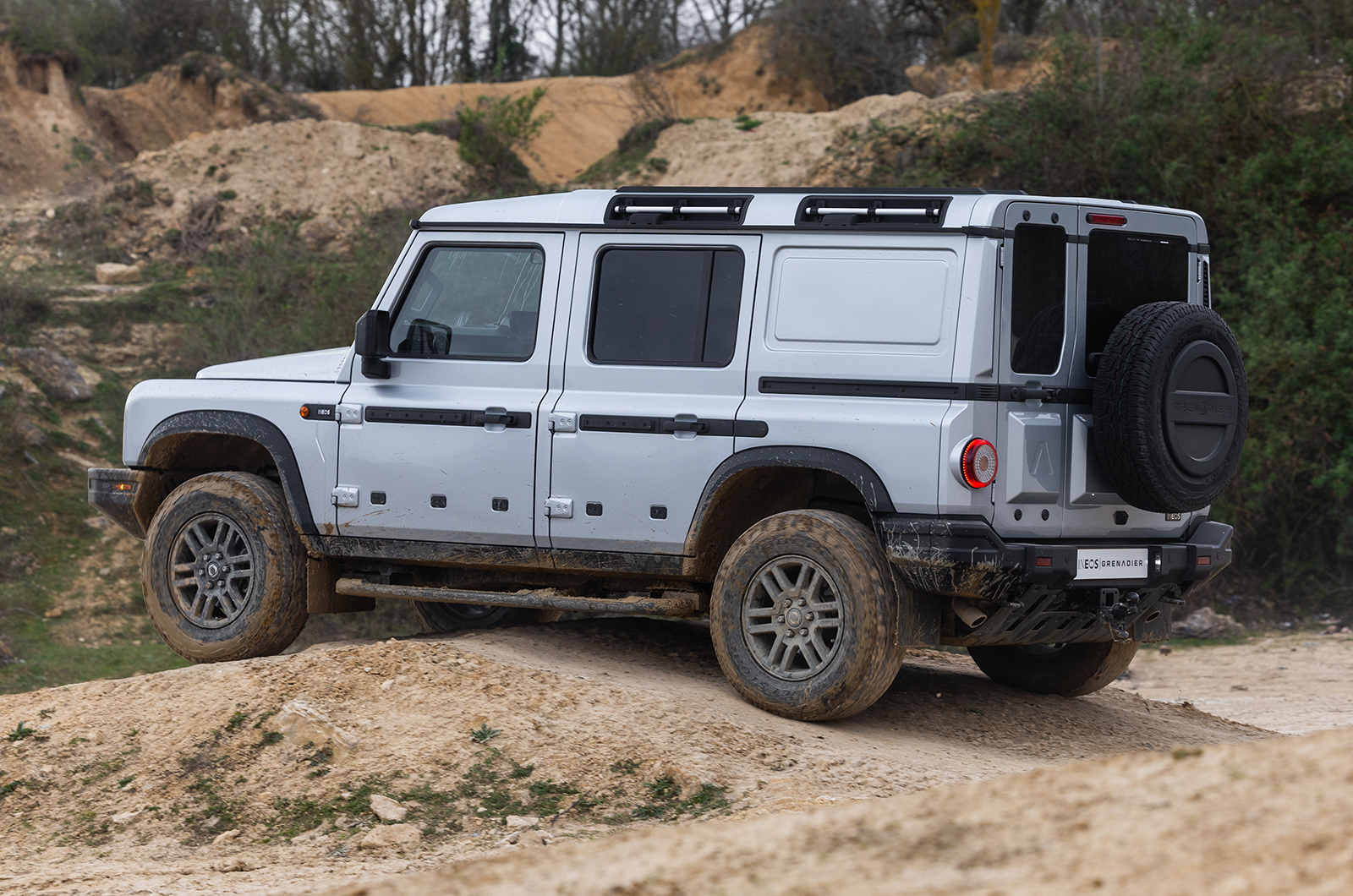
The Grenadier Commercial’s driving experience is shaped entirely by its engineering priorities. Unlike most modern vans (and many pickups), it uses a ladder-frame chassis, solid front and rear axles, and a recirculating-ball steering system. In other words, the Grenadier Commercial was designed to prioritise off-road precision over ease of use on the road.
Buyers can choose between either a petrol or diesel BMW-sourced 3.0-litre six-cylinder engine. The diesel is expected to account for the majority of sales, and it’s the better fit for commercial use thanks to its strong low-speed torque. With 245bhp and 406lb-ft, it pulls confidently from low revs and copes easily with heavy loads or towing duties.
Both engines are paired with an eight-speed automatic gearbox, which shifts smoothly and suits the Grenadier’s relaxed, torque-led character.
Performance feels adequate rather than quick. Acceleration is brisk enough for joining traffic, but the Grenadier never feels light or agile, and it’s happiest when driven steadily rather than hurried.
Refinement is also limited: road, wind and tyre noise are all more noticeable than in most alternatives, especially at higher speeds.
Steering is the most controversial aspect of the driving experience, and nothing has changed between the passenger version of the Ineos Grenadier and this commercial model. You see, it lacks self-centring, meaning the wheel doesn’t naturally straighten after a corner. This can feel awkward at first and requires the driver's conscious input, particularly on faster roads. Once acclimatised, it’s manageable, but it never feels as natural as the rack-and-pinion system you’ll find in most cars and vans.
On the road, its steering and refinement would limit it to a two-star rating, but take it off tarmac and the Grenadier becomes a five-star machine, with few vehicles able to match its ability.
A driver will rarely need to fight the steering to maintain their course on rugged tracks. And by tracks, we mean some of the most challenging terrain you’ll face in the UK. Whether clambering up soggy Scottish Munros, wading through rivers up to 800mm deep, or simply making your way across farm tracks, the permanent four-wheel drive, two-speed transfer case, locking diffs and, yes, the steering that’s vague on road, all combine to make the Grenadier feel unstoppable.
So, use cases dictate whether the steering setup is a good or bad thing. The likes of the Toyota Land Cruiser Commercial and especially Land Rover Defender Hard Top provide a far more reassuring and capable on-road experience, but both will struggle to keep up with the Grenadier when facing extreme off-road conditions. The KGM Rexton sits in a bit of a no man’s land, being neither as refined on the road as the Land Rover or Toyota, nor as capable off it.
Ride quality is mixed, however. At lower speeds, the Grenadier deals well with broken surfaces, potholes and rough tracks, absorbing impacts that would trouble more road-focused vehicles. At higher speeds, though, body movement becomes more pronounced, and the ride feels less settled, particularly on uneven roads.
“The Grenadier asks more of you than most modern vehicles, especially through the steering. But the moment you leave tarmac, everything about it makes sense.” – Phil Huff, Van reviewer
Tips & Advice
Interior
The interior layout, fit and finish
Strengths
- Hard-wearing interior designed for harsh use
- Clear, glove-friendly physical switchgear
- Excellent driving position and forward visibility
Weaknesses
- Unconventional instrument layout takes getting use
- Interior feels functional rather than comfortable
- Noisy at speed compared with most rivals
The Grenadier Commercial’s interior is unlike that of almost any other light commercial vehicle — or any other vehicle, full stop. It’s very much shaped by function rather than fashion, with everything designed to withstand hard use in challenging environments, even if that comes at the expense of everyday comfort or familiarity.
The driving position is upright and offers a commanding view, with excellent forward visibility and a clear view of the Grenadier’s squared-off bonnet. The seats are firm but supportive, and there’s plenty of adjustment to suit different drivers — this road tester is exactly average height, and there was plenty of movement in every direction from my preferred seating position. Optional leather trim adds a touch of comfort, but even in entry-level trim, the interior feels tough and purposeful rather than spartan.
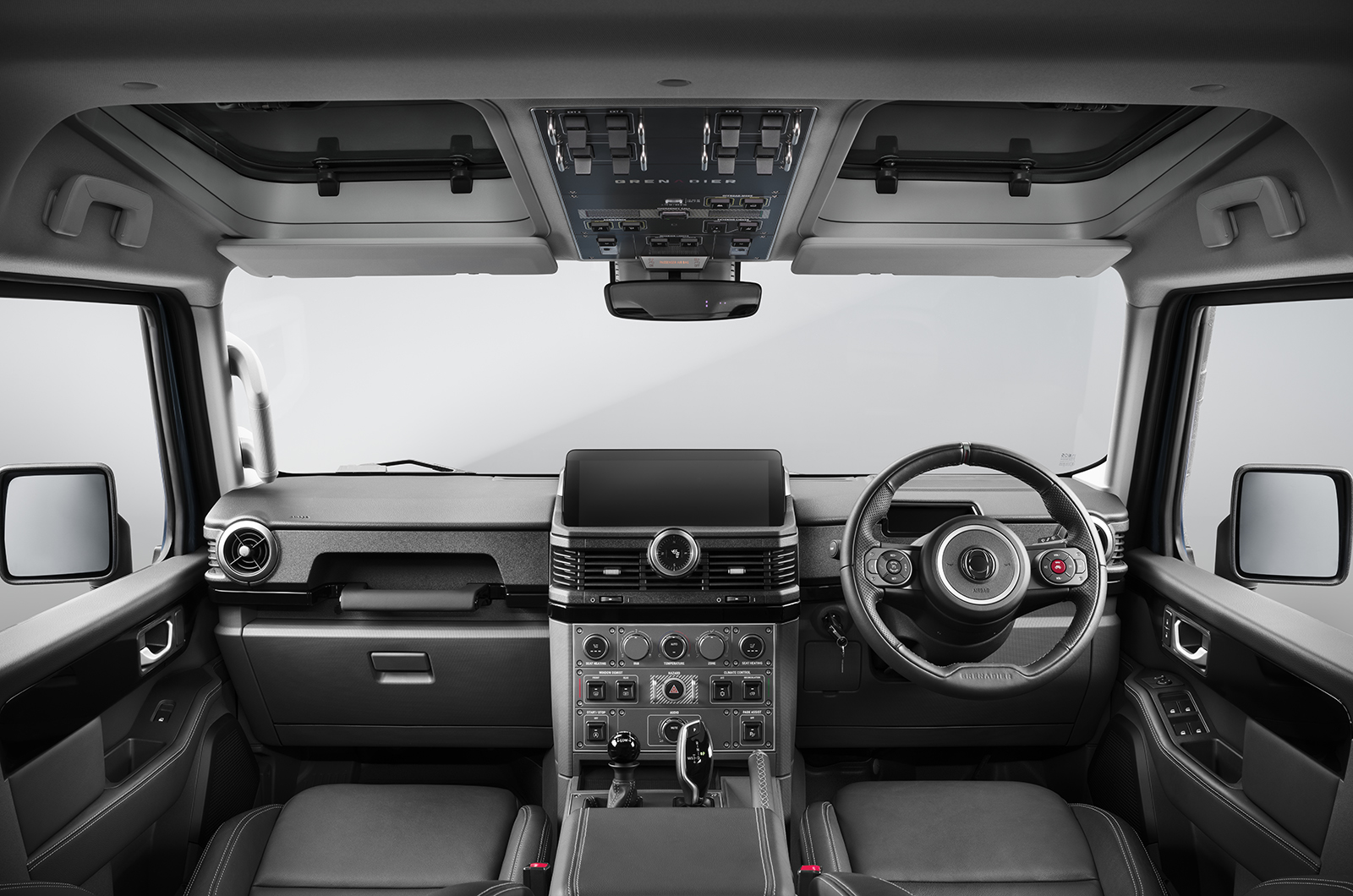
Dominating the dashboard is a centrally mounted 12.3in touchscreen that handles infotainment, navigation and vehicle settings, including off-road data displays. Apple CarPlay and Android Auto are supported, and the system can also be controlled via a rotary dial in the centre console, which is useful when wearing gloves.
It’s modern enough in style, but can be very slow to respond, with long pauses between tapping the screen and anything happening. The user interface is also far from intuitive, and once you’ve got things set up as you want, the display can be a little on the small side. Even the speedometer is relegated to the central screen, appearing as a small readout in the top right-hand corner, meaning you’ll need to take your eyes off the road to see it.
With the speedo and other key information found on the touchscreen, there’s no need for a traditional driver’s display. What looks like a small digital display is just a bank of warning lights. It takes some getting used to, and both the Land Rover Defender Hard Top and Toyota Land Cruiser Commercial do things better with their more traditional layouts.
On a more positive note, the Grenadier is packed with large physical switches. They’re chunky enough to be operated with gloves on and to cope with dirt and moisture, reinforcing the vehicle’s working focus, though it’s not always clear which of the near-identical buttons is meant to do what, especially for those on the roof. Viewing angles from the driver’s seat mean you’ll be relying on muscle memory to hit the right spot.
There’s also provision for adding aftermarket accessories without resorting to untidy modifications, as there’s a bank of built-in switches ready to be utilised for winches, external lights, or any other of myriad operations. They’re all pre-wired to various points around the exterior of the Grenadier, too, which will appeal to specialist operators.
Material quality is robust rather than plush. Hard plastics dominate, but they feel durable and easy to clean, and the interior is designed to be washed out if necessary. This approach suits agricultural, utility and industrial use, but it does make the Grenadier feel less welcoming than rivals such as the Land Rover Defender Hard Top on longer journeys.
“I could tell the Grenadier’s priorities as soon as I got behind the wheel: gloves on, mud everywhere, job to do. It’s clever, but it’s not an interior you instantly relax into.” – Phil Huff, Van reviewer
Passenger & boot space
How it copes with people and clutter
Strengths
- Purpose-built load area with good tie-down points
- Excellent towing capability
- Extensive scope for specialist conversions
Weaknesses
- Very limited load space compared with vans
- Modest payload for a vehicle of its size
- Rear access less convenient than side-loading vans
The Grenadier Commercial’s practicality is defined more by durability and adaptability than outright load-carrying ability. That means that, while it meets full light commercial vehicle requirements, it’s not going to replace a regular panel van if cargo volume or payload are what’s important.
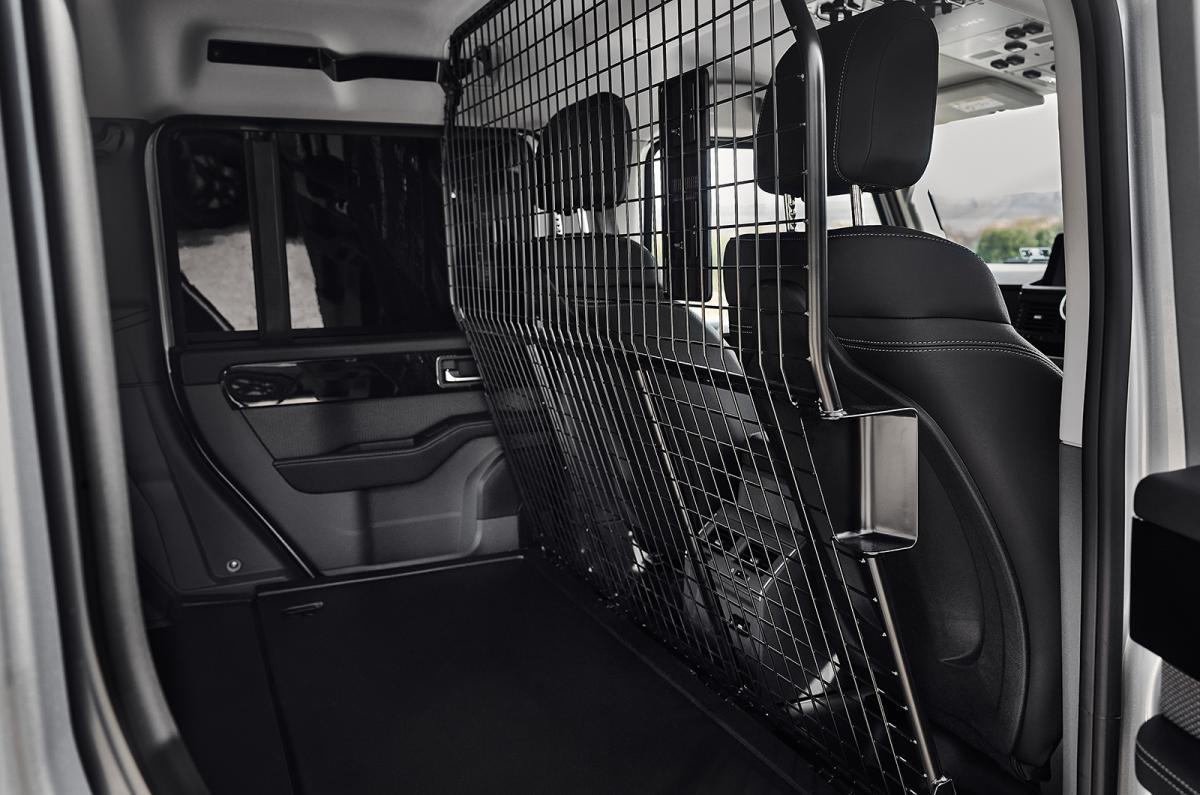
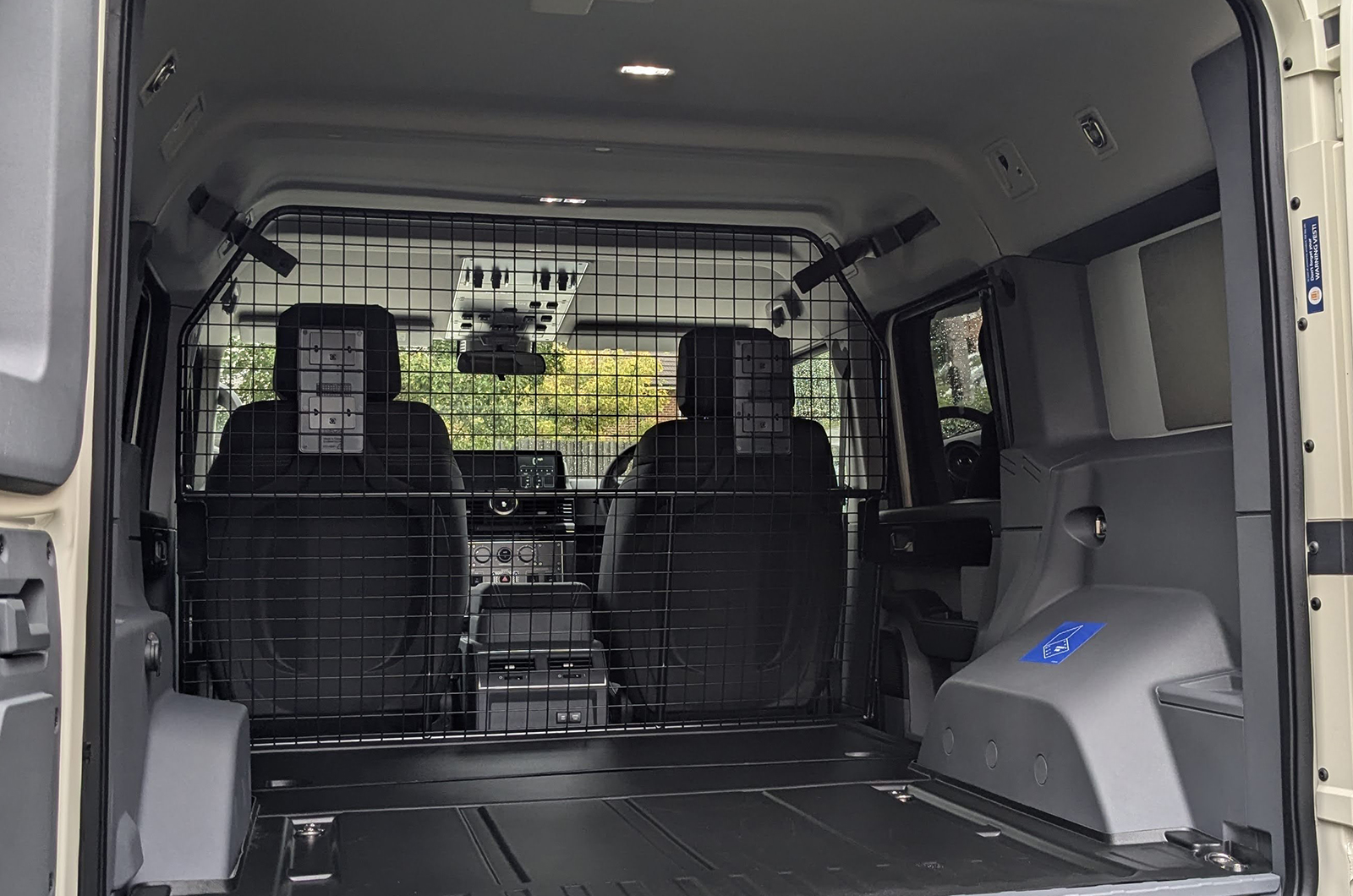
The rear seats are removed entirely and replaced by a purpose-built load area with a flat floor and a full-height steel mesh bulkhead behind the front seats. Load volume is just over 2.0m³, which is far more than you’ll get in a short wheelbase Land Rover Defender Hard Top 90, and almost exactly the same as you’ll find in the back of the long wheelbase Defender Hard Top 110 and Land Cruiser Commercial, but far smaller than even a compact van — even the tiny Ford Transit Courier can take just under 3.0m³.
The shape of the load bay is also compromised slightly by wheel arches and door apertures, although it’s still capable of carrying bulky equipment and, impressively, can accommodate up to two Euro pallets at a push.
Access is via twin asymmetric rear doors that open wide, making it easy to load larger items from behind. The rear side doors are retained but have their windows replaced with solid panels, and while they can be used for access, most loading is likely to be done from the rear. Numerous tie-down points are fitted in the load bay, along with mounting points that allow equipment, racking, or specialist fixtures to be installed securely.
Payload is modest. Diesel models can carry up to 796kg, while the petrol version increases this to around 870kg. Those figures are comparable to those of similar heavy-duty 4×4 models, though they fall well short of what a pickup can manage — an Isuzu D-Max, for example, can carry around 1.1 tonnes, four passengers, and tow a trailer, although not necessarily all at the same time. That’s where the Grenadier can claw back some ground, with its class-leading gross train weight of 7 tonnes and an ability to tow up to 3.5 tonnes while still carrying a full payload onboard.
Further versatility comes from outside the load bay. The roof is rated to carry up to 150kg while driving, and significantly more when stationary, opening the door to roof-mounted equipment, platforms or even specialist camping or observation setups. Combined with mounting points on the body and doors, this makes the Grenadier Commercial highly configurable for niche roles.
For most businesses, its limited load space and payload will be a deal-breaker. But for operators who need to lug equipment to remote areas over intimidating terrain, or who need to customise a vehicle around specialist equipment, the Grenadier Commercial offers a level of flexibility few rivals can match.
“You don’t buy a Grenadier because it carries the most weight or largest volume. You buy it because it’ll carry the right kit to places a van simply won’t reach.” – Phil Huff, Van reviewer
Tips & Advice
Buying & owning
Everyday costs, plus how reliable and safe it is
Strengths
- Full commercial vehicle tax treatment
- Long warranty provides reassurance
- Robust engineering suited to long-term ownership
Weaknesses
- High purchase price
- Fuel economy is poor by van standards
- Options can push costs up quickly
The Ineos Grenadier Commercial is an expensive vehicle by any light commercial measure, and its pricing immediately limits its appeal to specialist users. Both the petrol and diesel versions are priced identically, starting at more than £50,000 before VAT. That puts it well above most pickups and vans, but broadly in line with niche rivals such as the Land Rover Defender Hard Top and Land Cruiser Commercial. A KGM Rexton Commercial will save £15,000, but that’s more suited to working on sites rather than tackling the Darien gap.
Because the Grenadier Commercial is classed as a light commercial vehicle, VAT can be reclaimed by eligible businesses, it’s eligible for a 100% capital allowance for those businesses, and benefit-in-kind tax is charged at the fixed van rate rather than a CO₂-based calculation. That last benefit helps offset the high list price for company users, but it doesn’t make the Grenadier a low-cost option.
Running costs are also significant. Official combined fuel economy ranges from around 26mpg for the diesel and less than 20mpg for the petrol, depending on specification and tyres. In real-world use, especially when towing or operating off-road, fuel consumption will sit at the lower end of those figures, and likely in the high teens. A fairly gentle 300-mile run in an unloaded Grenadier Commercial saw the on-board computer showing 25.6mpg.
Insurance and tyre costs are also likely to be higher than average, reflecting the Grenadier’s size, weight and specialist hardware.
Servicing and maintenance costs are harder to pin down, but the Grenadier’s relatively simple mechanical layout and use of well-proven BMW engines should reassure buyers planning to keep vehicles for the long term. Ineos backs the Grenadier Commercial with a five-year/100,000-mile warranty, which is longer than many rivals and helps reduce ownership risk during the early years, although Ineos dealers have been opening and closing over the last few years.
Interestingly, Ineos released a version of the workshop manuals for the Grenadier, allowing suitably equipped businesses and individuals to work on the vehicles themselves.
While the Grenadier Commercial comes well equipped in standard form, many features that will be essential for certain users — such as front and rear locking differentials, off-road tyres, towing equipment, or winches — are available only as expensive options. It’s easy to add several thousand pounds to the list price, pushing the Grenadier firmly into premium territory.
“Like the best tools, it’s expensive. But if it’s the right tool for the job, I think it’s worth every penny.” – Phil Huff, Van reviewer
Buy it if…
- You need a van with genuine off-road capability
- A tough interior is important to you
- You regularly tow heavy loads
Don’t buy it if…
- You want a van that’s easy to drive
- You prefer refinement over ruggedness
- You’re looking to save money on your fuel bills
For all the latest reviews, advice and new car deals, sign up to the What Car? newsletter here
Tips & Advice
FAQs
About the writer