New BMW X5 vs Audi Q7
Space and practicality
Front space, rear space, seating flexibility, boot
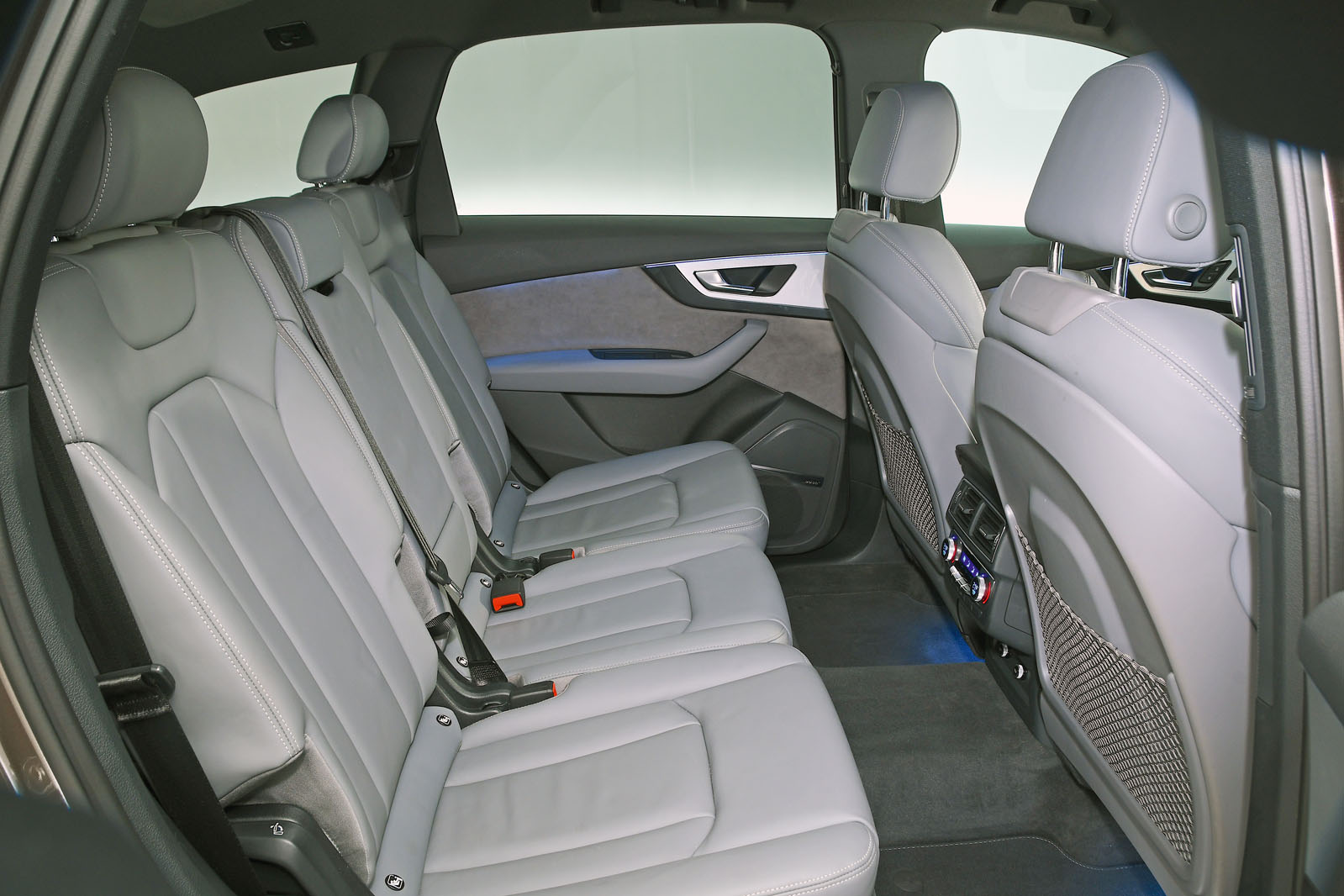
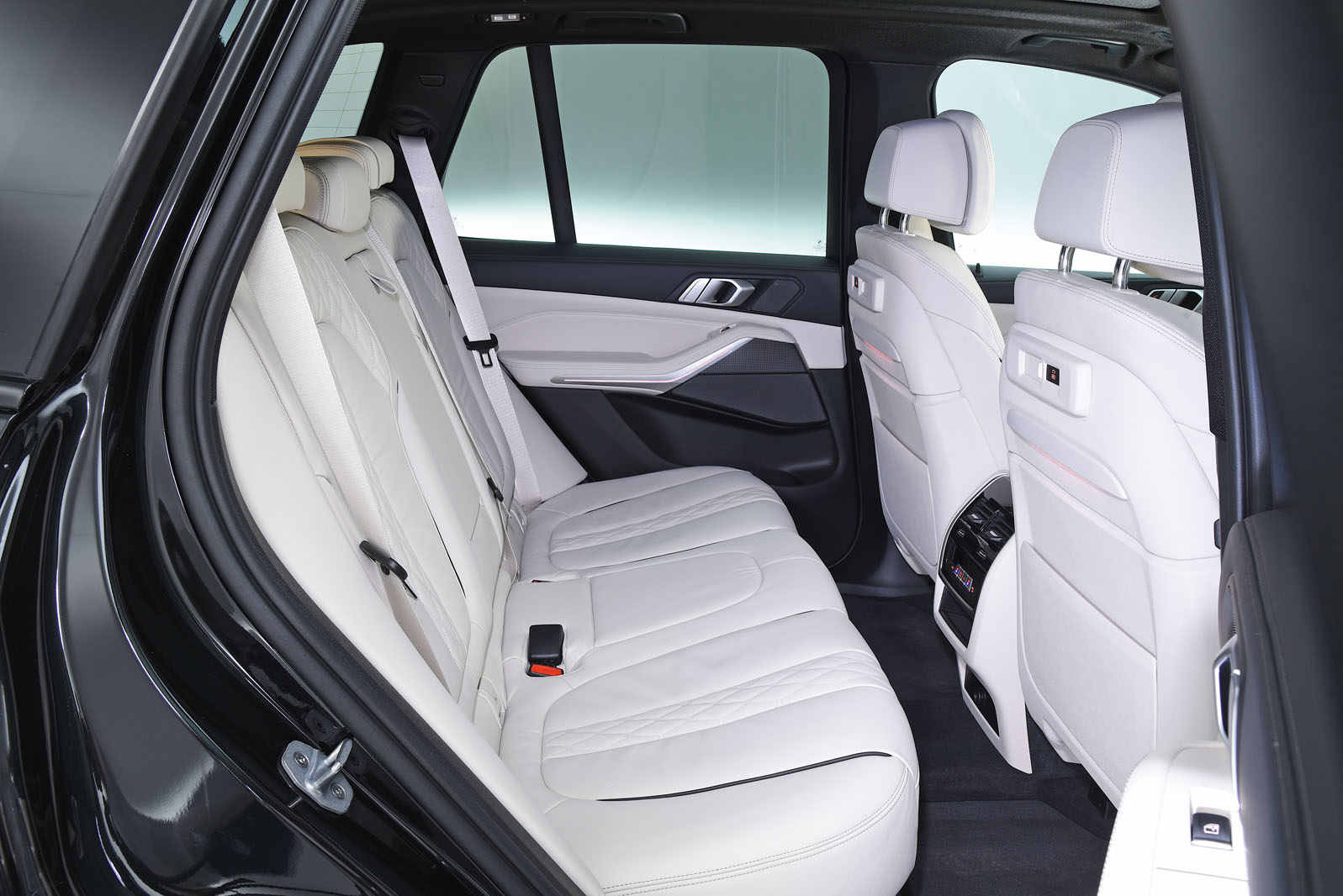
Apart from being fractionally wider up front than the Q7, the X5 is outgunned when it comes to interior space. As we’ve noted before, the Q7 is an exceptional piece of packaging, giving both front and middle-row passengers significantly more head and leg room than they’ll find in the X5.
Now, you can pay £1390 to add a third row of seats to your X5, but our test car was the standard five-seater – the configuration BMW predicts will be the bigger seller. However, we’ve tried a seven-seat X5 too, and its third-row seats are nowhere near as spacious as the Q7’s.
Nor can the X5 match the Q7’s boot space, even without the third-row seats fitted. In fact, it has one of the least impressive boots in the class, offering a smaller capacity than other rivals such as the Volvo XC90, Mercedes-Benz GLE and Porsche Cayenne.


However, the X5’s split tailgate is genuinely useful for loading larger items, because you can rest them on the lower section – which folds down – before sliding them into the boot. The upper half opens and closes electrically as standard, and you can opt to have the lower section operate that way too. With the second-row seats folded down, you end up with a usefully flat extended load area in both cars.
Audi Q7
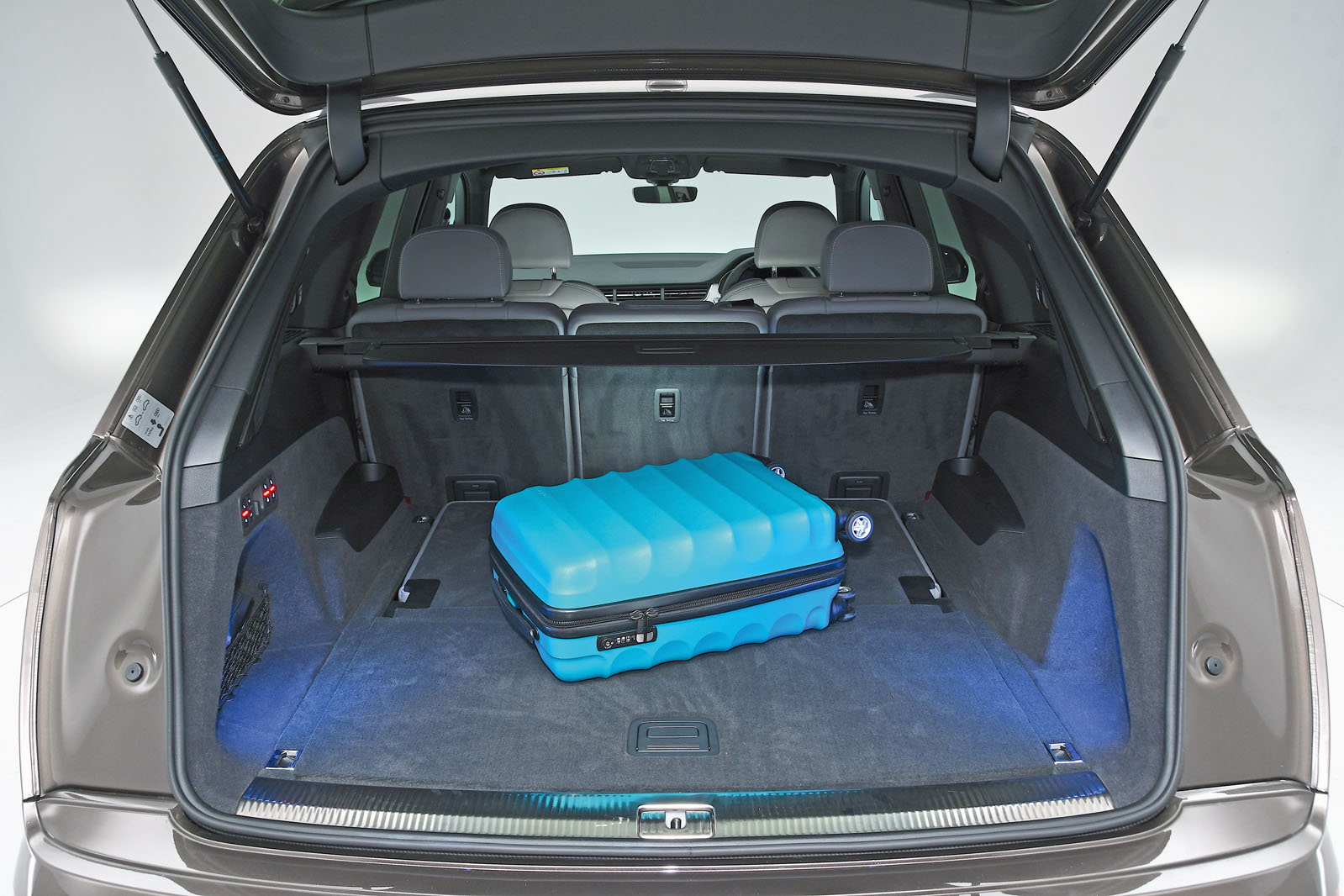
The Q7’s interior is hugely flexible, thanks to a 35/30/35 split middle row that can slide back and forth, allowing you to adapt it for any combination of luggage and people. Third-row seats fold electrically via switches at boot entrance.
Boot 295-770-1955 litres Suitcases 10
BMW X5
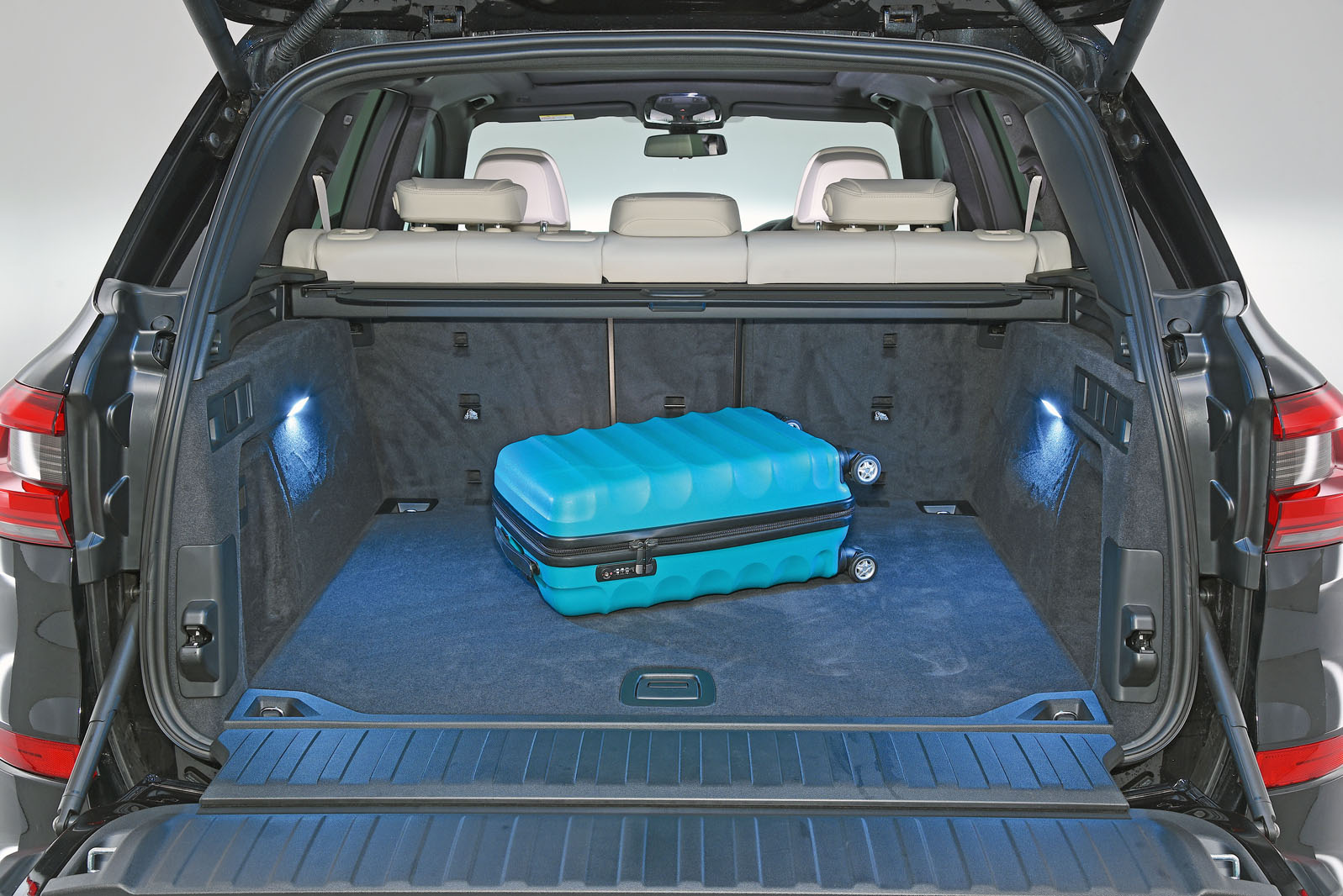
The X5 may not offer the same amount of space inside as the Q7, but it’s still very roomy, thanks to large side windows and a broad interior. More disappointing is the boot, which isn’t much bigger than the X3’s from a class down.
Boot 645-1860 litres Suitcases 8
< Previous | Next: Buying and owning >
Page 4 of 6