New Honda CR-V & Toyota RAV4 vs Mazda CX-5
Behind the wheel
Driving position, visibility, build quality
The CX-5 and RAV4 have an electrically adjustable driver’s seat with a memory function, not only making it easier for you to get comfortable to start with but also letting you recall your chosen seat settings instantly after someone else has been driving.
In the CR-V, you have to set everything up manually, although all three cars have adjustable lumbar support as standard to help ward off lower back pain on longer journeys. The CX-5’s seat holds you in place most securely through corners, while the CR-V’s provides the most support for your upper back – although its firm base does tend to give you a numb bum after an hour or so.
All three come with front and rear parking sensors and a reversing camera to help you out in tight spots. The CR-V and RAV4 are slightly easier to see out of than the CX-5, because they have thinner windscreen pillars and larger rear side windows. Meanwhile, all of our protagonists have powerful LED headlights to help you see where you’re going that bit better at night.


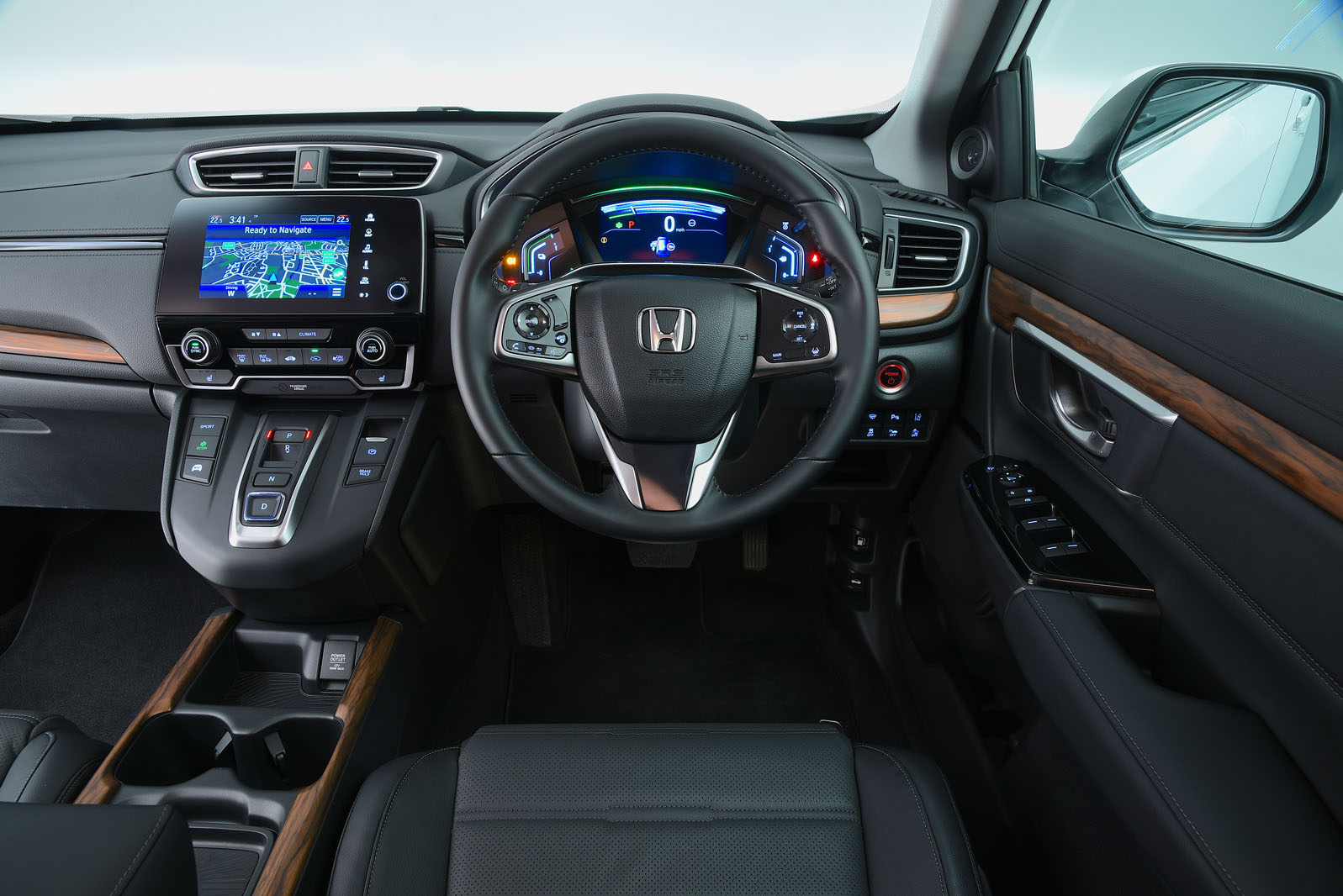
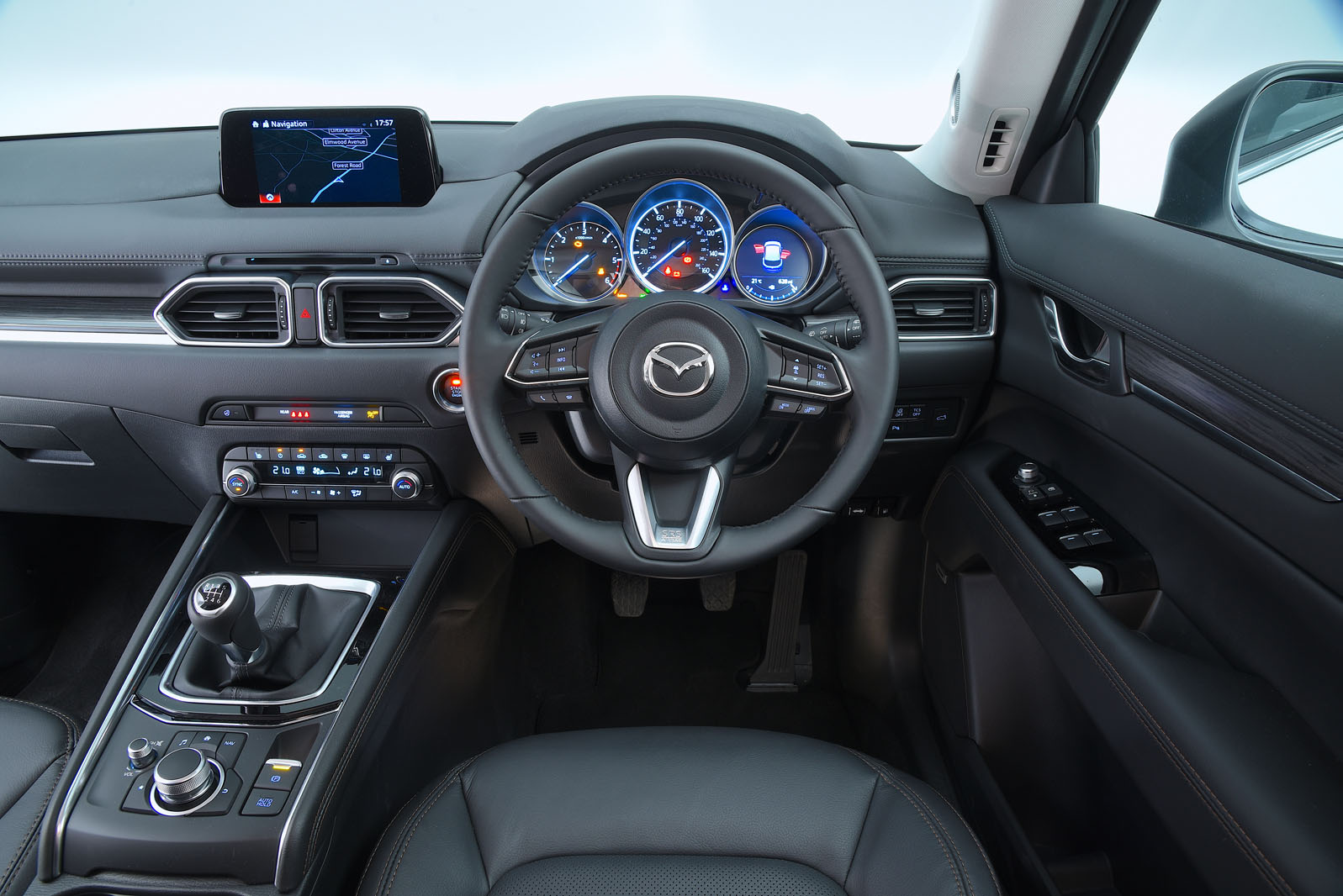
The CX-5 and RAV4 have relatively logical dashboard arrangements and clearly labelled buttons and switches on their steering wheels. Not so the CR-V: the controls for its trip computer and adaptive cruise control are so unintuitive that we’d wager that, without consulting the user manual, you’d simply never work out how to use them.
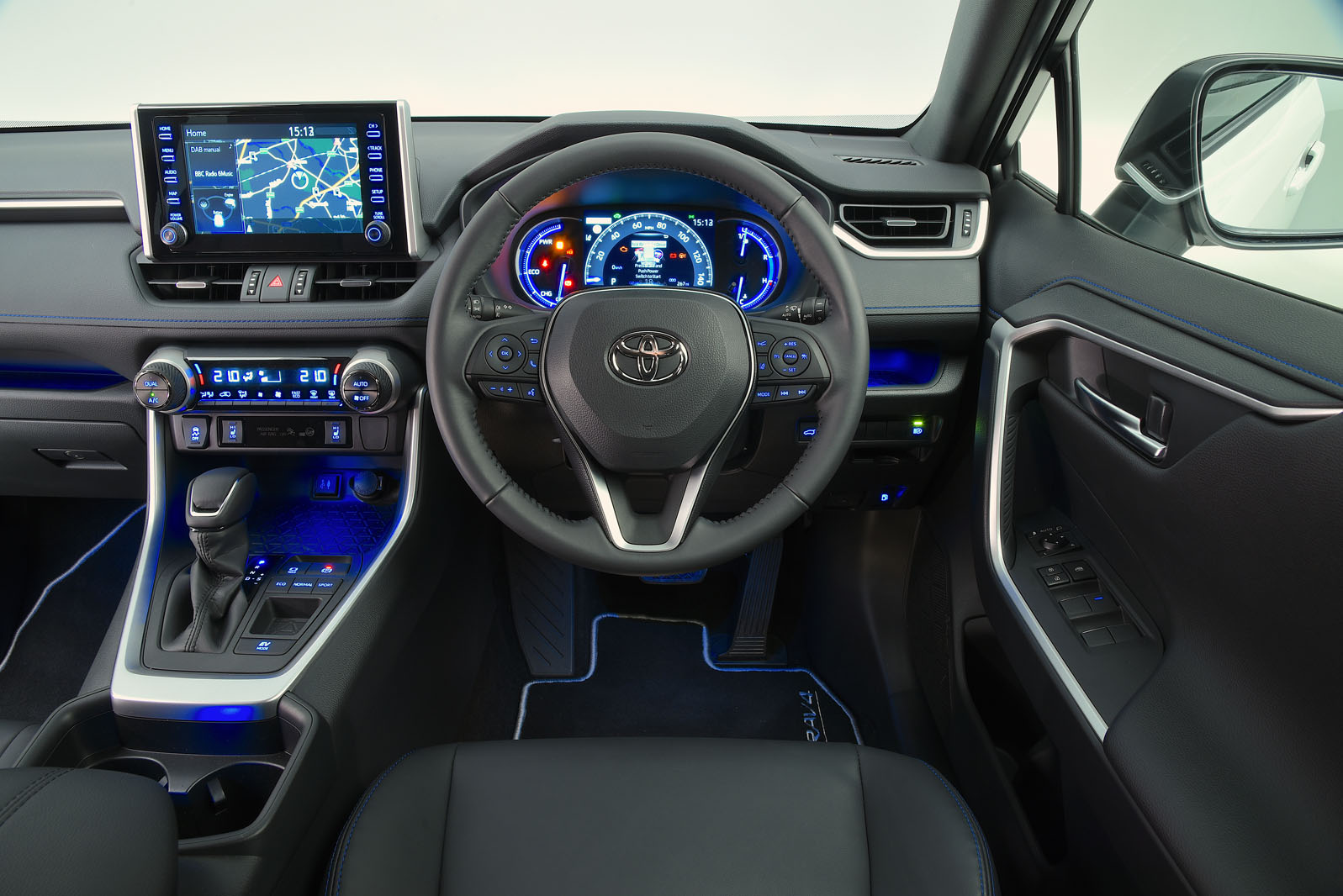
As for interior quality, the latest CR-V is undoubtedly a big step forward compared with its predecessor; all the dashboard panels and fixtures feel suitably solid and there are plenty of squidgy materials. Sadly, the obviously fake wood veneers and swathes of shiny, hard plastic lower down let the side down a bit.
There are some hard, scratchy plastics in the RAV4, too, but its dashboard looks and feels that bit more upmarket, with buttons and dials that have a surprisingly high-quality feel. Still, neither hybrid can hold a candle to the CX-5; Mazda’s interior quality has improved markedly over the past couple of years and, premium-badged alternatives aside, things don’t get much better in this class.
< Previous | Next: Infotainment systems >
Page 2 of 6