
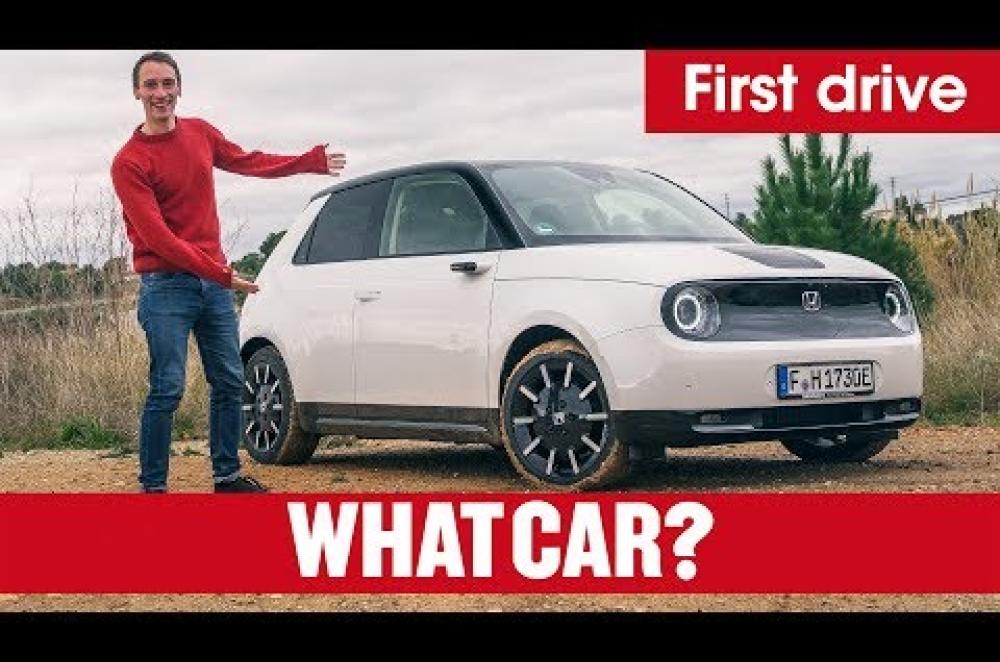
- 2021 Honda E review – the electric car of the future? | What Car?
- Honda e front cornering
- Honda e front tracking
- Honda e right tracking
- Honda e front cornering
- Honda e dashboard
- Honda e front seats
- Honda e door mirror
- Honda e rear camera
- Honda e boot open
- Honda e rear cornering
- Honda e dashboard
- Honda e rear seats
- Honda e infotainment
- 2021 Honda E review – the electric car of the future? | What Car?



What is What Car? best price?
The What Car? best price shows you the cheapest way to buy your new car, whether it's by choosing an in-stock car through our partner Autotrader or placing a factory order.
RRP from: £34,430
Introduction
It's rare that a tiny five-door hatchback generates massive excitement, but when pictures of the Honda E were first released, there was a fevered clamour for more details.
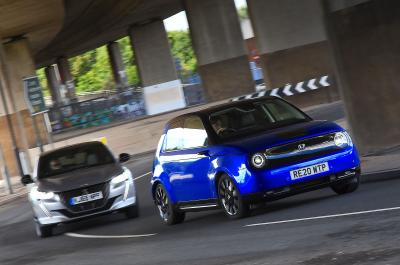
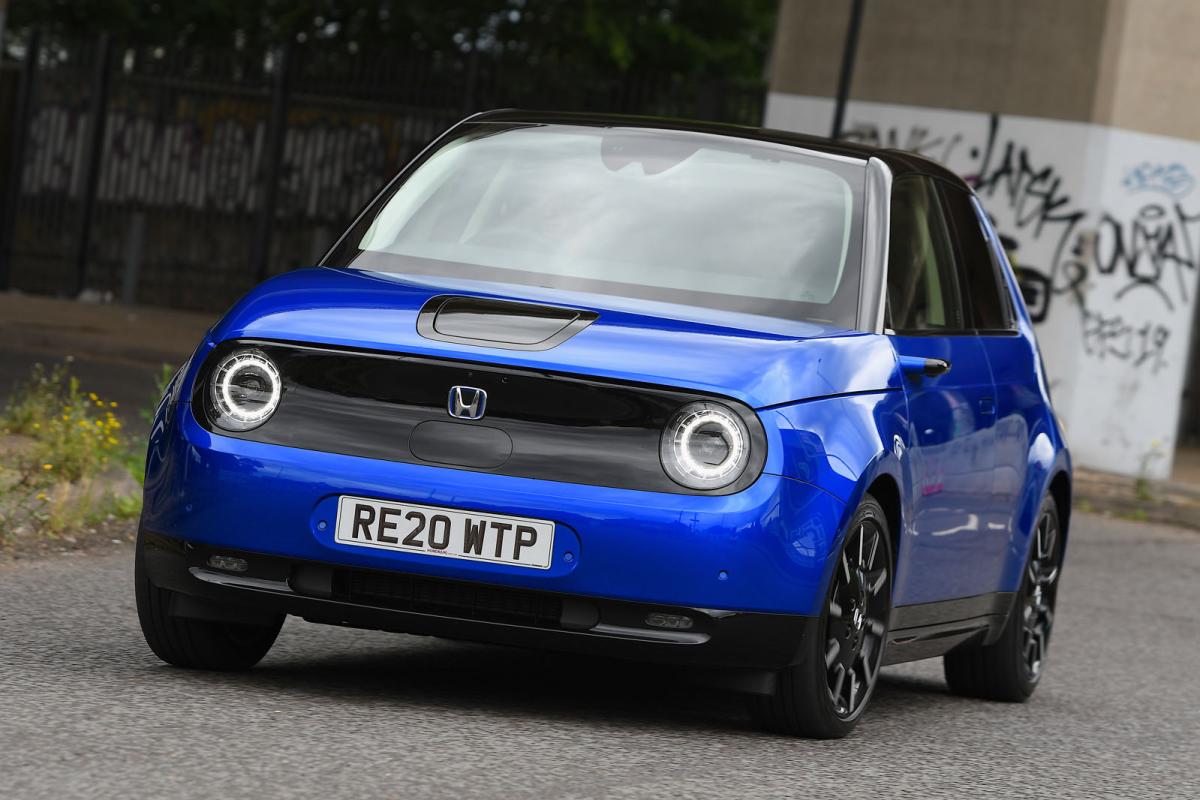
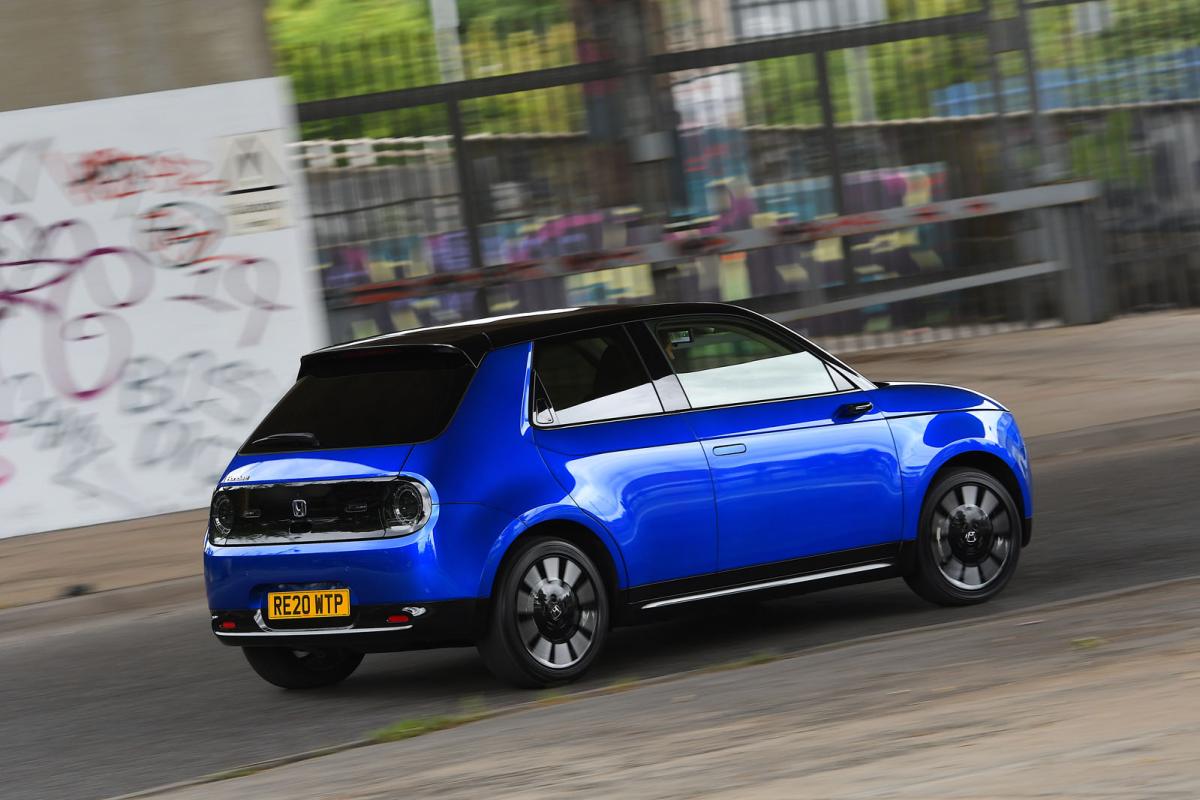
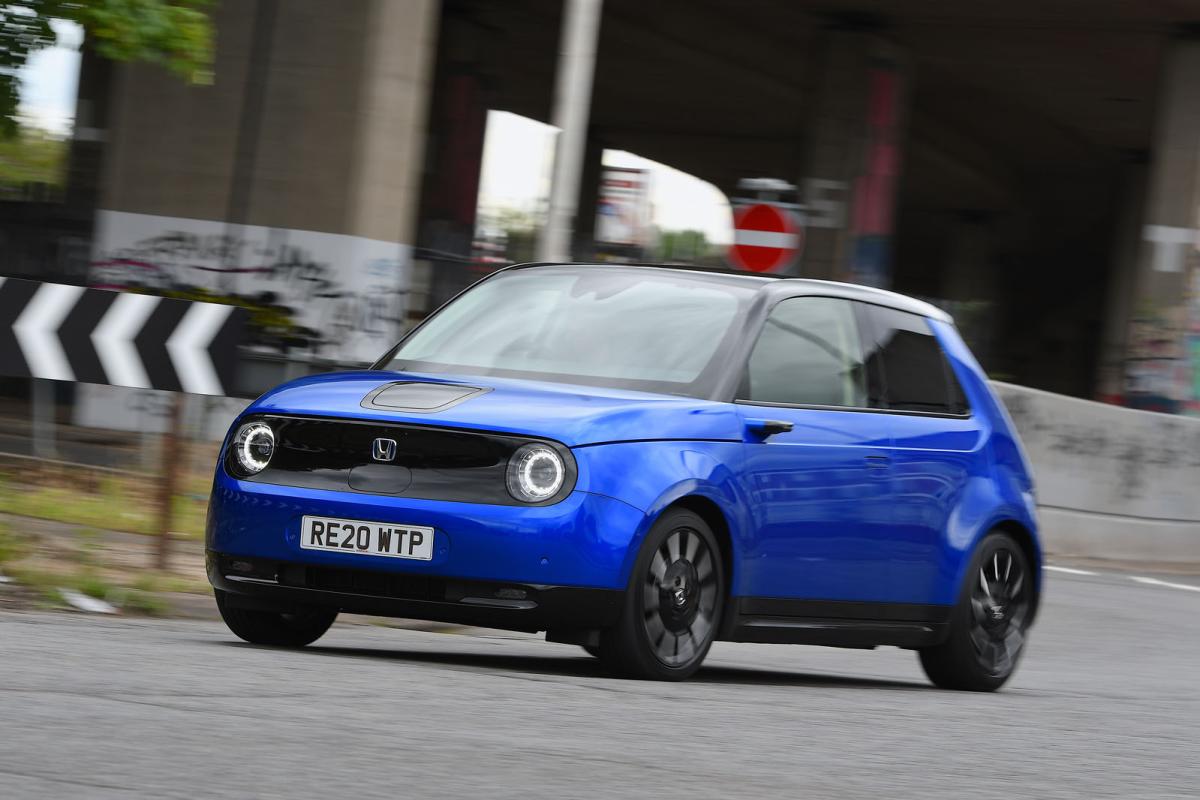
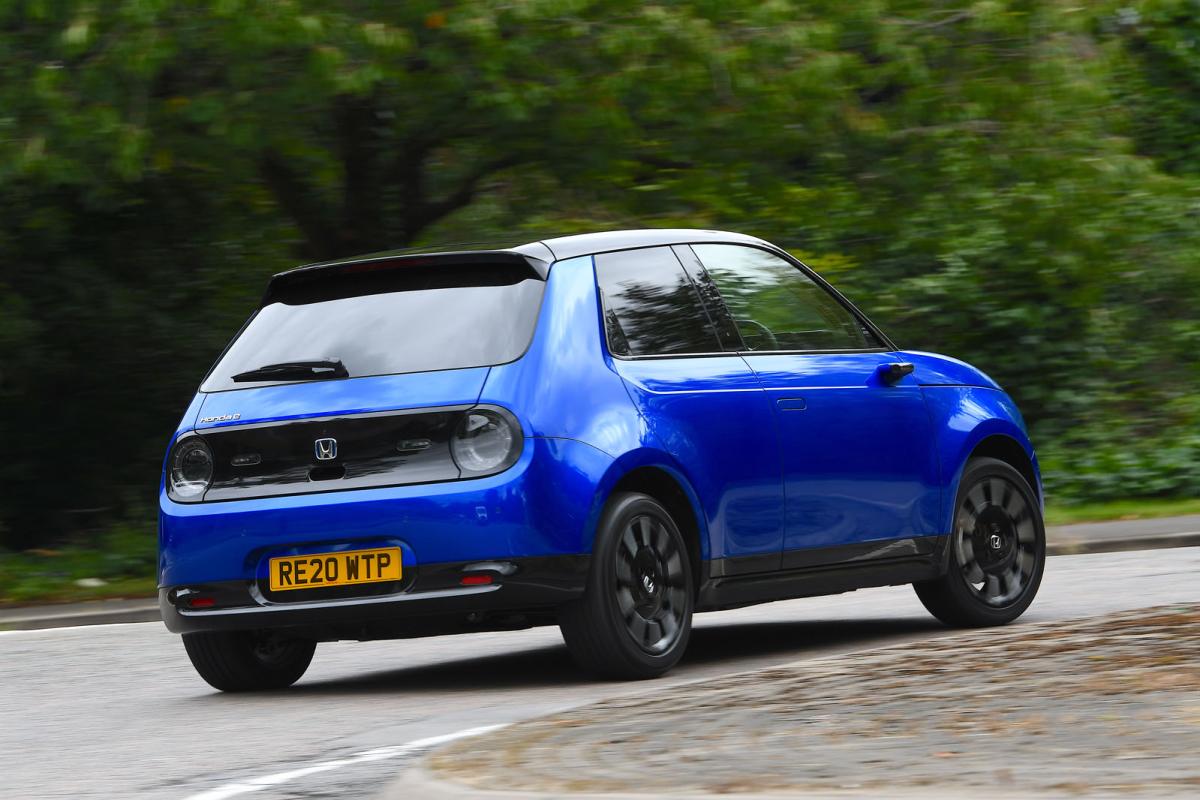
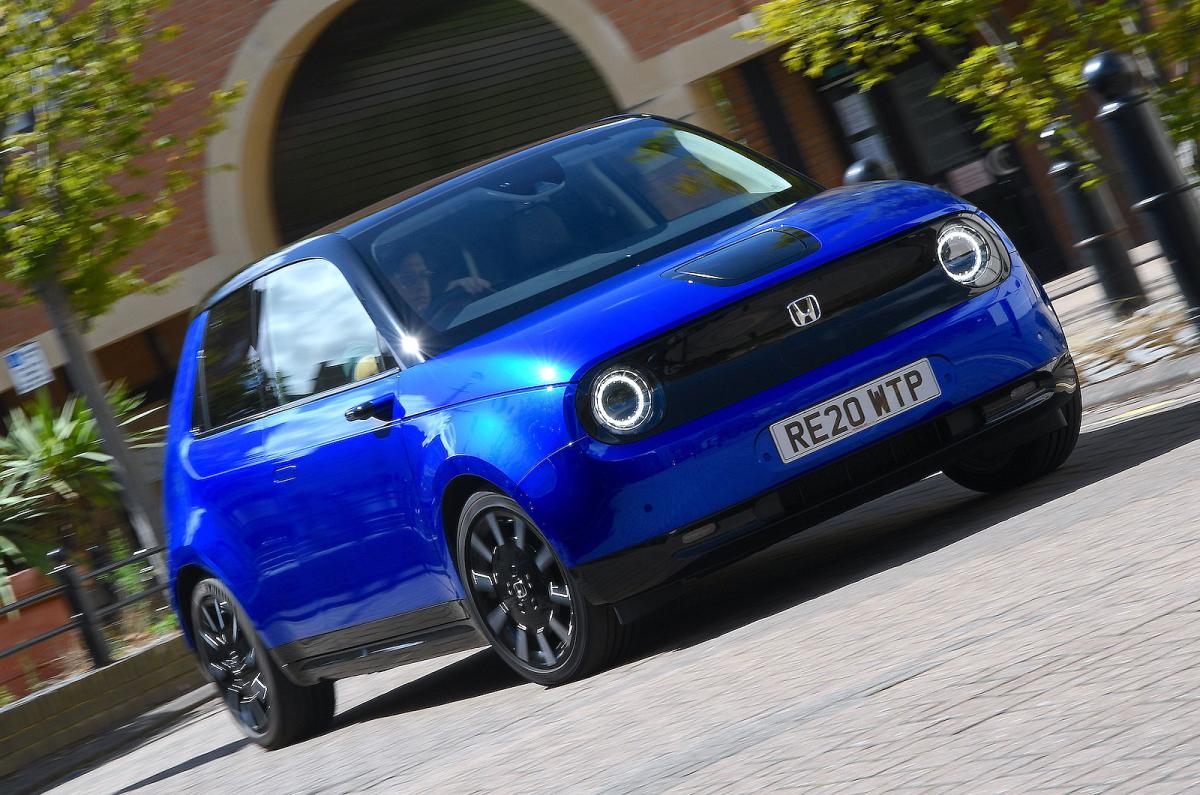
Its cutesy retro styling turned heads and dropped jaws at motor shows, with onlookers admiring its curvy shape, circular headlight design and gloss-black exterior cladding. In fact, there was a general impression that Honda had taken design inspiration from a much-missed bygone era.
What is What Car? best price?
The What Car? best price shows you the cheapest way to buy your new car, whether it's by choosing an in-stock car through our partner Autotrader or placing a factory order.
RRP from: £34,430
Looking a little closer at the Honda e reveals that this is actually a fiercely futuristic car, with flush door handles, cameras instead of door mirrors and two enormous touchscreens on the inside. Most importantly of all, though, it's a fully electric car – Honda's first, no less – and, despite its dinky dimensions, it can seat four.
So, surely it's a style-conscious technophile’s dream set of wheels? Well, it’s not quite as simple as that. Electric cars need to do more than just look good. How many miles they can travel between charges and how much they cost are hugely important factors, and plenty of the rivals strike a commendable balance between the two.
For starters, you have the Fiat 500, Mini Electric, Peugeot e-208 and Renault Zoe – which all cost less but offer longer ranges. The Honda E's price tag also means it has to go toe to toe with some larger and even more daunting rivals, including the Kia Niro EV and VW ID.3.
So, is the Honda E good enough to beat that impressive line-up? Well, we've driven it, and in this review we'll tell you how we rate it against rivals, as well as giving you the low-down on its performance and handling, interior quality, practicality, running and costs and more.
What’s new
- January 2024: Production ends
- July 2022: e Limited Edition has red paint, black alloys
- March 2020: First deliveries take place. Two versions available: e and e Advance, with 35.5kWh battery. E has 134bhp motor, e Advance has 152bhp
- September 2019: Prices announced
- May 2019: Honda opens orders for production car
- February 2019: e prototype debuts at Geneva motor show


Pros
- Distinctive styling
- Good to drive
- Appealing interior
Cons
- Poor range
- Too expensive
- Miniscule boot
Performance & drive
What it's like to drive, and how quiet it is
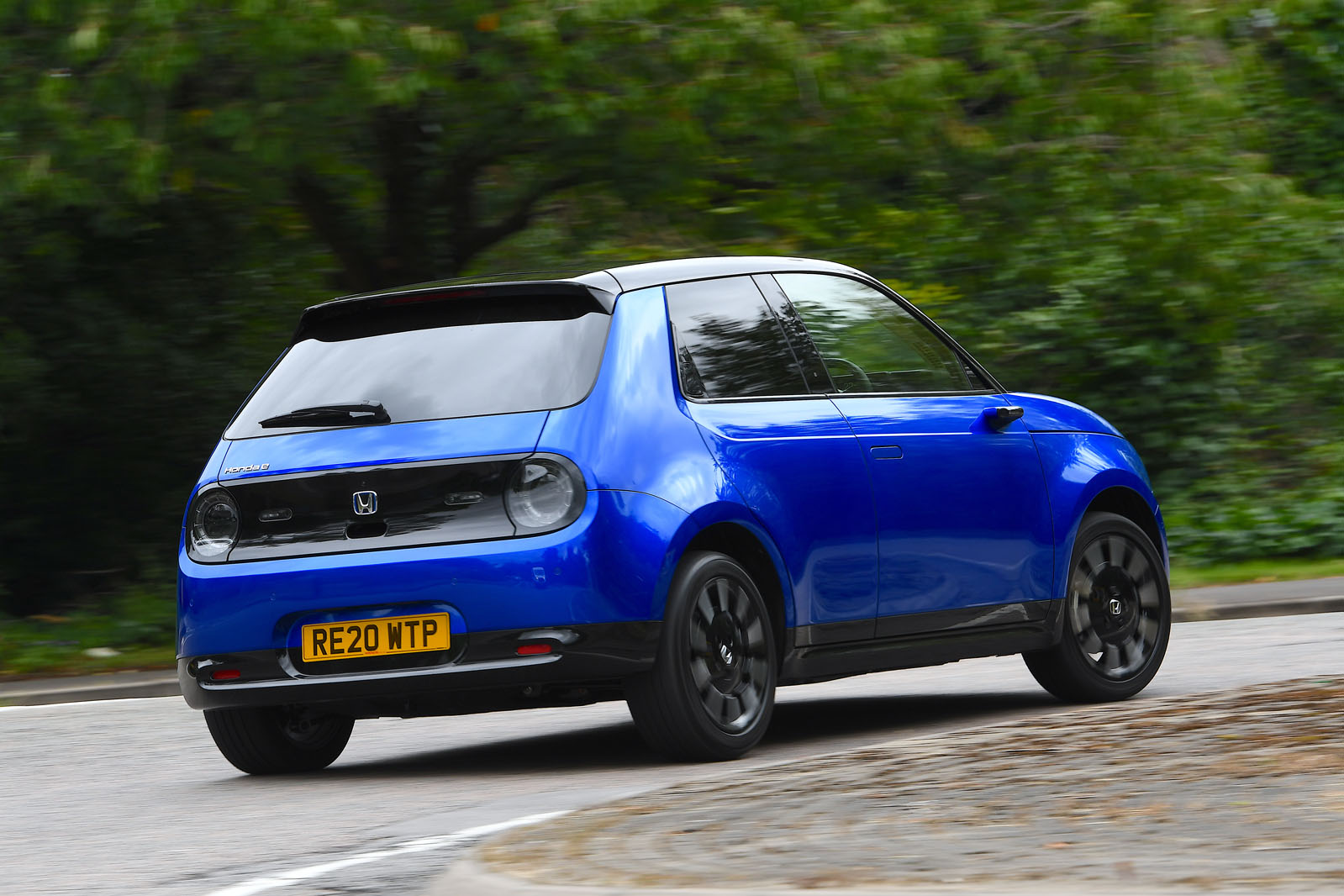
The Honda E’s cheeky looks are backed up by genuinely fun driving manners. It feels really darty around town, with plenty of grip for zipping around roundabouts and a ridiculously tight turning circle, so you’ll hardly ever need to make a three-point turn.
Even when you’re out for a jaunt in the country, it corners in a composed manner without much body lean. And no matter what speed you’re doing, the steering gives you a good sense of connection with the front wheels, thanks to its accuracy and natural weighting.
It’s important to stress that we're comparing it with other similarly priced electric cars such as the Peugeot e-208 and Renault Zoe so don’t expect the cat-like agility or rewarding handling you’d experience in a Ford Fiesta ST hot hatch. Nevertheless, even compared with the Mini Electric, Honda’s first proper electric car is jolly good fun.
It’s comfortable enough, too, dealing with nasty urban ruts and potholes more adroitly than the Mini Electric. The suspension is relatively firm, though, and you're jostled around a bit along roads that aren’t perfectly smooth. That's not particularly annoying, but the e-208 is a better choice if comfort is a priority.
Although the Honda E is primarily built for the city, it remains relatively quiet on faster roads. There isn’t much road or wind noise, and there’s less electric motor whine than you hear in some rivals.
The single electric motor gives it 152bhp and and official 0-62mph time of 8.3sec. That’s very slightly slower than the e-208 but one second slower than the Mini Electric. Even so, acceleration feels urgent when you put your foot down at relatively low speeds, making the baby Honda ideally suited to the urban cut and thrust.
A push of a button enables one-pedal driving, so that lifting off the accelerator pedal turns the car’s regenerative braking system up to its maximum level. That slows the car quickly without you needing to press the brake pedal at all, and recoups energy to recharge the battery. When you do use the brake pedal, you’ll find it easy to judge how much pressure to apply to slow the car smoothly – something that isn’t the case in many rivals.
Now for the Honda E’s Achilles' heel: its range. Officially, it can travel just 131 miles between charges, and in real-world driving, we’d expect that to be more like 100 miles. The cheaper Fiat 500 has an official range of 199 miles, while the Zoe's is 239 miles and the Mini Electric's is 145 miles.
Tips & Advice
Interior
The interior layout, fit and finish
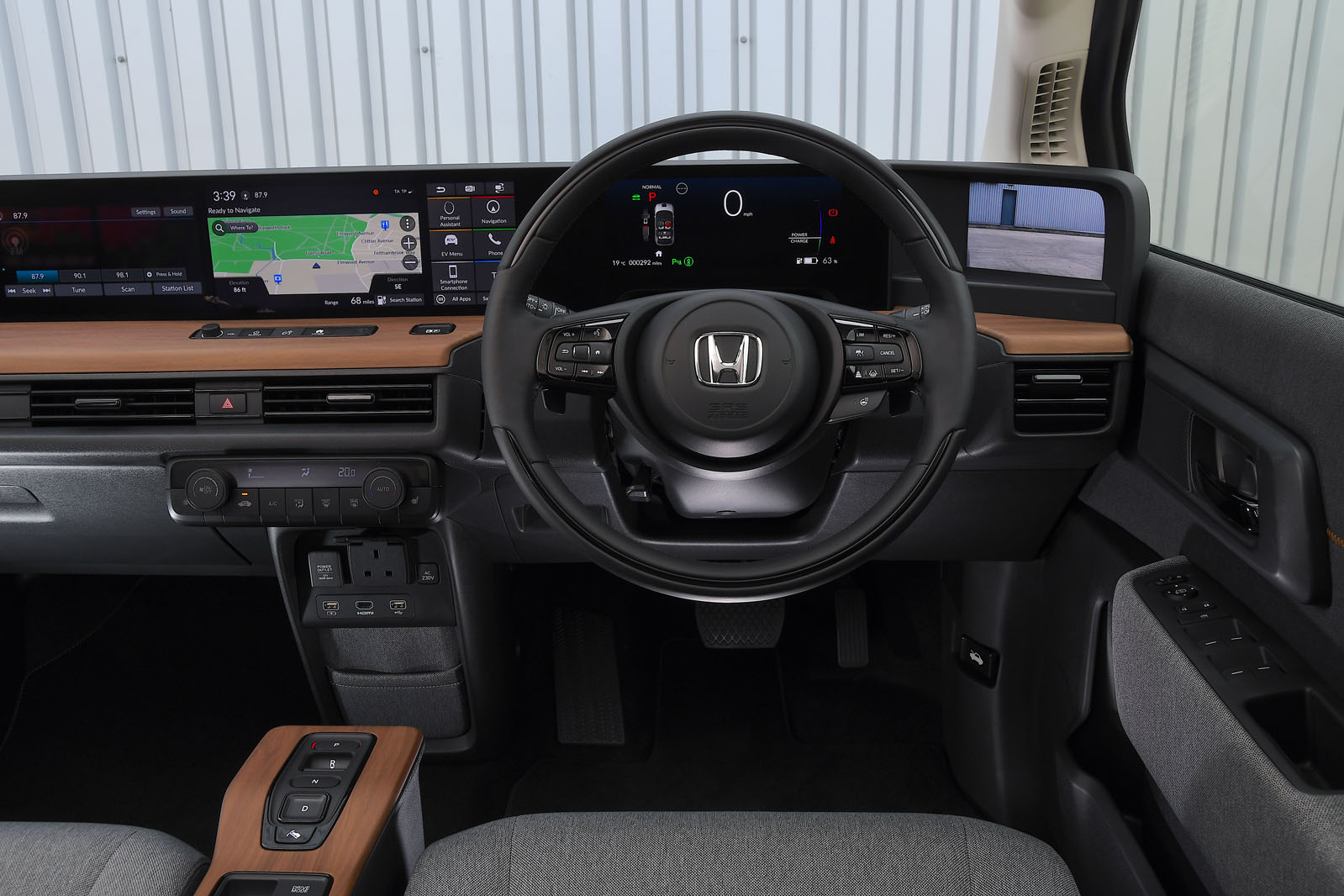
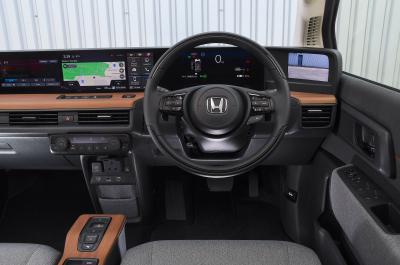
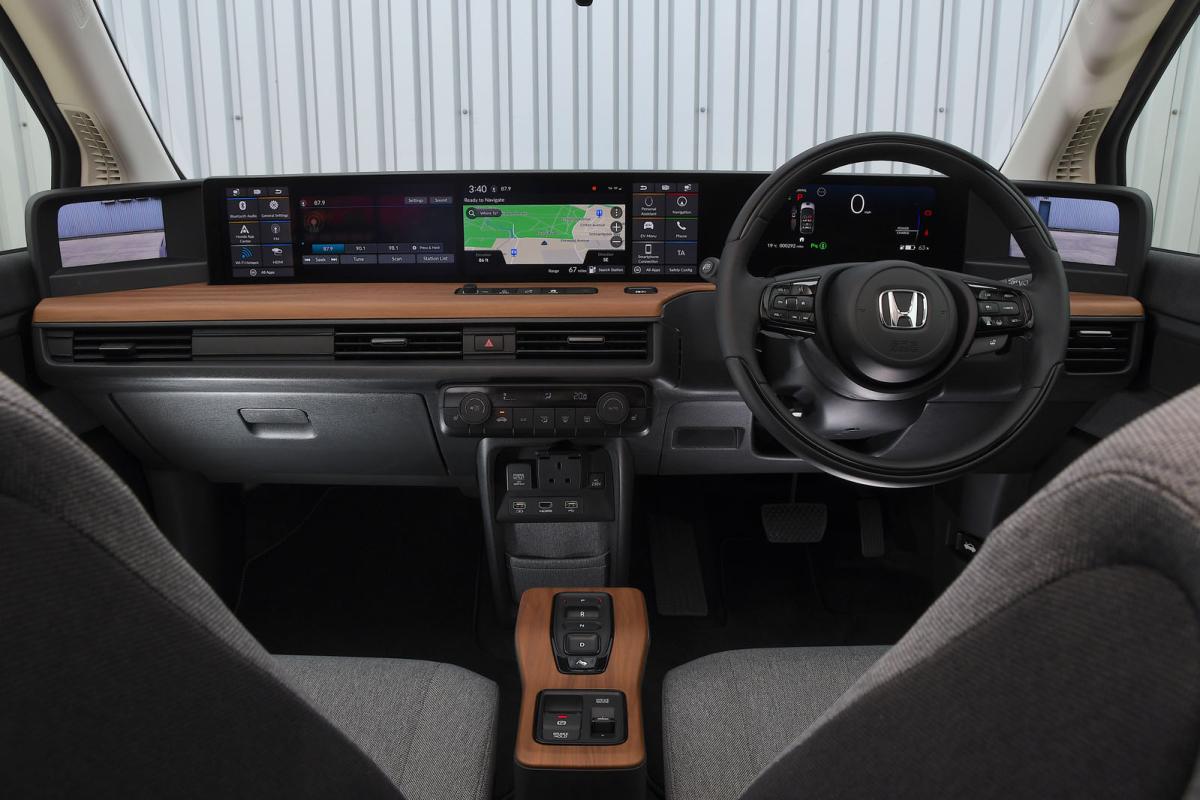
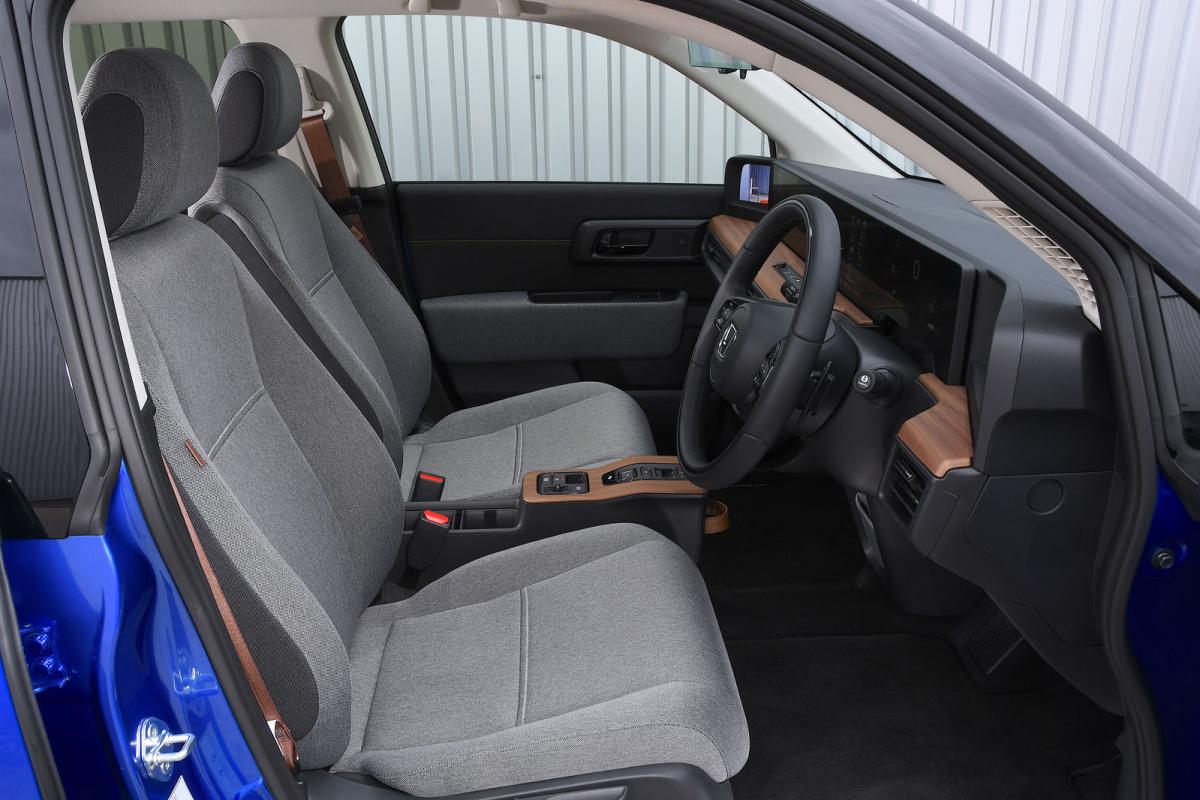
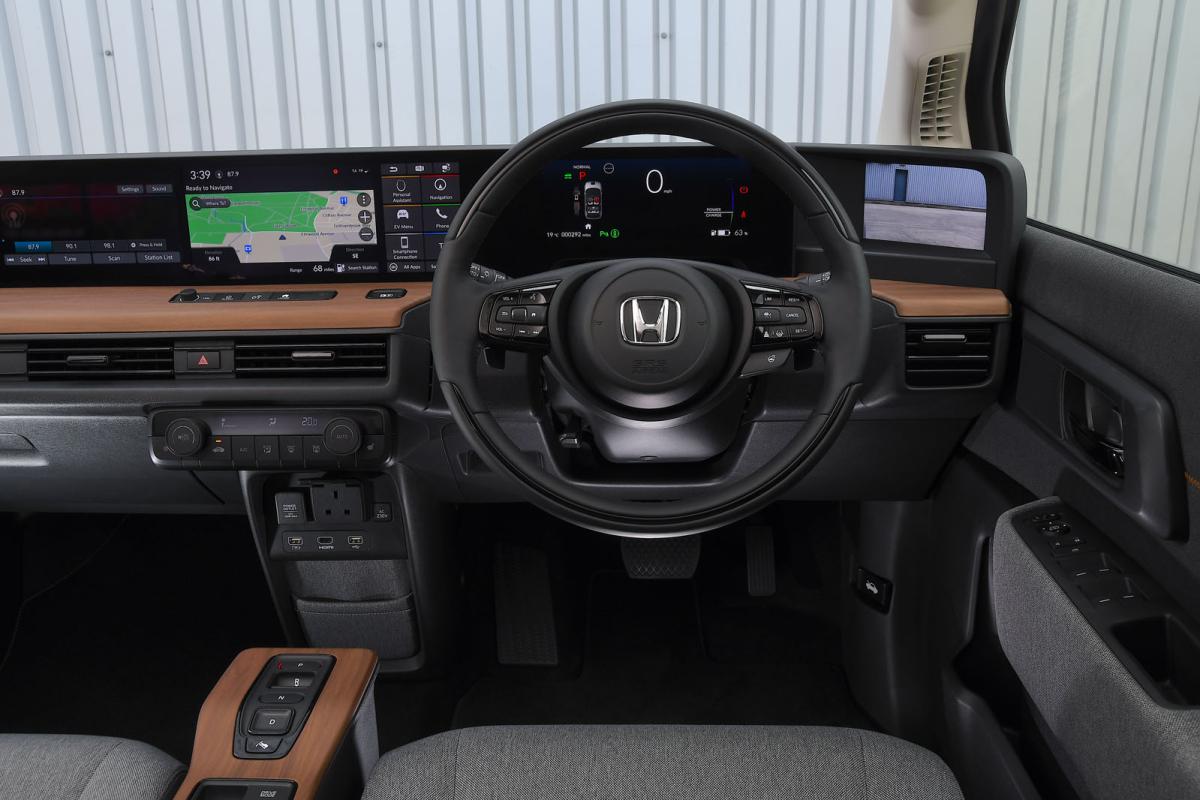
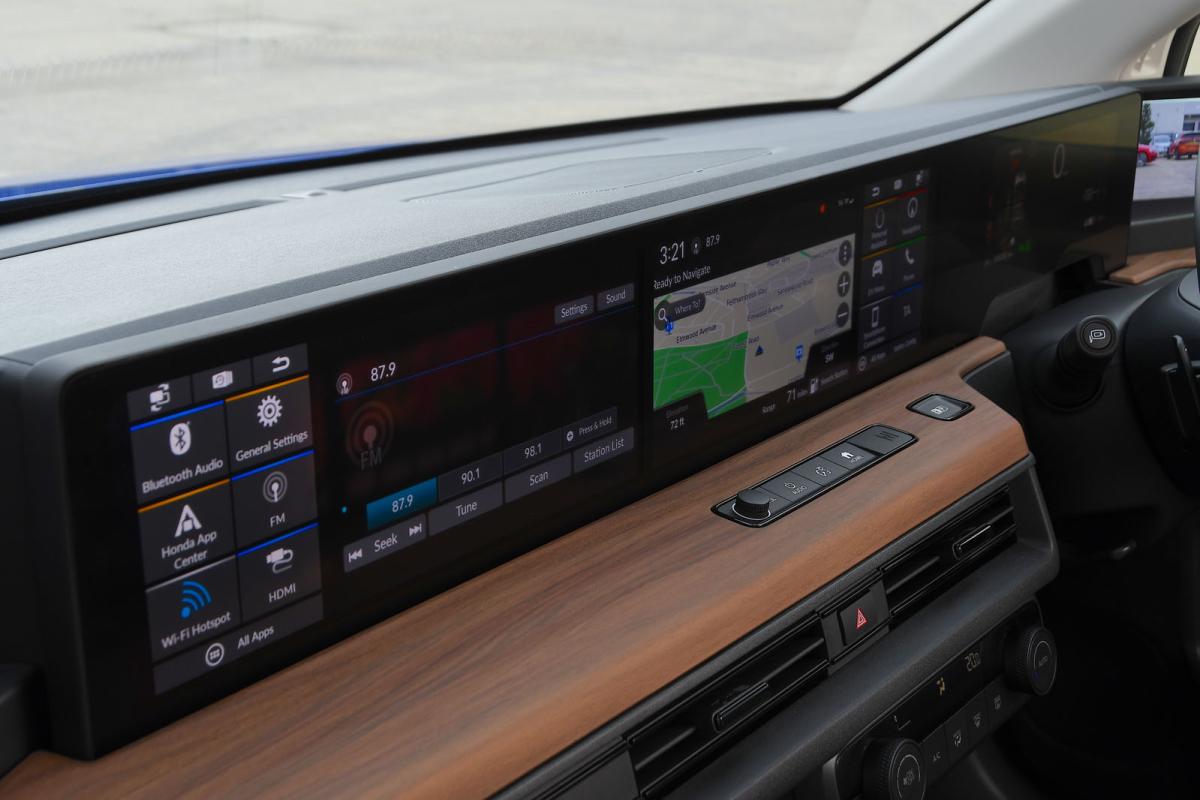
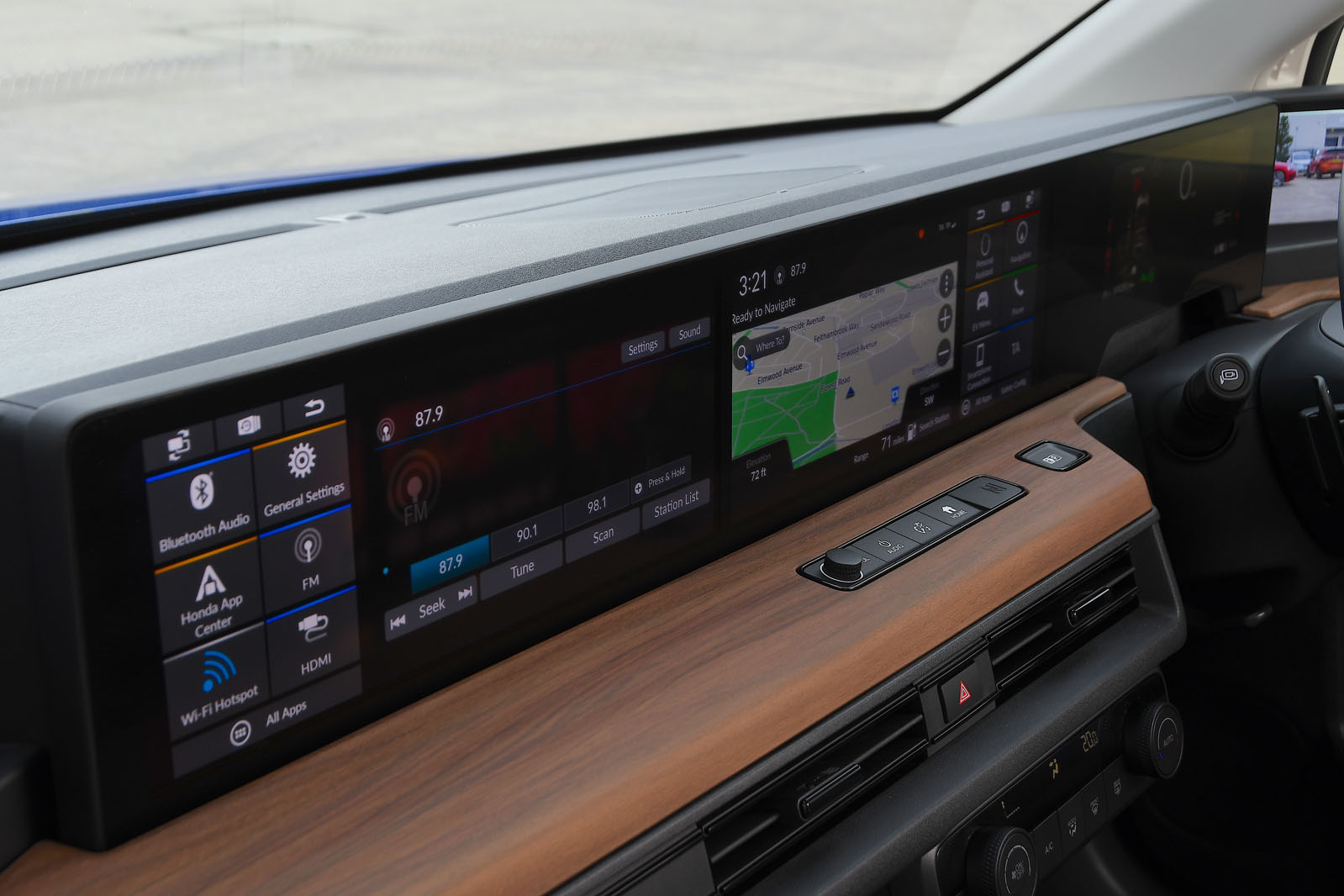
The first thing you’ll notice inside the Honda E is that it has more screens than a computer hacker’s bedroom. An 8.8in one serves as the instrument cluster behind the steering wheel, displaying your speed and remaining range. That's joined to two 12.3in infotainment touchscreens that stretch out across the width of the dashboard.
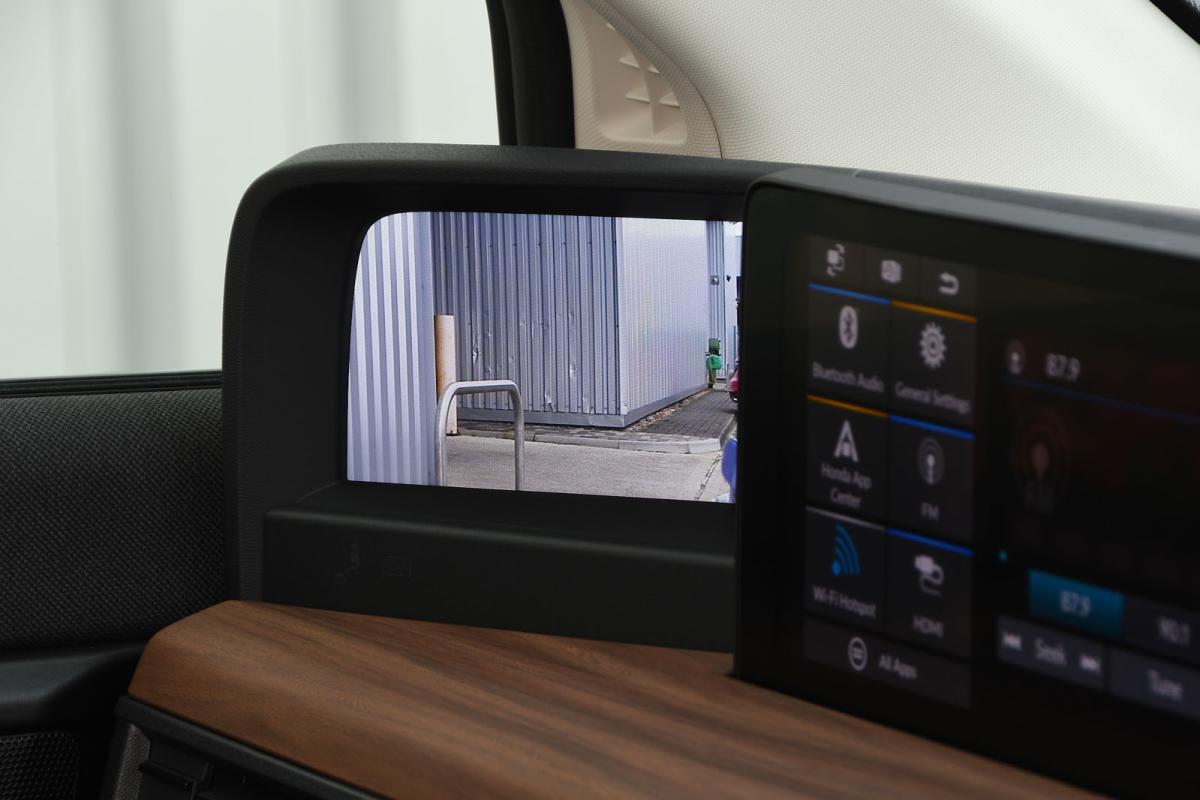
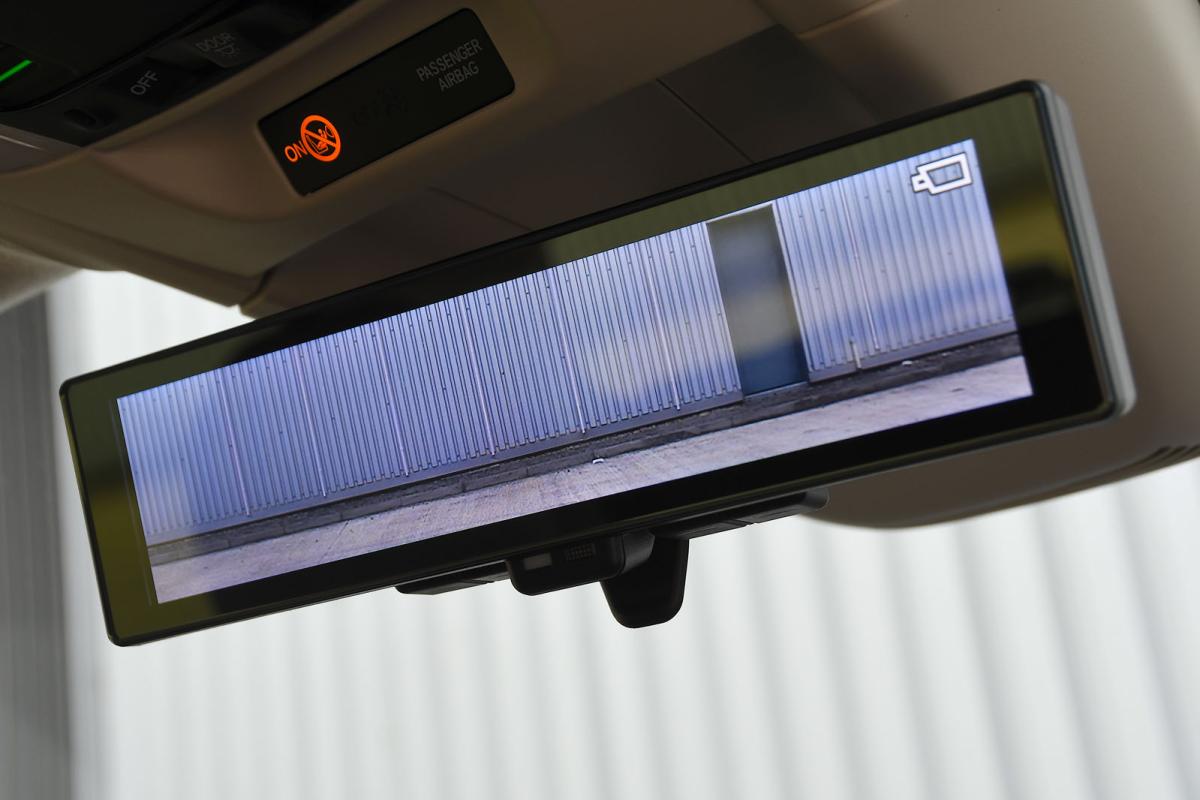
There are also two 6.0in screens that display a live feed from the futuristic camera door mirrors. They take a bit of getting used to, but you can adjust the cameras to suit your driving position, and the screens are overlaid with useful guidelines to help you judge how far away you are from other cars when you indicate. Just in case you don’t think there are enough screens already, the rear-view mirror can display a live camera feed from behind the car.
Overall, the screens help the interior look quite futurists, so it's a shame that usability appears to have been an afterthought. The touchscreens don’t respond to prods in the instantaneous way you’d hope, the operating system isn't very intuitive and the screen graphics are a bit fuzzy. Fortunately, the air-con controls are pleasingly simple, with proper buttons and dials.
There are also a couple of quirky features to help keep you occupied while you wait for the battery to charge. You can, for example, turn the two touchscreens into a virtual aquarium – with virtual fish swimming around. Or you can use the HDMI port to plug in a Google Chromecast or a games console. There are also USB ports aplenty.
The driving position is fundamentally very good, with excellent adjustability in the driver’s seat and steering wheel. If you're tall, you might find the seat bases a little short, but that's our only real gripe, and all-round visibility is better than in most rivals. Parking – already fairly straightforward because this is such a small car – is made even easier by the standard-fit front and rear parking sensors and rear-view camera.
Interior quality is mostly impressive, with plenty of high-quality fabrics and a real feeling of solidity. The wood-effect face on the dashboard won't fool anyone, but overall it feels more upmarket inside than the Renault Zoe. If you want a really plush interior in your small electric car, the Cupra Born and Mini Electric are a step up again.
Tips & Advice
Passenger & boot space
How it copes with people and clutter
Despite its dinky dimensions, space in the front of the Honda E is actually very good, and even really tall people won’t complain. Front storage is a mixed bag, though. There’s a usefully large cubby between the seats, and a cupholder that pulls out from behind the gear selector buttons. However, the door bins are a little shallow and the glovebox is small.
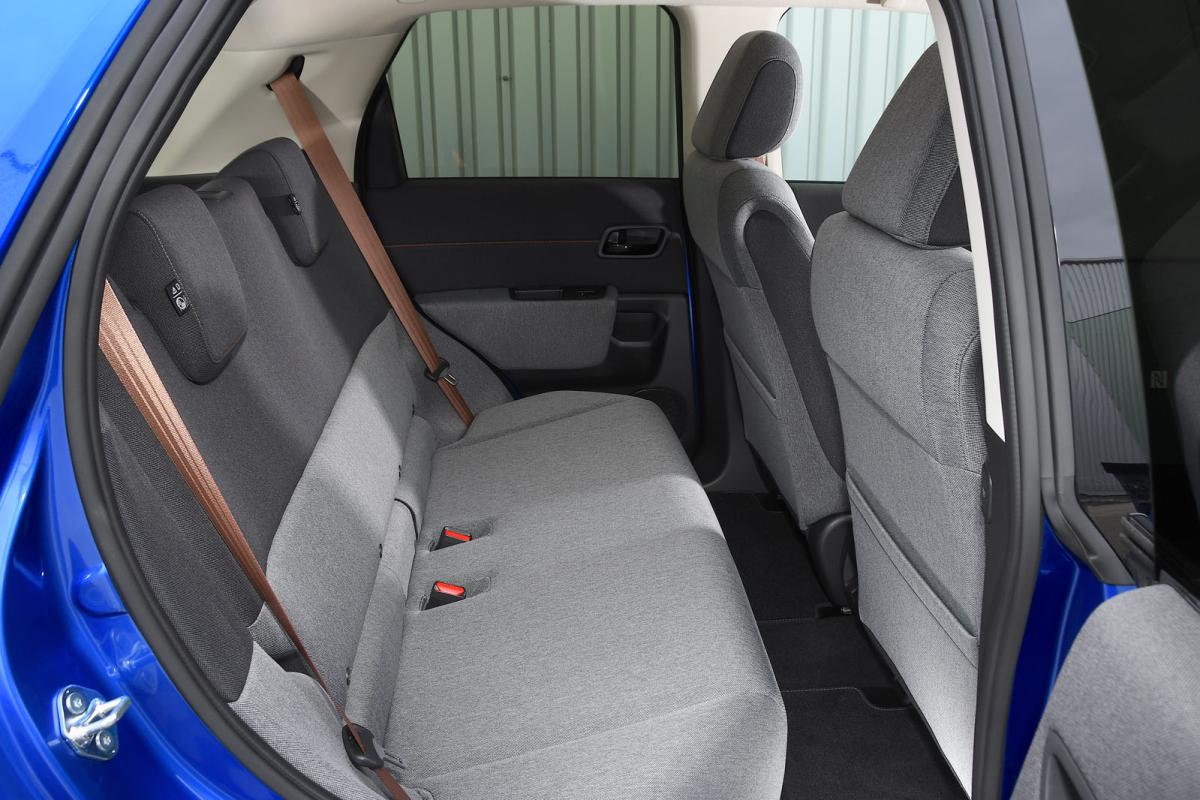
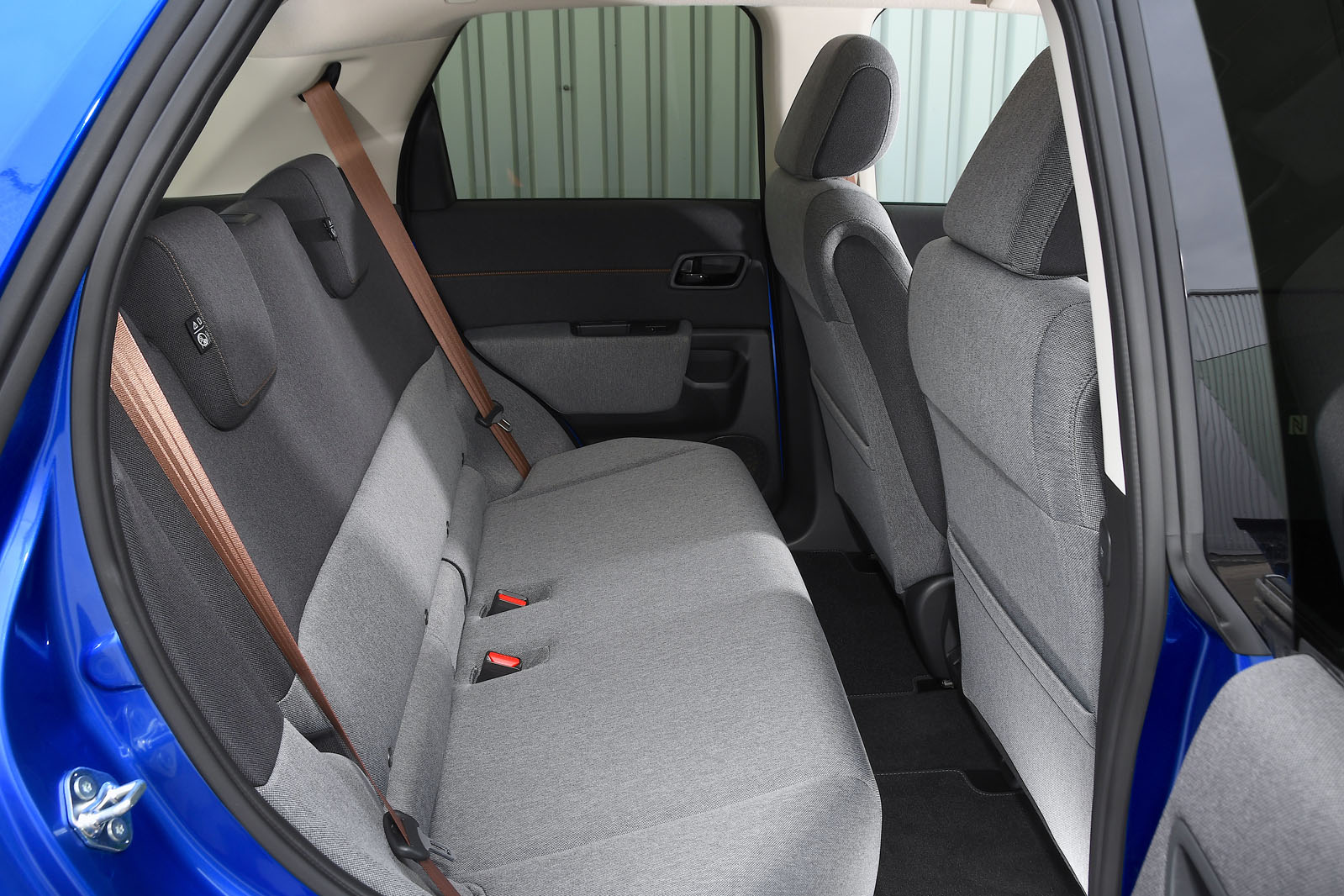
Space in the back is roughly on a par with the Renault Zoe and there’s more leg and head room than in the Mini Electric. There are only two seatbelts in the back, so carrying five people is out of the question, but then it would be a real squeeze in such a small car anyway. The rear door armrests can each hold a drinks can, but there are no proper door bins.
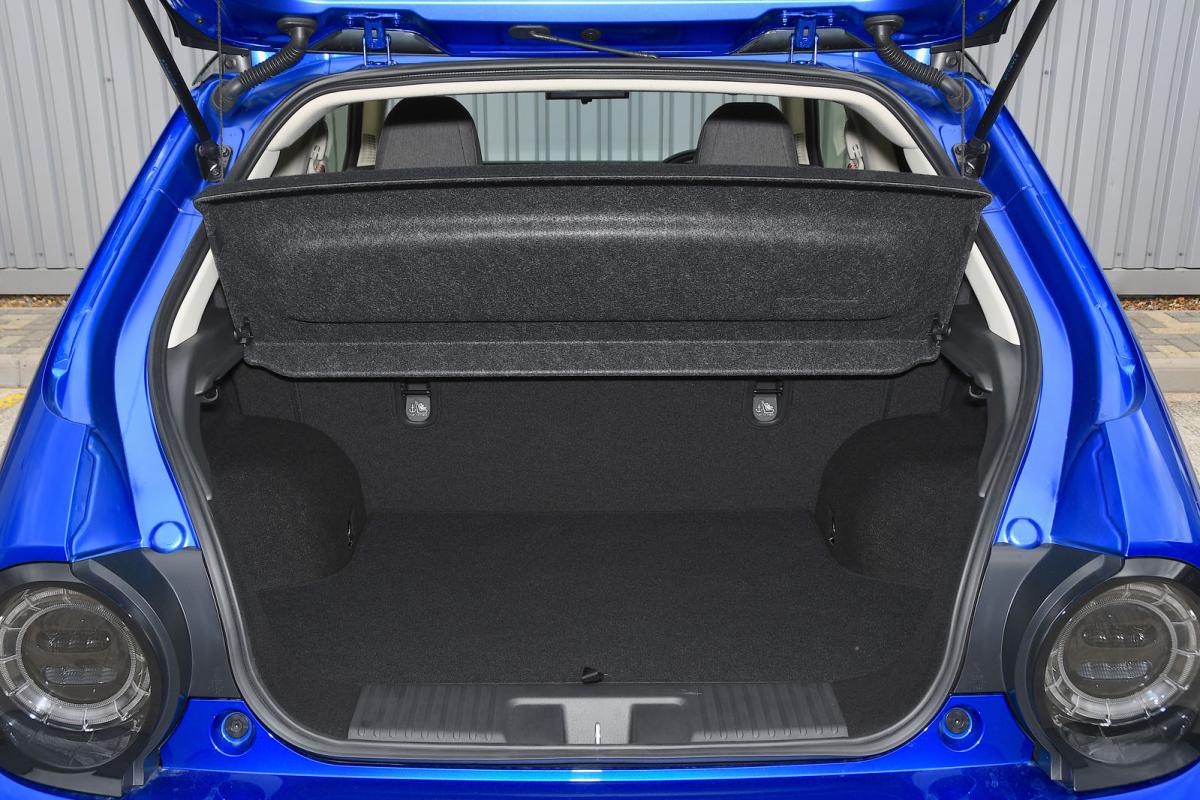
The boot, meanwhile, is tiny. In fact, despite having a relatively broad opening with no loading lip, it’s one of the smallest of any electric car out there, and is dwarfed by the load bays of rivals, including the Zoe and the Peugeot e-208. Even the similarly-sized Fiat 500 – which swallowed just three carry-on suitcases when we tested it – gives you more space in the boot. There is at least some underfloor storage for the charging cables.
The rear seatbacks fold down when you need to carry more than just a couple of bags of shopping, but because they do so in one cumbersome piece, you can’t carry, say, a buggy and a rear passenger at the same time.
Buying & owning
Everyday costs, plus how reliable and safe it is
Even if you love the looks of the Honda E, don’t give two hoots about practicality and can live with a small range between charges, there’s still something that might put you off: the price. It would be easier to forgive its flaws if it had a small price tag, but it’ll cost you a good chunk more than all the rivals, including the Fiat 500, Mini Electric, Peugeot e-208 and Renault Zoe. In fact, it’ll even cost you more than the entry-level Kia Niro EV and around the same as the Cupra Born in V1 trim.
Given that all of those rivals are larger cars with much longer ranges between charges, and the Mini Electric has a plusher interior and a more user-friendly infotainment system, it’s clear that the only reasons for choosing the Honda E are subjective ones. And that’s absolutely fine as long as you know that you're turning your nose up at other electric cars that offer more for less.
Ways to buy
In terms of depreciation, the Honda E should hold on to its value as well as the cheaper e-208 and the Zoe, but the Born and Mini Electric will depreciate much more slowly over three years. That difference is reflected in PCP finance payments: the Born V1 and top-spec Mini Electric Resolute should cost you less per month.
There's only one trim level, badged Advance, and it does come well equipped, matching the more expensive variants of its rivals in most cases. You get a heated steering wheel, a self-parking system and heated front seats.
There's also an impressive amount of safety equipment, including automatic emergency braking (AEB). When Euro NCAP tested the model for safety in 2020, it was awarded four out of five stars. It provided good protection for adults in the front during the severe side pole impact, but was rated marginal for protection of the driver’s chest and poor for protection of the driver’s lower right leg. The VW ID.3 scored the full five stars when it was tested in the same year.
The Honda E's maximum charging speed is 35kW. The 35.5kWh battery should take 36 minutes to charge from 10-80% if you're plugged into a 50kW CCS public charger. A 7kW home wall box will give you a full charged (0-100%) in around five hours and 15 minutes.
Honda has a pretty good record when it comes to reliability, finishing 12th out of the 32 manufacturers in the 2022 What Car? Reliability Survey. That places it above rivals Renault (18th), Volkswagen (22nd), Peugeot (28th) and Fiat (30th) but way below Mini in third.
For added peace of mind, the e is covered by a three-year, 90,000-mile warranty, with the battery covered by a separate eight-year, 100,000-mile warranty with a guarantee that it will retain at least 70% of its original capacity during that time.
For all the latest reviews, advice and new car deals, sign up to the What Car? newsletter here
Tips & Advice
Similarly priced cars


If you're interested in finding a Honda E, or any of the other electric cars mentioned here, head over to our Cars available now pages to find new cars listed for sale at great prices.
FAQs
Honda Honda E specifications
RRP price range
Battery range (miles)
Available fuel types (which is best for you? )
Number of engines (see all)
Number of trims (see all)
What is What Car? best price?
The What Car? best price shows you the cheapest way to buy your new car, whether it's by choosing an in-stock car through our partner Autotrader or placing a factory order.
RRP from: £34,430
About the writer