News
Tests of automated driving systems show drivers shouldn't rely on them
More than 70% of drivers think they can buy a car that can drive itself, but the first independent tests of 'autonomous' systems show they can’t always be relied upon to prevent accidents
According to a survey carried out by car security and safety organisation Thatcham and crash testing organisation Euro NCAP, 71% of drivers globally believe current cars can drive themselves and, because of this, 10% would be tempted to take a nap while using a motorway assist system such as adaptive cruise control.
advertisement
scroll for more
However, the first independent tests of advanced driver assistance systems (ADAS) demonstrate why drivers shouldn’t leave the driving to their cars.
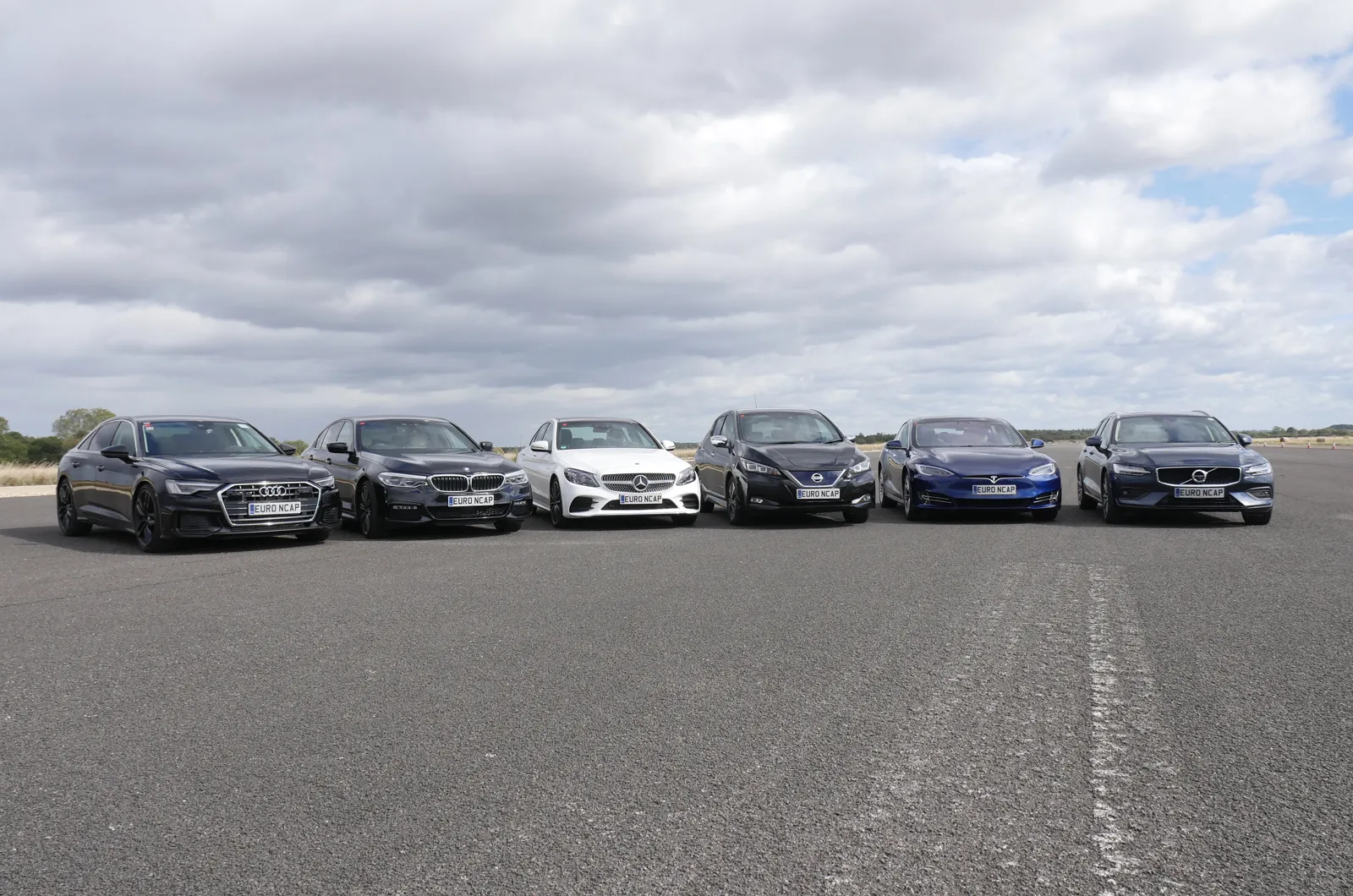
Thatcham put 10 of the latest car models, all equipped with ADAS technology, through a series of tests. The cars were the: Audi A6, BMW 5 Series, DS 7 Crossback, Ford Focus, Hyundai Nexo, Mercedes-Benz C-Class, Nissan Leaf, Tesla Model S, Toyota Corolla and Volvo V60.
The tests included assessing how each car reacted when driven at more than 40mph towards a stationary vehicle and when driven towards and then steered around a large pothole that would be visible to the driver but not to the ADAS technology.

Claire Evans
Updated: 18 October 2018
Car reviews
Nissan Leaf
View all new car reviews
What Car? was given the opportunity to watch demonstrations of some of the cars undergoing these two tests, in which three of the cars, all fitted with similar-sounding systems, reacted very differently.
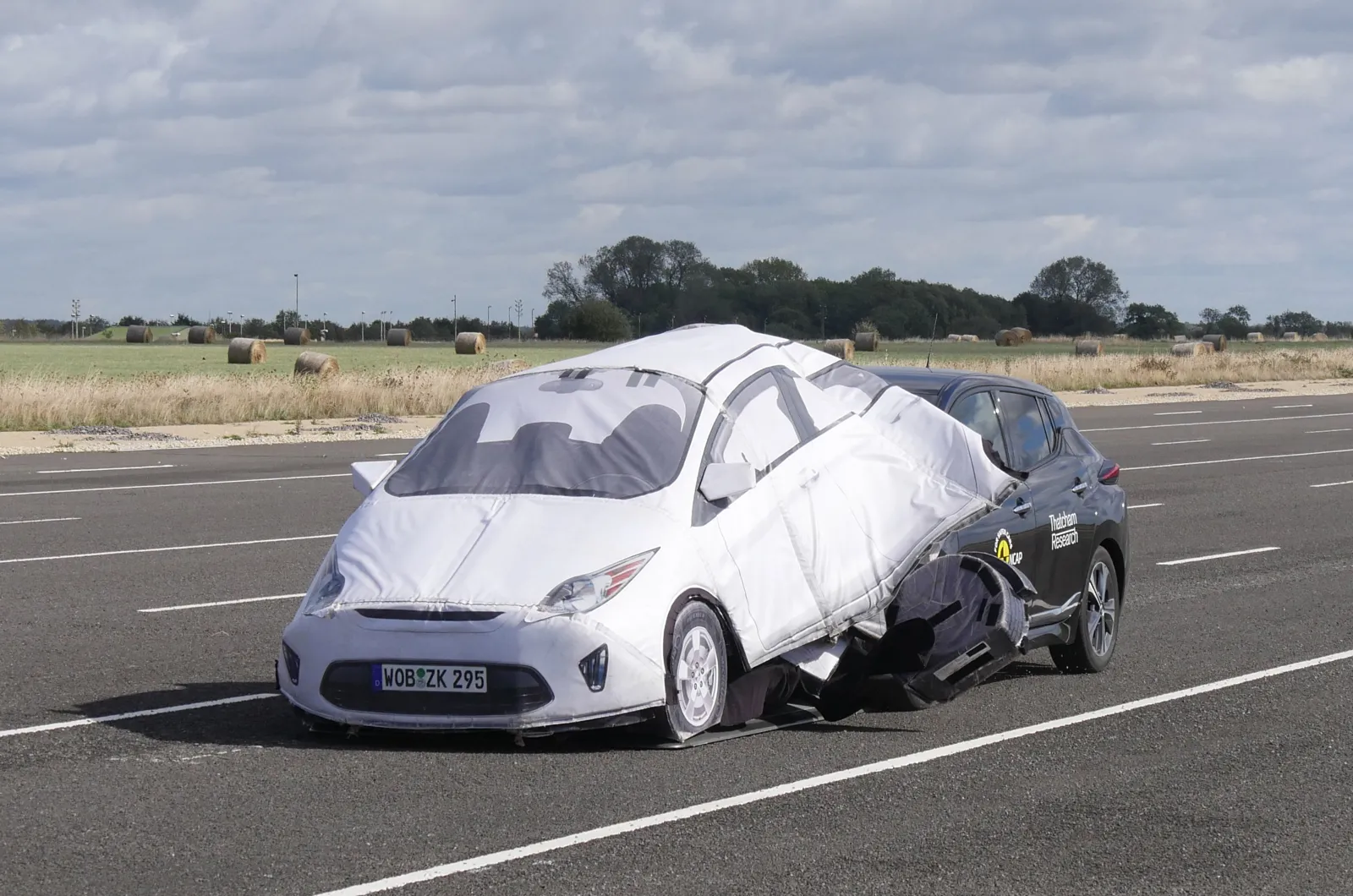
The Volvo V60’s automatic emergency braking (AEB) system activated and performed an automatic emergency stop, halting the car a few inches from the stationary vehicle. The adaptive cruise control (ACC) on the Model S spotted the stationary car and gradually slowed the Tesla down to a halt just behind it.
advertisement
scroll for more
The Leaf’s ACC failed react, because it won't stop the car at speeds above 37mph, and its AEB, which should give support up to 56mph, also failed to spot the car, so the Leaf rear-ended the car.
These results highlight the complexity of the different systems on cars and the need for drivers to understand their capabilities and shortcomings.
Nissan stated in response to the Leaf's performance: "This was a media demonstration conducted by Thatcham and not an official test. They have not shared their findings or given us access to the vehicle tested, so we are unable to verify the result.
"Official safety system testing carried out by Euro NCAP concluded that the driver assistance technologies on the Leaf perform as designed in a variety of scenarios. The Leaf also has a five-star Euro NCAP rating."
In response to the similarly poor results of the 7 Crossback in the Thatcham test, DS stated: "The 7 Crossback has an emergency braking system equipped to detect vehicles (moving or stationary) or pedestrians on the road. It's designed for urban situations and operates between 3mph and 52.8mph, with the ability to trigger the brakes automatically to avoid or minimise the outcomes of impact."
advertisement
scroll for more
In contrast to the performance of the Leaf and 7 Crossback's systems in its test, Thatcham believes the ACC system in the Model S engages too early, potentially resulting in over-reliance on the system by drivers.
In the pothole test, which assessed the lane-keeping assistance systems, nine of the cars' systems cut out to allow the driver to steer around the pothole and then reactivated, but the Model S tried to keep the car in the correct position in the lane and made it difficult for the driver to steer around the pothole.
The fact that the Tesla’s system tried to discourage the driver from deviating from the correct lane could make some drivers feel like the car is in control rather than them, and that again could lead to over-reliance on such systems.
Matthew Avery, director of research at Thatcham, said: “These new Euro NCAP assessments are a heads-up for drivers on what these systems can and can’t do and starkly show their limitations, proving beyond any doubt that they are not autonomous.
advertisement
scroll for more
“It’s a delicate balancing act for car makers: offer too much assistance to the driver and they disengage; offer too little and the driver thinks ‘What’s the point?’ and switches the system off. The best systems are those that support the driver, but leave them in no doubt that they are in control.”
Tesla responded to the Thatcham test by stating that it is removing the Full Self Driving Capability package from its options list.
Mike Hawes, chief executive of the Society of Motor Manufacturers and Traders, commented: “Safety is the top priority for car makers, which spend billions developing technology that mitigates driver error, reduces accidents and saves lives. Many new cars are now available with advanced assistance systems where the driver must remain in control at all times, including lane-keeping assistance, blindspot monitoring and automatic emergency braking. Such systems are already making our roads safer and are expected to save 2500 lives by 2030.
advertisement
scroll for more
“The industry is working now with regulators in the UK and at United Nations level to determine what makes a vehicle fully autonomous. This will ensure there is a common understanding and that all autonomous cars meet exacting international standards.”
Next: the test results >>
Page 1 of 3
News and advice
News
Peugeot 208 and 2008 gain new mid-spec Envy trim for £23k
Feature
20 years of Qashqai: the model that started the family crossover revolution
Feature
Mazda CX-5 long-term test
News
2027 Volvo XC40: styling tweaks and new interior tech for £38k
Sponsored
Best used large SUVs for less than £20,000
Feature