Hyundai i30 review
Category: Family car
Decent in areas but soundly beaten overall by better cars like the Ford Focus, Skoda Octavia and Seat Leon.


What Car? says...
What do vanilla ice cream, chicken nuggets and the Hyundai i30 have in common? The answer is that all three are known for being safe and inoffensive choices. At least, that’s what we’ve come to expect since the first-generation i30 went on sale, but times are-a-changing.
The third-generation version of this family hatchback has been updated to meet the ever-tougher challenges being set by rivals such as the Ford Focus, Seat Leon, Skoda Octavia and Volkswagen Golf. Changes include mild hybrid tech for its engines, to improve the economy and emissions, and an improved infotainment suite.
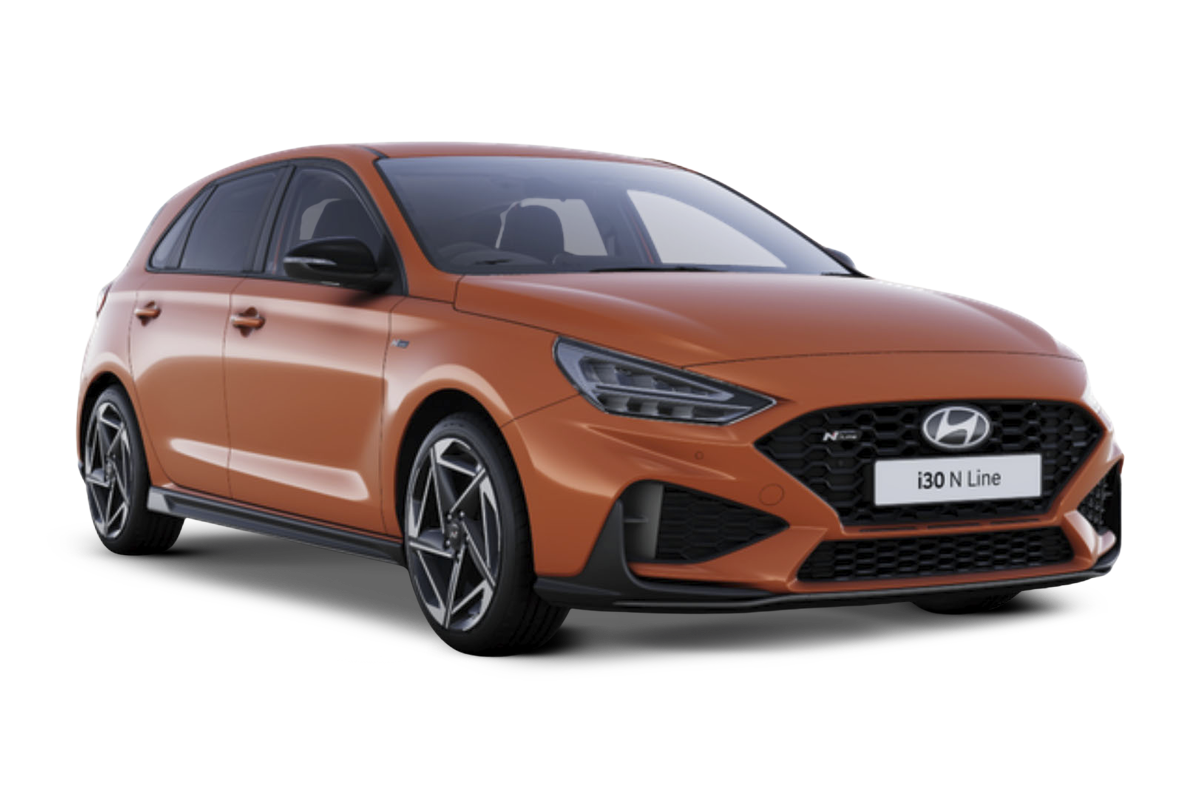
This isn't a one-size-fits-all car, either. While this review is looking solely at the five-door hatchback, you can also choose the Fastback or the Tourer estate bodystyles, plus there's the i30N hot hatch that's remarkably good fun to drive. That's also spawned an N Line trim for the regular i30, which adds a sporting feel without the hot hatchback running costs.

Every i30 comes with a five-year, unlimited-mileage warranty and Hyundai’s are generally known for offering lots of goodies as standard. So, with all that in mind, is the Hyundai i30 the safe, sensible, and above all, wise choice for your next family car, or is the smart alternative to spend your money on one its many rivals?
Read on to find out, as we look at how it drives, what it’s like inside and which versions make, the most sense. And if after that you decide you want to buy a Hyundai i30, make sure you check out our New Car Buying service to find out how much you could save without any awkward haggling.
What’s new
- September 2020: Facelift brings refreshed styling, mild hybrid tech for 1.0 T-GDi and 1.6 CRDi engines (1.4 T-GDi is dropped), and 157bhp 1.5 T-GDi engine for N Line editions
- February 2019: i30 N Line gets 119bhp 1.0 T-GDi engine option and sportier looks
- September 2018: i30 N Line has 138bhp 1.4 T-GDi engine
- April 2017: i30 Mk3 hatchback arrives in five-door form with 119bhp 1.0 T-GDi or 138bhp 1.4 T-GDi petrol engines, or 109bhp 1.6 CRDi diesel.
Performance & drive
What it’s like to drive, and how quiet it is
Engine, 0-60mph and gearbox
Since the i30 was updated, we've only driven one engine: the 1.0 T-GDi 48v Hybrid 120, which produces 118bhp.
Like the other engines in the range, it features a very small electric motor and battery, for a little electrical ‘kick’ as you drive around, but while there's enough performance for day-to-day driving, it's not going to set your world on fire. The 0-62mph sprint takes 11.2sec, which is slower than the equivalent Ford Focus, Seat Leon, Skoda Octavia and Volkswagen Golf.
There's also a 1.5 T-GDi 48v Hybrid 159, which has 157bhp and drops the 0-62mph time down to a handier 8.6sec, and a special-order 1.6 CRDi 48v Hybrid 136 diesel, should you want it. That has 134bhp and will hit 0-62mph in 10.2sec.
Suspension and ride comfort
A supple ride is one of the Hyundai i30’s most endearing qualities. The suspension soaks up bumps with ease, and even higher-specced versions, with larger alloy wheels, provide good comfort.
True, really rough roads make the i30 fidget around more than the Toyota Corolla or Volkswagen Golf, but never enough to make you truly uncomfortable. Instead, the biggest downside is that the i30 feels floatier over bigger bumps than some of its sportier rivals.

Handling
Given the comparatively soft suspension, it's no surprise that the i30 isn't the sharpest-handling family hatchback out there. It leans more in corners than the Ford Focus and Seat Leon, which are two of the tidiest-handling cars in the class, and doesn’t feel especially sharp or responsive to throw around on twisty roads.
The steering never really involves you in the action, either, and it's quite heavy once you add a bit of lock on to, say, get around a mini-roundabout. The i30 does grip strongly, though.
Noise and vibration
The i30 is a reasonably quiet car at speed, keeping wind noise well suppressed. However, road noise is more intrusive than it is in a Focus, and you hear more suspension noise than you do in a Mazda 3.
The 1.0 T-GDi 48v Hybrid 120 petrol engine thrums a little, as most three-cylinder engines do, but it's never annoying. What does grate is the combination of its clutch biting point and accelerator response at low revs; neither feels properly tuned, so it's tricky to get away or change gear as smoothly as it is in most rivals.
The manual gearbox itself has an accurate gait, but it's not a pleasure to use like the Focus's well-oiled 'box.
Interior
The interior layout, fit and finish
Driving position and dashboard
There isn't a great deal of side support from the driver’s seat (although we haven't tried the N Line sports seats yet) but it is comfortable on long journeys and the pedals are positioned nicely in line. Seat height adjustment and electrically adjustable lumbar support are standard on all trims, while the top Premium trim adds electric adjustment.
The steering wheel also moves for height and reach, while behind it sit analogue dials on the SE Connect trim or part-digital instruments on N Line and Premium trims; basically, the central part is a digital speedometer and trip computer, but you cannot turn the whole instrument pod into a sat-nav map as you can, for example, in the Seat Leon or Volkswagen Golf.
The rest of the i30’s dashboard is refreshingly simple. Every button is big enough to find at a glance, and all the controls are clearly marked. That's a big improvement on the mainly touch-sensitive buttons that you get with the Leon or Golf.
Visibility, parking sensors and cameras
The Hyundai i30’s small rear screen and relatively thick rear pillars mean over-the-shoulder visibility isn’t particularly impressive. The view out of the front is much better, making it easy to judge roundabouts and T-junctions.
Rear parking sensors and a reversing camera are standard on all versions. Premium trim adds sensors at the front plus LED headlights (also fitted to N Line) with a smart high beam function, which automatically dips the beam when there’s a car in front.

Sat nav and infotainment
Entry-level SE Connect cars comes with an 8.0in touchscreen, a DAB radio, Bluetooth and Apple CarPlay and Android Auto smartphone mirroring. So far, though, we’ve only tried the upgraded system that comes with the N Line and Premium trims, and this very good. It gets built-in sat-nav and a 10.3in touchscreen – that's bigger than a Ford Focus's and the same size as the one in pricier versions of the Seat Leon.
The screen is sharp and the graphics look smart, plus you get a row of shortcut buttons to hop between menus. They’re touch-sensitive rather than physical buttons, but they’re placed prominently so you can reach them easily.
There’s a slight delay swapping between the main menus, after which the software seems more responsive and it’s easy to find what you want after a bit of practice. The same cannot be said of the Golf's laggy and frustrating system.
Quality
Inside, the i30 is conservatively styled. And while the upper surfaces of the dashboard are soft to the touch, there's a lot of hard plastic from midway down, so it's nowhere near as plush as the Mazda 3 or premium rivals such as the BMW 1 Series and Mercedes A-Class.
It feels more robust than a Focus inside, though, and all of the switches and knobs are well damped.
Passenger & boot space
How it copes with people and clutter
Front space
Up front, the i30 is just as roomy as the majority of its rivals; you’d have to be unbelievably towering to feel hemmed in for height or struggle for leg room.
There’s also enough storage, including a fair-sized glovebox, its medium-sized door bins, a lidded cubby under the centre armrest and a couple of cupholders.
Rear space
There's enough head room in the back if you're six-feet or slightly over, but leg room is really tight. A Volkswagen Golf is better at fitting two tall adults, while the Ford Focus, Seat Leon and Skoda Octavia are all considerably roomier than the i30.
In addition, although the floor is almost flat, that doesn't help the middle passenger much because they'll also have limited room for their legs. Rear storage, meanwhile, is limited to small door bins.

Seat folding and flexibility
With 60/40 split-folding rear seatbacks as standard, the i30 matches the spec of many hatchback rivals but the rear seats don’t do anything fancy, like they do in some family SUVs, such as slide or recline. There is a ski hatch, though, for easing in any long items like...well, a set of skis.
The front passenger's seat has height adjustment as standard, but lumbar and electric adjustment are exclusively the reserve of the driver.
Boot space
The i30's boot has a reasonably low loading lip and a 395-litre capacity. That’s plenty for the average family shopping trip or a buggy, and, on paper, a little more than the Leon and Golf offer. It’s no match for the class giant, though: the Skoda Octavia has 600 litres of luggage space.
Still, the i30's boot is impressively deep and square, with decent access as well. It's just a pity there's no height-adjustable boot floor, because this means you end up with a step in the floor when the rear seats are folded flat.
Buying & owning
Everyday costs, plus how reliable and safe it is
Costs, insurance groups, MPG and CO2
The i30 is priced roughly on a par with the Seat Leon and Skoda Octavia, and is quite a bit cheaper than the Toyota Corolla and Volkswagen Golf (you can check out what discounts are available by heading over to our New Car Buying service).
Resale values of the i30 are nothing to write home about, though, with the Corolla and Golf both holding onto a far bigger chunk of their list price after three years, and the i30's PCP finance payments aren't that enticing, either.
The 1.0 T-GDi 48v Hybrid is reasonably efficient, but its official fuel economy and CO2 emissions still aren't a match for the Ford Focus 1.0 Ecoboost Hybrid 125. And the 1.5 T-GDi 48v Hybrid 159 is way off a 1.0 Ecoboost Hybrid 155, which has roughly the same power. If you want a diesel, for lengthier runs between fill-ups, it will take a while to arrive because it's a special order.
Equipment, options and extras
We'd stick with SE Connect trim and try to maximise your value for money. It has most of what you might reasonably need or desire, including 16in alloy wheels, a leather-trimmed steering wheel and gearlever, air-con, automatic lights and wipers, cruise control and power-folding door mirrors.
N Line is the sporty option, mirroring the more aggressive looks of the full-fat i30N hot hatch, plus it brings privacy glass and climate control. Premium trim adds further luxuries such as keyless entry, heated front seats and a heated steering wheel.

Reliability
Hyundai's five-year, unlimited-mileage warranty is one of the i30’s main selling points. Plus, roadside assistance is included.
Judging by Hyundai’s reliability record, though, you probably won't have to make use of this. It was the 6th most reliable brand (out of 31) in the 2020 What Car? Reliability Survey, below Skoda and Toyota, but above all its other rivals. The i30 itself does suffer more faults per car than the Focus or Corolla, though.
Safety and security
Every i30 comes with six airbags, tyre pressure monitoring, automatic emergency braking (AEB), lane-keeping assistance and eCall emergency response, which is reasonably impressive but not as good as the haul of safety equipment you get with a Mazda 3.
Premium trim adds blind spot monitoring and rear cross traffic alert, which warns you about traffic crossing behind you as you're reversing into a road.
According to the safety experts at Euro NCAP, the i30 isn't as good at protecting adults or children in a crash as the Mazda 3 or Corolla, even though it scores five stars overall.
For all the latest reviews, advice and new car deals, sign up to the What Car? newsletter here
FAQs
Yes. The Hyundai i30 came second in the family car category of our 2021 What Car? Reliability Survey. Hyundai itself did very well too, finishing joint third (with Suzuki) out of 30 manufacturers rated in the brands section of the survey. Only premium car maker Lexus and Dacia did better. Read more here
The Hyundai i30’s engines all have mild-hybrid technology to improve efficiency and reduce emissions, but you can’t get a fully electric car version or a plug-in hybrid (PHEV). There are two petrol engines available (1.0-litre and 1.5-litre) plus a 1.6-litre diesel. We favour the 1.0T GDi to keep costs down. Read more here
Our favourite version of the Hyundai i30 is the 1.0T GDi SE Connect because it gives the best value for money. SE Connect trim has a reasonable amount of equipment for the price, with 16in alloy wheels, a leather-trimmed steering wheel and gearlever, air-con, automatic lights and wipers, cruise control and power-folding door mirrors. Standard safety equipment includes automatic emergency braking (AEB) and lane-keeping assistance. Read more here
The Hyundai i30 N Line has sportier styling than the Premium, with a similar aggressive look to the Hyundai i30 N hot hatch. Premium and N Line both have more luxuries than SE Connect, including keyless entry, heated front seats, a heated steering wheel, a 10.3in infotainment system, sat-nav, privacy glass and climate control. Read more here
The Hyundai i30 in entry-level SE Connect trim comes with an 8.0in infotainment touchscreen, DAB radio, Bluetooth, and Apple CarPlay and Android Auto smartphone mirroring. Premium and N Line cars have an upgraded infotainment system that has a larger (10.3in) touchscreen and built-in sat-nav. The screen is sharp and the graphics look smart, plus you get a row of touch-sensitive shortcut buttons to make it easier to switch between menus. Read more here
All versions of the Hyundai i30 have 395 litres of boot space. That gives you plenty of space for a family shopping trip or to fit in a child buggy. The boot is deep and square and easy enough to load, with a fairly low lip at the entrance. You can fold the back seats down to create a larger loading bay, but this leaves a step up in the floor (there’s no head-adjustable boot floor to level it out). Read more here
| RRP price range | £24,770 - £29,810 |
|---|---|
| Number of trims (see all) | 4 |
| Number of engines (see all) | 1 |
| Available fuel types (which is best for you?) | petrol hybrid |
| MPG range across all versions | 42.2 - 50.4 |
| Available doors options | 5 |
| Company car tax at 20% (min/max) | £1,456 / £1,927 |
| Company car tax at 40% (min/max) | £2,911 / £3,854 |

