Slideshow

The Best family SUVs in 2025

The best SUVs for all the family

Best family SUVs 2024: our favourite SUVs for kids and cargo

Best family SUVs 2024

For the majority of modern families, SUVs are becoming the go-to car of choice. It's not hard to see why, either, because the best family SUVs offer the kind of high-up driving position which lots of buyers crave, alongside a practical boot, a comfortable ride and smooth, efficient engines.

But which are the best ones? Take a look at our guide:

advertisment

10: Audi Q5

Audi Q5 front right tracking

The Audi Q5 is a stalwart of the family SUV class because it blends sportiness and usability with the upmarket look and feel many buyers seek. While there’s no electric version – you’ll need the slightly smaller Q4 e-tron for that – there is a comprehensive range comprising petrol, diesel and plug-in hybrid models. That’s in addition to the high-performance SQ5 and Q5 Sportback coupé SUV, which we’ve covered separately.

The best choice for company car drivers is the plug-in hybrid model, but for all round ability (whisper it quietly), the entry-level diesel, badged 40 TDI, is our top pick. It feels strong and smooth, and makes for an excellent tow car, too. Ride quality is good, but depends on the trim you choose. Here, the expensive Vorsprung is best, closely followed by the entry-level Sport.

Yet it’s the S Line that’s our favourite because it has superb and supportive seats, LED headlights with beams that constantly adjust to avoid dazzling other motorists – and the sporty look that’s so popular with premium SUVs.

10: Audi Q5

Audi Q5 interior dashboard

Strengths

  • Smooth and punchy engines
  • Good to drive
  • High-quality interior

Weaknesses

  • Plug-in hybrid battery range could be better
  • No seven-seat option
  • Firmer ride on S line and Edition 1 versions

9: Lexus NX

Silver Lexus NX front cornering

Lexus has been building SUVs and hybrid models for years, but the NX was the first to be offered as a plug-in hybrid. But you’d be hard pressed to tell, because it’s a superb effort. As you’d expect, the Lexus NX 450h PHEV offers low company car tax bills and the best efficiency, while the non-plug-in 350h is significantly cheaper to buy, and is still very efficient by class standards.

Both versions offer a refined ride, especially if you opt for smaller wheels, and the driving position should suit most people. Indeed, those front seats are some of the best you’ll find in any car because they’re extremely comfortable, provide excellent support and have a huge range of adjustment.

The rest of the interior is a delight, with a superb attention to build quality and tech that represents a huge leap forward over Lexus models from only a few years ago. Space in the front, rear and boot is perfectly respectable, too, and usually for a plug-in hybrid, the NX 450h has underfloor storage for its charging cables.

The NX comes well-equipped whichever version you choose, but we recommend the entry-level version of the 450h+, called Premium Pack. And we certainly recommend the optional larger touchscreen.

9: Lexus NX

Lexus NX interior dashboard

Strengths

  • Strong performance
  • Promise of stellar reliability
  • PHEV has an impressive electric range

Weaknesses

  • Petrol engine isn’t the smoothest
  • Choppy high-speed ride on F Sport versions
  • Takumi versions are pricey

8: Mercedes GLC

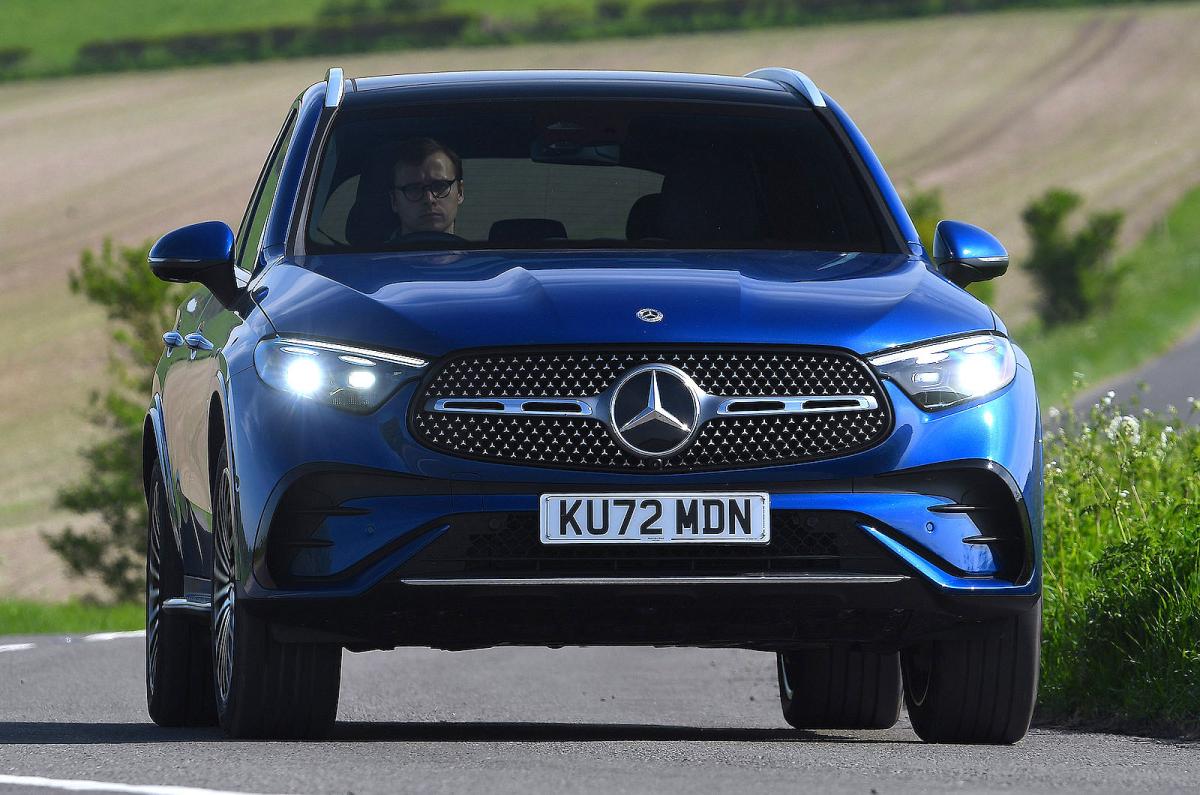
Mercedes GLC front driving

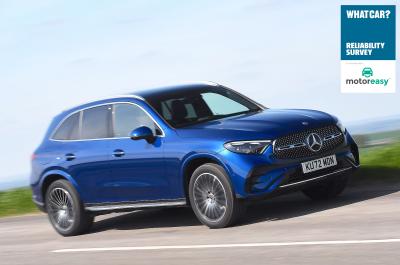
The Mercedes GLC is a strong performer in the family SUV class but it’s the plug-in hybrid version, badged 300e, which is particularly impressive, especially for those with short commutes to school or work, or for company car drivers.

That’s because it combines low company car tax bills with the promise of being able to travel around 130 km on electric power alone – that’s further than pretty much any other plug-in hybrid on the market.

Away from the pragmatic, the GLC has a spacious and eye-catching interior with loads of on-board tech that's a big step up from the tough-but-dull look of some family-focused models. Our favourite AMG Line Premium car even includes special glass that insulates you from heat and noise – a welcome feature if you have a young family and do lots of long journeys.

We were able to fit six carry-on suitcases into the PHEV 300e, which has a slightly smaller boot than regular petrol-powered models. But there’s more outright space than you’ll find in the Audi Q5 or BMW X3.

8: Mercedes GLC

Mercedes GLC dashboard

Strengths

  • Well equipped
  • Plug-in hybrid has impressive electric range
  • Spacious interior

Weaknesses

  • Slightly firmer ride than rivals
  • Stylish interior doesn't feel the most sturdy
  • Petrol engines need working hard

7: Skoda Enyaq iV

Blue Skoda Enyaq front right driving

The Skoda Enyaq is among the cheapest family electric SUVs on sale. Yet despite this, it’s still a superb all-rounder – and its clever features such as a compartment in the driver’s door to store an umbrella, double seat pockets, folding tables and myriad storage compartments make family life that much easier.

The interior is handsome and the controls are well laid out. And importantly for a family SUV, it feels top-notch inside, with materials that feel of a higher quality than in the more expensive Ford Mustang Mach-E. The driving position is great – not very high like a Range Rover, but higher than a Kia EV6 – and the seats are comfortable for most drivers.

Tech is mostly good, and isn’t afflicted with the unlit heater controls that vanish at night as you find in cars like the Volkswagen ID 4. A number of interior design flavours are available, but we think if you’re choosing our favourite model, the 85 Edition, then you won't be disappointed.

Entry-level versions offer decent range – returning 335 km in our real-world tests – but we think it's worth upgrading to the bigger battery you'll find in 85 models, which can officially manage 560 km on a full charge. There's also a version with four-wheel drive, but we suspect most buyers will be fine with the rear-wheel drive models.

7: Skoda Enyaq iV

Skoda Enyaq interior front seats

Strengths

  • Extremely practical
  • 85 version has an impressive range
  • Comfortable and easy to drive

Weaknesses

  • So-so performance from entry-level 60 version
  • You'll want to add options, such as a heat pump
  • Faster charging capability limited to 4x4 Enyaqs

6: Volvo XC40

Volvo XC40 front cornering grey

In many ways, the Volvo XC40 is the purest essence of a great family SUV. It blends the practicality, style and – of course – safety credentials for which Volvo is famed the world over. Just here, it’s scaled down into more compact dimensions that make it great for more congested environments.

Our favourite engine is the entry-level B3 2.0-litre petrol model, because it has enough power for most buyers and keeps costs down. The driving experience is relaxed and comfortable, with an outstanding ride and a smooth automatic gearbox – you can no longer buy a manual XC40. It’s not as much fun to drive as the BMW X1, but it’s certainly quieter on the road. Plus, it has mild hybrid technology to help lower your fuel bills.

The XC40 comes well equipped as standard, although we recommend upgrading to Plus trim, which adds heated front and rear seats, a heated steering wheel and ambient interior lighting. As you might expect, the XC40 scored a full five-star rating in the Euro NCAP crash tests, coming with a comprehensive suite of safety features including an automatic emergency braking system which can detect cars, cyclists, pedestrians and even animals.

6: Volvo XC40

Volvo XC40 dashboard

Strengths

  • Stylish and high-quality interior
  • Comfortable ride on most versions
  • Comprehensive safety kit

Weaknesses

  • Lacks the rear-seat flexibility of some rivals
  • Fairly small infotainment screen
  • Some road noise on the motorway

5: BMW iX3

BMW iX3 front cornering

The BMW iX3, like many other electric cars, is based on the underpinnings of an existing combustion-engined car. In this case, it shares many parts with the equally impressive BMW X3. But developing cars in that way can leave electric versions compromised.

Not so with the iX3, though. By placing batteries under the floor, there’s no impact on boot space or leg and head room for rear passengers, and you can even recline the outer rear seats – something you can’t do in the Jaguar I-Pace or Mercedes EQC. The iX3's 550-litre boot can swallow eight carry-on suitcases, which matches the Land Rover Discovery Sport, but is one less than the Audi Q5 can accommodate.

Like the X3, the iX3 is great fun to drive, feeling agile and alert through the bends, which is why we favour the more sporting feel of the M Sport trim. Its 0-100 km/h time of 6.8 seconds is brisk rather than thrilling, but of more interest to most family SUV buyers is the range. Officially it will cover 460 km on a charge, more than the Mercedes EQC, although we found 340 km is more likely during our testing.

Don’t fancy an all-electric model? Don’t worry, because we rate the BMW X3 just as highly.

5: BMW iX3

BMW iX3 dashboard

Strengths

  • Good to drive
  • Great infotainment system
  • Comparatively well priced

Weaknesses

  • Not as fast as rivals
  • Audi Q6 e-tron is quieter
  • Shorter range than rivals

4: Genesis GV60

New Genesis GV60 front cornering

Genesis is a relative newcomer to the British new-car market, and is the upmarket sister brand to Hyundai and Kia. As a result, cars from the trio are similar, meaning the Genesis GV60 is based on the same underpinnings as the Hyundai Ioniq 5 and Kia EV6. And despite being the least well known of the three, it still forms a very compelling package.

Its ride strikes a fine balance between comfort and control, making it more refined than the EV6, with less lean than the Ioniq 5 when cornering. All models are fast, but we think the entry-level Premium model is best because it trades searing performance for improved range. So while it takes 7.5 seconds to accelerate from 0-100 km/h, it can travel 517 km between charges.

Inside, the GV60 is by far the most plush of the trio and is adorned with a sensible combination of physical and touch controls, making it very easy to live with. Despite being shorter than its siblings, the GV60 manages to be fairly practical, although it doesn't have as much boot space as its EV6 sibling, and so finishes below that car here.

Some GV60s can be expensive, but if you stick with the entry-level Premium model, the Genesis represents decent value for money.

4: Genesis GV60

Genesis GV60 dashboard

Strengths

  • Wonderful interior
  • Extremely quiet on the move
  • Great infotainment system

Weaknesses

  • Boot isn't huge
  • Rear space is average
  • Optional cameras not as good as traditional door mirrors

3: Kia EV6

Kia EV6 front left driving silver

The EV6 remains a fantastic all-rounder if you're in the market for an electric family SUV. It’s proof that cars in this class can be handsome, spacious, good to drive and travel long distances – even if its price is a far cry from Kias of old.

The Kia EV6 shares its underpinnings with the Genesis GV60 and Hyundai Ioniq 5, but the Kia is the most fun to drive of the trio. Yet while its suspension is firmer than the Hyundai, some of our testers preferred the less floaty sensation. The stiffer setup does mean that cars like the Jaguar I-Pace and GV60 are slightly more comfortable, though,

The EV6's interior is very smart and user-friendly, while space is generous up front and there's limo-like leg room in the rear. The boot is a very practical shape, and large enough to swallow seven carry-on suitcases.

It's great to drive, too: it grips well, the ride is firm without being uncomfortable, and depending on the model you choose, the EV6’s performance is either decent or seriously quick. And the range is impressive, with our top choice, the entry-level EV6 RWD, covering around 400 km between charges in real-world use.

3: Kia EV6

Kia EV6 facelift interior dashboard

Strengths

  • Long range and fast charging
  • Loads of rear legroom
  • Seven-year Kia warranty

Weaknesses

  • Shallow boot
  • Expensive top trim
  • Slightly firm ride

2: Renault Scenic E-Tech

Renault Scenic E-Tech front right driving

The first electric SUV to feature on this is the Renault Scenic, which officially offers up to 610 km of range between charges in our recommended Long Range form. In our real-world range tests, the Scenic's efficiency figure of 5.0 km/ kWh means a range of 435 km should be acheivable under normal conditions, and that's likely enough for the needs of most drivers.

The Scenic's suspension has been tuned for comfort rather than agility, with the result being that it edges even the Kia EV6 for outright comfort, and is more supple than the Tesla Model Y. The Scenic's steering is accurate, too, and although we'd like it to have a bit more heft, you can adjust its resistance by placing the Scenic into its Sport driving mode.

Even Long Range versions of the Scenic undercut most rivals on price, and there's no need to look beyond entry-level Techno trim, because this comes with everything you're likely to want including 19in alloy wheels, dual-zone climate control and adaptive cruise control.

2: Renault Scenic E-Tech

Renault Scenic E-Tech dashboard

Strengths

  • Bigger battery version offers a long range
  • Cheaper than many rivals
  • Five-star Euro NCAP safety rating

Weaknesses

  • Rear seat versatility could be better
  • Spongy brake pedal feel
  • Not particularly quick

1: Kia Sportage

Kia Sportage front cornering

The Kia Sportage is the very definition of a good family SUV. And that, quite simply, is why it’s the best car in the class. For instance, the Sportage feels solidly built and plush where it matters, while all models have a lofty driving position to give you a great view of the road.

When it comes to space, passengers of all ages and sizes can fit comfortably in the front and back seats, plus the boot is absolutely vast. You can also fold the back seats in a useful 40/20/40 configuration, which is something that neither the Nissan Qashqai or Volvo XC40 can do.

Then there’s how much it costs to buy and run. Even though there are fuel-sipping hybrid and plug-in hybrid versions available, the entry-level 1.6-litre petrol model is more affordable to buy, yet it still offers cheap running costs and strong performance.

When combined with 3 trim, you get luxuries such as a 12.3in digital driver’s display, heated front and outer rear seats, plus electrically adjustable front seats as standard. And even though the Sportage is more expensive to buy than the Hyundai Tucson, we think it’s worth the extra because of its superior ride comfort and refinement.

1: Kia Sportage

Kia Sportage dashboard

Strengths

  • Lower-spec models are great value
  • Smart interior
  • Generous rear leg room and boot space

Weaknesses

  • Rear head room compromised with panoramic roof
  • No clever rear seat functions

And the family SUV to avoid: Jeep Compass

Jeep Compass front left driving

Despite its high price, the Jeep Compass is nowhere near the top of the pack in a very competitive class. Unrefined engines, an unsettled ride and a cheap-feeling interior add up to make the Compass a thoroughly underwhelming family SUV.

advertisment

News and advice

Feature

New Kia Stonic vs Seat Arona

Best of

Best-selling cars 2026: EV sales reach new heights in June

News

New Bentley Torcal: name confirmed for brand's first all-electric car

Feature

Most reliable Mercedes models - and the unreliable ones to avoid

Feature

Best medium vans 2026 – tried and tested

Best of

Best used car deals of the week