2024 Volkswagen Tiguan review
On sale June 2024 | Price from £37,000 (est)
If it ain’t broke, don’t fix it, or so they say. That tatty pair of jeans you wear to mow the lawn? Still going strong. Your nan’s ancient oven dish that you used to make lasagne last night? Good as new. And then there’s the Volkswagen Tiguan – a family SUV that's been VW's best-selling car since 2018, and is still competitive in terms of performance, efficiency, equipment and practicality.
It’s not exactly screaming out for a makeover, and we’d have understood if the brand’s engineers were too busy working on their shiny, all-new electric car line-up to worry too much about freshening up their combustion-powered Kia Sportage rival.
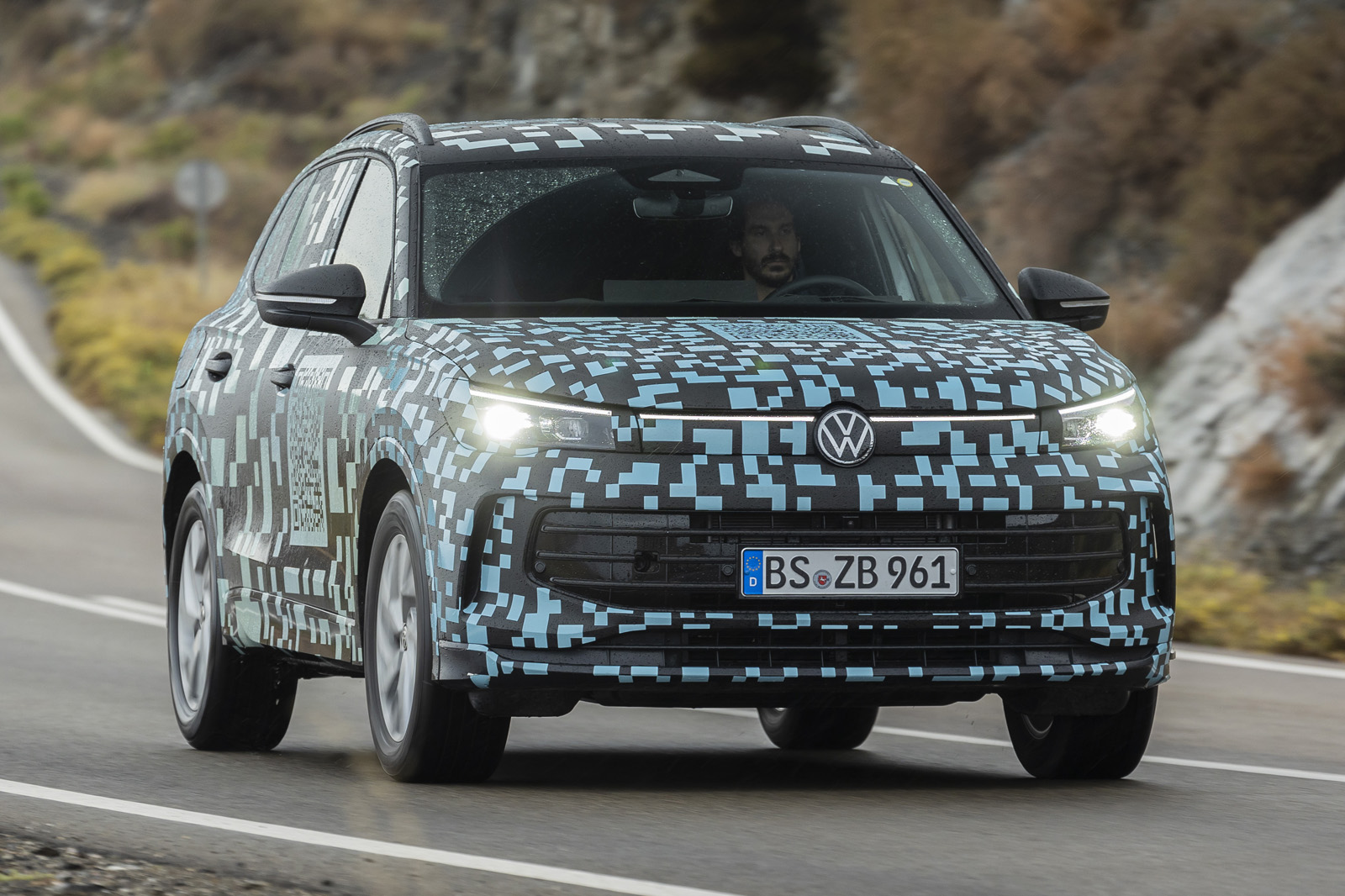
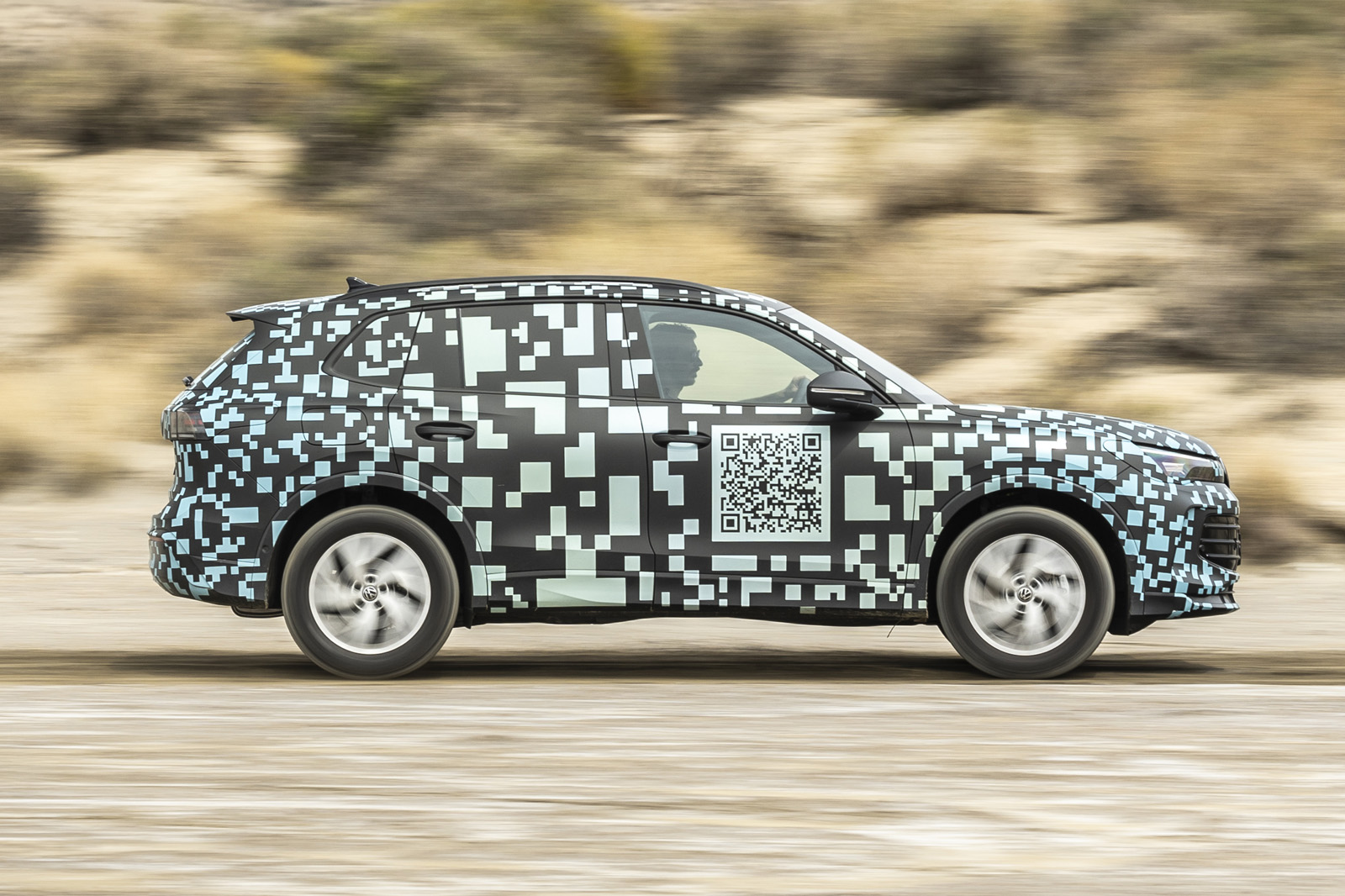
But while the original VW Beetle survived a whopping 65 years with relatively few changes, that form of longevity doesn’t cut it in today’s highly competitive family SUV market. As a result, a new-generation Tiguan is due on sale in June 2024, and is expected to remain available until the end of the decade. The wraps will come off in a few months, but even through the heavy camouflage, you can see that the Tiguan has been heavily reinvented for its third outing – and not just in design terms.


What’s the VW Tiguan like to drive?
The Tiguan’s underpinnings – which are also used for the VW Passat, the VW Polo, the VW T-Cross and the VW T-Roc – have been heavily upgraded for the third-generation Tiguan. Engine-wise, all bases are covered. There will be a choice of familiar pure-petrol, pure-diesel and mild-hybrid petrol engines from launch, with the option of front or four-wheel drive, depending on the version.
If you’re after a plug-in hybrid there’s a choice of 201bhp or 268bhp versions, both of which have a bigger battery than in the previous Tiguan. It’s officially good for an electric-only range of 62 miles and can be rapid-charged if you can find a suitable charging point.
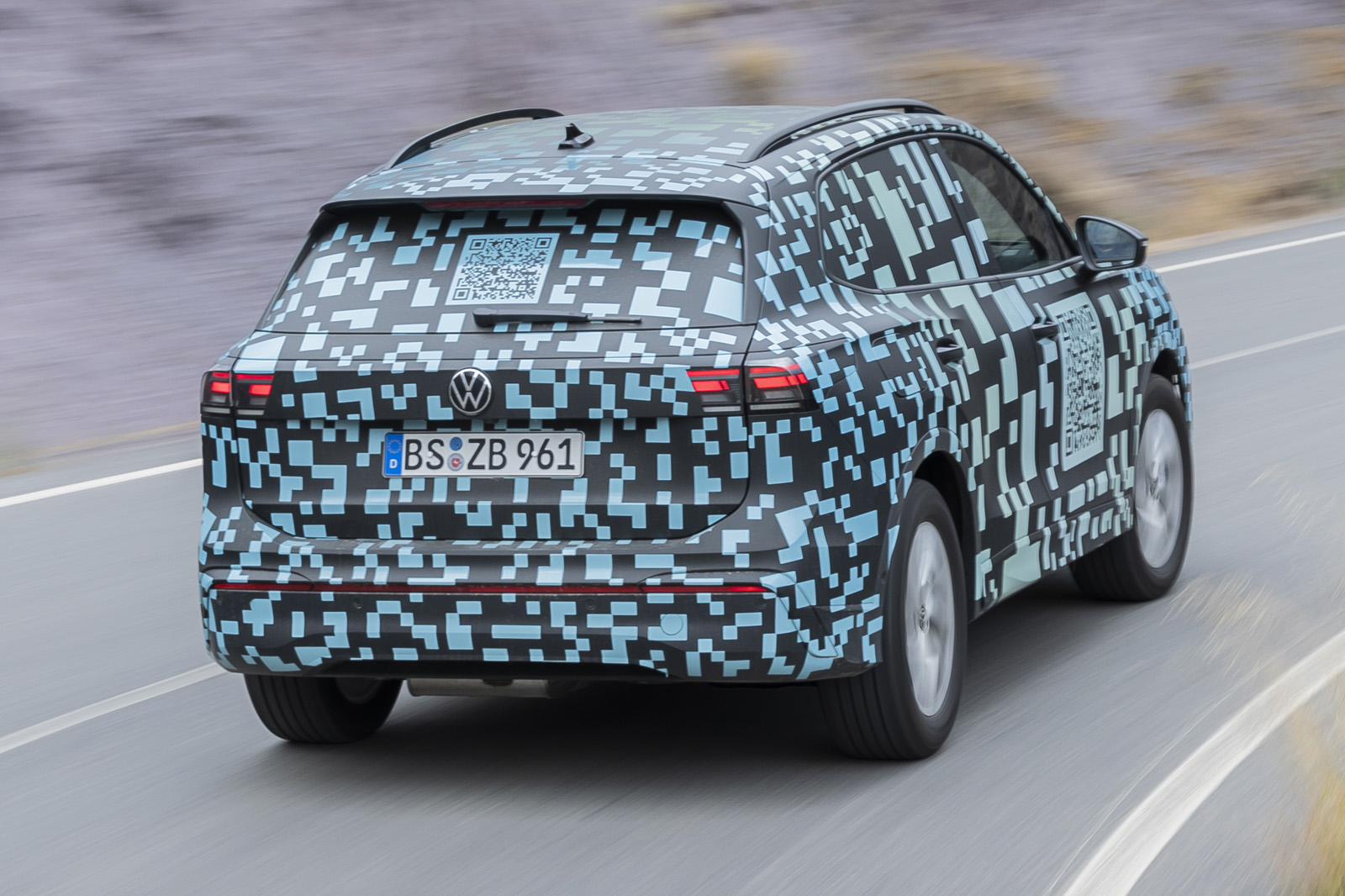
So far, we’ve driven the diesel, and we found that while it sounds a bit rough-and-ready at idle, it has plenty of grunt at low speed and fades away quietly into the background once you get up to motorway pace. Volkswagen has not given any performance figures yet, but you can expect a power output of around 150bhp and a 0-62mph time of roughly nine seconds – and you should be able to manage around 45mpg in daily driving.
New to the Tiguan is an adaptive suspension set-up that offers 15 degrees of firmness, depending on your mood and the state of the road in front of you. In softly sprung Comfort mode, the Tiguan rides serenely and quietly over rough roads – perfect for letting the kids sleep and not spilling the shopping. In stiffened-up Sport mode, you can take corners quicker and flatter, but the trade off is a juddery ride over potholes and bumps.
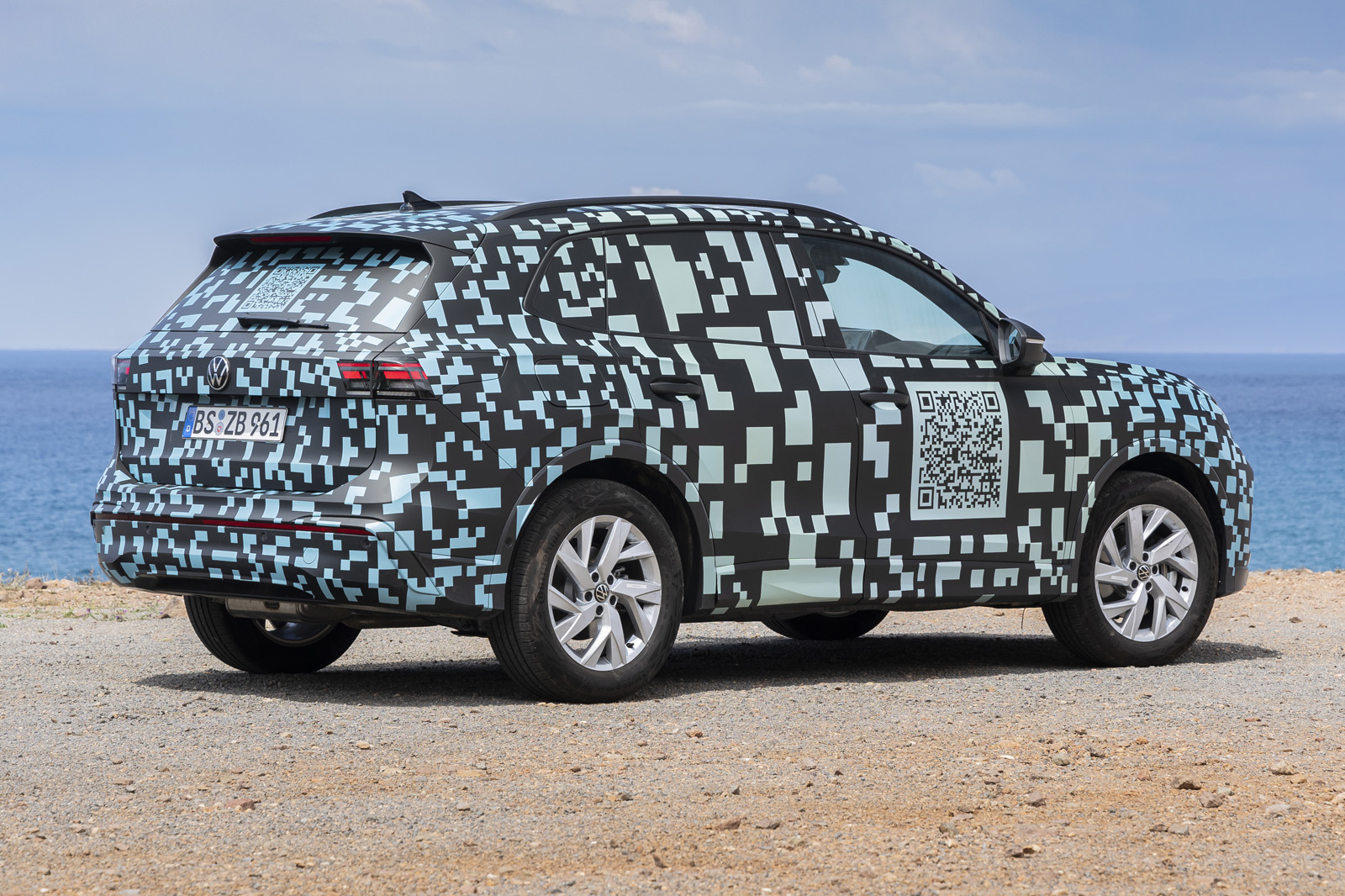
Since this isn’t a sports car you’ll be perfectly happy to just set the suspension to Comfort and leave it alone forever, but it’s nice to have the choice. The BMW X1 is a keener-handling family SUV, but the Tiguan has long been a frontrunner in the refinement stakes, and it looks like these improvements will help it maintain that position.
What’s it like inside?
While the new Tiguan’s exterior styling isn’t far removed from that of its predecessor, the changes are more far-reaching inside. The most prominent update is a freestanding central touchscreen that, depending on trim, measures either 12.9in or a whopping 15.0in – that’s as big as in a Tesla Model Y. That touchscreen incorporates the latest generation of VW’s MIB infotainment software, as seen in the VW ID 7 electric saloon, so some of the previous iteration’s, ahem, quirks have been ironed out to improve ease-of-use.
To help tidy up the dash, the climate control functions are no longer placed in their own control panel and have been integrated into the touchscreen, permanently displaying the main settings at the bottom of the screen. Meanwhile, touch pads below the screen that adjust the temperature light up so you can use them in the dark, making them more usable than the ID 3’s. Likewise, the ID 3’s steering-wheel mounted touchpads that make cruise control and audio adjustments tricky are replaced by more accurate physical buttons.
The inherently upright driving position affords excellent visibility at all four corners (only restricted on this test drive by the prototype’s brightly coloured camo), and the electrically adjustable seat is paired with a steering column with a wide range of reach and rake adjustability to make this a comfy SUV for drivers short and tall. Obviously, being a Volkswagen, the quality of all controls was impressive - even at prototype stage.
Elsewhere, you’ll find that the Tiguan has been usefully expanded to give 10mm more rear headroom and 33 extra litres of boot space, while it retains the 2681mm wheelbase (the distance between the front and rear wheels) of its predecessor to retain more-than-adequate leg room in both rows. There’s no seven-seater version (currently the VW Tiguan Allspace) but the new three-row VW Tayron, due in 2024, will fill that gap in the line-up, using the same underpinnings and engines as the Tiguan.
Verdict
With a broad engine range to choose from and an overhauled, up-to-date interior that offers a little more space, the new VW Tiguan is shaping up to be just as well-rounded as the current car.
Expect it to cost a little more than the outgoing version, continuing to bridge the gap between value-focused contenders and the pricier premium models in the family SUV class.
For all the latest reviews, advice and new car deals, sign up to the What Car? newsletter here
Volkswagen Tiguan 2.0 TDI prototype
Price £37,000 (est) Engine 4cyl, 1968cc, diesel Power 148bhp Torque 266lb ft Gearbox 7-spd automatic 0-62mph 9.3sec (est) Top speed 123mph (est) Fuel economy tbc CO2, tax band tbc
Rivals:
Read more: Best Family SUVs >>