Best large vans 2026 – tried and tested
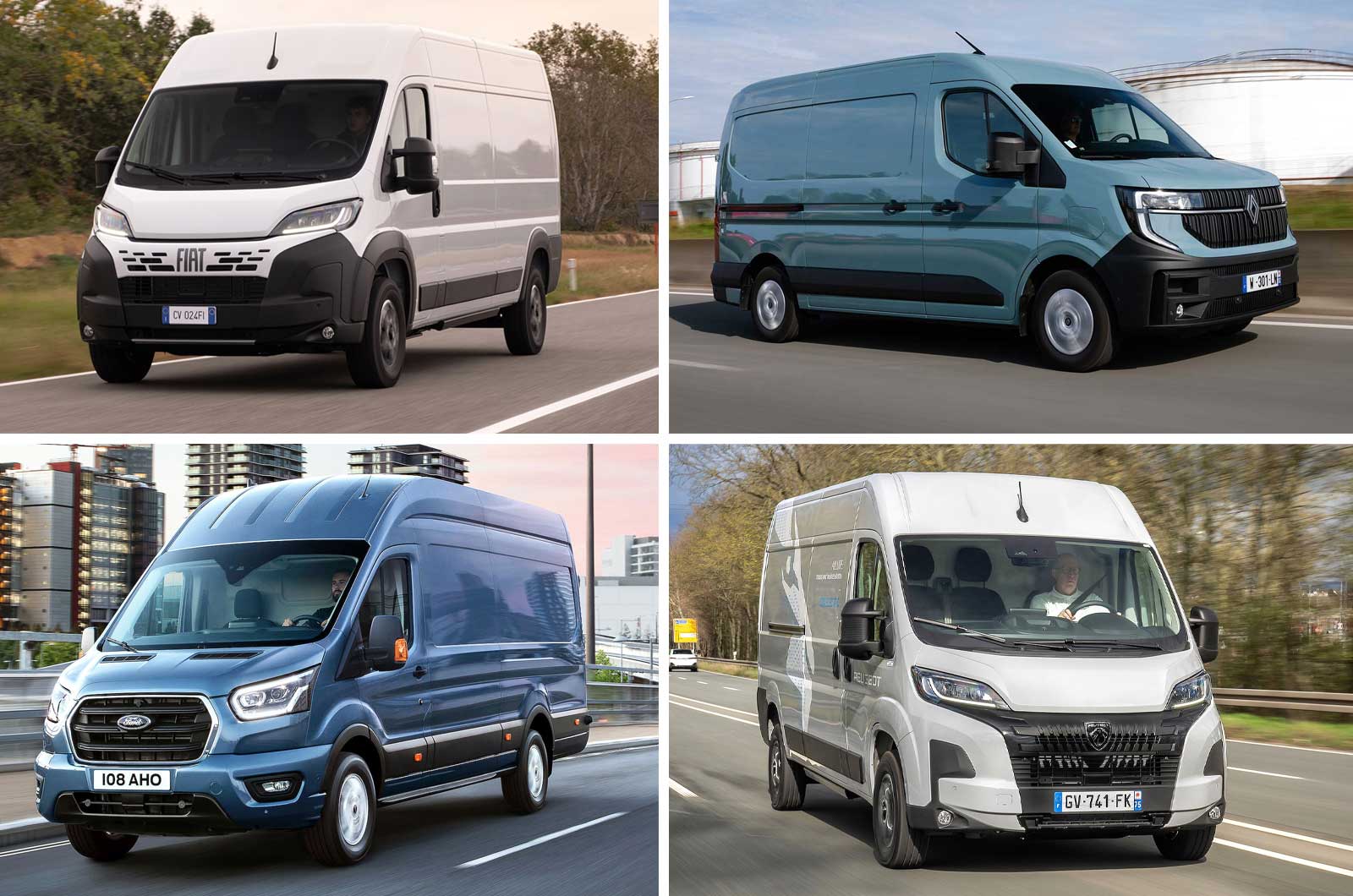
If you need to move a lot of cargo from A to B, but aren't in a fully fledged lorry, then chances are that you'll need to get a large van. Such vehicles make up around a third of the light commercial vehicles on UK roads, and are as popular with builders as they are with bakers – and, we think, a few candlestick makers as well. Indeed, the best large vans are incredibly versatile, offering a spacious and comfortable interior, powerful engines, and enough cargo space to store whatever you might need.
Most are sold as 3.5-tonne vans, the maximum weight of vehicle you can drive on a standard car licence, but large vans can go as high as seven tonnes. Large vans tend to use fairly powerful engines with high torque outputs to help with towing and make easier work of driving off with a heavy load, but there are also an increasing number of electric options to consider.
In this story, we'll reveal our picks for the best large vans on the market, plus the model which we think is best avoided. In each case, we'll also show you how to pick up a bargain with our used van deals – just follow the links to find out more. And you can find out more about how we test and rate vans in our dedicated feature.


Best large vans to buy now – and how to get the best deal
| Make and model | Price from (excl. VAT) | Rating | Used van deals |
| Renault Master | £42,275 | 5 | Best used deals |
| Ford Transit | £43,085 | 4 | Best used deals |
| Volkswagen Crafter | £39,145 | 4 | Best used deals |
| MAN TGE | £41,790 | 4 | Best used deals |
| Mercedes Sprinter | £49,520 | 3 | Best used deals |
The best large vans for you
The Renault Master sets the standard among large vans, offering impressive amounts of space while also putting a big focus on driver assistance and comfort. Indeed, the new Master is one of the safest vans you'll find anywhere – something which will endear it to owners.
The big-selling Ford Transit remains a solid choice in this market, with a broad range of power options – including a fully electric version – and a flexible load space. It drives better than most rivals, too.
For something a little more premium, the Volkswagen Crafter is well worth considering. It offers an especially comfortable driver's seat, along with more storage space than any one person could possibly find use for.
Best large vans 2026
1. Renault Master

Whether your top priority is productivity, efficiency, driver comfort or safety, the latest Renault Master will have you well covered.
Rather than being a small update of the previous Master, this is instead an all-new van. And being based on all-new underpinnings means that Renault could take advantage of all the latest technology, driver aids and safety kit. That means the Master is a large van which will take care of you on the road – something which is justified by having received a Platinum award from the safety experts at Euro NCAP.
With an aerodynamic design which is said to reduce fuel useage by as much as 20% compared with the old Master, the latest van is perfectly capable of returning 40mpg in real-world conditions – even when you've loaded it full of luggage. Making use of that space is easy, too, thanks to the largest sliding door on the market, rear doors which swing all the way around to the sides of the van, and a convenient step to make getting in and out easy.
The Master's 2.0-litre diesel engine is available in 129bhp, 148bhp or 168bhp forms, and even the entry-level model has enough pep to keep up with motorway traffic. Certainly, there's more poke than in a like-for-like Ford Transit. Plus, if you fancy going green, then there's also an electric Master E-Tech electric van.
Strengths Refined driving experience | Large cargo volume | Great value
Weaknesses Largely uninspiring interior | No keyless entry or start | Options list can add significant cost
"Nobody would suggest that the new Renault Master is a true off-roader, but the Grip Xtend system was very helpful when I was traversing over loose gravel and stone." – Phil Huff, Van Reviewer
Read our full Renault Master review
2. Ford Transit
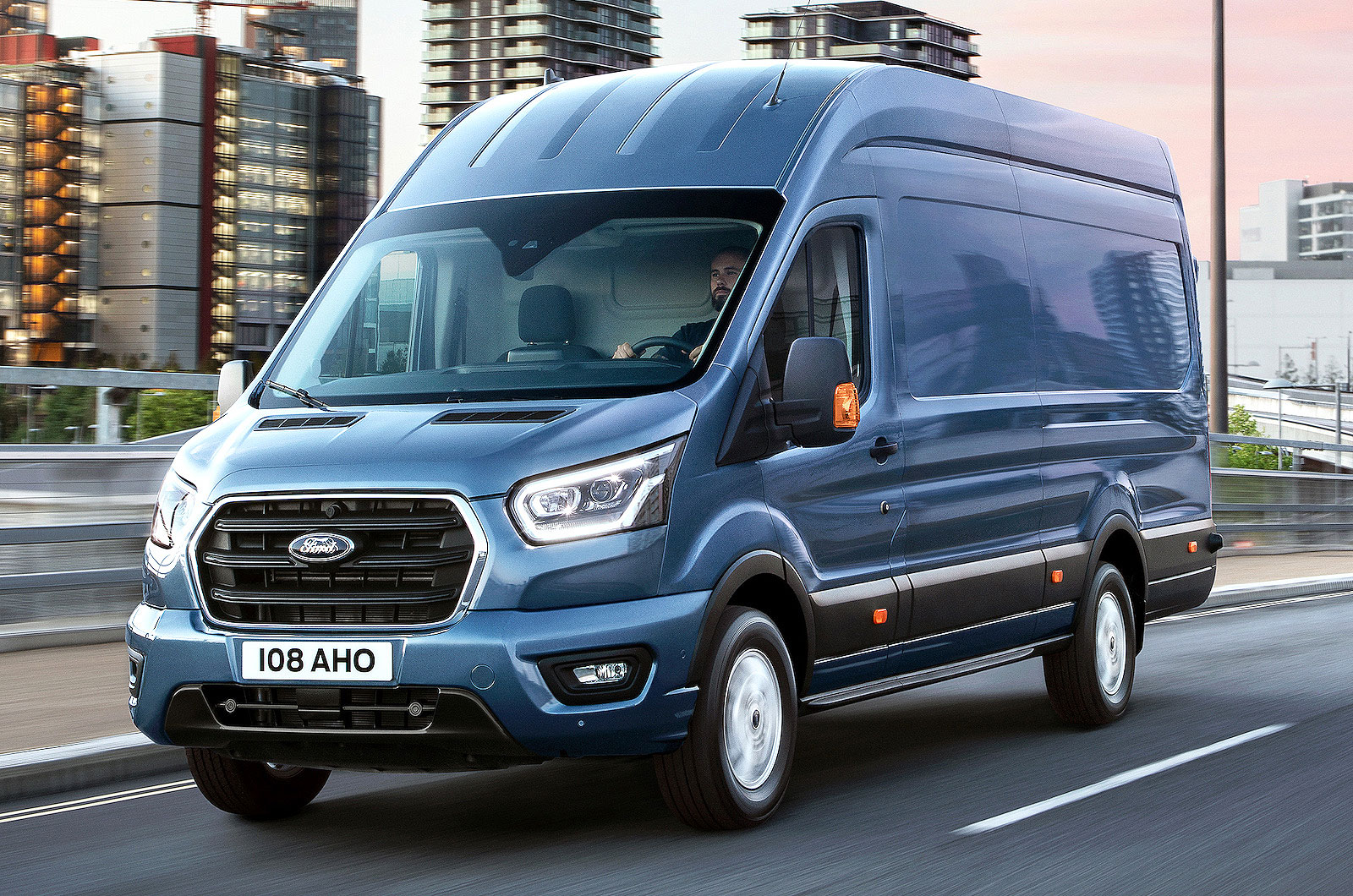
The Ford Transit is consisently one of the best-selling vans in the UK, and with good reason, offering the most variety of any van on sale. It's as capable as it is versatile, too. While other vans have larger load volumes – both the Mercedes Sprinter and Volkswagen Crafter can carry more – the Transit makes up for it with faultless driving manners and an interior that wouldn’t feel too out of place in a car.
There’s loads of in-cab storage too, while smart safety systems such as adaptive cruise control and pedestrian detection make it one of the safest vans on the market. Power is delivered primarily through a range of 2.0-litre diesel engines, with outputs varying from 103bhp to 163bhp. You can also have front, rear or even four-wheel drive, plus the option of a manual or automatic gearbox.
There's also the all-electric Ford E-Transit, itself a former What Car? Van of the Year winner, to consider if you want to go green.
Prices place the Transit broadly in line with its Sprinter and Crafter rivals, which means it's not especially cheap. That said, servicing and maintenance costs should be less than for those German rivals.
There's no need to look past mid-level Trend trim for the best range of kit, because this brings air conditioning, sat-nav, parking sensors and automatic wipers and headlights.
Strengths Great to drive | Huge range of body, engine and weight options | Modern infotainment system
Weaknesses Base trim comes with very little kit | Expensive list prices | Not all models are driveable on a car licence
“I was impressed with the quick responses of the Transit's 12in infotainment touchscreen. It has clear, crisp graphics, too, and a 5G modem to allow you to monitor the traffic in real time.” – Will Nightingale, Reviews Editor
Read our full Ford Transit review
3. Volkswagen Crafter

Volkswagen went to extreme lengths to make its own van after a deal to borrow the underpinnings of the Mercedes Sprinter expired. The result, £1.5 billion of research and development later, is the latest Crafter. All that money was certainly well spent, because the Crafter is a very good large van. It has a refined 2.0-litre engine and is available with front, rear or four-wheel drive.
Despite its considerable size, the Crafter doesn't feel that big thanks to its fast and responsive steering. This is a van which feels surprisingly easy to thread along a tight city street. The six-speed manual gearbox performs well, too, helping you to make the most of the engine's power.
The interior has been ergonomically designed to make it as comfortable and relaxing as possible, plus it's practical, with plenty of storage and space for occupants. The Crafter also has one of the biggest load areas in the segment, with an enormous 18.4m3 carrying capacity from the very largest models.
The Crafter comes loaded with some of the latest safety and assistance kit, including lane-keeping assistance and even an assisted steering system to help you park. And you get a three-year, unlimited-mileage warranty should anything go wrong.
Strengths Quiet and comfortable | Well thought out interior | Huge carrying capacity
Weaknesses Fairly dull on the inside | Confusing size and height names
“The addition of electromechanical steering in the Crafter might sound boring, but in reality it's very useful. It allows to van to make use of technolgy like Trailer Assist, for example, and Park Steering Assist, which helps to avoid embarrassing scrapes in the car park.” – John Howell, Deputy Reviews Editor
Read our full Volkswagen Crafter review
4. MAN TGE
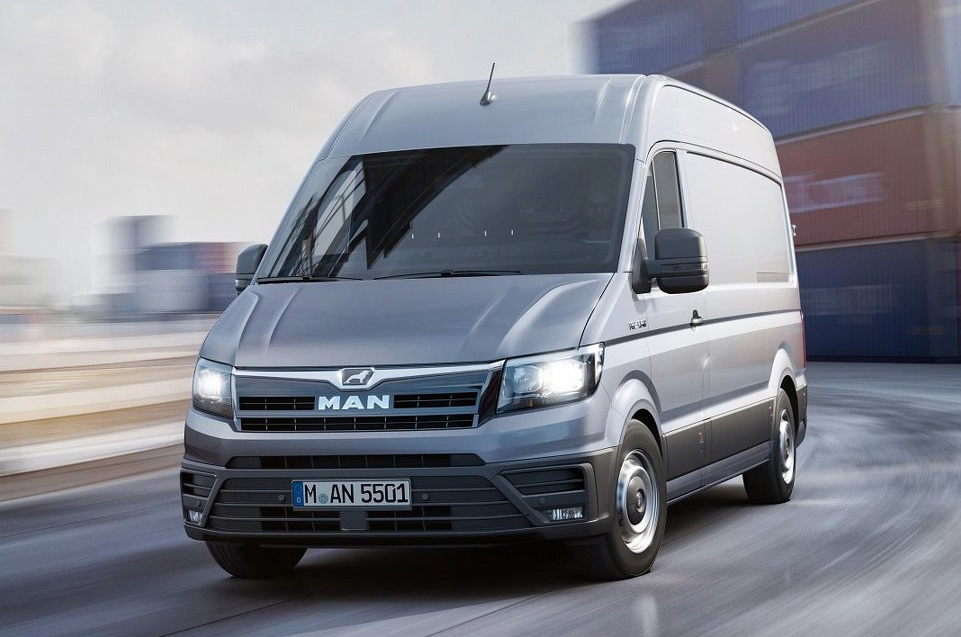
Being based on the Volkswagen Crafter further up this list, it's no surprise that the MAN TGE shares many of the same virtues as that van – namely, being comfortable if not overly inspiring to drive, as well as having enough space to haul just about anything you might wish.
It's available in two wheelbase lengths, with three body lengths and three heights. If that weren't enough options to choose from, there are also multiple configurations possible for each of those variants, which can lead to some confusion in finding the best version to suit your needs.
Still, being primarily a truck manufacturer means that MAN is used to dealing with the out-of-hours needs of fleets, so you won't be caught short if something goes wrong.
To drive, the TGE is pleasant and comfortable, if lacking in the kind of agility you might find in the Ford Transit. It's the 138bhp diesel engine which best suits the TGE in our opinion, because it has plenty of pep while also keeping your running costs sensible. This engine is available across all versions of the van, allowing you to specify it with a six-speed manual or eight-speed automatic gearbox, as well as with four-wheel drive.
“If you regularly need to travel on the motorway, I'd go for the 138bhp engine option. With this, the TGE pulls away smoothly from low revs, and has no trouble keeping up with faster traffic.” – Steve Huntingford, Editor
Read our full MAN TGE review
5. Mercedes Sprinter

There’s no doubting the Mercedes Sprinter has long been the van that everyone aspires to own, with a first-class interior and build quality of the highest order. And while entry-level versions make do with a 7.0in infotainment screen, more expensive versions get a larger 10.25in unit which replicates what you'll find in Mercedes' road cars.
The range of engines on offer in the Sprinter mean most drivers will find a version to suit those needs, while it feels more powerful than its large van rivals, including the Citroën Relay and Peugeot Boxer. Our preferred option is a 2.0-litre diesel unit with 148bhp, which gives the Sprinter enough pace to comfortably keep pace with faster traffic on the motorway.
However, the Sprinter is beginning to feel outclassed in the large van market, while its high price tag means running one is prohibitive for some businesses. Indeed, this is one of the most expensive offerings in the large van market, and maintenance bills don't get any cheaper. At least service intervals are some of the best in the segment, and the Sprinter is covered by a three-year warranty.
Strengths Huge range of body styles | High-tech but user friendly infotainment system | Improved fuel economy
Weaknesses Not the cheapest van to buy or run | Aggressive safety tech
“When shopping for your Sprinter, I'd recommend looking at the Comfort and Driver's equipment packs, because they add much-needed luxuries like electric seat adjustment, as well as parking sensors and air-conditioning.” – Stuart Milne, Digital Editor
Read our full Mercedes Sprinter review
6. Toyota Proace

The Toyota Proace Max enters the large van sector as a rebadged version of the Stellantis-built platform shared with the Citroën Relay, Fiat Ducato, Peugeot Boxer and Vauxhall Movano, so there’s no doubting its proven credentials. It offers a familiar combination of generous load space, strong payload capacity and straightforward usability.
Available in multiple body lengths and heights, the Proace Max caters for a wide range of business needs, with load volumes and payloads that place it firmly among the most capable vans in the class. The load area is practical and easy to access, with wide-opening rear doors and a large side loading door.
To drive, the Proace Max prioritises function over finesse. It’s not as refined, comfortable or wieldy as newer rivals such as the Renault Master, but it remains easy enough to drive and well suited to long working days. Where it stands out is in its simplicity and Toyota-backed ownership proposition – which includes a warranty that can run for up to 10 years – adding reassurance for businesses looking for a no-nonsense workhorse.
Strengths Long warranty | Competitive engine line-up | Strong performance
Weaknesses Old-fashioned chassis | Payload limits train rivals | Cab is beginning to feel dated
“The Proace Max doesn’t reinvent the large van formula, but its proven Stellantis underpinnings, strong cargo carrying ability, straightforward usability, and excellent warranty cover will appeal to small businesses.” – Phil Huff, Van Reviewer
=7. Citroën Relay
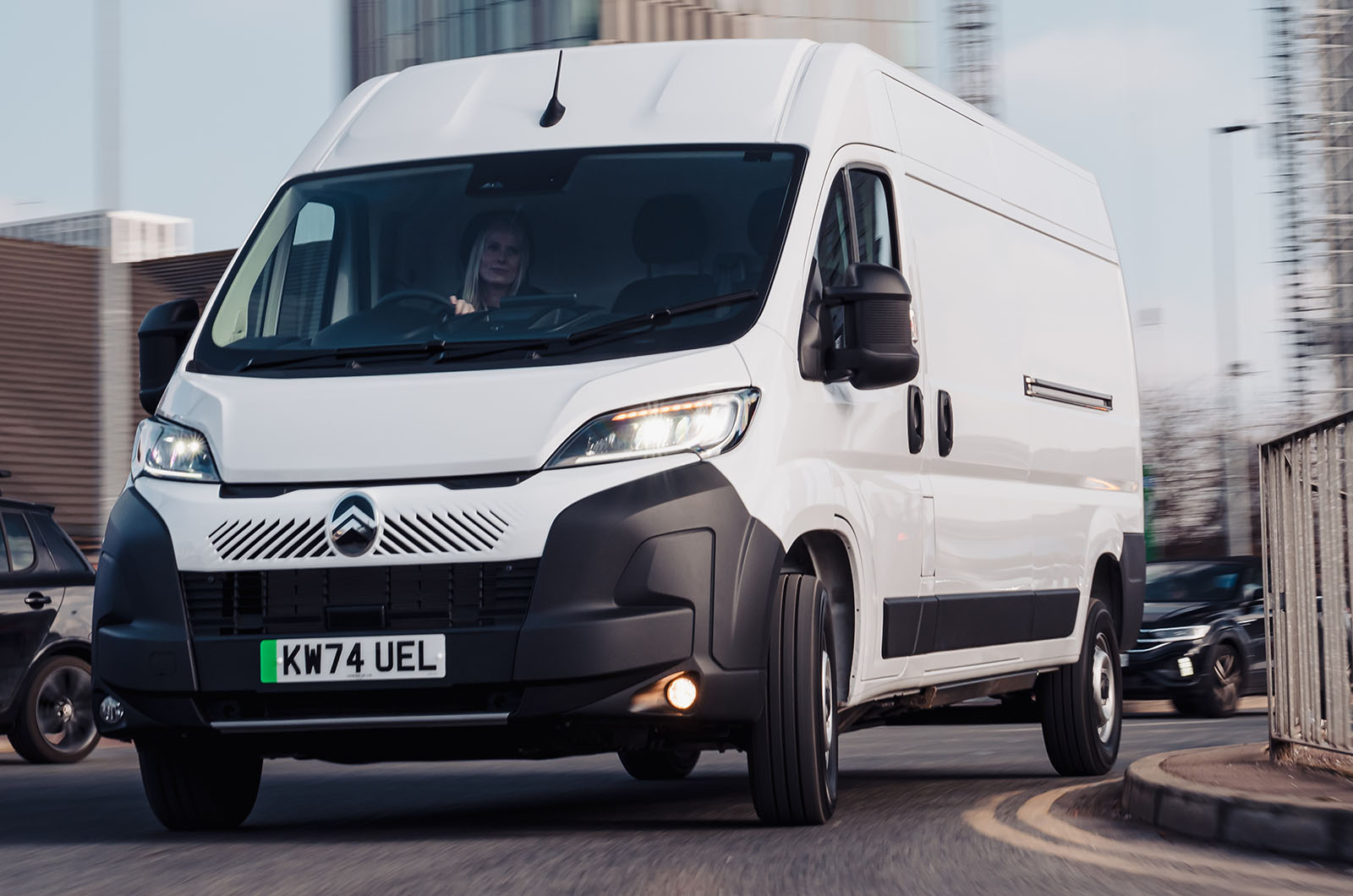
If you're looking for value in the large van market, then the Citroën Relay is worth considering. It's available in enough different forms to suit most buyers, and offers enough space to shift big loads. That alone might put it onto your shortlist, but we'd advise caution. You see, in crucial areas such as comfort and refinement, the Relay is lacking by modern standards.
Most of its engines thrum away in the background, for example, and the gearshift is rather notchy, making long-distance journeys more of a chore than they need to be. Plus, there's no automatic gearbox option. The rival Ford Transit can carry slightly less than the Relay, but will be more comfortable and engaging for drivers.
Pricing for the Relay is very competitive. It will cost you less to put one on your driveway than for the Transit or Sprinter elsewhere on this list. Only the Maxus Deliver 9 can match the value the Citroën offers. You get a three-year warranty limited to 100,000 miles, which is similar to what Mercedes offers.
Strengths Cargo volumes beat most rivals | Improved interior feels modern | Smooth and refined engine
Weaknesses Infotainment system is outdated | Limited engine options | Payload limits falling behind rivals
“It's a shame that payload limits in the Relay are lower than in many rivals, and that despite being a large van, there's only one sliding side door. That means it's difficult to load bulky items into the expansive load bay.” – Claire Evans, Consumer Editor
Read our full Citroën Relay review
=7. Peugeot Boxer

The Boxer and the Citroën Relay above are, essentially, the same van, which means they share many of the same attributes. Namely, that means it offers lots of space to move big loads for not very much money. Sadly, many of the Relay's shortcomings apply too, which means most large van rivals will be more comfortable – and quieter – over long distances, and the interior doesn't have a high level of perceived quality.
The Boxer's 2.2-litre diesel engine is available in three forms, with range-topping models getting 177bhp. Torque across the range is set at 258lb/ft, which is fine for most situations, but if you regularly travel fully laden then you might wish for a bit more brute force.
Strengths Good value | Pleasingly refined engine | Competitive cargo volume
Weaknesses Uncomfortable | Dated interior | Vague and lifeless steering
"When I'm weaving around tight city streets, I appreciate light steering – even in something as large as the Peugeot Boxer. So I liked that I could easily turn the wheel without much effort.” – Darren Moss, Deputy Editor
Read our full Peugeot Boxer review
=7. Vauxhall Movano
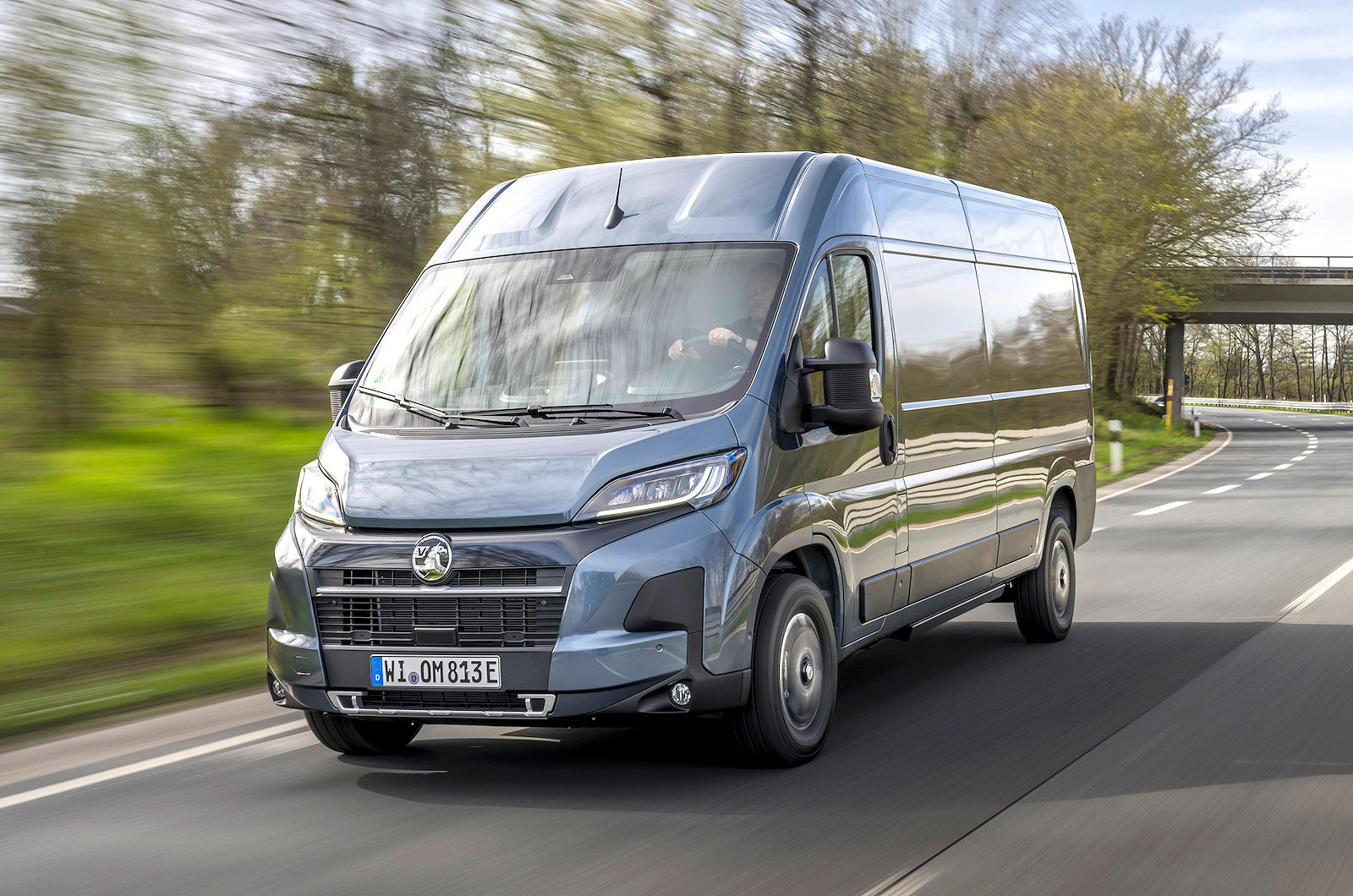
There's more to love about the Vauxhall Movano than just its impressive ability to move lots of items from A to B; it's also available with a range of responsive engines and a commanding seating position that gives you a good view of the road ahead.
The Movano isn't among the best vans to drive, but its tight turning circle and light steering makes it a doddle to weave in and out of city traffic. The ride quality is only adequate, with potholes and surface cracks being felt inside the cab, but it's not bad enough to put you off.
And although it looks a little uninspiring inside, the quality of the materials used is decent enough and there's lots of storage space for your odds and ends. Plus, the Movano's updated 2.3-litre engine is more efficient than before, resulting in reduced running costs, with the best-performing models returning a healthy 32.2mpg according to official tests.
Strengths Good value | Cargo volumes are competitive | Vastly improved interior
Weaknesses Terrible infotainment system | Lack of engine options | Payload limits are dropping behind rivals
“Nothing’s changed in the back of the Vauxhall Movano since 2006, but I don't think that’s a bad thing. While not the best in class, the Movano is still a competitive load-lugger.” – Phil Huff, Van Reviewer
Read our full Vauxhall Movano review
10. Fiat Ducato

Thanks to a mid-life update earlier last year, the Fiat Ducato is now better than ever. While still not quite troubling the class leaders, the latest Ducato is just as practical as the old model, but also sports an elegant interior design and is loaded with assistance kit to make the business of driving easier and safer.
You can fit more into the Ducato than you could into the Ford Transit, while the smallest Renault Master can swallow more than a similarly-sized version of the Fiat.
If you stick with entry-level versions of the Ducato, then this large van can represent decent value for money. If you venture too far up the range, however, then the Ducato starts to look pricey.
Strengths Good value compared with rivals | Strong and refined 2.2-litre diesel engine | Flexible configurations
Weaknesses Updated interior still lacks behind rivals | High-power engine not available for 3.5t models | Newer rivals offer more load volume
“While much of the latest Fiat Ducato is new, its underpinnings are beginning to show their age – several rivals, including the Renault Master, are more comfortable over long distances.” – George Hill, Used Cars Writer
Read our full Fiat Ducato review
And the large van to avoid...
Iveco Daily
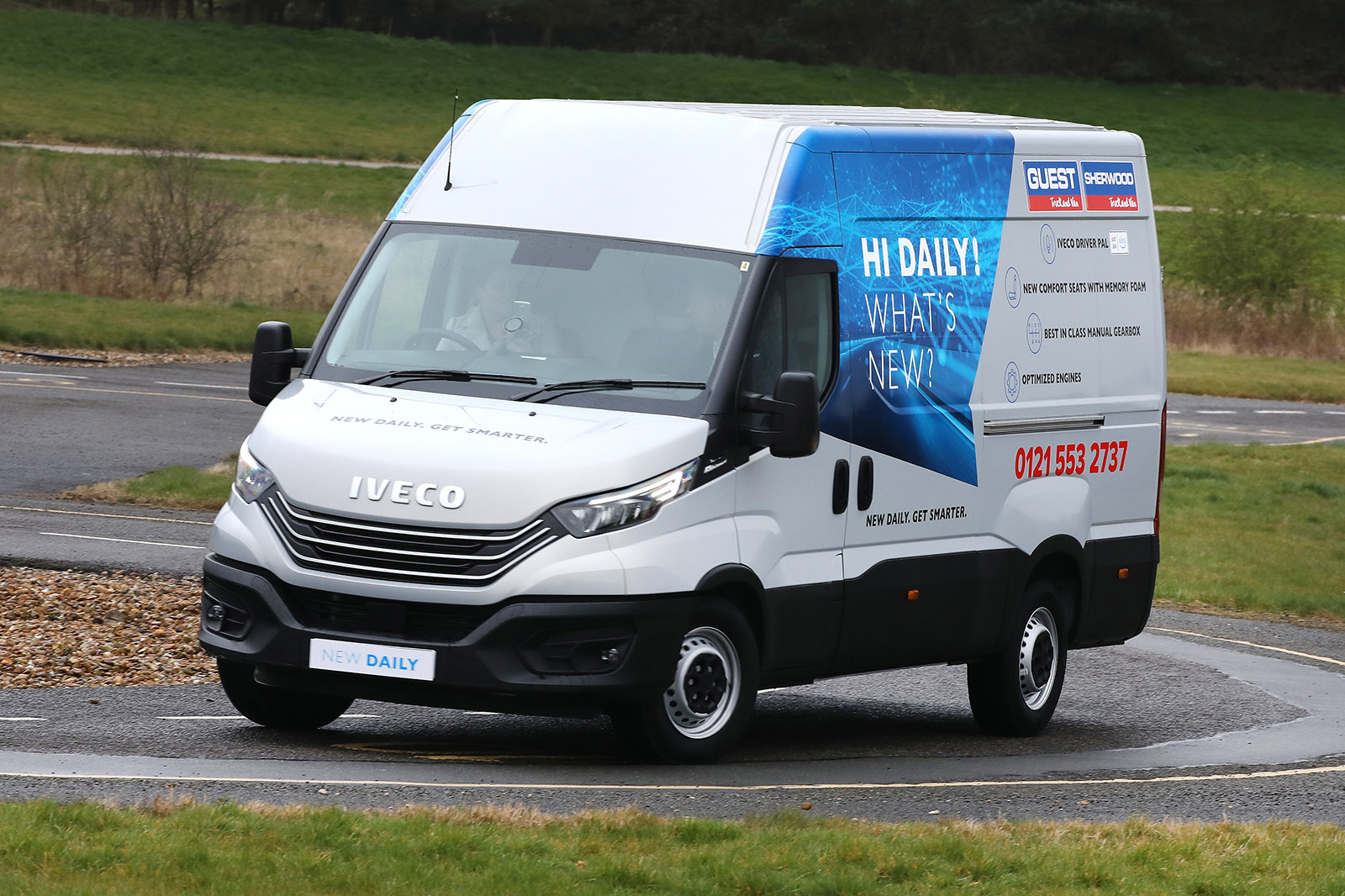
Despite being updated recently, the Iveco Daily falls behind in too many areas to be recommendable. While the latest Daily rides more smoothly than previous models, it also has a raised ride height which makes loading larger items into the rear trick. Plus, while it's spacious in the rear, in-cab storage is limited and the materials used feel rough and ready rather than luxurious.
For all the latest reviews, advice and new car deals, sign up to the What Car? newsletter here