Volkswagen ID Buzz Cargo electric van review
Category: Electric Van
The ID Buzz Cargo has plenty of visual appeal, a long electric range and is good to drive, but it's an expensive choice


What Car? says...
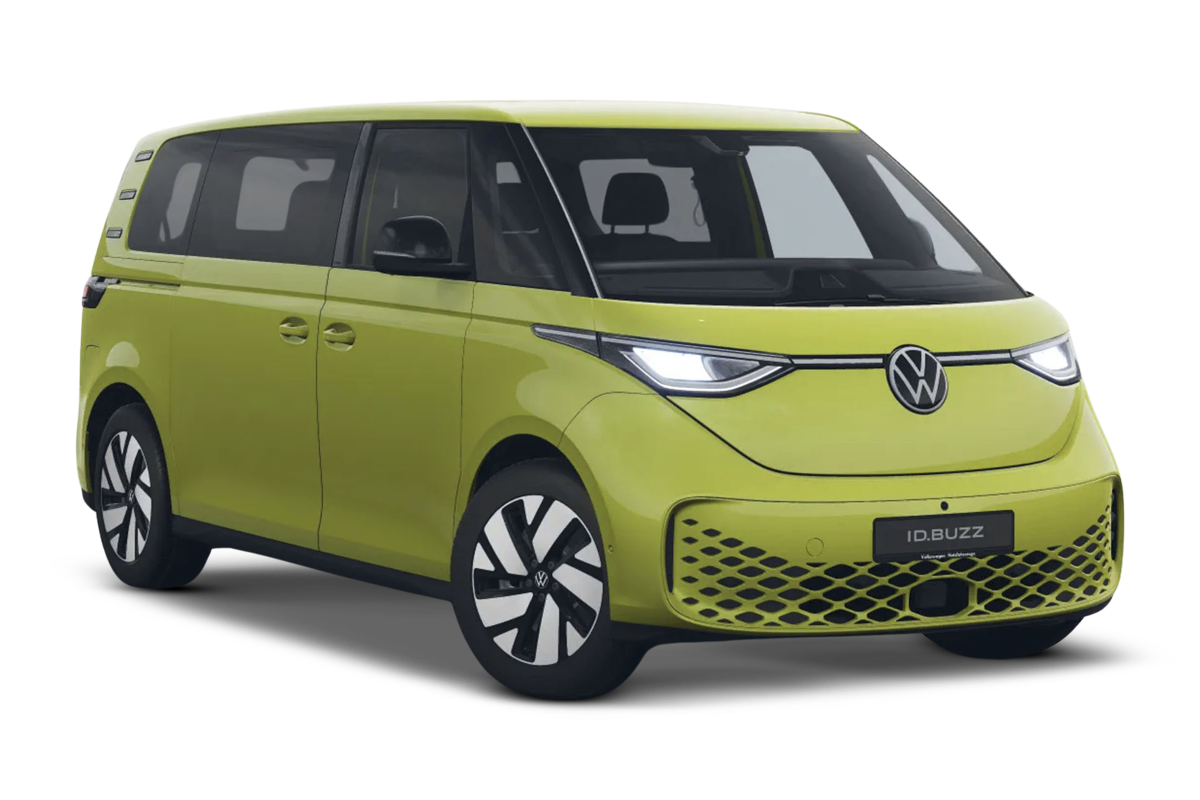
The Volkswagen ID Buzz Cargo is here to prove that vans aren’t just boxy workhorses - they can be desirable, too. With its retro styling and wide range of vivid exterior paint colours to help you stand out, the ID Buzz Cargo looks like nothing else on the road.
As an all-electric van that runs on near-silent battery power, it’s ideal for those wanting to cut down on exhaust emissions and a great alternative to a grumbly diesel engine.
The Buzz Cargo is essentially the van variant of the VW ID Buzz electric MPV. It’s also quite different to the more traditional VW Transporter, which shares its underpinnings with the Ford Transit and has its own battery-powered version, called the e-Transporter.
Volkswagen ID Buzz Cargo review
The ID Buzz Cargo might catch your attention from the outside, but it still faces a growing field of rivals, including the Maxus e Deliver 3 and the Ford E-Transit Custom. Further alternatives include the Citroën ë-Dispatch, Renault Trafic E-Tech, Toyota Proace Electric and Vauxhall Vivaro Electric.

Read more: How we test vans
What's new
- March 2025: Smaller 59kWh battery variant introduced with a lower list price. A more powerful four-wheel drive 4Motion model is also introduced as the flagship version.
Performance & drive
What it’s like to drive, and how quiet it is
Strengths
- +Impressive ride and handling balance
- +Spritely performance
- +Strong battery range
Weaknesses
- -Brake pedal response could be smoother
The Volkswagen ID Buzz is one of the best medium-sized electric vans to drive, thanks to a combination of power, refinement and comfort.
There are three power outputs available, kicking off with 187bhp and rising up to 335bhp. We’ve only tried the mid-level 282bhp model so far, which is already one of the most powerful options in the class. It certainly feels quick for a commercial vehicle, and unlike other mid-sized electric vehicles, where acceleration tails off towards higher speeds, the ID Buzz Cargo continues to pull effortlessly up to motorway speeds.
We’ve yet to try the lower-powered version but we don’t expect it to be drastically different to earlier models that came equipped with 201bhp; in short, there should be enough performance for most buyers.
Most versions have an electric motor that sends power to the rear wheels, but the 335bhp model is fitted with an extra motor up front to give it four-wheel drive. Badged ‘4Motion’, this setup maximises traction to help you squeeze out every drop of that extra performance.
The steering is quite light, but its accurate and keen response helps the ID Buzz Cargo feel a bit more car-like to drive than many rivals. What’s more, it feels grippy and composed without much body lean, so it’s great in the corners.
Without any cargo in the rear, there’s a slight thud from the firm suspension, but it’s so well controlled that the ride quickly settles down again. It deals with bumps and potholes without any fuss and is far more polished than the Maxus eDeliver 5.
As a result, the ID Buzz Cargo is one of the better vans to drive and the only slight weakness mirrors the regular ID Buzz: the brake pedal. The vague initial response means it can be tricky to judge your inputs and slow down smoothly.
A twist of the gear selector to B mode activates a strong regenerative braking setting that slows the ID Buzz Cargo down when you lift off the accelerator. This helps recoup some electric energy for the battery, but the braking effect isn’t strong enough to slow the van down to a halt.
On the whole, the ID Buzz Cargo is far more peaceful than a van with a petrol or diesel engine while being far smoother to drive. There is some road noise and a bit of wind noise rushing around the door mirrors, but it’s far less tiring over a long journey.
The smaller 58kWh battery option has an official range of 218 miles, which means it makes more sense if you tend to drive locally; especially in the colder months when you’ll struggle to achieve around 175 miles when carrying cargo. The 79kWh battery has an official range of up to 277 miles, which is among the longest ranges of any electric van. That said, we saw an indicated range of around 200 miles during our time of testing. The most powerful 4motion version has an official range of 260 miles.
With peak charging speeds ranging from 170 to 185kW, either battery can charge from 5 to 80% in around half an hour if you can find a suitably powerful charge point.
“I spent a week with the ID Buzz Cargo and found it as easy to drive as the regular MPV version. It’s less agricultural than your typical diesel van.” – Lawrence Cheung, New Cars Editor

Interior
The interior layout, fit and finish
Strengths
- +Great driving position
- +Plenty of USB sockets for your tech
Weaknesses
- -Air-con controls are on the touchscreen
- -Materials aren’t as upmarket as some may hope
With its commanding driving position, chances are that you’ll feel right at home as soon as you step up into the ID Buzz Cargo.
With a pair of digital screens, it feels as modern inside as its rivals. That said, the digital driver’s display is on the small side and doesn’t show as much information as what you’d get in the VW e-Transporter.
More positively, the 12.9in infotainment screen offers crisp graphics and a quick response. You can customise some of your preferred shortcuts at the top to save you swiping and hopping in between menus, but it’s a slight shame the icons and fonts are quite small, making them trickier to read and aim for on the move.
While we’re not fans of the fiddly touch-sensitive pads to adjust the climate control, they are at least separate from the touchscreen.
Unlike the VW ID Buzz passenger variant, which is very jazzy inside, the Cargo looks a bit sterile and bland. Of course, that’s not the biggest issue in a commercial vehicle, but those hoping that the colour and plush materials would be carried over from the regular version may be slightly disappointed, especially given the price premium.
At least the acres of flat grey plastic feel good quality, while the physical buttons on the steering wheel that have replaced the fiddly touch sensitive pads from earlier models are nicely damped.
Visibility is good, thanks to short overhangs that allow you to easily judge the extremities of the van and large wing mirrors. Parking manoeuvres are made easier by standard-fit front and rear parking sensors, and a rear-view camera if you opt for the top-spec Cargo Commerce Plus trim.
“I found the big door mirrors help with visibility and you can get a rear-view camera for around £355 on entry-level trim.” – Lawrence Cheung, New Cars Editor

Passenger & boot space
How it copes with people and clutter
Strengths
- +Lots of shelves and cubbies on the dash
- +Flat floor up front for a complete walkthrough
- +Versatile doors
Weaknesses
- -Modest cargo volume
- -Rivals have bigger payload limits
- -Only one body size available
The Volkswagen ID Buzz Cargo sits between the smaller VW Caddy Cargo and the medium-sized VW Transporter.
It's slightly larger than the Caddy inside, with a loadspace of 3.9m3, but it’s only available in just one body size; most rivals are available in different lengths and heights to accommodate more… well, cargo.
The ID Buzz Cargo’s maximum payload ranges from 516 to 647kg, which is modest and quite a long way off the limits of the Ford E-Transit Custom (1062kg) and the VW e-Transporter (1083kg).
Based on a 2988mm wheelbase, the van measures 4712mm in total, with a width of 1985mm and height of 1938mm. The Buzz Cargo has a total towing capacity of 1000kg.
The split opening rear doors can make access easier in tight parking spaces and, unlike the E-Transit Custom, the ID Buzz Cargo has two sliding side doors. The load area comes with rails on the side walls and lashing rings in the floor. To improve storage and ensure that you can always find the charging cable, there's a separate underfloor storage compartment for it.
It comes as standard with three seats in the cab: a driver’s seat plus a double bench seat. We managed to squeeze in two adults (of around 5t 7in) next to the driver and while the flat floor provides a good level of leg room, shoulder space is a bit tight, so they won’t want to sit there for long. Head room is generous and there’s the option of an individual seat for the front-seat passenger.
There’s plenty of storage space including a large cubby atop the dashboard, multi-layered door pockets, a large glovebox with another open compartment above it and a space to store your phone.
“If you’re not a fan of the split rear doors, I found you can opt to have a conventional tailgate with a window instead - and it can open electrically too.” – Lawrence Cheung, New Cars Editor

Buying & owning
Everyday costs, plus how reliable and safe it is
Strengths
- +Competitive official battery range
- +Good level of equipment as standard
Weaknesses
- -Lengthy options list means the price can rise quic
- -Warranty can’t compete with Toyota
Volkswagen’s vans have a tendency to be quite expensive and the ID Buzz Cargo is no exception to that rule. While there are tax benefits to mitigate against the high purchase price compared with a diesel van, there are more affordable electric vans out there that are also more practical. The Ford E-Transit Custom is similarly pricey, but the Maxus E-Deliver 3 is a more affordable option that is also bigger and has a higher payload rating.
You do get a good level of kit as standard, including climate control, keyless entry, cruise control, heated front seats and automatic wipers. There’s also plenty of driver assistance technology as standard, including automatic emergency braking (AEB), lane-keep assist, speed limit sign recognition and driver attention monitoring.
In terms of security, the ID Buzz Cargo comes with an alarm as standard, which also detects when it’s being towed away.
The ID Buzz didn't feature specifically in the 2025 What Car? Reliability Survey but Volkswagen came 24th out of 30 brands in the overall manufacturer league table. That's level with Ford. Every ID Buzz Cargo comes with a three-year/100,000 mile warranty, while the battery pack has a separate eight-year/100,000 mile warranty.
“There’s a good range of paint options available on the ID Buzz Cargo to help your business van stand out – that includes a two-tone paint finish, although it is quite pricey.” – Lawrence Cheung, New Cars Editor
Buy it if…
- You want a van that’s good to drive and refined
- You need a slightly longer range
- You’d like something with a bit more visual appeal
Don’t buy it if…
- You’re on a limited budget
- Physical climate controls are a must-have
- You need the biggest possible payload from a medium van
For all the latest reviews, advice and new car deals, sign up to the What Car? newsletter here

FAQs
The Buzz Cargo can travel up to 277 miles between charges based on official testing, but we'd expect the real-world range to be closer to 200 miles.
The main difference is that the Cargo is a van, while the VW ID Buzz is a passenger vehicle (MPV).
As a commercial vehicle, it wasn’t included in the 2025 What Car? Reliability Survey but VW as a brand finished 24th out of the 30 manufacturers.
Our experts don’t have data for the Cargo, but the closely-related passenger variant is predicted to hold its value incredibly well.
| Available fuel types (which is best for you?) | |
|---|---|
| MPG range across all versions | Infinity - -Infinity |

