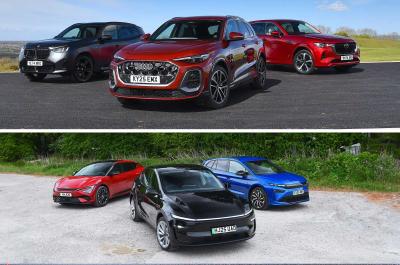
New Porsche Macan Electric GTS vs Audi SQ6 e-tron vs Tesla Model Y
The contenders
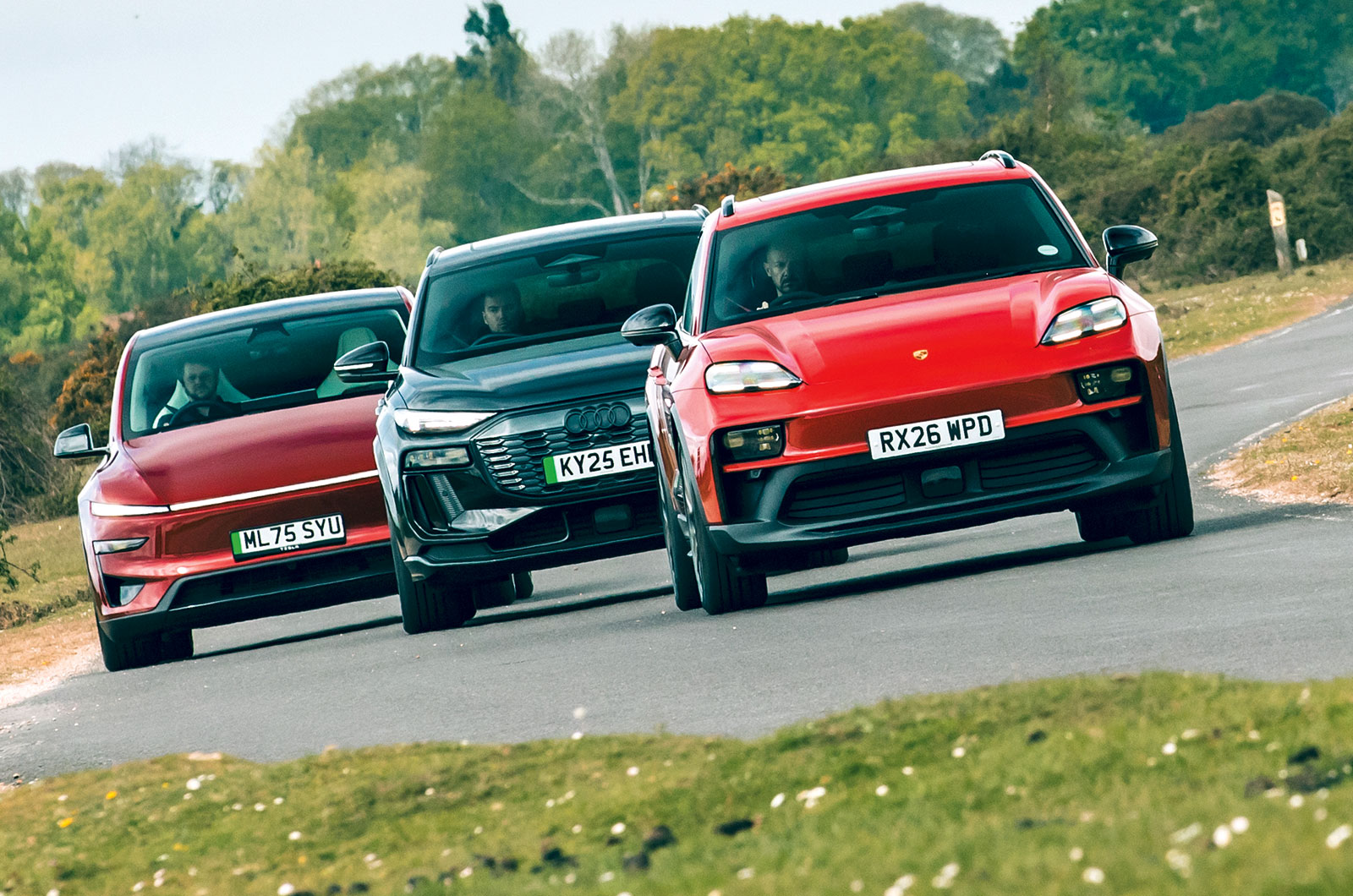
NEW Porsche Macan Electric GTS
List price £89,065
Best price £89,065
Slotting into the Macan Electric line-up below the range-topping Turbo, the GTS is the most powerful of our trio and comes with performance-enhancing goodies that promise to make it great to drive.
Audi SQ6 e-tron Vorsprung quattro
List price £94,400
Best price £94,400
The hottest model in Audi’s Q6 e-tron line-up is closely related to the Porsche Macan Electric but has a slightly softer set-up. In range-topping Vorsprung trim, it’s the priciest car here.
Tesla Model Y Performance AWD
List price £61,990
Best price £61,990
The fastest version of Tesla’s popular SUV is by far the cheapest car in this test, yet it’s unlikely to be put to shame on pace or range. And like other versions of the Model Y, it’s highly practical.
If you look at their definitions, sports cars and SUVs are pretty much the antithesis of each other, but sometimes opposites attract. When they do, the result can be spectacular, with the best sports SUVs managing to offer both great fun and generous practicality.


One brand that has a great track record in this arena is Porsche. It manages to instill a surprising amount of sports car DNA into its more family-friendly models, and the result is that the Cayenne Coupé S is our current favourite of the breed and the smaller petrol Macan is better to drive than any direct rivals.
But does the formula still work when you introduce electric power and a heavy battery? The newer Macan Electric, it must be said, has been a bit of a mixed bag so far. We’ve been underwhelmed by the entry-level version, and while the range-topping Turbo makes a convincing sports SUV, it’s too expensive for
us to wholeheartedly recommend.
There’s still hope, though. The new Macan Electric GTS comes with most of the performance-enhancing kit that makes the Turbo so good to drive, but at a lower price. True, it’s still far from cheap, at a shade under £90,000, but if it can replicate the feel of its petrol sibling, it might well be the sweet spot
in the Macan Electric range and should be a formidable competitor.
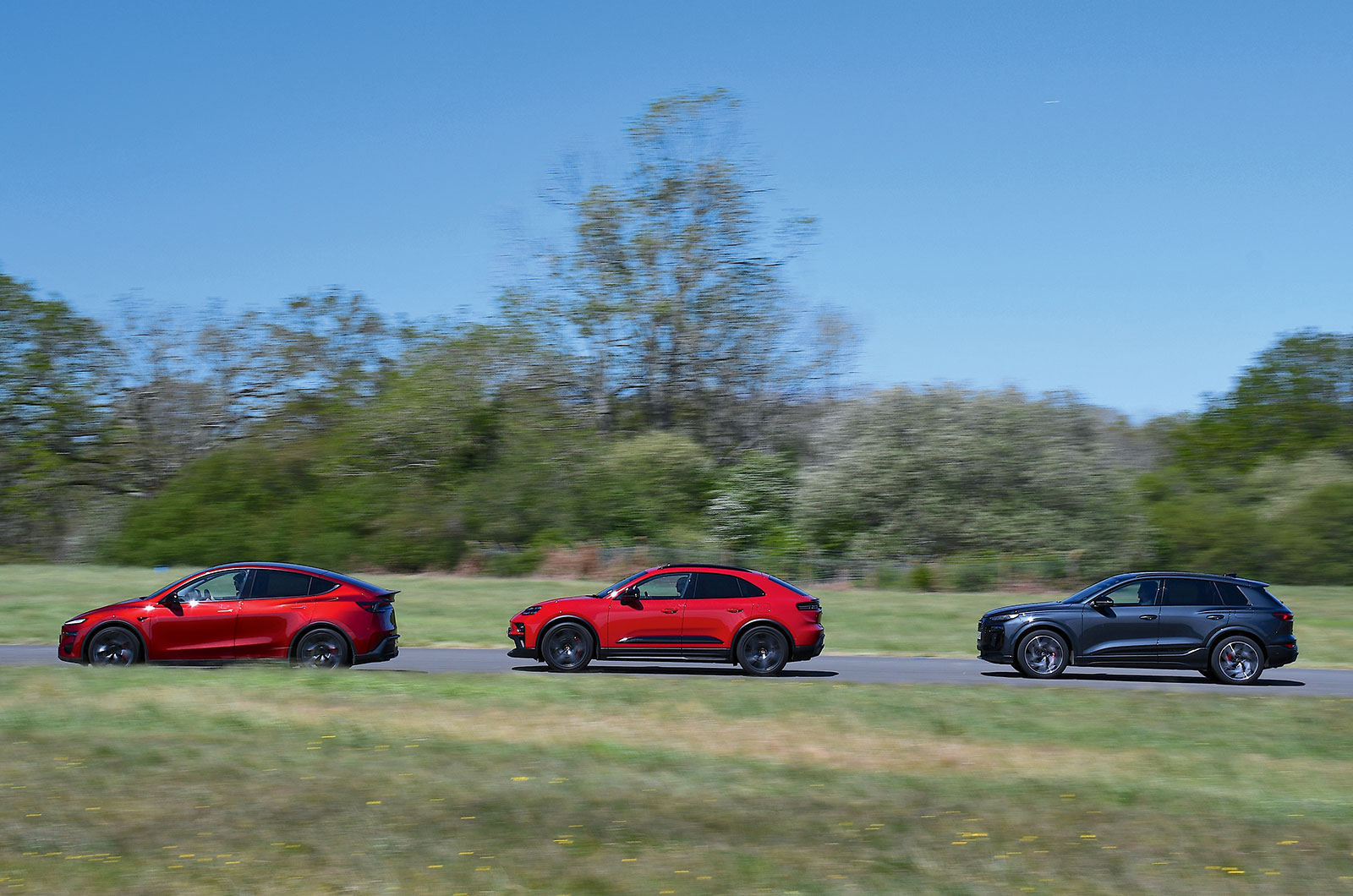
So should the Audi SQ6 e-tron. It’s closely related to the Macan Electric and therefore shares most of its underpinnings, including its battery and 800-volt electrical architecture (for ultra-fast charging). We’re testing it in range-topping Vorsprung trim, which has a price tag of more than £94,000, making the SQ6 the most expensive of this group.
What if you’re looking for a fast SUV but don’t want to spend all that money, though? That’s where the Tesla Model Y Performance comes in. With a price of just under £62,000, it looks like a bargain next to the others, yet we know from previous experience that it shouldn’t be underestimated; it’s seriously rapid.
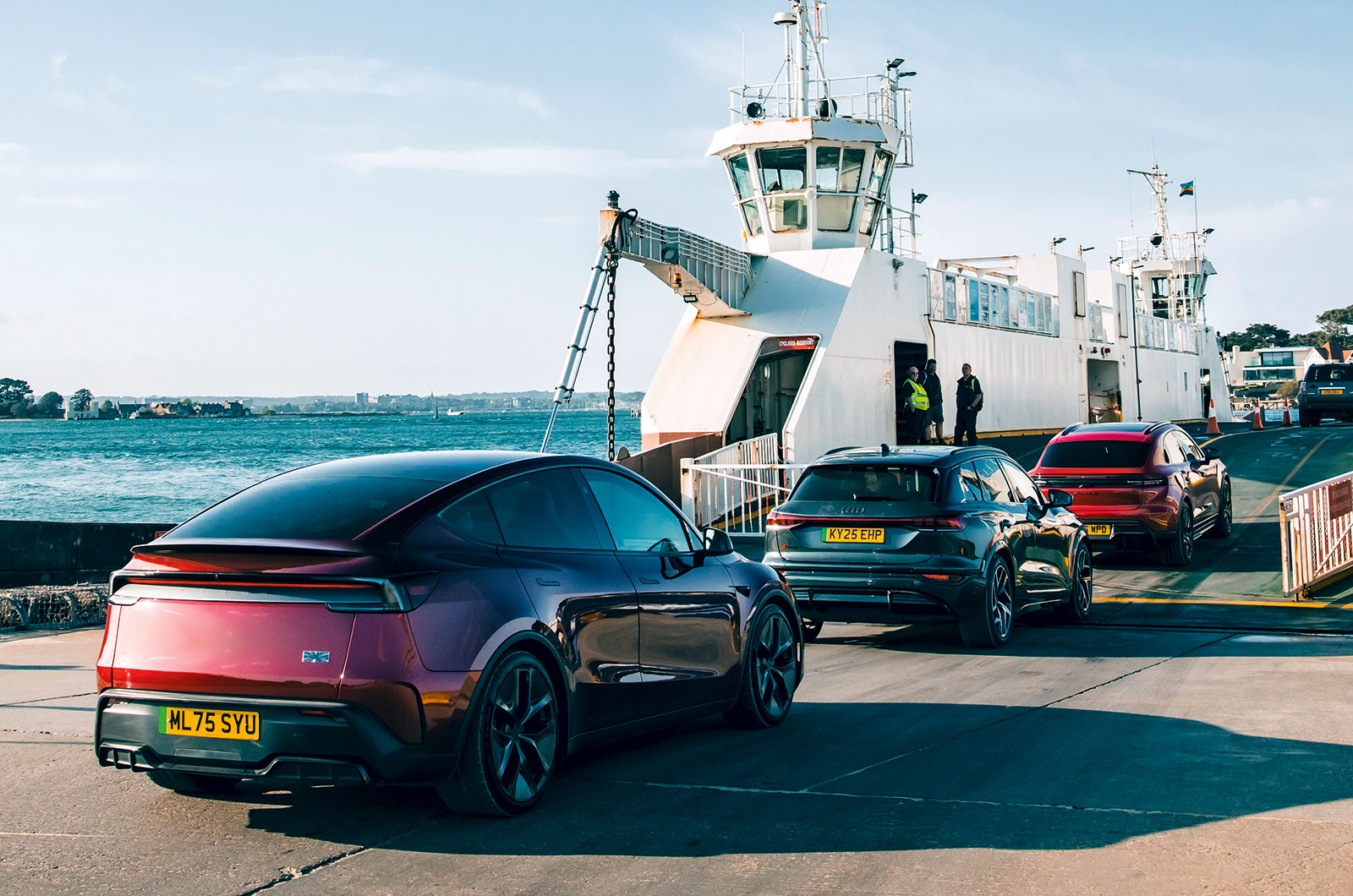
So, which is the best? Can a good sports SUV even be powered by electricity? To find out, we took our contenders on a two-day road trip from our office in south-west London to the seaside in Poole and back. They’d be tasked with eating up motorway miles comfortably, putting a smile on our faces when the roads got twisty and knocking our socks off in a drag race at a private track.
Driving
Performance, ride, handling, refinement
Day one of our trip consisted mainly of motorway cruising down to the south coast. Of the three, the SQ6 has the softest suspension, making it good at soaking up compressions but causing slightly more side-to-side motion over undulating roads. You can, however, tailor its adaptive air suspension by switching between driving modes (of which there are three). Provided you do this whenever necessary to suit the prevailing road conditions, the SQ6 tends to remain very comfortable.
Like the SQ6, the Macan has adaptive air suspension with a selection of modes, but all of the settings are generally firmer. Even so, leave it in Normal mode and it maintains an excellent level of control, with very little movement vertically or side to side. True, urban potholes sometimes cause more of a thud than in the SQ6, but they’re dealt with quickly, so the Macan feels composed even along particularly gnarly roads.
That’s not always true of the Model Y, despite the fact that the Performance comes with adaptive suspension that lesser versions lack. While smaller bumps are dealt with quite well, larger ones cause more of an impact than in the others and can make you bounce around in your seat. It isn’t so bad that it gets annoying, but the Model Y’s ride lacks the finesse of the other two.
Some suspension noise can be heard in the SQ6 and Macan along badly pockmarked roads, whereas there’s very little sign of this in the Model Y. Generally, though, the SQ6 is the quietest at motorway speeds, with the least road and wind noise, although the others aren’t particularly loud in those areas either.
There’s more of a difference when it comes to braking. You see, the Model Y relies heavily on its strong regenerative braking system (which harvests energy to help with range) to slow down when you lift off the accelerator. Around town, you rarely have to use the brake pedal to come to a stop, even when you have the regen set to its low level. But when you have to call upon the regular brakes to slow down swiftly from high speeds, there’s very little feel to help you gauge how hard to press the pedal.
By contrast, the regenerative braking systems in the SQ6 and Macan are much less aggressive and their brake pedals are better judged, giving you a clearer idea of how much pressure to apply, especially when braking hard for bends.
Of course, given that these are sports SUVs, it’s important that they handle well, and the Macan emphatically does. Its poise is impeccable no matter which driving mode you’re in, but select one of its sportier settings and its suspension lowers by 10mm and firms up, giving it even better control through corners. While all three cars have four-wheel drive, the Macan often feels more like it’s rear-wheel drive, pivoting around its centre point through bends in a very satisfying, playful way.
Sublime steering adds to the fun. It has just the right weight and speed to allow you to place the car precisely where you want it in corners, and gives you a great sense of connection to the front wheels.
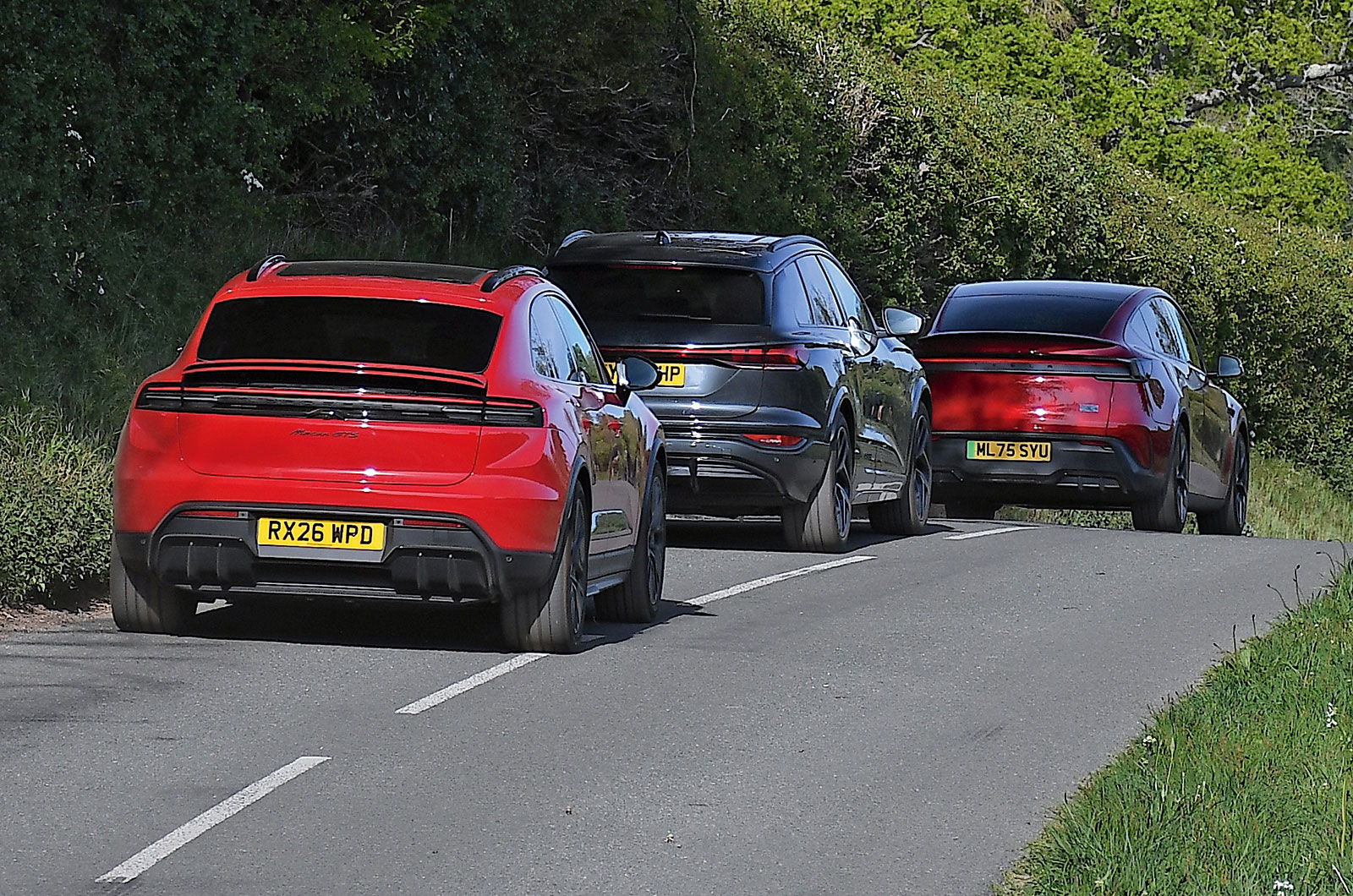
While the SQ6’s steering system is related to the Macan’s, it isn’t quite as well judged for enthusiastic driving, being overly light for our taste. In its sportiest (Dynamic) mode, the SQ6 has an element of the Macan’s playfulness and adjustability in corners, but it leans more and isn’t as involving.
The Model Y Performance’s adaptive suspension gives it two driving modes: Standard and Sport. However, there isn’t much difference between them as far as handling is concerned; the always firm set-up controls body lean well through corners and makes the car behave in a predictable manner. There isn’t much fun to be had, though. Sure, the Model Y can be driven quickly along a twisty road and feels the lightest of the trio (it’s no illusion), but the other two – especially the Macan – feel more alive.
Part of the reason for this is the Model Y’s steering. It’s very sharp, and there’s little weight build-up, so you don’t really feel much of a connection to the front wheels.
What about range, though? Officially, these cars are very close, each promising 360 miles or so between charges. With 206 miles of mainly motorway cruising under our belt, the Model Y’s trip computer said it was averaging an impressive 3.8 miles per kilowatt hour (mi/kWh), making it the most efficient of the three and giving it a theoretical real-world range of 300 miles. The SQ6 showed 3.2mi/kWh, but its larger battery means it should still be able to travel four miles farther before needing a top-up, while the Macan’s claimed 3.1mi/kWh was good enough for a theoretical 294-mile range.
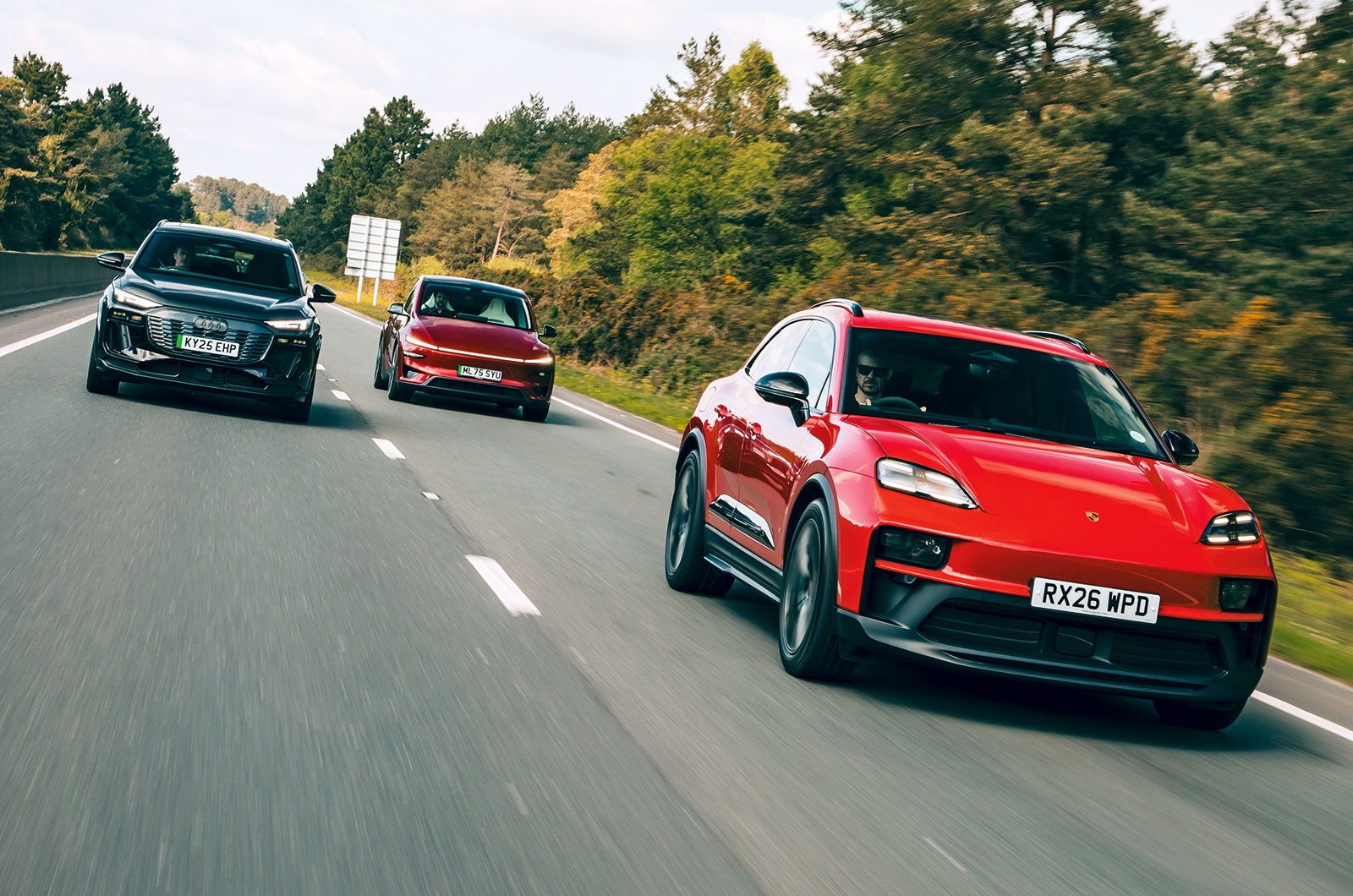
The next task was to see which car is quickest in a straight line. While it’s unlikely that many owners will be drag racing their cars, a 1km sprint is a great way to really test their acceleration (and it’s exciting for the accompanying Youtube video).
With each of our contenders being four-wheel drive, traction off the line wouldn’t be an issue, but the Macan, being the most powerful, was the favourite to cross the finish line first. It has a mighty 563bhp on tap when launch control is engaged, compared with the SQ6’s peak of 510bhp and the Model Y’s 454bhp.
Sure enough, when the flag dropped, the Macan flew down the runway, getting from 0-60mph in 3.5sec and covering 1km in 21.7sec. But it wasn’t the SQ6 that was hot on its tail; it was the Model Y, despite its apparent power disadvantage. It kept the Macan honest until the midway point, posting a 0-60mph time of 3.7sec and 22.3sec over the 1km distance.
The SQ6 was left behind somewhat, getting to 60mph in 4.1sec and crossing the finish line in 22.9sec. That’s largely down to the fact that the SQ6 is the heaviest car here, although it’s still far from slow. Indeed, they all feel mighty powerful and pin you into your seat when you press the accelerator pedal all the way to the floor.
Behind the wheel
Driving position, visibility, build quality
If you like SUVs because they sit you high above the road, the SQ6 and Model Y will appeal the most, because each offers a commanding view of the road ahead. They don’t feel particularly sporty, though, especially when compared with the Macan’s seating position. Sure, you still sit higher than you would be in a sports car or a hot hatch, but you feel as though you’re closer to the ground in the Macan, in part because the window line is higher, adding to the overall sense of sportiness.
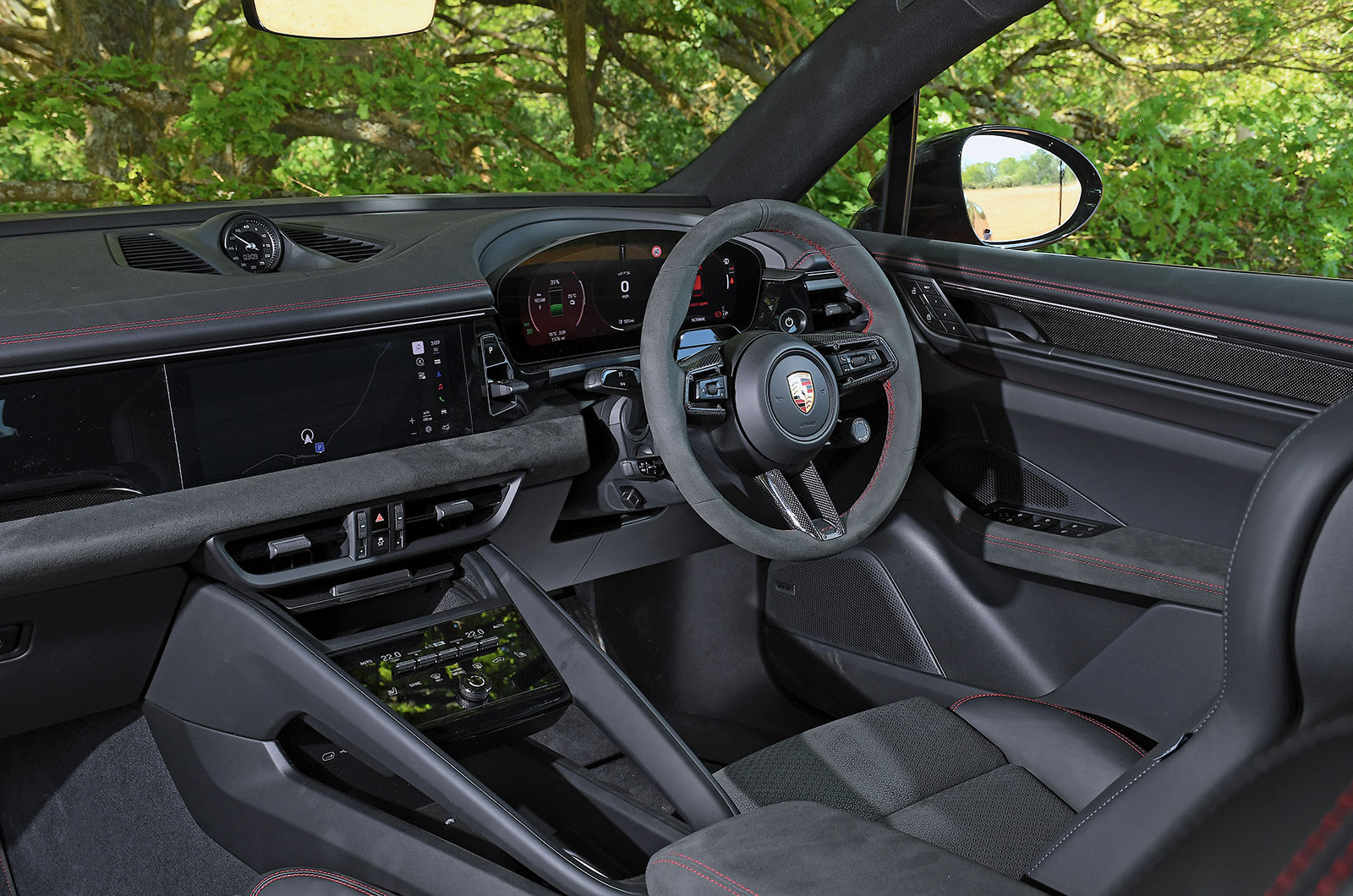
In GTS guise, the Macan comes with 18-way electrically adjustable sports front seats, which include adjustable side bolsters and lumbar support. They perfectly balance comfort and support, never becoming bothersome on long drives yet holding you in place through corners.
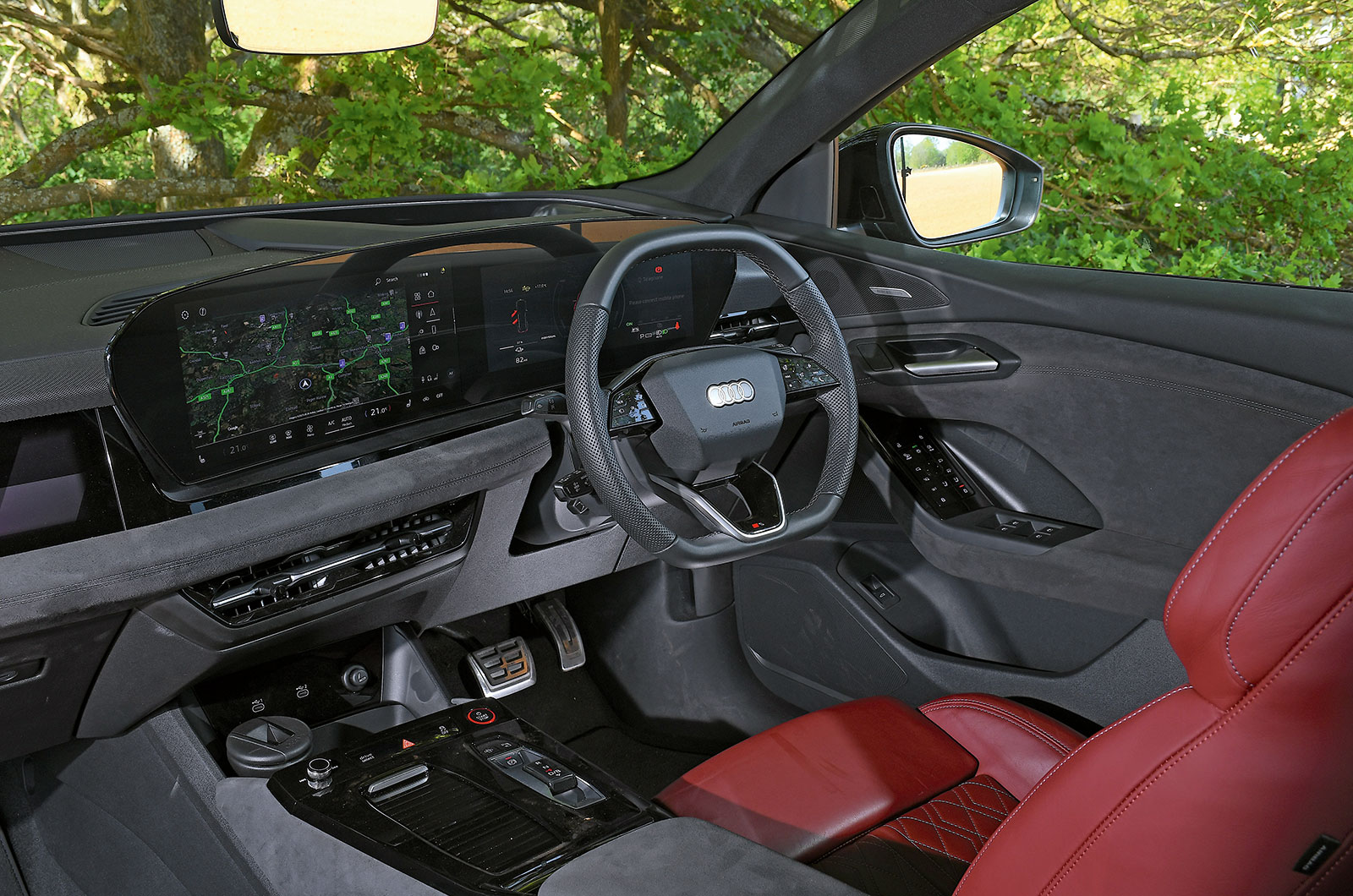
The SQ6 and Model Y have sports seats too, so they’re more heavily bolstered than those of regular versions. But while they’re just as good as the Macan’s at keeping you free from aches on a long drive, you still slide around more in them through corners.
As in the Model Y, you won’t find many physical controls in the SQ6, so you have to make climate control changes through the infotainment screen or via voice control, which can be distracting. That isn’t a problem in the Macan, though, thanks to a panel between the front seats that’s filled with physical buttons and switches. The Model Y’s user-friendliness is further hindered by the fact that you have to use the infotainment screen and knobs on the steering wheel to adjust the doors mirrors and the position of the wheel.
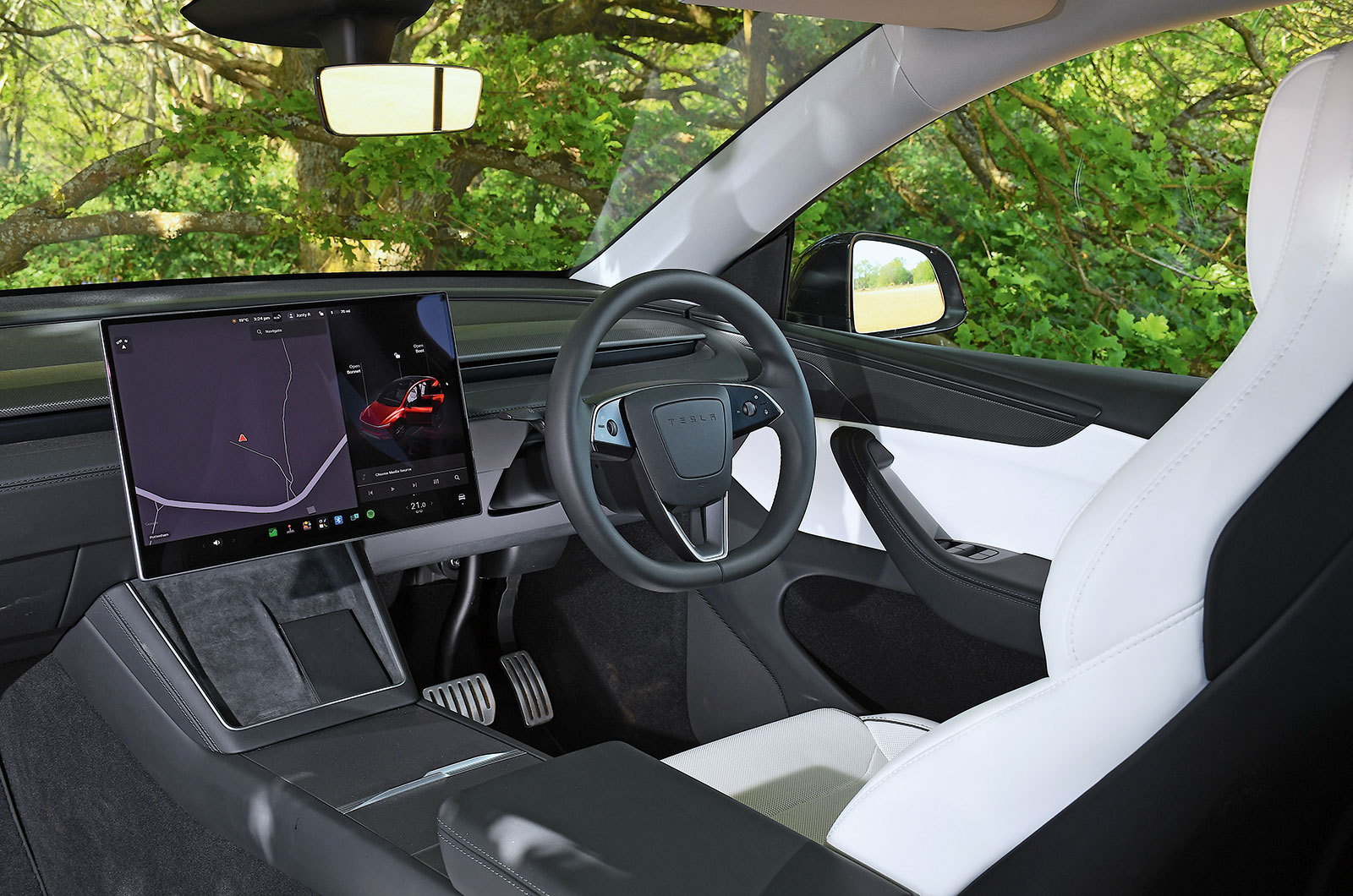
As with other versions of the Model Y, there’s no instrument panel facing the driver; the speedometer is located in the top right corner of the infotainment screen. In contrast, the SQ6 and Macan have large, easy-to-read digital driver’s displays with a choice of layouts, including a sat-nav map. The SQ6’s sits within the same huge, curved panel as the 14.5in infotainment touchscreen; the Macan’s is set deeper in the dashboard in its own binnacle.
Despite having so much to deal with, the Model Y’s infotainment system is particularly impressive. It’s easy to get used to, the menus are straightforward and the screen is lightning quick in its responses to inputs.
Although the SQ6’s infotainment system isn’t quite as intuitive as the Model Y’s, its 14.5in touchscreen is still pleasingly crisp and responsive, and it’s better than the Macan’s. Don’t get us wrong: the latter’s set-up is decent enough, but its screen is smaller than the others (10.9in) and its many menus can be confusing to navigate.
That isn’t all the screens you’ll find in the SQ6; go for Vorsprung trim and you get an additional 10.9in touchscreen for the front passenger. That allows them to make changes to the system, watch media or play games (all of which the driver can’t see, thanks to clever polarising tech). You can add a similar screen to the Macan for £1215, while the Model Y gets a standard-fit touchscreen in the rear, to keep those passengers happy.
In GTS form, the Macan’s interior is a tactile, high-quality delight. Great materials cover every surface, including a generous helping of Racetex (Porsche’s version of faux suede) on parts of the dashboard, doors, seats and steering wheel rim. What’s more, build quality is second to none in this company.
Our test car was equipped with an optional GTS Interior Package in Carmine Red (£4636), which makes things even more impressive by adding extra Racetex on the centre armrest and lots of red detailing to match the exterior paint. Given the quality of the standard interior, though, it’s not a must-have upgrade.
The Model Y doesn’t feel as special inside. Apart from alloy pedals and faux carbonfibre inserts on the dashboard and doors, it’s identical to what you’ll find in any other Model Y, so while the quality is good and it’s a nice place to be (especially if you opt for the £1200 white faux leather option), it’s functional rather than having much of a wow factor.
The SQ6’s interior features a good mix of materials and a definite step up in quality compared with many other new Audis that we’ve seen over the past few years. It still doesn’t attain the same level of quality as the others in this test, though, with more hard, scratchy plastics dotted around.
Space and practicality
Front space, rear space, seating flexibility, boot
Six-footers to get comfortable in the front of all of our contenders, but it’s the Model Y that offers the most space in the back, by a substantial margin. A six-footer sitting behind someone equally tall in the front will find that they have lots of knee room. Head room, too, is generous, ensuring that passengers’ hair won’t be brushing the rooflining, and unlike in the other two, they can recline the rear seatbacks if they want to relax a bit more.
By contrast, anyone six feet tall or more will find that both head and knee room are relatively tight in the back of the SQ6, while the Macan is even more restricted in the knee room department.
The Model Y has a completely flat floor, giving plenty of foot space for a middle passenger to go with all that head room, so it’s a shame that the seat itself is an uncomfortable shape. The SQ6 and Macan have a large floor hump that a middle passenger has to straddle, and head room is again limited, but the seats themselves are comfier than the Model Y’s. We haven’t tried the Macan without an optional panoramic glass roof; head room might be slightly better if you leave that box unticked.
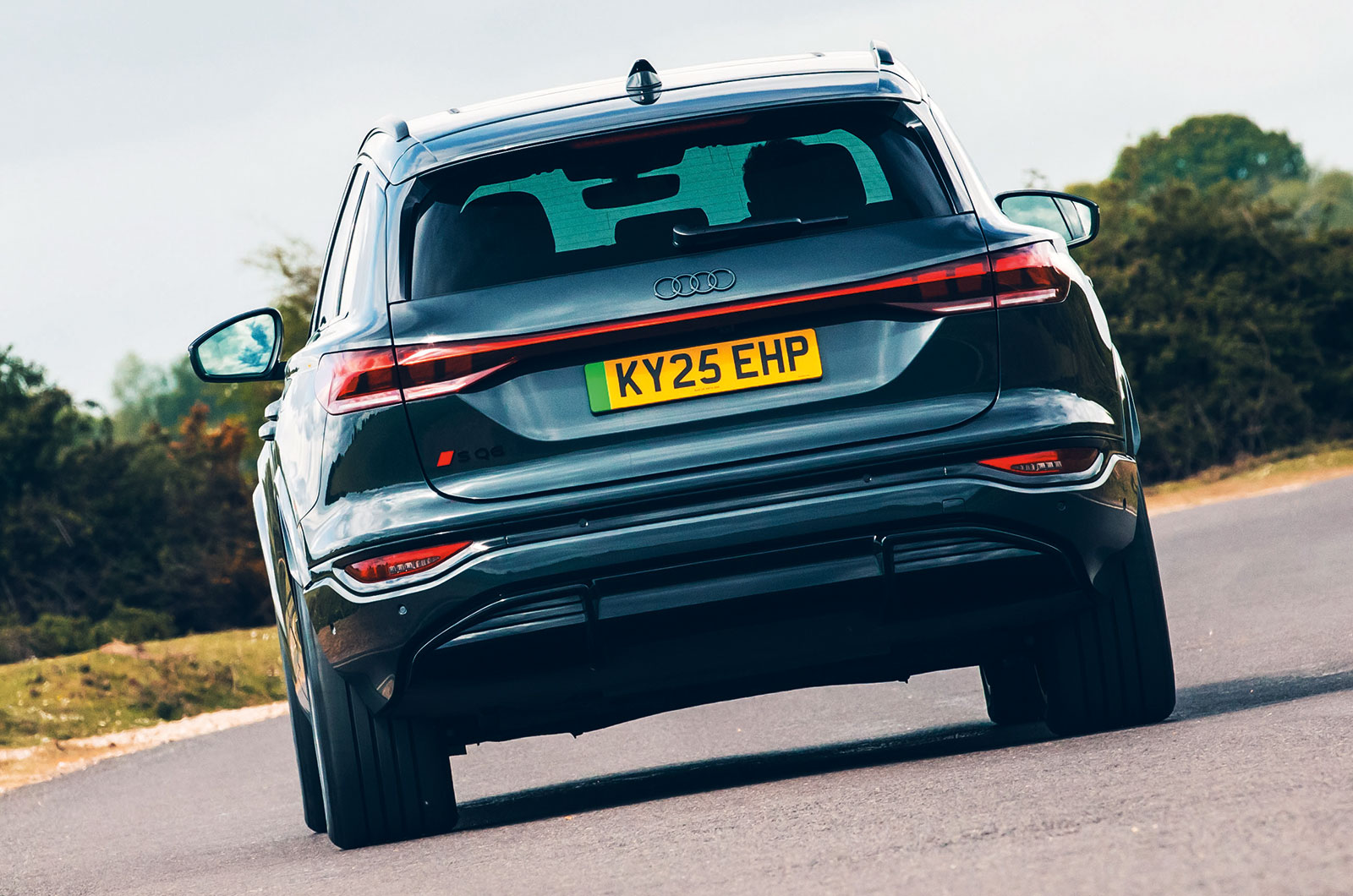
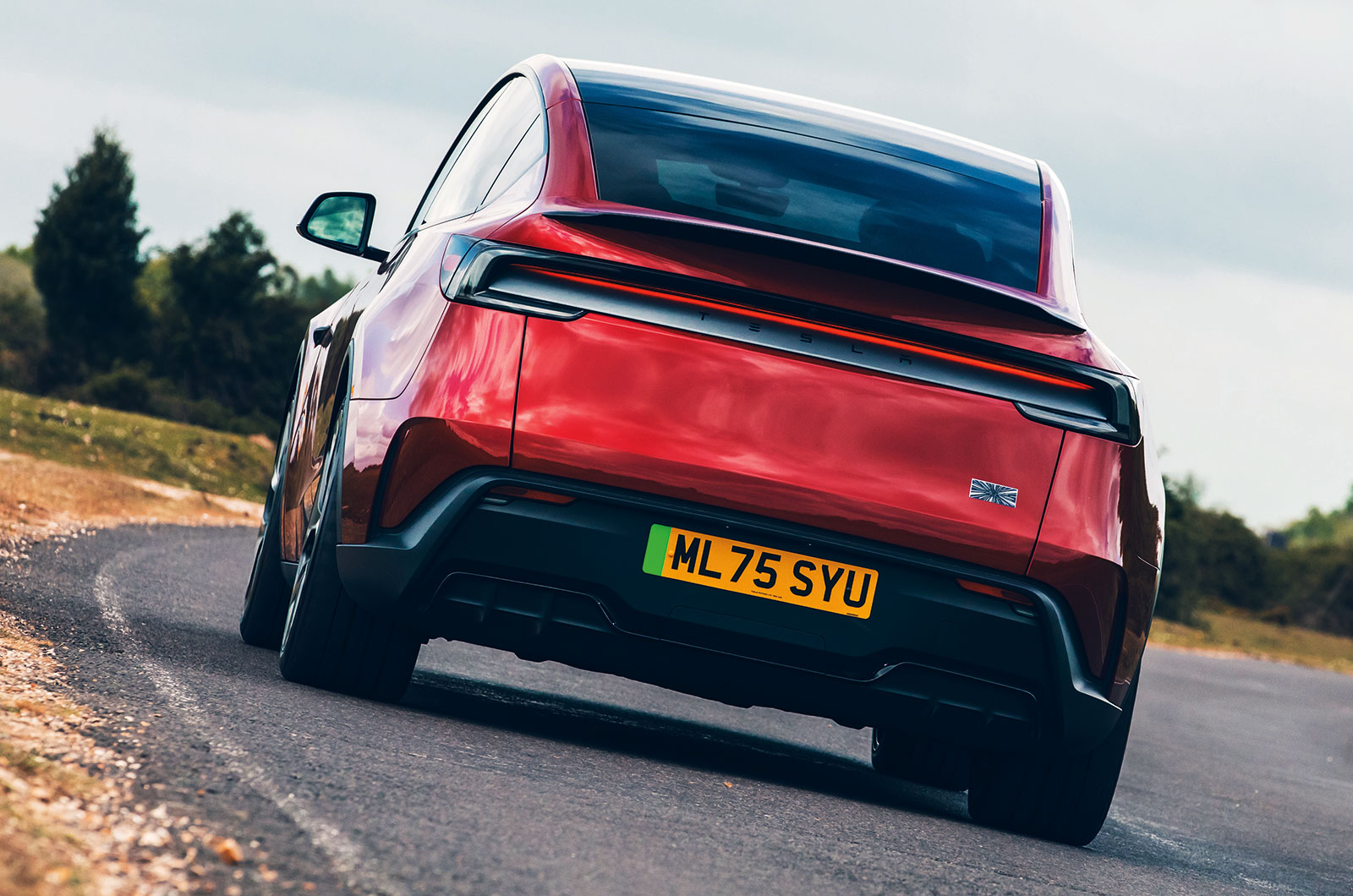
All three have practical boots with big, square openings and electric tailgates, but the Model Y’s is the most spacious. In our tests, it swallowed nine carry-on suitcases below its parcel shelf, with two of them going into the deep, rectangular compartment under the boot floor. On top of that, you can fit a further case in the space under the bonnet, taking the total to an impressive 10.
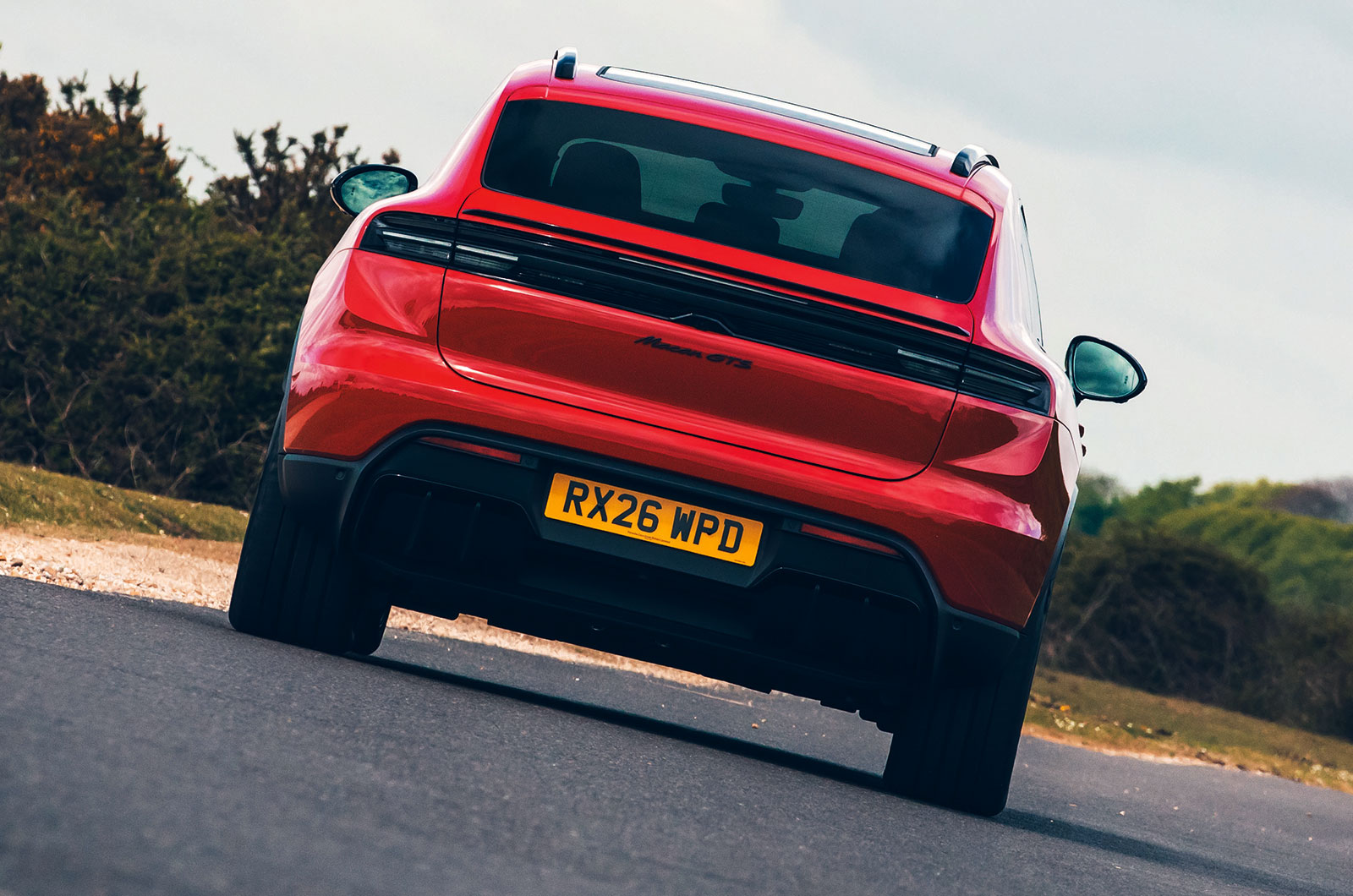
Each of the others can also store a single case under the bonnet, in addition to eight in the SQ6’s boot and seven in the Macan’s. They offer some additional storage space below their boot floors, but far less than in the Model Y; the Macan’s is mostly taken up by the (admittedly excellent) standard sound system’s subwoofer.
In all three, versatile 40/20/40 split-folding seatbacks allow you to thread long items (such as skis) through from the boot without sacrificing one of the outer rear seats, as you would with a more conventional 60/40 split. You can fold down the seatbacks using handy levers in each boot, but while the SQ6 and Macan have mechanical release mechanisms, the Model Y’s are folded electrically.
Buying and owning
Costs, equipment, reliability, safety and security
You’re unlikely to get much of a discount on any of these cars, so anyone buying an SQ6 or a Macan outright will have to stump up £90,000 or more. That makes the Model Y’s far lower list price look very appealing.
What’s more, the Model Y will be the cheapest to own for private buyers, with the lowest servicing, insurance and electricity costs over three years. The SQ6 will be by far the most expensive to run privately, mainly due to its steep predicted rate of depreciation. The Macan, in contrast, is expected to shed value relatively slowly, with the Model Y not far behind.
That difference in list prices also means the Model Y is far cheaper to buy on PCP finance Put down a £9000 deposit on a three-year deal with a limit of 10,000 miles per year and the Model Y will cost you £924 a month, compared with the SQ6’s £1384 (aided by a generous, £8450 deposit contribution from Audi at the time of writing) and the Macan’s £1436.
When you need to top up the batteries, the Model Y can accept a maximum rate of 250kW, while the others stretch to 270kW. As a result, despite having a smaller battery, the Model Y will take slightly longer to get from 10-80% using a compatible public rapid charger
(28 minutes versus 21 minutes).
The Model Y, though, comes with full access to the Tesla Supercharger network, which is one of the most reliable and convenient around. Although non-Tesla drivers can now use around 40% of Supercharger sites, they have to take out a subscription to get the lower charging rates that Tesla owners enjoy.
No matter which car you choose, you get niceties such as keyless entry and heated front seats. The SQ6 and Model Y go further by including adaptive cruise control, 360-degree parking cameras, ventilated front seats, heated rear seats and panoramic glass roofs. You can add most of those things to the Macan, but they’ll cost extra; that seems rather stingy, especially next to the generosity of Tesla.
All three come with a five-star safety rating from Euro NCAP, with the Model Y earning exceptionally high scores across the board, including for active safety assistance, despite being retested just last year under a more stringent procedure than the others. The SQ6 and Macan both scored highly when tested in 2024, with the SQ6 offering slightly better protection for adults in the front and children in the rear.
The SQ6 and Macan are too new to have featured in the most recent What Car? Reliability Survey, but the Model Y was included, coming third out of 27 models in the electric SUV category. Tesla fared the best of the three brands in the overall league table, ranking seventh out of 30. Porsche was 19th and Audi joint 22nd (with Mercedes).
Should anything go wrong, Tesla offers a four-year/60,000-mile warranty, while Porsche’s cover is for three years but with unlimited mileage. Audi’s warranty is the least generous, at three years/60,000 miles. All three give you a separate eight-year/100,000-mile warranty on their high-voltage batteries.
Our verdict
The SQ6 is an electric SUV that you’ll happily spend lots of time in; it’s very comfortable and quiet and has a respectable range. However, it’s more of a fast, refined cruiser than an engaging sports SUV, and it struggles to justify its lofty price.
In fairness, the Model Y doesn’t really fulfil the sports SUV brief any better than the SQ6, because it, too, is found wanting in the driver appeal department. Still, it offers a lot of performance for the money, and of course it’s far more spacious and practical than both rivals.
Neither can touch the Macan, though. In every way (except its soundtrack, perhaps), this GTS version is a true sports SUV. It’s not only absurdly fast but also a joy to drive along a twisty road. In fact, we’d go so far as to say it’s even more rewarding than the petrol Macan.
True, it isn’t exactly palatial in the back seats, but it should still be practical enough for most buyers’ needs, and its interior is everything you’d hope for in terms of ambience and quality.
As with the best petrol sports SUVs, you’ll actively look for excuses to go for drives in the GTS and choose to take the long way home every time. If that isn’t the mark of a great sports SUV, we don’t know what is.
For all the latest reviews, advice and new car deals, sign up to the What Car? newsletter here
1st - Porsche Macan Electric
For Rapid and thrilling to drive; top-notch interior quality; excellent range
Against Cheaper versions aren't all that fast; without air suspension the ride is iffy; reliability is a concern
What Car? rating 5 stars out of 5
Porsche Macan Electric review >>
Porsche Macan Electric deals >>
2nd – Tesla Model Y
For Rapid acceleration; long range between charges; Tesla's brilliant charging infrastructure
Against Some fiddly interior controls; doesn't ride as well as some rivals; no Apple CarPlay or Android Auto
What Car? rating 4 stars out of 5
Tesla Model Y review >>
Tesla Model Y deals >>
3rd – Audi SQ6 e-tron
For Competitive range; super-quiet on the move; fast charging potential
Against Expensive; interior quality not as impressive as you might expect; slow-speed ride can be brittle
What Car? rating 4 stars out of 5
Audi Q6 e-tron review >>
Audi Q6 e-tron deals >>
Audi SQ6 e-tron Vorsprung quattro
Engine two electric motors
Peak power 510bhp (launch control)
Peak torque 631lb/ft
Gearbox 1-spd automatic
0-60mph 4.1sec
Top speed 142mph
Battery size (usable) 94.9kWh
Rapid charging type CCS
Maximum charging rate 270kW
Real-world range (est) 304 miles
Official range 357 miles
Efficiency on test 3.2mi/kWh
Porsche Macan Electric GTS
Engine two electric motors
Peak power 563bhp (launch control)
Peak torque 704lb/ft
Gearbox 1-spd automatic
0-60mph 3.5sec
Top speed 155mph
Battery size (usable) 94.9kWh
Rapid charging type CCS
Maximum charging rate 270kW
Real-world range (est) 294 miles
Official range 359 miles
Efficiency on test 3.1mi/kWh
Tesla Model Y AWD
Engine two electric motors
Peak power 454bhp
Peak torque 547lb/ft (est)
Gearbox 1-spd automatic
0-60mph 3.7sec
Top speed 155mph
Battery size (usable) 79kWh
Rapid charging type CCS
Maximum charging rate 250kW
Real-world range (est) 300 miles
Official range 360 miles
Efficiency on test 3.8mi/kWh
Cars pictured
Audi SQ6 e-tron Edition One with Manhattan Grey metallic paint (£750) and Storage and Luggage Compartment Pack (£265)
Porsche Macan Electric GTS with Carmine Red metallic paint (£1245), GTS Interior Package Carmine Red (£4636), panoramic glass roof (£1346), roof rails (£282) and privacy glass (£385)
Tesla Model Y Performance with Ultra Red Metallic paint (£2600), Black and White interior (£1200) and Enhanced Autopilot (£3400)