Toyota Aygo X review
Category: Small car
The Aygo X is an urban-focused, fuel-efficient hybrid and a smaller sibling to the Yaris


What Car? says...
Kids grow up fast, and sometimes so do cars. The Toyota Aygo X is a prime example, because it’s become much more sophisticated in recent years.
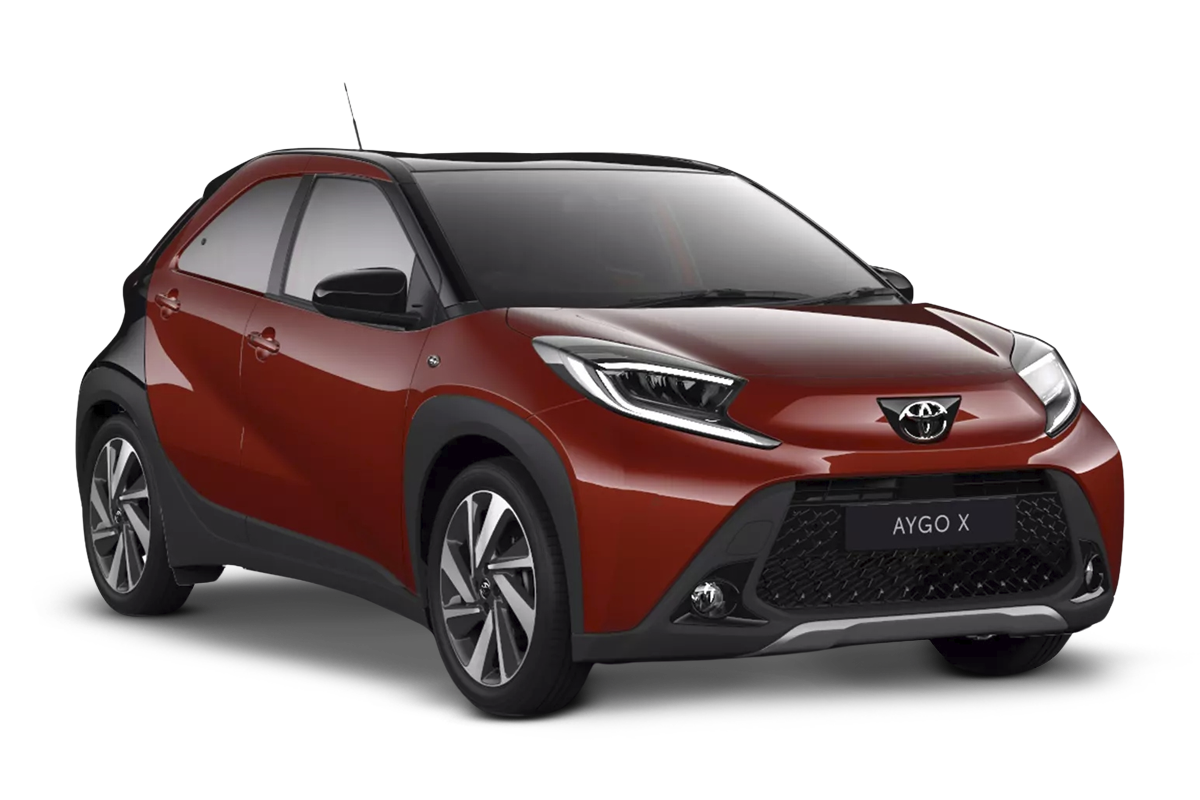
The Aygo X first arrived in 2022, and straight away it felt a lot more grown up than the previous, 2014-2021 Toyota Aygo. It borrowed underpinnings from the larger Toyota Yaris, and it adopted some SUV-inspired styling cues.
Toyota has now just taken things one giant step further. Gone is the Aygo X’s 1.0-litre petrol engine and shoehorned in its place is a 1.5-litre, full hybrid (HEV) setup – the same one you’ll find in the Yaris.
Nonetheless, the Aygo X remains smaller and less practical compared with the Yaris: in short, it's more of a city car. It’s cheaper to buy, too.
Toyota Aygo X video review
The Aygo X rivals the Hyundai i10 and Kia Picanto, although admittedly they’re purely petrol powered. As far as HEV rivals go, the Aygo X is pretty much in a class of its own right now.
It’s a unique proposition, then, but how does the little Aygo X stack up against other rivals in the small car class? Read on for our take.

What’s new?
- January 2026: Aygo X wins What Car? Small Car of the Year 2026
- September 2025 - New hybrid version introduced with the lowest emissions of any non-plug-in car on sale, at an estimated 86g/km. 1.0-litre petrol model discontinued.
- October 2024 - Special edition Aygo X JBL features 300-watt audio system, silver-black paint and alloy wheels
- March 2024 - Aygo X Undercover is a limited edition with two-tone grey paint, 18in alloys and red accents
Performance & drive
What it’s like to drive, and how quiet it is
Strengths
- +Tight turning circle
- +Tidy handling
- +Strong acceleration
Weaknesses
- -Noisy at speed
- -Fairly firm ride
How fast is it and which engine is best?
The Toyota Aygo X is available with just one engine – a full hybrid with an automatic gearbox. Acceleration is impressive by small car standards. In our tests, the Aygo X managed to cover 0-60mph in 9.2sec – or around half a second slower than the Renault Clio E-Tech 145.
Compared with the previous non-hybrid, the new Aygo X feels much stronger, cutting the official 0-62mph sprint by over five seconds. In fact, with 114bhp, the Aygo X is also more powerful than any Hyundai i10 or Kia Picanto and both of those cars are noticeably slower, no matter the situation.
Around town, the Aygo X’s electric motor helps it pick up speed quickly and smoothly, and on the motorway, the 1.5-litre engine has the muscle to keep the performance feeling strong.
Is it agile and is the ride comfortable?
The Aygo X is indeed agile, with its small size and tight turning circle coming in particularly useful around town. It remains a tidy handler when things go from city streets to rural roads, too. The Aygo X resists body lean well, while the well-weighted steering helps you place the car accurately on the road. It inspires more confidence than the i10 and Picanto.
Still, if you’re after a good driving experience, we’d be tempted to point you towards the larger Renault Clio or Seat Ibiza: both have sharper steering and even more composure through the twisty stuff.
The Aygo X’s GR Sport trim comes with slightly stiffer suspension and tweaked steering to sharpen up the response, but the difference is negligible. Thankfully, it doesn’t have a negative effect on ride comfort, either. The ride in all versions is somewhat firm, but it rounds off bumps at low speeds in a controlled manner. On the motorway it can struggle to settle down, making it feel a tad choppy at times.
Is it quiet and how easy is it to drive smoothly?
The hybrid system allows the Aygo X to drive with the engine off for very short distances at low speeds, allowing for moments of quiet progress in town. When it's running, the three-cylinder engine's thrum fades at motorway speeds and, while it is vocal when you work it hard, you shouldn’t have to do that too often. There’s some engine vibration through the controls at points, but it’s vastly reduced over the earlier 1.0-litre version.
Road noise is kept in check, but wind noise grows markedly at motorway speeds, mainly from around the front door pillars and – if fitted – the sliding fabric roof.
Despite the brake pedal needing to combine a regenerative braking system with the regular brakes, a positive and linear response makes it easy to bring the Aygo X to a smooth stop. You can slide the gear-lever into a B mode to increase the braking effect when you release the accelerator, but it’s not strong enough to bring the car to a complete halt.
"The Hybrid version of the Aygo X has drastically improved one of its previous shortcomings. I like that the added punch means it no longer feels out of its depth once you leave town" — Lawrence Cheung, New Cars Editor

Interior
The interior layout, fit and finish
Strengths
- +Great visibility
- +Easy-to-use ventilation controls
- +Interior feels well built
Weaknesses
- -No reach adjustment for steering wheel
- -Smaller touchscreen can be slow to respond
What does the interior look like and is it well made?
The Aygo X’s interior is styled to look curvy, and you could argue that its swoopy design is more eye-catching than the Hyundai i10 and Kia Picanto’s more squared look. You can make the final call about whether it’s better looking, though, as well as whether it has more charm than the Fiat 500 Hybrid’s interior.
What we can tell you is that the Aygo X feels really well screwed together and better than an MG3. Controls such as the indicator and wiper stalks feel surprisingly solid given the car's low price, and even the steering wheel is trimmed with tactile leather.
Granted, it feels less plush inside compared with a Renault Clio or VW Polo (there's no soft-touch plastic on the dashboard, for example), but it has the edge over a Dacia Sandero and MG3. The i10 and Picanto don't feel any swankier, either.
Is the driving position comfortable and easy to see out?
The Toyota Aygo X's driver's seat is height-adjustable and the steering wheel and pedals line up neatly with one another. Unlike in a Clio, you can only adjust the Aygo X’s steering wheel for height and not reach, so there’s a chance that you might struggle to get completely comfortable.
Forward visibility is excellent, helped by big door mirrors and relatively narrow windscreen pillars. True, the chunky rear pillars and small rear window make seeing out of the back tricky, but all versions come with a rear-view camera as standard to help when parking, and the image displayed fills up the whole infotainment screen. Excel and GR Sport trims also include front and rear parking sensors.
Are the dashboard and infotainment system easy to use?
There are two sizes of infotainment touchscreen available, and both have Android Auto and Apple CarPlay smartphone mirroring as standard. Icon and Design models have a 9.0in screen, which has fairly sharp graphics, but it can be quite sluggish to respond to commands.
If you upgrade to range-topping Excel or GR Sport trim, the screen grows to 10.5in and responds quickly enough to prods. Usability is pretty much on a par with the MG3’s system but is better than the Renault Clio’s, which is jerkier and slower to respond.
Every Aygo X, apart from the entry-level Icon, gets a wireless phone-charging pad, while the Excel and GR Sport trims give you the option of adding a more powerful JBL sound system. It's clear and has enough punch from the subwoofer, but you still only get four front speakers, so rear passengers won't hear the same fulsome sound.
Behind the wheel, you'll find a 7.0in digital driver's display showing useful information, including your speed, fuel economy, and the proportion of your journey that's been covered on electric power. It's a simple but effective arrangement.
"I like the looks of the Aygo X, admittedly, but my favourite view is the one out. Here is a small car that's very easy to drive thanks to its excellent all-round visibility. The steering wheel feels nice in the hands, too." — Will Nightingale, Reviews Editor

Passenger & boot space
How it copes with people and clutter
Strengths
- +Plenty of space in the front
- +Five doors as standard
Weaknesses
- -Limited rear-seat space
- -Only four seats in total
- -Small boot
How much space does it have for people?
There's plenty of space in the front of the Toyota Aygo X – a decent amount of elbow room to avoid you feeling squished, and enough leg and head room for those well over 6ft tall. The mid-life update introduced a height-adjustable front passenger seat, so taller occupants won’t feel as perched up as they would have in earlier models.
Rear passengers aren't nearly so well catered for, though. Head room is tight (a six-footer will need to cower) and the optional canvas sunroof lowers the height of the roof even further. With limited leg room and small side windows (which open out instead of wind down), claustrophobia could set in quickly.
Access to the rear seats is also restricted because the small rear doors don’t open very wide. That makes installing a child seat difficult. What's more, the Aygo X has only two seats in the back, whereas many of its rivals have three. Put simply, if rear space is a priority, you're better off looking at the Hyundai i10 and Kia Picanto or the larger Dacia Sandero and Renault Clio.
How much room does it have for luggage?
Storage space up front is reasonable, with a tray for your phone in front of the gear lever and a pair of cupholders on the centre console. The door pockets are more like letterbox slots, though, so can only take small bottles.
In terms of rear storage, the centre console that extends from the front to the rear has a couple of shallow storage trays, but that’s your lot. You don’t get map pockets on the back of the front seats or any door bins.
Sadly, opt for the optional JBL sound system and the boot shrinks even further to 189 litres, due to a raised floor that caters for a subwoofer sitting underneath it.
You can fold down the rear seats if you need to carry more, although the backrest (which splits 50/50) sits on top of the seat base, creating an awkward step in the floor of the extended load bay.
"You won't be buying the Aygo X for acres of interior space, but there's plenty of room up front. I've found that younger friends and family members are quite happy in the back seats for shorter journeys." - Darren Moss, Deputy Digital Editor

Buying & owning
Everyday costs, plus how reliable and safe it is
Strengths
- +Even the entry-level trim is well equipped
- +Excellent fuel economy
- +Warranty lasts up to 10 years
Weaknesses
- -Some larger rivals have a similar starting price
How much does it cost and what equipment do you get?
The Toyota Aygo X's list price is more than the Hyundai i10, Kia Picanto and MG3, roughly in line with the Renault Clio E-Tech, and less than the Toyota Yaris.
PCP finance is a different story. As of writing, the Aygo X not only undercuts the Clio's monthly payments, but the i10's, the Picanto's and the MG3’s, too.
And thanks to excellent fuel economy (officially up to 74.3mpg) and cheap insurance, the Aygo X should work out cheaper to own than almost any other new petrol car in the long run.
Entry-level Icon trim keeps costs to a minimum, but has all the kit you really need, including 17in alloy wheels, electric front windows, automatic headlights, air conditioning and adaptive cruise control.
Mid-level Design trim is worth considering. It adds a bi-tone paint finish, 18in alloy wheels, automatic wipers, keyless start and rear privacy glass.
Range-topping Excel trim gets you keyless entry, ambient lighting, two-zone climate control and some faux-leather trim on the seats, but it pushes the list price into the territory of more polished small cars. There are some optional extras, including a canvas roof, but none are really worth forking out for.
GR Sport brings the option of black paint finish for the bonnet, and is the only model available with a yellow Mustard body finish.
Is it reliable, and how long is the warranty?
While the similar, previous version of the Aygo X, came joint top of our 2024 reliability survey, the latest hybrid model was too new to feature in the 2025 What Car? Reliability Survey. But Toyota as a brand came 4th out of 30, below Honda, Mini and Suzuki, but well above the others, including Kia and Hyundai. And Toyota's warranty is among the best, lasting for up to 10 years if you get your car serviced annually by an official dealer.
The safety experts at Euro NCAP awarded the Aygo X four stars (out of five), which is better than the score of some other budget small cars, including the Dacia Sandero and the Hyundai i10. All trims come with automatic emergency braking (AEB), lane-keeping assistance, traffic-sign assist and tyre-pressure monitoring.
"You're not going to go far wrong with long-term reliability if you buy an Aygo X. Toyota frequently scores well in our reliability survey, and I reckon the potential for an Aygo X to have a 10-year warranty is brilliant." — Oliver Young, Reviewer
Buy one if…
- You want really low running costs
- You primarily complete urban journeys
- You’d like the idea of a hybrid you don’t have to plug in
Don’t buy one if…
- You need lots of interior space or five seats (it’s a four-seater)
- You need a big boot
- You want the smoothest-riding small car
For all the latest reviews, advice and new car deals, sign up to the What Car? newsletter here

FAQs
It's the Aygo X's excellent fuel economy that stands out most, making this one of the cheapest new petrol-powered cars on sale to run. But the hybrid engine's performance is strong, too, and it can run for short bursts on electric power alone. Also, its small size makes it ideal for the city, it comes well equipped, and Toyota's reliability and long warranty seal the deal.
The Aygo X is the successor to the 2014-2022 Toyota Aygo and it's a bit bigger. Toyota would like you to think of it as a crossover (a halfway house between a hatchback and an SUV) but in reality it's a great small car with some black plastic trim around the wheel arches.
The Aygo X is available in four trims: Icon, Design, Excel and GR Sport. All versions have a 1.5-litre petrol engine with a self-charging hybrid system.
The Aygo X is more at home in urban and suburban environments. However, that doesn't mean long motorway journeys are out of the question, but there are quieter small cars available that are better suited to longer trips.
| RRP price range | £21,645 - £26,945 |
|---|---|
| Number of trims (see all) | 4 |
| Number of engines (see all) | 1 |
| Available fuel types (which is best for you?) | petrol hybrid |
| MPG range across all versions | 74.34 - 74.34 |
| Available doors options | 5 |
| Company car tax at 20% (min/max) | £820 / £1,136 |
| Company car tax at 40% (min/max) | £1,640 / £2,272 |

