New Audi Q5 vs BMW X3 vs Mazda CX-60
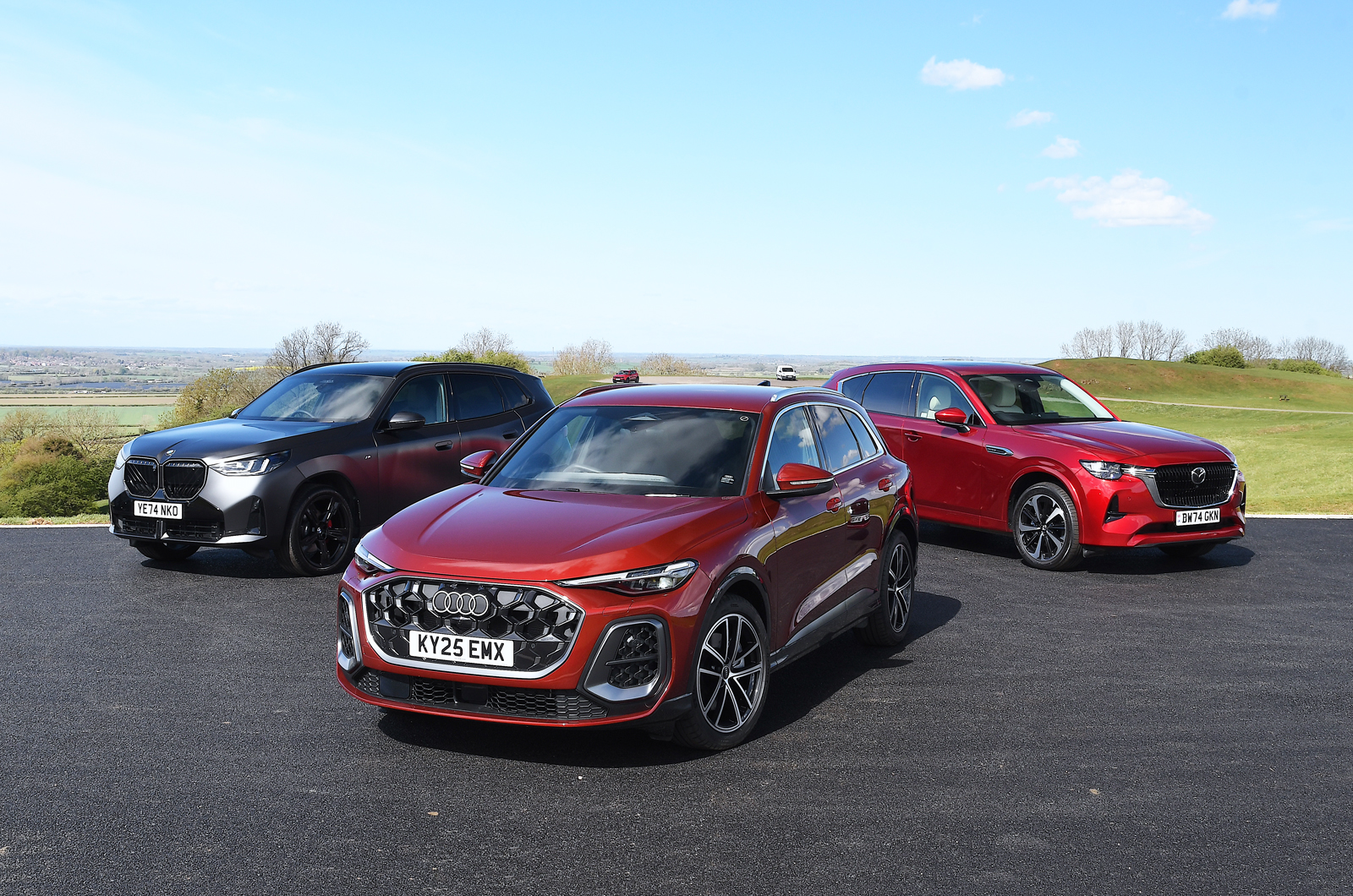
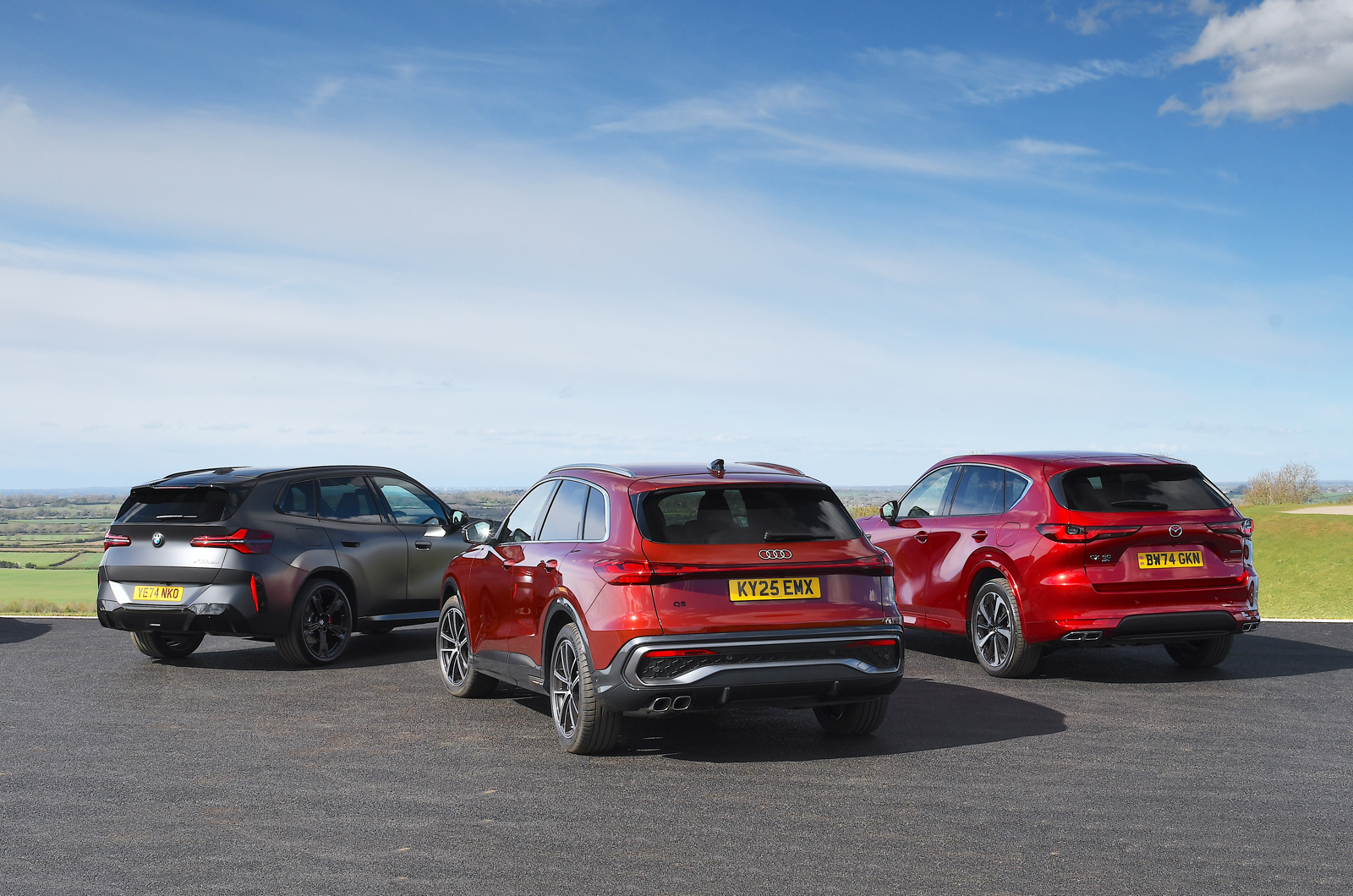
The contenders
NEW Audi Q5 TDI quattro Edition 1
List price £59,110
Target Price £55,412
Third generation of Audi’s posh family SUV comes with a high-tech interior and more advanced mild hybrid engines than its predecessor. It has a relatively high price to overcome, though
BMW X3 20d xDrive M Sport (Pro Pack)
List price £56,225
Target Price £52,718
We know the latest X3 is spacious and great to drive in petrol form, but does it make even more sense with diesel power?
Mazda CX-60 3.3 e-Skyactiv D AWD Takumi Plus
List price £56,050
Target Price £51,891
Armed with a plush interior and a powerful six-cylinder diesel engine, the CX-60 can still show its German rivals a few tricks. Could it even surpass them?
Have we gone back in time? You might be wondering why we have three diesel SUVs battling it out, but we can assure you that this is not an issue of What Car? from a decade ago. You see, while sales figures have been declining, a diesel SUV still makes plenty of sense for high-mileage drivers or those who use their car for towing.


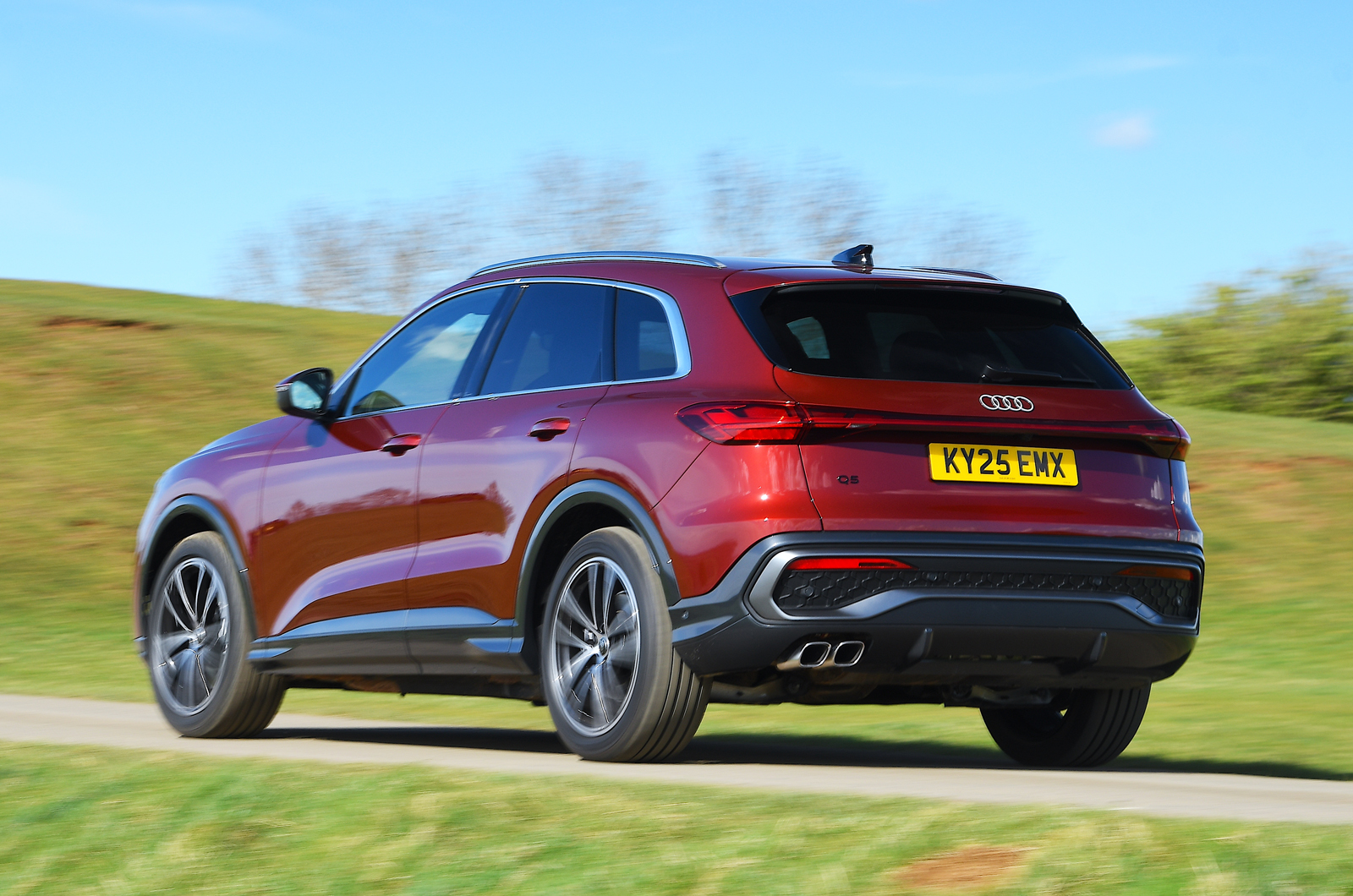
What’s more, diesel power has always suited the Audi Q5 particularly well, and there’s every reason to think that will continue to be the case with the arrival of the third generation of the brand’s upmarket family SUV. We’re testing it in range-topping Edition 1 trim.
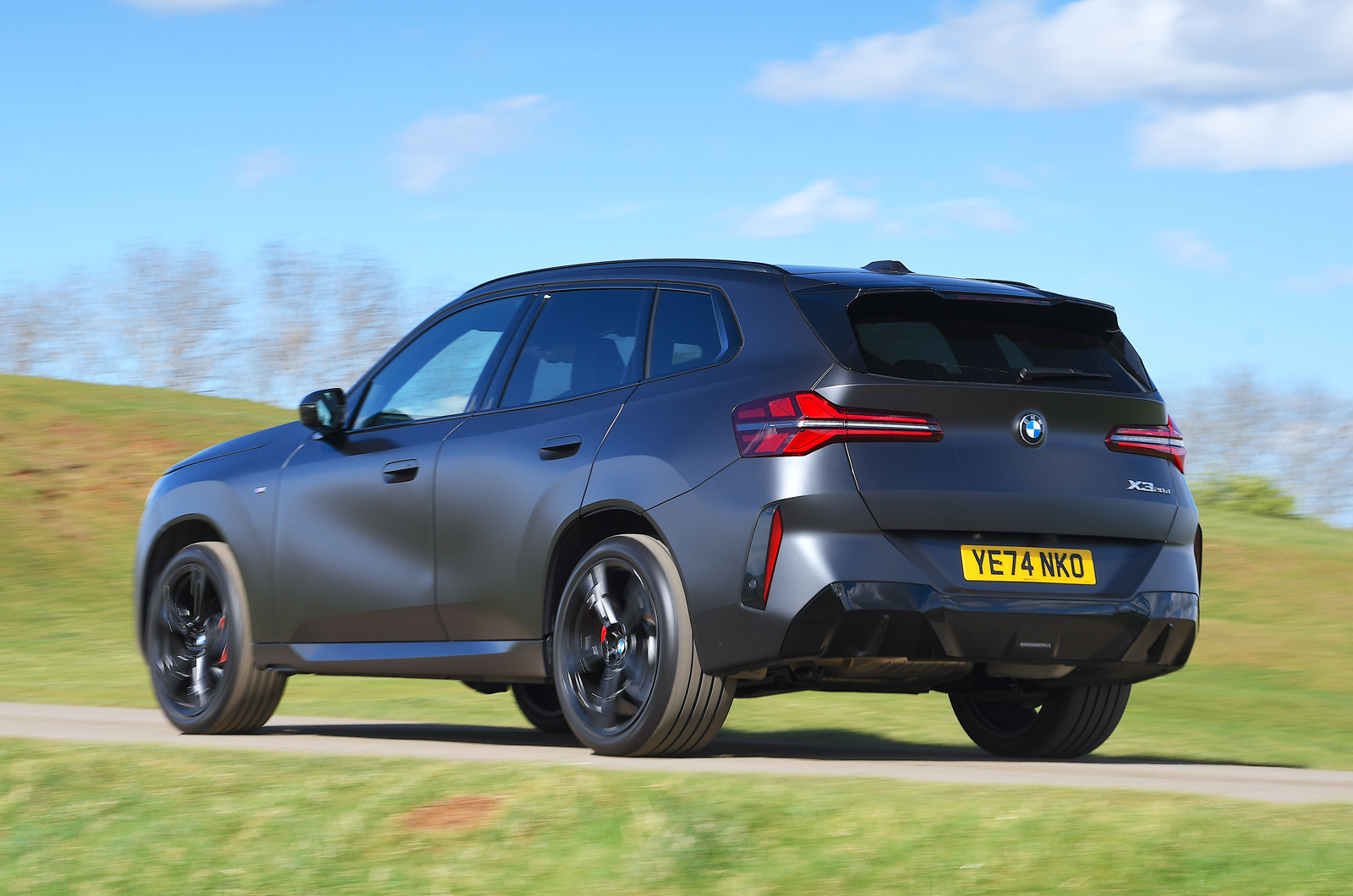
One of its fiercest rivals, as always, is the BMW X3. That model, too, was renewed only recently, and it faces the Q5 in
20d xDrive guise and in popular M Sport trim (with the £2300 Pro Pack included).
While our final contender, the Mazda CX-60, has been around for longer, an update for 2025 has brought revised trim levels and tweaked suspension, the latter in a bid to improve the way it drives. Unlike its 2.0-litre, four-cylinder rivals, the CX-60 is powered by a 3.3-litre, six-cylinder engine and is being tested in its priciest, Takumi Plus trim. If you’re in the market for a plush, diesel-powered family SUV, all of these models look promising on paper.
Driving
Performance, ride, handling, refinement
With its much larger-capacity engine, the CX-60 pumps out significantly more power and torque than its rivals. However, this doesn’t translate to notably quicker acceleration from a standstill. It doesn’t feel as eager as its rivals at low speeds; as a result, the dash from 0-60mph is very close between all three, with the CX-60 slightly trailing the Q5 and just ahead of the X3.
The CX-60 feels far more muscular when it’s rolling along, though; it’s usefully quicker when accelerating from 30mph
up to motorway speeds. But while the smaller engines in the Q5 and X3 have to be worked harder to get up to speed quickly, they never feel underpowered.
The automatic gearboxes in the Q5 and X3 shift smoothly and change down willingly if you ask for a quick burst of acceleration, whereas the CX-60’s can be a bit clunky when dropping down a gear. Around town, the Q5’s mild hybrid system allows you to set off and cover very short distances solely on electric power – provided its small battery has enough charge in it and you’re gentle with the accelerator pedal. The others can’t do this. The CX-60’s mild hybrid system could be smoother and more responsive when restarting the engine in stop-start traffic, too.
The CX-60’s slow-revving engine encourages you to drive at a laid-back pace, as does steering that’s relatively slow to respond off-centre. With the most body lean and lower levels of grip, the CX-60 inspires the least confidence along a country road.
The X3 is the opposite; its taut suspension does the best job of preventing body lean through corners. Combined with the highest levels of grip and the most responsive steering, the X3 is eager to change direction, especially with our car’s optional adaptive suspension (£550) set to its firmest setting.
The Q5 strikes a fine balance between the two, with a bit more body lean than the X3 but a more reassuring feel than the CX-60, thanks to well-weighted steering and plenty of grip and composure.
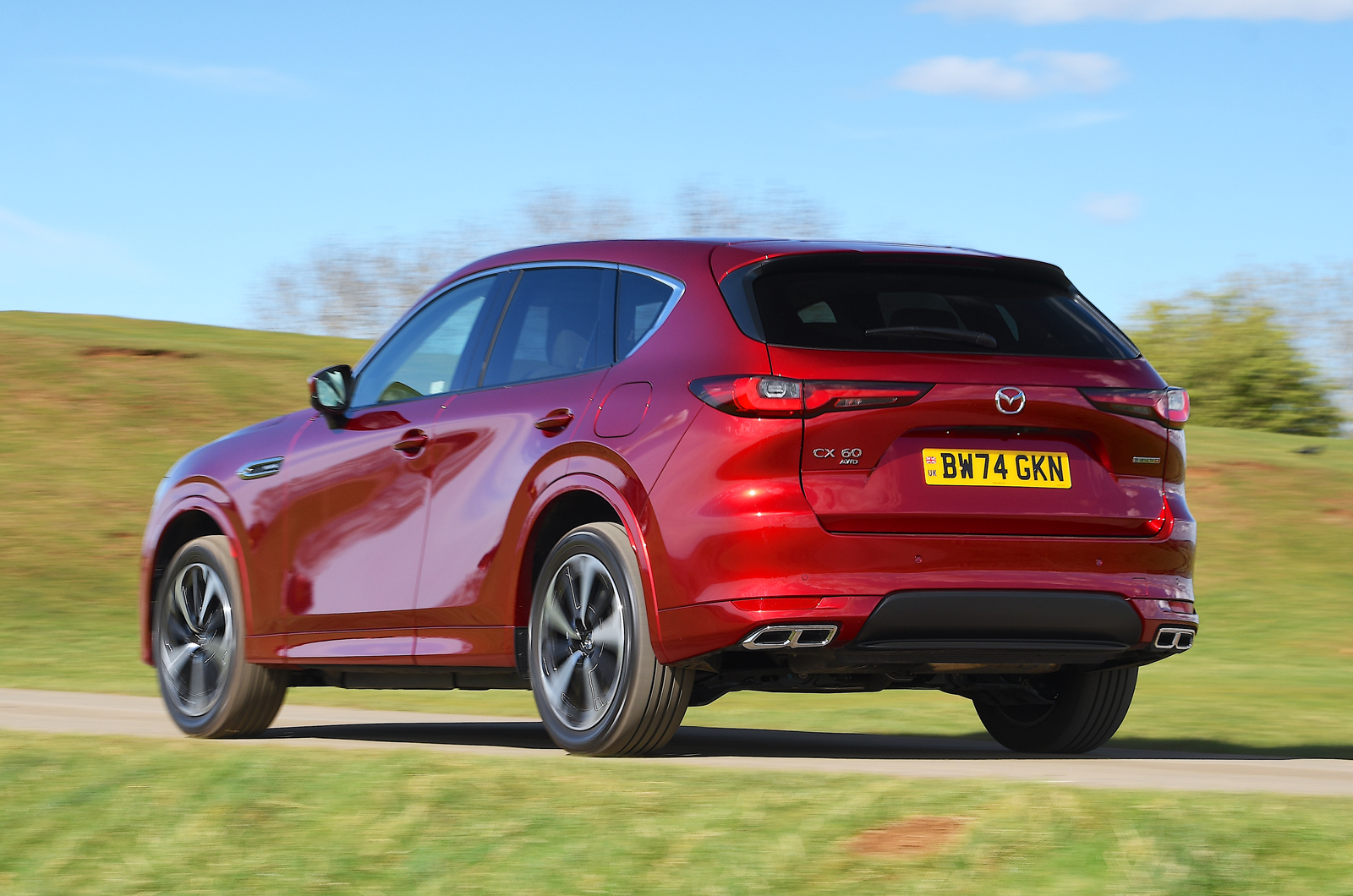
With a supple ride at all speeds, the Q5 also does the best job of isolating occupants from bumps and potholes, helped by its optional adaptive air suspension (£1725). The X3’s firmer set-up subjects occupants to some jostling around town – especially with the optional 21in wheels on our test car (in place of the standard 19in items) – but it settles down well at higher speeds to be nearly as comfortable as the Q5 when cruising along a motorway.
While the CX-60’s slightly softer ride is more forgiving than before, its conventional, non-adaptive suspension feels the least sophisticated. As a result, speed bumps generate large thumps and the body wallows in a way that the Q5 and X3 avoid. You’re also more aware of road imperfections through the seat, so it doesn’t feel as polished.
Although the CX-60’s ride is better at a 70mph cruise than it is around town, it still struggles to isolate occupants from potholes and expansion joints effectively.
The Q5 is alone in having laminated front side windows; these help to keep wind and road noise right down, making it the quietest at 70mph. The X3, while generating slightly higher levels of noise than the Q5, is still a very quiet cruiser. Although it’s far from rowdy, the CX-60 suffers from the most suspension, tyre and engine noise, along with some wind noise around the door mirrors.
Behind the wheel
Driving position, visibility, build quality
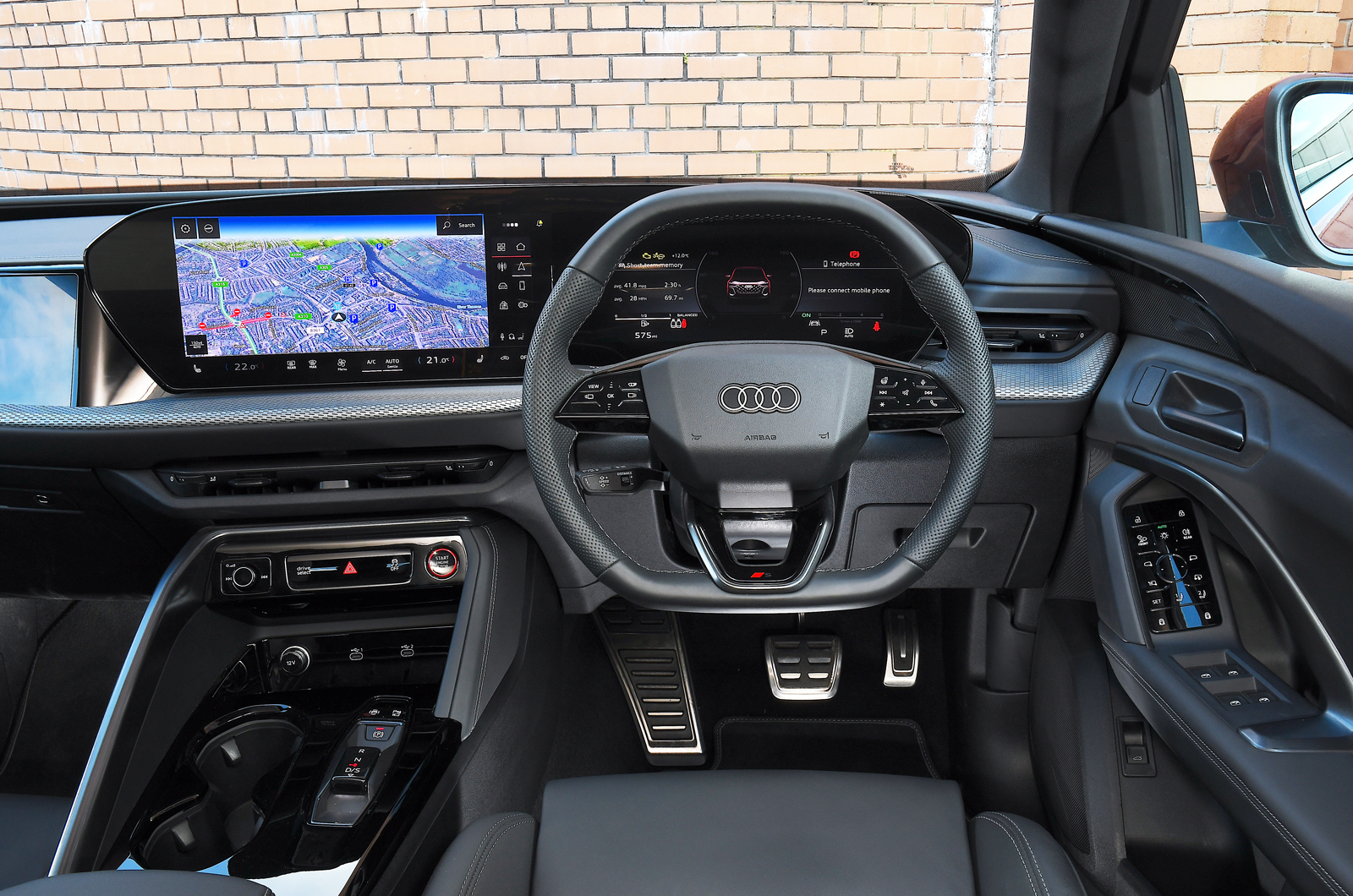
Finding a comfortable driving position is a doddle in any of our contenders, with plenty of electric adjustment for their seats. You can also adjust the steering column electrically in the Q5 and CX-60, although having to do so manually in the X3 is hardly a chore (and possibly quicker).
Disappointingly, you have to fork out for the £1500 Comfort Pack to get adjustable lumbar support in the X3 (it’s standard in the others), but its seat has the most side bolstering to hold you in place through corners. The Q5’s is supportive, too, but you tend to slide around a bit more in the CX-60’s flatter seat.
Even with their seats moved down, you feel like you’re sitting relatively high in the Q5 and CX-60, in part because their dashboards are lower. There’s a wider range of height adjustment for the X3’s seat; you can set it much lower than in the others, if that’s what you prefer.
Although all three cars have fairly chunky windscreen pillars, they’re angled in a way that makes them easy to see around at junctions. The CX-60 has a shallow rear screen that results in a slightly more restricted view out the back than in the others, whereas the Q5’s large side windows provide the clearest view over the shoulder.
All three come with front and rear parking sensors and rear-view cameras to help out in low-speed manoeuvres. However, you have to specify the Technology Pack (£2275) to get a 360-degree camera in the X3 – a feature that’s standard on the Q5 and CX-60.
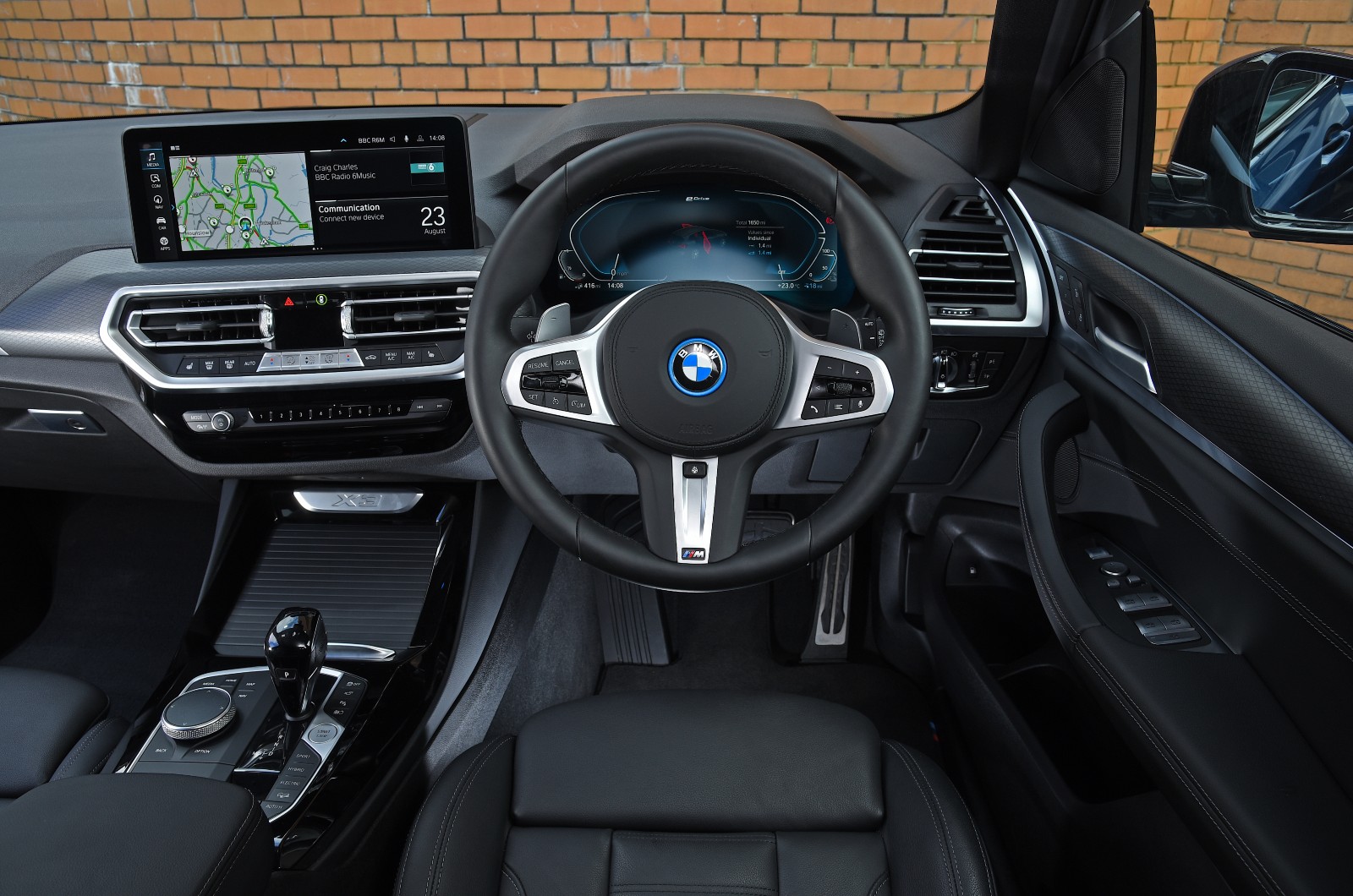
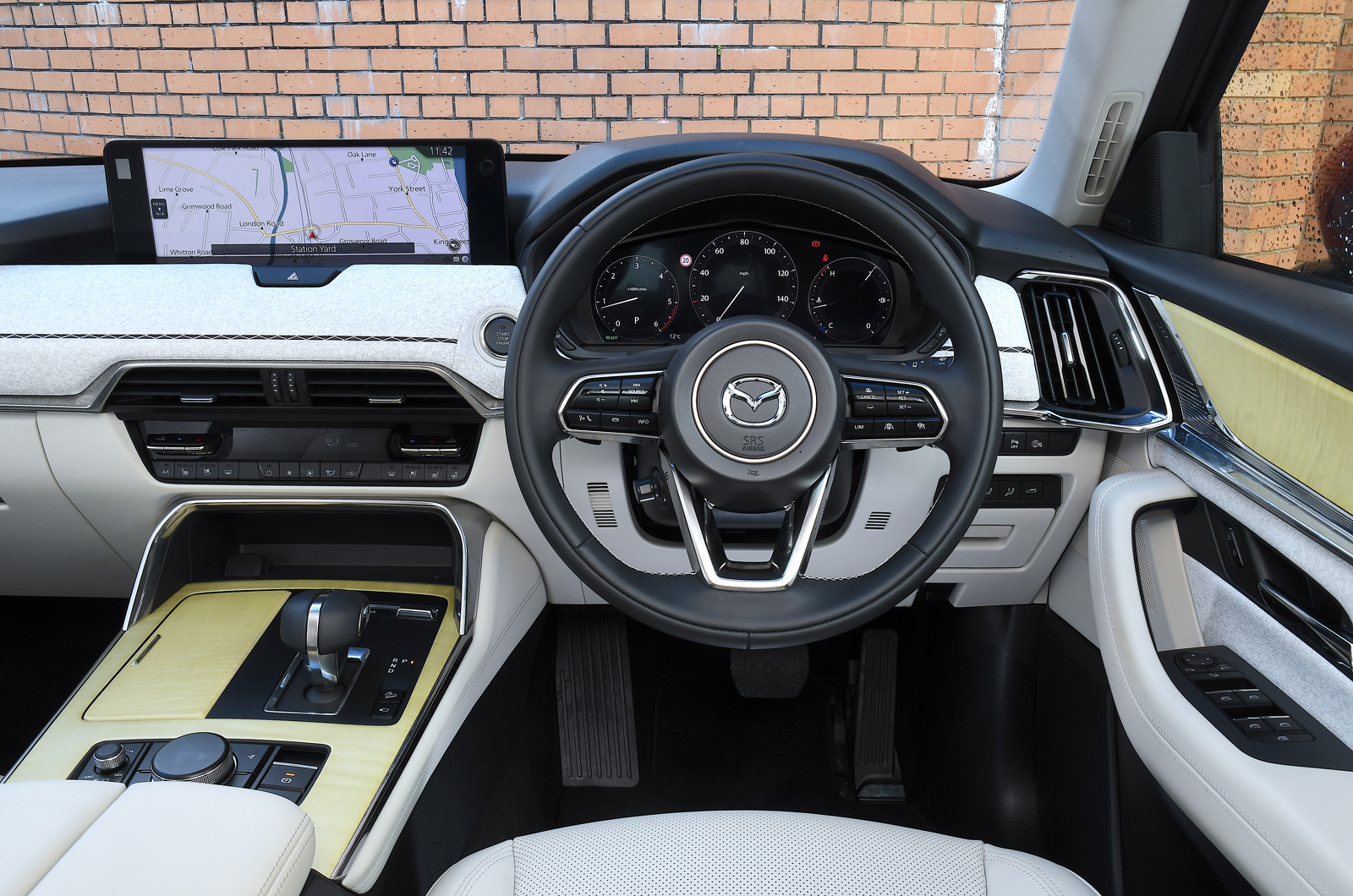
The X3’s digital instrument panel is the most impressive, with large, easy-to-read graphics and a wide choice of layouts. The Q5’s slightly smaller display shows a lot of information, but it isn’t as configurable as that of its predecessor. Meanwhile, the CX-60’s instrument panel offers even less choice over what can be shown, but because it’s sited lower down in a conventional binnacle, it’s less likely to be partially obscured if you prefer to have the steering wheel set low (as can easily happen in the Q5 and X3).
The Q5 and X3 have more minimalist layouts than the CX-60, with fewer physical dashboard controls, and they have panels of switches on the front doors that aren’t easy to operate by feel; those in the Q5 in particular are quite awkward to see and reach.
In comparison, the CX-60’s conventional spread of physical buttons – including for the climate control – are intuitive to use and far less distracting when driving. Both the Q5 and X3 integrate the air-con controls into the touchscreen; the temperature icons are always on display, but anything more requires you to delve into a sub-menu.
Previously, the Q5’s and X3’s lavishly appointed interiors made a strong case for choosing them over most other family SUVs, but these latest ones have taken a step backwards in quality. Some soft materials are still used, but more cheap-feeling, hollow-sounding plastics are now on display in prominent places, particularly in the X3. And in our Q5, some of the trim rattled on bumpy roads, while the steering wheel buttons wobbled when we pressed them.
For £450, you can add a ‘Luxury Instrument Panel’ to the X3; this introduces a fabric finish on the dashboard and upper door panels. A similar approach just about works in a sub-£30,000 Mini, but it doesn’t feel upmarket enough in a car costing more than £55k.
Some might wonder how long it will take for our CX-60’s white Nappa leather upholstery to look dirty, but, along with light-coloured fabric and wood trim finishers, it has the nicest choice of materials. Not only does it have the most uplifting interior, but the CX-60 also feels better screwed together. True, you still get some cheaper-feeling plastics lower down, but they’re no worse than those used in the Q5 and X3.
Infotainment systems
Audi Q5
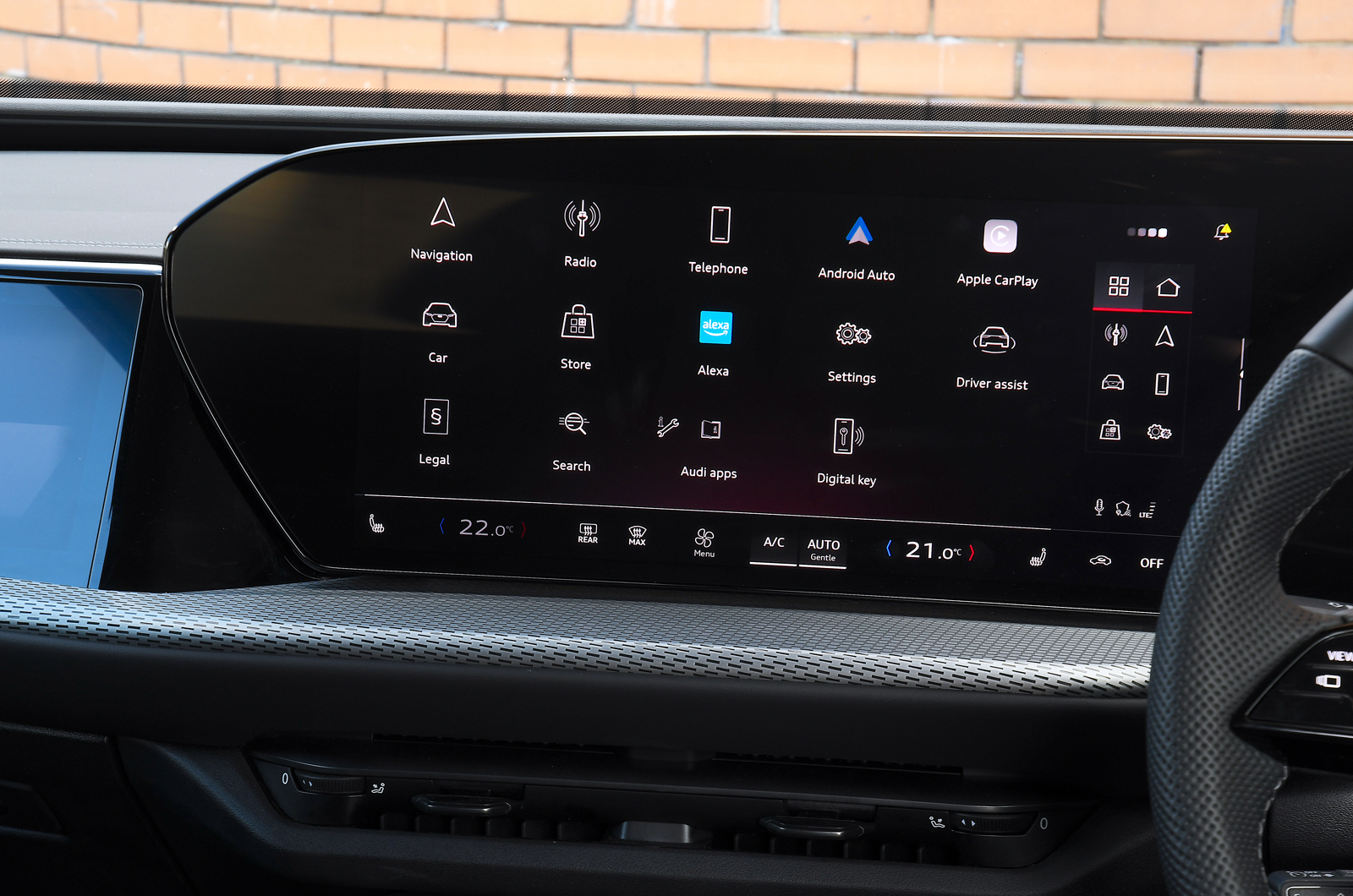
The Q5’s 14.5in touchscreen responds quickly enough to inputs and the graphics are smooth, but it’s not all that easy to read or operate at a glance, because the text and icons used are mostly relatively small. Edition 1 trim adds another 10.9in touchscreen ahead of the front passenger, so they don’t have to stretch. The optional Bang & Olufsen audio system is the most configurable here and produces the best sound quality, being both punchy and immersive.
BMW X3
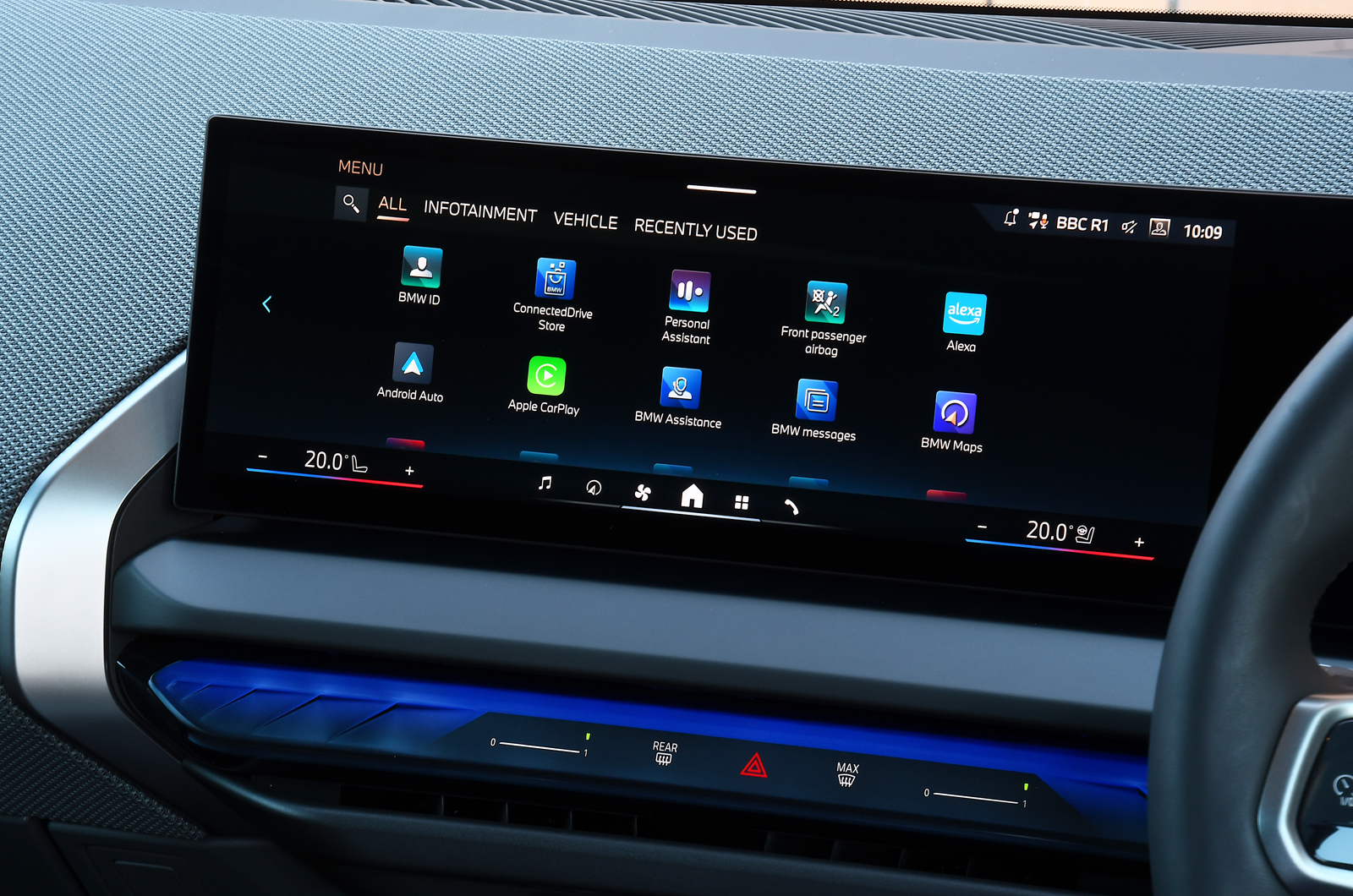
With sharp graphics and quick responses to inputs, the X3’s 14.9in touchscreen is the best to use. Shortcut icons across the bottom of the screen make hopping between the main functions easy when stationary, while you can use a rotary controller between the front seats to scroll through menus without distraction when driving. The optional Harman Kardon audio system produces more bass than the CX-60’s standard system, but it doesn’t sound all that clear.
Mazda CX-60
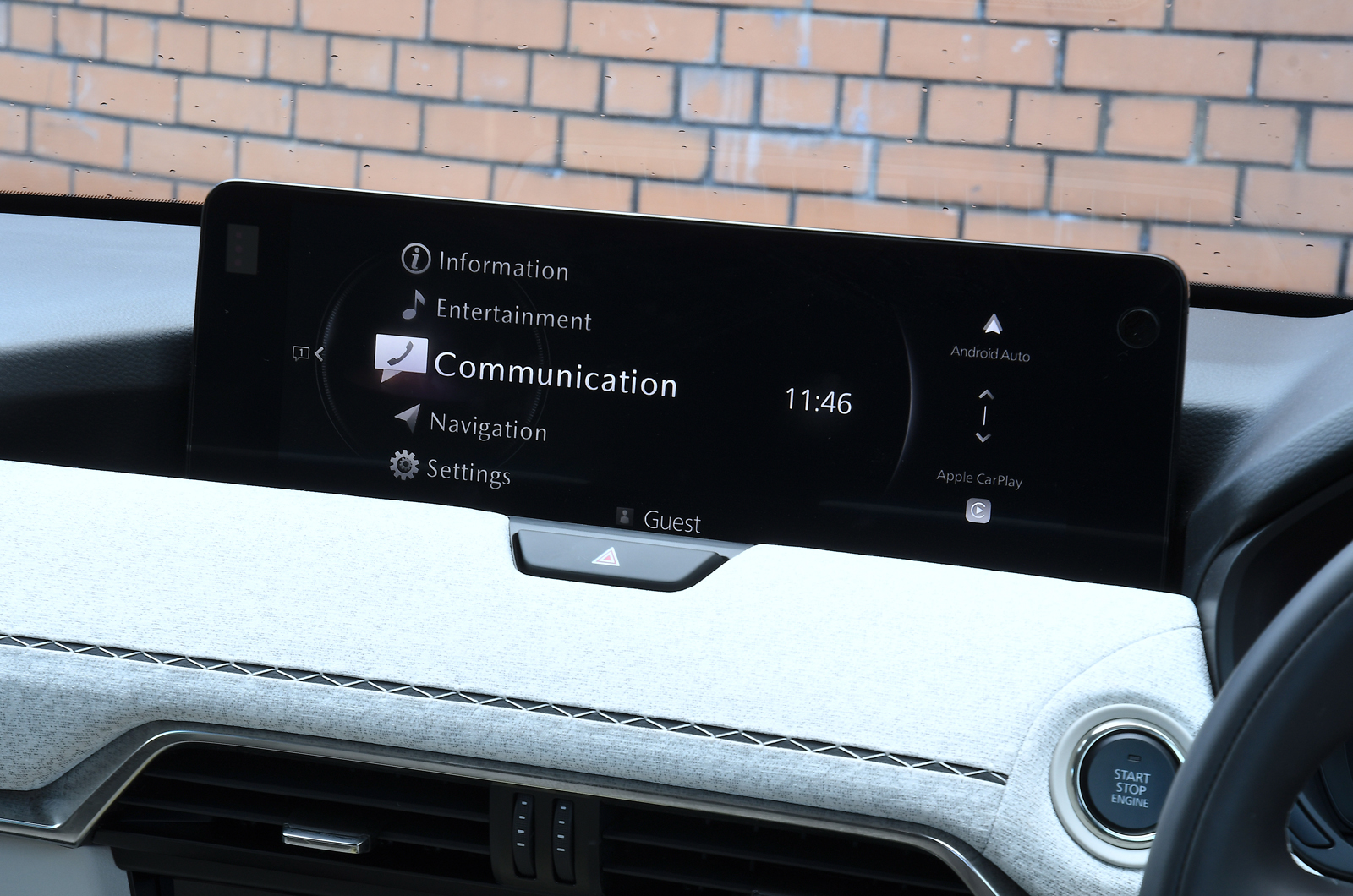
The CX-60’s relatively shallow 12.3in screen is positioned farther away from the driver than the others, making it slightly trickier to view at a glance. The graphics look quite basic, but the menu system is straightforward. As in the X3, there’s a physical rotary controller for easy operation on the move, while the screen also responds to touch inputs when the car is stationary. It’s a shame the 10-speaker Bose sound system isn’t more punchy and immersive.
Space and practicality
Front space, rear space, seating flexibility, boot
There’s plenty of space for a pair of six-footers to sit comfortably in the front of any of our contenders, but if you’re particularly tall, you’ll find the most clearance above your head in the Q5. That’s helped by it being the only car here without a panoramic glass roof (although you can fit one for £1600). Still, those fitted to the X3 (for £1350) and CX-60 (standard) don’t eat into head room by much.
Getting in or out of the back seats is easiest in the X3, thanks to it having the largest door openings. Once they’re settled, occupants are able to stretch out their legs the most in the X3, but a pair of six-footers in the Q5 and CX-60 still have plenty of knee room when sitting behind someone of equal height. Those sitting on the outer seats will have plenty of head room, but again the Q5 is the most generous for taller occupants.
The Q5 has the most versatile rear seats; they not only slide but also have reclining backrests. Even when you slide the bench all the way forwards to free up extra boot space, there’s still enough leg room for adults to squeeze in on a short journey. The X3 doesn’t have reclining rear seatbacks, and those in the CX-60 don’t adjust by enough to provide greater comfort.
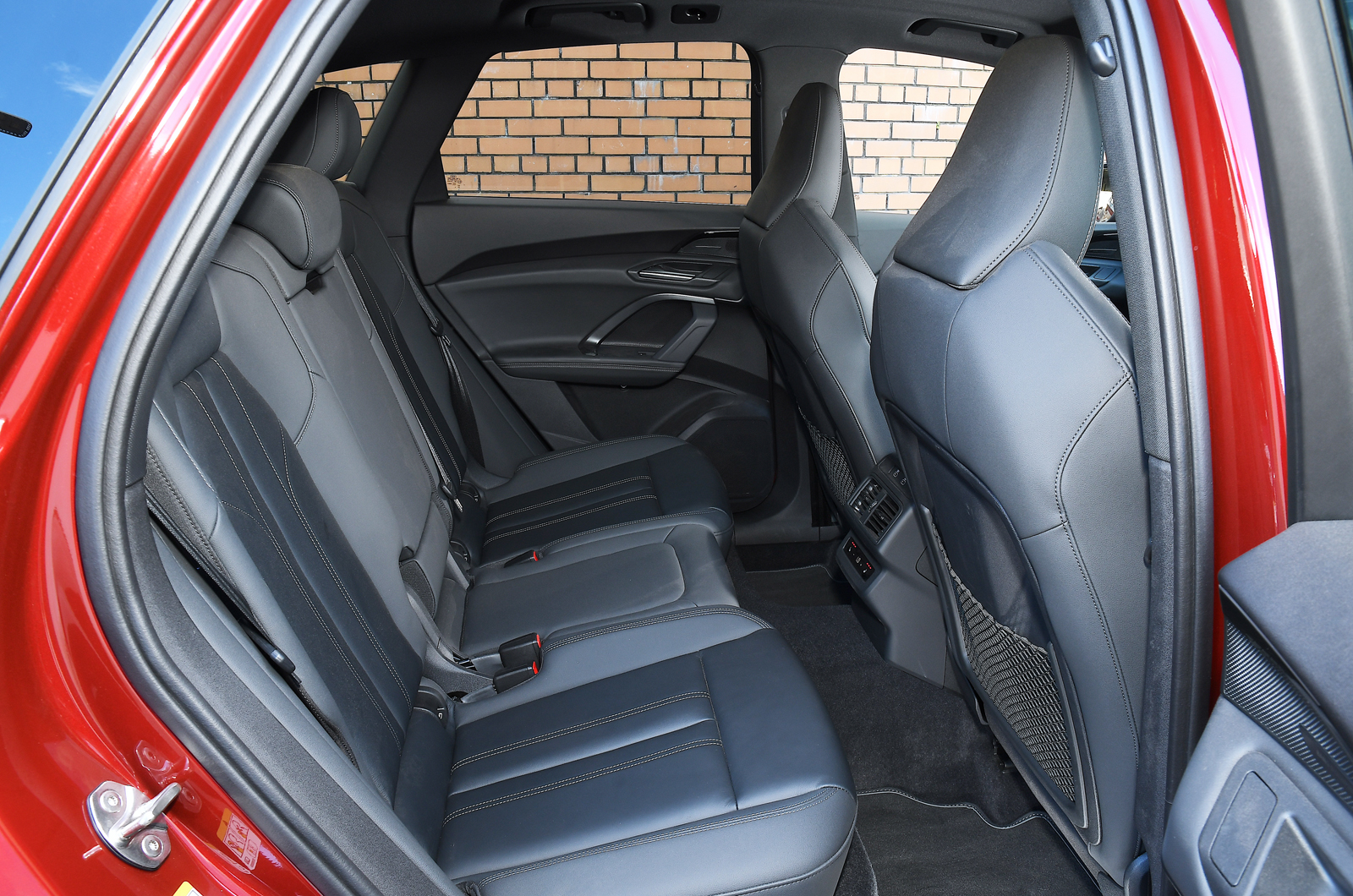
Being wider across the back, the CX-60 provides the most shoulder and elbow room for three people sitting side by side, although head room is tight for most adults sitting in the middle. That said, a relatively small floor hump frees up foot space; the Q5 and X3 have much larger humps to straddle.
All three have generous-sized boots, but the Q5’s is the longest, helping it to hold an extra carry-on suitcase (nine in total) below the parcel shelf. Each car has a versatile 40/20/40 seat split, allowing you to thread long items through from the boot while the two outer seats are in use. There’s a slight upward slope when the seatbacks are folded down in all three. Unlike the X3, the Q5 and CX-60 have levers in the boot so you can drop the seats remotely.
None of them has a height-adjustable boot floor, but the Q5 and X3 have handy storage wells underneath. Helpfully, the height of their floors is almost level with the sill at the entrance, so you don’t have to heave bulky items over a lip. As a bonus, the Q5’s air suspension allows you to lower the height of the rear at the press of a button to further ease access. All three come with electric tailgates.
Boot space
Audi Q5
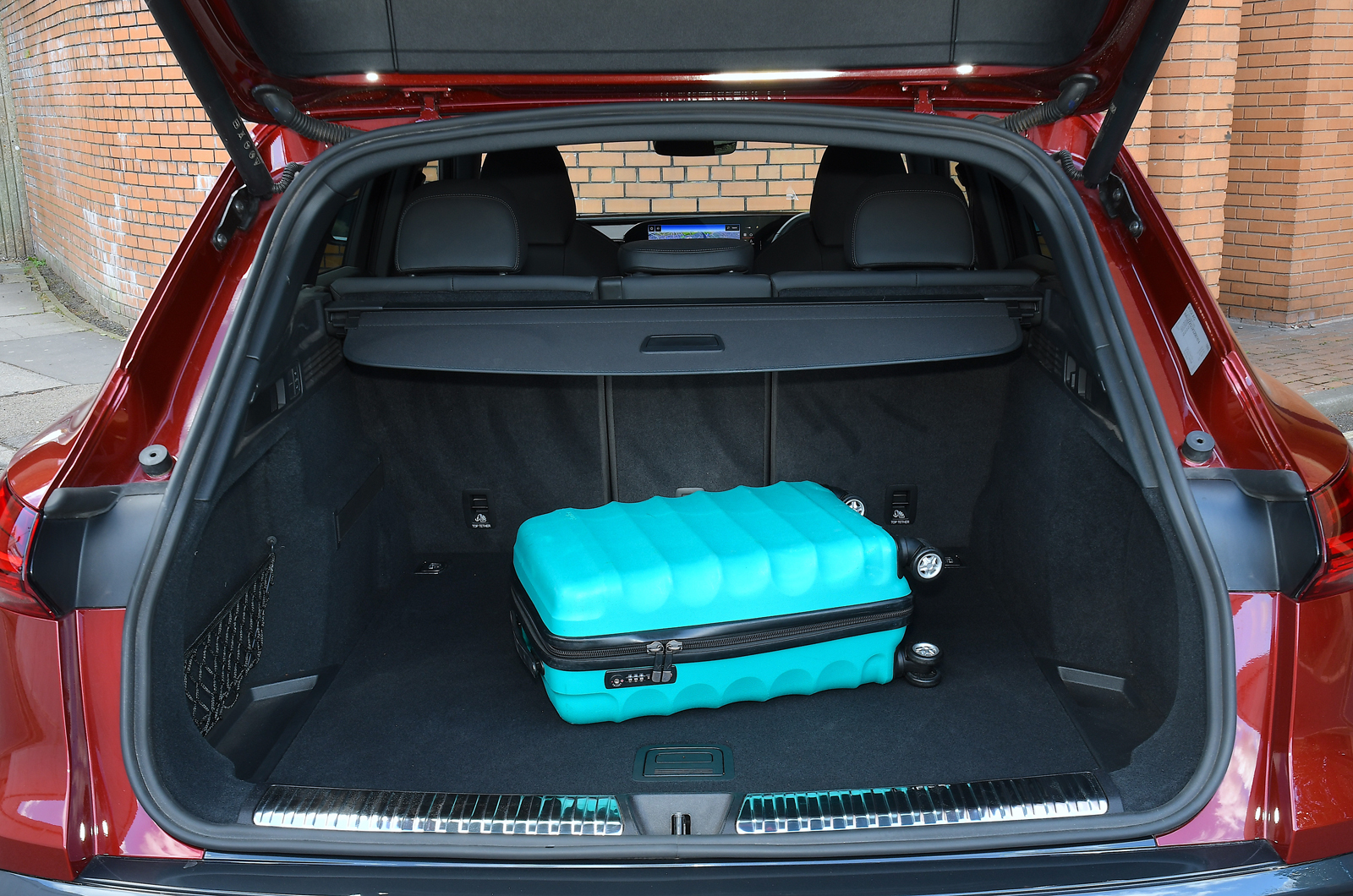
Boot capacity 520-1473 litres Suitcases 9
BMW X3
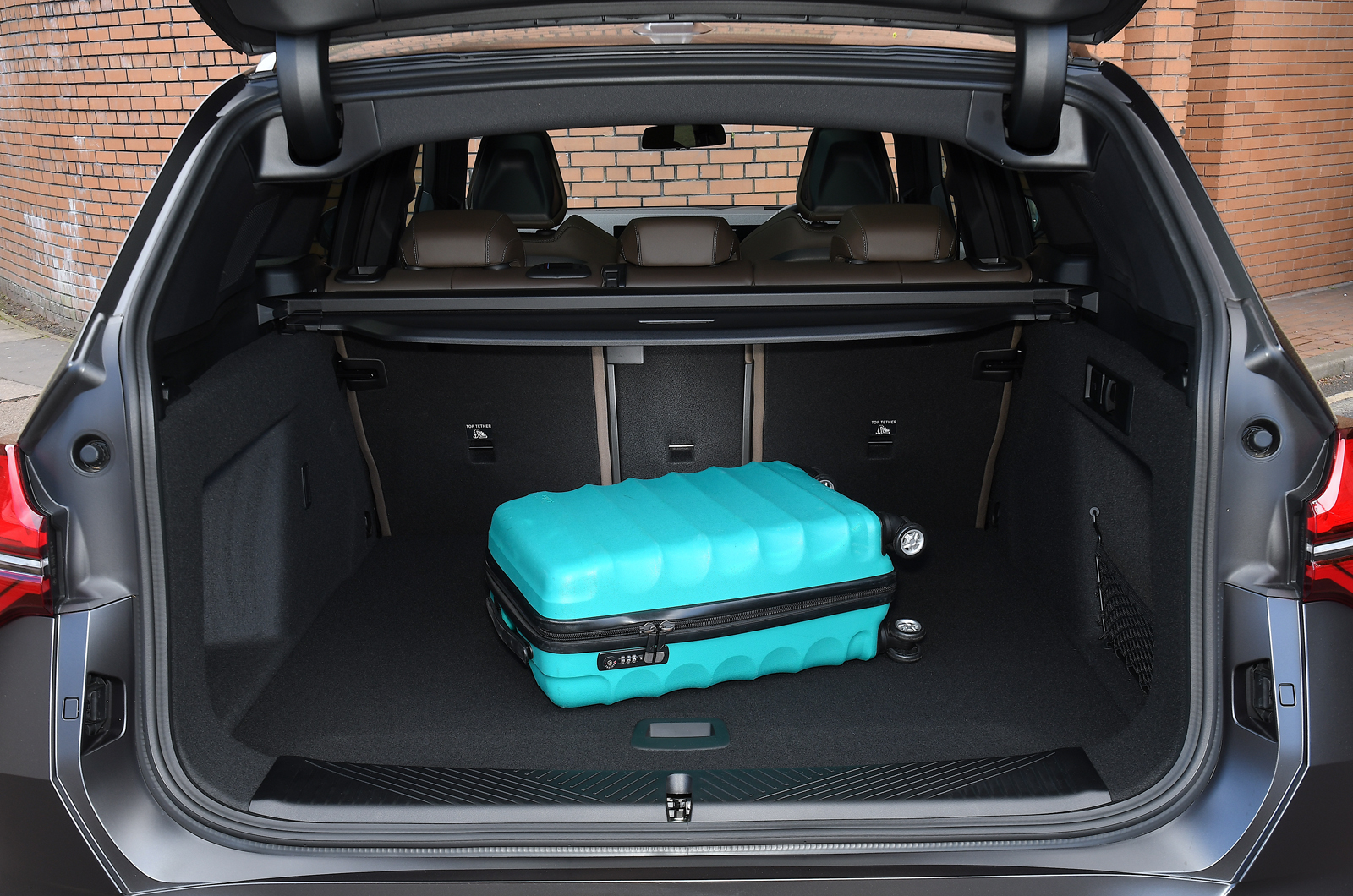
Boot capacity 570-1700 litres Suitcases 8
Mazda CX-60
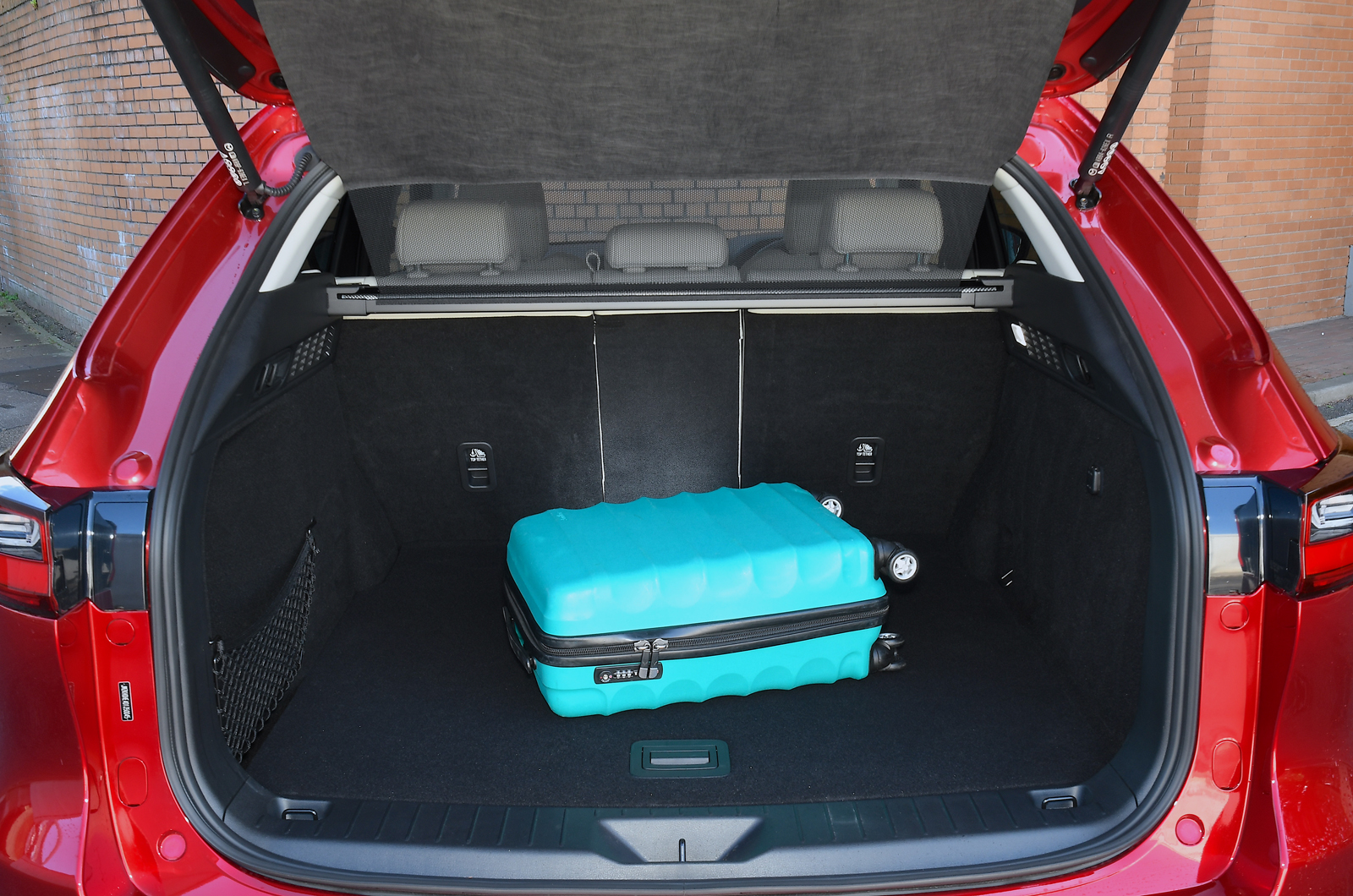
Boot capacity 570-1726 litres Suitcases 8
Buying and owning
Costs, equipment, reliability, safety and security
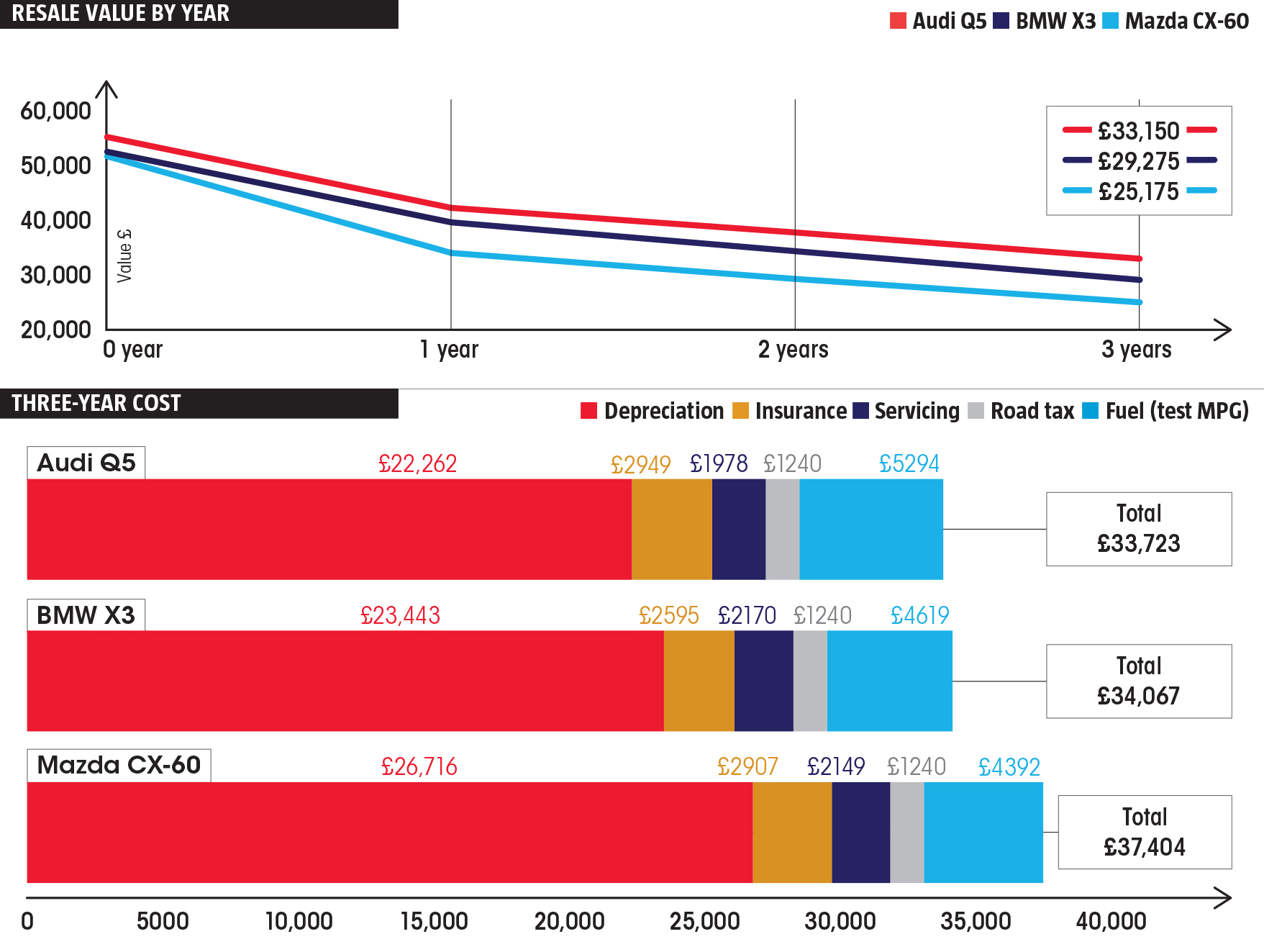
The Q5 is the most expensive to buy outright (by around £3000), but discounts are available on all three, with the CX-60 being the cheapest option for private cash buyers.
Go down the PCP finance route instead and the X3 is the most expensive. With a £5500 deposit on a three-year agreement with a 10,000-mile annual limit, it will cost a hefty £876 per month. That said, the Q5 isn’t much cheaper (£863), and while the CX-60’s monthly payments are lower, the figure is still a punchy £717.
Thanks to its lower price and CO2 output, the CX-60 is the cheapest option for company car drivers paying benefit-in-kind tax, although the monthly salary sacrifices are all hefty. Existing or upcoming plug-in hybrid versions of all three models will make more financial sense as company cars.
Given the size of the CX-60’s engine, the fact that it’s the most economical is impressive. A real-world average of 52.8mpg
on our mixed test route trumped the X3’s 50.2mpg and the Q5’s 43.8mpg. Even so, the CX-60 will be the priciest for private buyers to own over three years, mainly because it’s predicted to shed value at a faster rate.
In the high-spec trims tested, all of our contenders come well equipped, with varying degrees of faux or real leather upholstery, cruise control, keyless entry and heated front seats. While the CX-60 also gets ventilated front seats, it has to make do with two-zone climate control (the others have a third zone for rear passengers). Overall, the Q5 is the most generously equipped; by the time you add option packs to the X3 to match the Q5’s standard list (to include adaptive cruise control, adaptive matrix LED headlights and a 360-degree parking camera), the price isn’t far off its rival’s.
The Q5 and X3 are too new to have featured in the latest What Car? Reliability Survey, but the CX-60 proved to be the least dependable of the 15 models that featured in the large SUV category. BMW ranked eighth out of 31 in the overall brand league table, with Mazda 16th and Audi farther down in 24th place.
Each of our contenders comes with a three-year warranty. Cover for the Q5 and CX-60 is limited to 60,000 miles, while the X3 is slightly more generous, having no mileage limit.
The CX-60 is the only one to have been tested for safety by Euro NCAP, achieving a five-star rating in 2022. The driver’s chest and knees could have been better protected by the airbags in a frontal impact, but it performed strongly in other tests. All three cars come with automatic emergency braking, lane-keeping assistance, traffic sign recognition and blindspot monitors.
Used alternative
2023 Range Rover Sport
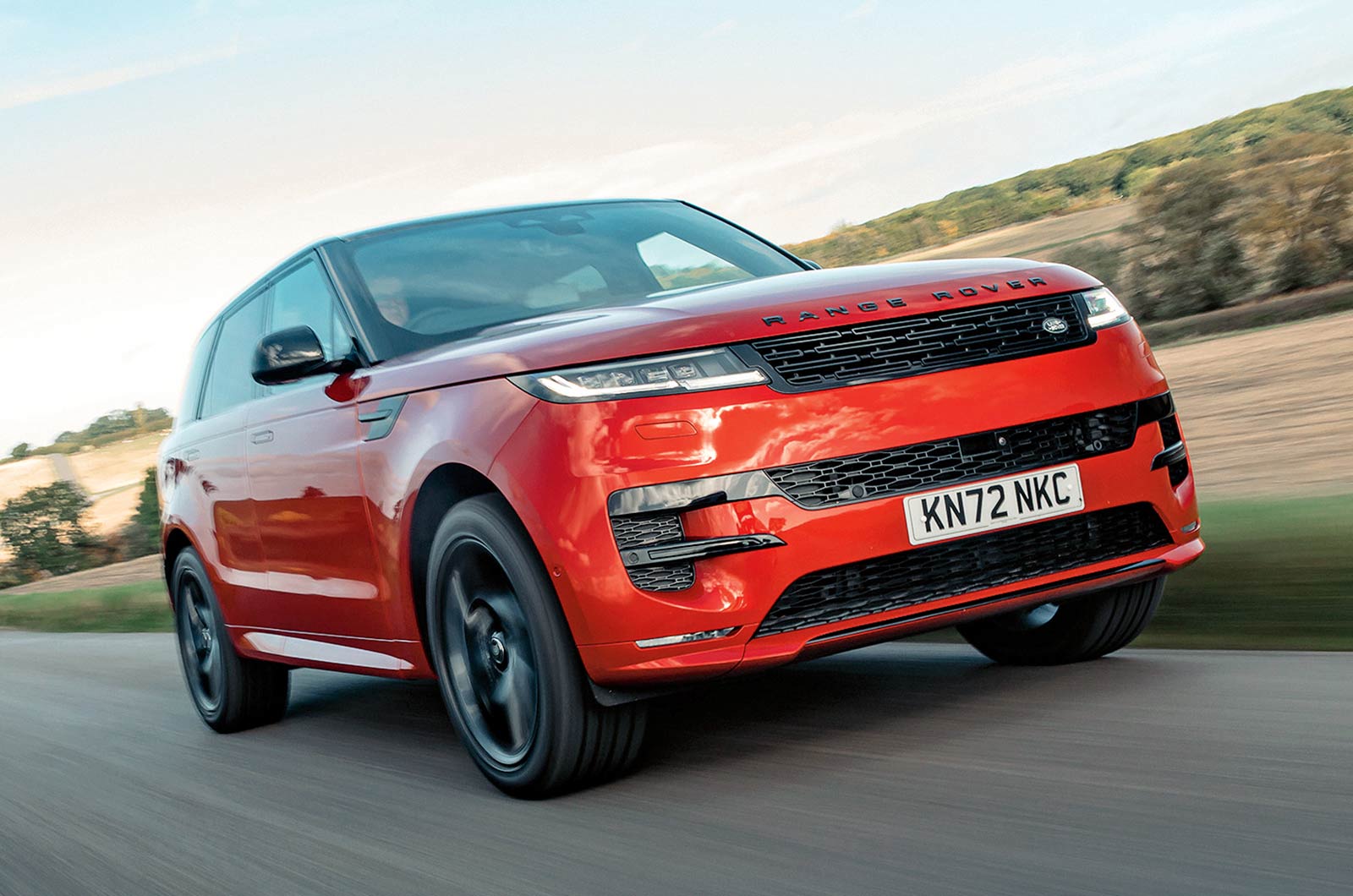
For a similar price to any of our new cars, you could bag a two-year-old Range Rover Sport in our favourite D300 Dynamic SE guise. Few SUVs are as versatile; it’s supremely comfortable and refined on the road and almost unstoppable off it. You get a great driving position and a plush, well-equipped interior. Resale values are strong, and owners tell us that its reliability
is getting better.
Our verdict
With an economical engine serving up gutsy performance, and a user-friendly, high-quality interior that’s generously equipped, the CX-60 does have a few attractive qualities. However, while its monthly PCP price isn’t as eye-wateringly high as those of the other contenders, it’s also not as polished as them, especially when it comes to ride comfort and refinement. Its poor reliability record also lets it down overall.
The X3 is still the one to get if you want a family SUV that’s great to drive, and it backs this up with plenty of space for the family and one of the best infotainment systems around. It’s a pricier choice than it first appears, though, because you need to add quite a few options in order to get a similar level of equipment to the others.
True, doing so merely puts the X3 on price parity with the Q5, but the latter edges ahead in some crucial areas, with its plush ride and hushed road manners making it an exceptionally comfortable car. Meanwhile, having the biggest boot and the most versatile rear seats makes it the most family-friendly. Although the margins are slim, the Q5 does enough to come out on top.
For all the latest reviews, advice and new car deals, sign up to the What Car? newsletter here
1st – Audi Q5
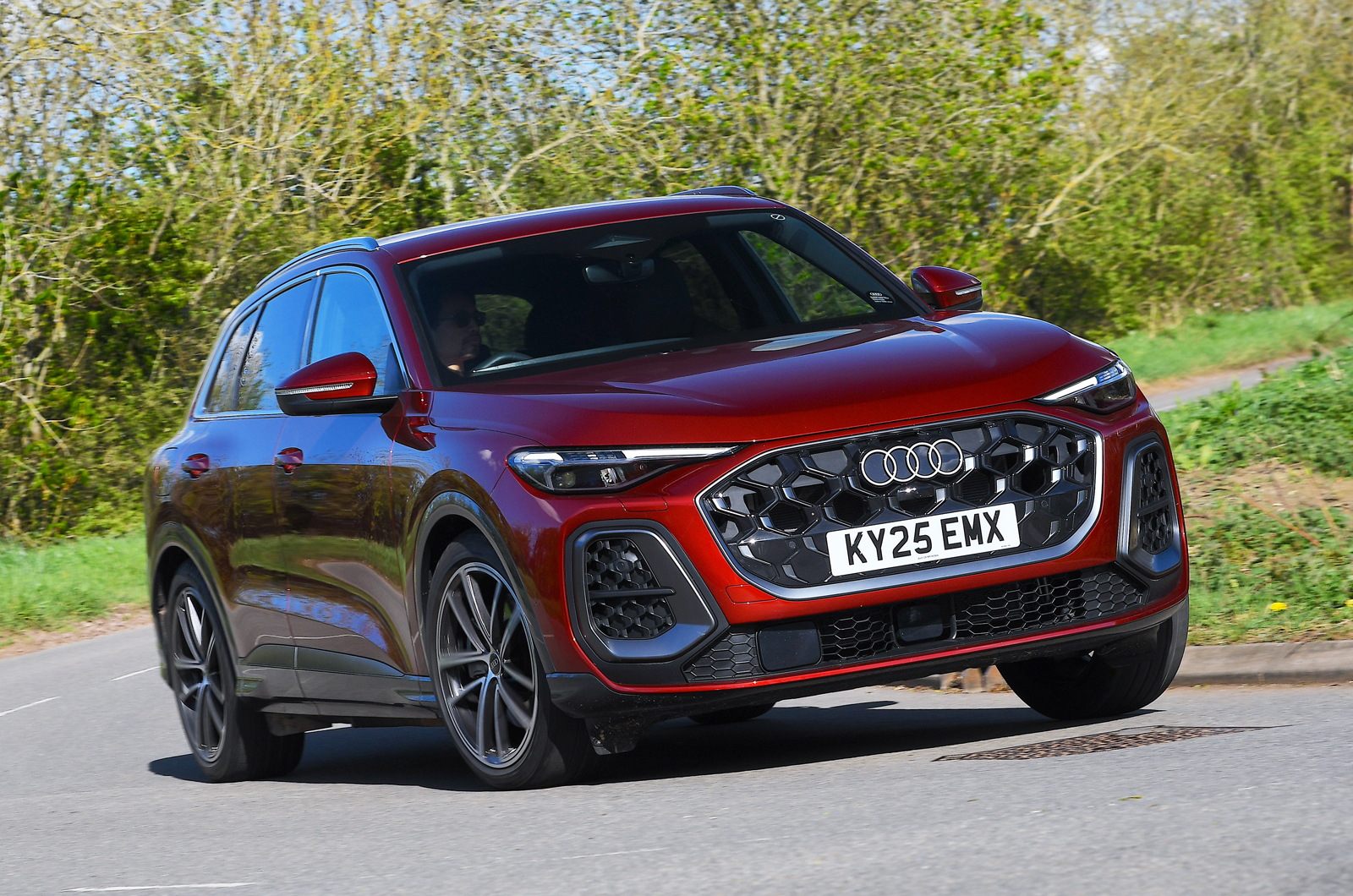
For Quietest cruiser; comfiest ride; most versatile rear seats; generous head room; biggest boot
Against So-so fuel economy; interior quality is a little disappointing in places; priciest to buy outright
Recommended options None
What Car? rating 4 stars out of 5
Audi Q5 review >>
Audi Q5 deals >>
2nd – BMW X3
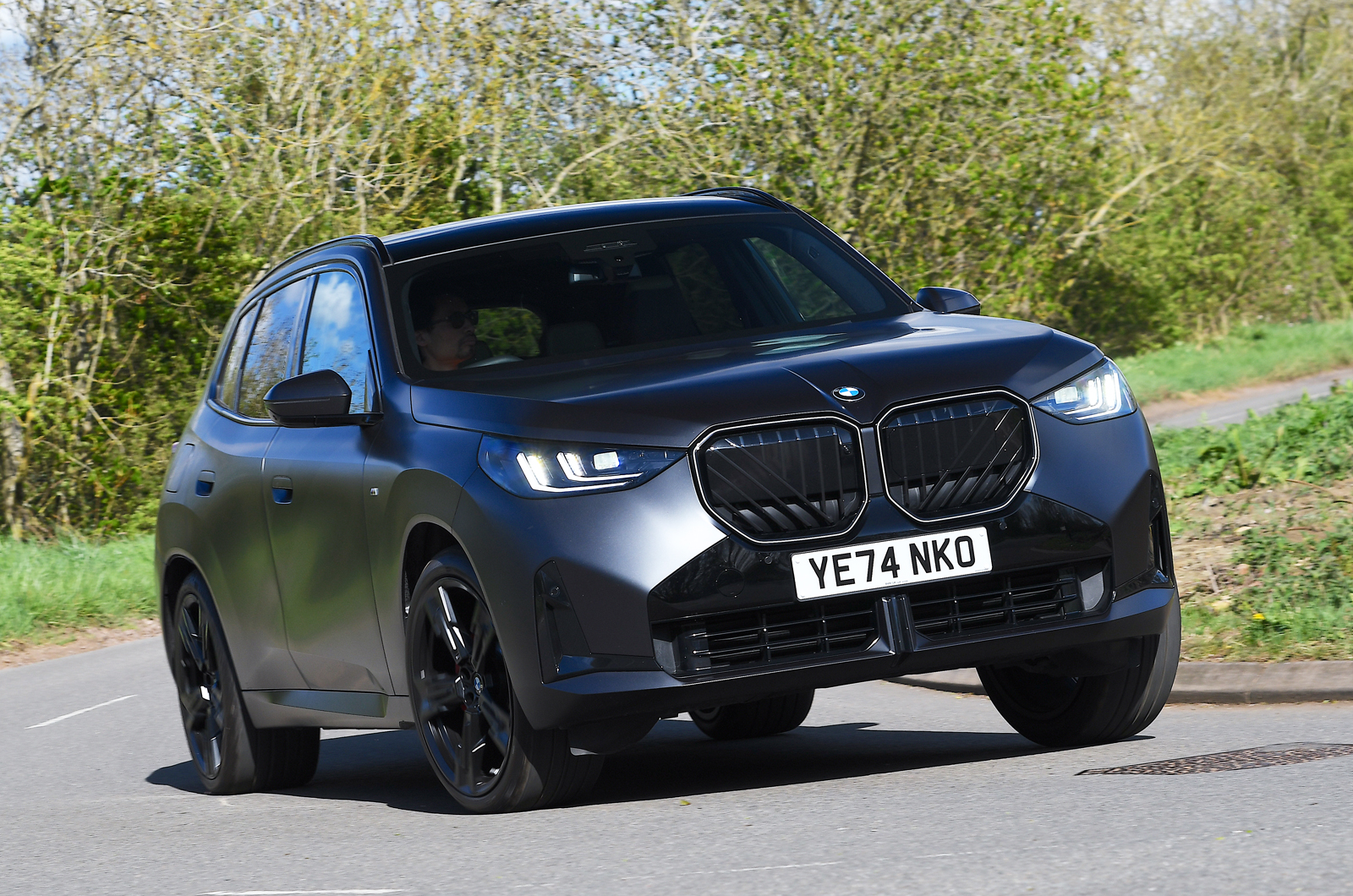
For Sharpest handling; most rear leg room; user-friendly infotainment system
Against Unsettled low-speed ride; some worthwhile kit is on the options list; interior feels cheap in places
Recommended options Comfort Pack (£1500)
What Car? rating 4 stars out of 5
BMW X3 review >>
BMW X3 deals >>
3rd – Mazda CX-80
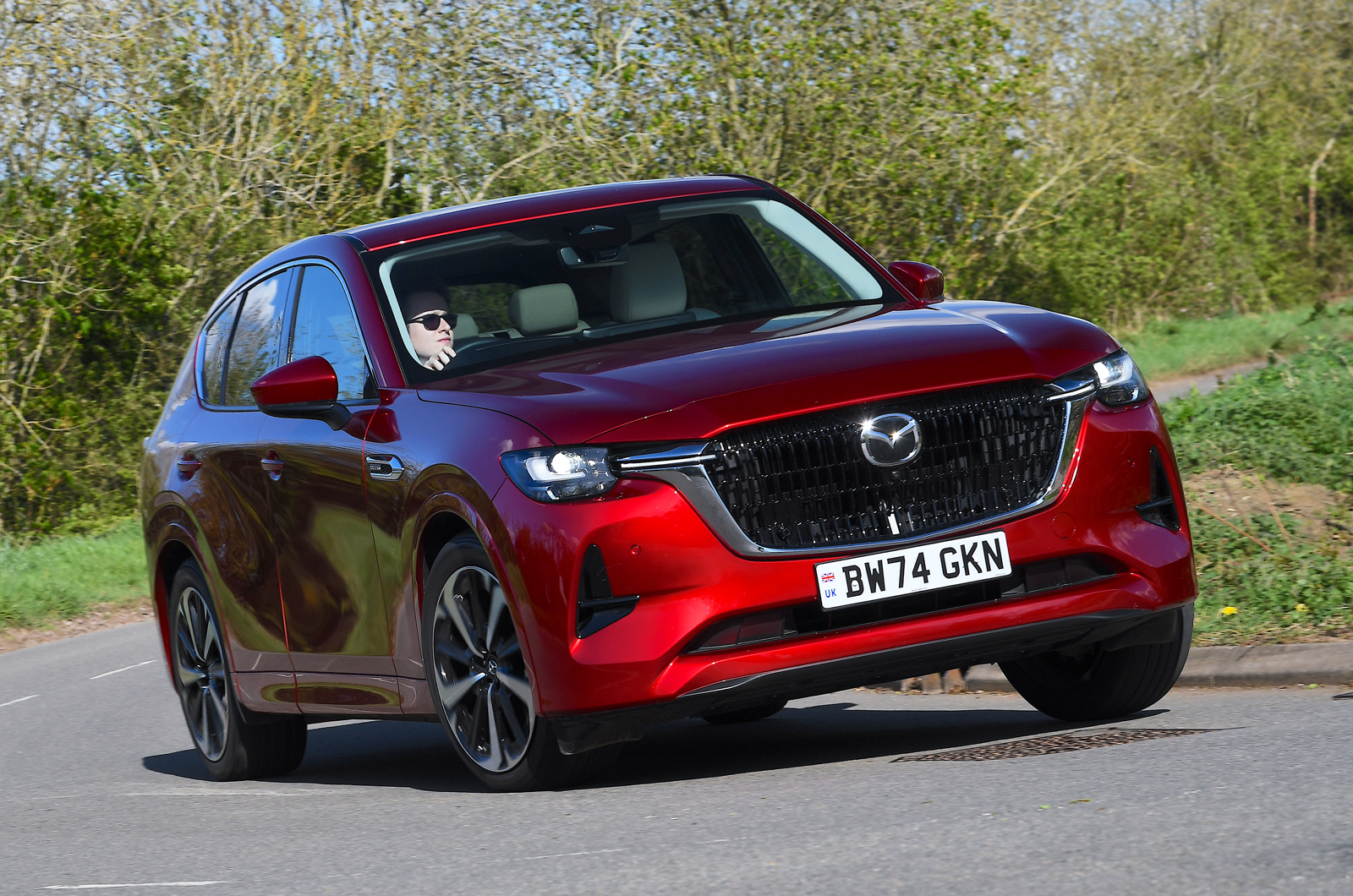
For Plushest and best-equipped interior; gutsy performance; user-friendly controls; best fuel economy
Against Wallowy handling; thumpy ride; noisiest cruiser; sheds value at the fastest rate
Recommended options None
What Car? rating 3 stars out of 5
Mazda CX-80 review >>
Mazda CX-80 deals >>
Specifications: Audi Q5 TDI quattro Edition 1
Engine 4cyl, 1968cc, diesel
Peak power 201bhp at 3800-4200rpm
Peak torque 295lb ft at 1750-32500rpm
Gearbox 7-spd automatic, 4WD
0-60mph 6.9sec
30-70mph in kickdown 7.4sec
Top speed 140mph
Braking 30-0mph 8.5m
Braking 70-0mph 45.9m
Noise at 30mph 56.3dB
Noise at 70mph 62.6dB
Kerb weight 1955kg
Tyre size (std) 255/40 R21
Fuel tank 65 litres
Test fuel economy 43.8mpg
Official fuel economy 44.1mpg
CO2 emissions 168g/km
Specifications: BMW X3 20d xDrive M Sport (Pro Pack)
Engine 4cyl, 1995cc, diesel
Peak power 194bhp at 4000rpm
Peak torque 295lb ft at 1500-2750rpm
Gearbox 8-spd automatic, 4WD
0-60mph 7.2sec
30-70mph in kickdown 8.0sec
Top speed 134mph
Braking 30-0mph 8.7m
Braking 70-0mph 46.6m
Noise at 30mph 57.0dB
Noise at 70mph 63.1dB
Kerb weight 1965kg
Tyre size (std) 245/50 R19
Fuel tank 60 litres
Test fuel economy 50.2mpg
Official fuel economy 47.9mpg
CO2 emissions 155g/km
Specifications: Mazda CX-60 3.3 e-Skyactiv D AWD Takumi Plus
Engine 6cyl, 3283cc, diesel
Peak power 251bhp at 3750rpm
Peak torque 406lb ft at 1500-2400rpm
Gearbox 8-spd automatic, 4WD
0-60mph 7.1sec
30-70mph in kickdown 6.1sec
Top speed 136mph
Braking 30-0mph 9.0m
Braking 70-0mph 49.6m
Noise at 30mph 58.1dB
Noise at 70mph 64.0dB
Kerb weight 1950kg
Tyre size (std) 235/50 R20
Fuel tank 58 litres
Test fuel economy 52.8mpg
Official fuel economy 53.3mpg
CO2 emissions 142g/km
Weather conditions 13deg C, dry
Cars pictured
Audi Q5 TDI quattro Launch Edition with Grenadine Red metallic paint (£770)
BMW X3 20d xDrive M Sport with BMW Individual Frozen Deep Grey paint (£2575), Comfort Plus Pack (£2850), Technology Pack (£2275), 21in M Jet Black wheels (£2150), panoramic glass roof (£1350), rear privacy glass (£450), luxury instrument panel (£450) and heated steering wheel (£250)
Mazda CX-60 3.3 e-Skyactiv D AWD Takumi Plus with Soul Red Crystal metallic paint (£900)