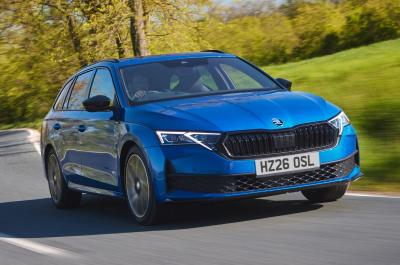
The cars with the biggest boots
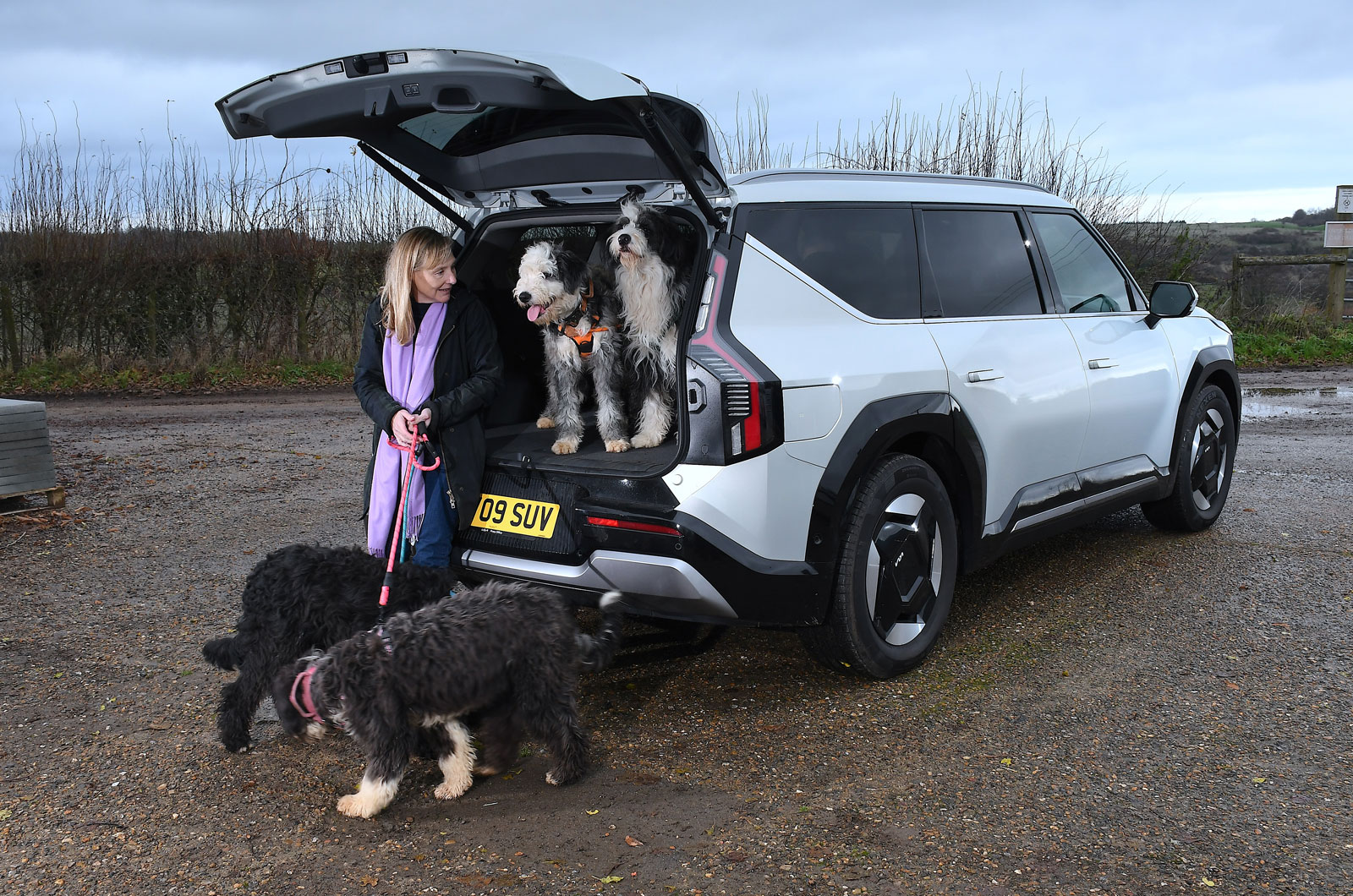
Whether you keep a pack of large dogs, regularly transport a five-a-side footie team and all their kit or simply buy a lot of shopping, you'll appreciate the usefulness of a huge boot. However, getting one doesn't necessarily mean buying the biggest car you can afford. Many, including a number of large SUVs and even some van-based vehicles, skimp on luggage room in favour of passenger space.
Measuring boot space in litres of volume can be deceiving, too, because not every nook and cranny that makes up a boot's total capacity is useful unless you're carrying water or sand, even though it adds to the overall volume. That's why, when we test cars, we count how many carry-on suitcases (560x350x230mm) will fit into a car's boot, despite intrusion from wheel arches and other factors that restrict the stowage of bulky items.
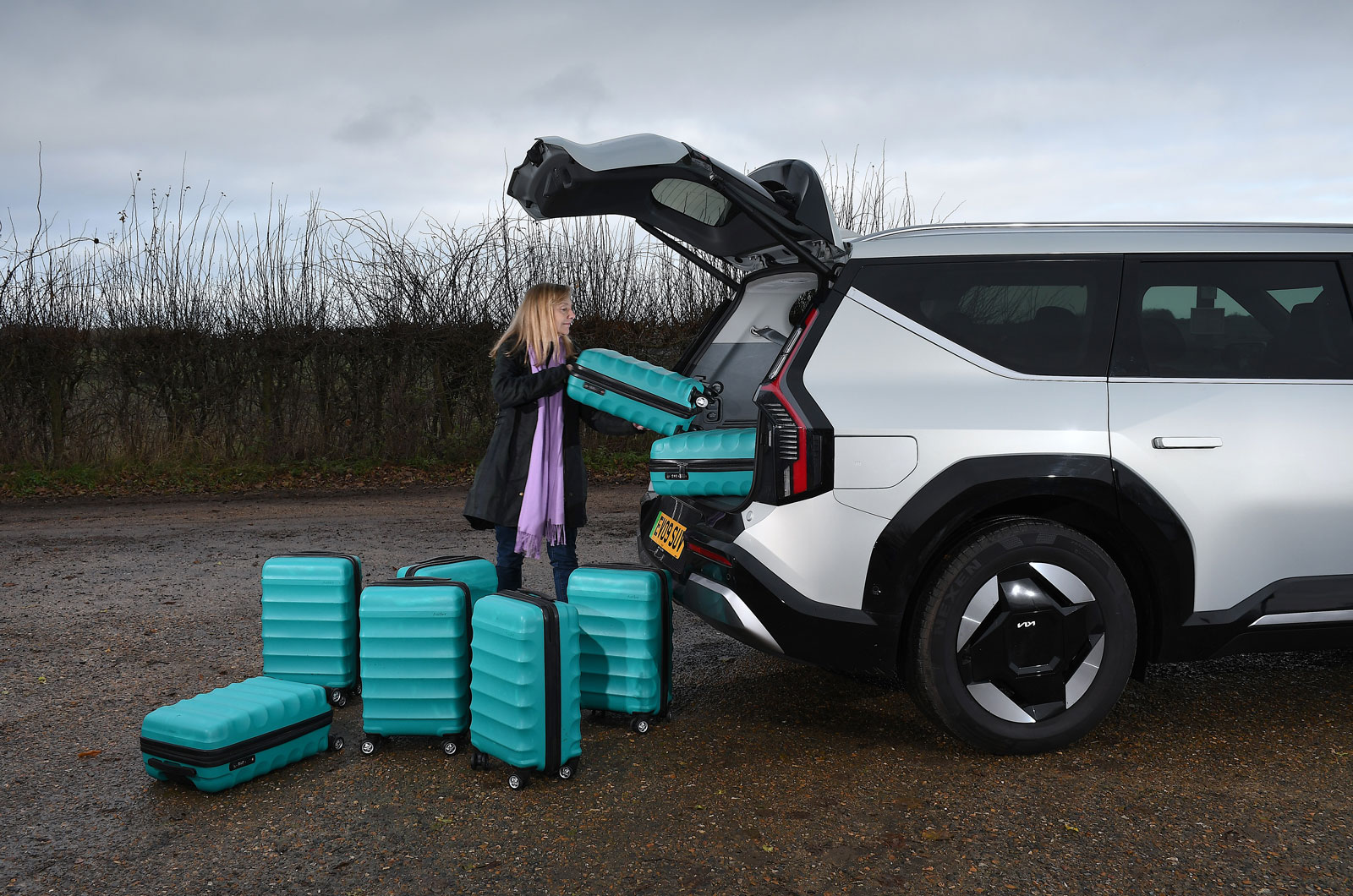
We always measure capacity up to the boot's load cover (or bootlid for saloons). We assess all models including seven-seaters in five-seat -mode with the rear bench pushed as far back as it goes, with seatbacks in their upright position.
There are a wide range of cars featured in our list, including SUVs, MPVs and even a couple of estates, with each ranked by the boot space in litres. Read on to find out which cars will enable you to transport your family and all of their kit in comfort.
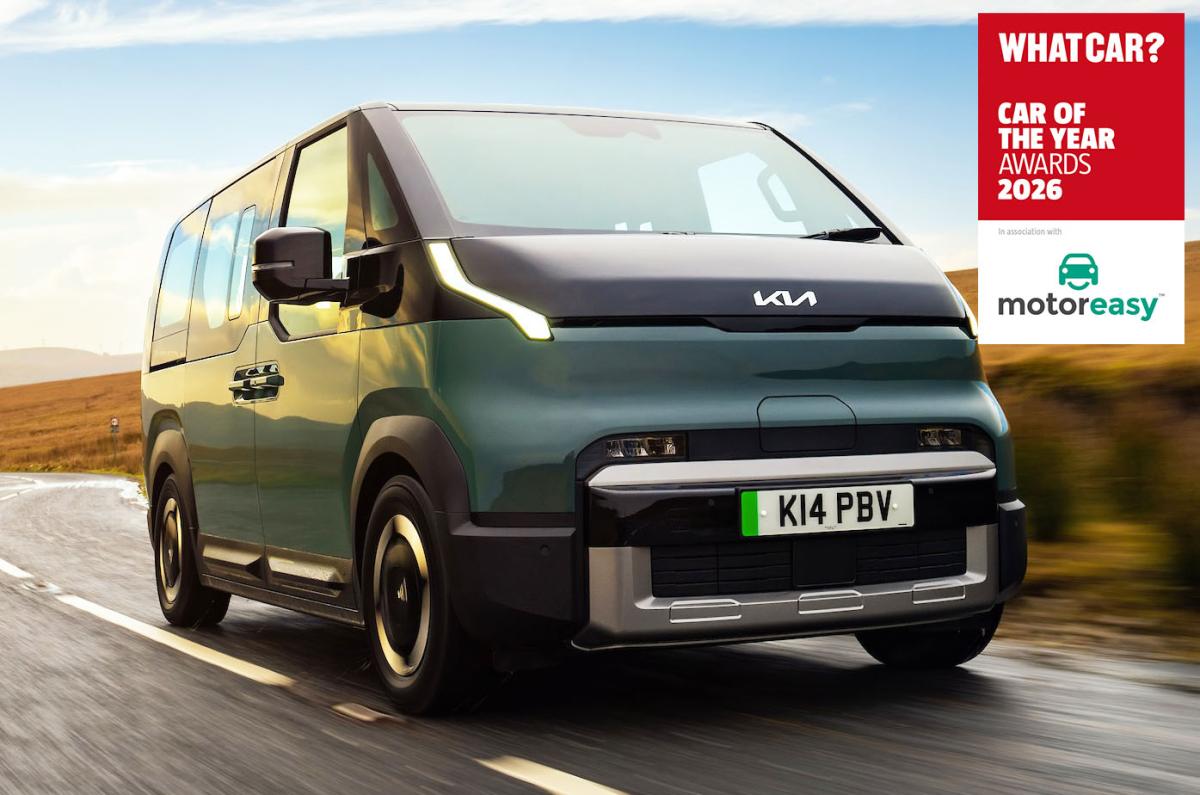
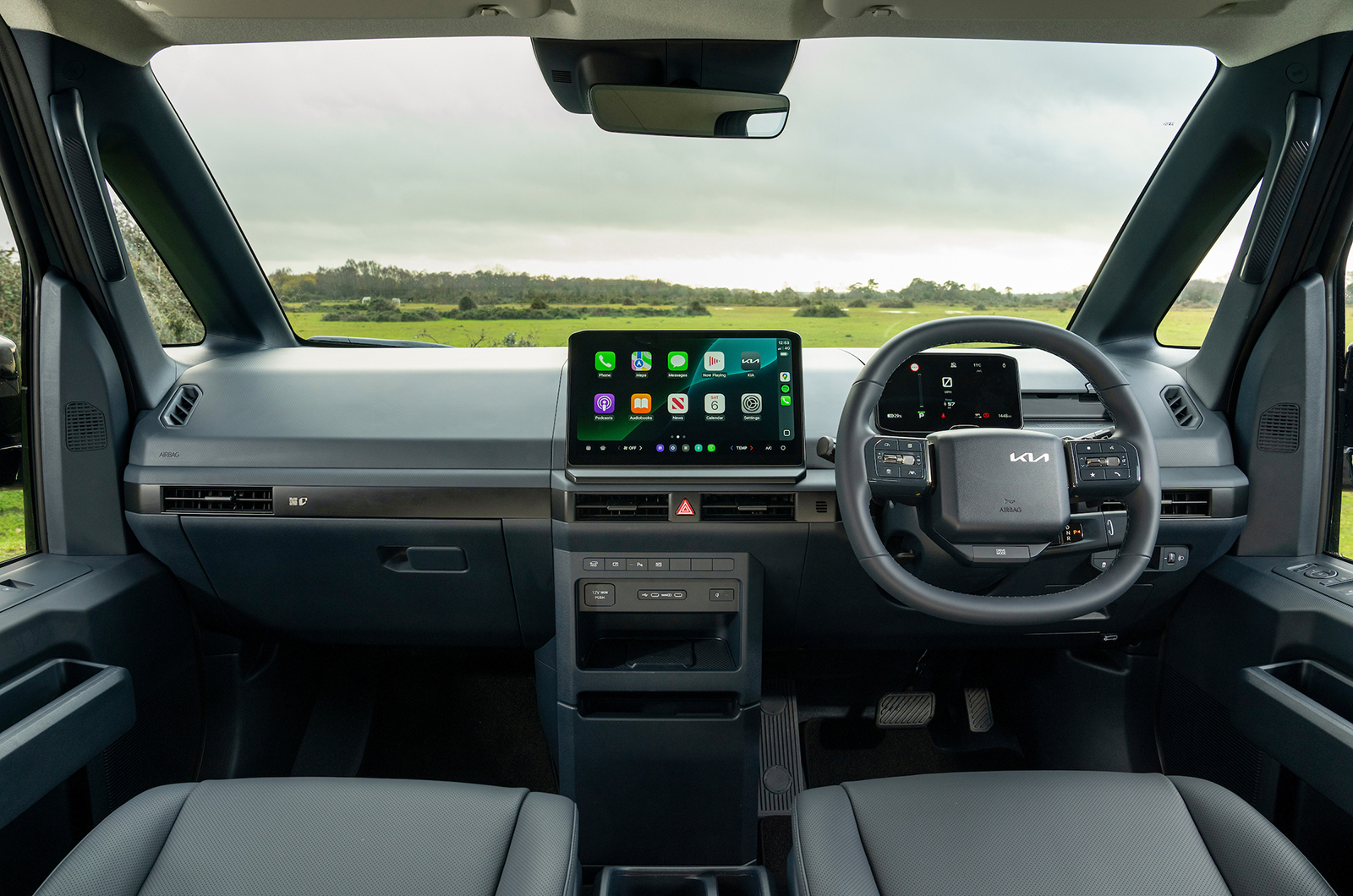
Our pick: Long Range 71.2kWh Plus Passenger MPV Auto 5dr


Strengths
- Masses of interior space
- Far cheaper to buy than rivals
- Easy to drive
Weaknesses
- Shorter range than the ID Buzz
- No seven-seater version (yet)
- No physical air-con controls
Boot size 1320 litres | Suitcases 16
Clearly inspired by the Volkswagen ID Buzz, the Passenger version of the PV5 is an electric MPV that's hugely practical and has limo-like levels of interior room in fiveseat format (a seven-seat version is coming later in 2026). It also has loads of luggage space enough to match the ID Buzz's tally of 16 carry-on suitcases. If you need truly van-like carrying capacity, the rear seats fold down and the front passenger perch can be removed to create an extra-long load bay. It's a shame, though, that folding the rear seats down leaves a large step in the boot floor, and there's no height-adjustable boot floor to level that lump out.


What is What Car? best price?
The What Car? best price shows you the cheapest way to buy your new car, whether it's by choosing an in-stock car through our partner Autotrader or placing a factory order.
Available now from: £29,745
RRP from: £33,195
About our price indicator
What Car? indicative Personal lease example (subject to status)
Standard Range 51.5kWh Essential Passenger MPV 5dr Electric Auto (5Seat) (120 bhp)
| Expected annual mileage | 5000 |
| Term months | 48 |
| Deposit months | 12 |
| Monthly payment | £355.81 |
| Initial payment | £4,269.72 |
Step-by-step
Leasing works a bit like a long-term rental. You drive it, but you don’t own it.
- Choose your car, pick your terms and apply for lease credit online
- Pay monthly rental payments for your chosen term length
- Drive it, enjoy it, then give it back at the end
What you get
When you lease with Autotrader you get all of this:
- Full manufacturer’s warranty
- Road tax and roadside assistance included
- No admin fees
- Free returns within 30 days*

- Lower total monthly cost than PCP/HP
- No balloon payments
- Road tax included
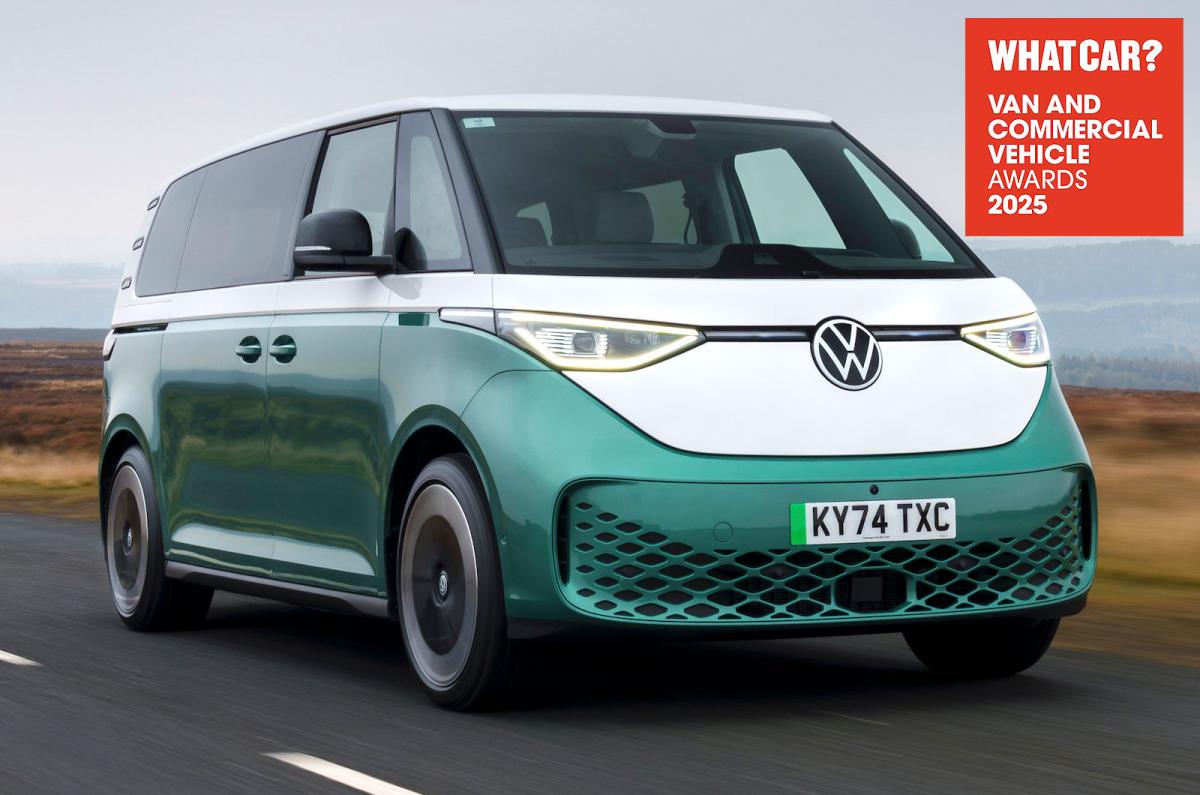
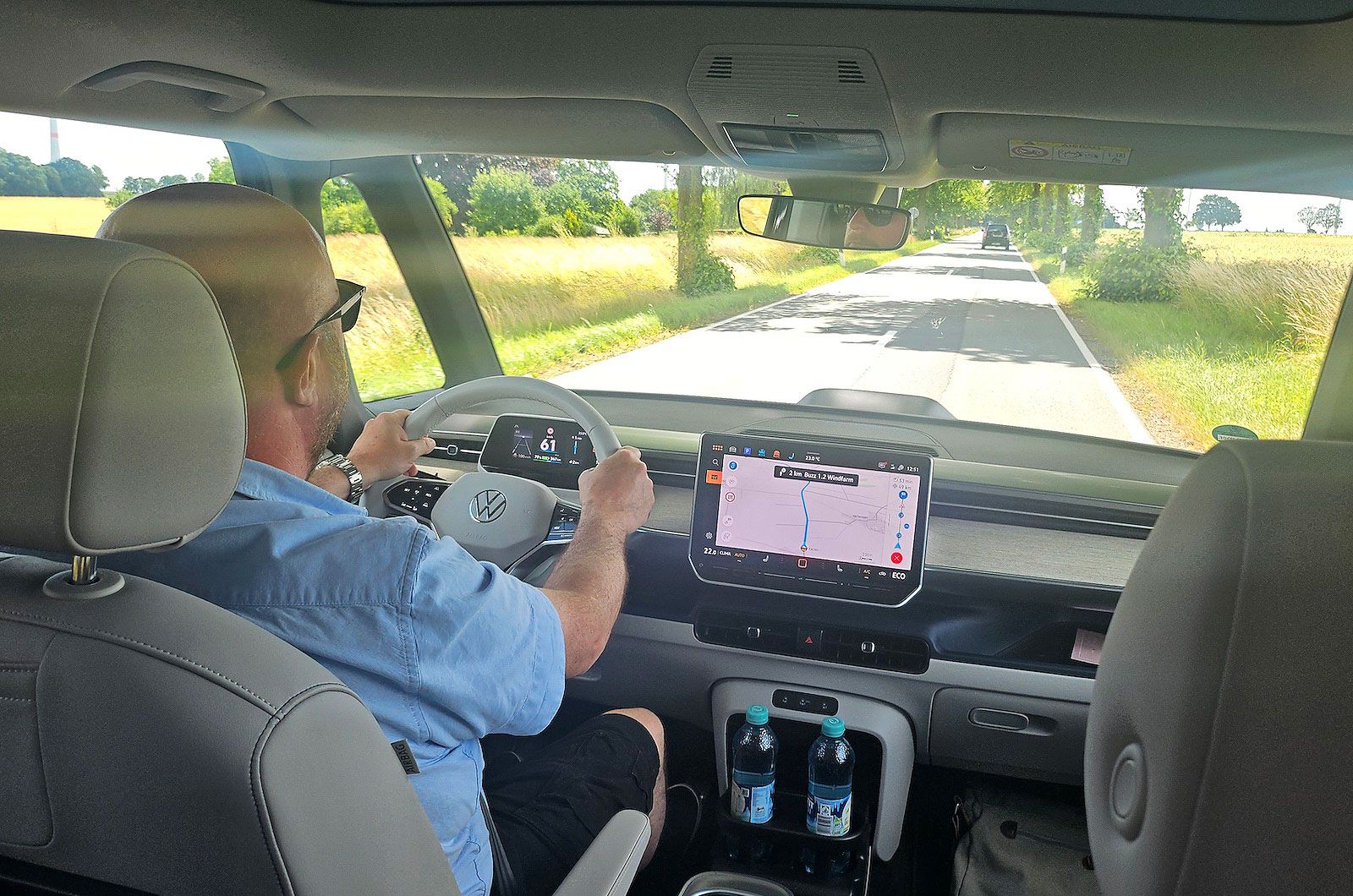
Our pick: Pro 79kWh Style Auto 5dr (SWB, 6Seat)
Strengths
- Surprisingly good to drive
- Hugely practical
- Strong resale values
Weaknesses
- Fiddly air-con controls and infotainment
- Efficiency could be better
- The LWB version doesn't ride as smoothly as the SWB
Boot size 1121 litres | Suitcases 16
The electric ID Buzz MPV was our 2023 Car of the Year, and its sheer practicality was a big factor in that decision. The ID Buzz is offered with five, six or seven seats, and in standard and long-wheelbase guises. Even if you task the shorter version with transporting a small sports team, it should make light work of carrying everyone's kit; its 16-case tally matches the PV5's and is twice what you'd fit in many premium SUVs, such as the BMW iX3. Rather than folding flush with the floor, the rear seats leave a step when lowered, but higher trims add a false floor to create a flat platform above them, with storage underneath for smaller items.
Read our in-depth Volkswagen ID Buzz review
What is What Car? best price?
The What Car? best price shows you the cheapest way to buy your new car, whether it's by choosing an in-stock car through our partner Autotrader or placing a factory order.
Available now from: £49,491
RRP from: £59,405
About our price indicator
What Car? indicative Personal lease example (subject to status)
Pro 79kWh Life MPV 5dr Electric Auto (SWB, 5Seat) (286 ps)
| Expected annual mileage | 5000 |
| Term months | 48 |
| Deposit months | 12 |
| Monthly payment | £588.05 |
| Initial payment | £7,056.60 |
Step-by-step
Leasing works a bit like a long-term rental. You drive it, but you don’t own it.
- Choose your car, pick your terms and apply for lease credit online
- Pay monthly rental payments for your chosen term length
- Drive it, enjoy it, then give it back at the end
What you get
When you lease with Autotrader you get all of this:
- Full manufacturer’s warranty
- Road tax and roadside assistance included
- No admin fees
- Free returns within 30 days*
- Lower total monthly cost than PCP/HP
- No balloon payments
- Road tax included
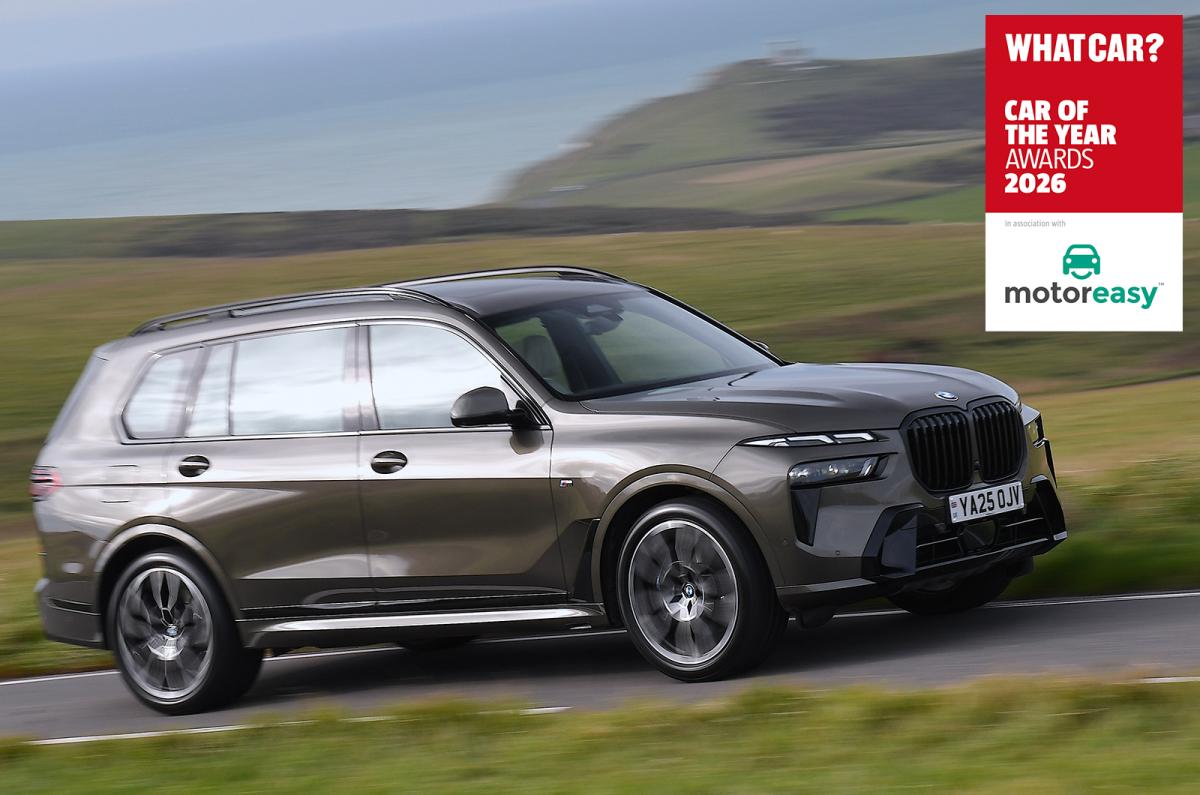
Our pick: 3.0 40i MHT M Sport Auto xDrive Euro 6 (s/s) 5dr
Strengths
- Supremely quiet and comfortable
- Incredibly spacious and practical
- Fabulous interior quality
Weaknesses
- There are cheaper alternatives
- Looks won’t be to all tastes
- No plug-in hybrid or electric option
Boot size 750 litres | Suitcases 11
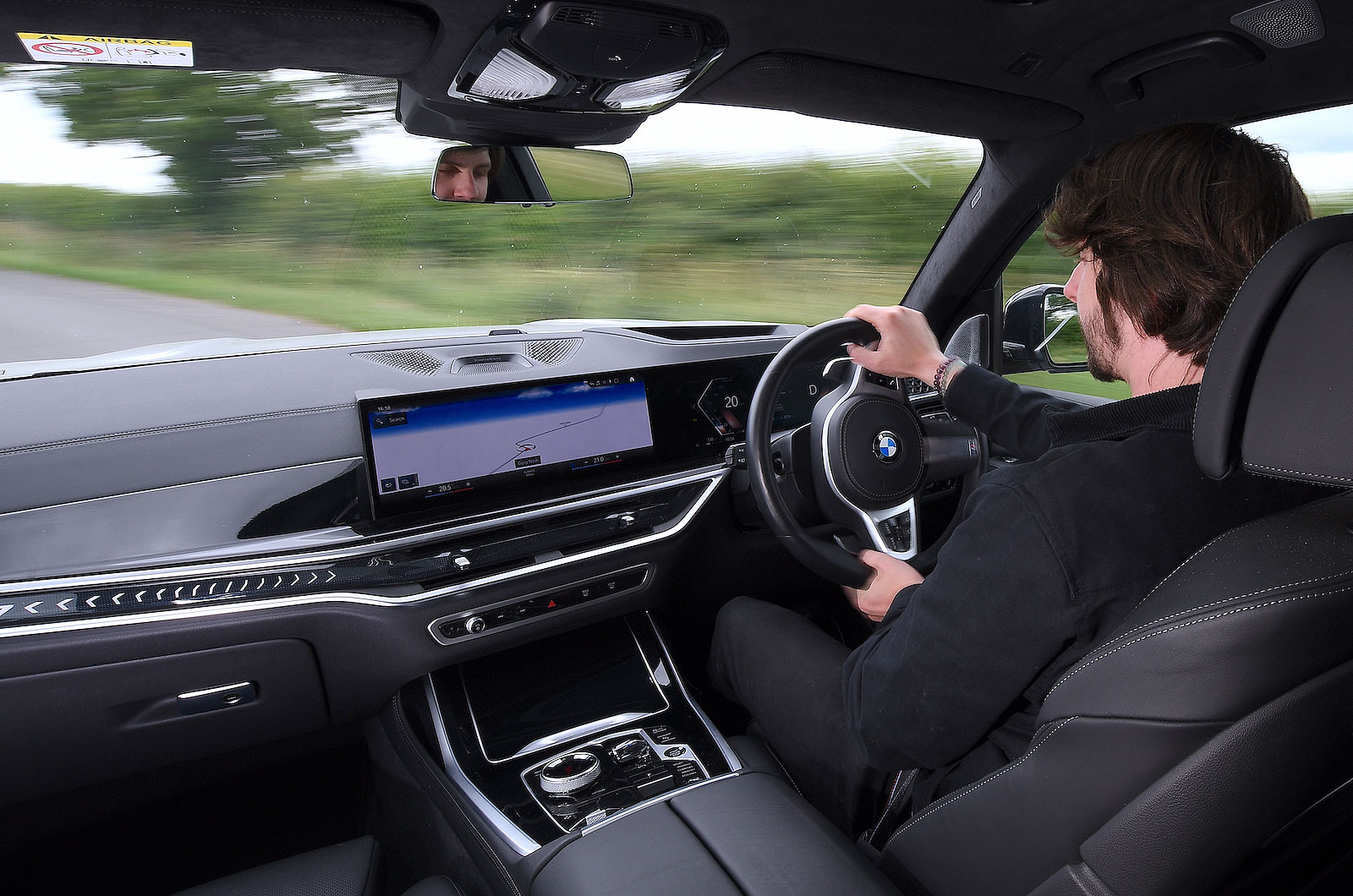
BMW's biggest model, the X7, is a sumptuously appointed luxury SUV that's marginally longer than a standard wheelbase Range Rover. It's available with either six or seven seats, and the two rearmost armchairs are roomier than those in the Audi Q7 and Volvo XC90.
This translates into lashings of boot space when the third row is folded down; taking into account the underfloor storage compartment, we managed to fit 11 cases in, making the X7 the joint best luxury SUV for luggage capacity alongside the Mercedes GLS. One natty feature is the split tailgate; this has a separate lower section that can be folded flat to use as a seat while you're changing out of your muddy wellies.
Read our in-depth BMW X7 review
What is What Car? best price?
The What Car? best price shows you the cheapest way to buy your new car, whether it's by choosing an in-stock car through our partner Autotrader or placing a factory order.
Available now from: £77,490
RRP from: £93,280
About our price indicator
What Car? indicative Personal lease example (subject to status)
3.0 40d MHT Excellence SUV 5dr Diesel Hybrid Auto xDrive Euro 6 (s/s) (352 ps)
| Expected annual mileage | 5000 |
| Term months | 48 |
| Deposit months | 12 |
| Monthly payment | £1,118.30 |
| Initial payment | £13,419.60 |
Step-by-step
Leasing works a bit like a long-term rental. You drive it, but you don’t own it.
- Choose your car, pick your terms and apply for lease credit online
- Pay monthly rental payments for your chosen term length
- Drive it, enjoy it, then give it back at the end
What you get
When you lease with Autotrader you get all of this:
- Full manufacturer’s warranty
- Road tax and roadside assistance included
- No admin fees
- Free returns within 30 days*
- Lower total monthly cost than PCP/HP
- No balloon payments
- Road tax included
Our pick: 3.0 GLS450dh MHEV AMG Line (Premium Plus) G-Tronic 4MATIC Euro 6 (s/s) 5dr
Strengths
- Effortless performance
- Strong equipment levels
- Wide range of versions
Weaknesses
- Poorly controlled ride
- Inconsistent interior quality
- Rivals offer better low-speed manoeuvrability
Boot size 890 litres | Suitcases 11
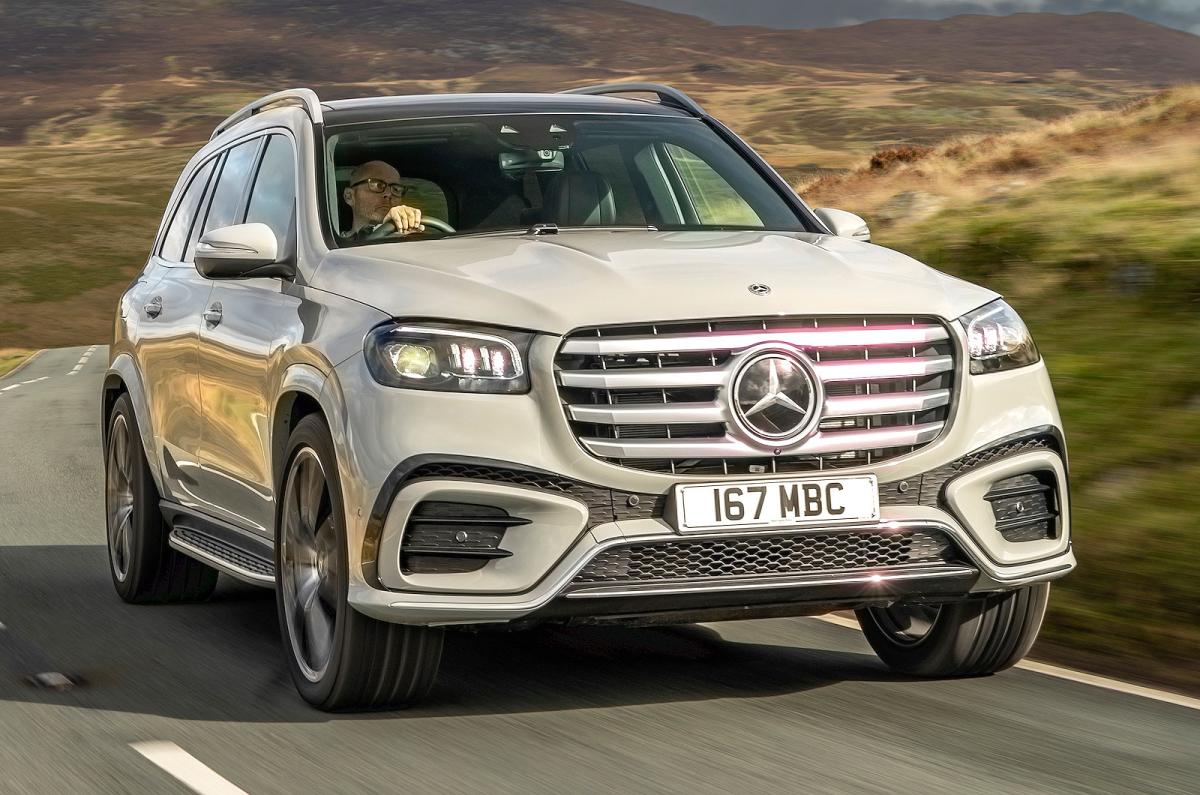
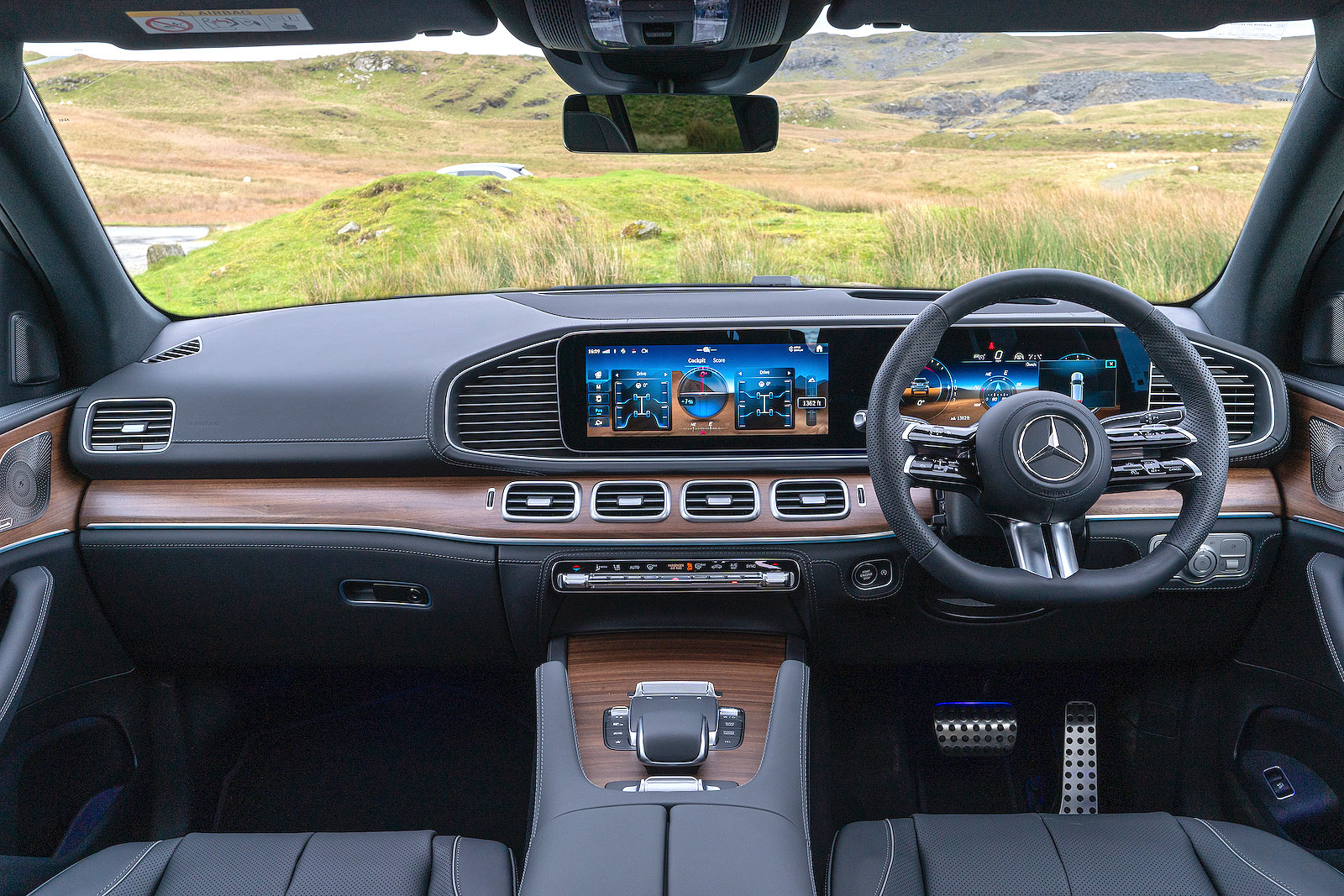
THE GLS IS among the very biggest SUVs you can buy; it's even longer than the gargantuan X7. That means there's enough room for seven tall adults inside, and the middle-row seats can be slid forwards to accommodate third-row passengers almost as well as its BMW rival. In five-seat mode, it has more boot capacity (in litres) than the X7, but it exactly matches its rival in terms of real-world capacity, holding 10 cases in the main boot and one more under the floor. Alternatively, you can stow the load cover under the boot floor if you need to tuck it out of the way. The only thing the GLS lacks is the BMW's two-piece tailgate. With all seven seats in use, there's still 355 litres of luggage room, trumping the X7's 300 litres.
Read our in-depth Mercedes GLS review
What is What Car? best price?
The What Car? best price shows you the cheapest way to buy your new car, whether it's by choosing an in-stock car through our partner Autotrader or placing a factory order.
Available now from: £103,420
RRP from: £110,920
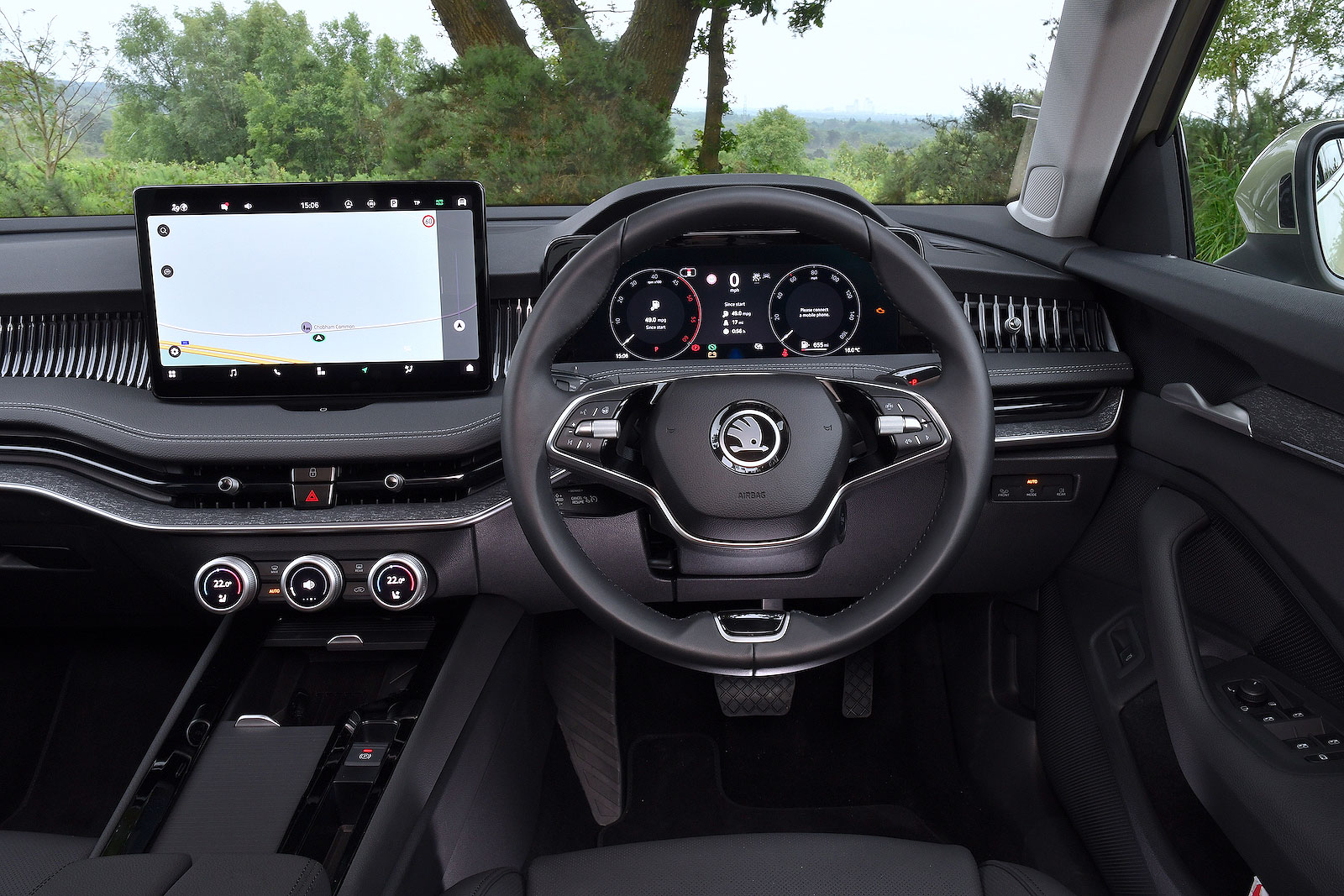
Our pick: 1.5 TSI e-TEC MHEV SE Technology DSG Euro 6 (s/s) 5dr
Strengths
- Hugely spacious boot and interior
- Comfortable on adaptive (DCC) suspension
- Well equipped and priced – PHEV makes a cheap company car
Weaknesses
- Grabby brakes on the PHEV
- Interior quality not the best in places
- 3 Series Touring is more fun to drive
Boot size 690 litres | Suitcases 11
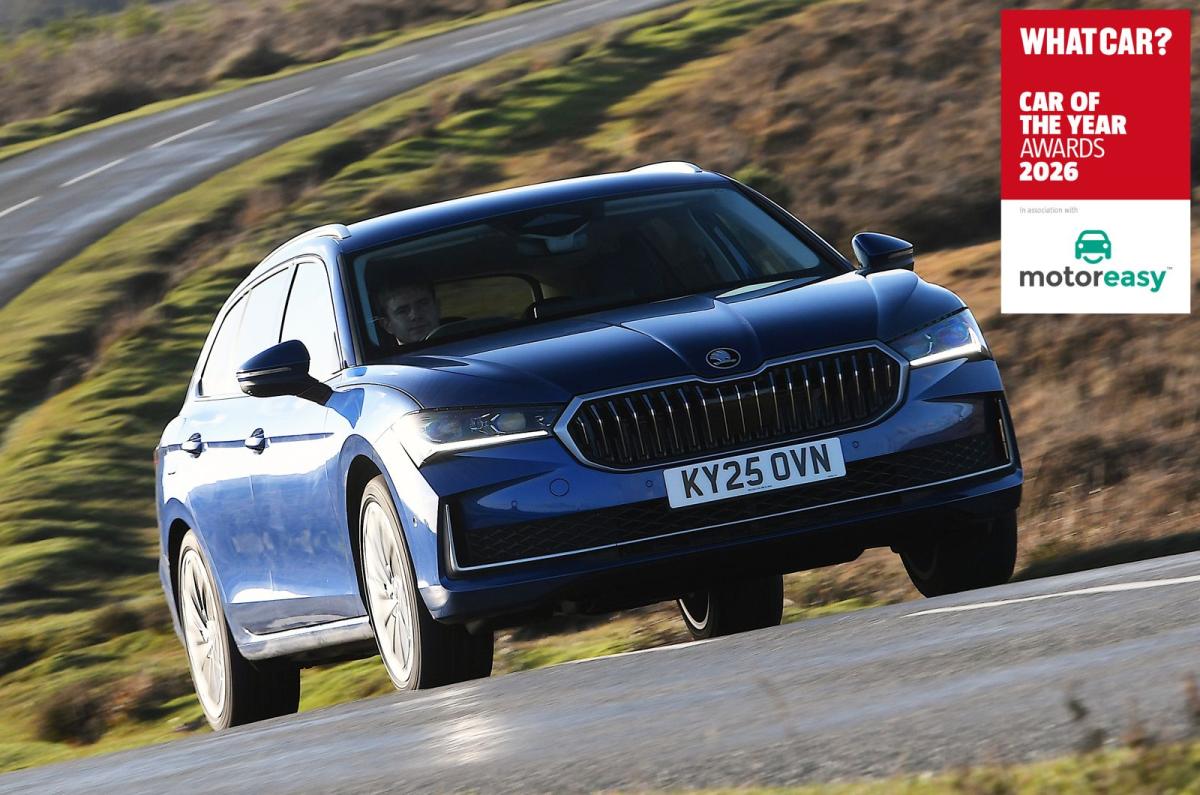
A big boot has always been one of the main selling points of the Superb Estate, and the load bay of the latest version is the biggest yet. At 690 litres, it isn't far behind the BMW X7's, and it's significantly roomier than those of much pricier luxury estates such as the BMW 5 Series Touring (570 litres) and Mercedes-Benz E-Class Estate (615 litres).
Not only is there room enough for 11 carry-on cases, but there are also useful features such as cargo nets, plastic load dividers, four foldable bag hooks and an electrically powered load cover that slides open as you lift the tailgate.
The plug-in hybrid Superb has less boot space (510 litres), due to space taken up by the battery beneath the boot floor.
Read our in-depth Skoda Superb Estate review
What is What Car? best price?
The What Car? best price shows you the cheapest way to buy your new car, whether it's by choosing an in-stock car through our partner Autotrader or placing a factory order.
Available now from: £35,495
RRP from: £38,135
About our price indicator
What Car? indicative Personal lease example (subject to status)
2.0 TDI SE L Estate 5dr Diesel DSG Euro 6 (s/s) (150 ps)
| Expected annual mileage | 5000 |
| Term months | 24 |
| Deposit months | 12 |
| Monthly payment | £286.63 |
| Initial payment | £3,439.56 |
Step-by-step
Leasing works a bit like a long-term rental. You drive it, but you don’t own it.
- Choose your car, pick your terms and apply for lease credit online
- Pay monthly rental payments for your chosen term length
- Drive it, enjoy it, then give it back at the end
What you get
When you lease with Autotrader you get all of this:
- Full manufacturer’s warranty
- Road tax and roadside assistance included
- No admin fees
- Free returns within 30 days*
- Lower total monthly cost than PCP/HP
- No balloon payments
- Road tax included
Strengths
- Smooth and powerful engines
- Pillowy ride in Sport and S line trims
- Superb interior quality
Weaknesses
- Lack of physical buttons for infotainment system
- Third-row space is better in the BMW X7
- Some safety equipment optional
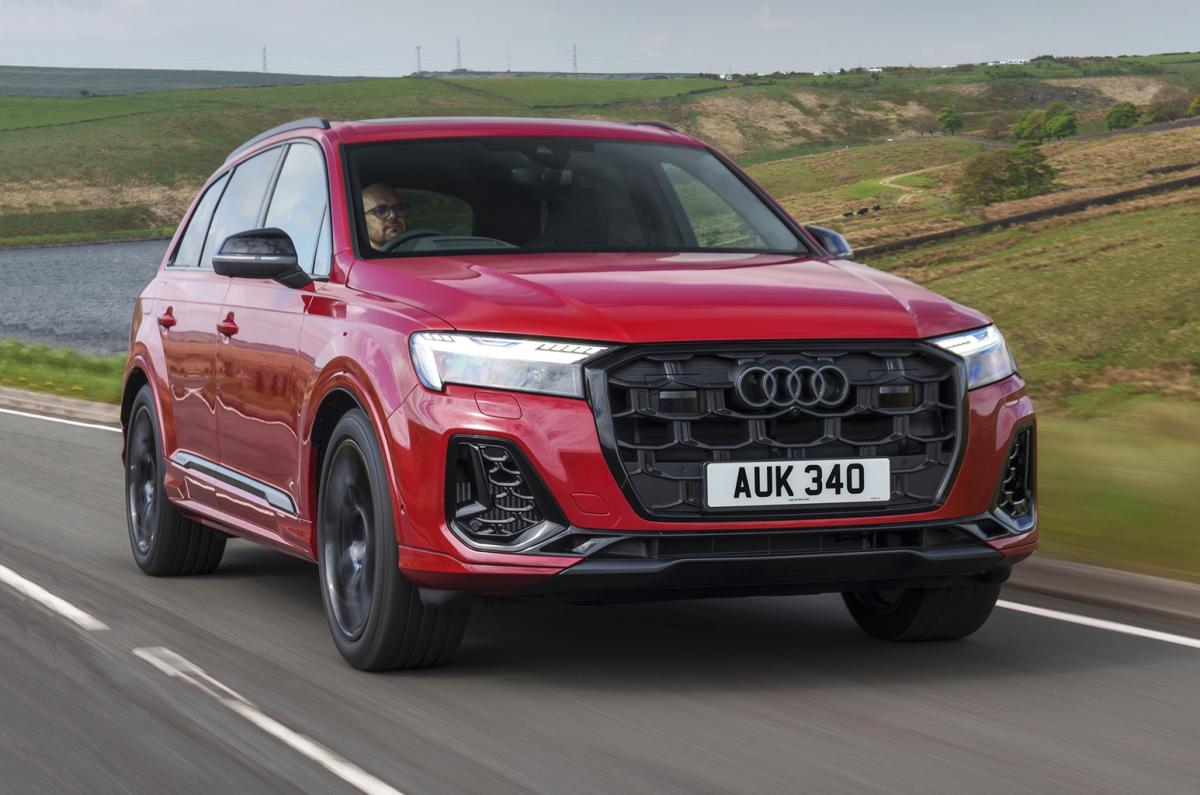
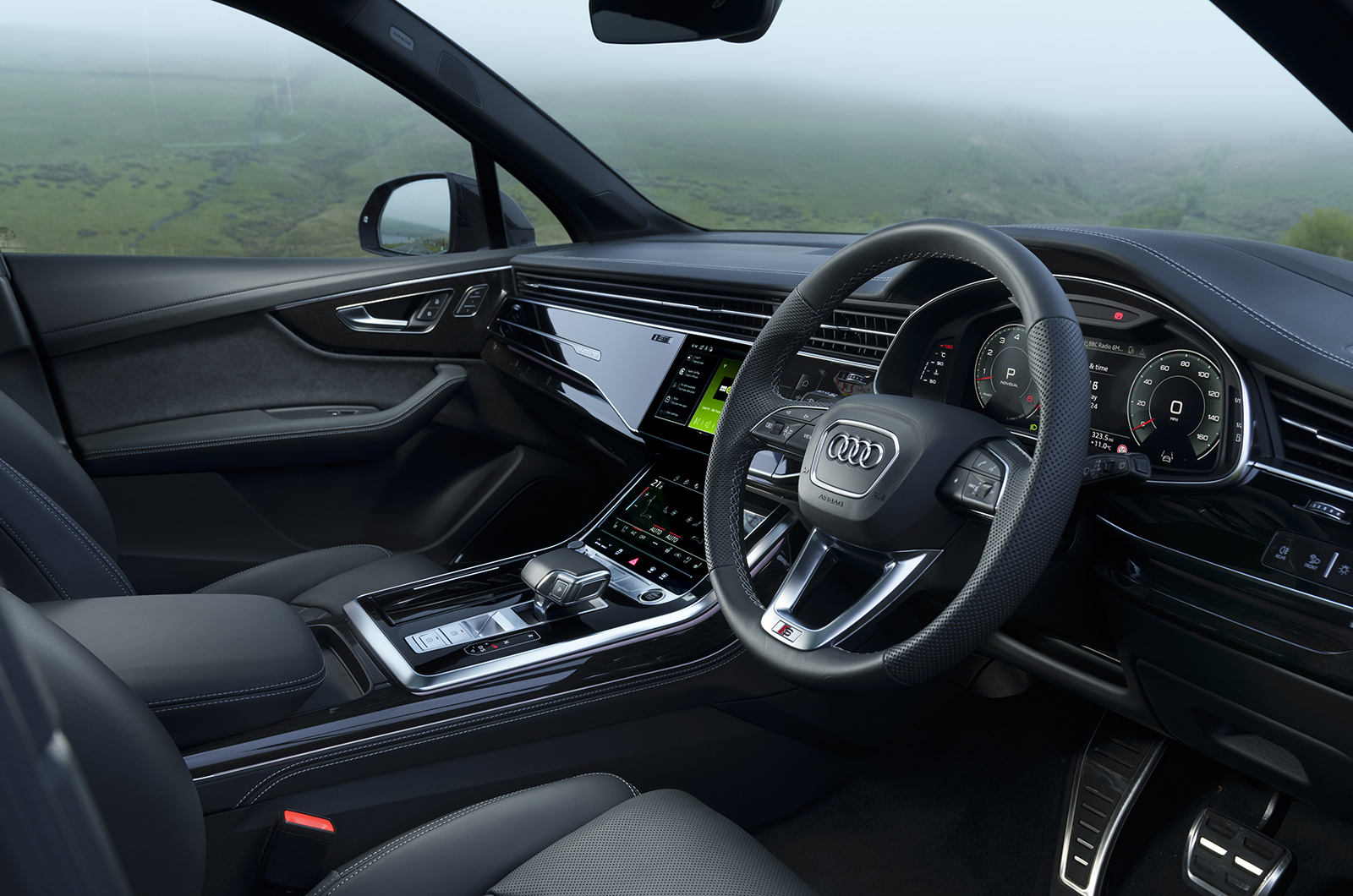
Boot size 770 litres | Suitcases 10
The Q7 has been one of our favourite luxury SUVs for many years, combining lavish accommodation for up to seven adults with tidy handling, strong towing ability and a bit of off-road talent.
In five-seat mode, its boot will hold up to 10 suitcases and can handle pushchairs or other large items below its load cover. Four fastening points can be used to prevent things from sliding around, and there's a small storage cubby on one side.
All three second-row seatbacks can be folded down separately via levers at the base of each seat, making it easy to create a bespoke space for longer items. The whole bench slides back and forth if you need more room for stowage or passengers.
Read our in-depth Audi Q7 review
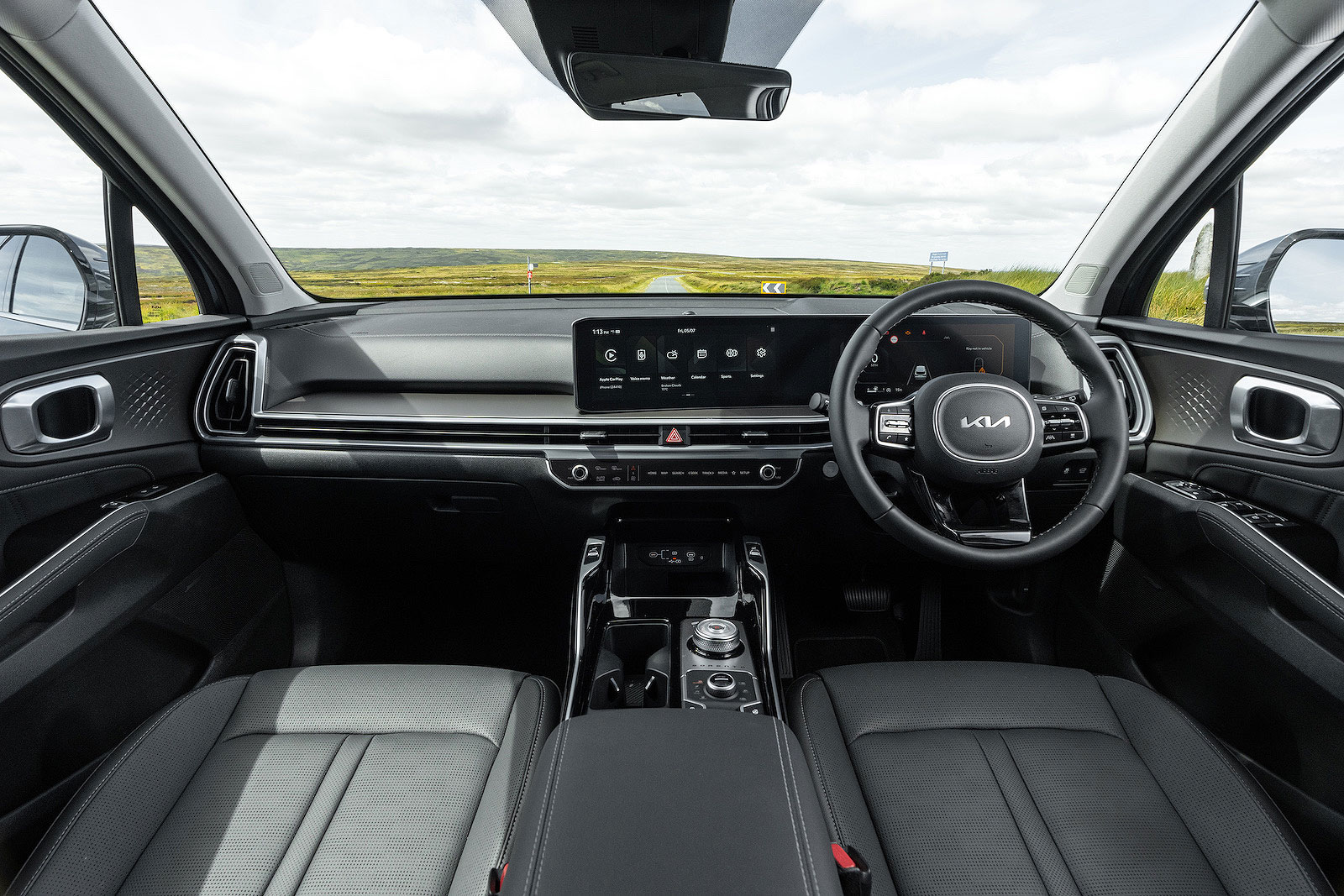
Strengths
- One of the more spacious seven seaters at this price
- A massive boot
- Well equipped
Weaknesses
- Priced above mainstream rivals
- Hybrid engine isn't as fuel efficient as a Honda CR-V's
- Interior quality not as good as similarly priced premium rivals
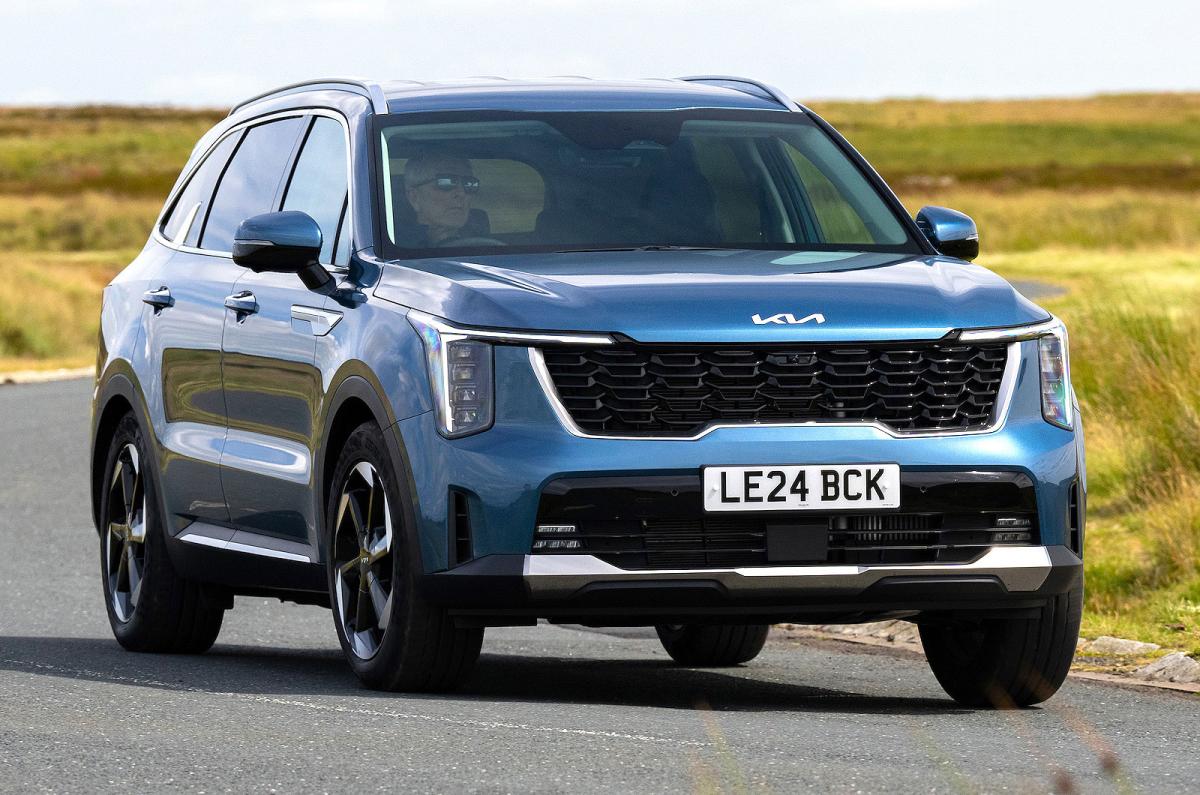
Boot size 813 litres | Suitcases 10
In its fourth generation, the Sorento has evolved into a smart and spacious seven-seater with frugal hybrid and plug-in hybrid power. It's closely related to the Hyundai Santa Fe, but its tally of 10 carry-on cases beats the nine-case capacity of its sibling.
The second-row seatbacks are split only 60/40, but the whole bench slides backwards and forwards and the seats can be tipped for easy access to the third row. The boot is huge and usefully square, and it has recesses towards the back on both sides that add some extra width.
The hybrid version has a small underfloor storage compartment, but the plug-in hybrid's battery occupies this space, so it has a little less luggage capacity overall.
Read our in-depth Kia Sorento review
What is What Car? best price?
The What Car? best price shows you the cheapest way to buy your new car, whether it's by choosing an in-stock car through our partner Autotrader or placing a factory order.
Available now from: £46,450
RRP from: £43,725
About our price indicator
What Car? indicative Personal lease example (subject to status)
1.6 h T-GDi Pure SUV 5dr Petrol Hybrid Auto AWD Euro 6 (s/s) (235 bhp)
| Expected annual mileage | 5000 |
| Term months | 60 |
| Deposit months | 12 |
| Monthly payment | £482.09 |
| Initial payment | £5,785.08 |
Step-by-step
Leasing works a bit like a long-term rental. You drive it, but you don’t own it.
- Choose your car, pick your terms and apply for lease credit online
- Pay monthly rental payments for your chosen term length
- Drive it, enjoy it, then give it back at the end
What you get
When you lease with Autotrader you get all of this:
- Full manufacturer’s warranty
- Road tax and roadside assistance included
- No admin fees
- Free returns within 30 days*
- Lower total monthly cost than PCP/HP
- No balloon payments
- Road tax included
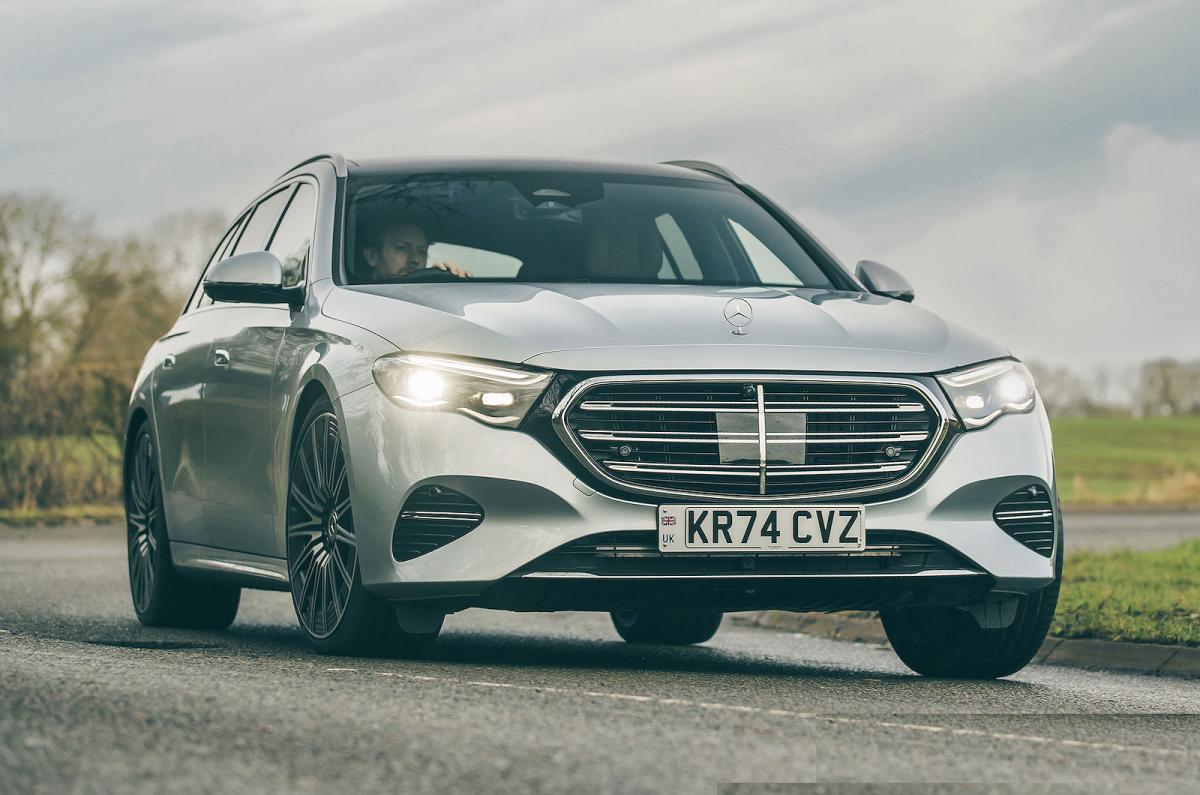
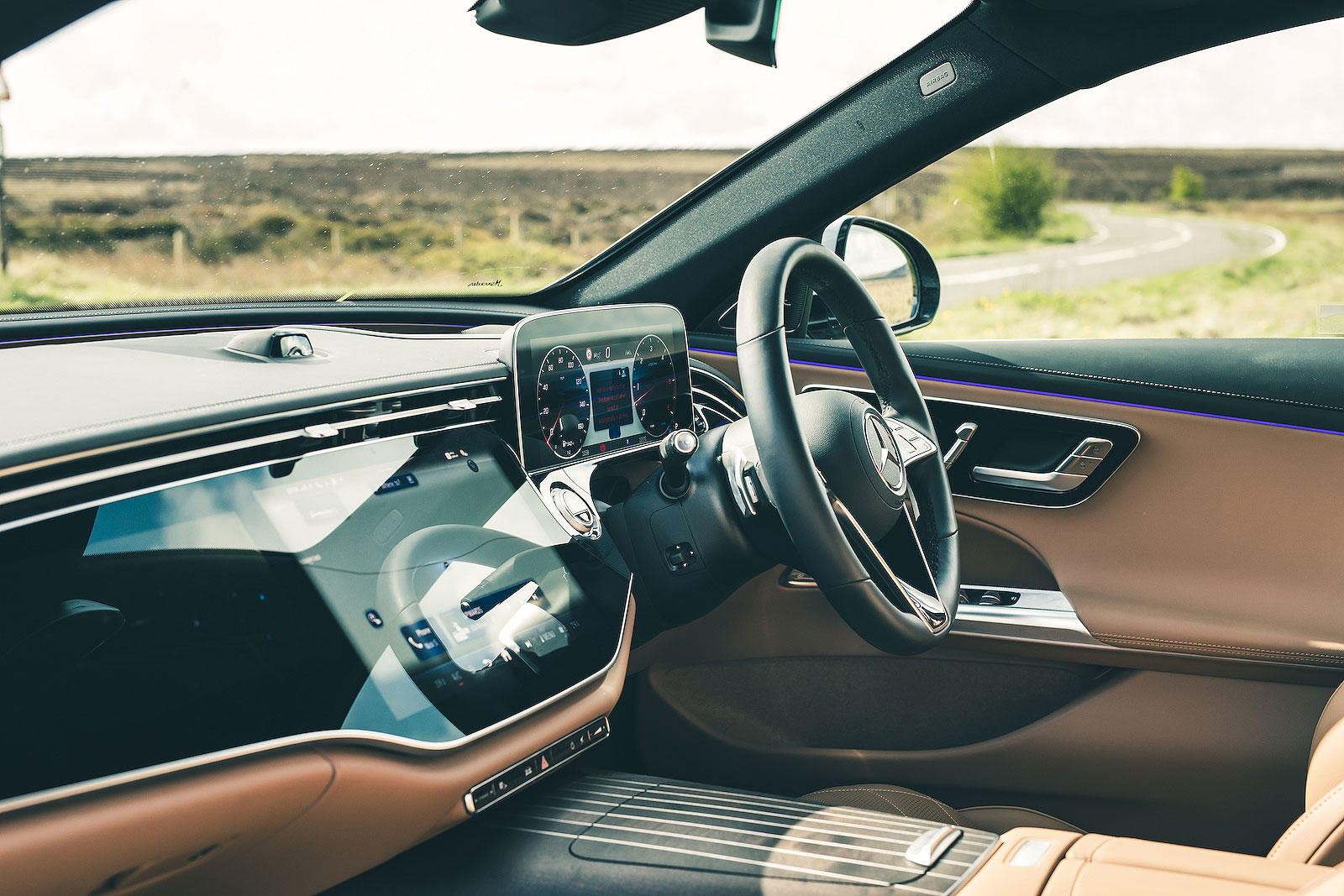
Our pick: 2.0 E300e 25.4kWh AMG Line (Premium) G-Tronic+ Euro 6 (s/s) 5dr
Strengths
- Base car is well equipped
- E300e makes for a compelling company car
- Refined and comfortable
Weaknesses
- More expensive than rivals
- Not as sharp to drive as BMW 5 Series Touring
- PHEVs have a smaller boot than an equivalent 5 Series
Boot size 615 litres | Suitcases 10
The latest E-Class Estate is likely to be the last combustion-engined luxury load lugger from the German car maker. It has plenty of strengths; it's luxurious and packed with tech, plus it's not afraid of a bit of heavy lifting. Its boot is bigger than those of its Audi A6 Avant and BMW 5 Series Touring rivals, but not the Skoda Superb Estate's.
Useful features include bag hooks and a foldable crate for smaller items. The rear seats split and fold 40/20/40 a process made easy by buttons in the boot and on the rear doors to fold them down electrically.
Most versions have an underfloor stowage compartment that can swallow two small cases, but this space is filled by the battery in the plug-in hybrid version.
Read our in-depth Mercedes E-Class Estate review
What is What Car? best price?
The What Car? best price shows you the cheapest way to buy your new car, whether it's by choosing an in-stock car through our partner Autotrader or placing a factory order.
Available now from: £53,770
RRP from: £59,770
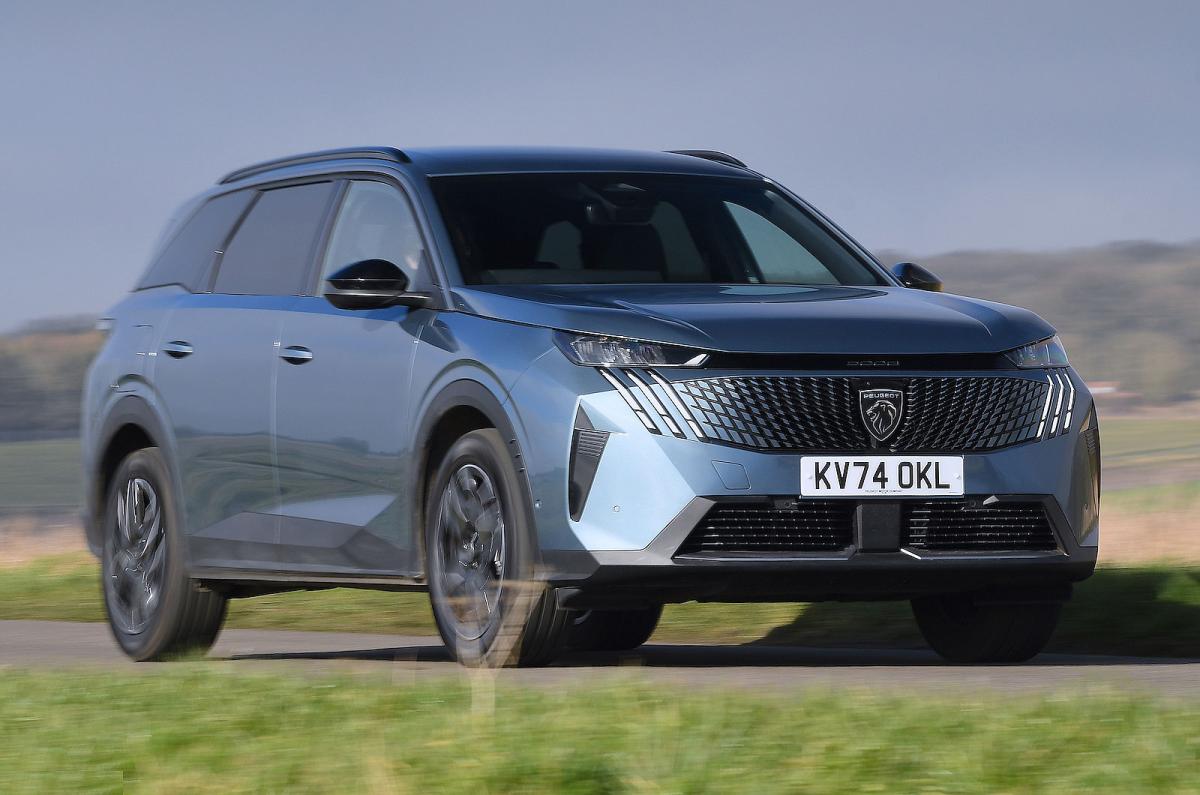
Strengths
- Quiet and comfortable
- Feels upmarket inside
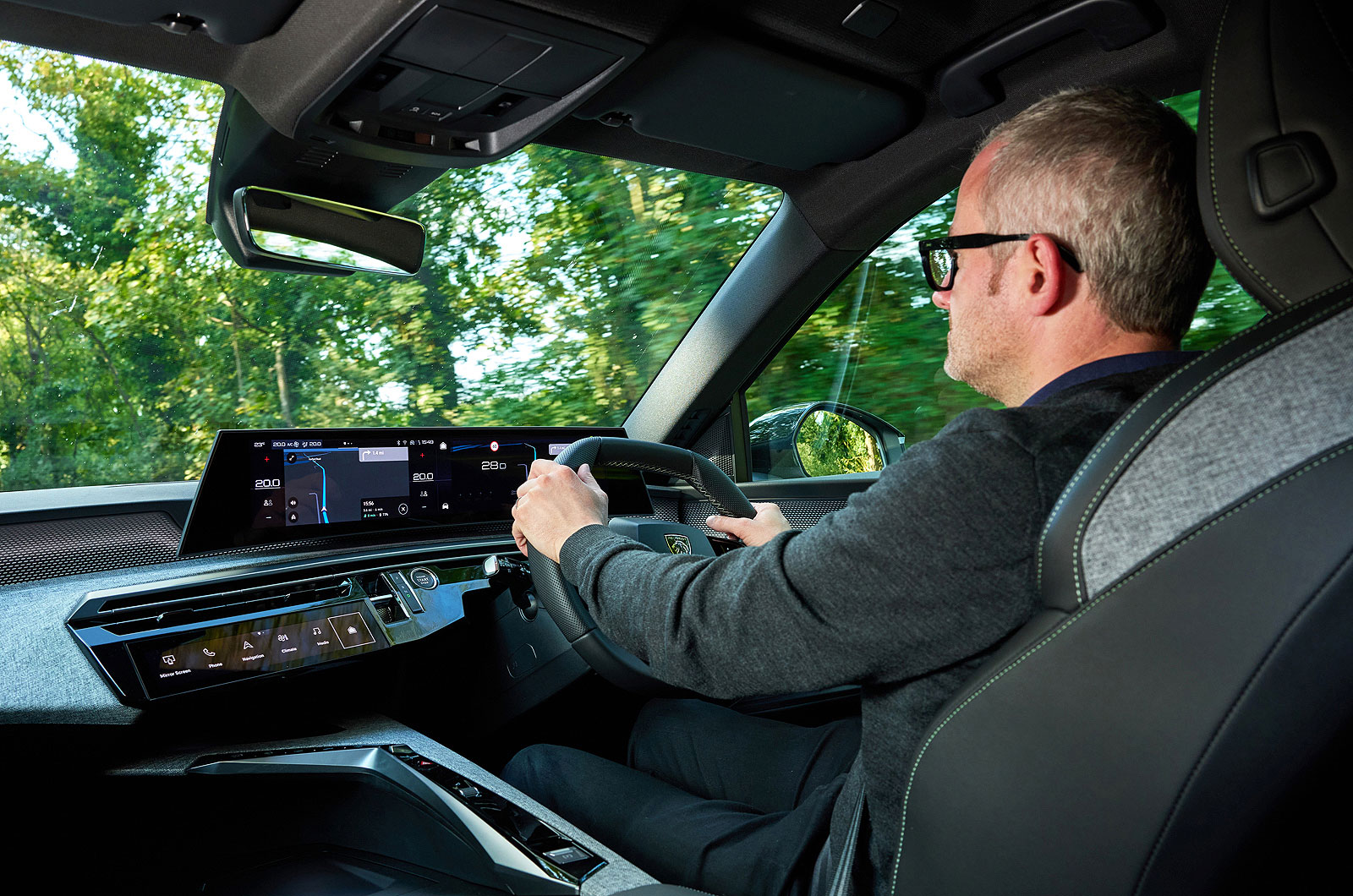
- A genuine seven-seater
Weaknesses
- Complex infotainment system
- Some rivals are even roomier
- Gearbox can frustrate
Boot size 916 litres
The 5008 has morphed from a boxy MPV into a stylish SUV, but one thing remains the same: it's an exceptionally practical seven-seater. It beats the Hyundai Santa Fe and Skoda Kodiaq for boot capacity, swallowing 10 cases compared with their nine each.
Access to the third row is made easy by levers on each of the second-row seats that tilt and slide them forwards individually. The boot has flat sides with no intrusion from the wheel arches, and you can fit something pretty bulky, such as a pushchair, between the floor and the load cover. Boot access is good, helped by a low floor with no lip to negotiate when lifting heavy items. All versions, including the plug-in hybrid, have an underfloor storage area.
Read our in-depth Peugeot 5008 review
What is What Car? best price?
The What Car? best price shows you the cheapest way to buy your new car, whether it's by choosing an in-stock car through our partner Autotrader or placing a factory order.
Available now from: £30,999
RRP from: £38,545
About our price indicator
What Car? indicative Personal lease example (subject to status)
1.2 GT SUV 5dr Petrol Hybrid e-DSC6 Euro 6 (s/s) (145 ps)
| Expected annual mileage | 5000 |
| Term months | 24 |
| Deposit months | 12 |
| Monthly payment | £292.45 |
| Initial payment | £3,509.40 |
Step-by-step
Leasing works a bit like a long-term rental. You drive it, but you don’t own it.
- Choose your car, pick your terms and apply for lease credit online
- Pay monthly rental payments for your chosen term length
- Drive it, enjoy it, then give it back at the end
What you get
When you lease with Autotrader you get all of this:
- Full manufacturer’s warranty
- Road tax and roadside assistance included
- No admin fees
- Free returns within 30 days*
- Lower total monthly cost than PCP/HP
- No balloon payments
- Road tax included
Our pick: 3.0 D300 MHEV SE Auto 4WD Euro 6 (s/s) 5dr
Strengths
- Fabulous driving position
- Fantastic off-road ability
- Useful seven-seat versatility
Weaknesses
- Very expensive
- Reliability is a concern
- More physical controls for the infotainment would be preferable
Boot size 818 litres (measured to ceiling) | Suitcases 10
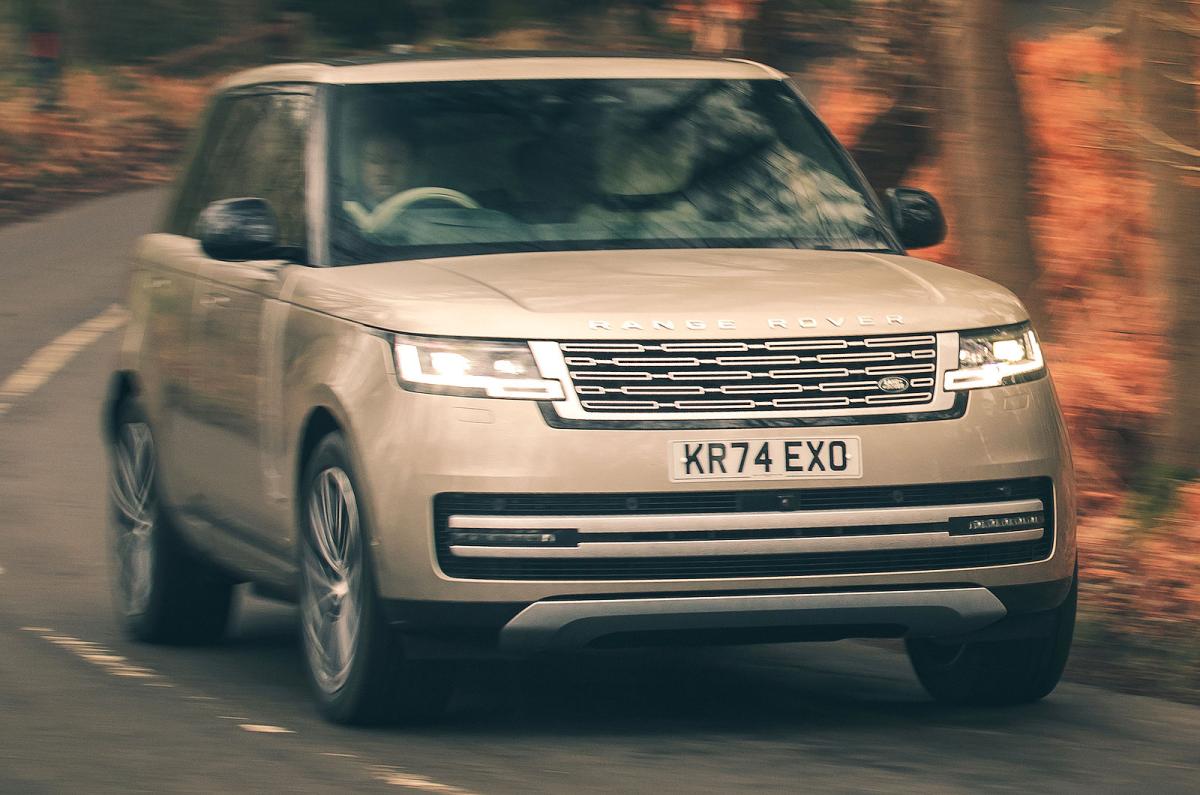
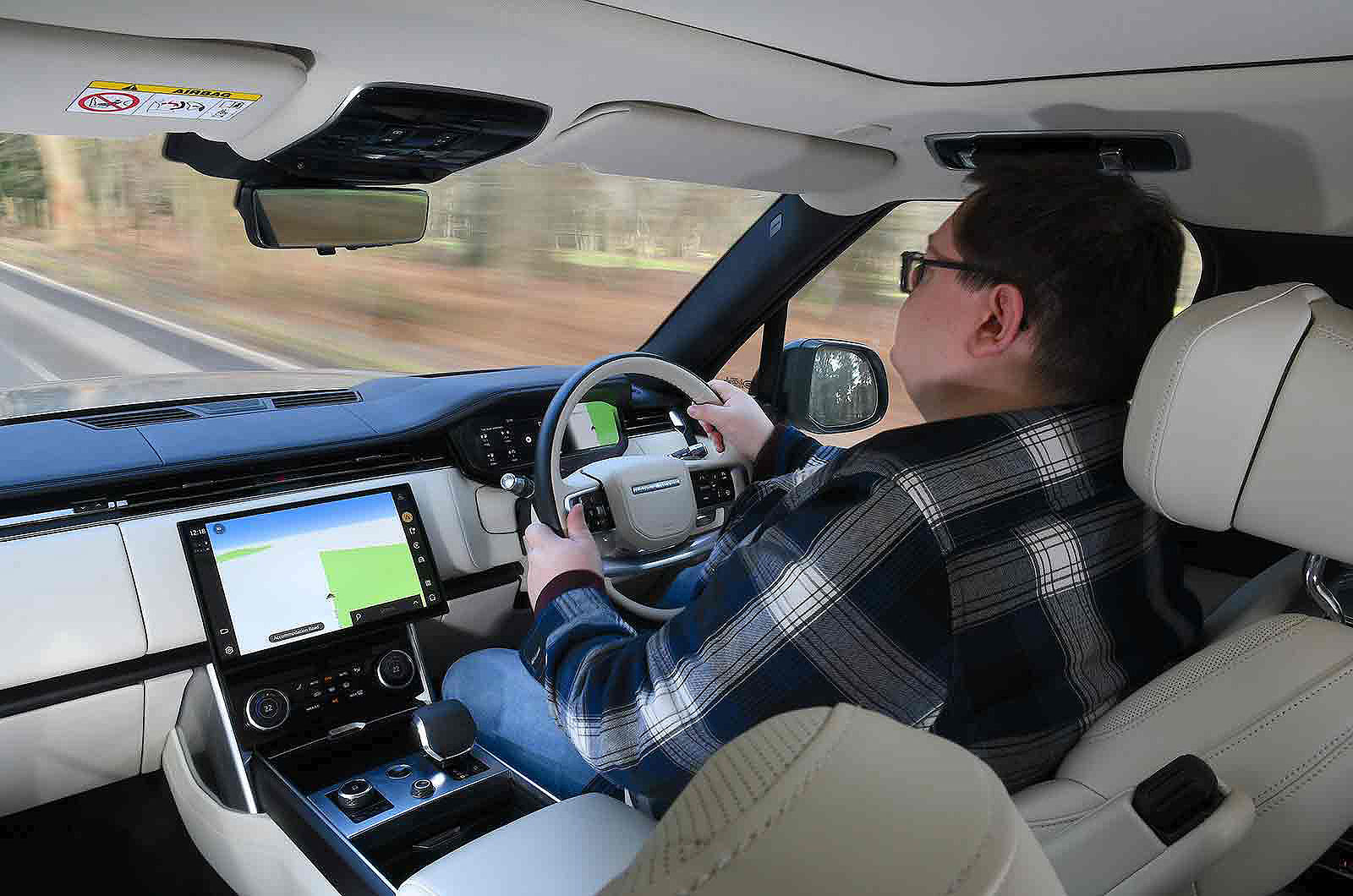
The full-fat Range Rover is famed more for its opulence and go-anywhere ability than its practicality, but it certainly ticks the latter box; it offers five seats in regular form and six or seven in long-wheelbase guise, plus all versions' boots are enormous, with no compromise for the plug-in hybrid.
Every Range Rover has an electrically operated split tailgate; the top section lifts up while the lower part folds down, creating a handy seat or platform to use when loading. Folding the third row lets you make use of a pair of pull-up load dividers, and there's a cupholder at each side of the tailgate base.
To help shorter passengers when getting in and out, a button in the boot sets the car's suspension to a low 'entry' mode.
Read our in-depth Range Rover review
What is What Car? best price?
The What Car? best price shows you the cheapest way to buy your new car, whether it's by choosing an in-stock car through our partner Autotrader or placing a factory order.
Available now from: £99,995
RRP from: £107,530
About our price indicator
What Car? indicative Personal lease example (subject to status)
3.0 D300 MHEV Westminster Edition SUV 5dr Diesel Auto 4WD Euro 6 (s/s) (300 ps)
| Expected annual mileage | 5000 |
| Term months | 48 |
| Deposit months | 12 |
| Monthly payment | £1,330.95 |
| Initial payment | £15,971.40 |
Step-by-step
Leasing works a bit like a long-term rental. You drive it, but you don’t own it.
- Choose your car, pick your terms and apply for lease credit online
- Pay monthly rental payments for your chosen term length
- Drive it, enjoy it, then give it back at the end
What you get
When you lease with Autotrader you get all of this:
- Full manufacturer’s warranty
- Road tax and roadside assistance included
- No admin fees
- Free returns within 30 days*
- Lower total monthly cost than PCP/HP
- No balloon payments
- Road tax included
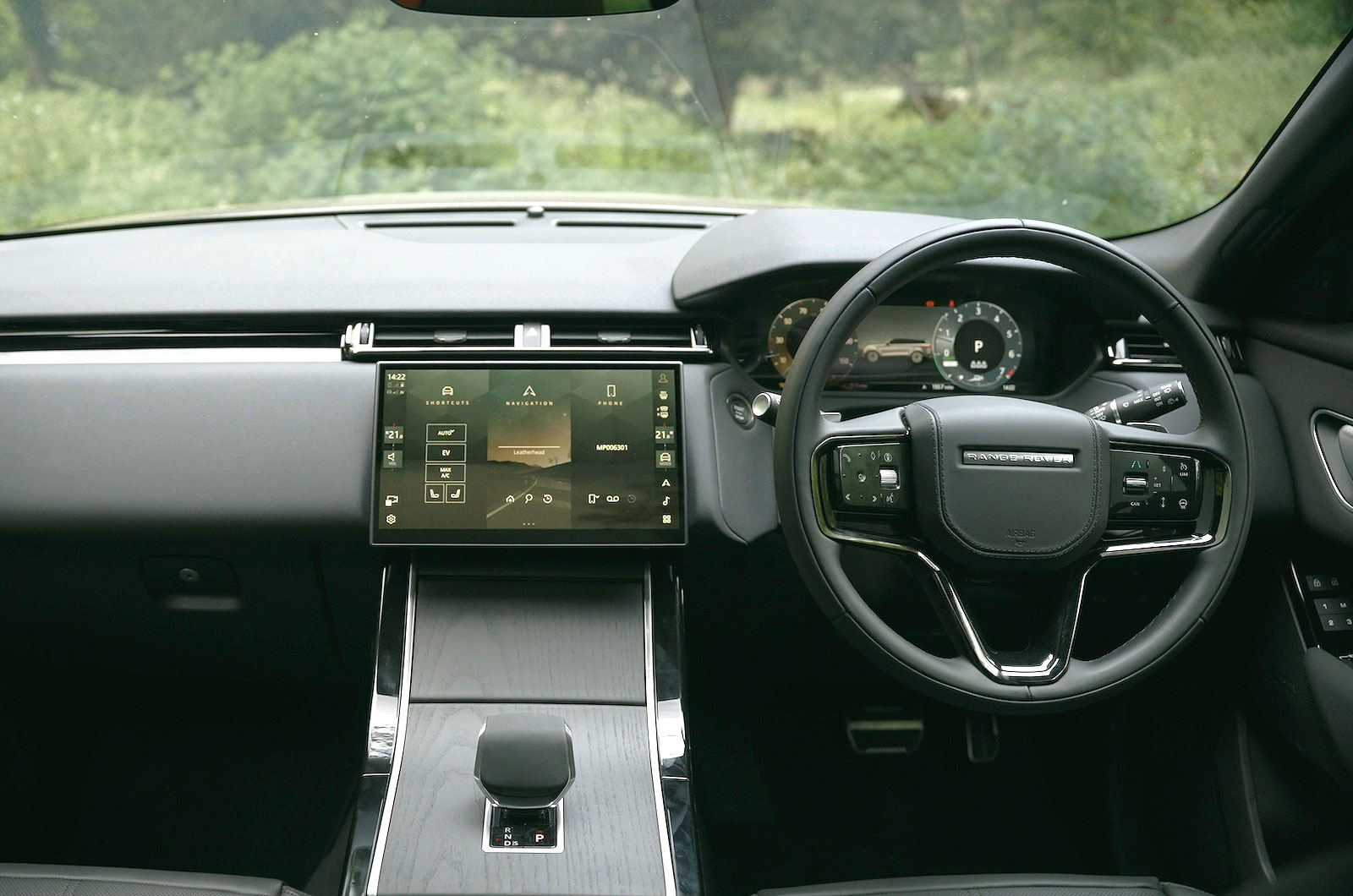
Our pick: 2.0 D200 MHEV S Auto 4WD Euro 6 (s/s) 5dr
Strengths
- Very comfy with smaller wheels or air suspension
- Cheaper versions are temptingly priced
- Huge boot
Weaknesses
- Rivals are more agile
- Fiddly climate controls
- Disappointing reliability record
Boot size 632 litres | Suitcases 10
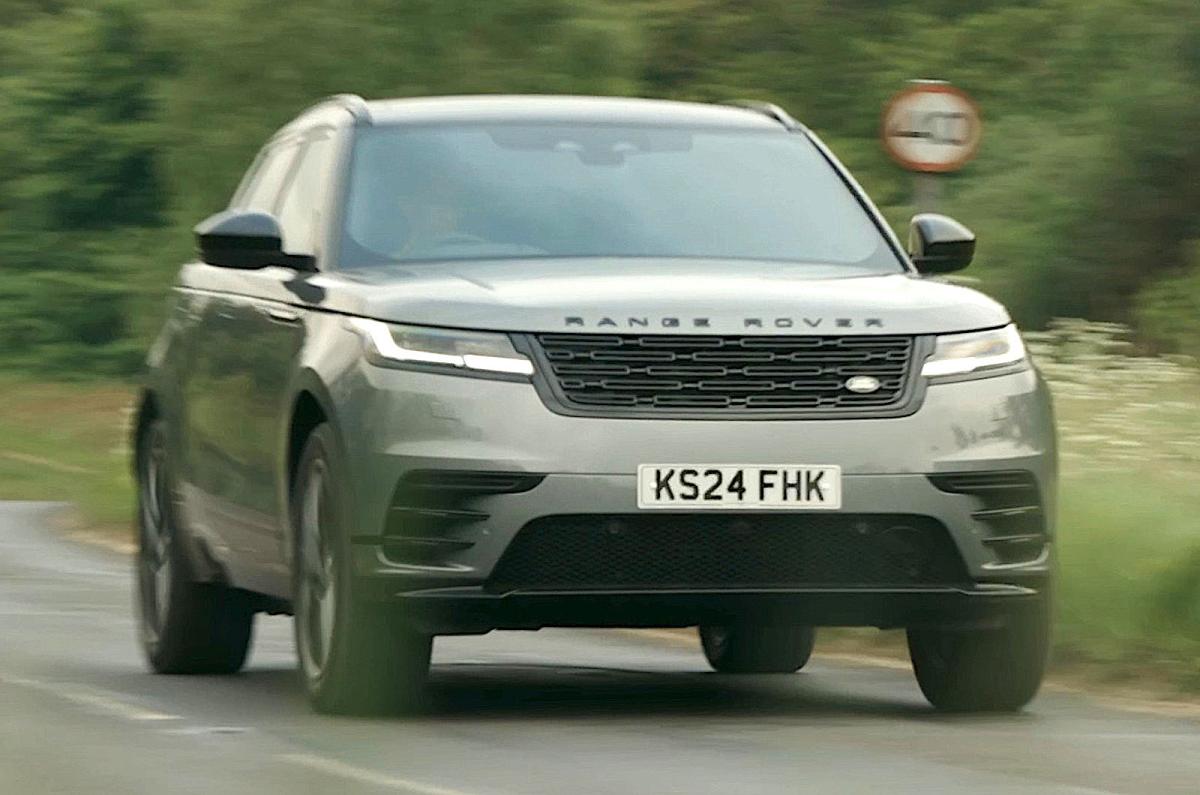
The Velar is more affordable and more compact than the Range Rover Sport, yet it's a better option if you've got lots of clobber to carry; its 10-case total beats the nine cases its sibling can swallow.
An electric tailgate is standard, but you have to pay extra if you want luggage nets, rubber or quilted mats, or storage partitions. You can also add release handles at either side of the boot (£105) so you don't have to open a side door to fold the rear seats down.
The boot floor is quite high off the ground, but if you choose a model with air suspension you can lower it via -bootmounted controls when the car is parked.
The P400e plug-in hybrid's battery reduces boot capacity to eight cases (503 litres).
Read our in-depth Range Rover Velar review
What is What Car? best price?
The What Car? best price shows you the cheapest way to buy your new car, whether it's by choosing an in-stock car through our partner Autotrader or placing a factory order.
Available now from: £52,500
RRP from: £55,460
About our price indicator
What Car? indicative Personal lease example (subject to status)
2.0 D200 MHEV S SUV 5dr Diesel Auto 4WD Euro 6 (s/s) (204 ps)
| Expected annual mileage | 5000 |
| Term months | 60 |
| Deposit months | 12 |
| Monthly payment | £732.72 |
| Initial payment | £8,792.64 |
Step-by-step
Leasing works a bit like a long-term rental. You drive it, but you don’t own it.
- Choose your car, pick your terms and apply for lease credit online
- Pay monthly rental payments for your chosen term length
- Drive it, enjoy it, then give it back at the end
What you get
When you lease with Autotrader you get all of this:
- Full manufacturer’s warranty
- Road tax and roadside assistance included
- No admin fees
- Free returns within 30 days*
- Lower total monthly cost than PCP/HP
- No balloon payments
- Road tax included
Strengths
- Rapid acceleration
- Long range between charges
- Tesla’s brilliant charging infrastructure
Weaknesses
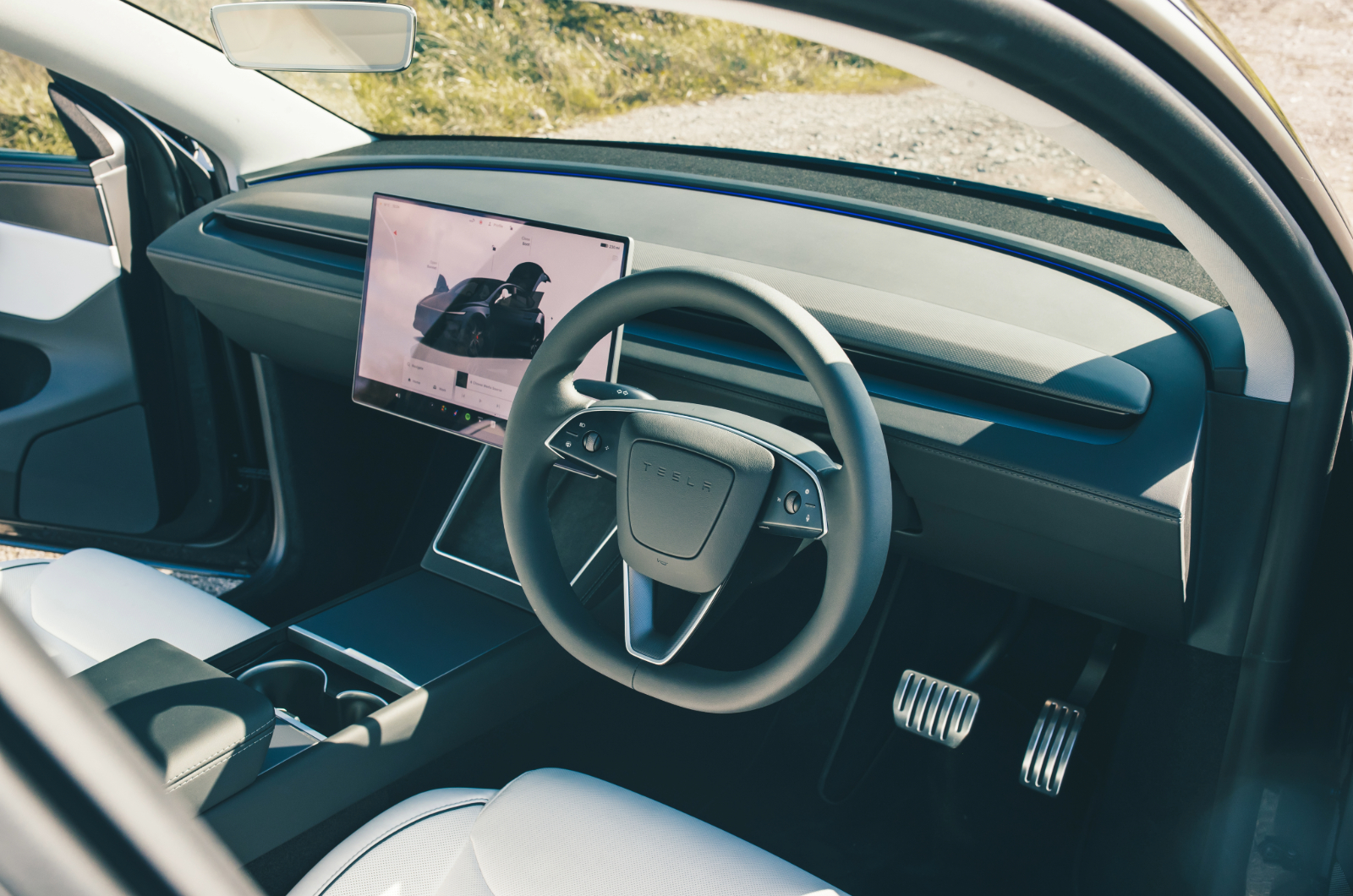
- Some fiddly interior controls
- Doesn't ride as well as some rivals
- No Apple CarPlay or Android Auto
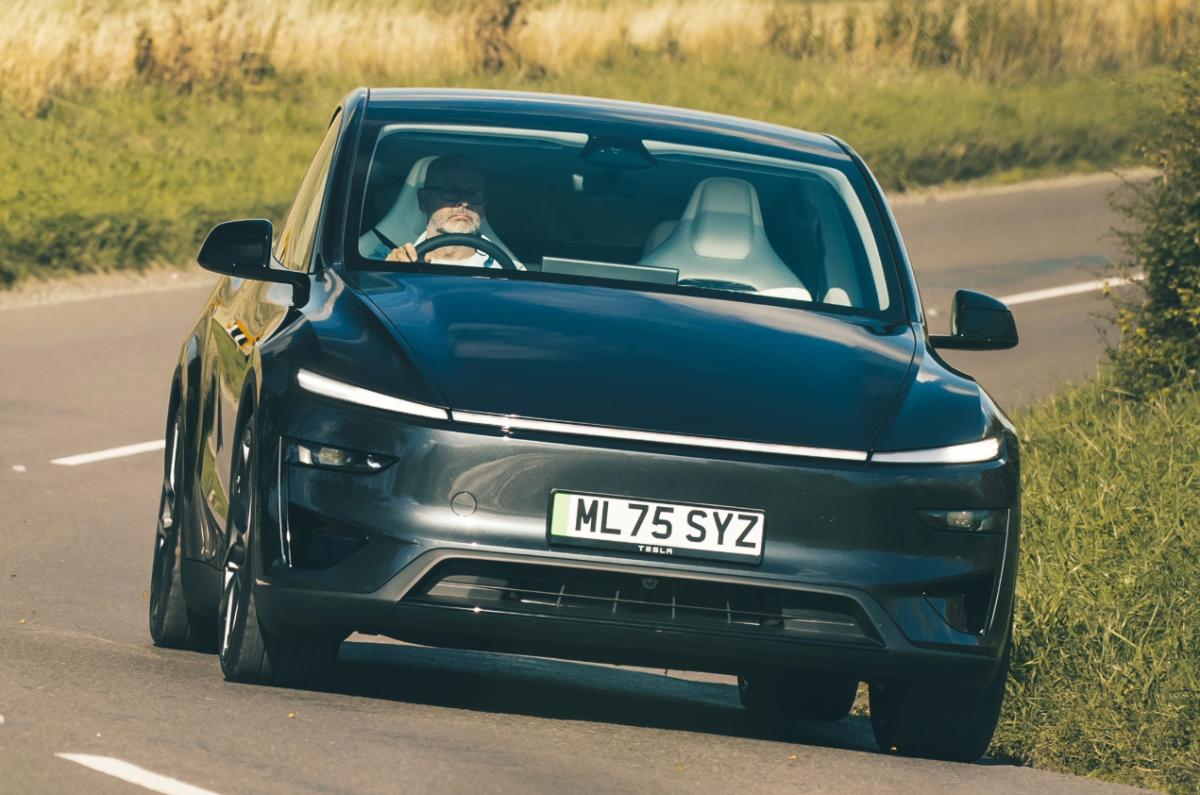
Boot size 971 litres (including underbonnet storage) | Suitcases 10
TheModel Y is deceptively practical; its suitcase tally matches those of larger SUVs, helped by the large well under its boot floor and additional underbonnet storage space.
The rear seatbacks split and fold in a handy 40/20/40 configuration; there are buttons in the boot to do this electrically. There's no option to slide the rear seats forwards and backwards, though.
The Model Y shares underpinnings with the Model 3 saloon, but its boot opening is wider, so bulky items such as pushchairs and golf trolleys can be slid in more easily.
Every Model Y comes with an electric tailgate that can be opened and closed using the car's central touchscreen, the Tesla app or a button on the car's rear end.
Read our in-depth Tesla Model Y review
What is What Car? best price?
The What Car? best price shows you the cheapest way to buy your new car, whether it's by choosing an in-stock car through our partner Autotrader or placing a factory order.
Available now from: £41,990
RRP from: £41,990
About our price indicator
What Car? indicative Personal lease example (subject to status)
62.5kWh Standard SUV 5dr Electric Auto RWD (298 ps)
| Expected annual mileage | 5000 |
| Term months | 48 |
| Deposit months | 12 |
| Monthly payment | £411.44 |
| Initial payment | £4,937.28 |
Step-by-step
Leasing works a bit like a long-term rental. You drive it, but you don’t own it.
- Choose your car, pick your terms and apply for lease credit online
- Pay monthly rental payments for your chosen term length
- Drive it, enjoy it, then give it back at the end
What you get
When you lease with Autotrader you get all of this:
- Full manufacturer’s warranty
- Road tax and roadside assistance included
- No admin fees
- Free returns within 30 days*
- Lower total monthly cost than PCP/HP
- No balloon payments
- Road tax included
Strengths
- Spacious interior and boot
- PHEVs are cheap to run as company cars
- A quiet and comfortable cruiser
Weaknesses
- Could be sharper to drive
- Not enough physical controls
- VW's reliability record is nothing special
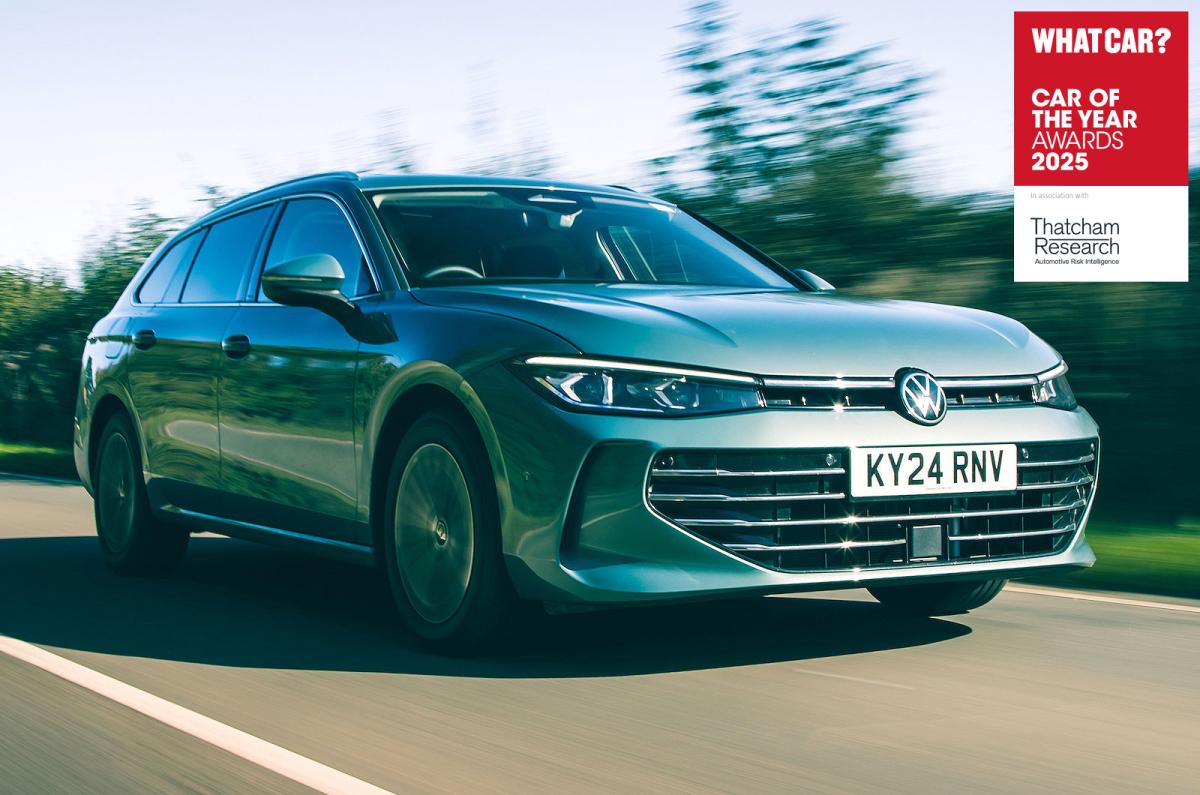
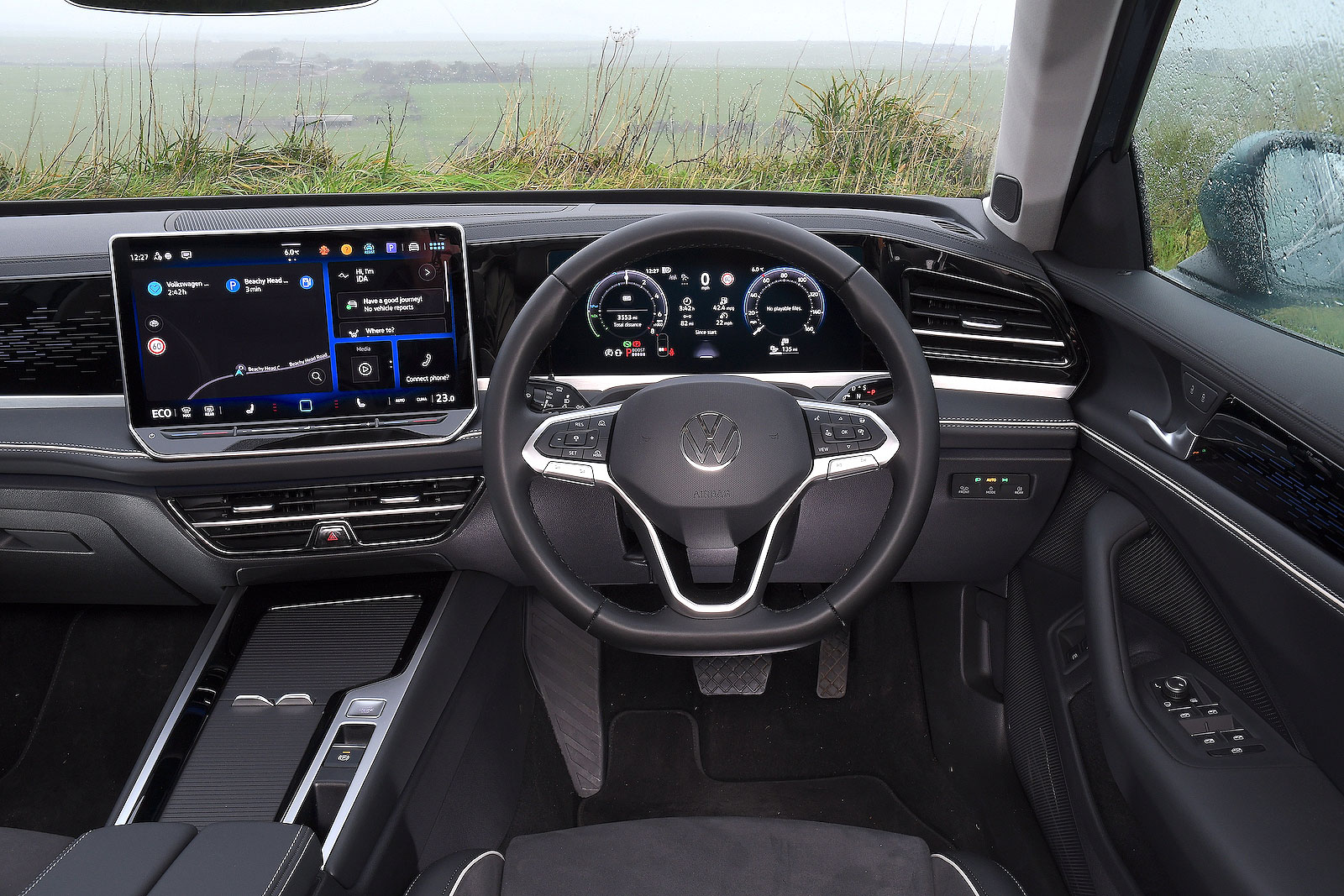
Boot size 690 litres | Suitcases 10
The latest, ninth-generation Passat is available only as an estate, and one that's longer, wider and roomier than before. In fact, having been developed alongside the Skoda Superb Estate, it shares that car's onpaper boot capacity. In practice, though, its rival can take one more carry-on suitcase; the shape of the Passat's boot prevents it from swallowing that 11th case.
There are plenty of useful features, though, including hooks and a 12-volt power socket. An electric tailgate is standard, and there are handily placed levers in the load bay for releasing the rear seatbacks.
Those seatbacks split only 60/40, but their versatility is boosted by a ski hatch that slender items can pass through.
Read our in-depth Volkswagen Passat Estate review
Strengths
- Strong engines
- Spacious inside for up to five people
- Excellent towing capabilities
Weaknesses
- Depreciates quicker than a BMW X5
- Firm ride without air suspension
- No seven-seat option
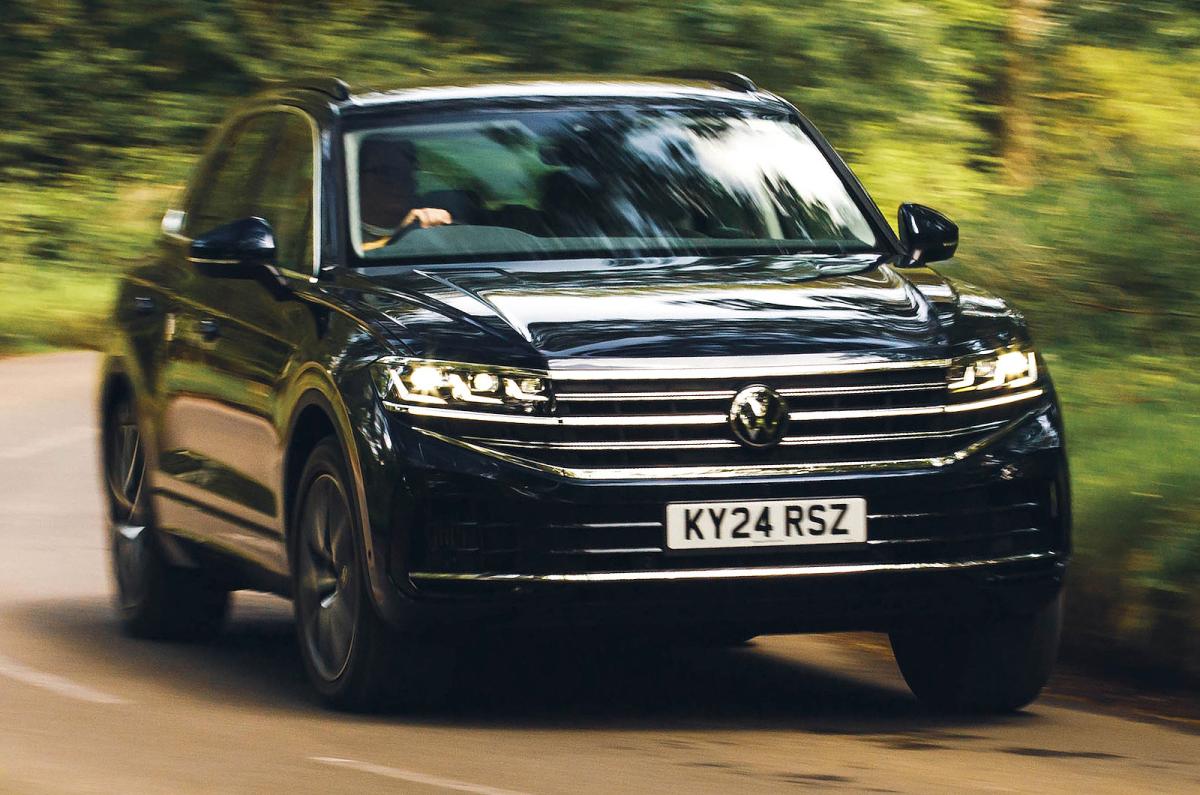
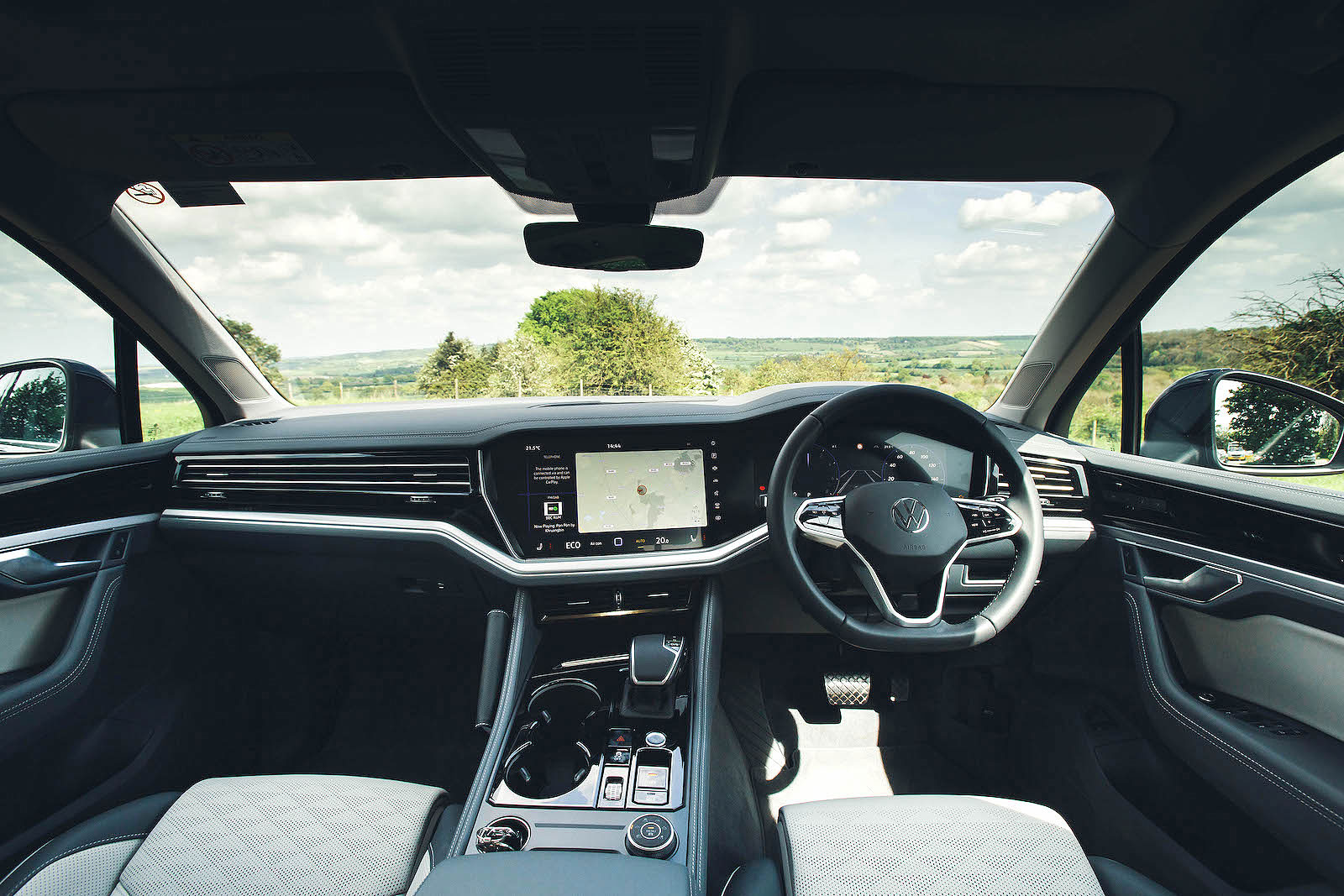
Boot size 810 litres | Suitcases 10
The Touareg shares its underpinnings with the Audi Q7, so it's no surprise that it has one of the largest boots in the SUV class. Unlike the Q7, though, it's offered with only five seats, the second row sliding to provide either more cargo space or extra leg room for passengers. These seats split 40/20/40; depending on the trim level, there are either manual or electric buttons in the boot to release and lower the seatbacks.
The load area is nicely square, and there's no lip to lift things over. Although it's not too high off the ground, opting for a model with air suspension will allow you to lower the car when it's parked. An electric tailgate is standard, along with four load lashing points in the boot.
Read our in-depth Volkswagen Touareg review
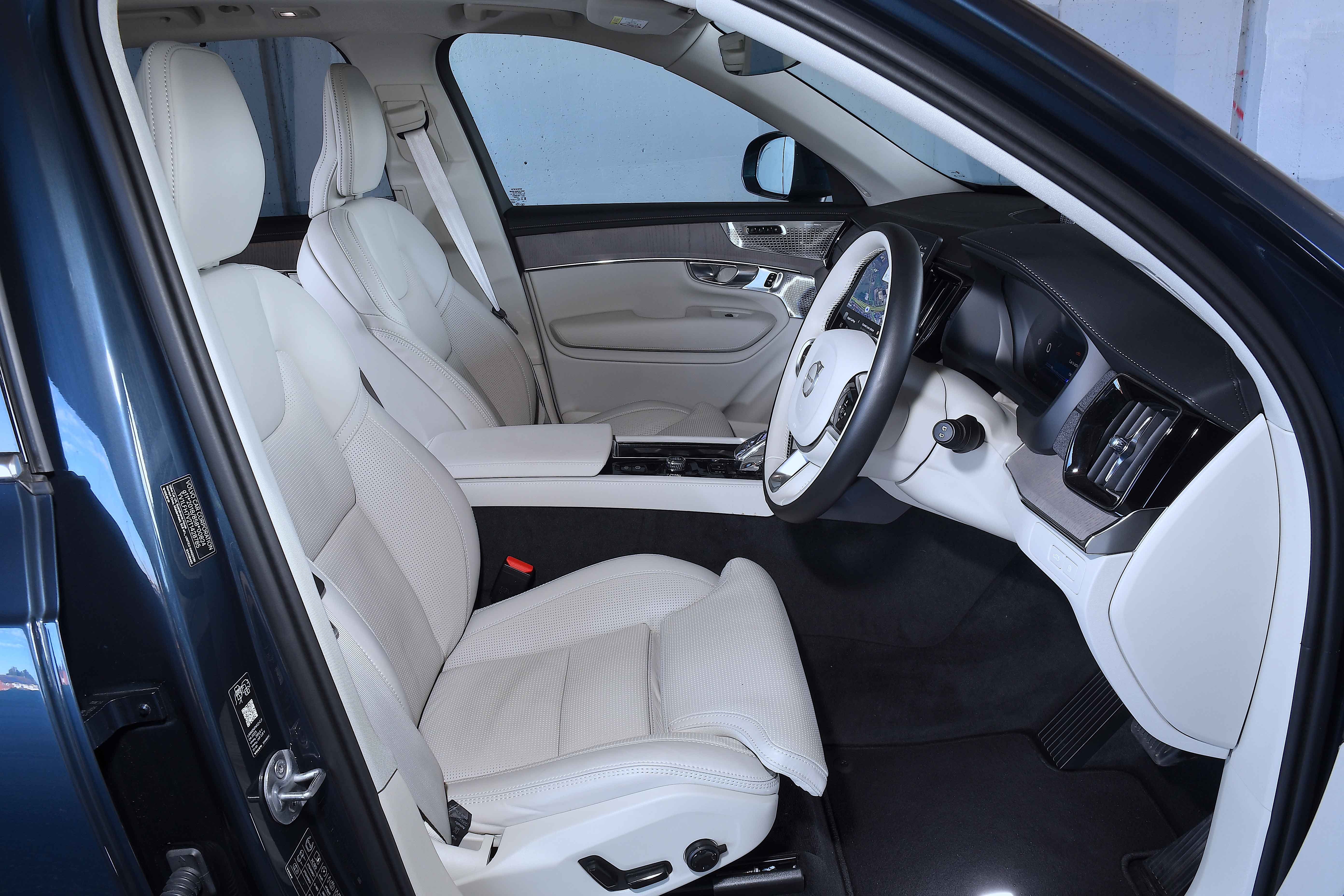
Our pick: 2.0 B5 MHEV Core Auto 4WD Euro 6 (s/s) 5dr
Strengths
- Classy interior
- Seven seats come as standard
- Cheaper to buy than some rivals
Weaknesses
- The Audi Q7 has a smoother ride
- A Land Rover Defender has roomier third-row seating
- Expired Euro NCAP safety rating
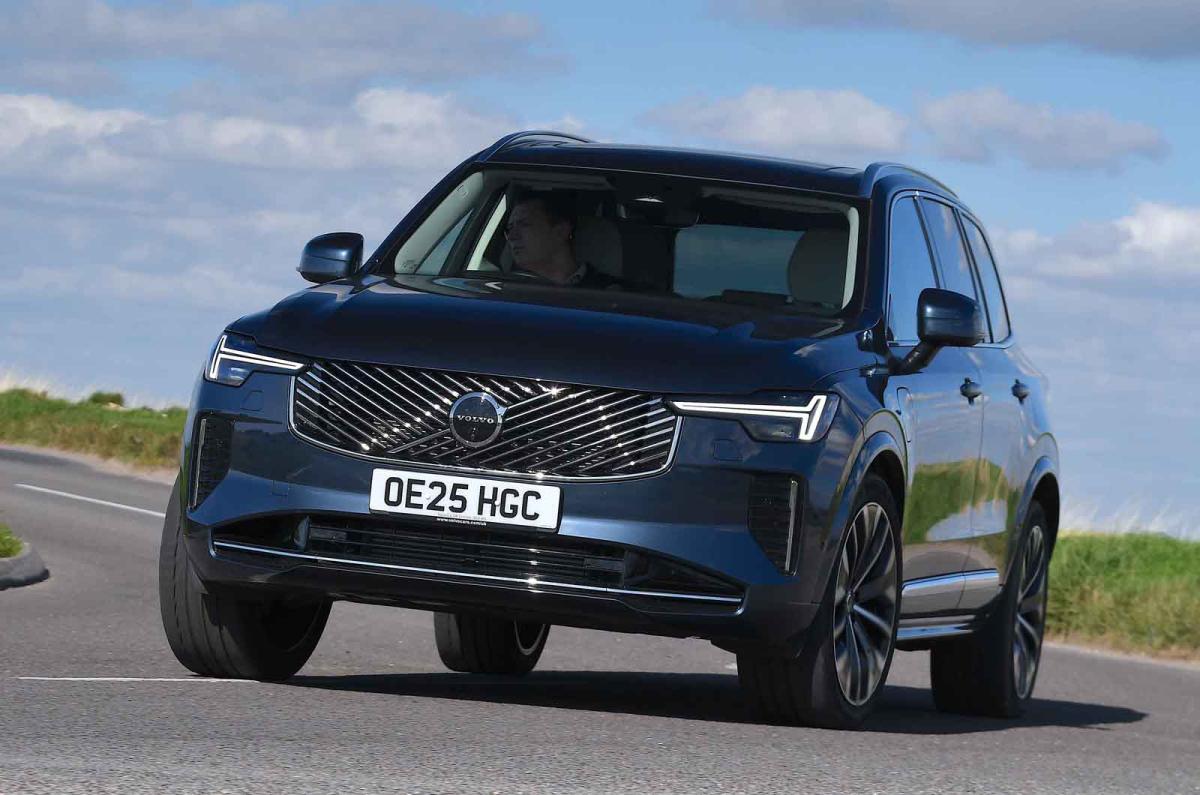
Boot size 650 litres | Suitcases 10
Volvo's flagship SUV is big, luxurious and practical, with seven seats as standard. The boot area is wide and square, with no intrusions, and as one of the longest in its class you might be able to stow larger items without folding the second-row seats. The three middle-row seats slide backwards and forwards individually.
The boot aperture is large and there's no load lip. If you opt for a model with air suspension, you can lower the car's rear end at the touch of a button to aid loading. There's an underfloor stowage cubby in all versions except the T8 plug-in hybrid; its battery occupies that space. Mind you, some plug-in hybrid rivals, including the Range Rover Velar, sacrifice more space.
Read our in-depth Volvo XC90 review
For all the latest reviews, advice and new car deals, sign up to the What Car? newsletter here
Read more: Best family SUVs >>
What is What Car? best price?
The What Car? best price shows you the cheapest way to buy your new car, whether it's by choosing an in-stock car through our partner Autotrader or placing a factory order.
Available now from: £67,165
RRP from: £66,270
About our price indicator
What Car? indicative Personal lease example (subject to status)
2.0 B5 MHEV Plus SUV 5dr Petrol Hybrid Auto 4WD Euro 6 (s/s) (250 ps)
| Expected annual mileage | 5000 |
| Term months | 36 |
| Deposit months | 12 |
| Monthly payment | £573.50 |
| Initial payment | £6,882.00 |
Step-by-step
Leasing works a bit like a long-term rental. You drive it, but you don’t own it.
- Choose your car, pick your terms and apply for lease credit online
- Pay monthly rental payments for your chosen term length
- Drive it, enjoy it, then give it back at the end
What you get
When you lease with Autotrader you get all of this:
- Full manufacturer’s warranty
- Road tax and roadside assistance included
- No admin fees
- Free returns within 30 days*
- Lower total monthly cost than PCP/HP
- No balloon payments
- Road tax included