Toyota C-HR+ review
The Toyota C-HR+ is an electric family SUV with a long range and a comfy ride





























What is What Car? best price?
The What Car? best price shows you the cheapest way to buy your new car, whether it's by choosing an in-stock car through our partner Autotrader or placing a factory order.
Available now from: £36,754
RRP from: £34,495
About our price indicator
What Car? indicative Personal lease example (subject to status)
Toyota C-HR+
| Expected annual mileage | 5000 |
| Term months | 36 |
| Deposit months | 12 |
| Monthly payment | £304.49 |
| Initial payment | £3,653.88 |
Step-by-step
Leasing works a bit like a long-term rental. You drive it, but you don’t own it.
- Choose your car, pick your terms and apply for lease credit online
- Pay monthly rental payments for your chosen term length
- Drive it, enjoy it, then give it back at the end
What you get
When you lease with Autotrader you get all of this:
- Full manufacturer’s warranty
- Road tax and roadside assistance included
- Free returns within 30 days*

- Lower total monthly cost than PCP/HP
- No balloon payments
- Road tax included
Figures for 77kWh Design Auto 5dr
Did you know that there’s an American Psycho 2? It wasn’t initially intended to be a sequel, but during production, studio executives decided otherwise. Perhaps a similar thing happened with the Toyota C-HR+.
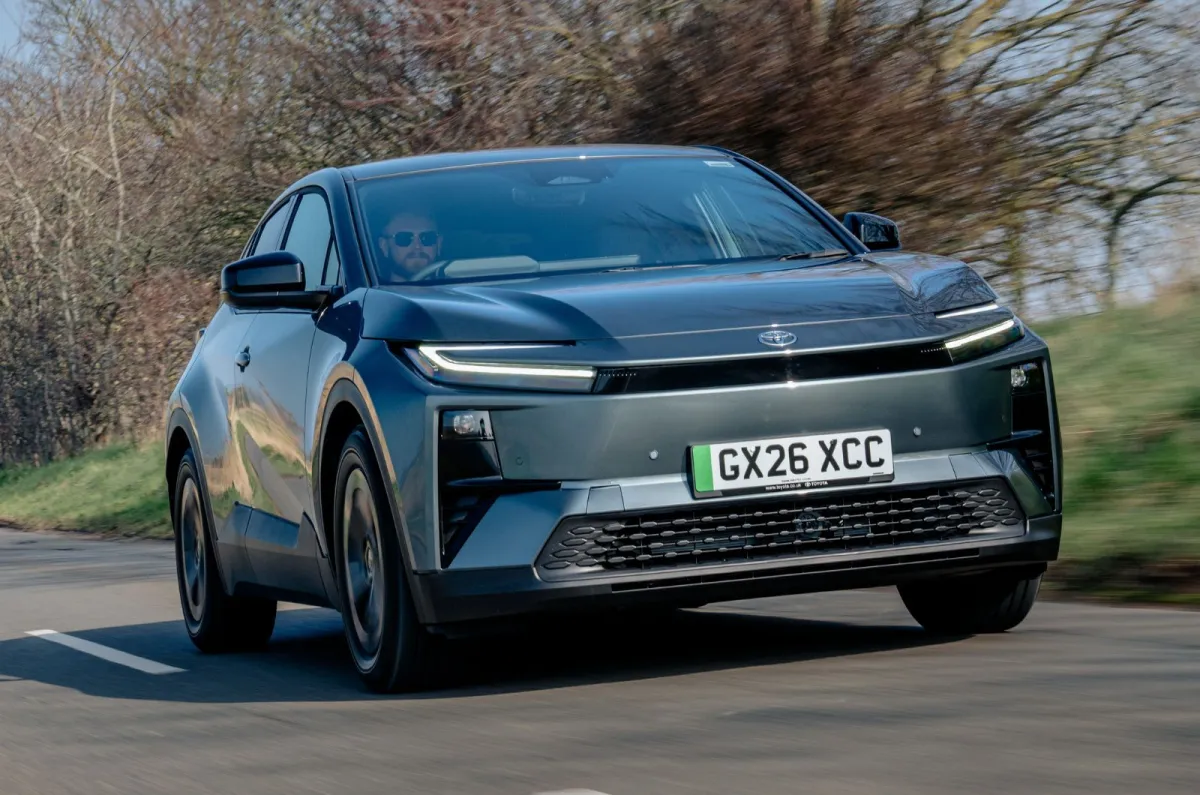
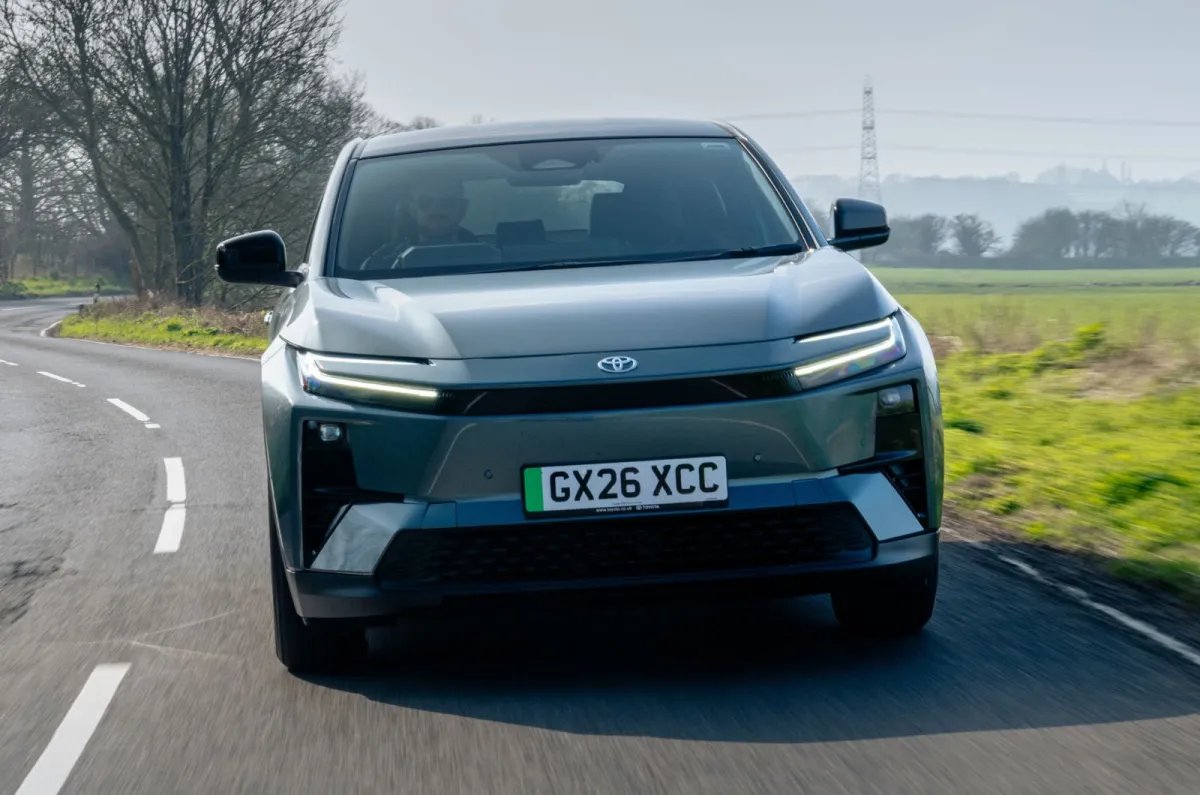
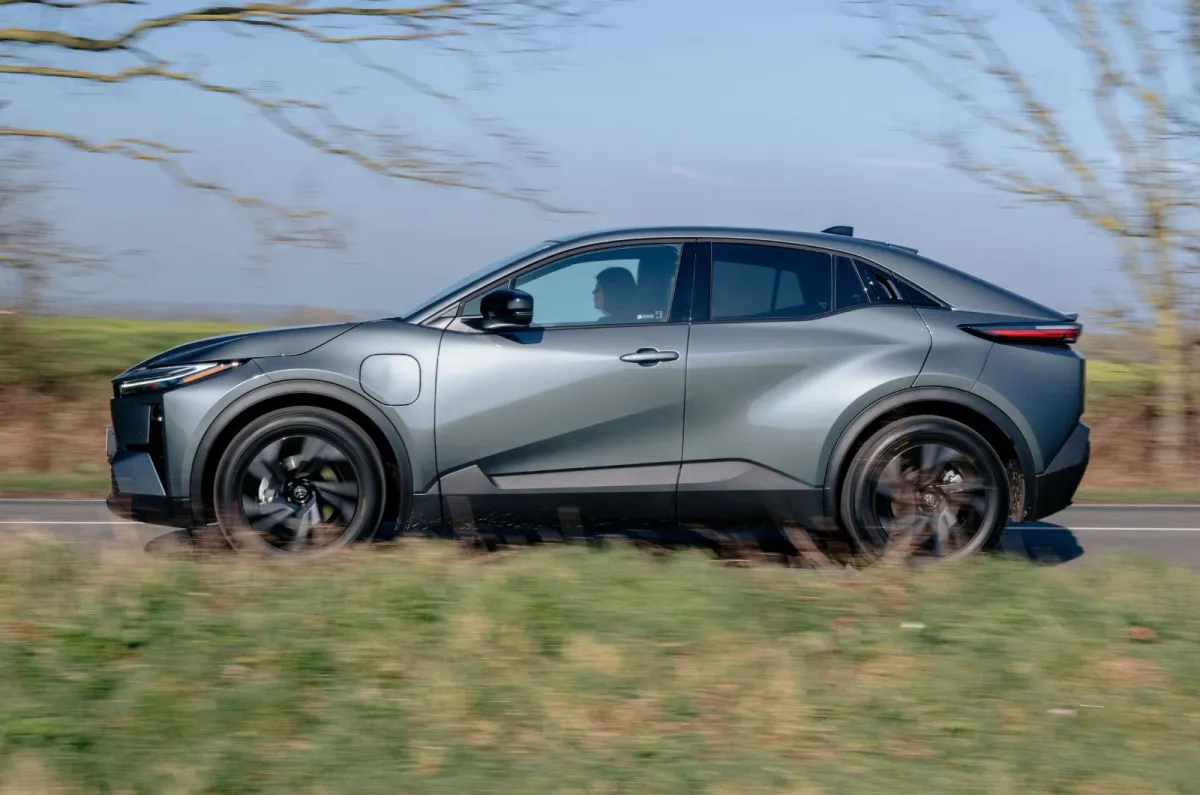
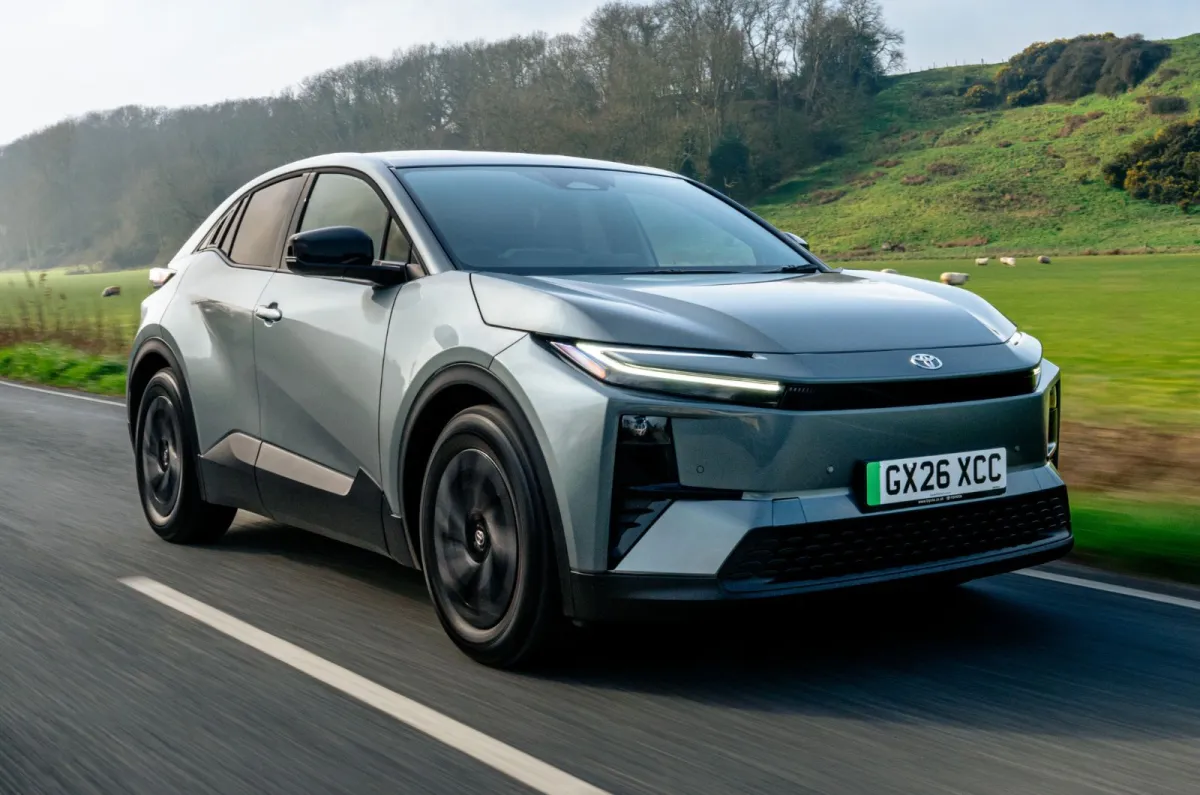
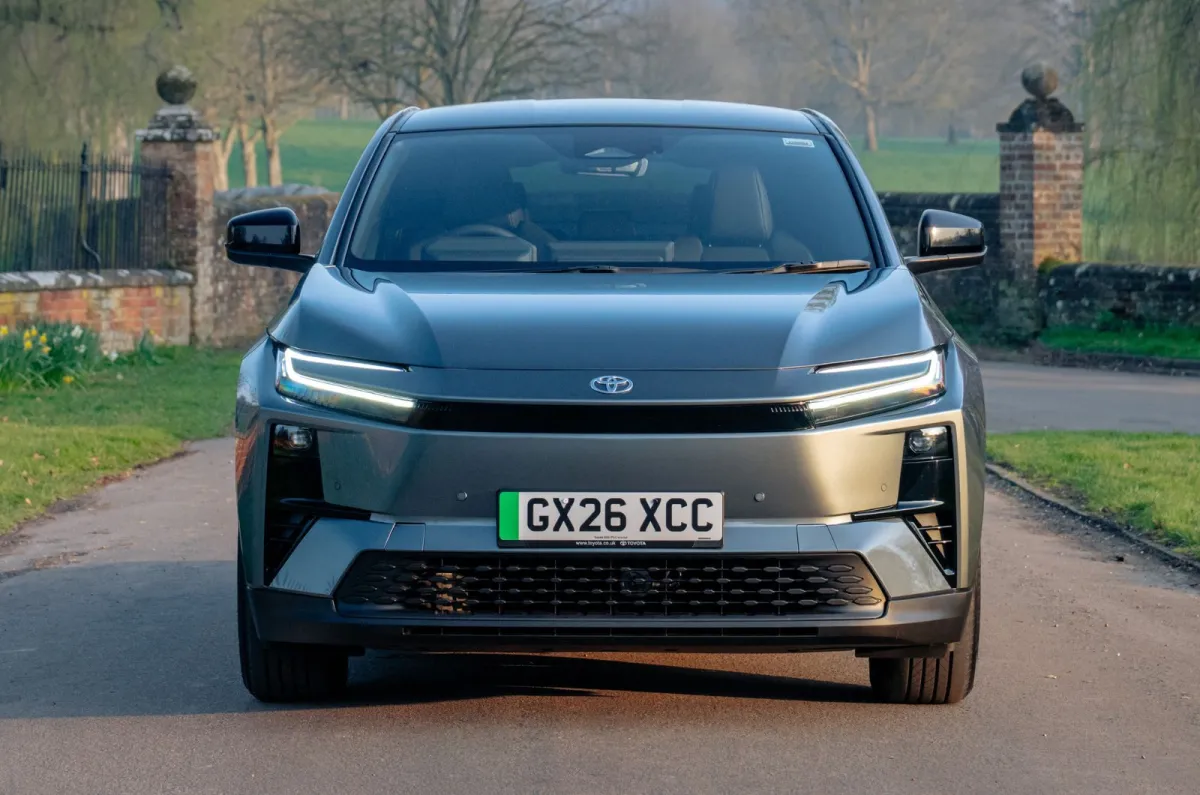
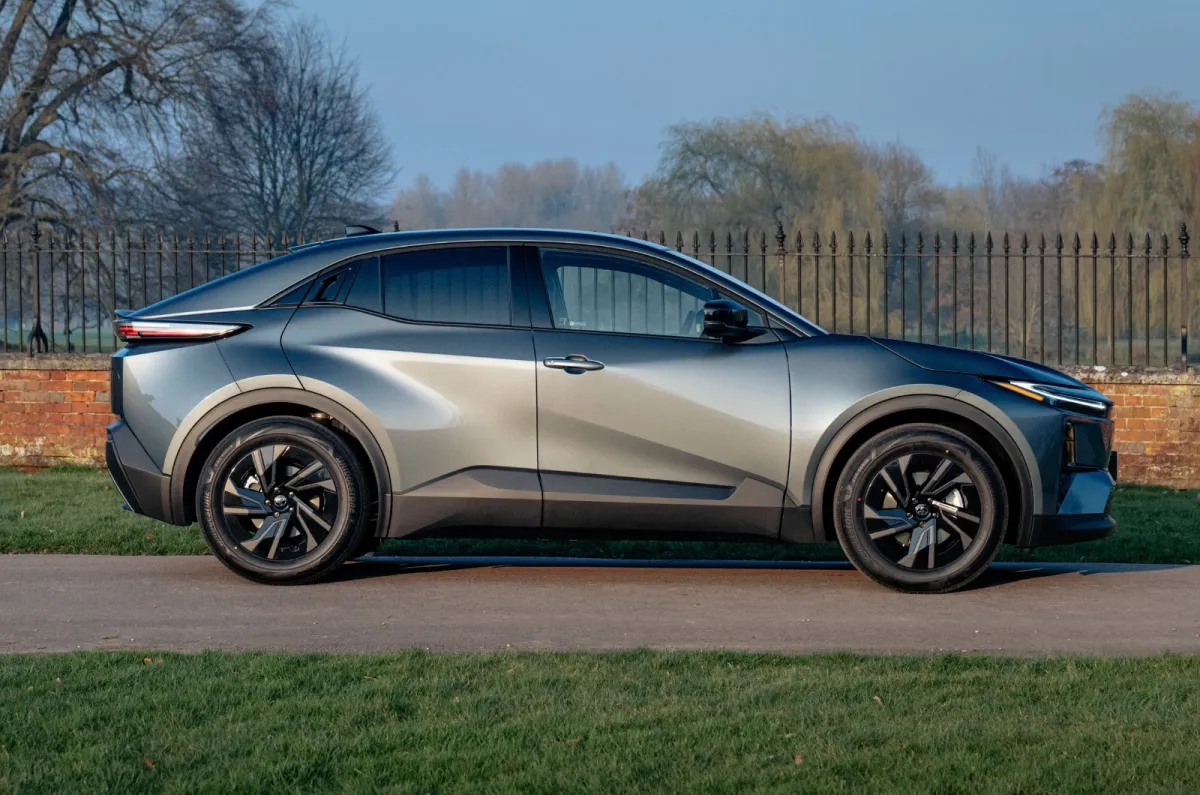
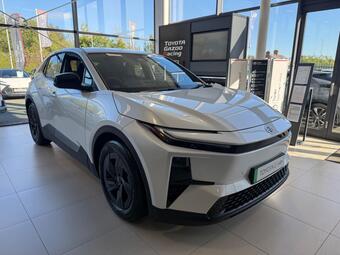
You see, the Toyota C-HR and C-HR+ are very different. The former is a small SUV available as a hybrid or plug-in hybrid (PHEV). The latter is an all-new, all-electric SUV built on dedicated electric vehicle (EV) underpinnings – shared with the Toyota bZ4X. The C-HR+ is bigger (in every dimension) than the C-HR, and we class it as a family SUV.
What is What Car? best price?
The What Car? best price shows you the cheapest way to buy your new car, whether it's by choosing an in-stock car through our partner Autotrader or placing a factory order.
Available now from: £36,754
RRP from: £34,495
About our price indicator
What Car? indicative Personal lease example (subject to status)
Toyota C-HR+
| Expected annual mileage | 5000 |
| Term months | 36 |
| Deposit months | 12 |
| Monthly payment | £304.49 |
| Initial payment | £3,653.88 |
Step-by-step
Leasing works a bit like a long-term rental. You drive it, but you don’t own it.
- Choose your car, pick your terms and apply for lease credit online
- Pay monthly rental payments for your chosen term length
- Drive it, enjoy it, then give it back at the end
What you get
When you lease with Autotrader you get all of this:
- Full manufacturer’s warranty
- Road tax and roadside assistance included
- Free returns within 30 days*
- Lower total monthly cost than PCP/HP
- No balloon payments
- Road tax included
So, the name is mostly there to give the C-HR+ a sense of familiarity with buyers. But like how American Psycho 2 failed as both a sequel and a film in and of itself, does the CH-R+ pale in comparison to rivals? Its toughest competition comes from the five-star Renault Scenic and Skoda Elroq, but if you’re willing to dip your toes into the small electric SUV class, there’s also the Kia EV3.
Read more: Complete the What Car? Reliability Survey now and you could win a prize
What’s new?
- March 2026: Finished C-HR+ arrives in the UK. We test the Design trim, which gets a 72kWh (usable capacity) battery and 376 miles of official range
- October 2025: C-HR+ prototype driven in France


Best buy

Pros
- Good range and efficiency
- Comfortable ride
- Lots of standard kit
Cons
- Rivals feel more agile
- Not much rear space
- Rear visibility isn’t great
Best buy
Performance & drive
What it's like to drive, and how quiet it is
Strengths
- Comfortable ride
- Natural-feeling brakes
- Long range
Weaknesses
- Slightly unnerving steering
- Rivals feel more agile
How fast is it and which motor is best?
The entry-level Toyota C-HR+ is badged Icon. It has a smaller battery and a 165bhp electric motor powering the front wheels, but we’re yet to drive it.
Design and Excel trims get a bigger battery and a 221bhp electric motor (again, driving the front wheels). We have tested this version and it's more than quick enough, being responsive and really nippy around town. It doesn’t quite maintain that level of urgency when getting up to motorway speeds, but it’s still punchier than the Renault Scenic, for instance.
|
|
0-62mph |
Top speed |
|
Icon |
8.4sec |
86mph |
|
Design/Excel |
7.3sec |
99mph |
As for the Skoda Elroq, the C-HR+ feels similarly sprightly in most scenarios. The reason we say ‘most’ is because there is one exception: when you floor the accelerator from a standstill. Where the Elroq grips and goes, the C-HR+ can struggle to put its power down cleanly – even in perfect conditions.
Is it agile and is the ride comfortable?
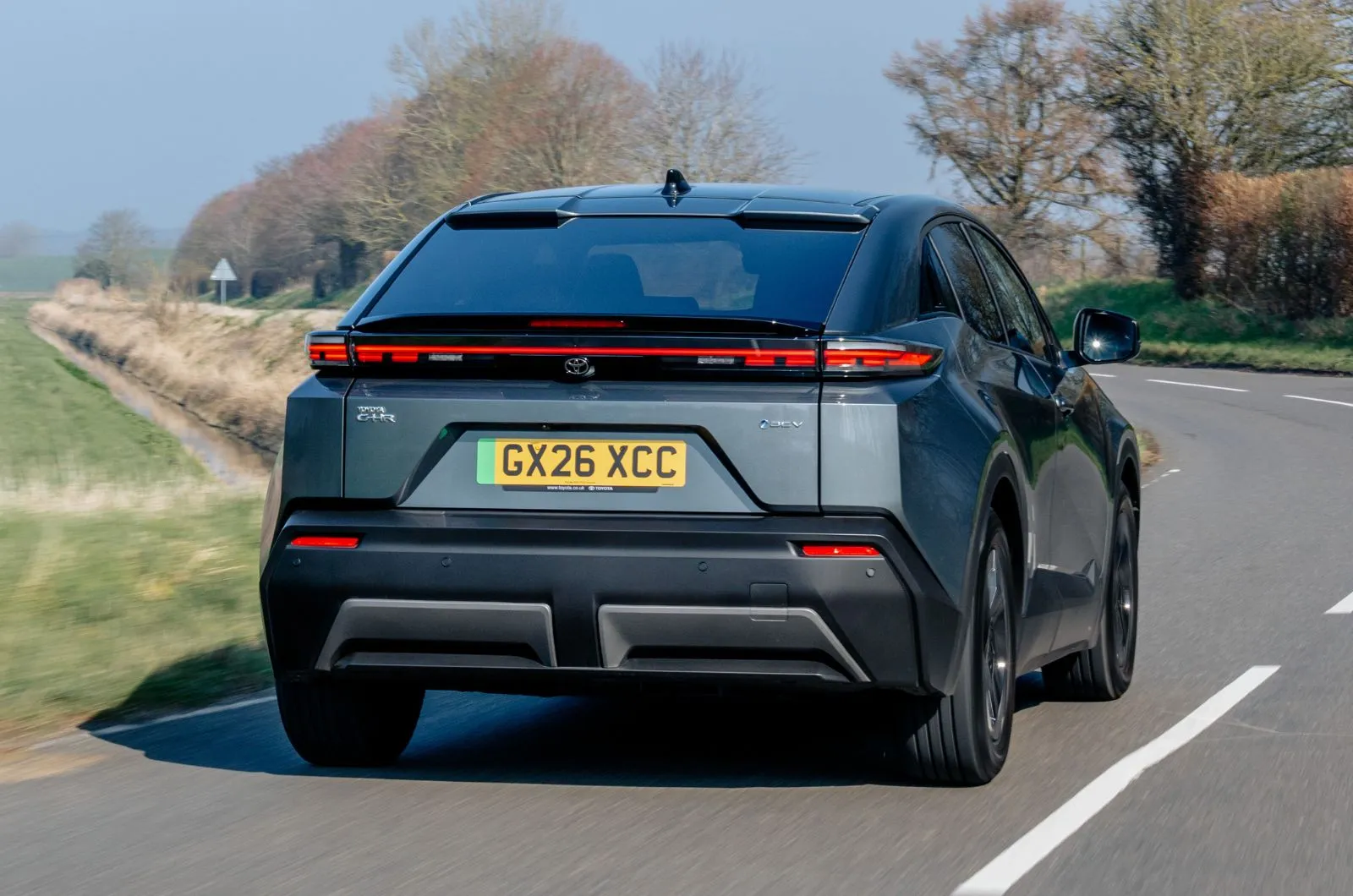
Let’s address the ride first, because it’s one of the C-HR+’s stronger points. It’s on the firmer end of the scale but there’s plenty of suspension travel to soak up bumps remarkably well in a controlled manner. It doesn’t thwack uncomfortably over imperfections like the softly-sprung Leapmotor C10 and, while there’s slightly more fidgeting than the calm-riding Skoda Elroq at low speeds, it’s not far off.
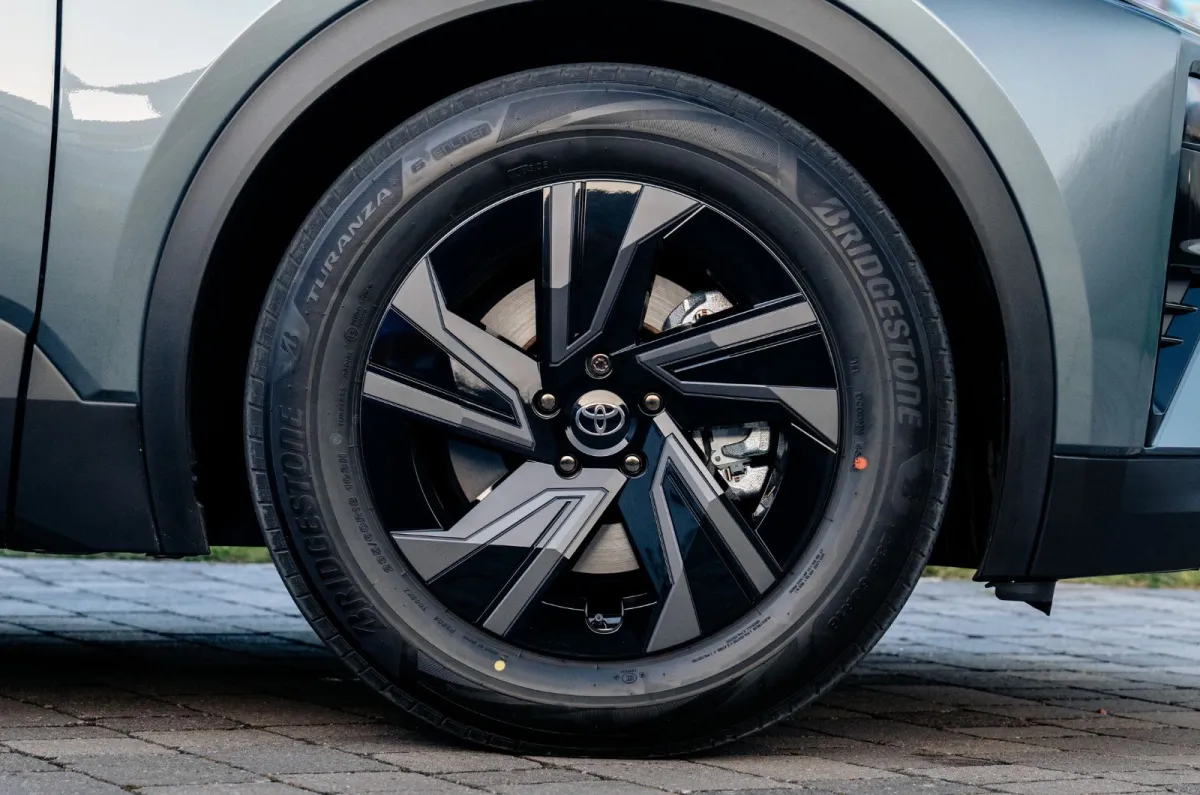
We recommend sticking with Design trim’s standard 18in wheels: the ride is a little firmer on the 20in wheels, but more notably, you miss out on some electric range (more on that later).
Now, part of what makes the rival Elroq so exceptional is that its smooth ride comes at no expense to its tidy body control, combined with well-weighted steering that helps it feel more car-like to drive than most rivals. If you are hoping the C-HR+ will be the same, we’re afraid it’s not quite the case.
The C-HR+ is perfectly capable around town, but it’s on faster, twisty roads where the driver may require a bit more time to build up confidence and trust in the car’s capabilities.
With a fair amount of body lean when cornering, the C-HR+ does feel relatively tall when compared with the Elroq. Meanwhile, the light steering doesn’t feel that direct when you initially turn into a corner and it takes a bit longer to build up weight.
It’s a shame, because there is a good level of grip and the nose of the car will turn in faithfully; it’s just that you don’t get that sense when driving gently.
Is it quiet and how easy is it to drive smoothly?
There is a faint whine from the electric motor at low speeds but the C-HR+ is generally quiet on the motorway. There’s only a little bit of wind noise at high speed, and while there is slightly more road noise than inside a Renault Scenic or Skoda Elroq, it’s not enough to cause a headache. Stick with the 18in wheels on lower trims; the 20in wheels on Excel trim drum up a bit more resonance.
You have regenerative braking in the C-HR+ to recoup some energy as the car slows down. There’s four different levels of strength to choose from and the braking effect builds up naturally when you ease off the accelerator pedal, making it easy to shed speed smoothly. The highest setting isn’t strong enough to bring the C-HR+ to a complete stop.
When you do have to use the brake pedal, the response is immediate and generally well weighted to help you judge your inputs. There are times when it becomes light and that results in a grabby response, but it’s still much easier to manage than the Scenic’s consistently spongey pedal.
What’s the range and efficiency like, and how quickly can it charge?
The C-HR+ is competitive for range, especially if you go for Design or Excel trim. These get a bigger 72kWh (usable capacity) battery, upping the range from 284 miles (with the 54kWh usable capacity battery) to 376 miles. For comparison, the Skoda Elroq 85 can officially manage 360 miles and the Renault Scenic 381 miles.
Choosing the 20in wheels – optional with Design and standard on Excel – takes the range down to 347 miles. Like we said, it’s a reason to stick with the 18in wheels if possible.
As for efficiency, the CH-R+ averaged an impressive 5.6mi/kWh during our test, which took place under sunny conditions across mostly country roads. That’s an exceptional return for an electric SUV.
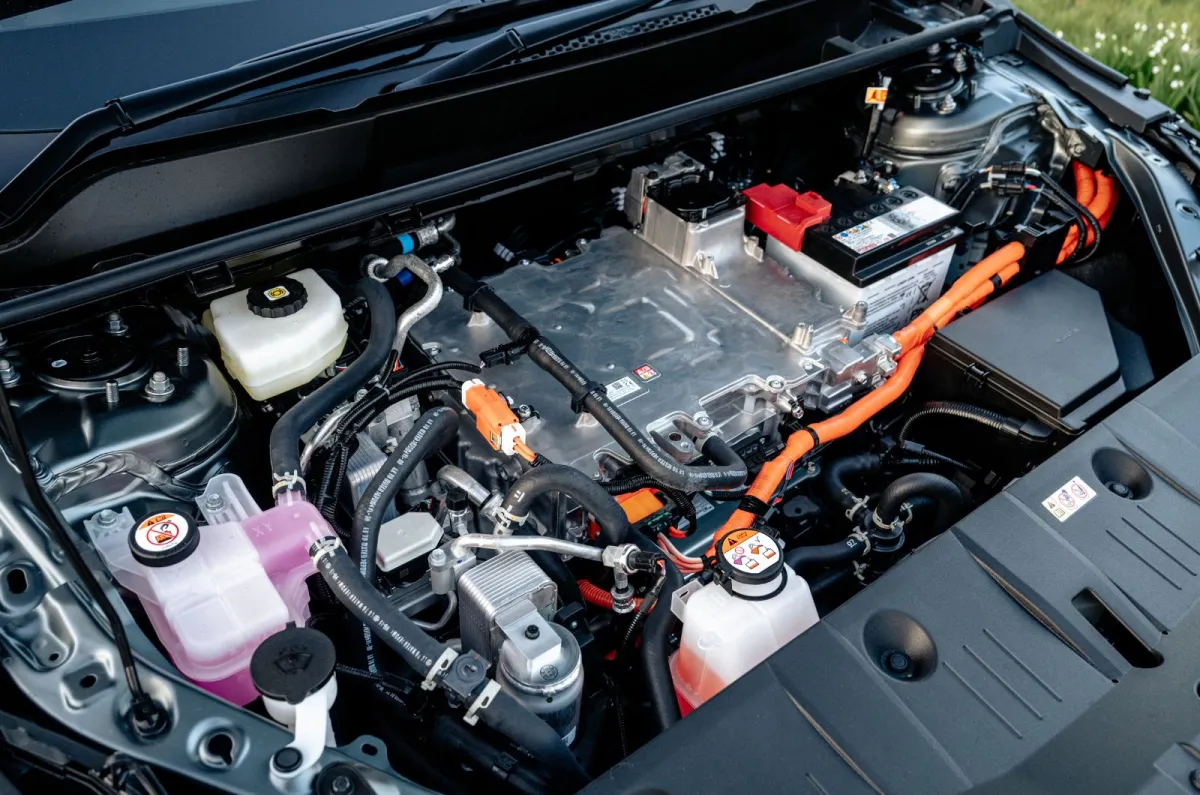
Every C-HR+ is capable of a 150kW maximum charging rate, which is the same as the Scenic and not far off the Elroq 85 (175kW). Using a suitably powerful public DC charger, a 10-80% charge can take around half an hour. Generously, battery preconditioning comes as standard and there’s a heat pump to warm up the interior more efficiently.
“Other countries are getting an all-wheel drive version of the C-HR+, which is the most powerful Toyota ever (outside of the GR Sport range). I thought that felt pretty quick, but didn’t find it so exciting to think we’re missing out.” – Dan Jones, Senior reviewer
Tips & Advice
Interior
The interior layout, fit and finish

Strengths
- Comfortable driving position
- Decent interior materials
- Lots of physical buttons on steering wheel
Weaknesses
- Rear visibility could be better
- Sits you quite low for an SUV
What does the interior look like and is it well made?
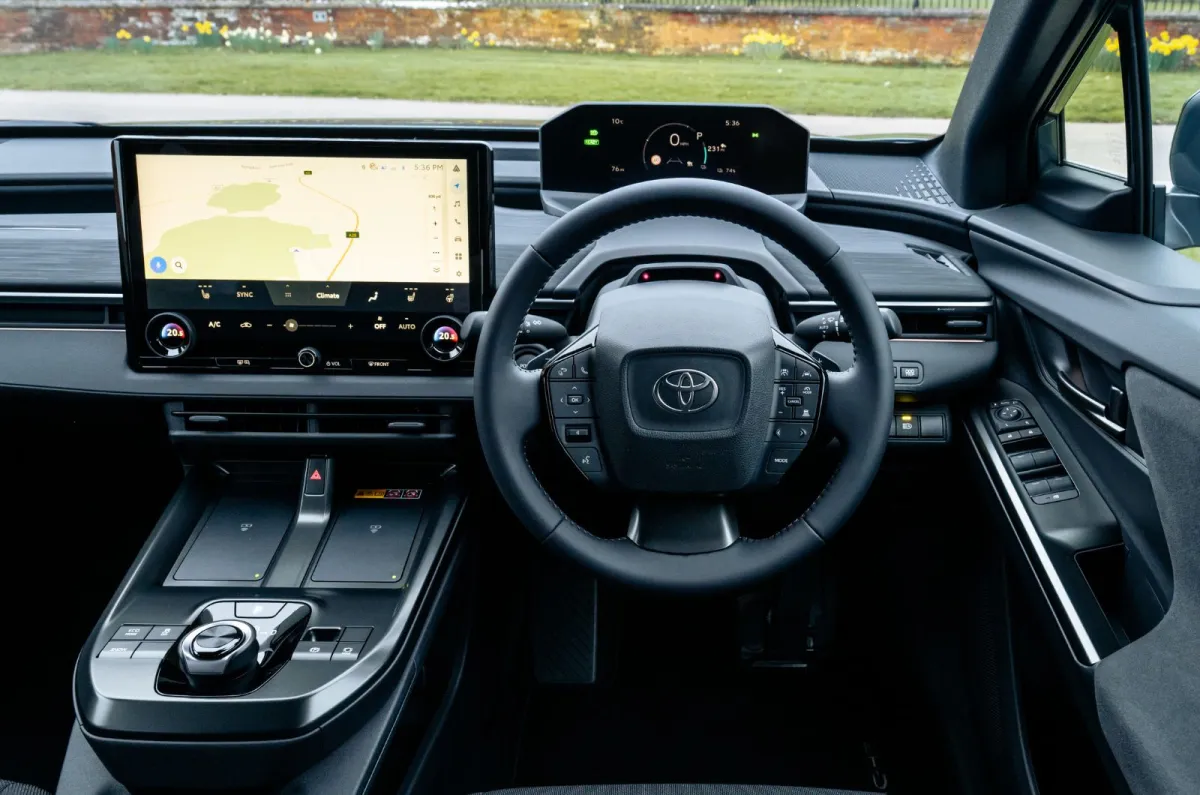
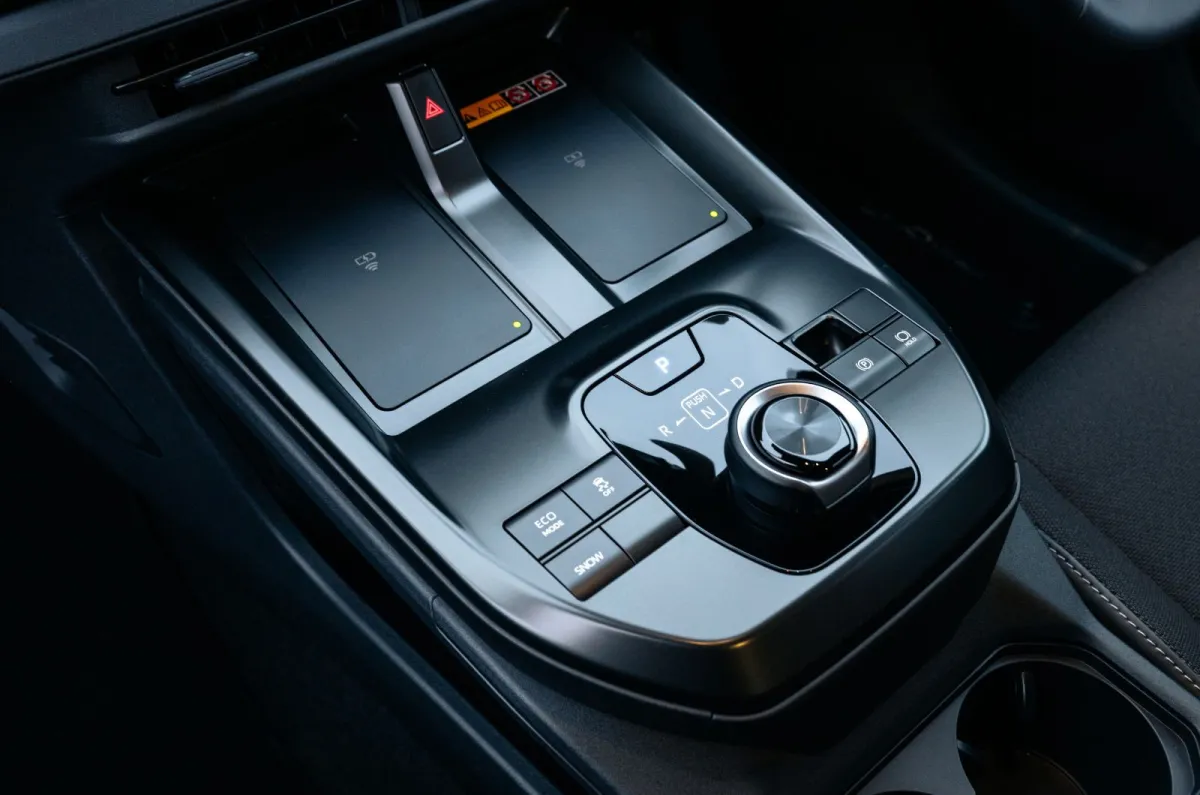
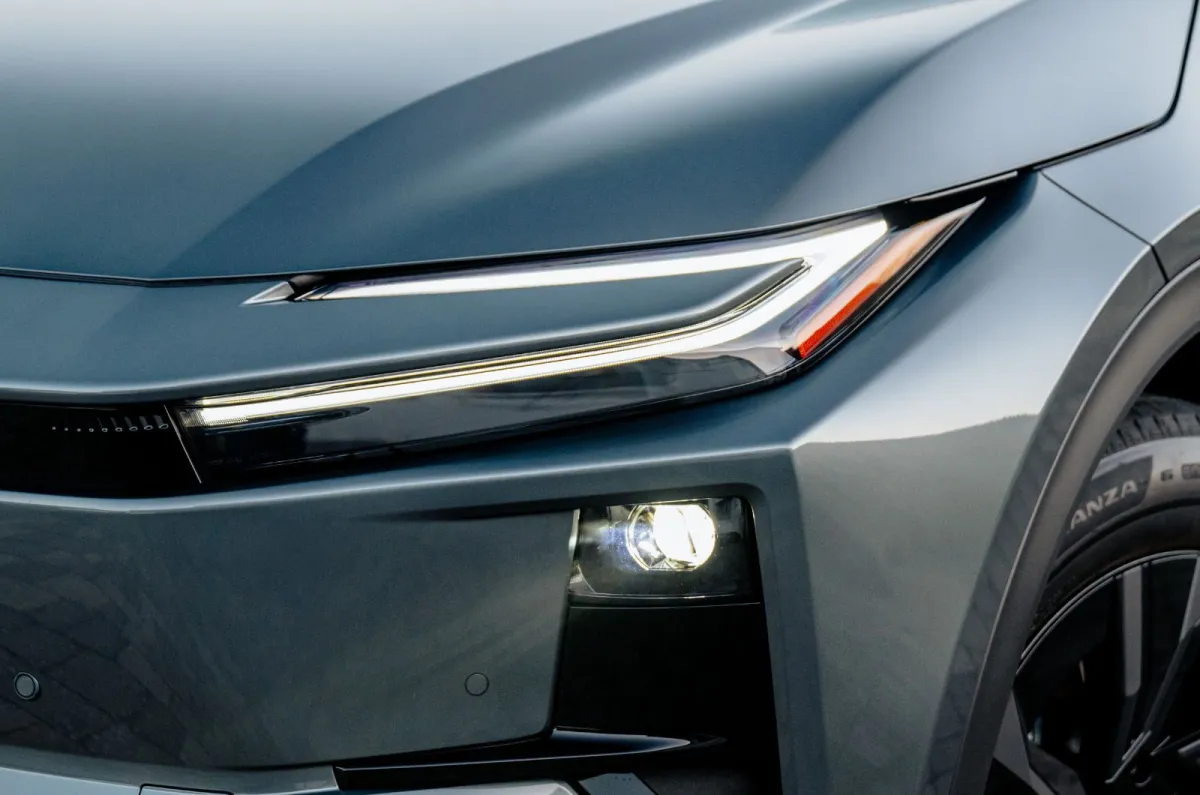
You might expect the Toyota C-HR+ to look a lot like the petrol-engined C-HR inside, but it actually feels much more upmarket. It’s very similar in design to the bigger Toyota bZ4X, with two big screens, a rotary gear selector and two wireless phone chargers as standard.
There are plenty of soft-touch materials used on the dashboard, doors and armrests, and overall the quality feels on a par with the Renault Scenic and Skoda Elroq. The buttons are well damped, while the harder plastics feel rather robust. Sure, there are scratchy plastics in the C-HR+, but most of them are low down and out of sight.
Is the driving position comfortable and is it easy to see out?
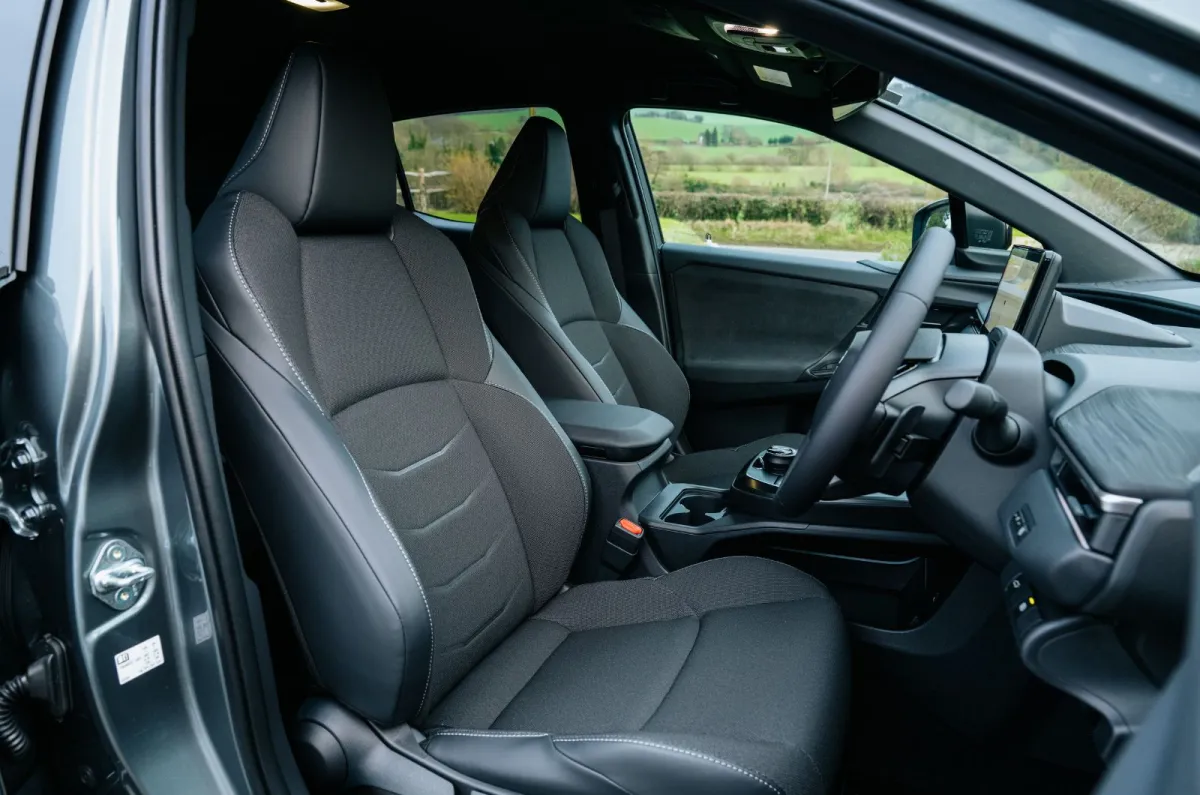
Even with the seat set to its lowest position, the driver sits quite high from the floor in the C-HR+. The driving position itself is comfortable, with plenty of adjustment in the seat and steering wheel. Just make sure you can set up the steering wheel in a way that’s both comfortable and unobstructive to the driver’s display.
You get a good view out of the front and over the bonnet. The front pillars are quite chunky and can get in the way when looking out at junctions.
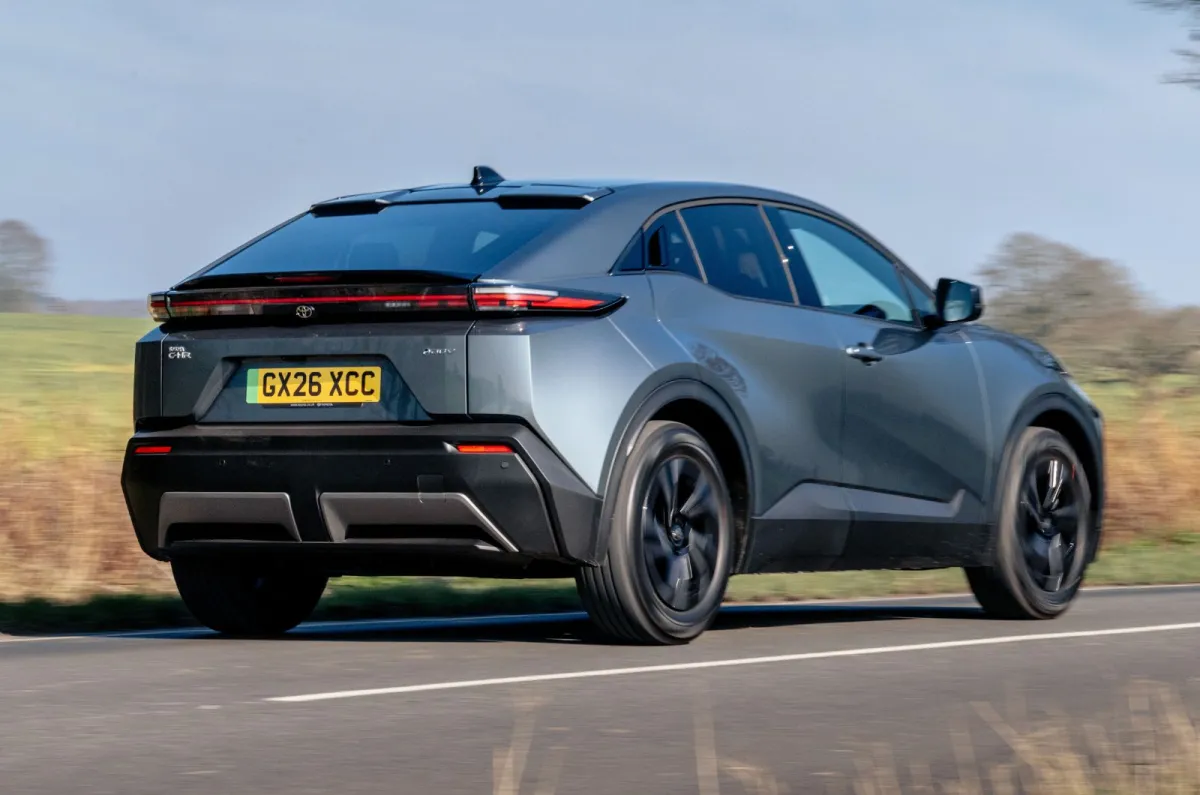
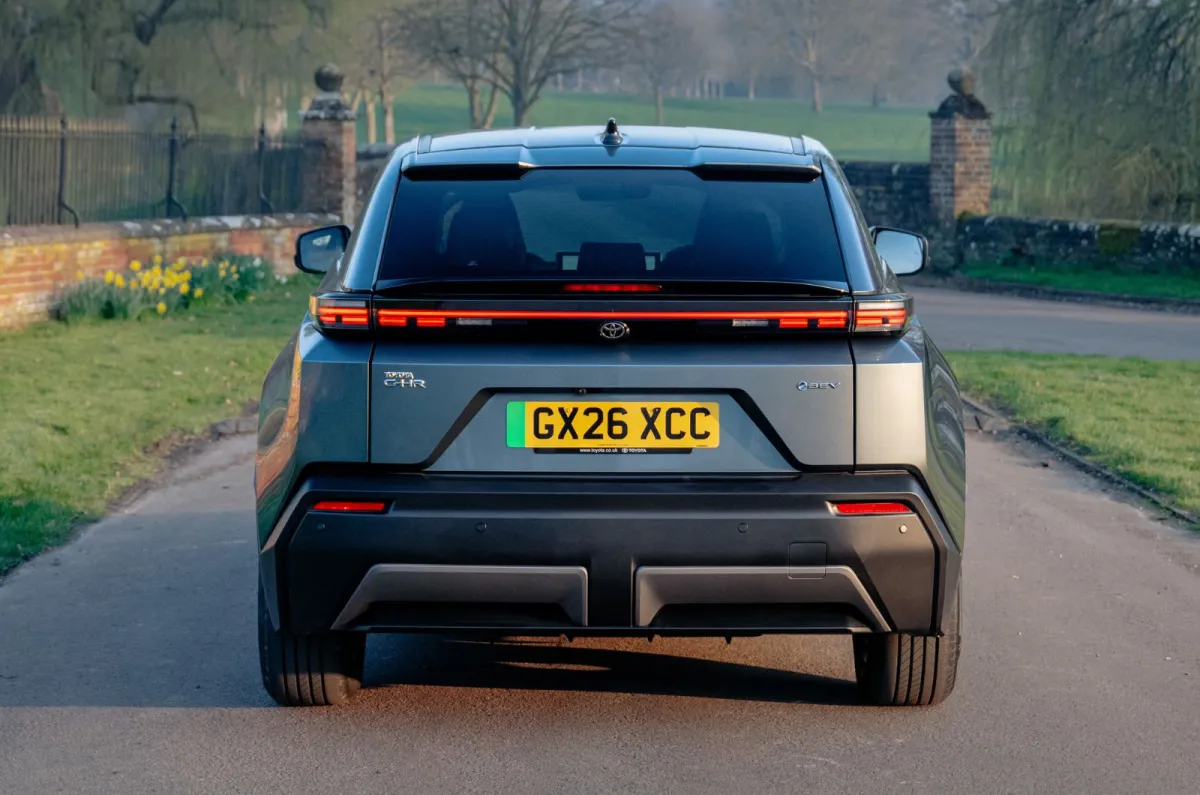
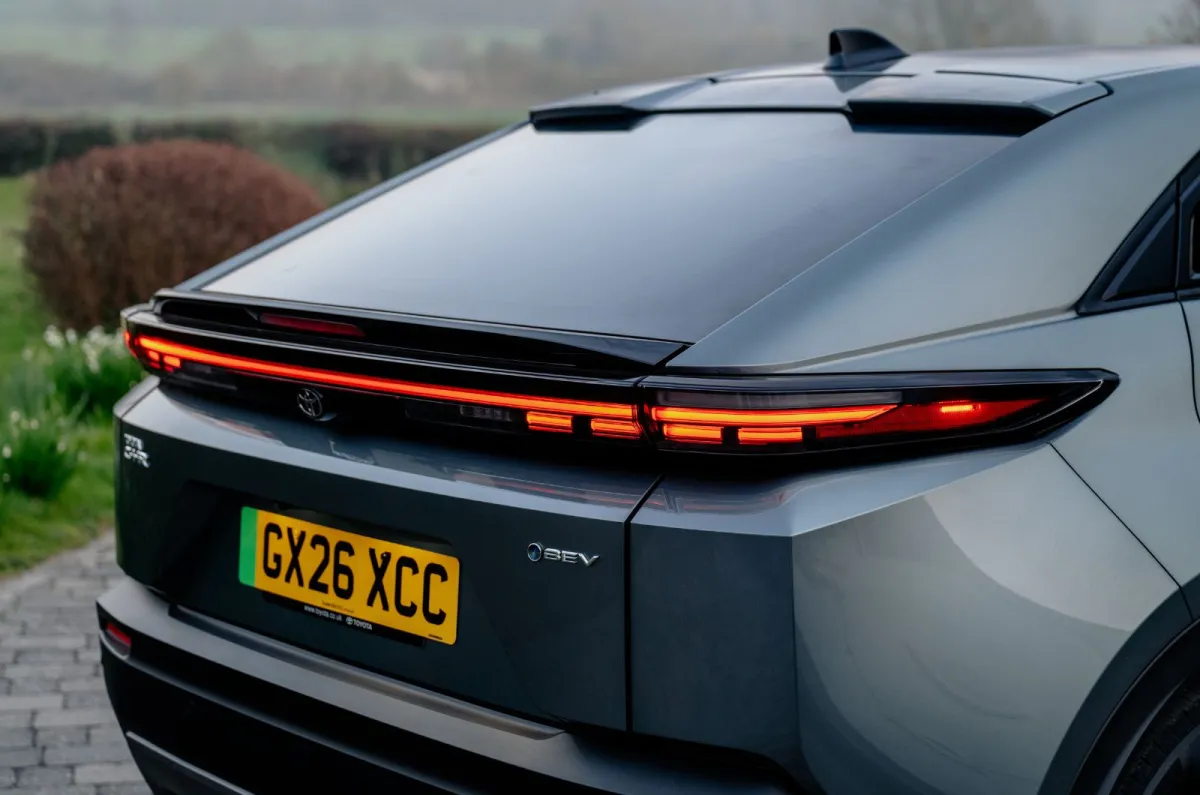
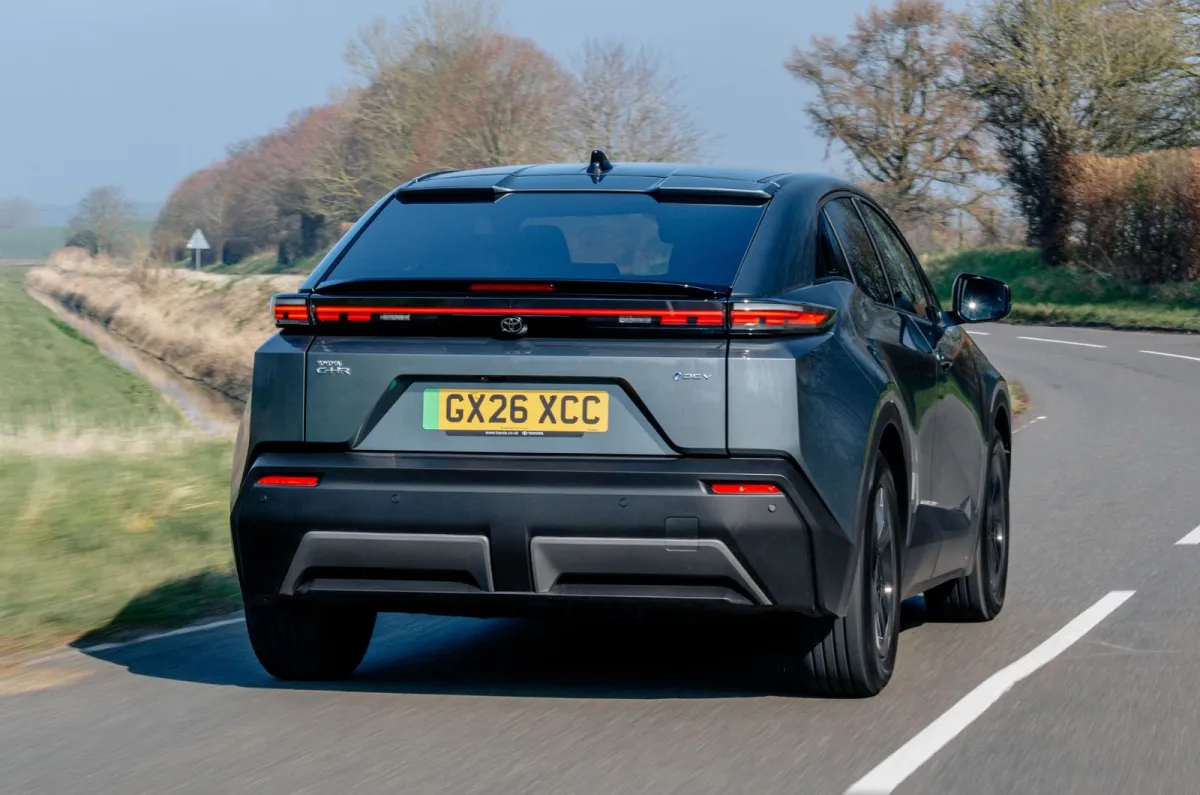
The coupé-inspired rear end of the C-HR+ means that visibility over your shoulder is compromised a little, with large rear pillars getting in the way. That said, the sloping rear window is quite tall, so the view out the back isn’t too compromised.
Luckily, to make parking easier, every C-HR+ comes with front and rear parking sensors, a rear-view camera and Toyota’s Advanced Parking Assist system (which parks the car for you).
Is the dashboard and infotainment system easy to use?
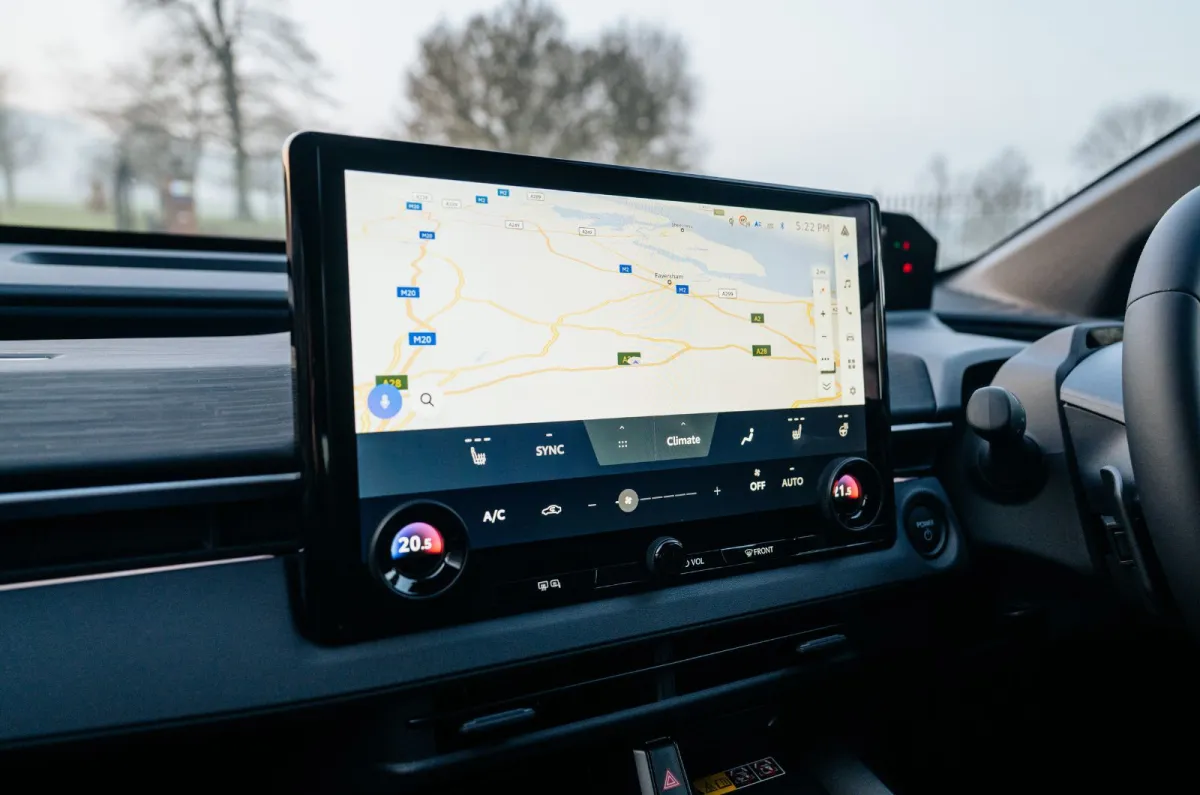
While the other Toyota C-HR comes with a row of easy-to-use physical controls for the air conditioning, the C-HR+ only has physical dials to adjust the temperature of the climate control system. The MG S5 and S6 are even more user-friendly with their additional physical switches, but the C-HR+ is still a bit better than most rivals that heavily rely on the touchscreen (including the BYD Atto 3 Evo, Geely EX5, Leapmotor C10 and Skoda Elroq).
Speaking of which, the 14in infotainment touchscreen itself is about 2in larger than what you’ll find in the regular C-HR and has the same easy-to-read sharp graphics. What’s less positive is that the software isn’t the best around. The menus could be more logical, the radio station list is clunky to use and the response times aren’t the quickest. At least the icons displayed at the bottom of the screen are large and easy to aim for. There’s also wireless Android Auto/Apple CarPlay smartphone mirroring and built-in sat-nav.
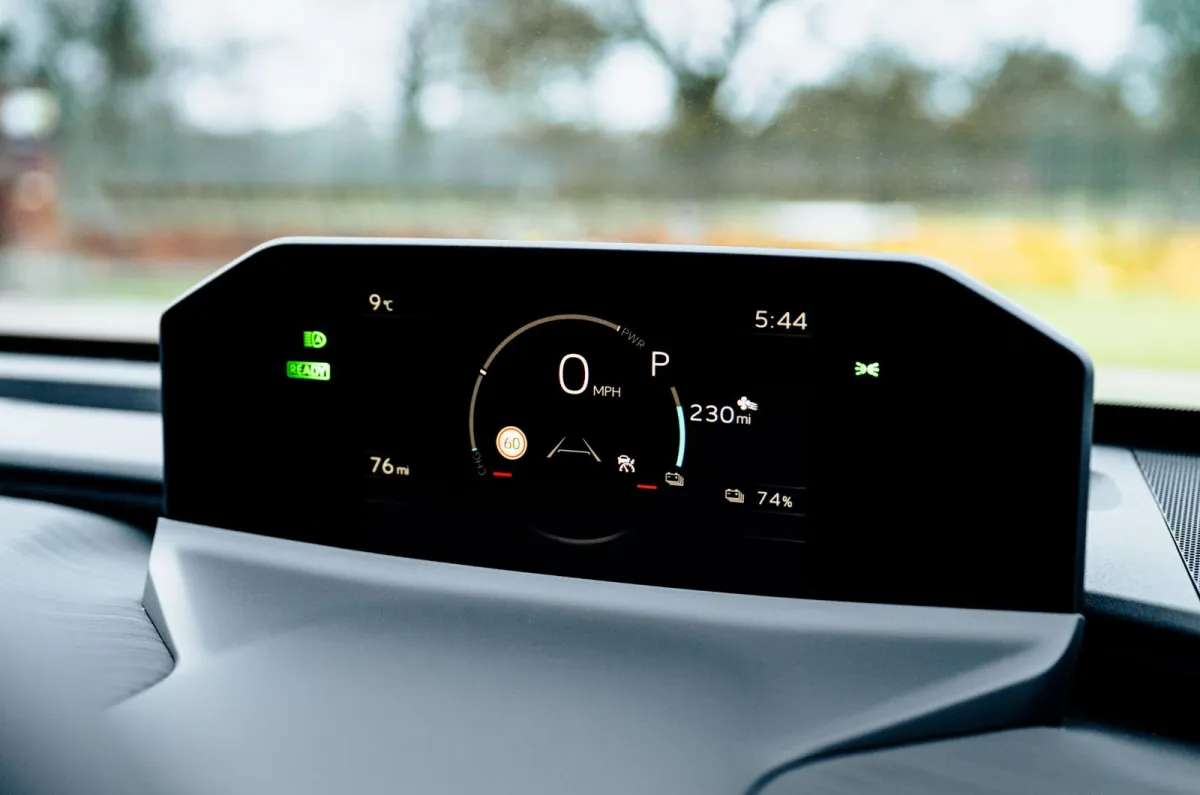
With a 7.0in digital instrument display mounted nice and high up, you don’t have to glance your eyes far away from the road to read it. The screen is bigger than the display in the Elroq and VW ID 4, although it’s not as impressive as the Scenic’s larger and more versatile one, which offers a range of layouts.
“There are a lot of physical buttons on the C-HR+’s steering wheel. They feel good quality, but having them arranged down a line means they’re not always close to your thumb.” – Dan Jones, Senior reviewer
Tips & Advice
Passenger & boot space
How it copes with people and clutter
Strengths
- Lots of front space
- Good cubby spaces
Weaknesses
- Tight for rear-seat space
- Boot isn’t anything special
How much space does it have for people?
We doubt anyone will struggle for head or leg room in the front of the Toyota C-HR+, while the width ensures plenty of shoulder room, too.
You get a few storage spaces in the front, including a couple of cupholders, a cubby within the central armrest and a decent-sized glovebox. The door bins are split into two sections, giving you space for two water bottles.
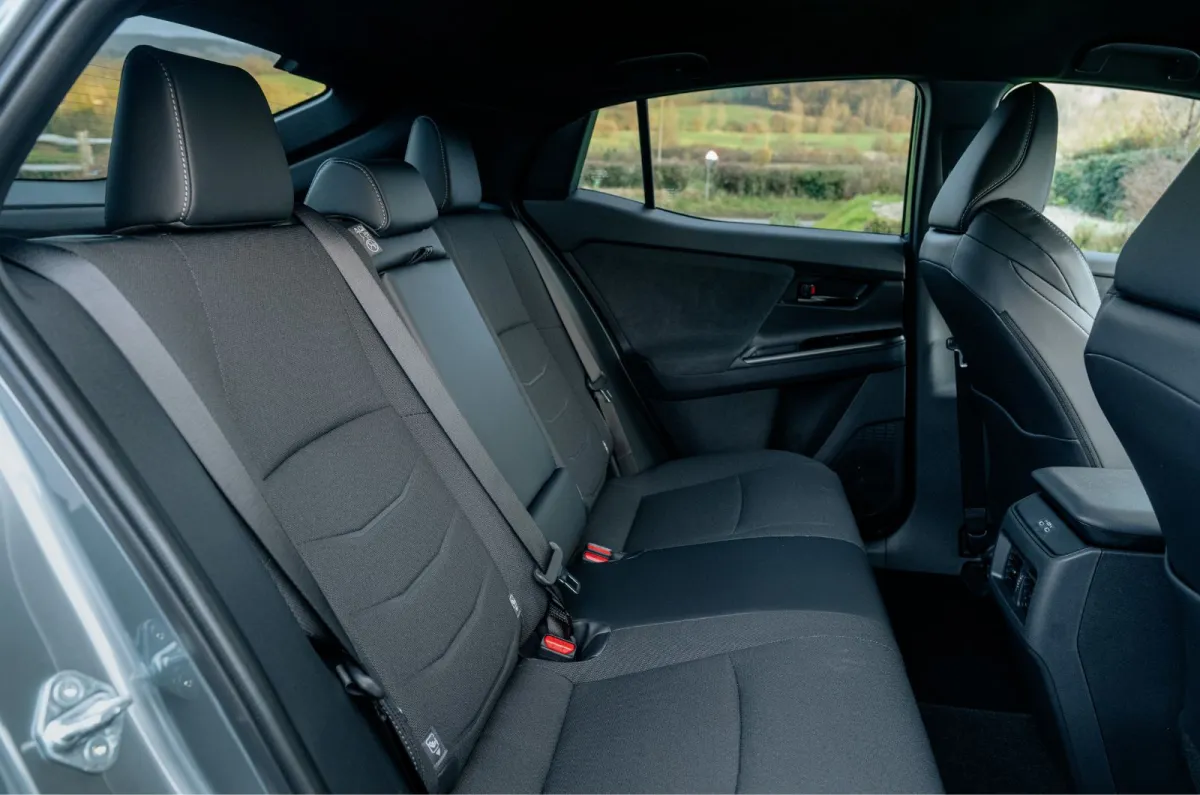
Because the C-HR+ is slightly larger than the normal C-HR, you have a little more room in the rear. Even so, it still feels cramped, with the coupe-styled rear end leaving little head room to spare for those measuring six-feet tall. The rear seats can be reclined slightly, but that only increases head room a little.
Leg room is also tight for anyone six-foot tall or taller and there isn’t much space for feet under the front seats. You also sit quite close to the floor so your knees are slightly raised. In short, the Renault Scenic, Skoda Elroq and Kia EV3 small SUV are all roomier alternatives.
On the plus side, three people sitting in the rear will have enough shoulder room to get reasonably comfortable, while the person sitting in the middle seat will be thankful that there’s only a tiny central tunnel to straddle.
How much room does it have for luggage?
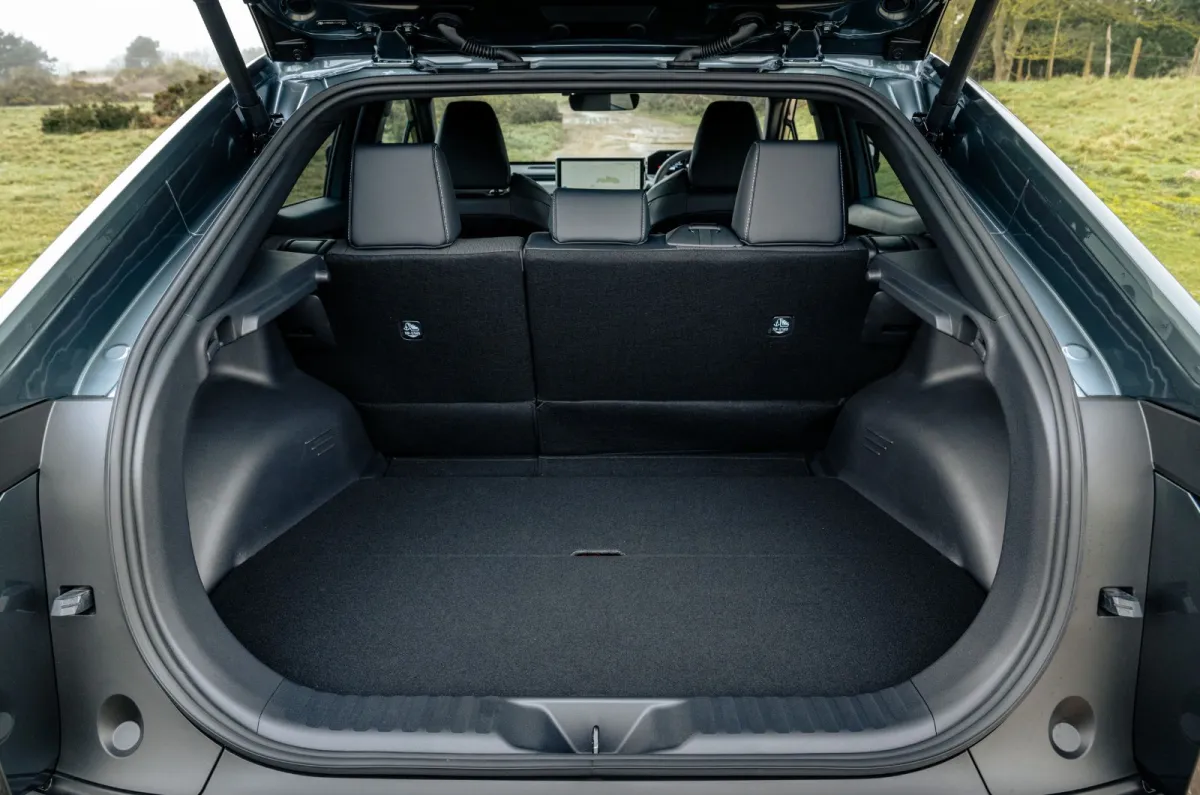
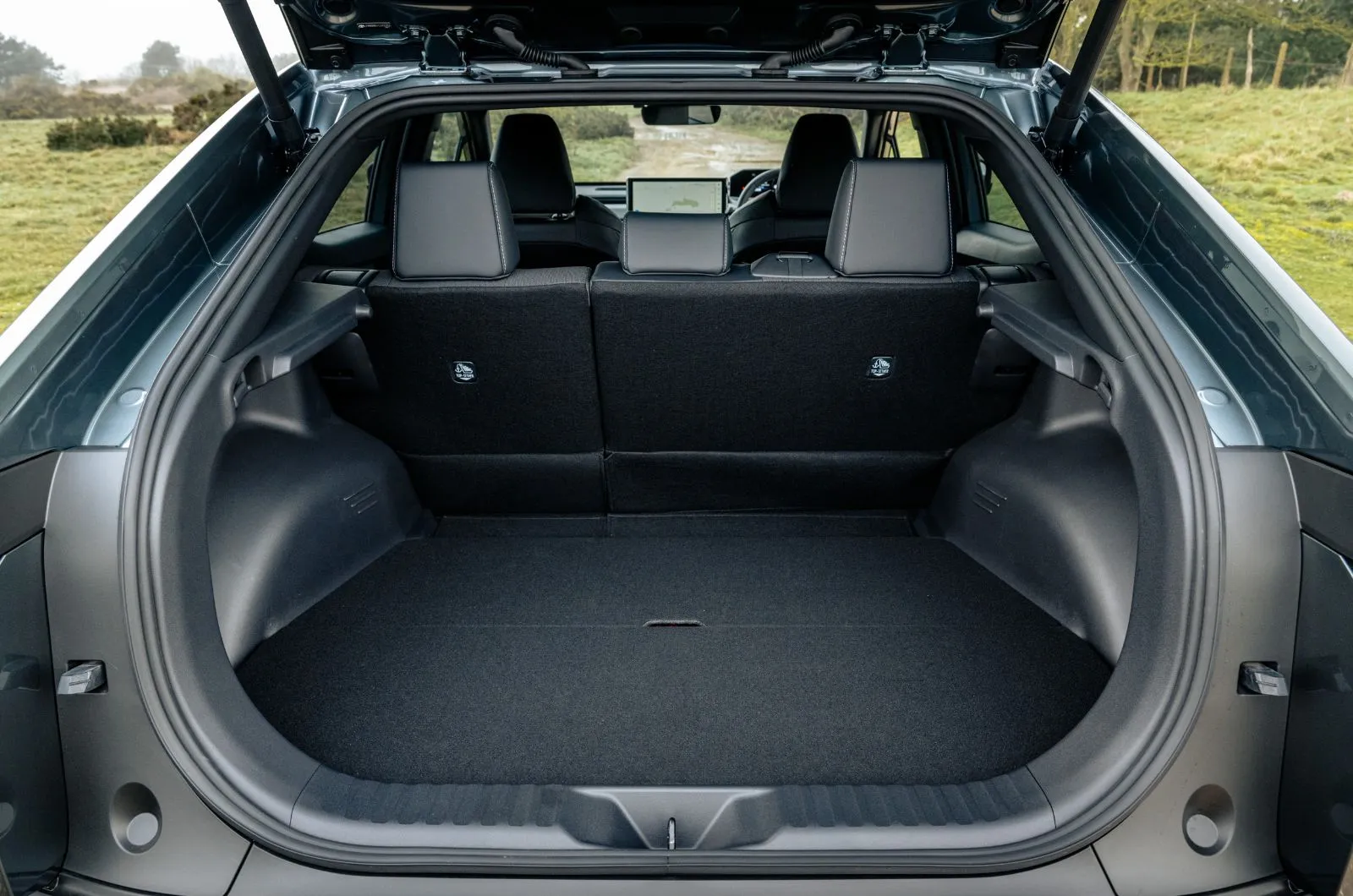
With a 416-litre load capacity, the C-HR+’s boot will manage a fairly big food shop or a family’s holiday luggage, but nonetheless it falls short of many rivals. This includes the MG S5 (453 litres), Skoda Elroq (470 litres) and the Renault Scenic’s cavernous 545 litres. Even the smaller Kia EV3 has a bigger boot, offering 460 litres.
The C-HR+ isn’t helped by the fact that its boot isn’t all that high, making it harder to load tall items in. That is, unless you remove the back part of the floor, which unveils a small cubby (ideal for storing the charging cables) and gives you a little more clearance.
For a little extra space, you can split the rear seats in a 60/40 configuration and fold them completely flat with the boot floor. The Elroq is the same, but the Scenic has a more versatile 40/20/40 split.
“I found it really handy that the C-HR+ has a 12V socket in the boot, allowing you to plug things like a coolbox in.” – Dan Jones, Senior reviewer
Buying & owning
Everyday costs, plus how reliable and safe it is
Strengths
- Competitively priced
- Plenty of standard kit
- Toyota’s great reliability rating and long warrant
Weaknesses
- No Euro NCAP safety rating yet
How much does it cost?
As a cash purchase, the Toyota C-HR+ starts from around £35,000, which is a reasonable entry point into the class. That’s slightly more than the Skoda Elroq and a little less than the Renault Scenic.
Our recommended Design version ups the price to around £37,000, which is still very reasonable considering the long range battery included. We just wouldn’t give range-topping Excel much thought. You don’t get much more for the money and the 20in wheels slightly compromise on ride comfort and overall battery range.
Ways to buy
What equipment do you get?
Entry-level Icon trim is very well equipped. It has luxuries like adaptive cruise control, heated front seats and a heated steering wheel – all as standard. If the Icon’s shorter electric range suits you, this trim could be well worth considering.
As for Design, it doesn’t gain much in the way of kit – only really privacy glass, a powered tailgate and the option of 20in wheels. It’s more about that larger battery.
Similarly, Excel only really adds standard 20in wheels, an electrically adjustable driver’s seat and a two-tone roof. It has the option for a panoramic roof, grey interior upholstery and a JBL nine-speaker sound system upgrade, but they’re not essential.
Is it reliable and how long is the warranty?
We’ll have to wait and see exactly how reliable the C-HR+ proves to be, but you can have confidence in Toyota’s great reputation for reliability. The brand ranked fourth out of 30 brands in our latest What Car? Reliability Survey, beating Kia, Renault and Skoda.
Toyota’s warranty runs for 10 years and 100,000 miles (as long as you service your car annually with an official dealer), and that’s industry leading. Kia covers its cars for up to seven years, while Renault and Skoda offer three years of cover.
How safe is it?
The C-HR+ was awarded the full five star safety rating when it was tested by Euro NCAP in 2025. It could have provided stronger chest protection for occupants in a frontal collision and side impact, but it performed well elsewhere - especially for child occupants.
The C-HR+ comes with plenty of standard safety kit, including automatic emergency braking (AEB), lane-keep assist, traffic-sign recognition and blind-spot monitoring. Range-topping Excel trim gets lane change assist, front cross traffic alert, and a panoramic view monitor.
“I’m glad to see that the pricing is competitive with the Elroq, especially in Design trim, which has everything you’d want.” – Oliver Young, Reviewer
Buy it if...
- You want a car that should be very reliable
- A long range between charges is important to you
- You’d like a comfortable EV that’s easy to drive
Don’t buy it if…
- Rear seat practicality is important to you
- You need a big boot
- You’re after a car that feels agile on a country road
For all the latest reviews, advice and new car deals, sign up to the What Car? newsletter here
Tips & Advice
Similarly priced cars


If you're interested in finding a Toyota C-HR+, or any of the other electric cars mentioned here, head over to our Cars available now pages to find new cars listed for sale at great prices.
Toyota C-HR+ specifications
Best buy
RRP price range
Battery range (miles)
Available fuel types (which is best for you? )
Available colours
Number of engines (see all)
Number of trims (see all)
Warranty
Company car tax at 20% (min/max)
Company car tax at 40% (min/max)
FAQs
What is What Car? best price?
The What Car? best price shows you the cheapest way to buy your new car, whether it's by choosing an in-stock car through our partner Autotrader or placing a factory order.
Available now from: £36,754
RRP from: £34,495
About our price indicator
What Car? indicative Personal lease example (subject to status)
Toyota C-HR+
| Expected annual mileage | 5000 |
| Term months | 36 |
| Deposit months | 12 |
| Monthly payment | £304.49 |
| Initial payment | £3,653.88 |
Step-by-step
Leasing works a bit like a long-term rental. You drive it, but you don’t own it.
- Choose your car, pick your terms and apply for lease credit online
- Pay monthly rental payments for your chosen term length
- Drive it, enjoy it, then give it back at the end
What you get
When you lease with Autotrader you get all of this:
- Full manufacturer’s warranty
- Road tax and roadside assistance included
- Free returns within 30 days*
- Lower total monthly cost than PCP/HP
- No balloon payments
- Road tax included
About the writer