Vauxhall Frontera Electric review
Category: Electric car
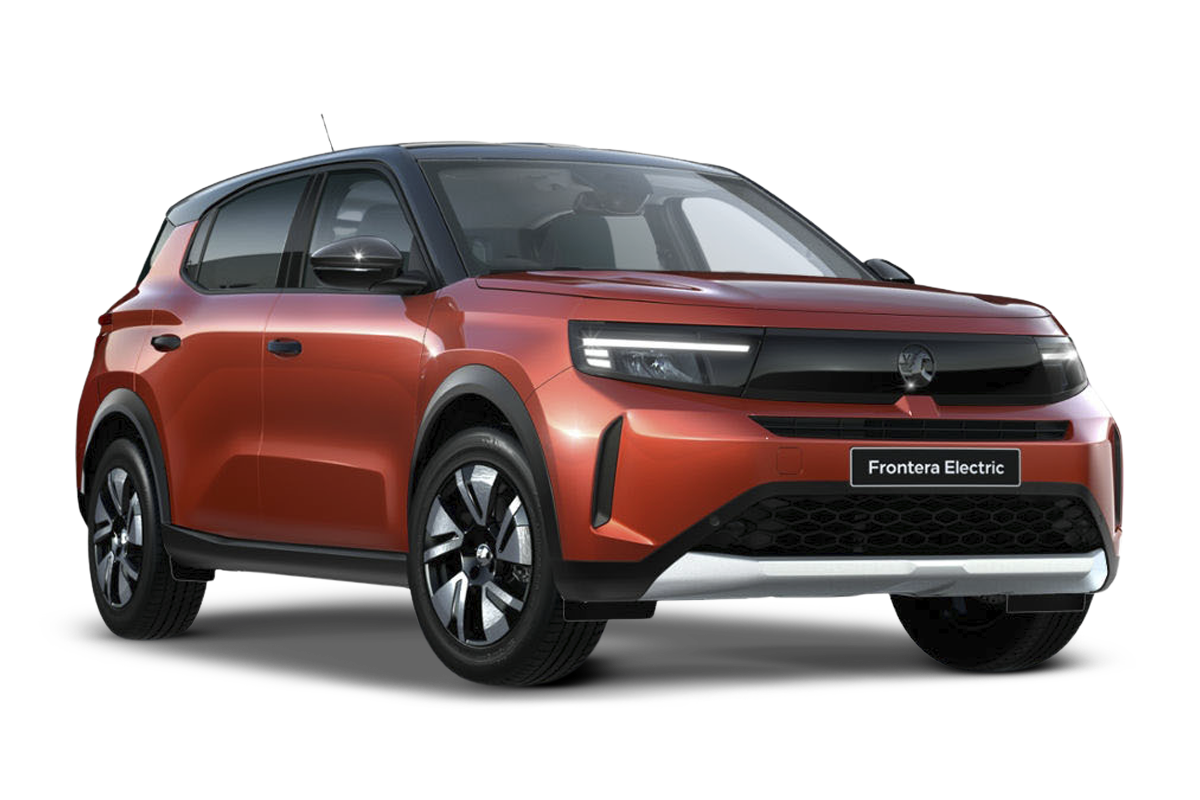
The Frontera Electric is practical and reasonably priced, even more so than its petrol-powered counterpart


What Car? says...
If you think about it, the name Vauxhall Frontera Electric has a nice ring to it. “Frontera” is Spanish for “frontier” and, without sounding too much like Star Trek’s Captain Kirk, you could say that electricity is – perhaps as things stand – the final frontier for the automobile.
Feel free to agree or disagree. If you do sway towards the latter opinion, there’s always the petrol-powered Vauxhall Frontera. Just bear in mind that the petrol Frontera is actually the more expensive option. You can thank the Government electric car (EV) grant for that.
The Frontera Electric is closely related to the Citroën ë-C3 Aircross. It rivals that car, as well as other cheap EVs, such as the Hyundai Inster and Renault 4. Those are good choices, so no pressure, right?
Performance & drive
What it’s like to drive, and how quiet it is
Strengths
- +Smooth power delivery
- +Comfortable ride
Weaknesses
- -Sluggish, especially for an EV
- -Quite noisy at speed
How fast is it and which motor is best?
Our recommended Vauxhall Frontera Electric is the entry-level one, meaning a 43.8kWh (usable capacity) battery and 111bhp electric motor driving the front wheels. It's smooth and quick enough in most situations, but ultimately it is rather sluggish, especially by EV standards – the 0-62mph sprint takes 12.1sec (so “sprint” may be an overstatement).

The alternative is a 51kWh (usable) battery. Just be aware that it comes with a considerable price premium, and with a 0-62mph time of 13.0sec, it’s even slower.
Is it agile and is the ride comfortable?
As we’ve established, no Frontera is particularly quick in a straight line, and we doubt you’ll deem it very exciting in the corners, either. There’s enough grip and it’s reasonably composed as you make turns, but the steering is rather vague and the brake pedal quite grabby – ultimately restricting your confidence behind the wheel. Most rivals, including the Hyundai Inster and Renault 4 (R4), are sharper handlers, while the best here is the Ford Puma Gen-E.
That said, the Gen-E’s firm suspension means it isn’t the best for comfort. The Frontera is better, being more compliant than the often-jiggly Gen-E. What’s more, for such a tall car, the Frontera’s ride feels pretty settled – more so than the petrol Vauxhall Frontera, funnily enough.
It’s just worth noting that, even though the ride is indeed comfortable, the Citroën ë-C3 Aircross is even better.
Is it quiet and how easy is it to drive smoothly?
While the Frontera Electric won’t destroy your eardrums, it does whip up some noticeable road and wind noise at motorway speeds. You’ll also pick up on some electric motor whine around town, as well as some suspension noise. The Inster and R4 are quieter.
And in regards to driving smoothly, the Frontera is good for the most part, but the grabby brake pedal does mean that it takes a steady foot to bring it to a smooth stop. The Inster and R4’s brake pedals are easier to operate in this regard.
What’s the range and efficiency like, and how quickly can it charge?
With the 43.8kWh battery, the Frontera Electric has a 189-mile official range, meaning it’s much better suited to the school run and local commuting than long-distance holidays.
For that, you’ll want the 51kWh alternative, because its official range is 251 miles. That’s more competitive, seeing as the R4 gets 245 miles and the Inster up to 229 miles.
The Frontera’s maximum charge speed is 100kW, allowing a 20-80% charge in 26min with a fast public charger.
“There’s a button labelled ‘C’ (for Comfort), which slackens off the regenerative braking. I found it came in handy for maintaining a steady cruise on the motorway.” – Lawrence Cheung, New Cars Editor

Interior
The interior layout, fit and finish
Strengths
- +Easy-to-use, physical buttons
- +Good range of seating adjustments
Weaknesses
- -Compromised rear visibility
- -Limited steering wheel adjustment
- -Hard plastics everywhere
What does the interior look like and is it well made?
The Vauxhall Frontera shares some of its interior with the Citroën ë-C3 Aircross, but fortunately their overall designs are very different. Instead of going for a funky look, like Citroën has, Vauxhall has opted for a sharper, classier, more conventional design. For instance, where Citroën has used fabric and stuck words of encouragement on each door (and that’s not a joke), Vauxhall opted for metal-effect pieces of trim on the dashboard and doors.
However, the metal-effect trim Vauxhall has used feels tacky, as does basically everything else. The interior is full of hard, scratchy plastics – there’s almost nothing soft to help mix things up, like the fabric you get in the ë-C3 Aircross. Build quality leaves nothing to be desired, sure, but that doesn’t save the Frontera from having one of the cheapest-feeling interiors in its class.
Is the driving position comfortable and is it easy to see out?
Well, sort of. The Frontera has a wide range of adjustments for the driver’s seat, but the steering wheel doesn’t come very far out towards you – a problem if you have long legs.
You sit reasonably high up, as you’d hope to do in an SUV, and that helps give you a grand view of the road ahead. On the flipside, rearward visibility has some issues: the shallow rear screen and tiny quarterlight windows don’t offer the best view of what’s directly behind. That said, parking is made easier by standard-fit rear parking sensors and a rear-view camera.
Is the dashboard and infotainment system easy to use?
Fortunately, yes. For instance, the air conditioning (or climate controls on higher trims) is controlled via physical buttons – you don’t have to mess around with the touchscreen like in the Ford Puma Gen-E.
The touchscreen in the Frontera Electric is 10.0in: it’s clear and easy to read and the software responds quickly to your inputs. You also get a fair few features, including sat-nav, DAB radio, Bluetooth, Android Auto, Apple CarPlay and wireless phone-charging.
“The interior certainly looks better than it feels. I think the metal-effect trim looks classy in photos but it’s a different story in person. The quality is simply not there.” – Oliver Young, Reviewer

Passenger & boot space
How it copes with people and clutter
Strengths
- +Plenty of boot space
- +Lots of head and leg room
- +Adjustable boot floor
Weaknesses
- -No seven-seat option like the petrol version
- -Wheel-arch intrusion in boot
How much space does it have for people?
There’s more than enough head and leg room in the Vauxhall Frontera Electric for taller adults, but the shoulder room is a wee bit on the tight side and there's no seat-height adjustment for the front passenger.
The front seat cushions feature an unusual trench-like depression running front to rear, which allegedly reduces pressure on your tailbone. All you really need to know is that, yes, the seats are indeed comfortable. There’s oodles of leg and head room in the rear, even if the rear seat cushions aren’t quite as plump.
Although there are no plans for a four-wheel-drive Frontera, a slim transmission tunnel runs down the middle of the car. Thankfully it's not big enough to be a stumbling block for those forced to sit in the centre back seat.
The rear seats fold in a 60/40 split, although you won’t be folding them to climb into a third row. Unlike the petrol Frontera, there’s no seven-seat version of the Frontera Electric, unfortunately.
How much room does it have for luggage?
The Frontera Electric’s boot space is a generous 460 litres, so you can stuff more inside it than you can in a Renault 4 (375 litres) or Hyundai Inster (up to 351 litres). Very few rivals can beat it, albeit the Ford Puma Gen-E is one of them (523 litres).
Maximising the Frontera’s load space is compromised somewhat by a bit of wheel-arch intrusion, but if you do need to carry larger loads, you can fold the rear seats down flat to create 1600 litres of space.
There’s also an adjustable floorboard, which can be used to create a completely flat floor and eliminate any load lip. Alternatively, it can be lowered into the spare wheel well (there is no spare wheel) to prevent items from rolling out of the tailgate when parked on an uphill gradient.
“The seven-seat version isn’t super spacious in the third row, so I’m not too fussed that it isn’t available with the EV.” – Lawrence Cheung, New Cars Editor

Buying & owning
Everyday costs, plus how reliable and safe it is
Strengths
- +Decent kit list
- +Vauxhall’s good reliability record
- +Low pricing
Weaknesses
- -Citroën ë-C3 Aircross 51kWh is even cheaper to buy
How much does it cost and what equipment do you get?
The Vauxhall Frontera Electric is very competitively priced. The Ford Puma Gen-E and Renault 4 are more expensive to buy, and while the Hyundai Inster is similarly priced, it’s a much smaller car.
The Citroën ë-C3 Aircross’ 43.8kWh version is priced roughly in line with the Frontera’s, but as for their 51kWh options, the ë-C3 Aircross comes out less expensive.
To play into the Frontera’s strengths as a low-cost option, we’d stick to entry-level Design trim. It gets 16in steel wheels (17in alloys are optional), automatic wipers, cruise control, LED headlights and wireless phone charging. If you’d like more kit, there’s GS trim, with its climate control, tinted rear windows and electrically folding door mirrors. Ultimate trim adds more luxuries, such as a heated steering wheel and heated front seats.
Is it reliable and how long is the warranty?
The Frontera Electric is too new to have featured in our latest What Car? Reliability Survey, but Vauxhall as a brand came a confidence-inspiring fifth out of 30 car brands. For added perspective, it ranked below Suzuki and Toyota but above Citroën and Kia.
Like every Vauxhall, the Frontera Electric gets a three-year/60,000-mile warranty and a year of roadside assistance, matching most brands but not Hyundai (five years), Kia (seven years) or Toyota (up to 10 years).
How safe is it and is it easy to steal?
The Frontera (both petrol and electric versions) hasn’t been tested by safety experts at Euro NCAP yet. However, it gets plenty of standard safety kit, like lane-departure warning, automatic emergency braking (AEB), a driver drowsiness alert, blind-spot monitoring and Isofix child-seat mounts on the front passenger and outer rear seats.
“Vauxhall has partnered with Tesco, meaning you get Clubcard points and EV charging credit by buying a new Frontera Electric. I think that’s pretty savvy.” – Oliver Young, Reviewer
Buy it if…
- You’d like lots of interior space
- You appreciate low pricing
- You want a competitive range (choose the bigger battery)
Don’t buy it if…
- You want a plush interior
- You’d like sharp, confidence-inspiring handling
- You want luxury-car refinement
For all the latest reviews, advice and new car deals, sign up to the What Car? newsletter here

FAQs
In the sense that it gives you a lot of interior and boot space for a low price, then yes. However, there’s certainly room for improvement, and we believe the closely related Citroën ë-C3 Aircross is a more well-rounded product.
With the 43.8kWh battery, the Frontera Electric has a 189-mile official range. The 51kWh battery has an official range of 251 miles, which is more than competitive, seeing as the Renault 4 offers 245 miles and the Hyundai Inster up to 229 miles.
No, there’s a mild-hybrid petrol version also available. We’ve reviewed that car separately and you can find it by clicking the link to our Vauxhall Frontera review.
| RRP price range | £23,995 - £30,695 |
|---|---|
| Number of trims (see all) | 3 |
| Number of engines (see all) | 1 |
| Available fuel types (which is best for you?) | electric |
| MPG range across all versions | 0 - 0 |
| Available doors options | 5 |
| Company car tax at 20% (min/max) | £48 / £1,534 |
| Company car tax at 40% (min/max) | £96 / £3,068 |

