Slideshow

The Best electric cars in 2026 – the EVs to buy and those to avoid

Sales of electric cars are booming, and no wonder: the best are quiet, cheap to run and smooth to drive. But which are the brightest sparks – and which are the loose connections?

Best electric cars 2026 – the EVs to buy and those to avoid

Best electric cars 2025

Whether it's someone at work, a family member, friend or neighbour, the chances are that you know someone running an electric car. Indeed, so far in 2026, around one-in-five new cars have been powered by electricity – and thanks to the recently announced Government grant, which allows buyers to receive up to £3750 towards a new electric car costing less than £37,000, even more of us are likely to buy one.

While bringing down the price of electric cars is undoubtedly a good thing, though, not every model which features on our list of the best electric cars will be eligible, meaning you'll need to weigh up whether the discount is worth it for you.

To help, our experienced team of road testers have spent hundreds of hours behind the wheel of every new car, driving them over thousands of miles both on public roads, and back-to-back against key rivals at our private test track. The result of that testing is this list you see here, where we're naming the best electric cars to buy. In each case, we've also noted down whether that car is eligible for the Government grant.

And to help you avoid any loose connections in the electric car market, we've also named the electric car which we think you should avoid, as well as answered the most common questions about electric car ownership at the bottom of this page.

Remember that if any of the models featured here take your fancy, you can follow the links through to our in-depth reviews to learn more about them, or see our latest electric car deals. And if you'd like even more choice, then we've got separate articles for the best small electric cars, the best large electric cars and the best electric SUVs.

Slideshow story: please click the right-hand arrow above to continue, or simply scroll down if you’re reading on your mobile

advertisment

10: BMW iX

BMW iX front right driving

BMW's largest and most luxurious SUV has always been easy to recommend, thanks to its combination of a long range and supreme comfort. And now, thanks to a wide range of updates, it promises to be even better.

The headline figure is 426 miles – that's how far the updated iX can take you between charges, and means that even commuters who travel hundreds of miles in a day should find that they don't have to charge up with every journey.

Then there's the power, which has been upped across the range. It means that even the entry-level 45 model produces 402bhp, while the range-topping M70 produces 659bhp. Most versions of the iX are quick to charge, too, with speeds of up to 195kW possible.

"I was worried that the iX would lose its intuitive rotary dial as part of its most recent facelift, and was overjoyed to see it remains – it makes operating the enormous infotainment screen that much easier." – Dan Jones, Reviewer

10: BMW iX

BMW iX dashboard

Strengths

  • One of the quietest cars we’ve ever tested
  • Spacious and luxurious interior
  • Great infotainment system

Weaknesses

  • Air suspension only standard on top-spec M70
  • Fiddly air-con controls
  • Quicker depreciation than rivals

9: Hyundai Inster

Hyundai Inster front cornering

Just because you've decided to go electric doesn't mean that you need to spend a lot on your new car. Indeed, the Hyundai Inster will cost you less than rivals including the BYD Dolphin, Fiat 500e and MG4 – even better, all versions should qualify for the Government grant, because no Inster will cost you more than the £37,000 threshold.

It's not like you'll be scrimping on kit if you go for an entry-level version, either, because features including 15in alloy wheels, climate control, keyless entry and start and even an EV heat pump all come as standard.

Drivers have two batteries to choose from, with the smaller 36kWh capable of taking you up to 203 miles officially. The larger 46kWh battery ups the official range to 229 miles, which is further than rivals such as the Dacia Spring and Dolphin can manage.

There is evidence inside that the Inster has been built to a budget, with plenty of scratchy plastics on display, but the seats are comfortable and the Inster's driving position is sound. A word of warning, though, because there's only two seats in the rear, meaning a family of five will end up leaving someone behind.

"I was impressed that even at this relatively modest price point, Hyundai hasn't skimped on technology – the Inster's infotainment screen is quick to respond, for example, while every version gets a 10.25in digital driver's display. You don't get that in a Dacia Spring." – Darren Moss, Deputy Editor

9: Hyundai Inster

Oliver Young test driving Hyundai Inster

Strengths

  • Surprising amount of interior space
  • Competitive electric range
  • Lots of standard kit

Weaknesses

  • Renault 5 is better to drive
  • Quite sluggish at higher speeds
  • Limited to four seats

8: Porsche Taycan

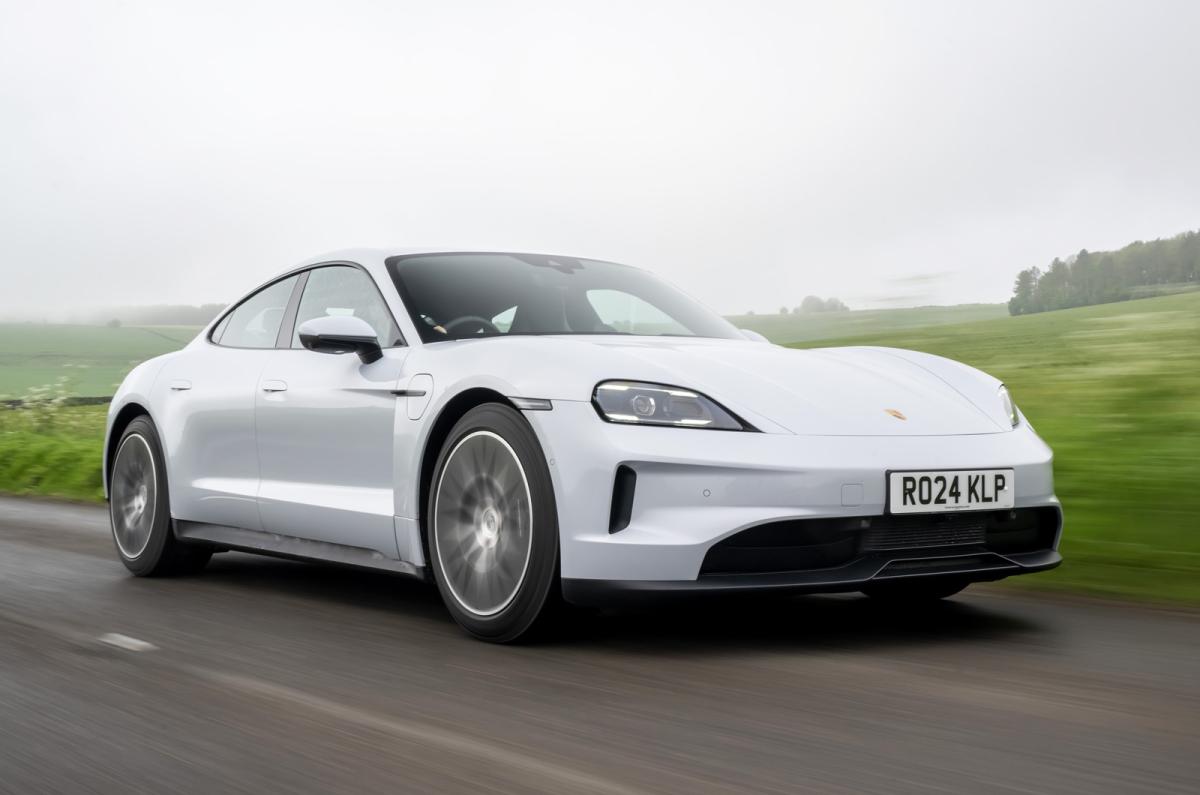
Porsche Taycan front driving silver

The Porsche Taycan has long since ranked among our favourite electric cars – and this latest version has benefitted from a round of updates designed to make it even better to drive, even among a field of outstanding rivals. And, as you can see by its spot on this list, it's worked.

Frankly, the Taycan is in a different league altogether from almost every other electric car. Its steering, for example, is sweeter than that of the Mercedes EQS. And while entry-level models deliver plenty enough power for most drivers, the 4S model which we recommend can take you to 62mph even faster than an Audi E-tron GT quattro.

Despite having more power than before, the Taycan can still take you a long way between charges. The 4S is officially rated for 346 miles, or 399 miles if you go for the optional larger battery. That's enough to get you from London to Glasgow without stopping, if you so wish.

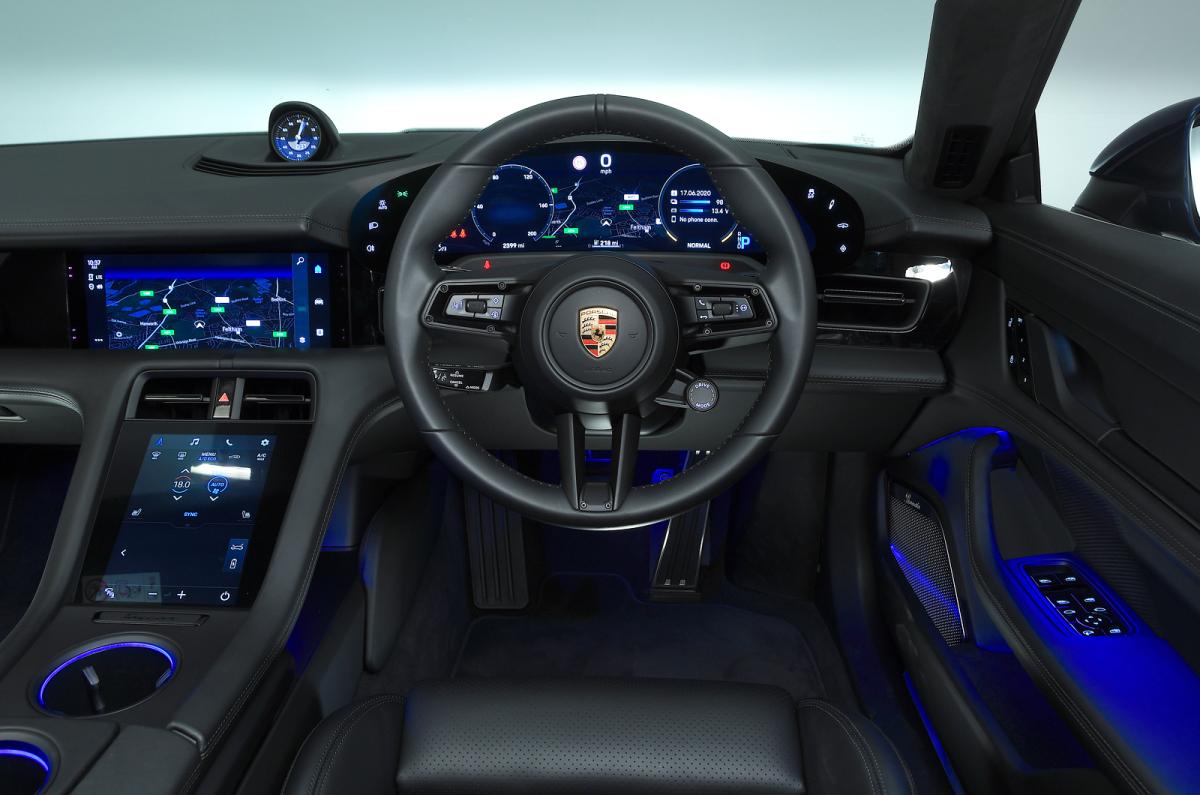
And you likely won't want to stop, because that could mean leaving the Taycan's sumptuous interior, which is beautifully finished and offers an excellent driving position.

"There's lots to like about the Taycan, but I think it's a shame that some of the functions for which its Audi E-tron GT sister car offers physical controls, the Taycan doesn't. Hitting some of the smaller icons on its infotainment touchscreen can be a pain while driving." – George Hill, Used Cars Writer

8: Porsche Taycan

Porsche Taycan dashboard

Strengths

  • Staggering performance and engaging handling
  • Great potential battery range
  • Wonderful interior quality

Weaknesses

  • It's very expensive...
  • ...and you’ll probably want to add some options
  • Reliability has been a concern

7: BMW i7

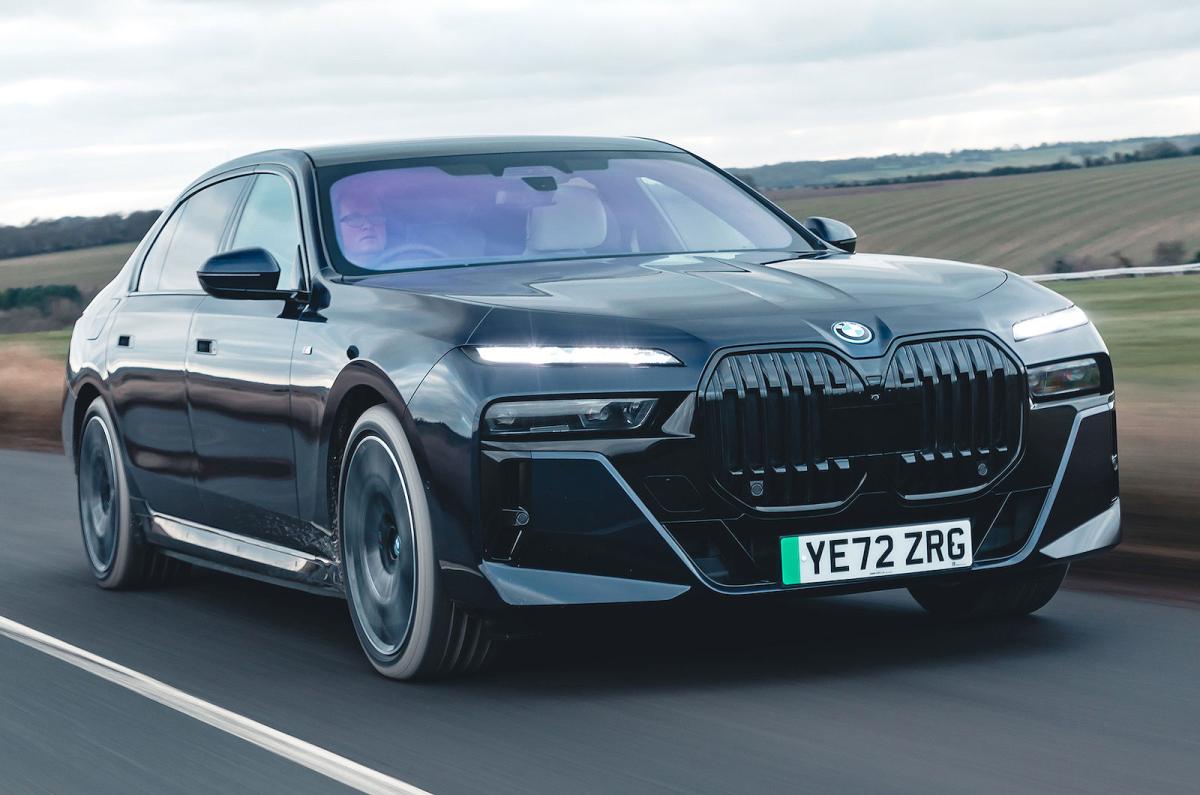
BMW i7 front right driving

If you're lucky enough to have someone do your driving for you, then the BMW i7 is one of the best luxury limousines on sale, offering technology, comfort and convenience in equal measure. Even if you're doing the driving yourself, though, it still out-shines its rivals.

Entry-level models make do with 'just' 449bhp from a single motor, and that's enough to haul this luxury limo to motorway speeds in just 5.5sec. The other, four-wheel drive i7s, are nothing short of ballistically fast. Indeed, the eDrive60 xDrive will out-sprint the rival Mercedes EQS to 62mph.

Not that there's much drama to be felt when reaching those speeds, though, because the i7 is as serene and as hushed as a Swiss watch. And with a cushioning ride, every trip is relaxing.

From any seat, you'll be immersed in an interior that's both luxurious and filled with technology, while your luggage should have no trouble fitting inside the 500-litre boot. The EQS is even more capacious, though, and benefits from a more practical hatchback-style opening.

"Not that I'm one for sleeping on the job, but the i7's optional Executive Pack can replace the outer rear seats with lounge-style alternatives which, among other things, can fold down into a bed." – Dan Jones, Reviewer

7: BMW i7

BMW i7 dashboard

Strengths

  • Stunning interior
  • Impressive optional 8K cinema screen
  • Extremely comfy for all occupants

Weaknesses

  • Desirable options are very expensive
  • Boot has a comparatively small opening

6: Renault Scenic

Renault Scenic E-Tech front right driving

In times gone by, the Renault Scenic was a fairly frumpy family MPV which, although spacious, didn't have much else going for it. That's certainly not the case with the latest version, though, which has morphed into a cutting-edge electric car.

To drive, the latest Scenic combines a long range – up to 379 miles, according to official figures – with the kind of pep which should make overtaking or getting the jump on urban traffic a breeze. Indeed, the 168bhp version can hit 62mph in around the same time as a Hyundai Ioniq 5 or Skoda Enyaq. The rival Kia Niro EV or Tesla Model Y are even nippier still, though.

The Model Y also places you farther from the road, but drivers seeking the kind of high-up SUV-style driving position which gives you a good view over the road ahead will be pleased with the Scenic. There's good head and leg room no matter which seat you're in, and you can fit more into the Renault's boot than you could into the Ioniq 5 or Kia EV6.

Despite its lengthy list of attributes, the Scenic remains competitively priced, costing about the same as a Skoda Enyaq. Plus, resale values are expected to be stronger than those of most rivals.

"I was impressed with the Solarbay sunroof which comes on the Scenic's Iconic trim – it allows you to electronically darken sections of the roof, meaning the kids can stay in shade while you enjoy the sunshine up front." – Mark Pearson, Used Cars Editor

6: Renault Scenic

Renault Scenic E-Tech dashboard

Strengths

  • Bigger battery version offers a long range
  • Cheaper than many rivals
  • Five-star Euro NCAP safety rating

Weaknesses

  • Rear seat versatility could be better
  • Spongy brake pedal feel
  • Not particularly quick

5: Volkswagen ID Buzz

VW ID Buzz LWB front right driving

There’s so much affection for the retro design of the Volkswagen ID Buzz that its maker could easily have penny-pinched on the engineering and still sold as many as it could make.

Instead, the German brand has clearly thrown everything at the car, and this has resulted in something that combines the practicality of an MPV with the comfort and refinement of a premium SUV and the low running costs of an electric car.

The ID Buzz is good to drive – it can sprint up to motorway speeds faster than many conventional family SUVs, such as the 1.5-litre petrol-engined Volkswagen Tiguan – and is endlessly spacious, meaning more space for passengers and luggage than you'd find in a Jaguar I-Pace or Tesla Model Y. And in LWB form, it's one of the most spacious cars you can buy in any class.

"I've not come close to maxing out the ID Buzz's available boot space yet – even on trips to Ikea and the tip." – Stuart Milne, Digital Editor

5: Volkswagen ID Buzz

Stuart Milne test driving VW ID Buzz LWB

Strengths

  • Surprisingly good to drive
  • Hugely practical
  • Strong resale values

Weaknesses

  • Fiddly air-con controls and infotainment
  • Efficiency could be better
  • The LWB version doesn't ride as smoothly as the SWB

4: Skoda Elroq

Skoda Elroq front cornering red

Welcome to Britain's best family electric SUV. And to give the Skoda Elroq that honour makes complete sense – after all, it's about the same size and offers many of the same features as the Skoda Karoq, which is one of our favourite family SUVs, but benefits from electric power.

Speaking of power, even entry-level 168bhp versions of the Karoq feel plenty quick enough, and the standard suspension setup does a good job of ironing out lumps and bumps in the road. The Elroq handles well for a family SUV, too, with well-weighted steering that's also accurate. It's just a shame that the brakes don't offer a better sense of feeling, but that's a problem which also affects the rival Cupra Tavascan.

Inside, you don't sit as high up as you do in the Tesla Model Y, but there's a decent amount of space for adults. Plus, we managed to fit six carry-on suitcases into the Elroq's boot, which means your holiday luggage shouldn't be much trouble. It's worth noting that the rival Renault Scenic managed to carry one more case in our tests, though.

Prices for the Elroq are tempting, and even more so when you consider that the SE 50, SE L 60 and Edition 60 models should be eligible for the Government grant. The higher-spec Edition 85, Sportline and vRS models are sadly too expensive to qualify.

"When I was faced with picking up some flat-pack furniture, I was pleased to find the Elroq has a handy ski hatch, so I could load longer items through the middle of the car from the boot." – Doug Revolta, Head of Video

4: Skoda Elroq

Steve Huntingford test driving Skoda Elroq

Strengths

  • Comfortable yet sharp to drive
  • Very roomy in the back
  • Well priced and equipped

Weaknesses

  • Rear seats don't do anything clever
  • No physical climate controls
  • Heat pump costs extra

3: Kia EV3

Kia EV3 front right driving

Kia's smallest and most affordable electric SUV has had some very impressive siblings to learn from – after all, the larger Kia EV6 is a former What Car? Car of the Year, while the even larger Kia EV9 is among our favourite electric seven-seaters.

It certainly starts off on the right note, with even the most affordable models able to officially cover 270 miles on a charge, while the Long Range model ups that figure to 375 miles – more than the rival Hyundai Kona Electric, Mini Aceman or Smart #3 can manage. The Kia beats the Aceman and matches the Kona Electric on boot space, too, and we managed to fit six carry-on suitcases inside – the same as the Skoda Elroq.

Speaking of the Elroq, the EV3's physical climate controls make it easier to adjust the temperature in that car, while elsewhere the Kia's interior impresses with an infotainment system that's easy to get along with, and the kind of high-up driving position which SUV buyers will love.

When you're driving around town, the EV3's soft suspension does a good job of soaking up lumps and bumps, but the downside is that it doesn't make the car feel especially agile, and it leans more through corners than some rivals.

Both the standard and long-range versions of the EV3 in entry-level Air trim should be eligible for the Government's grant – beyond that, the list price of the EV3 unfortunately breaks through the £37,000 threshold for financial help.

"If you're an audiophile like me, it might be worth looking at the range-topping EV3's kit list. That's because in GT-Line S trim, it comes with a premium stereo from Harman Kardon – perfect for your commuting soundtrack" – Oliver Young, Reviewer

3: Kia EV3

Dan Jones test driving Kia EV3

Strengths

  • Attractive entry price
  • Long range (especially in the, er, Long Range)
  • Comfortable ride

Weaknesses

  • Rivals have more versatile rear seats
  • Not very agile
  • Monthly PCP repayments are fairly high

2: Tesla Model 3

Tesla Model 3 front right driving

Since its launch in 2019, the Tesla Model 3 has consistently been one of our favourite electric cars. Now, thanks to its latest round of updates, it’s the model to beat if you're looking for an electric car which matches up to the best executive models.

The Model 3 is great to drive, offering sweeter handling than the rival Kia EV6 or Polestar 2. It’s fast, too (ridiculously so in Performance guise), and surprisingly practical.

The near-complete lack of physical buttons and switches (even the indicator stalk has been replaced with haptic buttons on the steering wheel) won’t suit everyone, but the enormous 15.4in central screen is at least pretty user-friendly.

Factor in that the Model 3 is also competitively priced, and that buying one gets you access to the brand’s ultra-fast and convenient Supercharger network, and it’s easy to recommend.

"Every time we test a Tesla, it proves vastly more efficient than its rivals; the Model 3 averaged 3.7 miles per kilowatt hour of electricity used on our real-world test route." – Will Nightingale, Reviews Editor

2: Tesla Model 3

Tesla Model 3 dashboard

Strengths

  • Fast and reliable charging via Tesla's Supercharger network
  • Long range between charges
  • Surprisingly practical

Weaknesses

  • Fiddly interior controls
  • Handling not as entertaining as the best petrol-powered rivals
  • Windscreen pillars hamper visibility

1: Renault 5

Renault 5 front cornering

With Instagram-worthy looks and a choice of bright colour schemes, you'd be forgiven for thinking that the new Renault 5 was a car built on style rather than substance. You'd be wrong, though, because even amid the crowded field of electric cars presented here, it's an outstanding champion. Indeed, we like it so much that we've made the Renault 5 our Car of the Year for 2025.

Let's start with how far the 5 can take you between charges, with even entry-level models officially capable of taking you up to 193 miles on a charge. Go for our recommended 52kWh battery, though, and that figure jumps to 253 miles – plenty for most buyers, especially if you can charge at home. And speaking of charging, you'll be waiting a similar amount of time for a 10-80% top-up as you would for the rival Citroën ë-C3, Mini Cooper SE and Peugeot e-208.

Inside, you'll find a comfortable and practical interior with a superb Google-based infotainment system that's easy to get along with. Plus, its physical climate controls are easier to use on the move than the purely screen or voice-based controls of some rivals. And while anyone approaching six-feet tall is inclined to feel a bit cramped in the rear seats over long journeys, the 5's boot is larger than those of the Fiat 500 or Mini.

Then there's the price, because even the most expensive Renault 5 will cost you less than £30,000, which is more than £1000 less than the cheapest Mini Cooper SE. And given that price, it's little wonder that all versions of the Renault 5 should be eligible for the Government grant.

"Unlike some rivals, there's no mechanical connection between the 5's brake pedal and the brakes themselves. I was nervous about this, but I needn't have been – teh system makes it easier to slow down smoothly than in rival electric cars" – Dan Jones, Reviewer

1: Renault 5

Renault 5 dashboard

Strengths

  • Grown-up driving manners
  • Great infotainment system
  • Tempting pricing

Weaknesses

  • Rear leg room is tight
  • Small discounts
  • Citroën ë-C3 and Fiat Grande Panda Electric are even cheaper

And the electric car to avoid - Skywell BE11

Skywell BE11 front right driving

A competitive range and a long warranty isn't enough to salvage the BE11 from being at the bottom of the electric car pile – it's simply behind the curve in too many other areas to recommend.

advertisment

News and advice

Feature

New Kia Stonic vs Seat Arona

Best of

Best-selling cars 2026: EV sales reach new heights in June

News

New Bentley Torcal: name confirmed for brand's first all-electric car

Feature

Most reliable Mercedes models - and the unreliable ones to avoid

Feature

Best medium vans 2026 – tried and tested

Best of

Best used car deals of the week