Vauxhall Astra review
Category: Family car
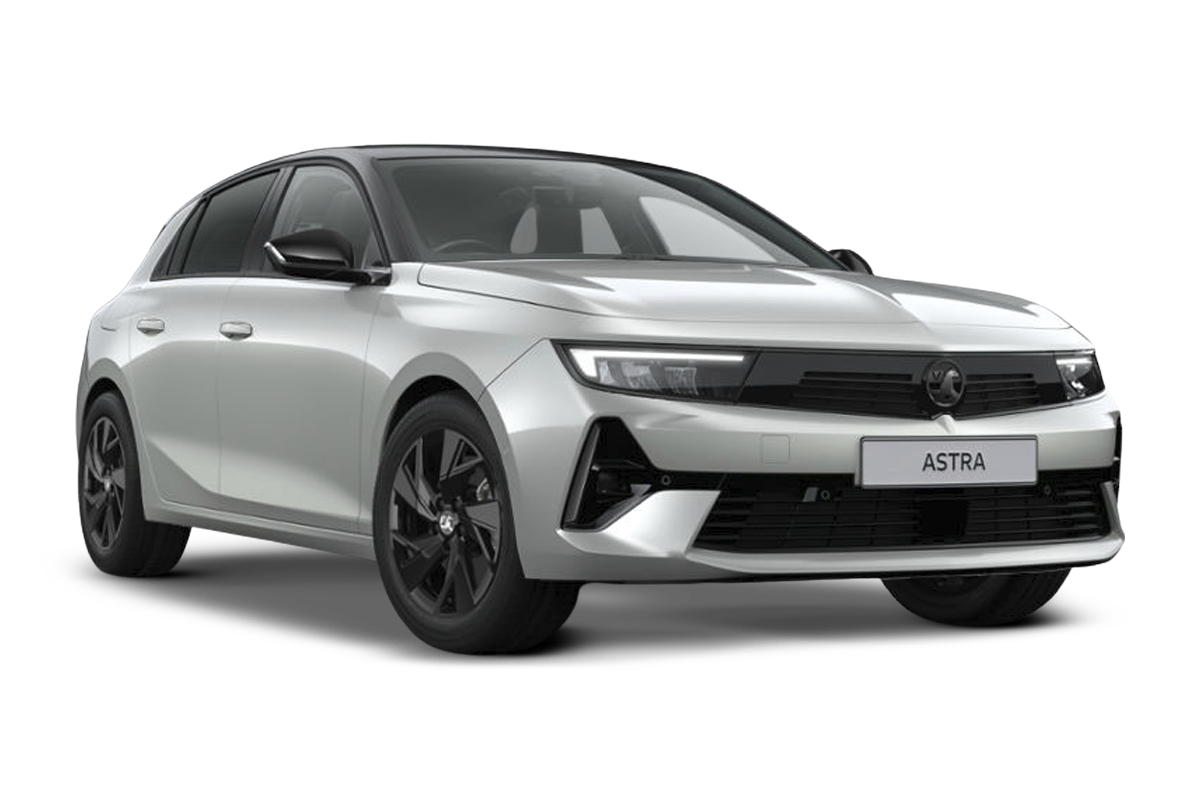
The Astra hatchback was updated in 2026 and it’s available with a wide variety of engines


What Car? says...
The Vauxhall Astra has long been an obvious choice for families wanting value-for-money motoring, and that's made it a big seller over the four decades it's been on sale.
In the hope of continuing its popularity, Vauxhall has updated the Astra for 2026, giving it sharper looks, up-to-date tech and a revised engine range: you have a pure petrol, the all-electric Vauxhall Astra Electric (which we've reviewed separately) and a couple of options in between.
Have these updates made the Astra a class leader? In other words, can it compete with the best family cars, such as the Honda Civic, Toyota Corolla and Seat Leon? Read on to find out.
What’s new?
- March 2026: Updated Astra gets a restyled nose with new headlamps as well as changes to interior trim, plus realigned pricing
- September 2025: Astra plug-in hybrid launched with a bigger 17.2kWh battery and more powerful 1.6-litre turbocharged engine
- June 2025: Griffin trim level revealed as the new entry-point, offered with two engines or as an EV with up to 260 miles of range

- February 2024: New 1.2-litre three-cylinder hybrid engine added, which is claimed to reduce fuel consumption by up to 19%
- April 2023: GSe trim level introduced, bringing improvements to the suspension, steering calibration and damper technology for better ride comfort and control
Performance & drive
What it’s like to drive, and how quiet it is
Strengths
- +Firm but well-controlled ride
- +Decent electric-only range for the PHEV
- +Not too much wind and road noise at speed
Weaknesses
- -Noisy petrol engines
- -Steering feels lifeless in corners
How fast is it and which engine is best?
Vauxhall has gone all in on electrification for the Astra… well, almost. The entry-level engine is purely petrol powered: it’s a 129bhp 1.2-litre unit, badged 1.2 Turbo Petrol. We’re yet to try it in the updated Astra, but previously it was our engine of choice. It was punchy enough and kept the price to a minimum.
0-62mph | Top speed | |
1.2 Turbo Petrol | 9.7sec | 130mph |
Hybrid 1.2 | 9.0sec | 130mph |
Hybrid 1.6 | 7.6sec | 140mph |
We have tested the 143bhp mild-hybrid (MHEV) petrol, badged Hybrid 1.2. The MHEV tech enables the Astra to trundle along on electric power alone for short distances, such as in stop-start traffic or car parks. It also lends a hand when you put your foot down. Overall, acceleration feels relatively strong and it’s roughly on a par with the rival Seat Leon 1.5 TSI 150.
The plug-in hybrid (PHEV) has a total of 193bhp and is badged Hybrid 1.6. It’s easily the nippiest Astra of all – and that includes the Vauxhall Astra Electric. What’s more, its 17kWh battery gives it an official electric-only range of up to 52 miles, which is decent for a PHEV, but the rival Leon e-Hybrid can officially travel around 80 miles on battery power alone.
We think most private buyers are best off sticking with the Hybrid 1.2, but seeing as the PHEV has the same list price, the latter is well worth considering if you have a home charger. Naturally, company car buyers will lean towards the PHEV (or the Astra Electric) for the lower BIK tax.
Every Astra gets an automatic gearbox and we found it fairly quick to react. We just hope that it still performs well in the entry-level petrol.
Is it agile and is the ride comfortable?
The Astra’s ride is nicely damped, and that’s something to appreciate if you suffer from travel sickness. Basically, it doesn’t bounce around nauseatingly over the ups and downs of a heaving country road. And, if you happen to strike a particularly gruesome pothole, the after effects don’t ricochet through the body, either.
That said, the Astra’s suspension set-up is towards the firmer end of the spectrum for the family car class. It’s not quite as firm as the Honda Civic or Seat Leon, but it doesn’t filter out the impacts of scruffy town roads as well as softer-sprung cars, such as the Skoda Octavia and Toyota Corolla. So, it’s not the best-riding car in the class but it’s not punishing, either.
The Astra doesn’t lean as much as the Corolla or Octavia when you’re cornering quickly either, and it isn’t upset if it encounters a tricky bump midway round a bend.
However, it doesn’t feel as rewarding to drive as a Leon for two reasons. Firstly, the steering doesn’t build up in weight as naturally when cornering, so you don’t get such a clear idea of how much grip you have at your disposal. Secondly, the Astra’s maximum grip level isn’t that high, because its tyres are more biased towards generating good fuel consumption figures rather than maximum grip.
Is it quiet and how easy is it to drive smoothly?
Let’s begin with the positives. There’s very little suspension noise; wind and road noise aren’t excessive; and if you buy any of the hybrid models, there’s no engine noise when they’re in electric mode.
However, there is plenty of engine noise when the petrol engines are running. In the Hybrid 1.2, you hear a deep thrum – and feel vibrations through the steering wheel – at low revs. Meanwhile, the 1.6-litre petrol in the PHEVs is coarse at high revs.
For a quieter, more refined experience (compared with any Astra), you’ll want to consider the Toyota Corolla.
“I was genuinely impressed by the Astra’s tight body control on bumpy B roads, which is why its uninspiring steering was so frustrating; if it steered with more finesse it would feel so much more fun to drive.” – John Howell, Deputy reviews editor

Interior
The interior layout, fit and finish
Strengths
- +Well-equipped infotainment system
- +A helpful array of physical buttons
- +On the whole, interior feels constructed stoutly
Weaknesses
- -Driving position won’t suit everyone
- -Interior ambience is rather dark and sombre
What does the interior look like and is it well made?
The look and feel inside the Vauxhall Astra is more functional than plush. The colour scheme is largely monotone – black or dark grey – with the only dash of colour being a splash of red on the door handles of higher trims. The 2026 update replaced the previous gloss black plastic with a matt-grey material that isn’t so fingerprint prone but does little to lift the ambience of what is a pretty sombre interior.
The material quality is okay, though. There are plenty of soft-touch finishes on upper surfaces. Lower down, the plastics are harder and scratchy, but that’s not unusual in this class – the Volkswagen Golf, for instance, isn’t any better.
And, generally speaking, the Astra’s interior fixtures and fittings feel solidly screwed together; it’s only certain elements, such as the light-weight action of the column stalks and interior vents, that let the side down.
If you want a reasonably priced family car with a genuinely top-notch finish, have a look at the Mazda 3. It’s nicer inside than some premium-badged hatchbacks, such as the Audi A3.
Is the driving position comfortable and is it easy to see out?
The Astra comes as standard with what Vauxhall calls ‘Intelliseats’, which are contoured to reduce pressure on your tailbone. This is said to improve comfort on long trips. All Astras also provide you with lumbar support as standard, further helping to relax your back on long trips, and the seat base can be extended if you need extra under-thigh support.
The standard seats aren’t especially supportive when cornering, but the sports seats you get with GS and Ultimate trim improve things, with more bolster cushioning. Ultimate trim brings 10-way electric seat adjustment, as well as a massage function.
However, while we’ve no particular gripes about the seats themselves, finding a comfy driving position may depend on your proportions if you’re particularly tall or on the small side. Of our two tallest road testers, both in the region of six-foot four tall, one had no problem, the other didn’t get on with it at all, despite there being height adjustment for the driving seat, as well as height and reach adjustment for the steering wheel.
The 10.0in digital driver’s display is simple to read and easy to see from behind the steering wheel – certainly easier than the display in the closely related Peugeot 308, with its quirky i-Cockpit layout. Ultimate trim and above add a head-up display.
While the Astra is generally pretty easy to see out of, it does have some issues. The positioning and angle of the front windscreen pillars means they can obscure your view at junctions, and the thick rear pillars are quite restrictive when you’re reversing. The Toyota Corolla has much better forward visibility, while the Skoda Scala is easier to see out of in every direction.
All versions of the Astra do at least come with front and rear parking sensors, a rear-view camera and bright LED headlights. GS trim adds a 180-deg rear-view camera, and all Astras get LED matrix headlights that can automatically shape their output at full beam to account for other vehicles, for bright, even illumination of the road ahead without dazzling other drivers. Ultimate trim brings upgraded headlights with more LED elements, allowing a more tightly-formed field of light that further improves visibility.
Are the dashboard and infotainment system easy to use?
All versions of the Astra come with a 10.0in infotainment touchscreen with lots of features as standard, including wireless Android Auto and Apple CarPlay smartphone mirroring, wireless phone charging, in-built sat nav, and a six-speaker stereo. There's also a voice-control system that uses ChatGPT artificial intelligence to recognise everyday phrases. For example, if you say, "Hey Vauxhall, it’s too warm in here!” it should turn the temperature down for you.
What’s even better than the voice activation is being able to operate the basic functions – including the interior temperature – yourself using some real, physical buttons. That’s a massive tick in our book because operating physical controls is so much easier than using touch-sensitive buttons or icons on the infotainment screen – that’s where the Seat Leon and Volkswagen Golf lose points.
The issue with the Astra is that the infotainment software lags behind some of its rivals. The software doesn’t always respond quickly and, when you are forced to make changes through the touchscreen, some of the icons are quite small and fiddly you find while you’re driving. Plus, despite the screen being helpfully angled towards the driver, the touchscreen is quite a stretch to reach if you’re tall and sitting farther back.
“I am 6 '3'’ tall and I didn’t get on with the Astra’s driving position. My proportions necessitate me to have the seat as far back as it’ll go, and, because the seat is quite low to the floor, my legs were unnaturally straight rather than the usual knees-bent sitting position I find in rivals like the Volkswagen Golf.” – John Howell, Deputy reviews editor

Passenger & boot space
How it copes with people and clutter
Strengths
- +Lots of interior storage space
- +Height-adjustable boot floor (not PHEVs)
- +Low boot load lip
Weaknesses
- -Boot isn’t as roomy as most rivals’
- -PHEVs have even less boot space
- -Tight rear seat space
How much space does it have for people?
Even if you're over 6ft tall, you won’t have to squeeze yourself into the front of the Vauxhall Astra because head and leg room are generous. It’s not tight width-wise, either, so you won’t be bashing elbows with your passenger or the door.
There’s plenty of storage space just within the centre console, including two cupholders, a large cubby under the front centre armrest, and a tray (with the wireless charging pad) for your mobile in front of the gear lever/selector. You’ve also got decent-sized door bins and a glovebox for anything you want to hide from prying eyes.
The rear seats aren’t as accommodating as they are in some family cars, though. For starters, the rear door openings are quite narrow, making it harder for tall adults to get in or out, and it’s no picnic if you’re a parent trying to lift small children into a child seat. And once you’re inside, there’s less leg and head room than there is in the back of a Seat Leon or Skoda Octavia. The lack of foot space under the front seats and the panoramic sunroof, which is standard with Ultimate trim and lowers the roof line, make life in the back even tighter.
You get storage nets on the backs of the front seats, but you only get a rear armrest (with cup holders) from Ultimate trim. That’s a bit stingy.
How much room does it have for luggage?
The Astra’s boot has a low loading lip to make life easier when you’re loading heavy items, and it’s a usefully square shape with a height-adjustable boot floor on all versions other than the 1.6 PHEV.
At 422 litres, on paper it’s more voluminous than the Seat Leon’s or Toyota Corolla’s boot. But at What Car? we do more than simply regurgitate numbers: we test what things are like in the real world. And in the real world, we managed to fit just five carry-on suitcases in the Astra’s boot, while we got six in the Corolla’s and Leon’s. Though the real king when it comes to boot space is the Skoda Octavia hatchback – we got a whopping ten carry-on cases in the back of one of those.
The Astra PHEVs have even less boot space, by the way; it drops to 352 litres to make room for the big hybrid battery.
If you have your heart set on an Astra but need a bigger boot, there’s always the Astra Sports Tourer estate. That comes with more flexible 40/20/40 split-folding rear seats, too, while the Astra hatchback has a 60/40 split – albeit with the useful addition of a ski hatch on Ultimate trim that you can poke long items through.
“We know the Vauxhall Astra isn’t the go-to family hatchback for ultimate practicality, but I was surprised how difficult it was to get a child seat in and out of the rear door openings – they really are quite tight.” – John Howell, Deputy reviews editor

Buying & owning
Everyday costs, plus how reliable and safe it is
Strengths
- +Electrified versions undercut the competition
- +Entry-level trim is well equipped
- +Vauxhall’s good reliability record
Weaknesses
- -Four-star Euro NCAP rating
- -Rivals available with much longer warranties
- -Other PHEVs offer lower BIK tax
How much does it cost and what equipment do you get?
As part of the 2026 update, the Vauxhall Astra’s pricing structure was radically overhauled to put the MHEV, PHEV and fully electric versions all at the same price if you’re paying with cash; you’ll not find such price parity in any other family car line-up. The only one that breaks from the mold is the pure petrol: it represents the cheapest Astra of the lot.
As for rivals, the Seat Leon has a slightly lower starting price than the Astra, while the Honda Civic, Peugeot 308, Skoda Octavia and VW Golf are all a bit more expensive.
Unfortunately, the Astra doesn’t have the strongest resale values in the class, and that tends to make PCP finance more expensive. Vauxhall often adds finance incentives that can redress the balance, though, so check out our New Car Deals page when you’re ready to buy.
When it comes to running costs, the Hybrid 1.2 officially averages almost 60mpg, but that’s still not quite enough to match the Toyota Corolla hybrid. However, with it costing no more to buy outright, the Astra PHEV makes a lot of sense; if you’re able to plug in and charge the battery regularly, its 52-mile official range could be enough to make local trips without using any petrol at all.
The PHEV is also a good option for company car drivers, thanks to its lower BIK tax. You’ll still pay more BIK on an Astra PHEV than some other rivals, such as the Leon PHEV (due to its longer electric range), but the Astra’s lower price helps narrow the gap. For the cheapest company car tax, you’re better off with a full on Vauxhall Astra Electric.
You get plenty of standard kit with the entry-level Astra Griffin, which you can have with any engine in the line-up and is our pick of the range. We’ve already mentioned the infotainment kit, including its 10in touchscreen, sat nav, wireless Android Auto and Apple CarPlay, wireless phone charging, six-speaker stereo, and visibility aids such as front and rear parking sensors, rear-view camera and LED headlights. On top of that it also comes with 17in alloy wheels, adaptive cruise control, heated front seats, a heated steering wheel, keyless entry and air conditioning.
GS trim is quite a jump up in price but is worth considering if additions like the more supportive sports front seats, dual-zone climate control, 180-degree parking camera, and keyless entry and start are appealing to you. Likewise with the range-topping Ultimate trim; it adds niceties such as wireless phone charging, a head-up display, a heated windscreen and those upgraded headlights – but it’s yet another hefty step up in price.
Is it reliable, and how long is the warranty?
Vauxhall did well in our most recent What Car? Reliability Survey, coming fifth out of 30 manufacturers. That still left it trailing Honda and Toyota, but further up the list than other rivals brands, including Peugeot, Seat, Skoda, and Volkswagen.
The Astra – like all Vauxhall models – comes with a three-year, 60,000-mile warranty. That's in keeping with cover from most other manufacturers, but can’t beat Hyundai's five-year offering, Kia's seven-year cover or Toyota’s 10-year warranty (conditional on you having the car serviced regularly by a Toyota dealer).
How safe is it, and is it easy to steal?
When Euro NCAP tested the Astra for safety in 2022, it was awarded a slightly disappointing four out of five stars. The Honda Civic and VW Golf have five-star ratings, with the Golf, for example, offering better chest protection for the front passenger in a frontal impact.
At least there’s plenty of safety equipment fitted as standard, including automatic emergency braking (AEB), lane-keeping assist and speed-limit sign recognition. Ultimate trim adds lane-change assistance, blind-spot assistance and rear cross-traffic alert.
“For me, the Astra in entry-level Griffin makes absolute sense because it’s relatively cheap to buy and comes with loads of kit. The more expensive versions don’t make sense because the Astra isn’t as competitive in a lot of ways as some of the other cars at the higher price point.” – John Howell, Deputy Reviews Editor
Buy it if…
– You are looking a competitively priced family car
– You want lots of standard equipment for your money
– You like some physical buttons to aid usability
Don’t buy it if…
– You want a car that’s easy to drive smoothly in traffic
– Noisy engines will annoy you
– You need something ultra-roomy and practical
For all the latest reviews, advice and new car deals, sign up to the What Car? newsletter here

FAQs
The Astra is a mixed bag. The body control on a twisty road is good, but it doesn’t steer well enough to be classed as fun to drive, so if that’s what appeals try the Seat Leon instead.
The ride is firm but nicely controlled, so there’s no danger of your passengers getting car sick, and there’s not a lot of wind or road noise on motorways. But the jerky automatic gearbox and noisy engines really let it down, so overall we’d say there are far more comfortable alternatives.
It’s okay, yes, but you get more rear-seat space and a far bigger boot in a Skoda Octavia.
If you’re a private buyer, we’d go for the entry-level 1.2 Turbo 130 manual in Griffin trim, which is peppy enough, well equipped and reasonably cheap. If you’re a company car driver, the Hybrid 1.6 Turbo 195 PHEV offers the lowest BIK tax, but bear in mind that rivals with a better electric range are in even cheaper tax brackets.
| RRP price range | £26,825 - £39,300 |
|---|---|
| Number of trims (see all) | 4 |
| Number of engines (see all) | 3 |
| Available fuel types (which is best for you?) | petrol, petrol plug-in hybrid, petrol hybrid |
| MPG range across all versions | 50.4 - 122.8 |
| Available doors options | 5 |
| Company car tax at 20% (min/max) | £70 / £2,117 |
| Company car tax at 40% (min/max) | £140 / £4,234 |

