Peugeot 2008 review
Category: Small SUV
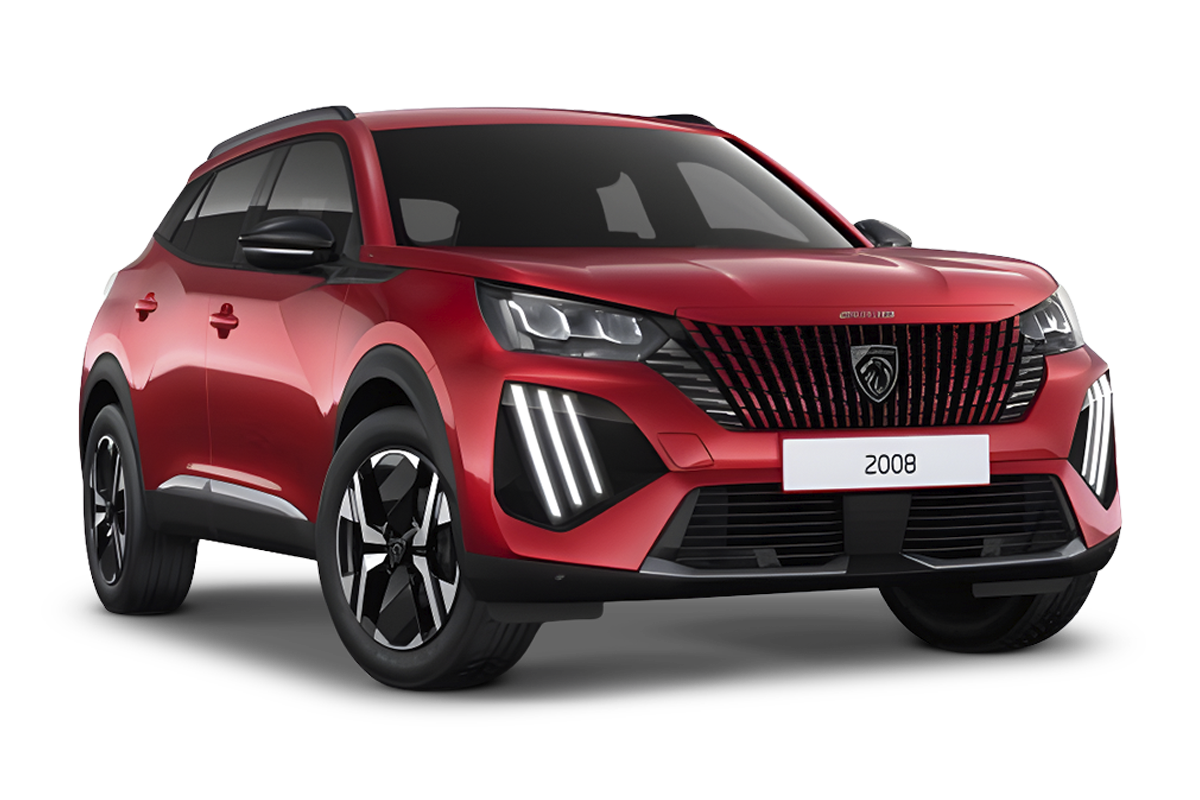
The Peugeot 2008 is smart inside and well equipped but there are much better small SUV all-rounders


What Car? says...
Fortune favours the brave, and setting your sights high is never a bad thing – just imagine if NASA had decided that going to the Moon was too much of a lofty goal. That’s why we like that the Peugeot 2008 has high ambitions.
How so? Well, for decades Peugeot has been duking it out with the so-called mainstream brands (and is still doing so today), but the upper end of the 2008's engine and trim range gives this small SUV a price tag that strays into the territory of the more premium Audi Q2 and Lexus LBX.
Peugeot 2008 video review
Does it justify setting its sights on posher rivals? That's a question we'll be answering in this review. We'll also tell you how we rate the 2008 against its rivals, ranging from the Ford Puma and Renault Captur to the Seat Arona, Skoda Kamiq and Volkswagen T-Roc.
Read on to find out everything you need to know about the petrol-powered Peugeot 2008 – or if you're interested in the fully electric version, see our Peugeot e-2008 review.
What’s new?
- May 2026: We drive the entry-level 2008 (PureTech 100) for the first time

- June 2025: New GT Premium trim introduced as range-topper with Alcantara interior, heated front seats and an electrically-adjustable driver’s seat
- March 2024: Order books open for mild-hybrid 2008, which pairs a 1.2-litre petrol engine with a small battery and electric motor to reduce CO2 by up to 26g/km
Performance & drive
What it’s like to drive, and how quiet it is
Strengths
- +Punchy petrol engines
- +Comfortable high-speed ride
- +Relatively hushed cruiser
Weaknesses
- -Not the sharpest handling
- -Ride comfort could be better around town
- -Automatic gearbox is jerky
How fast is it and which engine is best?
The Peugeot 2008 engine line-up starts with a 99bhp 1.2-litre turbo petrol, badged PureTech 100. Acceleration is strong enough in most scenarios and choosing it keeps the price down, so we suggest sticking with it.
Engine | 0-62mph | Top speed |
PureTech 100 | 10.8sec | 114mph |
Puretech 130 | 9.2sec | 126mph |
Hybrid 145 | 8.3sec | 128mph |
We can see why you’d be tempted by the 129bhp 1.2-litre PureTech 130, though. It’s noticeably quicker and it comes with an automatic gearbox (instead of the entry-level car’s six-speed manual ‘box).
Then there’s the Hybrid 145, which is essentially a mild hybrid version of the PureTech 130. It feels similarly punchy and is eager to set off from stationary; you don’t get that initial pause that affects some rivals with an automatic gearbox (such as the Kia Stonic and Seat Arona), which makes it handy when you need to aim for a gap in traffic. The mild hybrid tech is also meant to improve fuel economy and reduce emissions. More on that in the costs section.
Is it agile and is the ride comfortable?
The 2008's relatively soft suspension means it wafts along A-roads and motorways very smoothly. In fact, apart from a bit of bounce over larger undulations, it’s comfortable on a long drive.
At slower speeds and around town, the news isn’t quite as good. The 2008 can struggle with larger surface imperfections, and if you hit a pothole you can sometimes feel a shock wave ripple through the car. We’d also avoid GT Premium trim with its larger 18in wheels; these amplify the road surface a little bit more, resulting in a bit more fidgeting.
Don’t get us wrong, it's not outright uncomfortable, but if you do most of your driving in town, things are much calmer and comfortable in a Skoda Kamiq or VW T-Roc.
A downside to the 2008’s soft suspension is that there’s some body lean when cornering, and the 2008 never feels as sharp, agile or planted as the Audi Q2, Ford Puma or Seat Arona. Sure, the 2008 never feels uncontrollably sloppy either, but it’s ultimately an underwhelming car to thread through a set of corners.
What’s more, because of how tiny the steering wheel is, small inputs deliver comparatively big responses. It takes some getting used to and can rob you of some confidence. The Q2, Puma and Arona have more communicative, naturally weighted steering, furthering their position as the class leaders for handling.
On the plus side, when you’re pottering around in urban environments, that quick steering and tight turning circle are useful, and the 2008 is an easy car to park.
Is it quiet and how easy is it to drive smoothly?
You can feel some minor vibrations through the steering wheel when accelerating, but, with hushed engines and little in the way of tyre roar, the 2008 is a pleasingly relaxing car to drive. Other than a bit of wind noise at motorway speeds, it’s one of the better small SUVs for high-speed cruising.
A perk of the Hybrid 145 is that the mild hybrid system allows you to crawl along at walking pace on electric power alone, with the engine off. This makes it even quieter and smoother when dealing with stop-start traffic queues.
As we touched on earlier, the PureTech 100 comes with a six-speed manual gearbox, and the 130 and Hybrid 145 get automatic gearboxes. The manual isn’t as slick as the one in the Ford Puma, Seat Arona or VW T-Roc but it's nice enough to use.
However, the automatic gearbox is quite jerky in its responses – especially in slow-moving traffic. This low-speed jerkiness is made worse by the electronic handbrake’s ‘Auto Hold’ function, which is reluctant to release when you want to set off gently. As a result, it encourages you to almost stamp on the accelerator pedal and the car will surge forward.
“The jerkiness you get with the automatic gearbox can be a pain, but for me it's made worse by the abrupt nature of the 2008's engine stop-start system.” – Will Nightingale, Reviews Editor

Interior
The interior layout, fit and finish
Strengths
- +Good quality interior
- +Feels like an SUV from behind the wheel
- +Decent infotainment system
Weaknesses
- -Driving position won’t suit everyone
- -Climate controls are fiddly
- -Limited over-the-shoulder visibility
What does the interior look like and is it well made?
The 2008’s interior design is very much the same as its 208 stablemate. With a modern look and upmarket feel, it holds its own with premium-badged rivals. It gives the Audi Q2 and VW T-Roc a run for their money. Indeed, the Lexus LBX is the only small SUV that's noticeably classier inside.
Is it all style and no substance? No – the swish looks are backed up by plush-feeling materials and (mostly) good build quality. The dashboard surfaces are pleasantly squishy and it’s only on the doors that you’ll find some cheaper-feeling plastic. GT trim and above adds ambient lighting for some visual appeal in the dark.
Is the driving position comfortable and is it easy to see out?
Like in most small SUVs, the seats are mounted quite high up in the car, meaning the Peugeot 2008 does have a more commanding seating position than its smaller hatchback sibling, the Peugeot 208. What’s more, you sit higher up from the road than you do in the rival Skoda Kamiq.
There’s plenty of adjustment in the steering wheel and driver’s seat, although it's a shame adjustable lumbar support is available only on GT Premium trim. That said, this also includes a massaging function for the driver’s seat to boost comfort. Otherwise, the seats in general are very supportive and have a good amount of side bolstering to hold you in place.
Peugeot’s i-Cockpit layout forces you to look over – rather than through – an unusually small steering wheel to see the digital driver's display. Although the display is set higher than it is on most cars to make it easier to view in your line of sight, some drivers will need to jack up the seat unnaturally high to avoid the top of the wheel partially obstructing the view of the instruments.
If you’re buying a manual 2008, it’s worth making sure you can use the clutch pedal without hitting your knee against the steering wheel, especially when the latter is set to its lowest position.
The 2008’s high driving position helps to give you a decent view of the road ahead, although the chunky windscreen pillars can get in the way at junctions. Likewise, over-the-shoulder visibility isn't great.
Mercifully, front and rear parking sensors are standard across the range, while GT adds a rear-view camera. Allure trim has bright Eco LED headlights, with GT and GT Premium trims getting full LED headlights.
Is the dashboard and infotainment system easy to use?
All 2008s get a digital driver’s display that’s sharp to look at and easy to read. GT models get a 3D display but, because it isn’t consistently clear, we don’t think it’s worth stepping up to this trim to have it. At least it offers a range of layouts.
Every version of the 2008 gets a 10.0in infotainment touchscreen set into the dashboard, with wireless Android Auto and Apple CarPlay smartphone mirroring. There’s a touch-sensitive home button that’s useful for reverting to a page where you can store your own shortcuts.
Only top-level GT Premium trim gets a standard-fit sat-nav, but we don’t see it as a big issue: we'd instead suggest linking up your phone using smartphone mirroring and running a navigation app.
The infotainment system is reasonably responsive, but the menu layout could be more logical to help find features more easily. It’s annoying, too, that the air-con controls are buried in the touchscreen, so you have to switch between functions just to make adjustments. Physical buttons or knobs, like the Audi Q2 and Lexus LBX have, are less distracting to use while driving.
Most rival small SUVs (including the Audi Q2, Lexus LBX and VW T-Roc) have better systems.
"Peugeot's i-Cockpit layout is very divisive but I get on with it quite well. I tend to have the steering wheel mounted low down anyway.” – Lawrence Cheung, New Cars Editor

Passenger & boot space
How it copes with people and clutter
Strengths
- +Ample room in the front
- +Decent-sized boot
- +Height-adjustable boot floor on most trims
Weaknesses
- -Access to rear seats could be better
- -Rear seats don't do anything particularly clever
How much space does it have for people?
Even tall people won't feel cramped in the front of the Peugeot 2008. There's plenty of head and leg room along with enough interior width to prevent you feeling too close to your front passenger.
There’s also a decent amount of storage space, including good-sized door pockets, a deep cubby between the seats, a couple of cupholders and a tray at the bottom of the dashboard. Above that, you'll find a hidden compartment that clicks open to reveal an ideal spot to stow your phone.
Getting in and out of the back isn't as easy as it is in some rivals because of the 2008's fairly narrow door openings. Once inside you’ll find enough leg room (although the Skoda Kamiq and VW T-Roc have even more) but head room is limited by the sloping roofline, and that gets worse if you add the optional sunroof.
The middle rear seat is softly cushioned, but the 2008 is narrower in the rear than some rivals, so it's not the best small SUV for carrying three adults in the back. Storage space includes a couple of small door bins, along with map pockets on the backs of the front seats.
How much room does it have for luggage?
With the rear seats up, the 2008’s 434-litre boot capacity is average for the class. It beats the Kia Stonic (352-litres) and Seat Arona (400-litres) with enough space for a small holiday. However, the Ford Puma offers more room with the help of its large storage well under the floor (456 litres).
GT trim and above get a height-adjustable boot floor, allowing you to divide the boot into two compartments, and reduce the lip at the entrance when you don't need maximum boot capacity.
To make way for bigger items, the rear seatbacks split and fold in a 60/40 configuration. There’s no option of a more practical 40/20/40 set-up (like there is with the Skoda Karoq), a ski hatch (which you get in the VW T-Roc) or a sliding rear bench (a feature of the Renault Captur and VW T-Cross).
“I'm 5ft 11in tall, and when I sat in the 2008's rear seats having set the driver's seat up for someone of my size, I had just enough leg room and a good amount of space to get my feet under the seat in front.” – Oliver Young, Reviewer

Buying & owning
Everyday costs, plus how reliable and safe it is
Strengths
- +Relatively frugal petrol engines
- +Reasonably priced entry-level trim
Weaknesses
- -Lexus LBX is more fuel efficient
- -Higher trims push price too high
- -Safety rating is out of date
How much does it cost and what equipment do you get?
With a list price of around £25,000 in its entry-level form, the Peugeot 2008 is reasonably priced for a small SUV. That’s slightly more than the most affordable Kia Stonic, Renault Captur and Seat Arona, but less than the Ford Puma and Skoda Kamiq. It’s easy to push the price closer to £30,000, though, putting higher end 2008s in competition with the likes of the Audi Q2 and VW T-Roc.
Disappointingly, the 2008 loses value faster than many rivals, so it's likely to cost you more in the long run than the Q2, Puma, Captur or Kamiq.
In our Real MPG tests, the 1.2 PureTech 130 averaged 47mpg – roughly in line with the official figure. We’ve yet to conduct the same test on the Hybrid 145 but its 57mpg official average suggests it’ll do even better for fuel economy. That said, you'll have to drive many miles to recoup the extra initial outlay in fuel savings. For even better fuel economy, consider the Lexus LBX or Toyota Yaris Cross.
Officially, our pick of the engine range (the PureTech 100) averages 49.5mpg, but again, we’re yet to test how it fairs in real world conditions.
There isn’t a plug-in hybrid (PHEV) version of the 2008, but if you’re a company car driver, you’ll want to check out the fully electric Peugeot e-2008. It’ll be much cheaper than any other 2008 for benefit-in-kind (BIK) tax.
There are three trims to choose from with the Peugeot 2008: Allure, GT and GT Premium.
Allure gets automatic air-con, rain-sensing wipers, cruise control and privacy glass. Meanwhile, GT adds more creature comforts, including keyless entry and interior ambient lighting.
Range-topping GT Premium gets a front parking camera, 18in alloy wheels, heated, electrically adjustable front seats (with a massage function for the driver’s seat) and a wireless phone charger. It’s tempting but we’d stick with Allure because it keeps the price as reasonable as possible.
If you’re going to spend GT Premium money, we’d say you’re better off buying an Audi Q2, Lexus LBX or Volkswagen T-Roc – or perhaps a larger alternative, such as the Skoda Karoq.
Is it reliable and how long is the warranty?
In our 2025 What Car? Reliability Survey, the Peugeot 2008 ranked eighth out of 38 cars in the small SUV class. That’s a good result; it slots in between the VW Taigo and Vauxhall Mokka.
As a brand, Peugeot placed 11th out of 30 manufacturers featured. Again, that’s a good result; it’s sandwiched by Citroën and Dacia.
For peace of mind, every 2008 comes with a three-year, unlimited-mileage warranty as standard. Kia’s standard warranty is a lot longer, though.
How safe is it and is it easy to steal?
Safety experts at Euro NCAP awarded the 2008 five out of five stars back in 2019. It’s worth noting that the now-discontinued, entry-level Active trim received only four stars because of its less advanced automatic emergency braking (AEB) system.
Lane-keeping assistance is fitted across the range but blind-spot monitoring is, disappointingly, optional on Allure and GT trims. Isofix child-seat mounts on the two outer rear seats are standard on every trim.
“Peugeot has simplified the 2008's trim line-up over the years, which was welcome. There aren’t too many optional extras to tempt you into hiking up the price of your chosen model, either.” – Darren Moss, Deputy Editor
Buy it if…
- You want a reasonably priced small SUV that feels fairly premium inside
- You like a punchy petrol engine
- You’re looking for good reliability
Don’t buy it if…
- You want sharp handling
- You’re averse to an unusual driving position
- You want the most practical small SUV available
For all the latest reviews, advice and new car deals, sign up to the What Car? newsletter here

FAQs
The 2008 isn't a class-leading small SUV but it's still a good choice – especially if your priorities include a smart interior and hushed cruising manners.
These things are relative, of course, but the 2008 isn't actually that cheap for a small SUV. It costs more to buy new than an equivalent Ford Puma or Skoda Kamiq for example – although it's slightly cheaper than a like-for-like Audi Q2 or Lexus LBX.
We wouldn’t say it’s cheap, full stop. Sure, there are more affordable small SUVs available. However, the 2008 is generally cheaper to buy than some premium options, like the Audi Q2 and Lexus LBX – those cars have even plusher interiors, comfier rides and more refined engines.
Many rival small SUVs are roomier in the back and some are cheaper to buy, plus the 2008's automatic gearbox is horribly jerky at low speeds. However, there are plenty of positives, including a smart interior.
| RRP price range | £25,695 - £32,445 |
|---|---|
| Number of trims (see all) | 3 |
| Number of engines (see all) | 2 |
| Available fuel types (which is best for you?) | petrol, petrol hybrid |
| MPG range across all versions | 0 - 62.4 |
| Available doors options | 5 |
| Company car tax at 20% (min/max) | £70 / £2,139 |
| Company car tax at 40% (min/max) | £141 / £4,278 |

