Renault Megane review
Category: Electric car
The Megane is comfy, quiet and has a competitive range but rivals offer better value


What Car? says...
If you go to a party and most guests are unfamiliar, it's tempting to make a beeline for the people you do know. Likewise, while the all-electric Renault Megane is like no other Megane before, that familiar name was intended to help buyers gel with this new iteration.
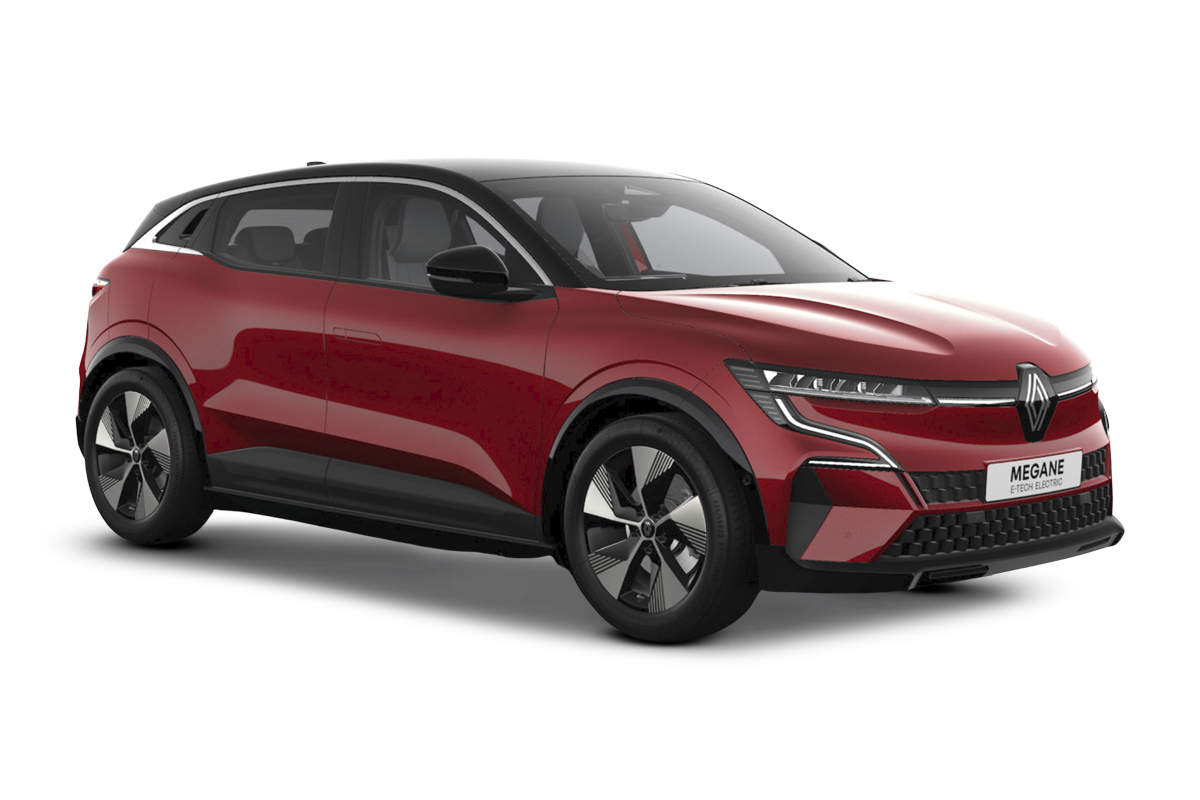
It can be tricky to judge the size of the Megane from photos alone because it looks like a hatchback fused with some subtle SUV-like styling. However, in reality it's actually closer in size to the MG4 than, say, the Kia EV6.
Renault Megane E-Tech video review
You could consider the MG4 a rival, then, along with the Cupra Born and VW ID 3. So, how does the Megane compare?
What’s new?
- April 2025: Megane updated and now features one-pedal driving and a simplified range of trim levels
- February 2023: range-topping Iconic trim announced, featuring a heat pump, new colours and an upgraded Harman Kardon sound system
- November 2022: Megane now available through Renault’s new subscription service, which includes servicing, VED, insurance and breakdown cover at one cost. Monthly mileage limit of 750 miles
- June 2022: pricing and specification details for new Megane revealed ahead of its arrival in showrooms
- September 2021: all-new Megane revealed as a new SUV-inspired hatchback featuring fully electric power

Performance & drive
What it’s like to drive, and how quiet it is
Strengths
- +Strong performance
- +Quiet to drive
- +Comfortable ride
Weaknesses
- -Front wheels occasionally struggle for traction
- -Inconsistent brake-pedal feel at low speeds
- -Only one battery option
Every Renault Megane has a 215bhp electric motor driving its front wheels, and that makes it fairly nippy. In our tests, it managed 0-60mph in 6.9sec – fractionally quicker than the equivalent Cupra Born or MG4.
All versions are front-wheel drive so you have to be a bit delicate with the accelerator pedal when the road is wet. If you put your foot down hard, the front wheels can spin before the traction control kicks in to cut power temporarily.
Entry-level Techno trim comes with 18in wheels and has the most agreeable ride, but the Megane is still comfortable on the 20in wheels you get with higher trims. The suspension has a firmer edge than the MG4's, but it’s well controlled, dealing with potholes and expansion joints quickly, with no pronounced aftershocks.
Disappointingly, while the Megane has tight body control, it doesn’t quite translate into being a car with enjoyable handling. It’s grippy and agile enough, but the steering is very light and the speed of it changes after you wind on the first few degrees of lock. This makes turning less instinctive.
While Sport mode makes the steering heavier, it doesn’t really transform the driving experience. That means placing the car accurately can be trickier along faster winding roads than in a Cupra Born or VW ID 3.
The regenerative braking system (which tops up the battery by recovering energy after lifting off the accelerator pedal) has four strength settings, and you can switch between them using small paddles behind the steering wheel. In the most extreme setting, it greatly reduces your need to use the actual brake pedal, especially around town.
Unfortunately, when you use the brake pedal at low speeds, you'll find it hard to judge: it sinks towards the floor with very little pressure applied, then the brakes grab suddenly. At higher speeds, the pedal is more progressive, which allows for smoother braking when travelling on quicker roads.
Renault is very proud of the extra sound insulation packaged into the floor to reduce road noise – a method it calls the "cocoon effect". It works well, and the Megane is quieter at a cruise than many rivals, including the Born and MG4; only a bit of wind flutters around the large door mirrors. The suspension is hushed too, with only the sharpest of ruts causing a pronounced thunk.
What about range? Well, all Meganes are powered by a 60kWh (usable capacity) battery that delivers an official range of around 286 miles. That’s more than the entry-level Cupra Born (264 miles), MG4 (280 miles) and VW ID 3 (240 miles). There are versions of the MG4, Born and ID 3 that can cover more than 300 miles, though.
Usefully, all versions of the Megane come with an EV heat pump as standard, which allows for more efficient warming of the interior. Until summer 2024, the Megane wasn’t offered with a heat pump so its range depleted quite quickly in colder weather, as we found out during our real-world winter range test (it managed 189 miles). Rivals, including the Born have this as an option.
“Most new cars with large alloy wheels sacrifice comfort in the name of style, but I was very impressed at how well the Megane's suspension soaked up the worst of the lumps and bumps, even with 20in wheels.” – Dan Jones, Senior Reviewer

Interior
The interior layout, fit and finish
Strengths
- +Comfortable driving position
- +Smart interior
- +Intuitive infotainment system
Weaknesses
- -Poor rear visibility
- -Confusing number of stalks
With plenty of seat and steering wheel adjustment, the Renault Megane has a great driving position. It's much better than the MG4 because that car has its steering wheel offset to your left.
Better still, all the adjustability makes it easy to get comfortable on long journeys, and all versions get electric adjustable lumbar support as standard. Mid-level Techno Esprit Alpine gets full electric adjustment for added convenience.
The Megane's front window pillars are fairly chunky and can get in the way when you're navigating sweeping bends or exiting a junction. Rearward visibility isn’t great either, due to the large rear pillars and tiny rear windows. That's less of a problem in the Cupra Born and MG4.
Thankfully, front and rear parking sensors come as standard on all models, as well as a rear-view camera. The range-topping trim (called Iconic Esprit Alpine) gets a 360-degree view camera and a digital rear-view mirror, which can show a feed from a camera at the back of the car.
Inside, the Megane is smartly finished with plenty of soft materials and fabrics, many of which are recycled. There are some hard plastics but they’re hidden low down and don’t detract from the overall impression.
All Meganes have a 12.3in digital driver’s display that offers a range of lay-outs and is more versatile than the 5.3in displays in a Born or Volkswagen ID 3. However, like in the MG 4, the steering wheel rim can block some of the display.
Like in the larger Renault Scenic, there are three stalks behind the steering wheel on the right hand side – one that acts as the gear selector, another to operate the windscreen wipers and a third for controlling the stereo. Indeed, they’re all within close reach, but it can feel a bit busy around there.
All versions come with a 12.0in touchscreen running on Renault’s OpenR infotainment system. It's easy to get along with thanks to its simple lay-out, sharp graphics and quick responses.
We also like the fact you get physical toggle switches for the climate controls, which makes it easy to adjust functions such as the temperature while driving. Overall, the infotainment and climate control set-up is more intuitive than the touch-sensitive sliders you get in a Cupra Born or VW ID 3.
The sound system changes depending on the trim level. Techno and mid-range Techno Esprit Alpine trim get six speakers, while range-topping Iconic Esprit Alpine models get a punchy nine-speaker Harman Kardon system.
“Renault’s OpenR infotainment system is one of my favourites. It runs Google-based software, which means it’s quick and responsive to use. Plus, it gets regular over-the-air updates to keep it fresh with the latest features.” – Oliver Young, Reviewer

Passenger & boot space
How it copes with people and clutter
Strengths
- +Spacious in the front
- +Plenty of storage areas
- +Big boot
Weaknesses
- -Head and leg room are tight in the back
- -Boot has a very high loading lip
There's plenty of head and leg room in the front of the Renault Megane. You also get plenty of storage, including door bins big enough for a large bottle of water, a glovebox, a tray with wireless phone-charging below the infotainment screen, and large cubbies in the central armrest and in front of it.
There's only one cupholder, mind, and the two movable dividers in the long lower cubby are a bit fiddly.
Space could be better in the Megane's back seats. Two six-footers will find their heads grazing the roof lining and knee room is disappointing by electric car standards. Plus, there’s not much room for feet under the front seats.
In short, the Megane’s main rivals – the Cupra Born, MG4 and the VW ID 3 – are more accommodating in the rear.
In the boot, the 440-litre load area is short but really deep. We managed to fit in an impressive seven carry-on suitcases below the tonneau cover compared with six in the Born and five in the MG4. The downside is that there's a very high load lip, so heaving in larger items isn’t all that easy. You do at least get a handy cubby under the boot floor that's large enough to store the charging cables.
The rear seats can be folded down in a 60/40 configuration, which is the same as most rivals. With the seat backs down, there’s a large step in the floor of the extended load bay so sliding in long items won’t be the easiest.
The Megane isn't available with a ski hatch in the centre of the backrest – something you can get in the Born and ID 3. Unlike with the Peugeot e-308 and Vauxhall Astra Electric, there isn’t an estate car version available, either.
“I was surprised by the space in the back of the Megane, and not in a good way. I’m 6ft 2in and found knee room tight. Also, the small rear windows, grey headlining and dark upholstery on our test car made it feel a bit claustrophobic.” – George Hill, Used Car Writer

Buying & owning
Everyday costs, plus how reliable and safe it is
Strengths
- +Reasonably priced
- +Well equipped
- +Plenty of standard safety kit
Weaknesses
- -Heavier depreciation than rivals
- -Renault’s reliability record isn’t great
If you're paying cash, the Renault Megane is reasonably priced, costing more than an MG4 but lining up well next to the VW ID 3. The Cupra Born is more expensive.
Disappointingly, the Megane is predicted to suffer heavier depreciation so it could mean higher monthly payments on PCP finance. That said, it's always worth checking for offers on our New Car Deals pages.
Our pick of the trim range is entry-level Techno, which comes with plenty of standard kit. That includes an EV heat pump, 18in alloy wheels, full LED headlights, dual-zone climate control, heated front seats, a heated steering wheel, ambient interior lighting and keyless entry.
Techno Esprit Alpine trim adds 20in alloy wheels, adaptive LED headlights, rear privacy glass, adaptive cruise control that reduces your speed for roundabouts and bends – based on map data – and an upgraded six-speaker sound system.
Top-spec Iconic Esprit Alpine trim adds a Harman Kardon premium sound system and replaces the rear-view mirror with a smart mirror that shows a feed from a camera. Unless you really want those items, we don't think it's worth the extra cost.
The Megane has a maximum charging speed of up to 130kW, which means a 10-80% battery top-up should take around 30 minutes if you plug into a powerful enough rapid charger. That’s about the same as the Cupra Born and Volkswagen ID 3, and a little less time than the MG4.
A full charge from a 7kW home EV charger will take around 10 hours.
The Megane finished in seventh place out of 19 electric cars in the 2025 What Car? Reliability Survey. As a manufacturer, Renault came in 20th place out of 30 manufacturers – above VW (24th) and MG (30th), but its 91% rating isn’t exactly stellar.
Renault gives you a three-year warranty with unlimited mileage for the first 24 months but a cap of 100,000 miles over the three years. Three years is fairly typical – matching Cupra and VW warranties – but doesn’t match Kia’s seven-year warranty. The Megane’s main battery is covered for eight years.
Euro NCAP awarded the Megane five stars out of five for safety in 2022, and it has plenty of safety tech as standard. That includes traffic sign recognition, a driver attention monitor system, a speed-limit warning system, lane-keep assistance and automatic emergency braking (AEB). All versions also have blind-spot monitoring and lane-keeping assist.
“I like that all new Renaults have a feature called the MySafety switch, which lets you save and personalise driver aids such as the lane-keep assistance through the touchscreen. Once you’ve set your preferences, you can enable them by pressing a button beside the steering wheel.” – Lawrence Cheung, New Cars Editor
Buy it if…
- You appreciate a comfy ride
- You like a plush, easy-to-use interior
- You want a pretty big boot
Don’t buy it if…
- You want a fun-to-drive electric car
- You want a super spacious interior
- You want the cheapest family-sized EV available
For all the latest reviews, advice and new car deals, sign up to the What Car? newsletter here

FAQs
Yes. It’s comfortable and quiet, plus it has a smart interior with an intuitive infotainment system. While it’s not the cheapest or most practical electric car it’s certainly worth considering.
The Megane has not been discontinued entirely. Instead, it’s been relaunched as the fully electric Renault Megane E-Tech. Although it has chunky SUV styling, it remains a family hatchback in terms of size.
| RRP price range | £32,795 - £36,995 |
|---|---|
| Number of trims (see all) | 3 |
| Number of engines (see all) | 1 |
| Available fuel types (which is best for you?) | electric |
| MPG range across all versions | 0 - 0 |
| Available doors options | 5 |
| Company car tax at 20% (min/max) | £65 / £74 |
| Company car tax at 40% (min/max) | £130 / £148 |

