Plug-in hybrid vs mild hybrid: which is best?
While car manufacturers around the world are putting increasing focus onto electric cars, with various countries vowing to ban the sale of new petrol and diesel models in the coming years, there has also been a significant uptake of hybrid cars.
According to official figures from the Society of Motor Manufacturers and Traders (SMMT), more than 426,000 new hybrid cars and a further 208,000 plug-in hybrids were sold in the UK during the first 10 months of 2025 alone. But those figures don’t include another type of hybrid that’s increasing in popularity: mild hybrids.
Finding out whether a mild hybrid or a plug-in hybrid is the right fit for you can be a tricky task, not least because some manufacturers offer both systems in their cars.
Here, we explain what exactly a mild hybrid and a plug-in hybrid is, compare their pros and cons and show you how we tested which one offers the best value for money in the real world.
What is a plug-in hybrid car?


Like other hybrid types, a plug-in hybrid (PHEV) features either a petrol or diesel engine, a battery and a motor. As the name suggests, though, the key difference is that you replenish a PHEV’s battery by plugging it into a vehicle charger, much like charging a fully-electric car. Plug-in hybrids also have regenerative braking to put a little extra power back into the battery when slowing down or braking.

It’s also possible to drive a plug-in hybrid car on purely electric power, with the engine only needing to be activated when travelling at high speeds or covering long distances. Most new plug-in hybrids have an official pure electric range of about 50 miles, but some can cover nearly 90 miles before depending on the engine alone. You can find more in our longest-range PHEV feature.
Of course, being able to run a plug-in hybrid on pure electric power can significantly reduce emissions and improve fuel economy. According to our testers, by covering short distances and charging regularly, the Lexus NX 450h is capable of achieving as much as 313mpg. Over 10,000 miles, we achieved 86mpg in a Mercedes E-Class E300de diesel-hybrid.
Nevertheless, to get the most out of a plug-in hybrid car, you’ll need to install a home EV charger or have a public charger nearby. That’s because without charging regularly, a PHEV will likely be more expensive to run than a conventional combustion engined car.
What’s more, since they feature larger battery packs than other types of hybrids, PHEVs are generally more expensive to buy outright. However, if you’re a company car buyer, a plug-in hybrid will be cheaper than an equivalent mild hybrid or combustion engined car because they emit lower levels of carbon dioxide and attract cheaper company car tax ratings.
From 2028, the government will introduce a pay-per-mile tax on cars that can be driven on pure electric power, with plug-in hybrids set to be charged 1.5p for each mile travelled.
What is a mild hybrid car?
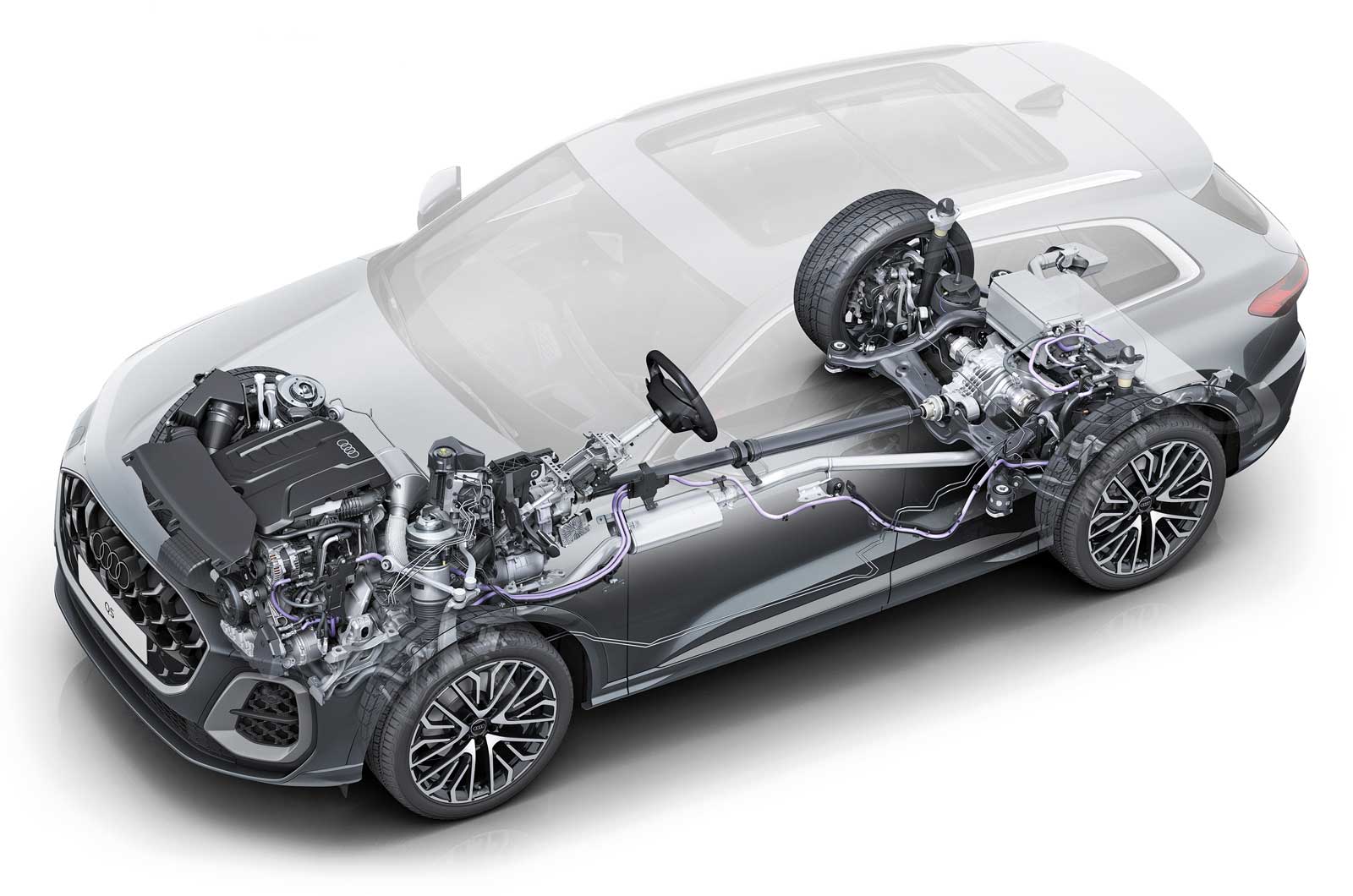
A mild hybrid electric vehicle (MHEV) uses either a petrol or diesel engine as its main source of power, albeit with the starter motor and alternator (the component that keeps the 12v battery charged up) replaced with a small electric generator and 48v battery.
Unlike other hybrid types, you can’t run a mild hybrid car on electric power alone. Instead, the power that’s generated goes to operating the car’s start-stop system and assisting the engine, reducing fuel consumption and emissions.
Indeed, cars fitted with mild hybrid technology are 15% more efficient than petrol or diesel counterparts on average. While that doesn’t sound like a particularly significant figure on face value, it could help to save you a decent sum in fuel each year.
Despite this, mild hybrid cars are almost always more affordable than other hybrid types and offer a closer driving experience to a conventional petrol or diesel model. For instance, some mild hybrid cars are fitted with a manual gearbox, whereas all plug-in hybrids are automatic.
However, there are some drawbacks to owning a mild hybrid. Most notably, the 48-volt battery will likely degrade over time and the electric generator can add increased complexity. Even so, these components shouldn’t give any issues when the vehicle is new and are typically covered under the manufacturer’s warranty.
How we tested mild hybrid vs plug-in hybrid?
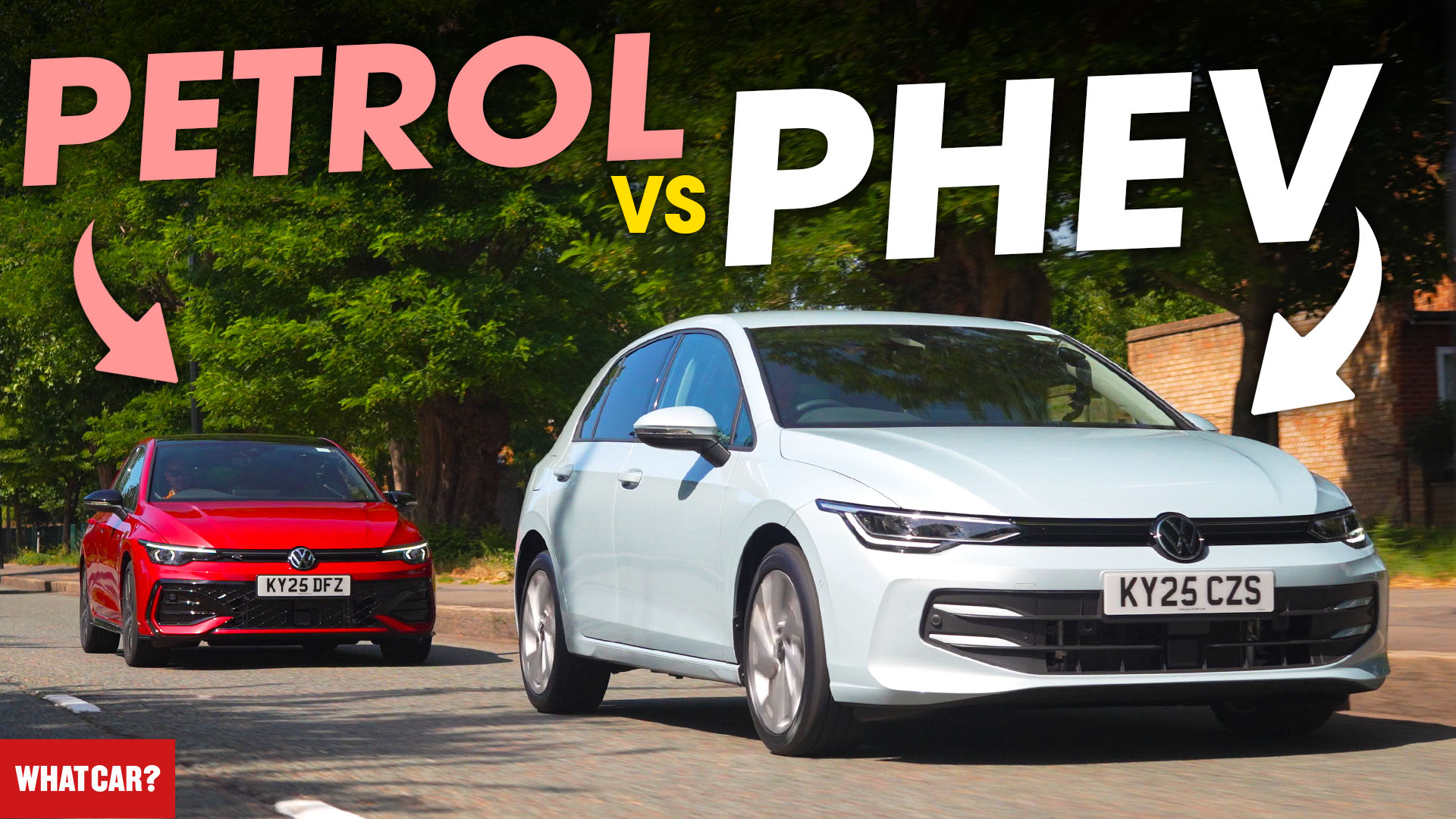
To test whether a mild hybrid or plug-in hybrid car offers better value for money, we took two examples of the Volkswagen Golf – a car offered with both types of hybrid setup – for a road trip.
The cheaper of the two was the Golf 1.5 eTSI mild hybrid, which prices starting at about £32,000 and is officially capable of averaging 52.5mpg. The plug-in hybrid Golf 1.5 TSI eHybrid is more expensive, with list prices from around £36,000, but can officially cover up to 88 miles on electricity alone which helps it to officially achieve 993mpg.
Two cars were filled and charged to the brim before setting off on a 200-mile trip that started and finished in London. Once the trip was over, the cars were refilled to find out how much petrol, and in the case of the PHEV electricity, was used. For fairness, the plug-in hybrid was set to ‘Hybrid’ mode – which uses both the engine and electric setup – throughout the road trip.
You can find out which car was cheaper, both during the journey and in the long run, by watching the video below.
Which is right for me?
Buy a mild hybrid car if…
- You’re on a more limited budget
- You don’t want to worry about charging your car’s battery or can’t install a home charger
- You want a hybrid that offers the same driving experience as a petrol or diesel car
Buy a plug-in hybrid car if…
- Your typical daily commute covers less than 50 miles
- You want an EV-like driving experience without the fear of range anxiety
- You’re a company car buyer
What Car? Says…
What Car? content editor, Jack Mortimer, says: “Knowing whether to buy a mild hybrid or a plug-in hybrid will largely depend on the sort of driving you do and how much you plan to spend on your next car. Mild hybrids are cheaper and drive like a conventional petrol or diesel car but are only slightly more efficient, whereas plug-in hybrids can drastically cut your fuel bills but need to be plugged in regularly and generally cost more to buy.
“Consider how many miles you typically cover and the sort of driving you do most. If most of your journeys take place around town or in the city, a plug-in hybrid would be the most efficient option. If you do lots of motorway miles, a mild hybrid is generally better suited.”