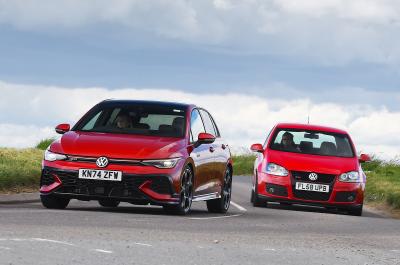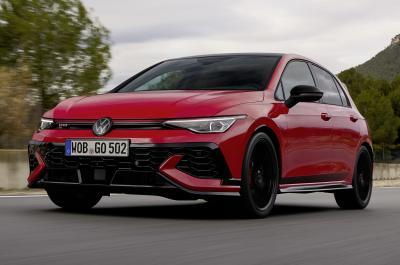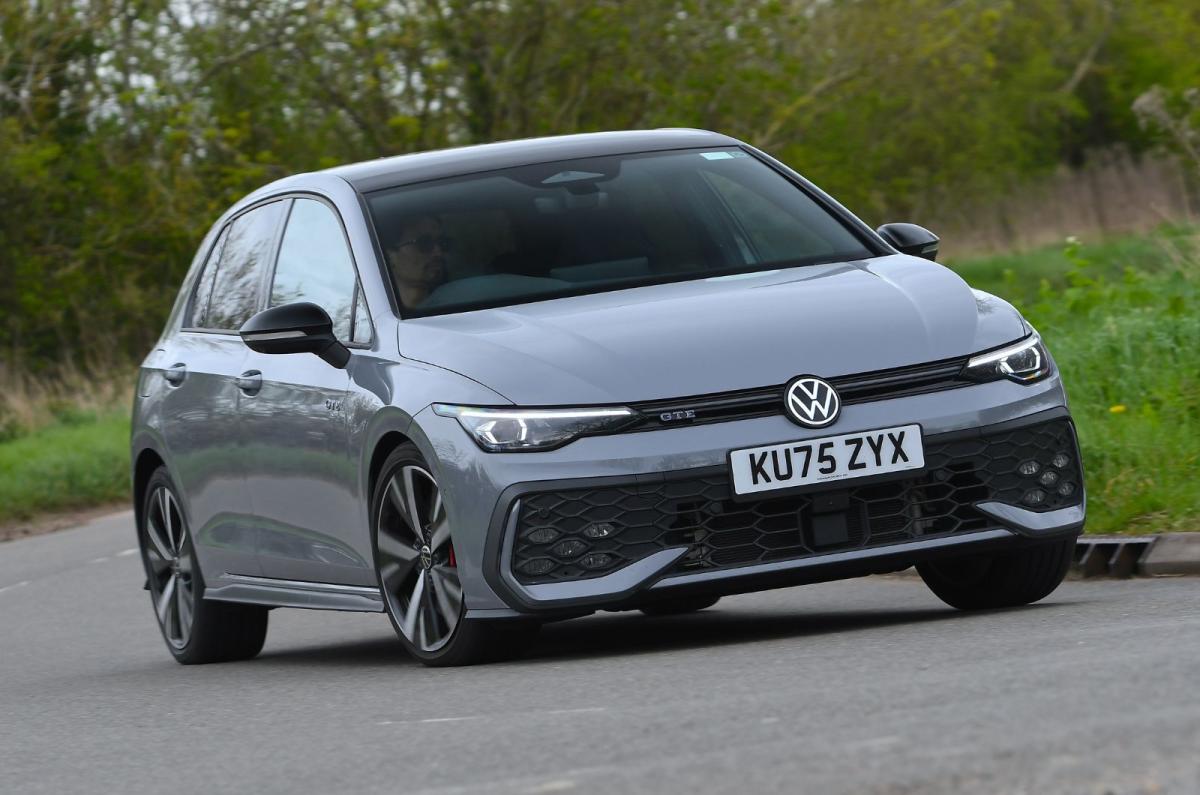
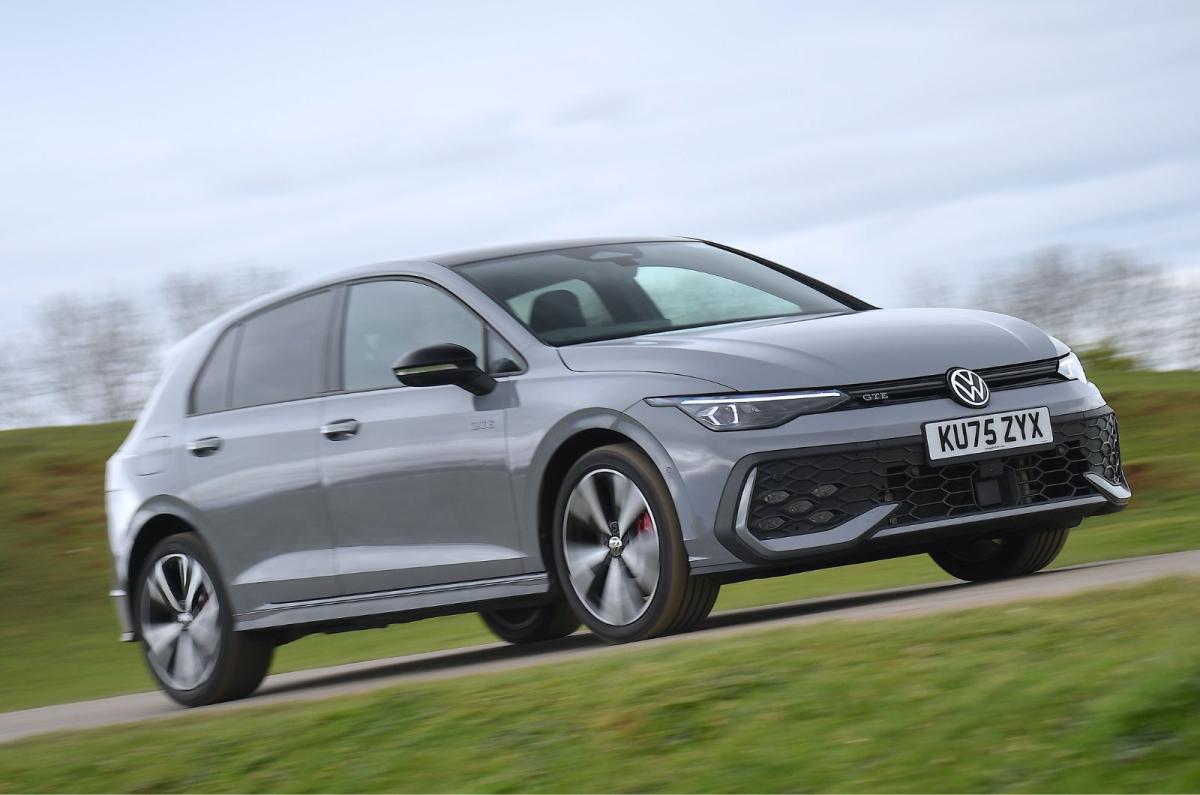




- Golf GTE front dynamic
- Golf GTE front dynamic
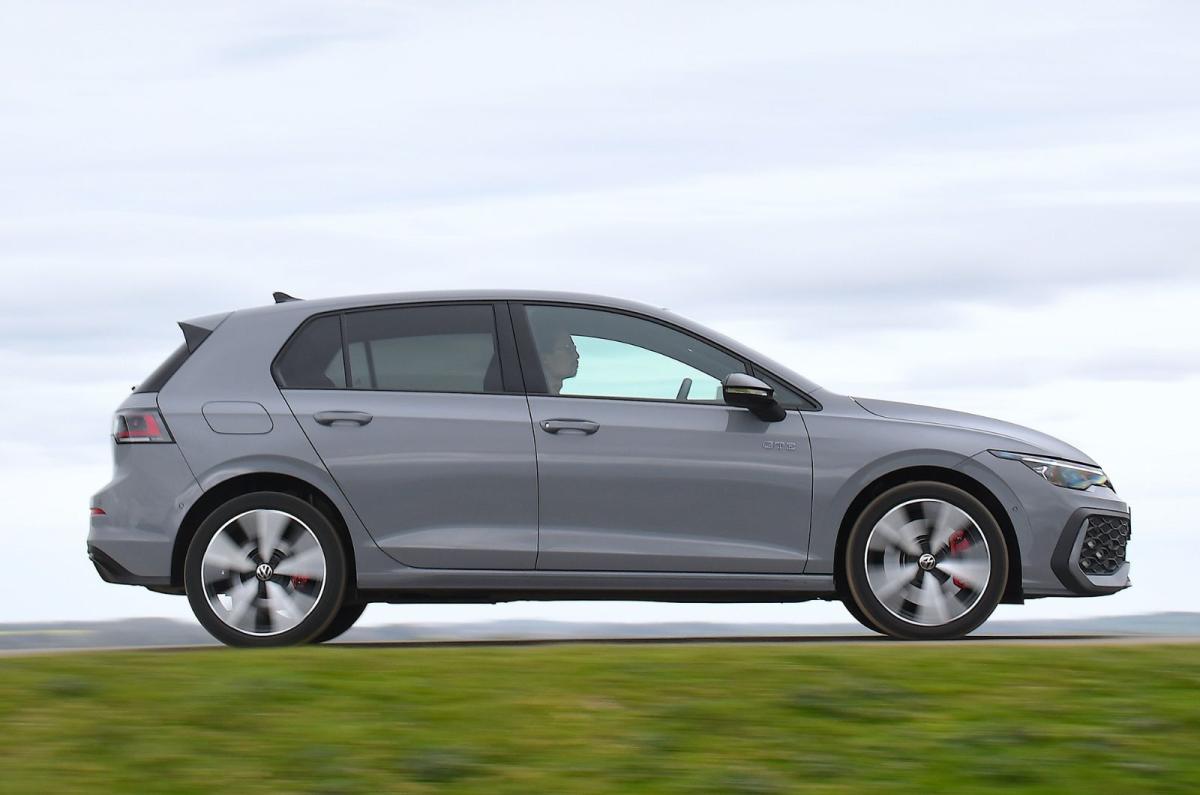
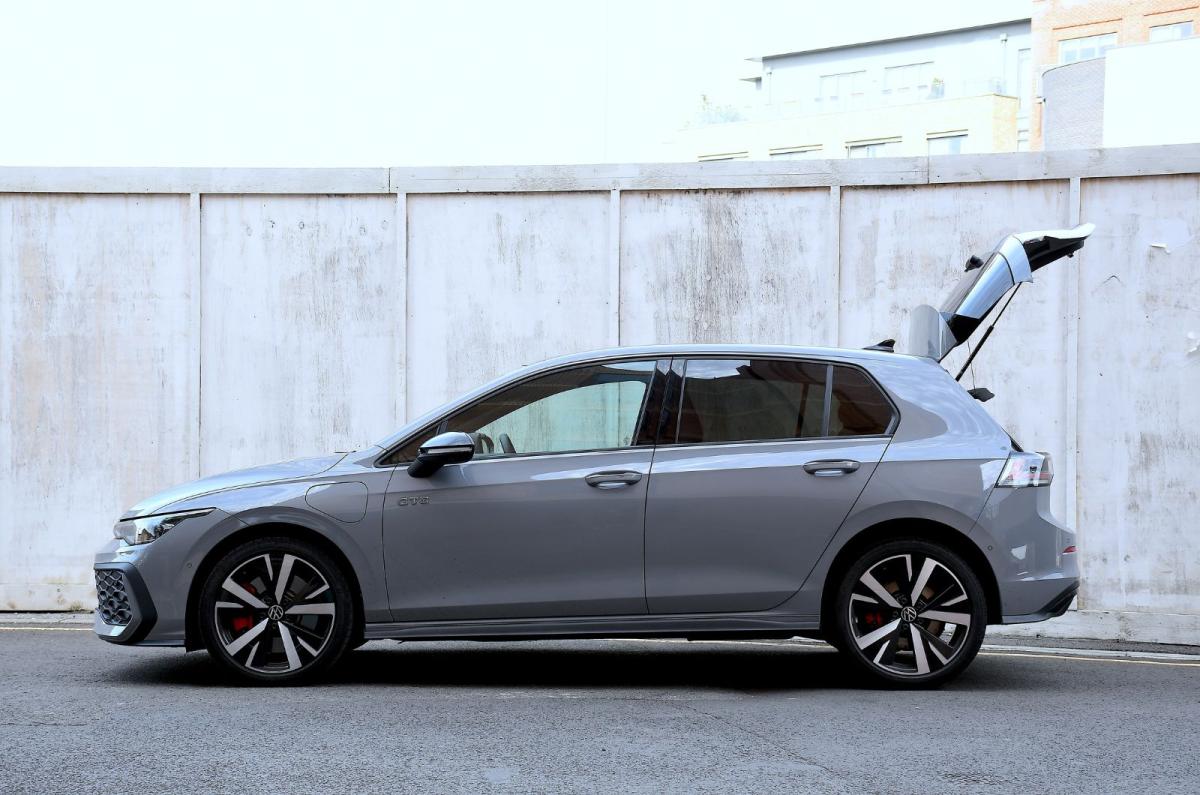
- Golf GTE side dynamic
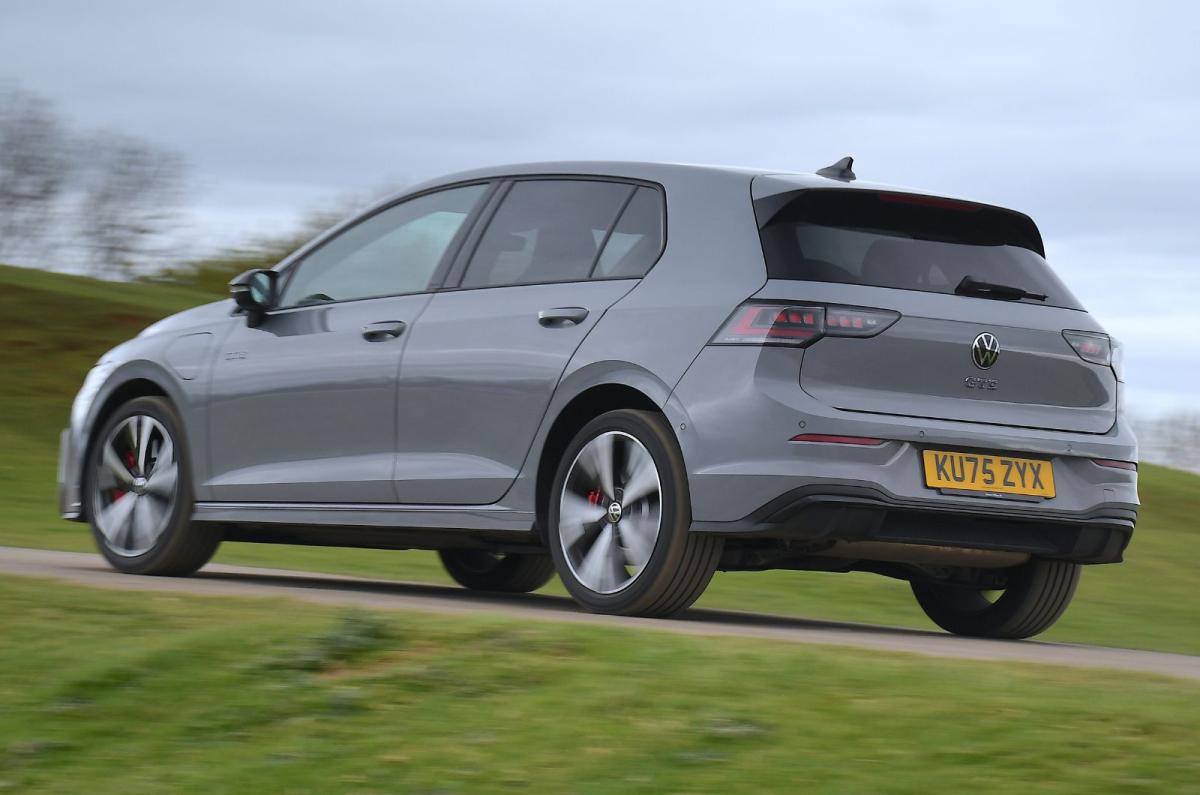
- Golf GTE rear dynamic
- Golf GTE interior
- Golf GTE interior
- Golf GTE interior details
- Golf GTE interior details
- Golf GTE interior details
- Golf GTE interior details
- Golf GTE interior details
- Golf GTE interior details
- Golf GTE interior details
- Golf GTE interior details
- Golf GTE exterior details
- Golf GTE exterior details
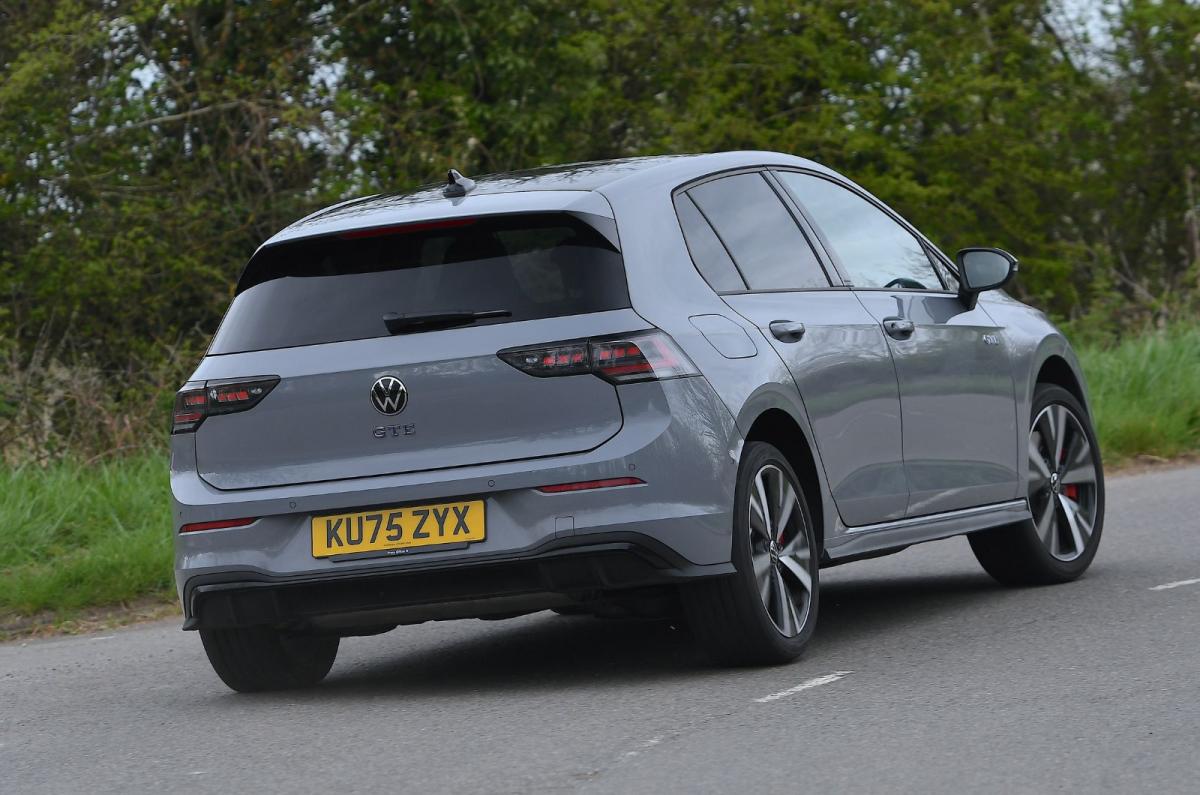
- Volkswagen Golf GTE rear cornering
- Volkswagen Golf GTE dashboard
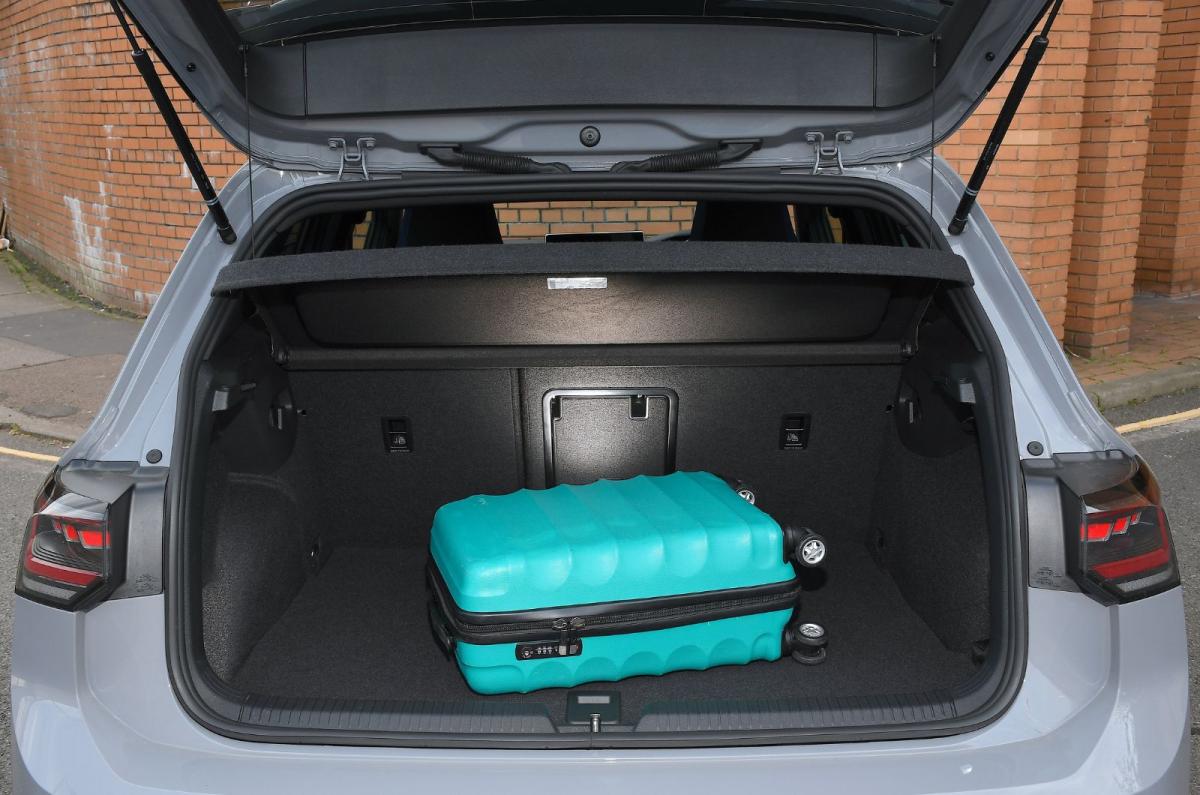
- Volkswagen Golf GTE boot
- Volkswagen Golf GTE badge


What is What Car? best price?
The What Car? best price shows you the cheapest way to buy your new car, whether it's by choosing an in-stock car through our partner Autotrader or placing a factory order.
Available now from: £22,495
RRP from: £28,910
About our price indicator
What Car? indicative Personal lease example (subject to status)
1.5 eTSI MHEV R-Line Hatchback 5dr Petrol Hybrid DSG Euro 6 (s/s) (150 ps)
| Expected annual mileage | 5000 |
| Term months | 36 |
| Deposit months | 12 |
| Monthly payment | £251.62 |
| Initial payment | £3,019.44 |
Step-by-step
Leasing works a bit like a long-term rental. You drive it, but you don’t own it.
- Choose your car, pick your terms and apply for lease credit online
- Pay monthly rental payments for your chosen term length
- Drive it, enjoy it, then give it back at the end
What you get
When you lease with Autotrader you get all of this:
- Full manufacturer’s warranty
- Road tax and roadside assistance included
- No admin fees
- Free returns within 30 days*

- Lower total monthly cost than PCP/HP
- No balloon payments
- Road tax included
Figures for 2.0 TSI GTI Clubsport DSG Euro 6 (s/s) 5dr
Introduction
Over the past 50 years, Volkswagen has sold more than 37 million Golfs, with that success largely down to the model’s classless appeal – its ability to be all things to all people. In today’s world, perhaps the version that exemplifies this best of all is the VW Golf GTE.
You see, the GTE first attempted to use plug-in hybrid technology to combine the swift acceleration of a hot hatch with excellent fuel efficiency more than a decade ago.
What is What Car? best price?
The What Car? best price shows you the cheapest way to buy your new car, whether it's by choosing an in-stock car through our partner Autotrader or placing a factory order.
Available now from: £22,495
RRP from: £28,910
About our price indicator
What Car? indicative Personal lease example (subject to status)
1.5 eTSI MHEV R-Line Hatchback 5dr Petrol Hybrid DSG Euro 6 (s/s) (150 ps)
| Expected annual mileage | 5000 |
| Term months | 36 |
| Deposit months | 12 |
| Monthly payment | £251.62 |
| Initial payment | £3,019.44 |
Step-by-step
Leasing works a bit like a long-term rental. You drive it, but you don’t own it.
- Choose your car, pick your terms and apply for lease credit online
- Pay monthly rental payments for your chosen term length
- Drive it, enjoy it, then give it back at the end
What you get
When you lease with Autotrader you get all of this:
- Full manufacturer’s warranty
- Road tax and roadside assistance included
- No admin fees
- Free returns within 30 days*
- Lower total monthly cost than PCP/HP
- No balloon payments
- Road tax included
This latest iteration is the most convincing version yet, being better to drive and fitted with a larger battery (with improved charging speeds) that gives it a whopping official pure electric range of around 80 miles.
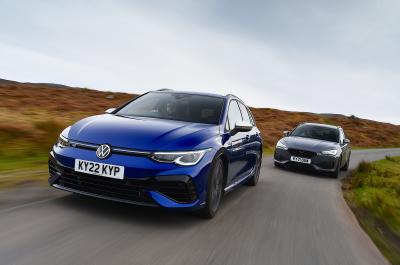
The main question is whether it’s as much fun as more traditional hot hatches, including Volkswagen's own Golf GTI, and how it compares overall with PHEV family cars? The Cupra Leon e-Hybrid, for example, is a close contender that promises to draw a grin on the driver’s face while keeping trips to the petrol station down to a minimum. That's what we're going to be looking at in this review.
Read more: Complete the What Car? Reliability Survey now and you could win a prize
What’s new?
- May 2024: Facelift model arrives with a 27bhp increase, longer range and CCS charging port


Our pick
Pros
- Fine ride and handling balance
- Lively performance
- Huge electric range
Cons
- Vocal engine when revved hard
- Fiddly climate controls
- Smaller boot than a petrol equivalent
Our pick
Trims available
Performance & drive
What it's like to drive, and how quiet it is
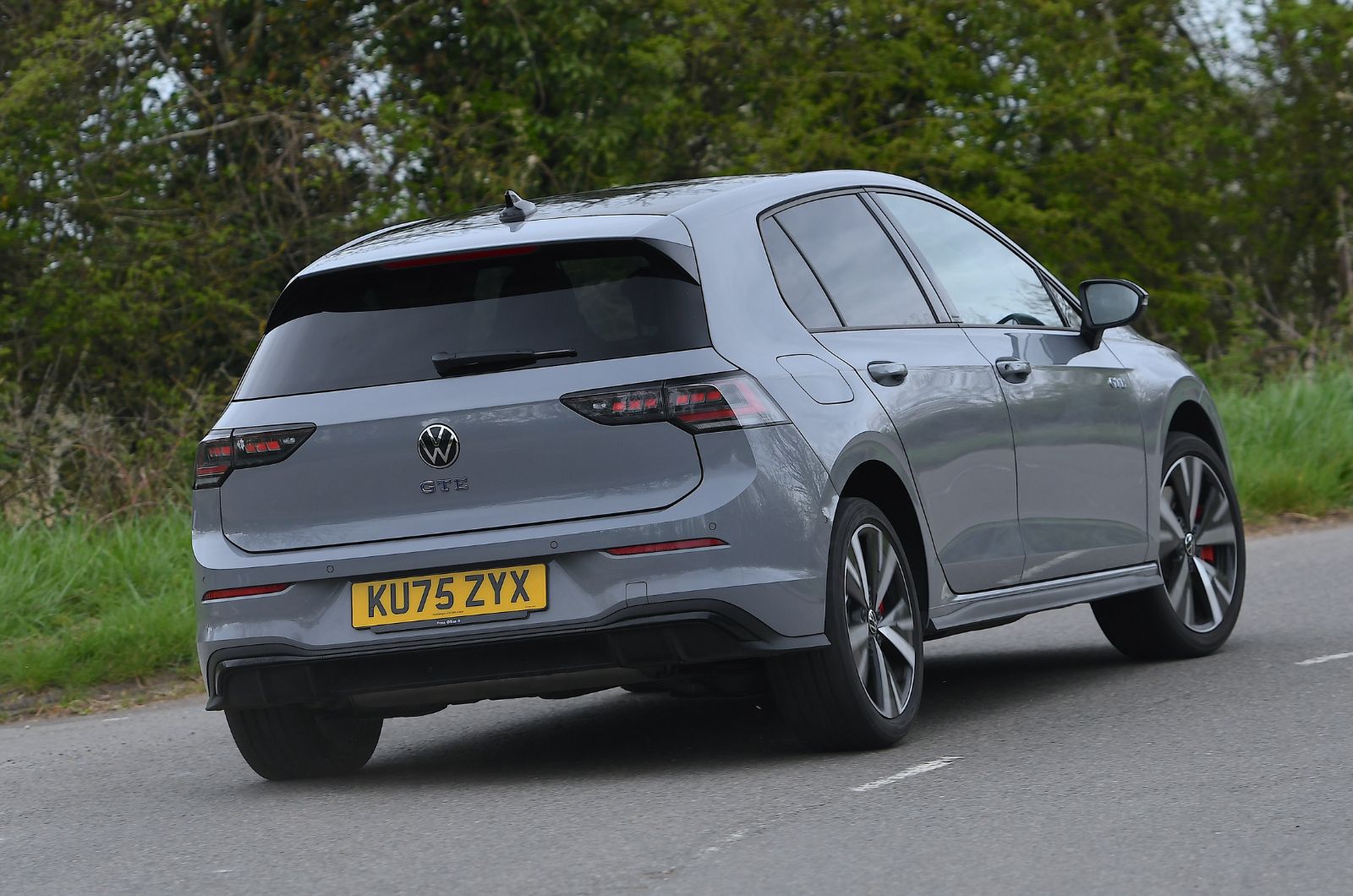
Strengths
- Good ride and handling balance
- Lively performance
Weaknesses
- Doesn't sound great when revved hard
- Inconsistent brake pedal response
How fast is it and which engine is best?
The VW Golf GTE combines a 1.5-litre turbocharged petrol with a 114bhp electric motor for a total output of 268bhp, making it more powerful and faster than the Audi A3 40 TFSIe and Mercedes A250e. You can have a Cupra Leon e-Hybrid with the same output, but it does cost more to buy in the first place.
You can run on battery power alone by selecting E-mode, and the petrol engine remains off unless you put your foot down hard or until the battery is low on charge. However, the car still feels plenty quick enough around town and will have no trouble getting up to motorway speeds at a moderate pace.
Alternatively, you can switch to the Hybrid setting, at which point the Golf feels even more muscular and managed to dart from 0-60mph in 5.7sec in our tests. That’s noticeably quicker than the lower-powered Golf eHybrid we tested previously, which managed a 6.9sec time.
Is it agile and is the ride comfortable?
The GTE does a great job of being more fun to drive than most other PHEV hatchbacks down a country road. There’s plenty of grip, body lean is well controlled in bends and the steering is accurate enough to let you place the car where you want it. No, the GTE doesn’t feel as playful as the Golf GTI (or other more conventional hot hatches for that matter) but it inspires plenty of confidence.
Equally impressive is the GTE’s ride – at least with the optional adaptive dampers fitted to our test car. It’s a little bit firmer to tighten up body control over undulations but it retains enough suppleness to absorb most imperfections in the road surface.
Overall, while the Cupra Leon e-Hybrid is sharper to drive, the GTE’s better judged ride and handling balance allows you to flow down the road more freely.
Is it quiet and how easy is it to drive smoothly?
The Golf GTE is quieter than the Cupra Leon e-Hybrid overall, but it still suffers from a moderately high level of road noise (enough to drown out any wind noise by the front windscreen, no less). That said, we suspect it’s more hushed than the regular Golf eHybrid Style we tested previously because of its softer, performance-biased tyres.
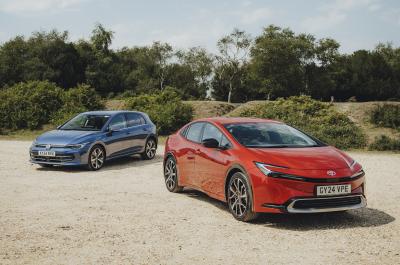
Like the Leon e-Hybrid, the GTE’s engine is quite vocal and sounds coarse under hard acceleration. If you want a quieter PHEV hatch, the Toyota Prius is a better option.
In terms of smoothness, the Golf’s hybrid system seamlessly transitions from the electric motor to the petrol engine. However, the brakes sometimes let the side down here. That’s mainly because the GTE blends regular friction brakes with regenerative braking that puts energy back into the battery and you don’t always get the same level of pedal response. Instead, you get a vague initial response before the brakes suddenly bite, which makes it tricky to slow down smoothly.
The regenerative braking system also activates when you lift off the accelerator pedal, with two levels of strength to choose from, plus an automatic one that adjusts the braking effect based on sat-nav data and the distance of the vehicle ahead. Here, the braking effect builds up smoothly.
What’s the range and efficiency like, and how quickly can it charge?
The Golf GTE is powered by a 19.7kWh (usable capacity) battery and has an official pure electric range of around 80 miles. That’s significantly better than the Mercedes A250e (around 50 miles) and the Toyota Prius, being as equally impressive as the Audi A3 TFSI e and Cupra Leon e-Hybrid.
In our real world test, we managed to cover 70 miles on the GTE’s battery. That’s a pretty good result, considering most of the route consisted of motorway cruising.
Unlike many PHEVs, the GTE has the bonus of being fitted with a CCS socket, allowing you to use a fast public charger. A peak charging rate of 40kW means it can officially top up from 5-80% in 26 minutes. Charging at home on a 7kW wallbox will take several hours.
If you find yourself frequently driving with a depleted battery, the GTE achieved a real-world fuel efficiency figure of 49.3mpg when we tested it against the Leon e-Hybrid 204 (45.2mpg). The advantage in fuel costs over three years won’t be huge, though.
“I noticed the Golf GTE puts its power down more effectively than the Leon e-Hybrid 204 when launching from a standstill. That said, the GTE’s extra muscle means the tyres can mildly scrabble when accelerating out of a corner during spirited driving.” – Lawrence Cheung, New Cars Editor
Interior
The interior layout, fit and finish
Strengths
- Fine driving position
- Good visibility
- Much improved infotainment system
Weaknesses
- Fiddly climate controls
- Interior quality could be better
What does the interior look like and is it well made?
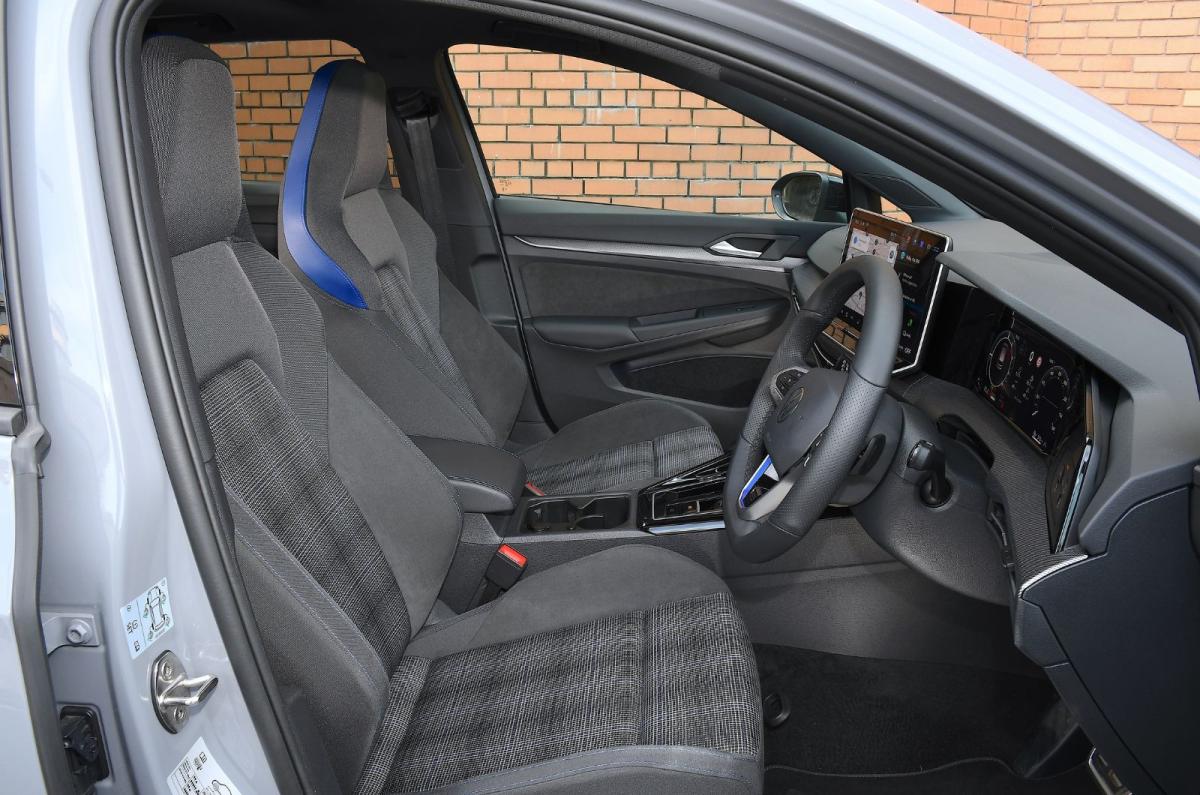
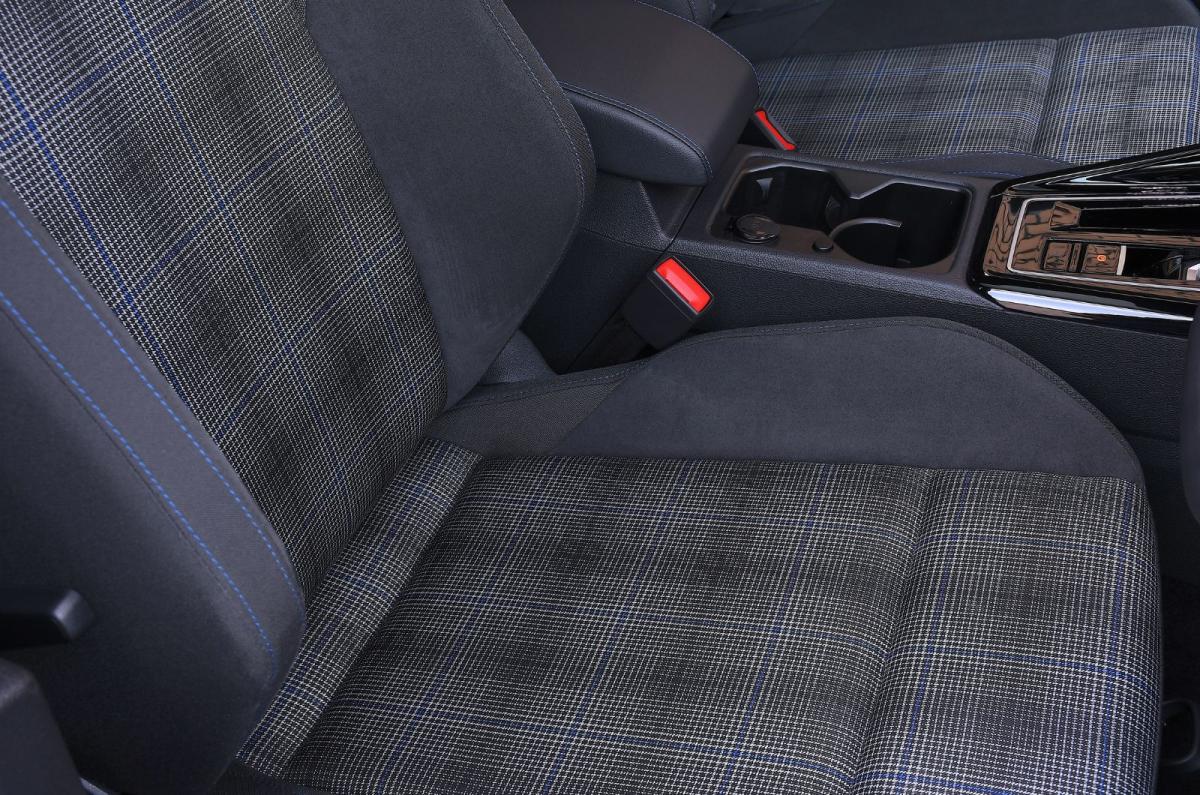
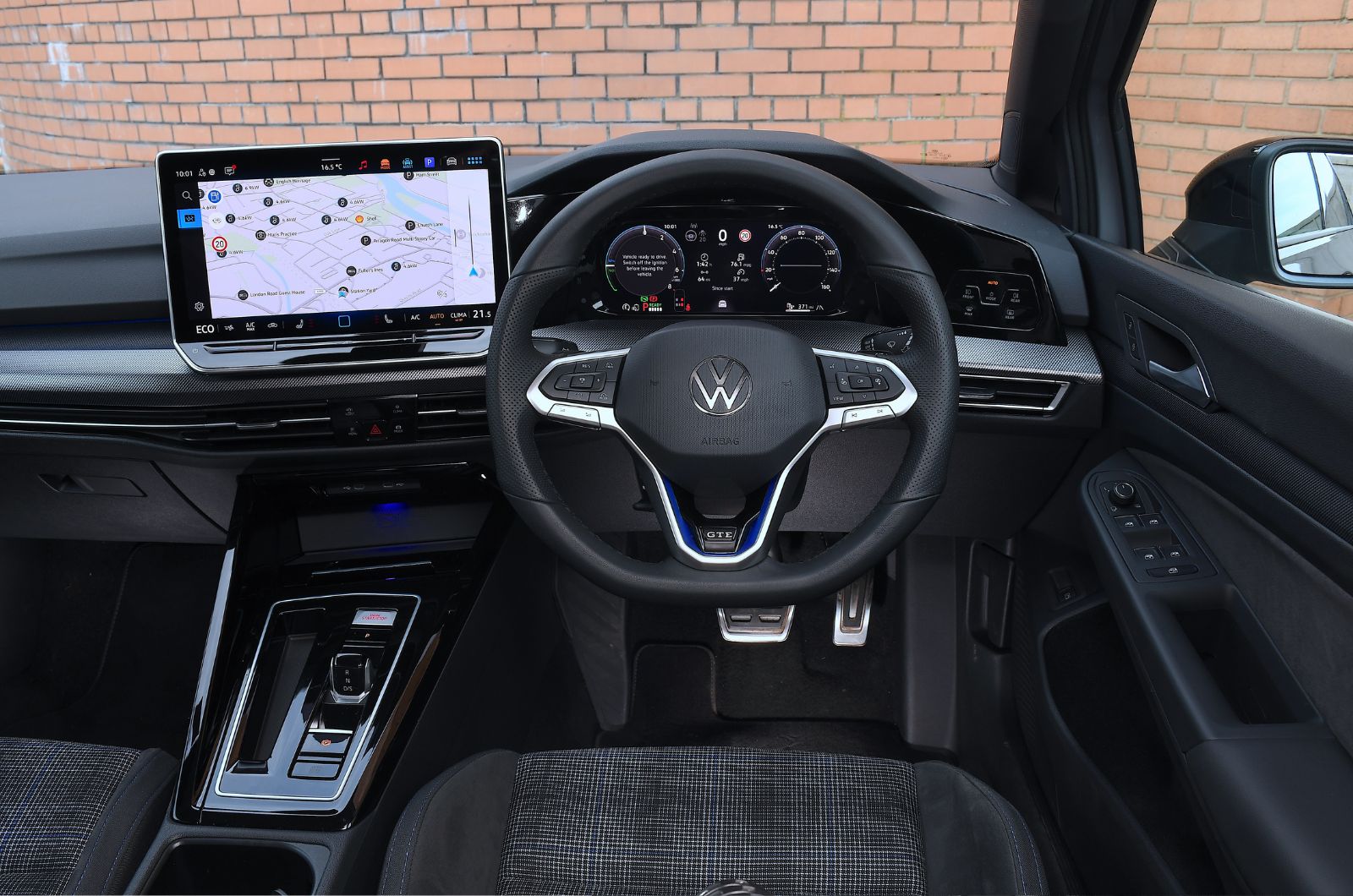
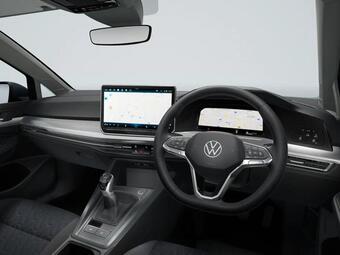
The seats of the VW Golf GTE are finished in a retro checked pattern and the interior gets blue highlights to help you identify it over other Golfs. Otherwise, it has the same layout as other versions in the range.
While it doesn’t look or feel as special as the Cupra Leon’s interior, the GTE does rank above most mainstream family hatchbacks for quality. You’ll find squidgy, dense-feeling plastic on the top of the dash and the buttons are nicely damped.
Is the driving position comfortable and is it easy to see out?
The driver's seat, steering wheel and pedals all line up nicely, while the GTE gets figure hugging front seats that stop you sliding around through corners. While you have to pay extra for electric seating adjustment, it’s very easy to get comfortable and manual lumbar adjustment is standard.
Even visibility is about as good as it gets these days. Like all Golfs, the GTE has big side windows and slim windscreen pillars. And although the rear pillars are a bit more chunky, the rear screen is tall, and the list of standard equipment includes front and rear parking sensors and a rear-view camera.
Is the dashboard and infotainment system easy to use?
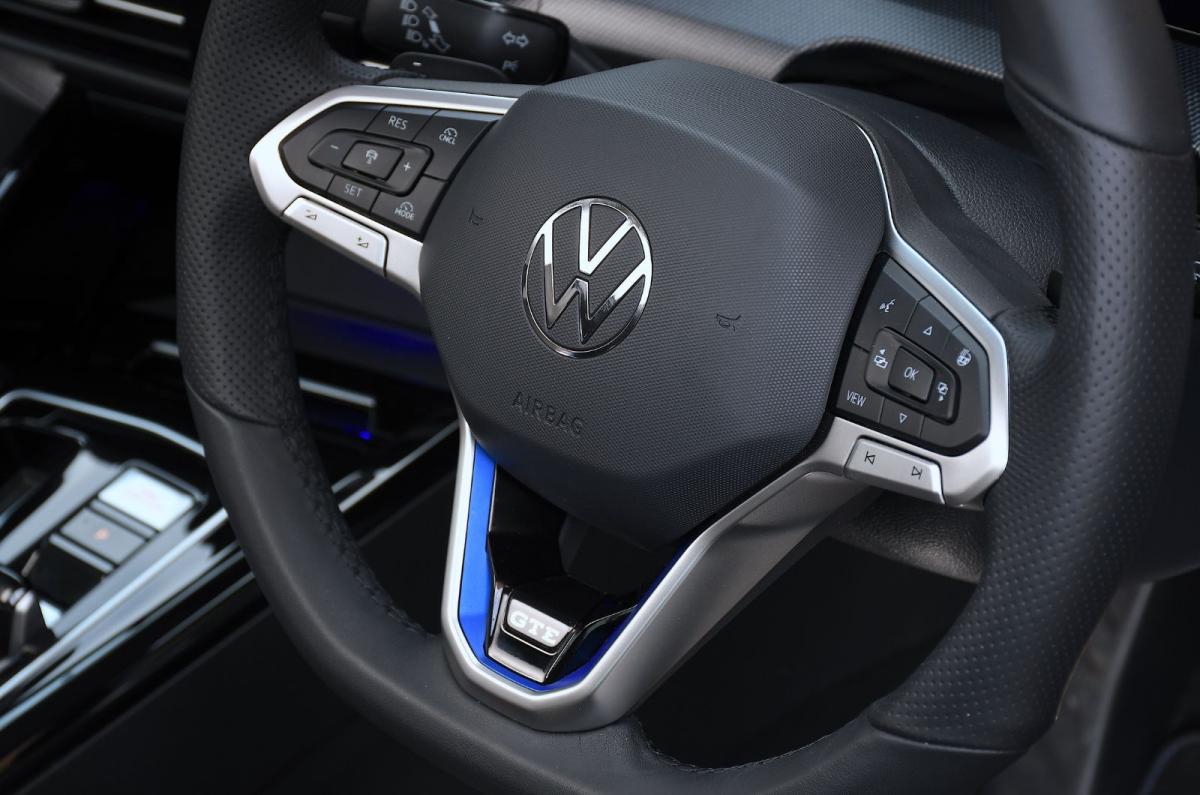
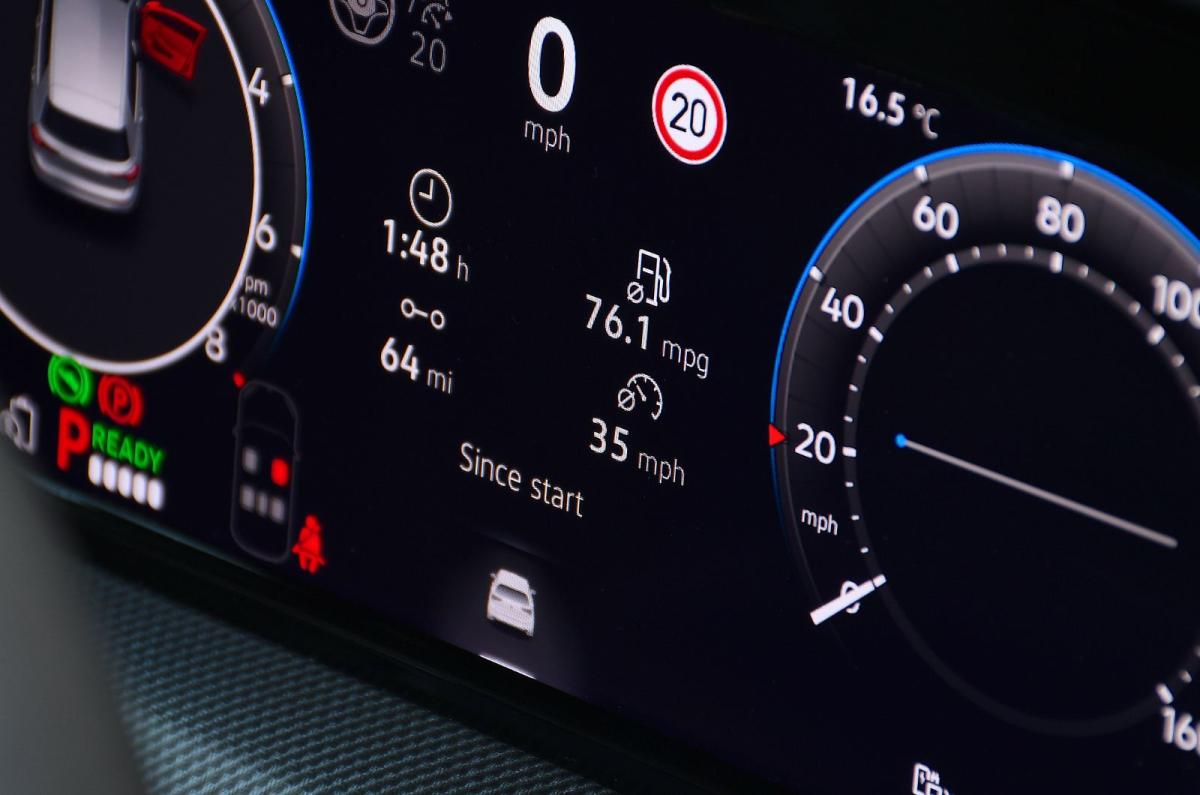
The GTE comes with a sharp-looking digital driver’s display that offers a good range of layouts and a high level of customisation. It’s easily controlled by physical buttons on the steering wheel.
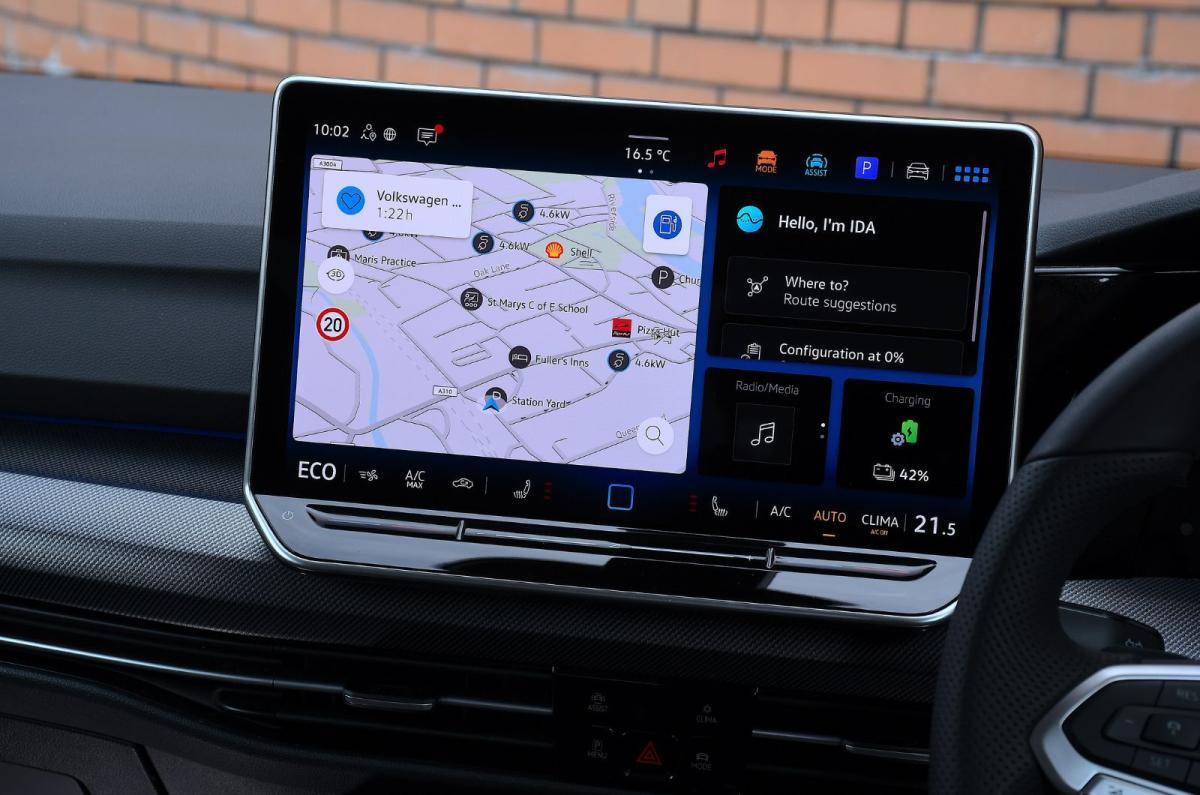
The car's mid-life refresh brought a new 12.9in infotainment touchscreen that’s a vast improvement on what you got before – principally because the new software is easier to use, thanks to more logical menus, five customisable shortcuts and the fact that it’s no longer plagued by bugs.
This is just as well, given that you control the vast majority of functions through the screen. And while the touch-sensitive sliders below it are now backlit so that you can actually use them at night, they’re still annoyingly fiddly; the physical buttons that you use to operate the climate control in the Audi A3 and Mercedes A-Class are much more user-friendly.
“If you're going to add one option to the Golf GTE, I'd recommend you consider the head-up display, which projects key information onto the windscreen so you can keep your eyes on the road more of the time.” – Steve Huntingford, Editor
Passenger & boot space
How it copes with people and clutter
Strengths
- Lots of space for four people
- Good in-car storage
Weaknesses
- Tight for five
- Small boot
How much space does it have for people?
In the front, the VW Golf GTE provides loads of space. Even those well over six-foot will have enough head and leg room. Even the optional panoramic glass roof doesn’t eat into head room by much. Plus, the glovebox and door bins are a good size, and there are some useful additional cubbies between the front seats.
Similarly, the Golf’s interior dimensions allow a pair of tall adults to sit comfortably in the back. True, they’ll get to stretch out their legs a bit more in the Cupra Leon, but it’s more comfortable than in the Toyota Prius. Shoulder room becomes tight when you have a third rear passenger, and there isn't much room for the feet of the person in the middle, but it's the same story in the Audi A3 40 TFSIe and Mercedes A250e.
How much room does it have for luggage?
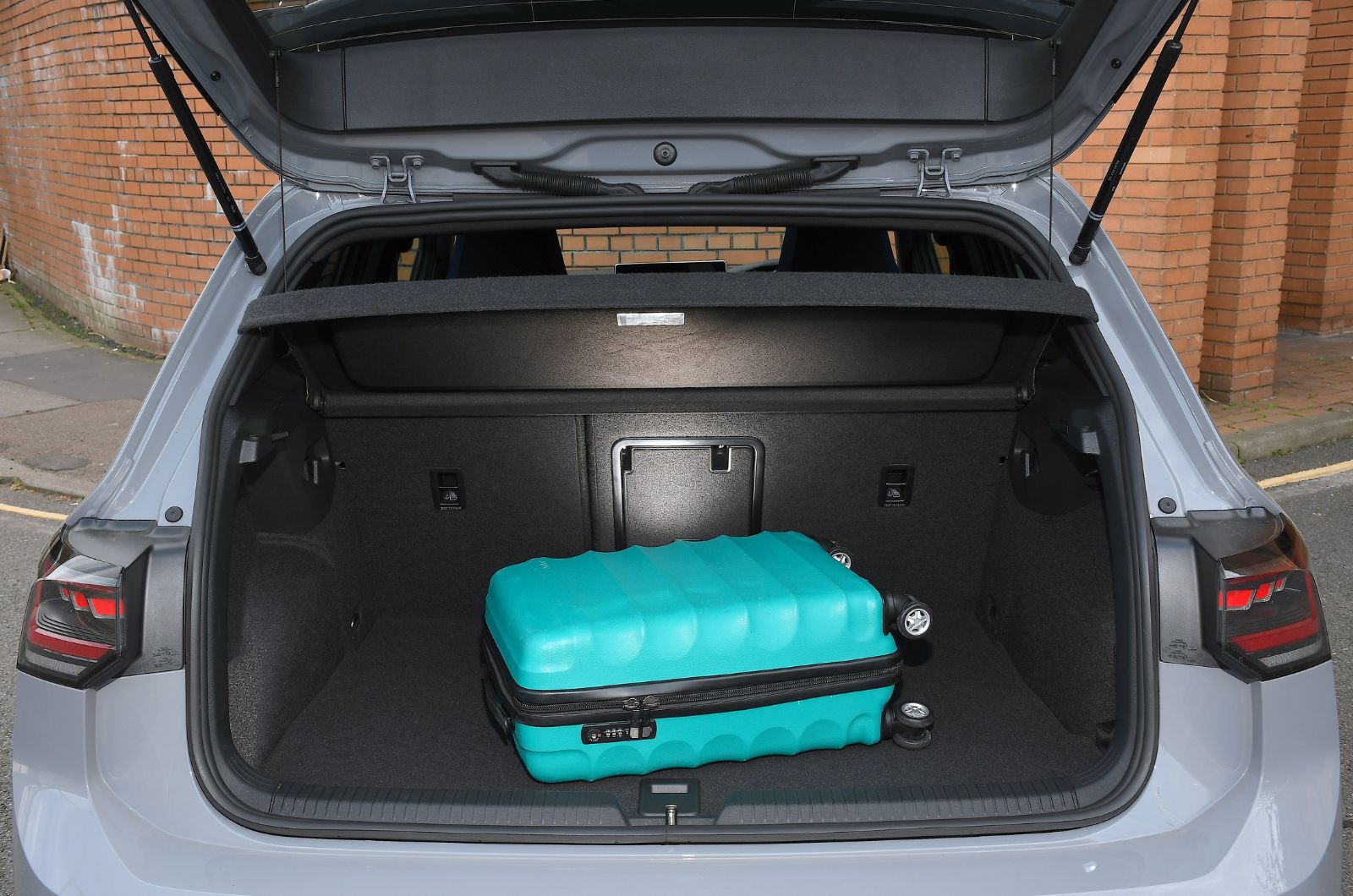
Like most PHEVs, the Golf GTE has a smaller boot than non-hybrid versions of the car, with capacity shrinking from 381 litres to 273 litres. Even so, we managed to fit five carry-on suitcases below the parcel shelf, which is on a par with the Cupra Leon e-Hybrid and Toyota Prius. That should still be enough for the weekly food shop, but most models from the class below give you more luggage space, including the Volkswagen Polo.
More positively, the Golf GTE still has 60/40 split-folding rear seats and a ski hatch for longer items. And while there isn't a height-adjustable boot floor, there’s next to no loading lip (unlike in the Leon), and no step up from the boot floor to the backs of the folded rear seats.
“There are bigger family hatchbacks, but I'm six-foot tall, and I can sit behind myself comfortably in the Golf GTE.” – Will Nightingale, Reviews Editor
Buying & owning
Everyday costs, plus how reliable and safe it is
Strengths
- Cheap to run as a company car
- Long electric range minimises BIK costs
- Well equipped
Weaknesses
- There are cheaper PHEVS to buy
- Reliability record is a concern
How much does it cost and what equipment do you get?
Because of its long electric range, the VW Golf GTE attracts one of the lowest benefit-in-kind tax ratings, which makes it a cheap company car.
True, the other VW Golf PHEV (badged eHybrid) will cost you even less to run, because it has a lower list price. However that doesn’t offer the same level of performance. A Cupra Leon e-Hybrid will also cost more if you want like-for-like performance.
Ways to buy
Those long electric ranges obviously help to reduce your fuel bills, too, but you’ll have to run on battery power as often as possible to take advantage, financially.
Compensation comes in the form of the Golf GTE's generous standard kit. The list includes 17in alloy wheels, keyless entry and start, three-zone climate control, adaptive cruise control, wireless phone-charging, a heated steering wheel, heated front seats and ambient interior lighting with 30 colour options. The GTE also has metallic paint as standard.
Is it reliable, and how long is the warranty?
Less impressively, the Golf finished 20th out of 21 family hatchbacks in the latest What Car? Reliability Survey. As a brand, Volkswagen finished down in 24th place, out of 30 car makers. Cupra finished in a stronger 13th place.
The Golf GTE's main warranty lasts for three years or 60,000 miles (whichever comes first), which isn’t as generous as Cupra’s five year/90,000 mile cover. The Prius has the ability to be covered for up to 10 years or 100,000 miles with annual Toyota servicing.
How safe is it, and is it easy to steal?
Likewise, safety equipment is comprehensive; you get a driver drowsiness monitor, traffic sign recognition, blindspot monitoring, lane change assist, and an automatic emergency braking (AEB) system that can recognise pedestrians and cyclists in addition to other cars.
When it comes to crash safety, the Golf was retested by Euro NCAP in 2025 and achieved the full five star rating. That said, the Golf could have provided stronger chest protection for the driver in a frontal impact.
In terms of security, an anti-theft alarm system with interior monitoring and the ability to detect being towed away is standard.
“A three-year warranty is nothing special, but I get some reassurance from the fact that the drive battery is covered for eight years or 100,000 miles.” – Claire Evans, Consumer Editor
Buy it if…
- You like the idea of hot hatch pace with low running costs
- You want a good balance of comfort and handling
- You need PHEV with a long electric range
Don’t buy it if…
- You would prefer physical controls inside
- You hope the GTE is exciting to drive
For all the latest reviews, advice and new car deals, sign up to the What Car? newsletter here
Similarly priced cars


If you're interested in finding a Volkswagen Golf Alltrack, or any of the other hot hatch cars mentioned here, head over to our Cars available now pages to find new cars listed for sale at great prices.
FAQs
Volkswagen Golf specifications
Our pick
RRP price range
MPG range across all versions
Available fuel types (which is best for you? )
Available colours
Number of engines (see all)
Number of trims (see all)
Company car tax at 20% (min/max)
Company car tax at 40% (min/max)
What is What Car? best price?
The What Car? best price shows you the cheapest way to buy your new car, whether it's by choosing an in-stock car through our partner Autotrader or placing a factory order.
Available now from: £22,495
RRP from: £28,910
About our price indicator
What Car? indicative Personal lease example (subject to status)
1.5 eTSI MHEV R-Line Hatchback 5dr Petrol Hybrid DSG Euro 6 (s/s) (150 ps)
| Expected annual mileage | 5000 |
| Term months | 36 |
| Deposit months | 12 |
| Monthly payment | £251.62 |
| Initial payment | £3,019.44 |
Step-by-step
Leasing works a bit like a long-term rental. You drive it, but you don’t own it.
- Choose your car, pick your terms and apply for lease credit online
- Pay monthly rental payments for your chosen term length
- Drive it, enjoy it, then give it back at the end
What you get
When you lease with Autotrader you get all of this:
- Full manufacturer’s warranty
- Road tax and roadside assistance included
- No admin fees
- Free returns within 30 days*
- Lower total monthly cost than PCP/HP
- No balloon payments
- Road tax included
Cars available now
About the writer

More Volkswagen Golf
Used reviews
New reviews
Longterm reviews
Reliability
- What Car? Reliability Survey: Most and least reliable family cars
- Reliability Survey: Most and least reliable diesel cars
- Britain's most reliable cars 2024 (plus the ones that'll let you down)
- Reliability survey: the most expensive cars to fix, and the cheapest
- Most and least reliable used cars: family cars