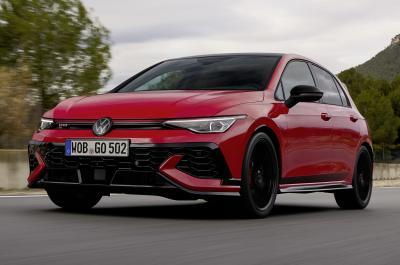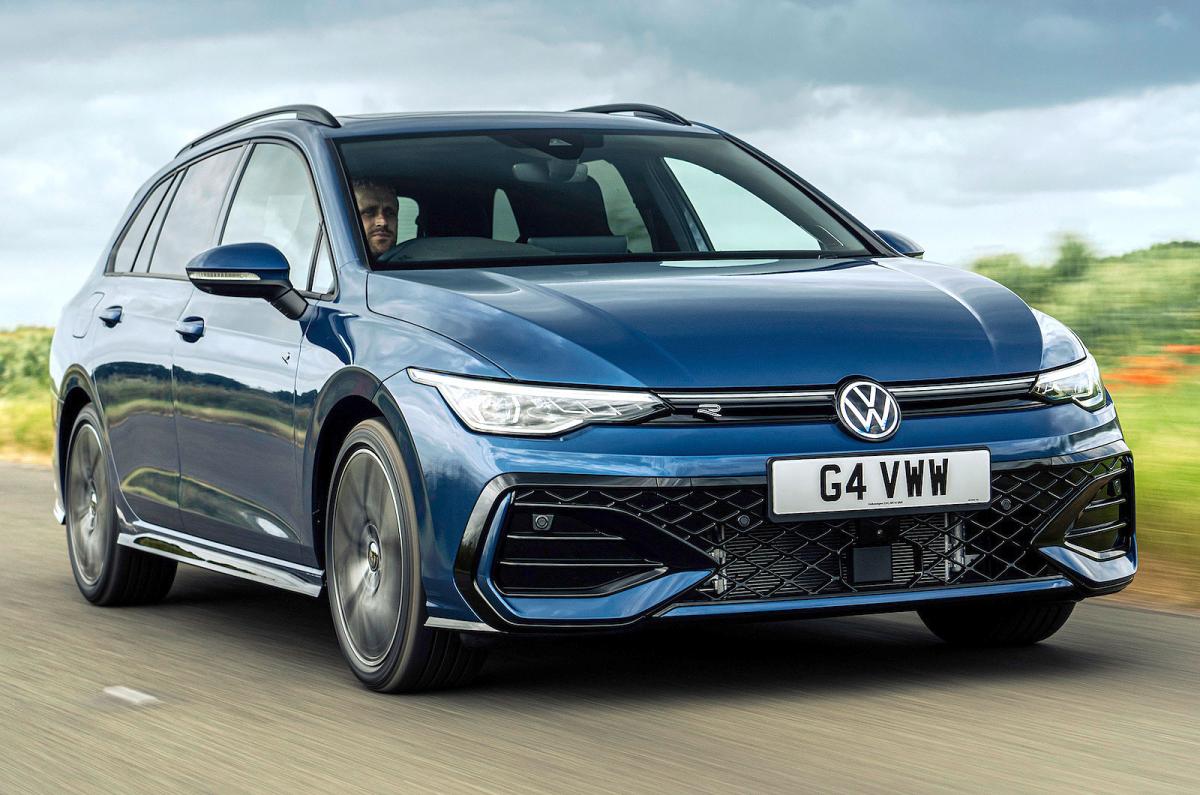
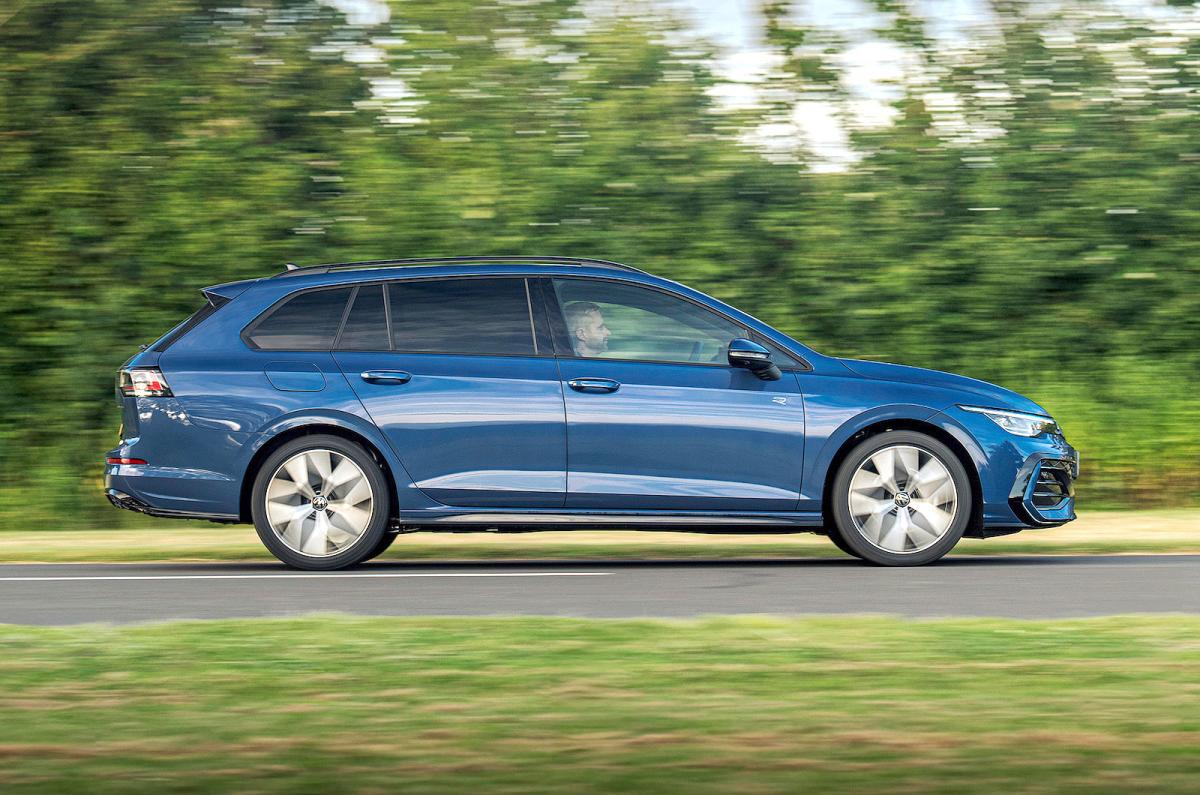
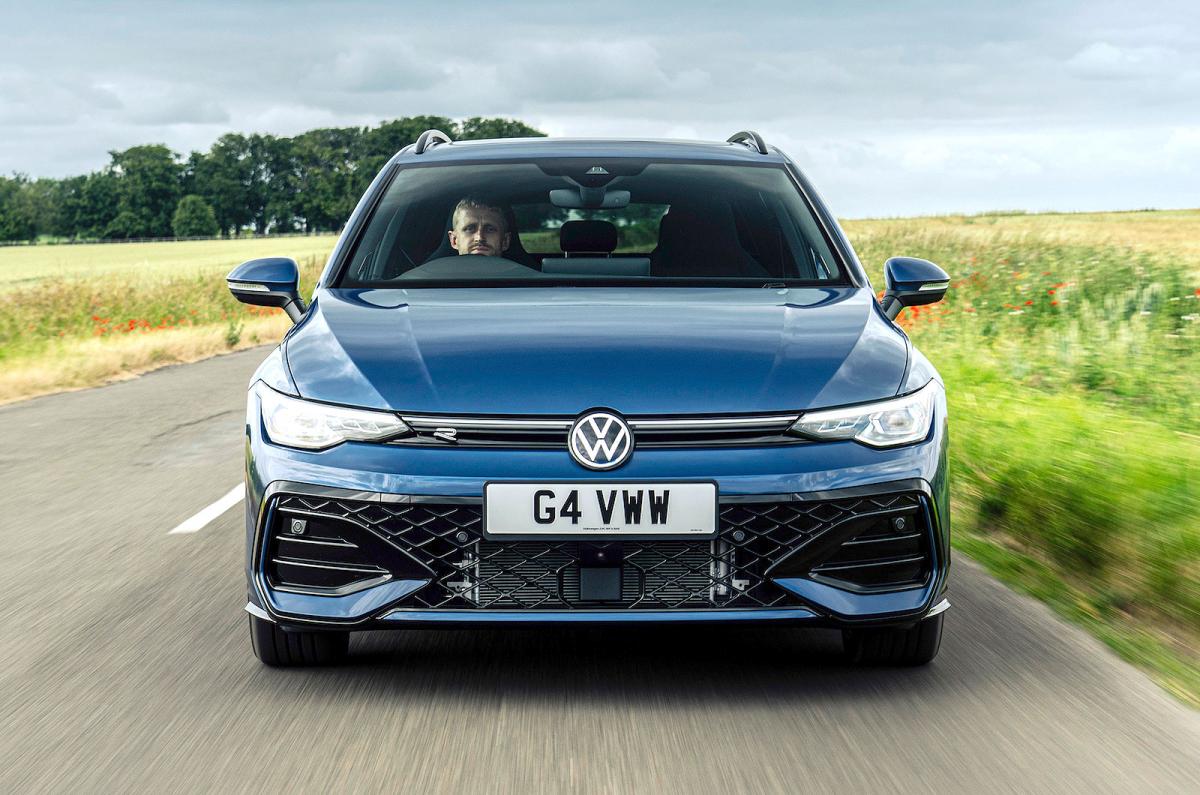
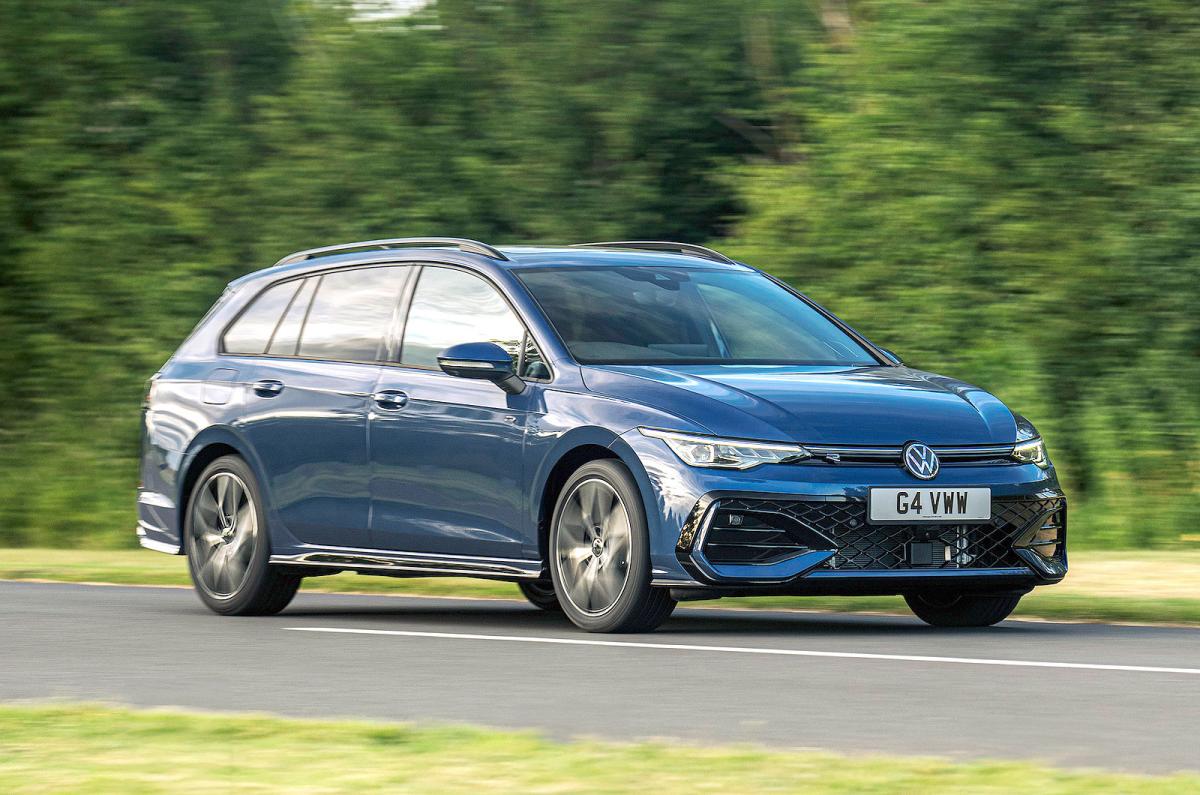
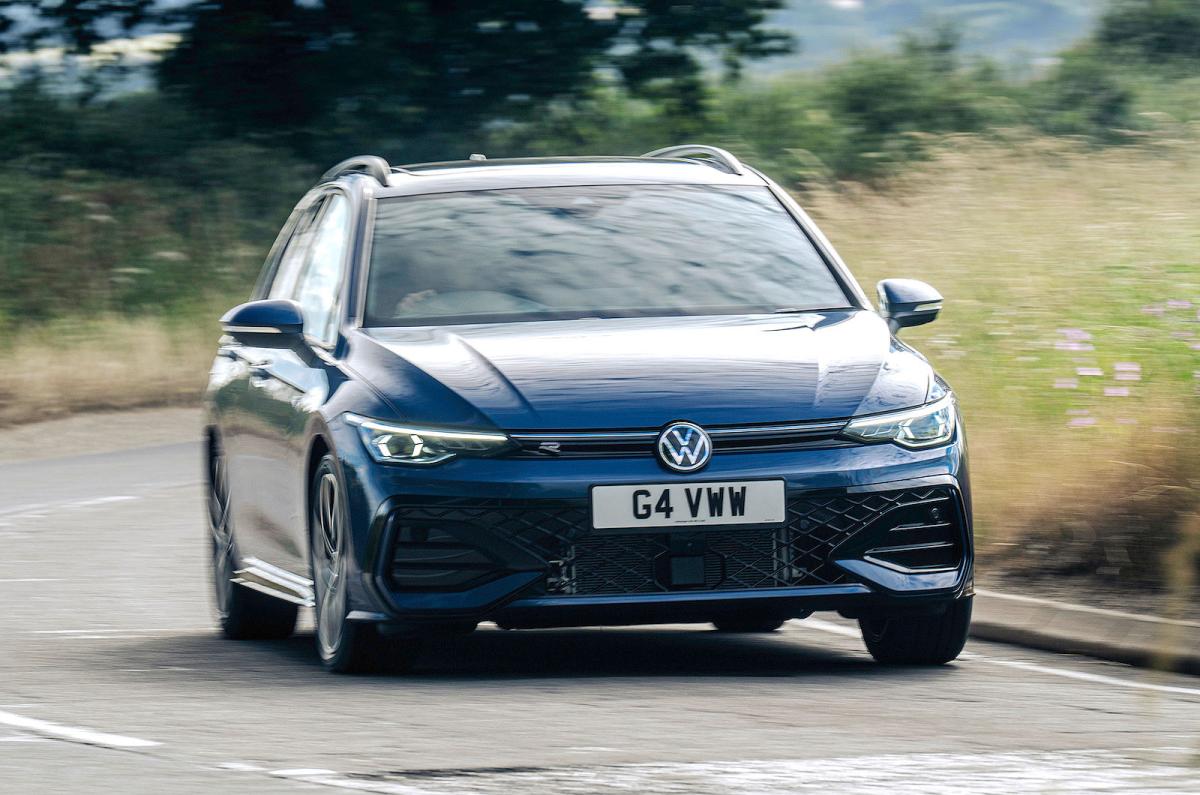
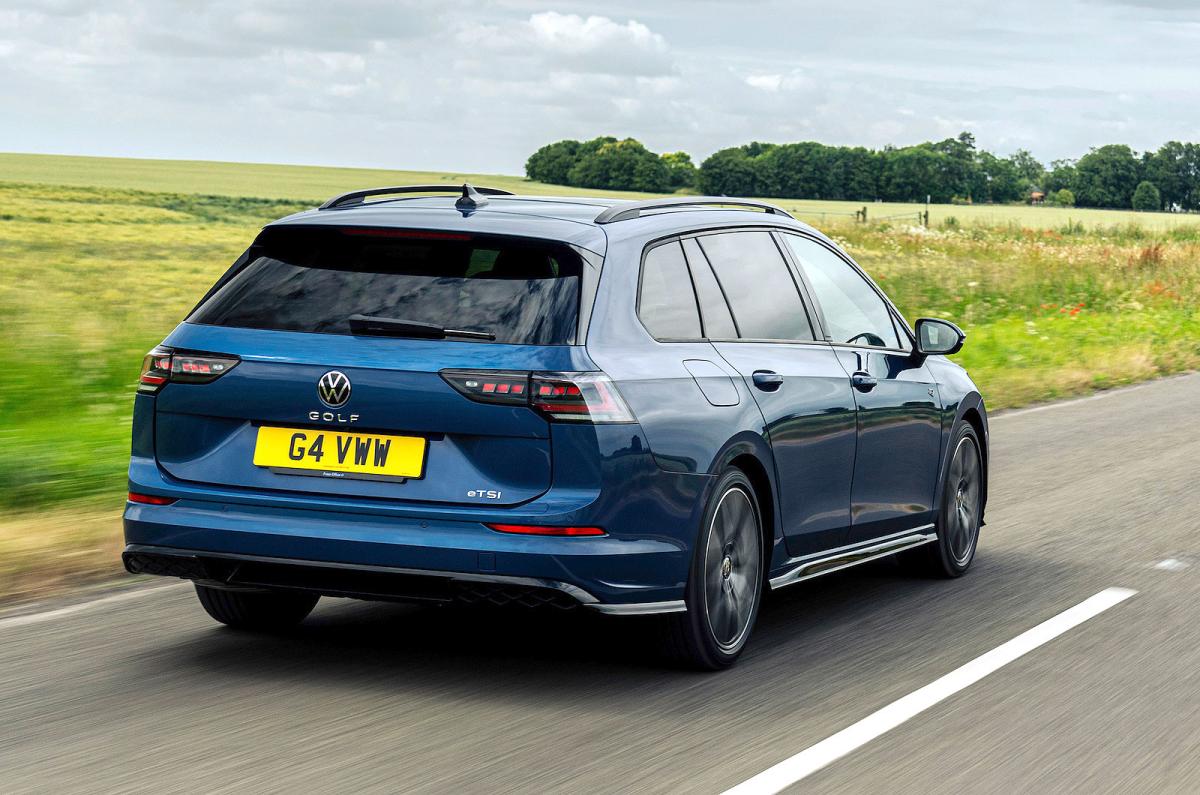
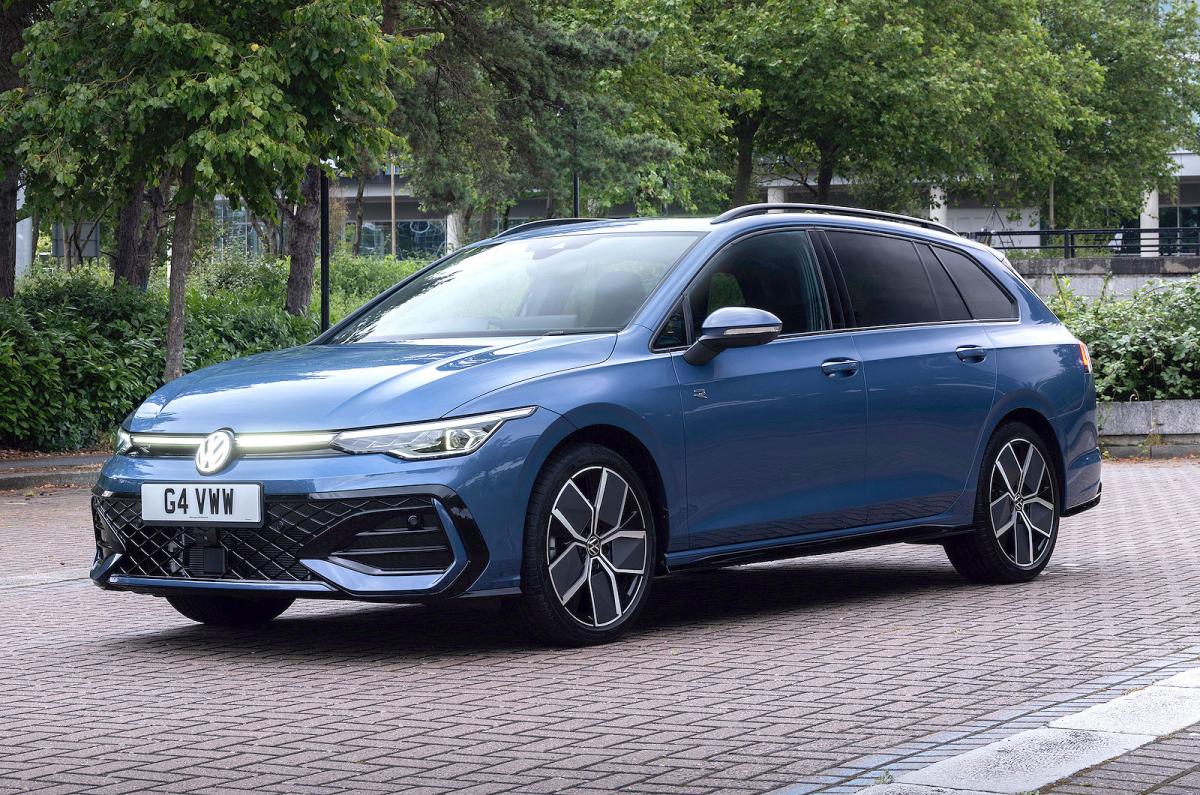
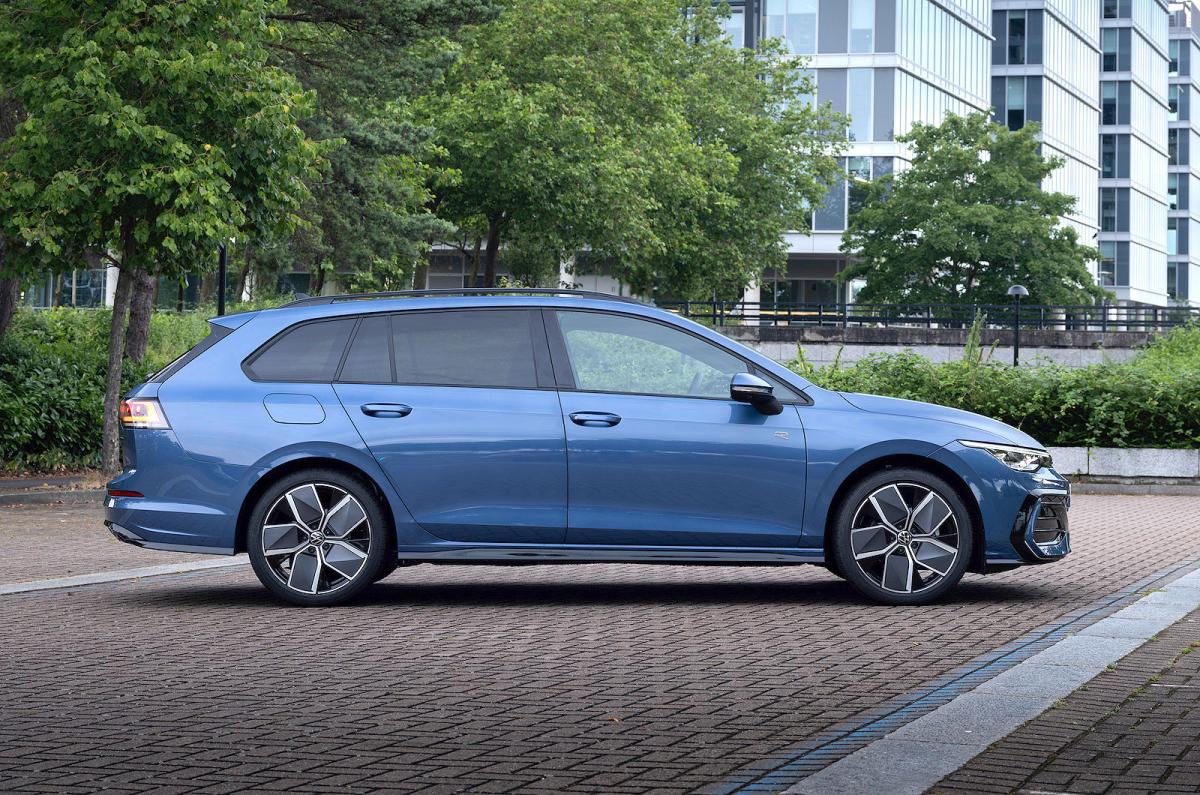
- VW Golf Estate front right driving
- Vw Golf Estate right driving
- VW Golf Estate front driving
- VW Golf Estate front right driving
- VW Golf Estate front cornering
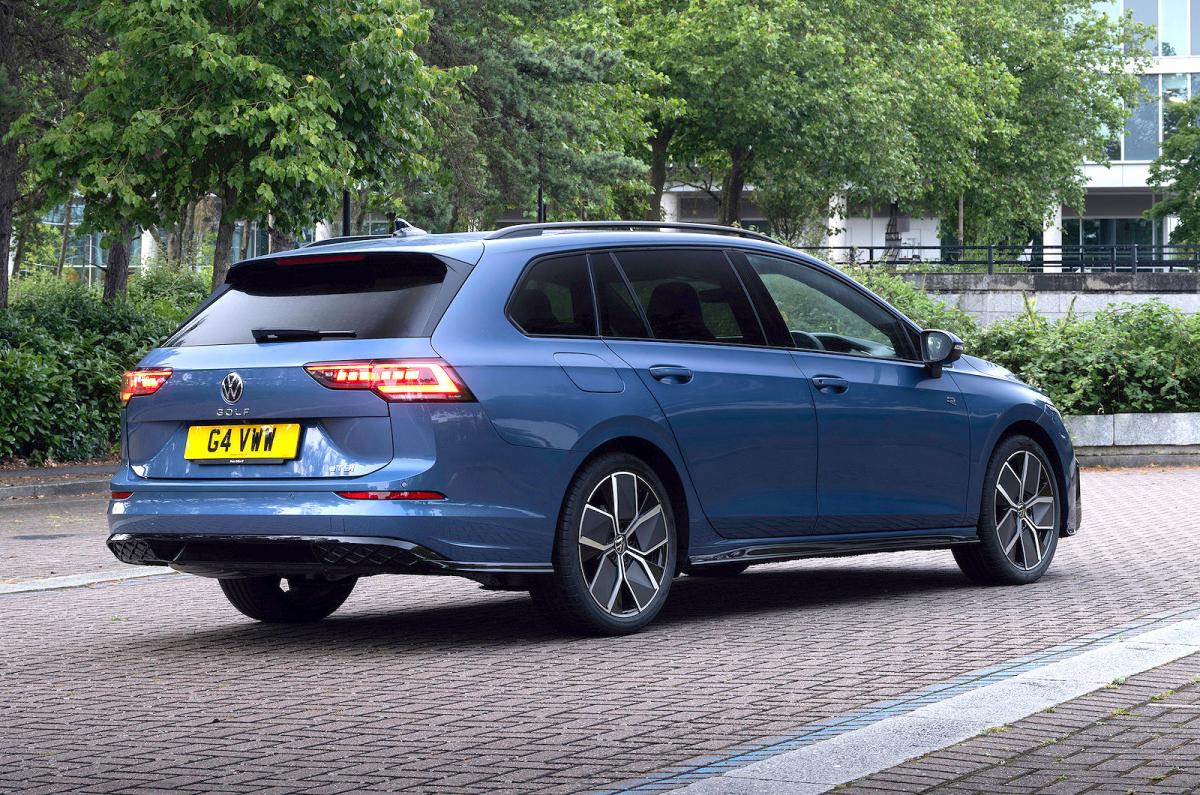
- VW Golf Estate rear right driving
- VW Golf Estate front left static
- VW Golf Estate right static
- VW Golf Estate rear right static
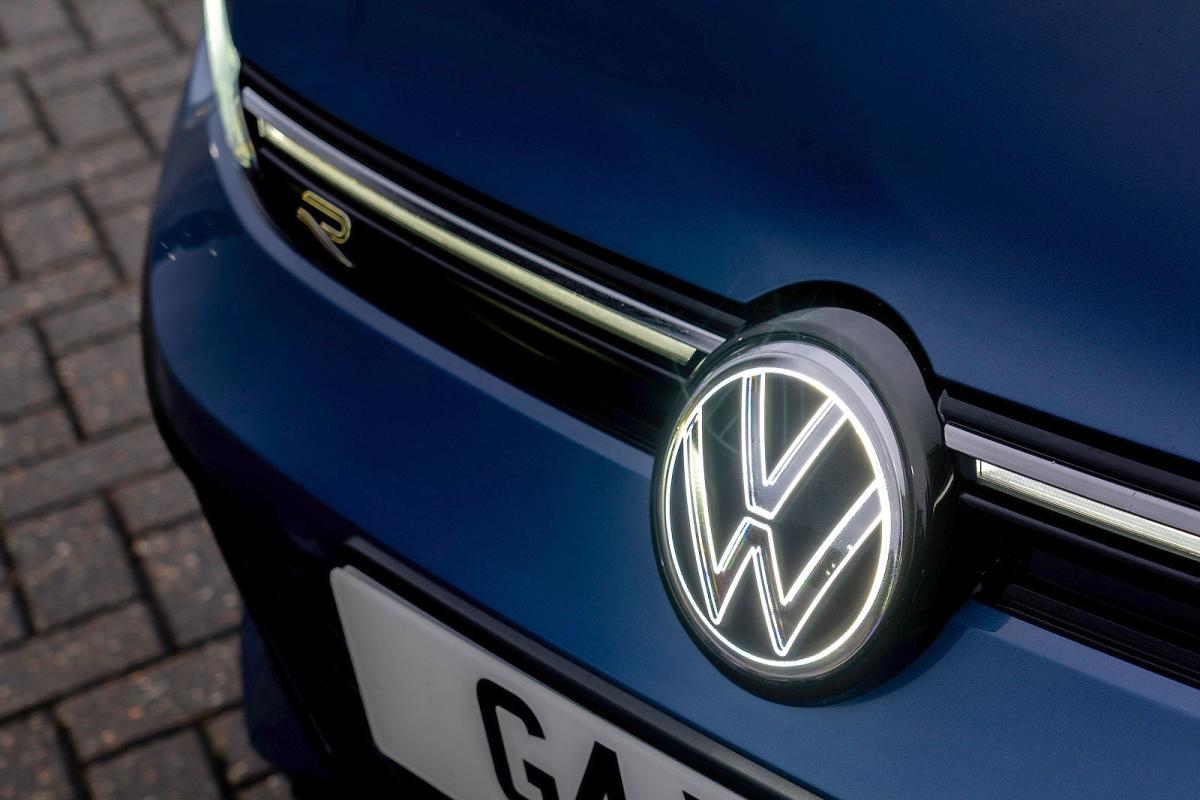
- VW Golf Estate front badge
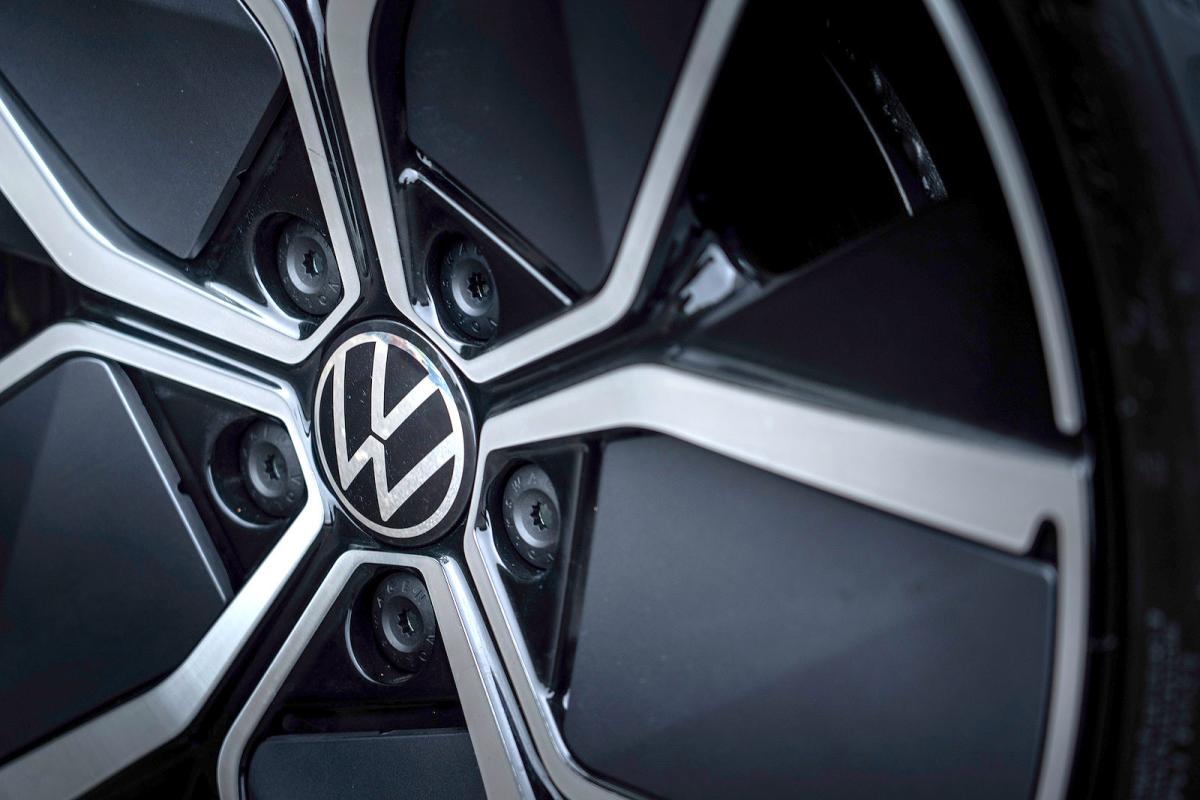
- VW Golf Estate alloy wheel
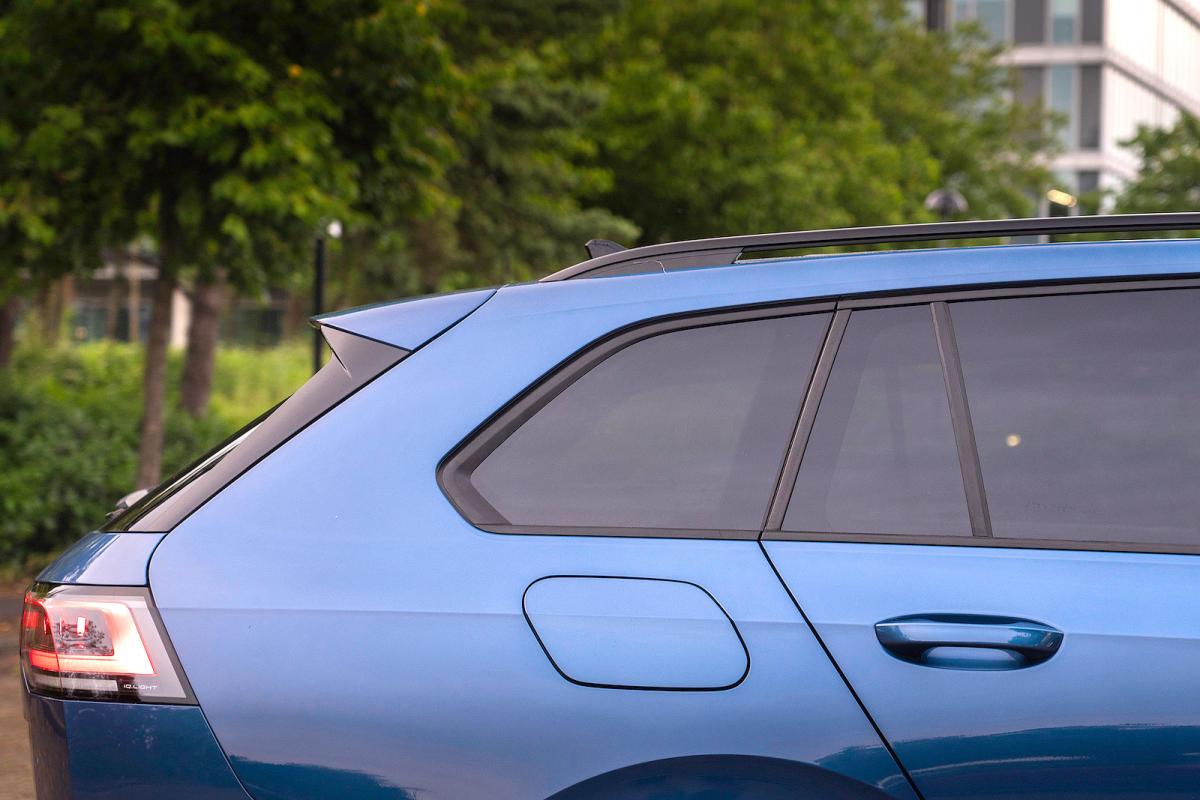
- VW Golf Estate rear detail
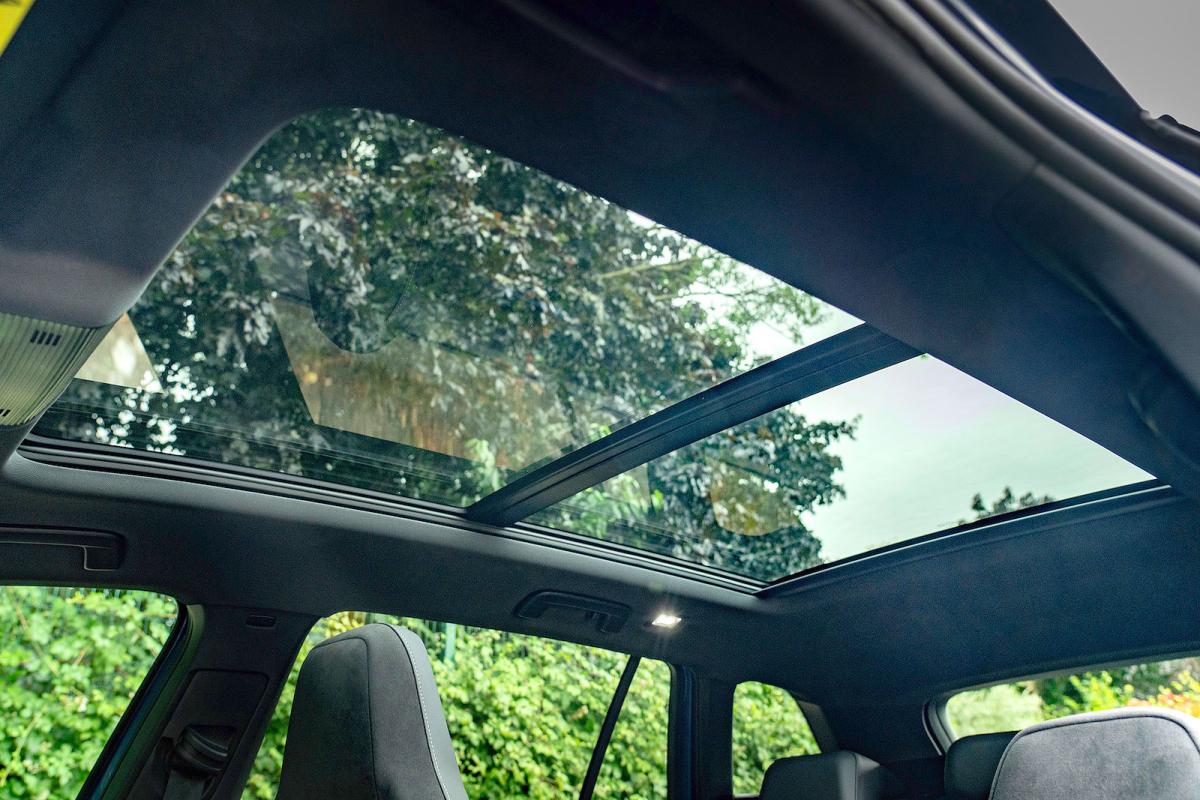
- VW Golf Estate panoramic roof
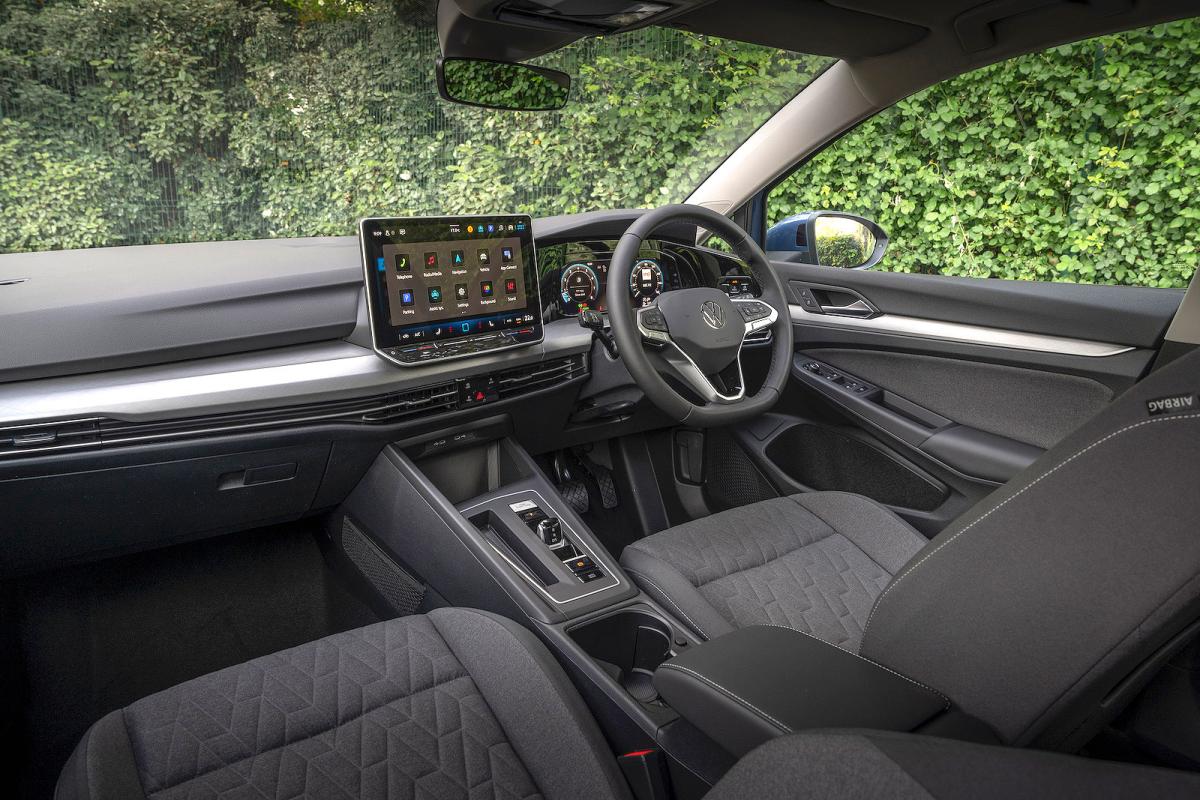
- VW Golf Estate dashboard
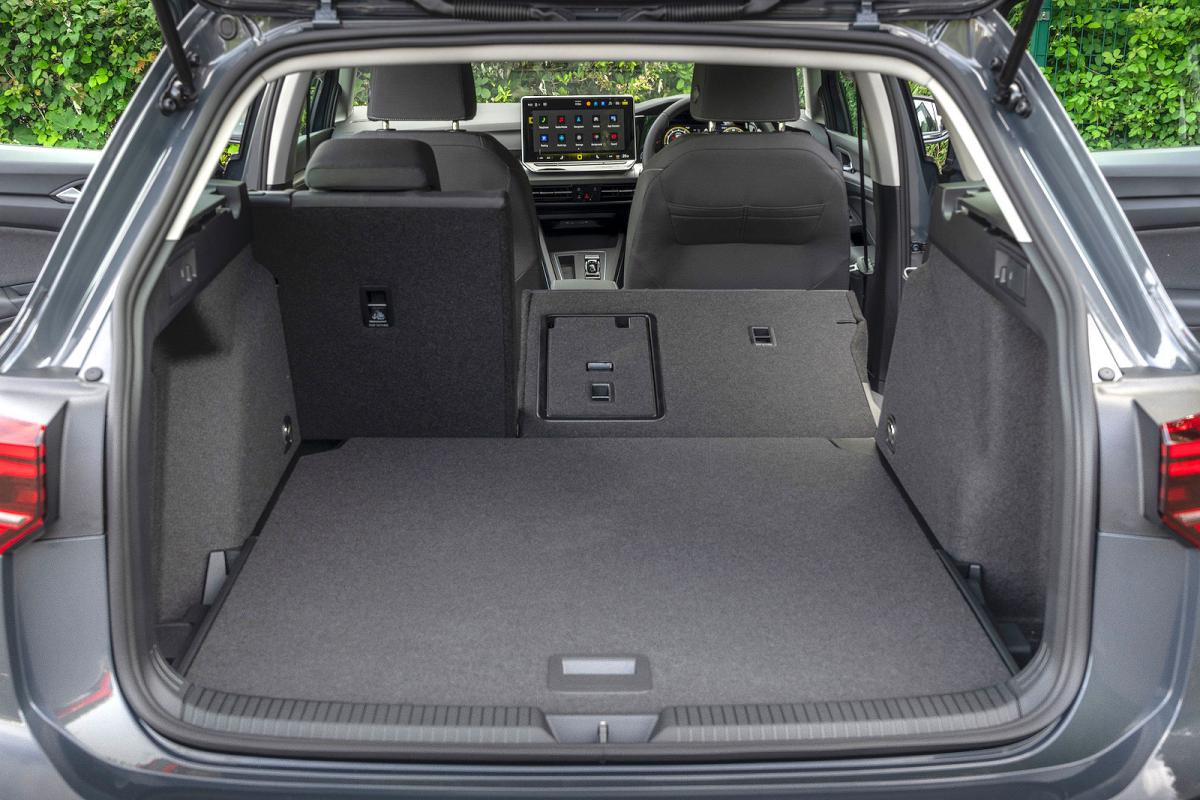
- VW Golf Estate boot
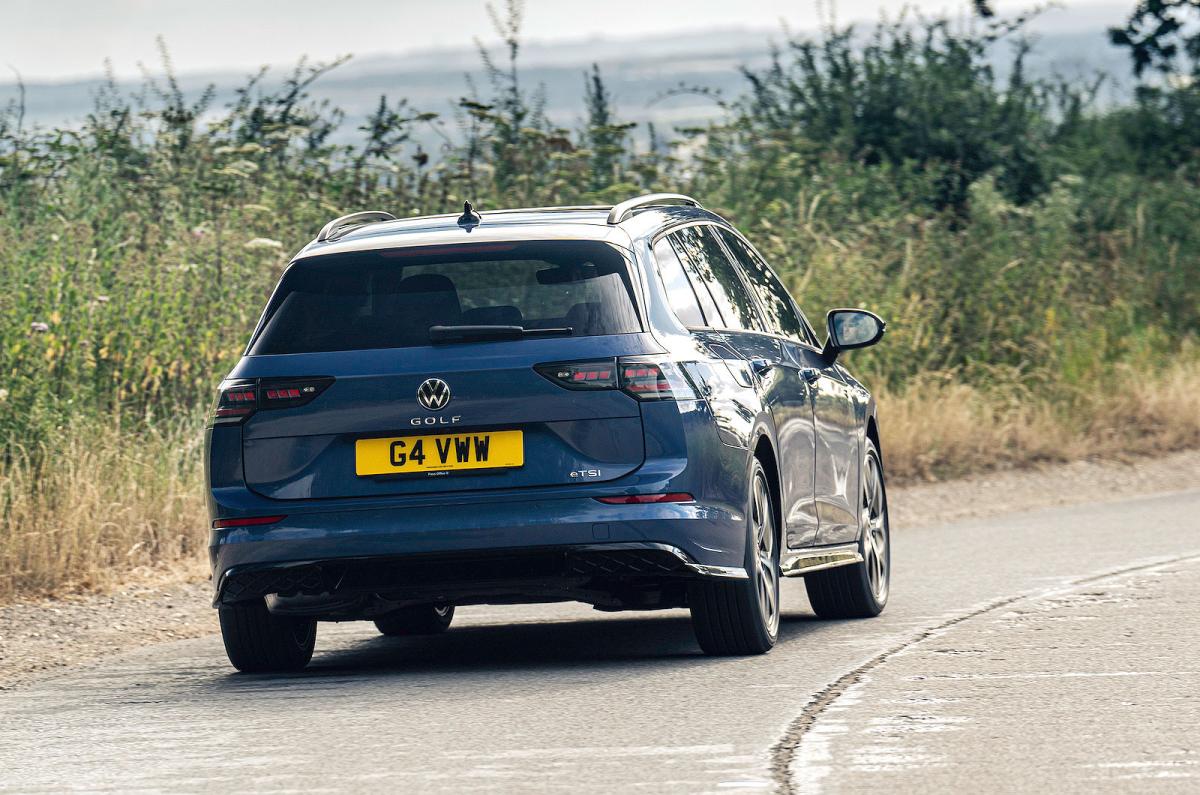
- VW Golf Estate rear cornering


What is What Car? best price?
The What Car? best price shows you the cheapest way to buy your new car, whether it's by choosing an in-stock car through our partner Autotrader or placing a factory order.
RRP from: £30,235
Introduction
If you've found this Volkswagen Golf Estate review while looking for info about Gleneagles – apologies. That's not the kind of golf estate we're writing about. Still, this one has a 611-litre boot so it'll manage a set of clubs easily.
As is obvious from the name, the Golf Estate is an estate car based on the super-popular VW Golf. As is equally unsurprising, you can have it with a petrol or diesel engine. But what you might not know is that the petrols are available with mild-hybrid assistance to improve efficiency. The mild-hybrid versions have a little "e" added to their names – so the 1.5-litre TSI 115 becomes the eTSI 115.
What is What Car? best price?
The What Car? best price shows you the cheapest way to buy your new car, whether it's by choosing an in-stock car through our partner Autotrader or placing a factory order.
RRP from: £30,235
While estate cars have been somewhat overshadowed by family SUVs in recent years, the Golf Estate still has plenty of rivals. They range from the Ford Focus Estate and Seat Leon Estate to the Vauxhall Astra Sports Tourer and Skoda Octavia Estate. Or, if you want an electric estate there's the MG5 EV.
Read on to find out how the VW Golf Estate compares with the best estate cars and how we rate it in all the important areas...
What’s new?
September 2020: new Golf Estate breaks cover, offering more cabin space and boot space. Rear legroom is 48mm longer than the previous Golf Estate’s, while the load area can carry 611 litres of boot space when the rear seats are raised, and 1642 litres with the folded down


Pros
- Spacious and versatile boot
- Comfortable ride
- Economical engines
Cons
- More wind and road noise than rivals
- Distracting touch-sensitive buttons
- Skoda Octavia is roomier
Performance & drive
What it's like to drive, and how quiet it is
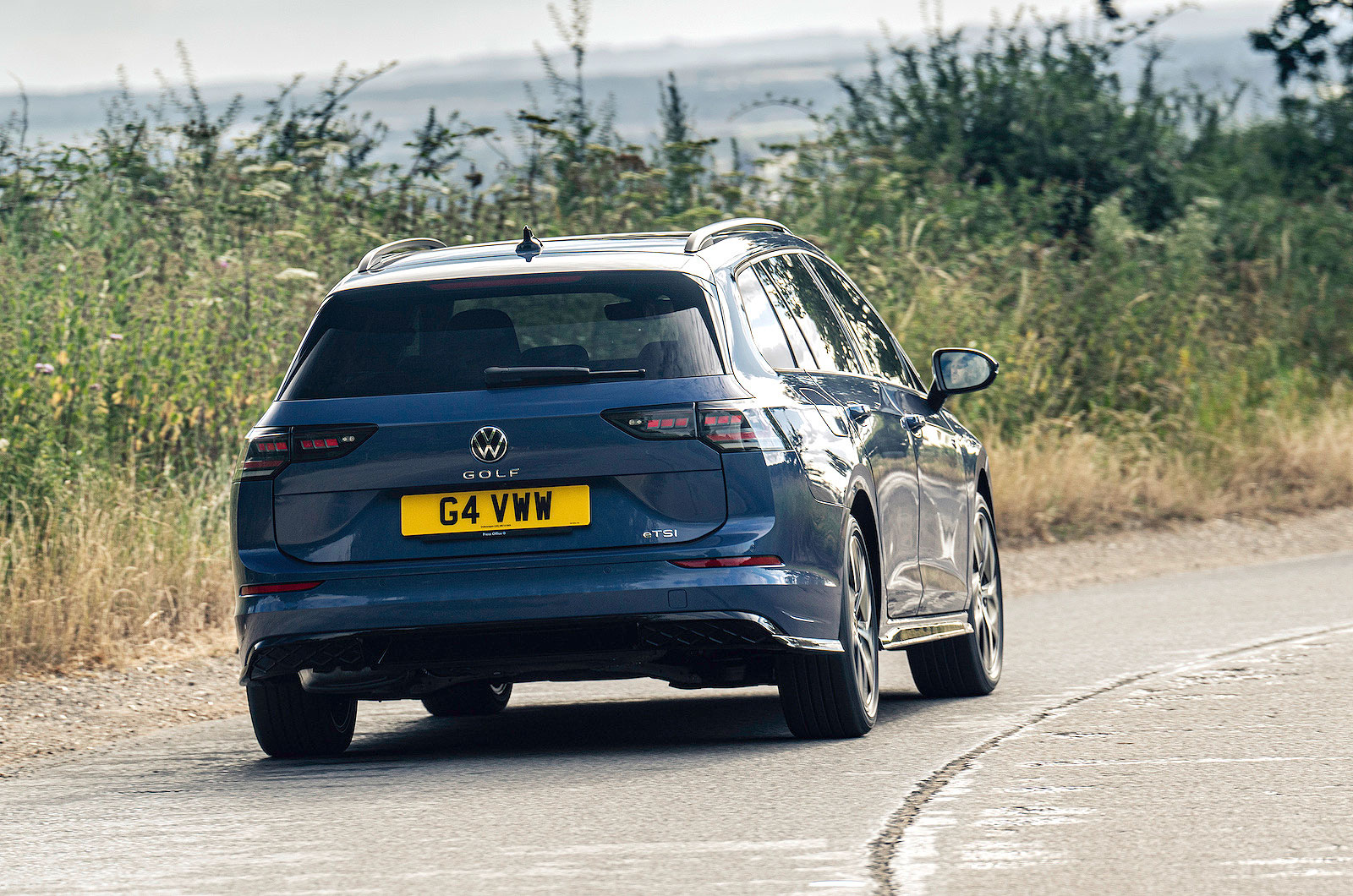
Strengths
- Refined engines
- Comfortable ride
- Strong daily performance
Weaknesses
- More wind and road noise than rivals
- Not that fun to drive
The VW Golf Estate's entry-level petrol engine – the 1.5-litre TSI 115 – is pretty good, but we think the more powerful 1.5 TSI 150 is a better choice for most buyers. It doesn’t cost much more and the extra power (148bhp compared to 113bhp) makes it more flexible, dropping the 0-62mph by around two seconds to 8.8 seconds. Both engines comes with a manual gearbox.
If you want an automatic with a petrol engine, you'll need the eTSI 115 or eTSI 150 – both of which have mild-hybrid tech and a responsive seven-speed DSG auto gearbox. If you can, we'd go for the more powerful of the two.
As for diesels, there are two. The 2.0 TDI 115 – which comes with a manual gearbox – makes for relaxed progress but is the slowest engine in the range, officially taking a little longer to sprint from 0-62mph than the entry-level petrol.
The more powerful 2.0 TDI 150 is matched with an auto gearbox and feels genuinely punchy, with every flex of your right foot causing a reasonable surge forwards. It’s our pick if you'll be using your Golf Estate as a towing car or covering big miles with people and luggage on board.
The Golf Estate rides potholes and ridges around town more adeptly than the Ford Focus Estate and remains comfortable when speeds increase. In fact, motorway jaunts are a real treat.
On standard suspension, it's slightly firmer than the Skoda Octavia Estate so while it doesn't waft over imperfections as well, it's better tied down and less bouncy over crests and dips.
For even better comfort, you can option adaptive suspension – aka Dynamic Chassis Control (DCC) – with Style trim or above. It gives you a choice of three modes, and the softest one makes the Golf Estate one of the supplest estate cars in its price range.
R-Line trim comes with lowered sports suspension, which is firmer but still acceptable. (You can add the lowered set-up as an option with the other trims.)
The Golf Estate has light steering that's great for town driving but might not suit you if you prefer a lot of heft and directness for faster, twistier roads.
If you've added adaptive suspension or chosen R-Line trim, you get a Driver Profile Selection button with a weightier Sport steering mode. Even with that, the steering isn't as sweetly calibrated as on a Ford Focus Estate or as responsive as on the Seat Leon Estate.
Both those rival cars are more agile and fun too, with less body lean through bends. R-Line trim’s stiffer sports suspension brings a little more agility to the table and helps make the most of the well-balanced chassis, as does the adaptive suspension's Sport mode, but the Golf Estate won’t make enthusiasts smile like the Focus Estate will.
All the Golf Estate petrol engines are pretty smooth – only really making themselves heard when worked hard. As you might expect, the diesels aren’t quite as refined but they're still smoother than equivalent rivals.
One thing you will notice in the Golf Estate is wind and road noise, and it's far from the quietest high-speed cruiser. The Focus Estate and Skoda Octavia Estate are better in that respect.
The manual gearbox is slick with a distinct biting point, while the automatic is smoother than the Focus equivalent. Most versions have progressive brakes that allow you to stop with grace, although the eTSI versions' brakes suffer from a bit of interference from the regenerative braking system. You can still slow down smoothly though.
Tips & Advice
Interior
The interior layout, fit and finish
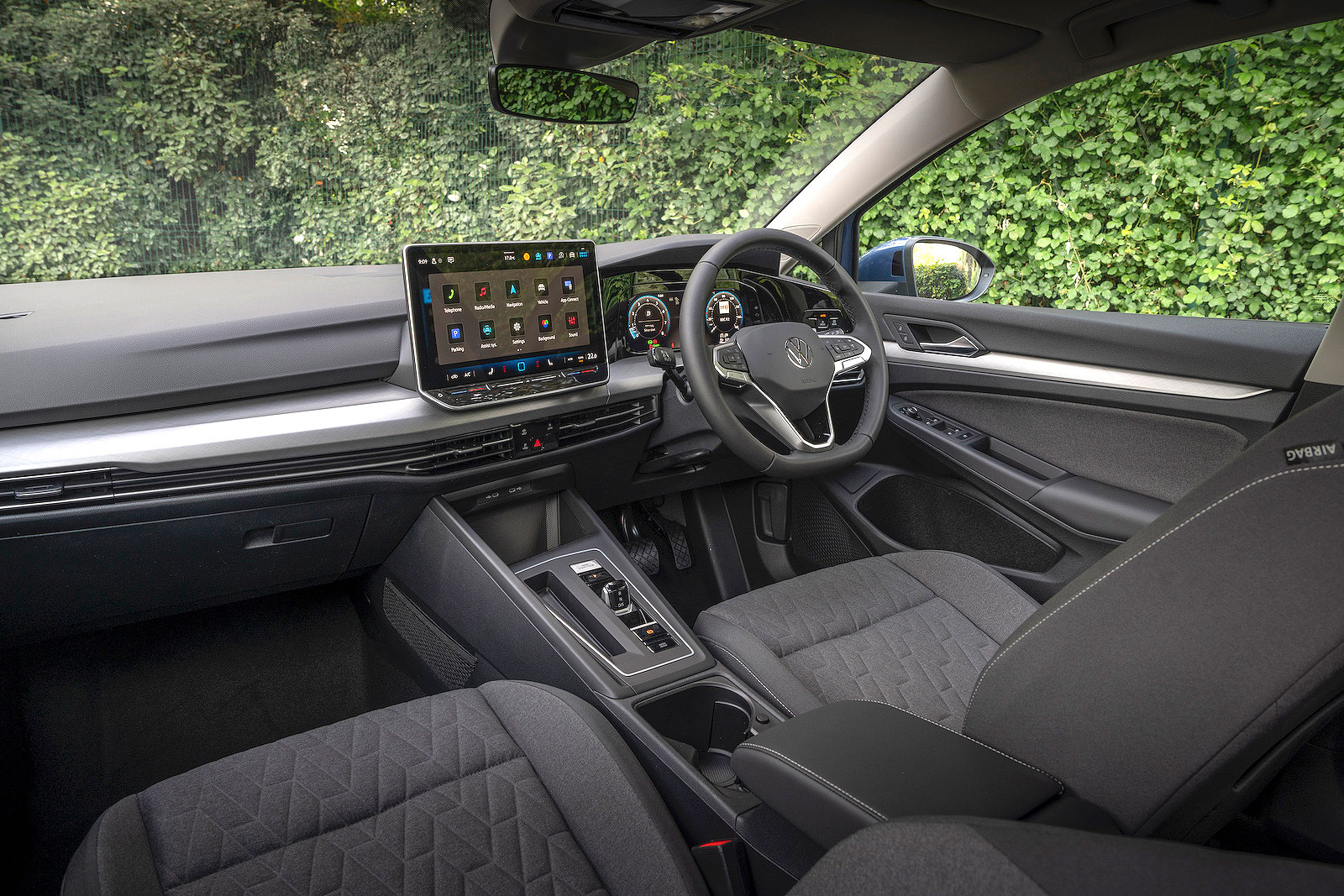
Strengths
- Comfortable driving position
- Much improved infotainment system
- Versatile digital instrument panel
Weaknesses
- Fiddly touch-sensitive sliders
- Interior quality could be better
No matter what size or shape you are, the VW Golf Estate is built with driver comfort in mind. There's plenty of seat adjustment (including manual lumbar support), lots of steering wheel rake-and-reach adjustment, and a moveable front centre armrest to cushion your arm.
If you look closely at the dashboard, you’ll see that most controls have been moved within the infotainment touchscreen. There are touch-sensitive sliders below the screen to set the air-con, and unlike on earlier models they're backlit, but they are much more fiddly than dials or buttons.
Mercifully, Volkswagen has brought back proper physical steering wheel buttons with all trim levels. They make is much less distracting to make cruise control and audio system changes, or to interact with the brilliant 10.25in digital driver's display. The display can be configured to show lots of driving information and used for basic controls on the radio, phone and built-in sat-nav.
The Golf Estate has a big windscreen and large side windows, so looking forwards or left and right at junctions is easy. The fact that it has more glass around the rear than the hatchback VW Golf makes it easier to reverse.
Every trim includes front and rear parking sensors, while Style trim and above gets a rear-view camera (it’s optional with Life trim).
Powerful automatic LED headlights are standard across the range, but the LED Plus lights equipped with Style trim and above come with the ability to direct their light around corners. IQ matrix LED headlights are optional and are the bee's knees – you can leave them on main beam without dazzling other road users.
In the past, the Golf Estate’s infotainment system has been pretty dire. Luckily, that's all changed: the 2024 model comes with VW’s latest software and a new 12.9in touchscreen.
The whole system is a vast improvement over the old one, with faster responses to your inputs, sharper graphics and – best of all – far fewer software glitches. It has plenty of standard features, including wireless phone-charging, built-in sat-nav, Bluetooth, Android Auto and Apple CarPlay.
The standard six-speaker stereo sounds decent, but if you're big into music you'll want the optional nine-speaker Harman Kardon system.
The Golf Estate (and, indeed, the regular VW Golf) has historically been a paragon of build quality, but that's less true of the current, eighth-generation model.
At first glance, everything looks smart, with a clean and modern design, and some soft-touch surfaces on the upper parts of the dashboard and front doors. There are other appealing elements too, such as metal dashboard trims and carpeted door bins (so items don't rattle in them).
Sadly, when it comes to feeling a cut above, the it's only marginally better than a Seat Leon Estate inside, and not quite as plush as the latest Skoda Octavia Estate. It is better than the Ford Focus Estate though.
Tips & Advice
Passenger & boot space
How it copes with people and clutter
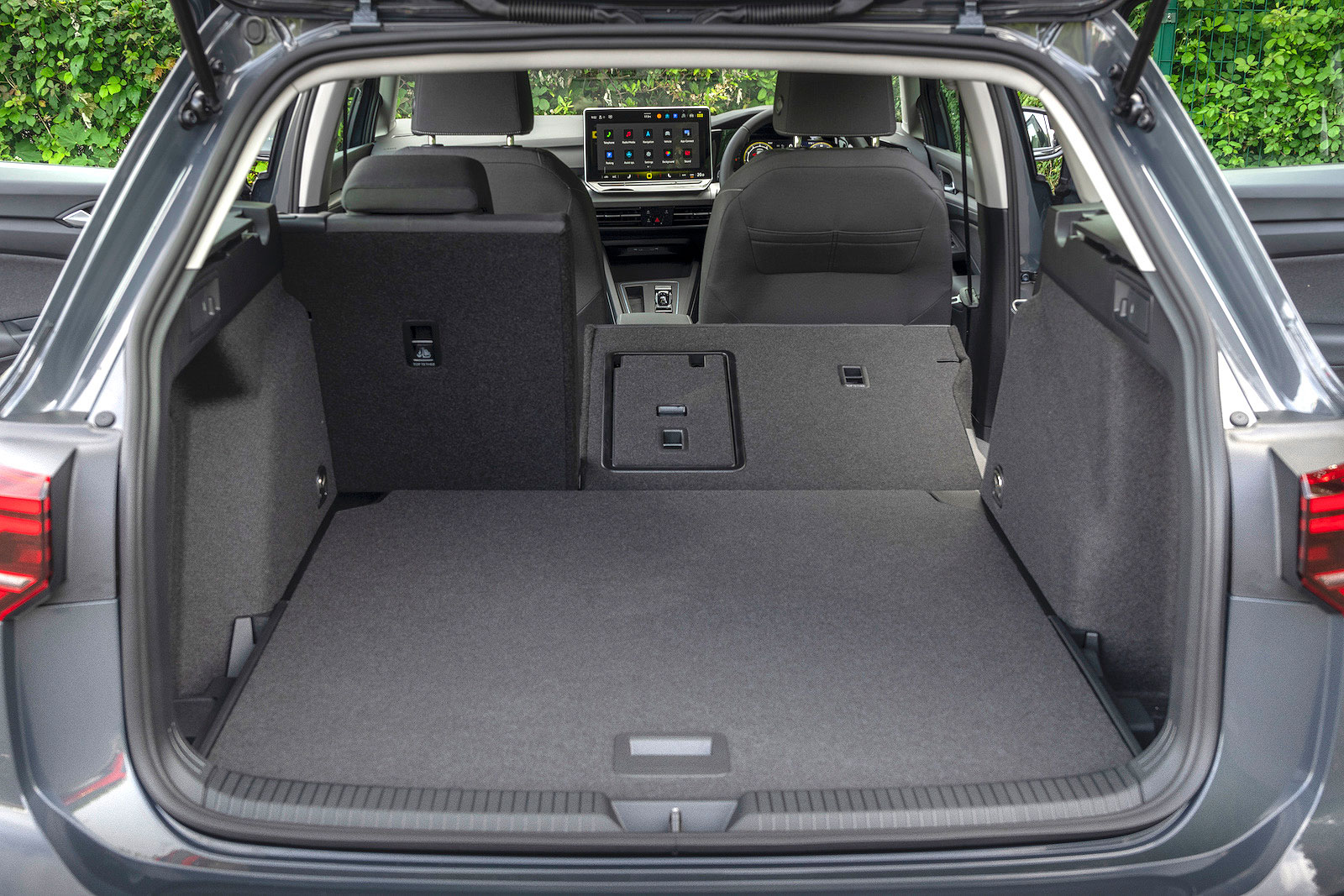
Strengths
- Big boot
- Lots of front space
Weaknesses
- Rear seats are not very versatile
- Rivals offer more rear leg room
The VW Golf Estate has plenty of head room to suit even the exceedingly tall, and its front seats go back far enough to accommodate anyone with long legs. It's wide in the front, too, so you won’t be clashing elbows with your passenger.
The front door pockets are each big enough for a 500ml bottle of water and there are two cupholders in the centre console. In front of the gear selector, there’s a handy tray for your phone, which includes wireless charging. You’ll also find a storage bin under the front centre armrest and a decent-sized air-conditioned glovebox.
The Golf Estate’s interior dimensions allow two six-footers to sit relatively comfortably in the back. Head room is generous and there’s loads of space for feet under the front seats. Leg room isn't outstanding though, and if the front-seat occupants slide their seats fully back, taller folks sitting in the rear won't have any space in front of their knees.
Shoulder room becomes tight when a third rear passenger is introduced, and the raised section of floor that runs down the centre of the car robs the middle passenger of foot space.
The Ford Focus Estate, the Skoda Octavia Estate and the Toyota Corolla Touring Sports offer a little more rear passenger space, but if you want something truly massive for this kind of cash, you'll want a Skoda Superb Estate.
The Golf Estate's rear seats don't slide or recline, as they can in some family SUVs of a similar size. You can, though, fold them down in a 60/40 split by pulling handy levers in the boot.
Pricier cars in the class – such as the BMW 3 Series Touring – offer a more flexible 40/20/40 split, but the Golf Estate comes with a ski hatch that does a similar job.
The front passenger seat is height adjustable and comes with adjustable lumbar support.
The biggest difference between the regular VW Golf and the estate car version is, as you'd expect, the boot size.
Whereas the hatchback's is acceptable, the estate's is big, at 611 litres below the load cover. That's not quite as big as a Skoda Octavia Estate boot and nothing like as voluminous as the vast luggage space in the Skoda Superb Estate but it's more than roomy enough. There's room for a fold-up baby buggy, a week’s shopping or two sets of golf clubs.
All versions come with a height-adjustable boot floor. It lets you create two compartments and when it's raised it irons out the step that's otherwise created when the rear seats are folded down. With the floor in its highest setting, there’s barely any lip to lift heavy items over.
Tips & Advice
Buying & owning
Everyday costs, plus how reliable and safe it is
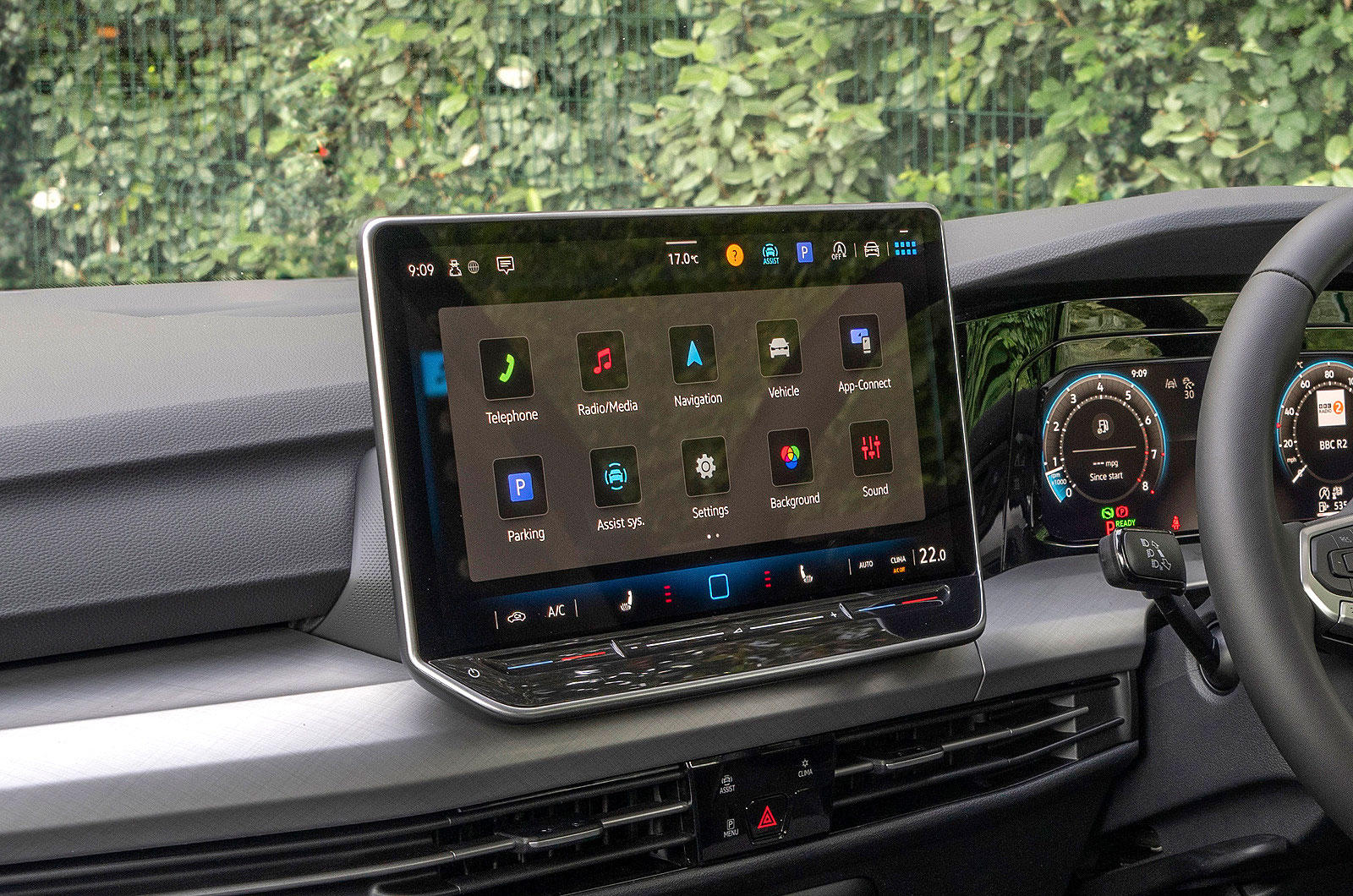
Strengths
- Competitively priced
- Good safety rating
- Plenty of standard equipment
Weaknesses
- Poor VW reliability score
- Toyota Corolla is more efficient
If you buy a Golf Estate, we'd stick with entry-level Life trim. It comes with all you really need, including single-zone climate control, 16in alloy wheels, a leather-trimmed steering wheel and gear knob, automatic lights and wipers and adaptive cruise control.
Style and R-Line trims add a few more toys and sharper looks, but aren't really worth their price hikes. If you want more toys for your money, have a look at the Ford Focus Estate and Skoda Octavia Estate. The Toyota Corolla Touring Sports is very well equipped but also pricier.
Ways to buy
If you’re buying a VW Golf Estate as a cash purchase, it looks pretty competitively priced. Indeed, while it’ll cost you more than the Seat Leon Estate, it’s around the same price as a Skoda Octavia Estate or Ford Focus Estate and less than a Toyota Corolla Touring Sports.
Better still, whichever engine you choose should be quite efficient, with our favourite 1.5 TSI 150 petrol returning 51.5mpg (1mpg less than the less-powerful 1.5 TSI 115). The eTSI’s hybrid tech increases the efficiency to almost 54mpg, but that’s still not a patch on the Corolla Touring Sports, which can manage up to 62.7mpg.
If you're getting an estate as a company car you'll probably want to minimise BIK tax. The Golf eTSI is fine for that, but the Octavia Estate has a lower P11D value and the Octavia iV plug-in hybrid will reduce your tax bill massively.
The hatchback VW Golf performed poorly in the 2024 What Car? Reliability Survey, finishing right at the bottom of the family car class in diesel form and near the bottom as a petrol. Volkswagen as a brand performed a little better, finishing 18th out of 31 brands listed, but it was soundly beaten by Toyota, in fifth place. Skoda came 13th and Ford was 14th.
Like other VW car models, the Golf Estate comes with a three-year/60,000-mile warranty and one year’s roadside assistance. That's not exceptional these days, falling short of the five-year warranty that Hyundai offers, the seven-years that you’ll get from Kia or the 10-year warranty that Toyota offers, providing you regularly service with them.
Every Golf Estate comes with automatic emergency braking (AEB), lane-keeping assistance, a driver fatigue monitor, traffic-sign recognition and something called Car2X. Car2X allows all cars fitted with it to share information on the traffic conditions and any hazards within a radius of 800m, and will send you an early warning of any dangers that lie ahead.
The Golf achieved a full five-star Euro NCAP safety rating, with excellent category scores. That star rating matches the Octavia, which was tested in the same year, but the Golf bested the Octavia’s scores in every area except adult occupancy, in which its score was 1% behind.
For all the latest reviews, advice and new car deals, sign up to the What Car? newsletter here
Tips & Advice
Similarly priced cars


If you're interested in finding a Volkswagen Golf Alltrack, or any of the other estate cars mentioned here, head over to our Cars available now pages to find new cars listed for sale at great prices.
FAQs
Volkswagen Golf specifications
RRP price range
MPG range across all versions
Available fuel types (which is best for you? )
Number of engines (see all)
Number of trims (see all)
What is What Car? best price?
The What Car? best price shows you the cheapest way to buy your new car, whether it's by choosing an in-stock car through our partner Autotrader or placing a factory order.
RRP from: £30,235
About the writer

More Volkswagen Golf
Used reviews
New reviews
Longterm reviews
Reliability
- What Car? Reliability Survey: Most and least reliable family cars
- Reliability Survey: Most and least reliable diesel cars
- Britain's most reliable cars 2024 (plus the ones that'll let you down)
- Reliability survey: the most expensive cars to fix, and the cheapest
- Most and least reliable used cars: family cars