Volvo V60 review
Category: Estate car
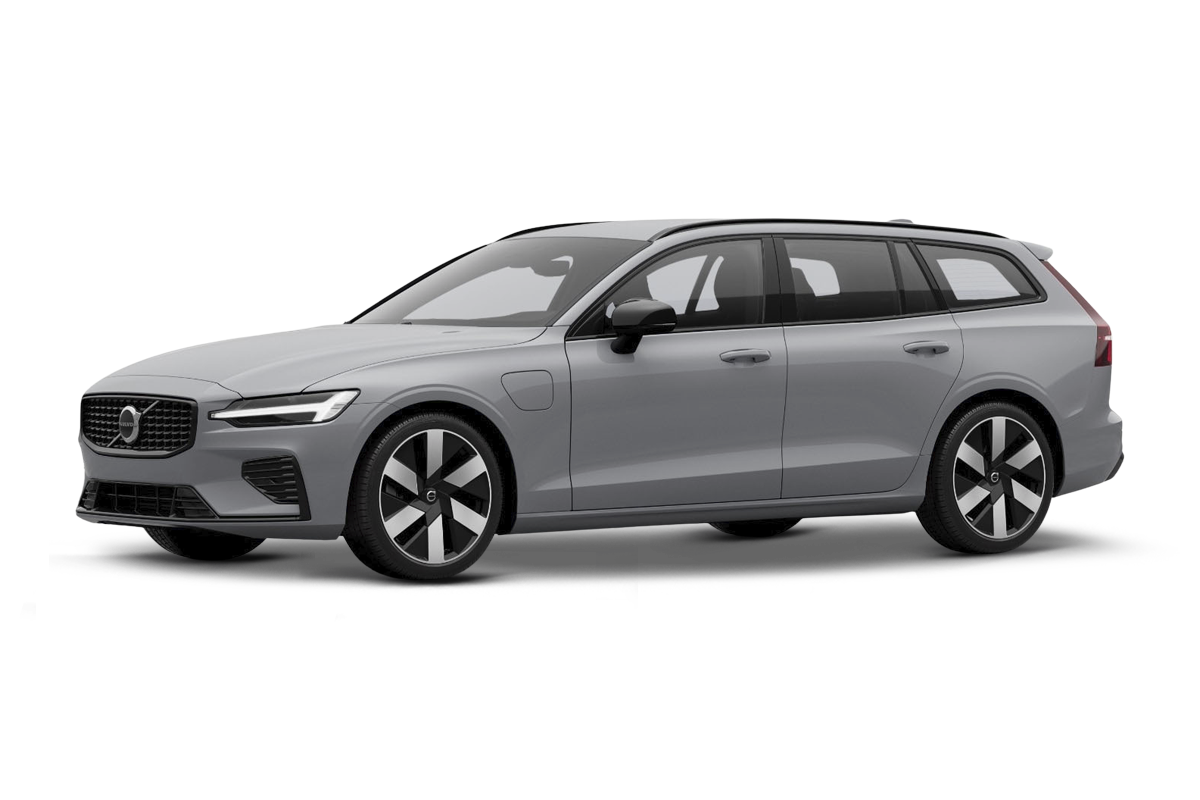
The V60 is a plush estate car that’s available as a mild hybrid or plug-in hybrid


What Car? says...
When ABC cancelled the TV thriller Designated Survivor after two seasons, it was viewer demand that led to it being revived by Netflix. Now something similar has happened with the Volvo V60.
You see, the V60 was retired a few years ago so the Swedish brand could focus on SUVs, but a resurgence in demand for estate cars means it's back.
Very little has changed from before, but that’s not necessarily a bad thing. It comes packed with kit and there are three engines to choose from: a mild-hybrid (MHEV) and two plug-in hybrids (PHEVs).
The V60 has plenty of rivals to compete with. So, should you buy one over premium rivals like the BMW 3 Series Touring and Mercedes C-Class Estate, or the likes of the cheaper Volkswagen Passat? Read on to find out…
What’s new?
- July 2024: Volvo restarts production of V60 after a pause. It was stopped because too few people were buying estates, but a sudden spike in demand led to a revival
- June 2023: V60 Recharge Plug-in Hybrid T6 named Towcar of the Year
- September 2019: V60 named Best Towcar in 1500-1700kg category

- September 2018: sporty R Design trim added to the new V60 range, as is the new off-road V60 Cross Country model. Cross Country features full-time four-wheel drive, an off-road driving mode, a 60mm increase in ride height, sat-nav and a 10-speaker audio system
Performance & drive
What it’s like to drive, and how quiet it is
Strengths
- +PHEV’s good all-electric range
- +A great motorway cruiser
- +Predictable handling
Weaknesses
- -Automatic gearboxes can be slow to react
- -Not as good to drive as a 3 Series Touring
How fast is it and which engine is best?
The entry-level B4 version has a 2.0-litre four-cylinder MHEV petrol unit, and it’s pretty fast. The engine never feels lacking, we just wish the eight-speed automatic gearbox was a bit more responsive.
Being front-wheel drive, the B4 can scrabble for traction at times. The rear-driven BMW 3 Series Touring puts its power down more cleanly. Still, the B4 does match the 320i Touring’s 0-62mph time of 7.6sec.
Power | 0-62mph | Top speed | |
B4 MHEV | 194bhp | 7.6sec | 112mph |
T6 PHEV | 306bhp (combined) | 5.4sec | 112mph |
T8 PHEV | 449bhp (combined) | 4.6sec | 112mph |
To get four-wheel drive, you’ll need one of the PHEVs. Both the T6 and T8 use an identical 2.0-litre engine to drive the front wheels, but between them, the electric motor (driving the rear wheels) differs in its power output.
The T6 has all the grunt most people could ever want or need, but if you must, the T8 is almost Porsche-911 quick. Again, we just wish the gearbox felt more awake.
Is it agile and is the ride comfortable?
The V60 feels composed, safe and secure in the corners, but no version is particularly agile. And while the PHEVs get four-wheel drive, their heavy batteries practically counteract any gain in agility.
You see, the 3 Series Touring reigns supreme here. It feels better balanced and its steering gives you a better sense of connection with the front wheels. The 3 Series is fun to drive, which is something we wouldn’t say about the V60.
Right now, you might be shouting, “it’s a Volvo, it isn’t meant to be sporty”, and that’s a fair point. The V60 is more concerned with comfort and, in that respect, it can give the 3 Series a run for its money. The V60’s suspension is well judged, allowing for a compliant yet controlled ride. It’s especially good on the motorway, and it’s fair to say the lighter B4 rides that bit smoother than the PHEV options.
Is the V60 the most comfortable estate car on sale? Well, not quite. The Mercedes C-Class Estate (when fitted with adaptive suspension) has an even smoother ride.
Is it quiet and how easy is it to drive smoothly?
The V60’s engines are quiet for the most part, especially at a cruise, and you’ll only really notice them when you put your foot to the floor.
At 70mph, there’s a slight rumble from the tyres and a bit of wind noise from its door mirrors, but it’s all largely subdued. It’s comparable to a C-Class Estate in this regard, with neither car being irritatingly loud.
What’s the range and efficiency like, and how quickly can it charge?
Let’s put aside the B4, because it can’t drive solely on electric power, let alone be plugged in. You can, unsurprisingly, plug in the T6 and T8 plug-in hybrids. They’ll go similar distances – respectively 56 and 60 miles, officially – on battery power alone.
The PHEV models come with a Type 2 charging cable (to plug into home EV chargers) and have a maximum charging rate of 6.4kW. At that rate, the battery is charged from empty in about five hours.
“After hours driving the V60 on the motorway, I was really impressed by how effortless it made it. The only thing that soured the experience was the gearbox’s slow reactions in traffic or around town." – Dan Jones, Senior Reviewer

Interior
The interior layout, fit and finish
Strengths
- +Excellent driving position
- +High-quality fit and finish
- +Sat-nav uses Google Maps
Weaknesses
- -Infotainment isn't as easy to use as BMW's
- -Digital driver's display isn't very configurable
What does the interior look like and is it well made?
The Volvo V60’s interior looks classy and minimalistic, and the design is basically identical to the larger Volvo XC60 family SUV. The materials and build quality are better than both the BMW 3 Series Touring and the Mercedes C-Class. You can also option softer Napa leather upholstery and wood trim finishers that really lift the ambience.
Is the driving position comfortable and is it easy to see out?
The Volvo V60 has a superb driving position. You sit perfectly in line with the steering wheel and pedals, with a comfortable armrest on the door and another between the front seats.
The driver's seat is supportive and has lumbar adjustment, and the steering wheel has a great range of height and reach adjustment. Even entry-level Plus trim comes with an electrically adjustable driver’s seat with memory and an extendable seat base for better under-thigh support.
The V60 is an easy car to see out of. The windscreen pillars are not too wide and there are no substantial blind-spots. The rear windows provide a good view over your shoulder, and you get power-folding rear headrests that drop at the touch of a button to give you a clearer view backwards.
Front and rear parking sensors, and a rear-view parking camera are standard on all versions, upgraded to a 360-degree camera system on Ultra trim. It’s easy to see at night because high-intensity LED headlights are fitted to every version, with matrix LED headlights standard on Ultra trim.
Are the dashboard and infotainment system easy to use?
Every V60 has a 12.3in digital driver's display instead of analogue dials, and while it's not as configurable as BMW’s Virtual Cockpit, it gives plenty of useful information, including media, telephone and navigation data.
Likewise, the V60's 9.0in, portrait-oriented infotainment touchscreen has small icons and lacks the user-friendly dial controller you get with the touchscreen in a BMW 3-Series Touring. BMW's software is more responsive and better laid out than Volvo's, but you soon get used to the V60's menus and the screen is very clear.
The sat-nav system uses Google for its maps, and provides a detailed display with real-time traffic information. DAB radio, wireless phone-charging, Bluetooth, and Android Auto and Apple CarPlay smartphone mirroring come as standard.
"Despite its length, the V60’s great all-round visibility means that it’s really easy to park, even in tight spaces." – Dan Jones, Senior Reviewer

Passenger & boot space
How it copes with people and clutter
Strengths
- +Good-sized boot
- +Roomy interior
Weaknesses
- -Panoramic roof robs head room
- -Small door bins
- -Seats only fold 60/40
How much space does it have for people?
The Volvo V60 has a generous amount of front head and leg room, but that's reduced significantly if you opt for the range-topping Ultra trim because it comes with a panoramic roof. What’s more, the interior is fairly wide, so you can get your elbows out without irking your passenger.
Rear space is also a strength. Again, head room is fine (panoramic roof aside) and the rear leg room is much better than in the C-Class Estate. You can get roomier estate cars but you'll either have to spend a lot more money or do without a premium badge – the Mercedes E-Class Estate in the former sense and the Skoda Superb Estate in the latter.
How much room does it have for luggage?
Interior storage space is generally good, with plenty of cubbies, compartments and a decent glovebox, although the door bins are a little small. The V60's boot has an electrically operated tailgate.
The non-PHEV versions have 519 litres of boot space with the rear seats up – enough for eight carry-on suitcases. That’s up on the 3 Series Touring (500 litres) and C-Class Estate (490 litres), but the Superb Estate (690 litres) is in a whole other league.
As is often the case, the PHEV versions have a slightly smaller boot, with a reduction to 481 litres. That’s still more than you’ll find in the 330e Touring or C300e Estate, though.
There’s more space under the floor if you don’t order a spare wheel, and you can drop the rear seats to make more space for longer items. They split 60/40 rather than in the 40/20/40 arrangement you get in the 3 Series Touring. The seats fold flat to the floor, with no step up in the long boot space.
"It almost goes without saying that interior space is really important for estate cars, and that’s one area where I've found the V60 does well." – Dan Jones, Senior Reviewer

Buying & owning
Everyday costs, plus how reliable and safe it is
Strengths
- +All models are well equipped
- +Low BIK rates for plug-in hybrid models
Weaknesses
- -Quicker predicted depreciation than BMW 3 Series
- -Safety rating has expired
How much does it cost and what equipment do you get?
If you tend to keep a beady eye on costs, the Volvo V60 is worthy of your attention. Like for like, it’s generally no pricier to buy in cash than premium-brand rivals, but you could save money if you buy a Skoda Superb Estate or VW Passat.
The V60 is predicted to hold on to a good chunk of its value when it comes to reselling in three years. There's little to split it on depreciation with the Mercedes C-Class Estate but the BMW 3 Series Touring is a bit better.
The V60’s engines are, generally speaking, better than the 3 Series Touring’s in terms of CO2 output and fuel consumption. If you're a company car user, it's definitely worth looking at the PHEVs because they significantly cut your BIK tax bill relative to other versions. An electric estate car – the Volkswagen ID 7 Tourer for example – will be even cheaper still to run.
We recommend sticking to the V60's entry-level Plus trim for the best value. It has more than enough gubbins to keep gadget lovers entertained, including a 9.0in touchscreen with sat-nav, a 10-speaker stereo, an electric tailgate, four-zone climate control, a heated front windscreen and steering wheel, heated front and rear seats, adaptive cruise control, 19in alloys and keyless entry.
Ultra trim adds a panoramic roof, tinted rear windows, an upgraded Harman Kardon sound system, an electrically adjustable front passenger seat and upgraded LED headlights and parking aids. It's worth noting that the T6 is only available in Plus trim, and the T8 is Ultra-only.
Is it reliable, and how long is the warranty?
In our latest What Car? Reliability Survey, the V60 came seventh out of nine cars in the executive car class, its 85.5% rating being cause for concern. It ranked higher than the C-Class but not the 3 Series.
As a brand, Volvo placed 21st out of 30 car makers featured – again, above Mercedes but below BMW.
If anything were to go wrong, every Volvo comes with a three-year, 60,000-mile manufacturer’s warranty and breakdown cover.
How safe is it, and is it easy to steal?
You get a good amount of standard safety equipment with the V60, including automatic emergency braking (AEB) that will detect cars, pedestrians, cyclists and large animals, traffic-sign recognition, oncoming lane mitigation (to help avoid a head-on collision) and lane-keeping assistance.
Every V60 gets an alarm and an immobiliser to help fend off pesky thieves.
"Given the importance Volvo places on safety, I think it’s a bit disappointing that the V60’s safety rating has been allowed to expire." – Dan Jones, Senior Reviewer
Buy it if…
- You want a posh interior
- You want good interior and boot space
- You like lots of standard kit
Don’t buy it if…
- You want the sharpest handling estate car
- You want a budget-friendly option
- You’d like rock-solid reliability
For all the latest reviews, advice and new car deals, sign up to the What Car? newsletter here

FAQs
Volvo discontinued the V60 due to a lack of demand for estate cars and to focus on its SUVs. Now though a resurgence in estate popularity means that the V60 is back.
At the time of writing the V60 costs around £45,000. It's roughly on a par price wise with premium rivals including the BMW 3 Series Touring and Mercedes C-Class Estate, and more expensive than a Skoda Octavia Estate or Volkswagen Passat. You can check the latest prices on our New Car Deals pages.
Private buyers will likely be best served by the entry-level B4 mild hybrid. Company car drivers, meanwhile, will want to go for one of the plug-in hybrid (PHEV) models because they significantly lower official CO2 emissions and therefore BIK tax costs.
The main differences between Volvo’s two estate cars is that the Volvo V90 is bigger and more expensive than the V60, and arguably more luxurious too.
| RRP price range | £45,210 - £57,365 |
|---|---|
| Number of trims (see all) | 2 |
| Number of engines (see all) | 2 |
| Available fuel types (which is best for you?) | petrol hybrid, petrol plug-in hybrid |
| MPG range across all versions | 44.8 - 470.2 |
| Available doors options | 5 |
| Company car tax at 20% (min/max) | £716 / £3,059 |
| Company car tax at 40% (min/max) | £1,432 / £6,118 |

