Volkswagen ID 4 review
Category: Electric car
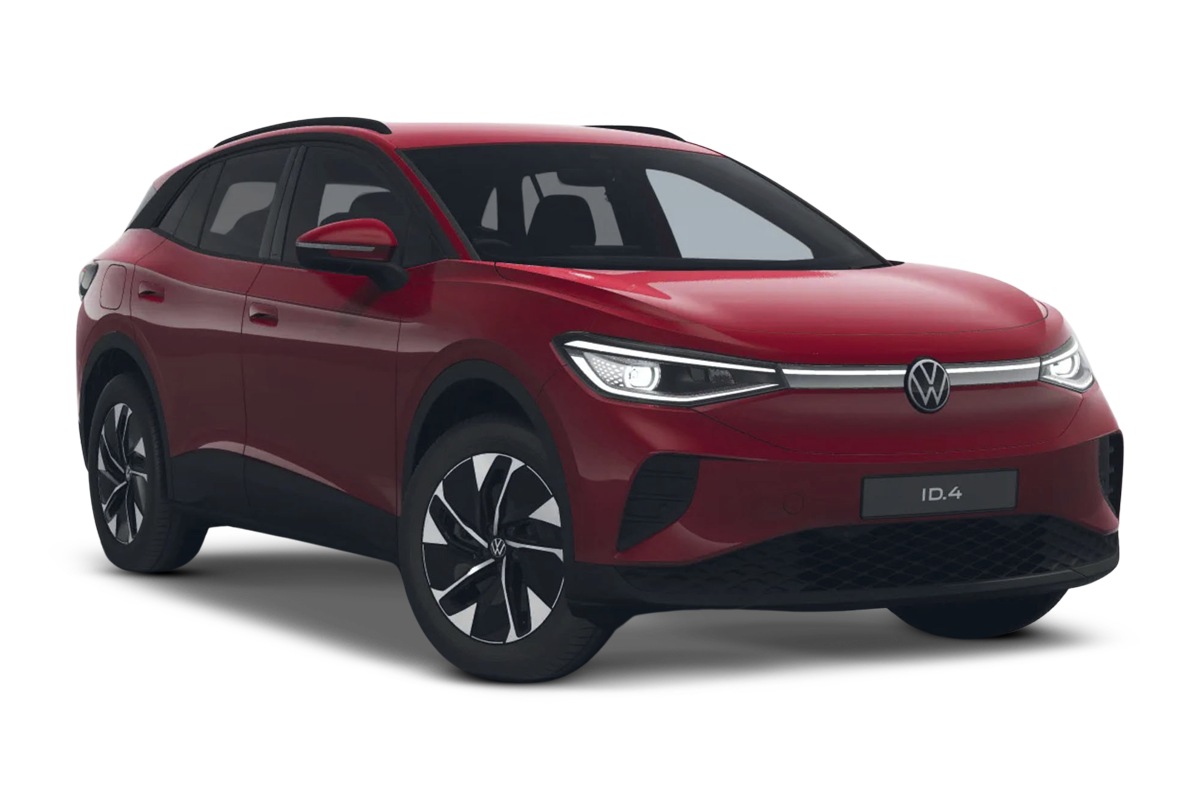
The ID 4 is a practical electric SUV with a decent range but there are better rivals out there


What Car? says...
If you consider all of the most important things an electric SUV needs, the Volkswagen ID 4 should be the perfect box-ticker. After all, it’s big and practical, and its latest facelift has given all versions a respectable range between charges.
Better still, Volkswagen says the ID 4 is carbon neutral at the point it’s handed over to you because renewable energy is used to build it. That’s all well and good, but is it worth buying in the first place?
VW ID 4 twin test video
Well, it’s hard to ignore the fact that the ID 4 sits in arguably the most competitive sector of the car market, so it’ll have to prove itself against lots of rival electric SUVs. They include the Ford Mustang Mach-E, Hyundai Ioniq 5, Kia EV6, Skoda Enyaq and Tesla Model Y.
Read on to find out how we rate the VW ID 4 for practicality, performance, running costs, equipment levels and more...
What’s new?
- May 2025: new Black Edition ID 4 models hit UK dealerships, starting from £46,180
- November 2023: ID 4 range facelifted, and gets larger battery and so a range of up to 339 miles

- May 2021: ID 4 range widens with option of smaller (and therefore cheaper) battery, and new trim levels
- April 2021: ID 4 scores full five-star rating in Euro NCAP safety tests
- January 2021: VW takes pure-electric motoring to the SUV marketplace with its new ID 4. First Edition cars feature 20in alloy wheels, LED lights at both ends, a reversing camera, plus microfleece seats and a heated steering wheel. Model offers a 310-mile range
Performance & drive
What it’s like to drive, and how quiet it is
Strengths
- +Wide range of power outputs to suit various needs
- +Good ride comfort
- +Composed handling for everyday driving
Weaknesses
- -Slightly grabby brake pedal
- -Not exactly fun to drive
Engine, 0-60mph and gearbox
You’ll be spoiled for choice if you buy a VW ID 4 because there are quite a few versions. The list starts with the 168bhp Pure, which is the slowest ID 4 in the line-up, but still has enough pace on offer for everyday needs. It's the only version to get a smaller 52kWh battery, meaning it has the shortest official range (up to 224 miles).
All other versions have a 77kWh battery, with the mid-spec Pro giving you the best balance of performance and range. Indeed, with 0-62mph taking 6.7sec and an official range of up to 351 miles, it’s the best of both worlds. You can also have the 77kWh battery with four-wheel drive, but bear in mind that will drop the range to 325 miles.
The range-topping, 335bhp ID 4 GTX gets two motors and four-wheel drive as standard, and is certainly quick enough – but don't expect the kinds of ballistic acceleration available from a Hyundai Ioniq 5 N or Kia EV6 GT. Instead, a 0-62mph sprint in 5.4sec puts it a second faster than the Ford Mustang Mach-E RWD, and pretty much level with the all-wheel drive versions of the EV6.
Suspension and ride comfort
There are smoother-riding electric SUVs than the ID 4 – including the closely related Audi Q4 e-tron, the Skoda Elroq and the EV6 – but it's still fairly comfortable.
Yes, you’re jostled around a bit, especially if you choose a version with chunky 20in alloys, but it's more forgiving over larger bumps and potholes than a Mustang Mach-E or Tesla Model Y.

Handling
The ID 4 isn't a particularly entertaining car to drive but it is composed and capable by class standards. That makes it entirely fit for purpose as a family electric SUV.
The steering responds progressively as you turn into a corner so it’s easy to guide the front of the car. There’s a bit of weight build-up to help it feel precise but it’s far from an arm wrestle in a multi-storey car park.
There’s also plenty of grip and body movements are well controlled. Sports suspension comes as standard on the sportier GTX but there’s no escaping that the ID 4 is a tall boxy car that can feel top-heavy when pressing on. If you want something more fun and agile, try the EV6 or Model Y.
Noise and vibration
As with many modern electric VW’s, we wish the ID 4’s brakes were a little more progressive. You see, the pedal has quite a lot of travel before the brakes start to bite and then, when they do, they feel quite grabby. That can make it quite difficult to slow down smoothly.
That said, the brake pedal still feels more natural than the Renault Scenic’s. Plus, you get multiple regenerative braking modes, which are well-judged and help you to avoid using the actual pedal in a lot of situations.
“While it can be hard to judge how much pressure you need to apply to the brake pedal on the open road, I found that in stop-start traffic the ID 4's brakes feel a bit less spiky.” – Will Nightingale, Reviews Editor
Interior
The interior layout, fit and finish
Strengths
- +Comfortable driving position
- +Good interior quality
- +Better infotainment system than on earlier ID 4s
Weaknesses
- -Rear visibility could be better
- -Haptic steering wheel controls are fiddly
Driving position and dashboard
Let’s start with the good bits. The VW ID 4's driver's seat is supportive, especially through corners, and its manual controls are easy to use. It’s a bit of a shame you don’t get adjustable lumbar support unless you go for the Black Edition or GTX but none of our testers noted back discomfort on longer journeys without it.
The steering wheel extends a good amount for height and reach, and the pod for the digital driver's display moves with it so you can always see the screen. Both front seats have an armrest and, while it’s not as comfortable as the broader centre armrest you get in the Ford Mustang Mach-E, it’ll be fine for most people to get comfortable.
Sadly, usability isn't so good in the ID 4 because there are no physical buttons. Instead, most functions are operated through the infotainment touchscreen. There are separate touch-sensitive sliders for the temperature settings but they're a faff to use and proper buttons, like the ones in the Renault Scenic, would be better. At least the ID 4’s sliders are backlit now, so that you can see them at night.
Visibility, parking sensors and cameras
The ID 4's high-set dashboard makes it tricky to judge where the bonnet ends, and the thick, acutely angled front pillars can be a nuisance at junctions.
The rear pillars are quite chunky too, reducing the view you get when you look over your shoulder. Even so, the view is still better than you get in the Mustang Mach-E, which has even chunkier pillars.
Luckily, parking the ID 4 should be a doddle thanks to standard-fit front and rear parking sensors and a reversing camera. What’s more, it has standard LED headlights to help you see plenty at night.

Sat nav and infotainment
The ID 4's 12.9in touchscreen works much better than the one in earlier versions, which tended to freeze up and slow down a lot. The new operating system is more straightforward and has permanent shortcut buttons across the top of the screen.
Despite all that, the ID 4’s set-up is still not quite as good as the infotainment systems in the EV6 and Model Y.
All ID 4s get natural-speech voice control, although it’s hit and miss whether it’ll do what you ask. Sat-nav is standard across the range, as is wireless Android Auto and Apple CarPlay smartphone mirroring, plus there are two USB-C sockets in the front and another two in the back.
Quality
The ID 4’s interior quality makes it a pleasant place to be, with lots of the surfaces covered in gloss black, shiny silver and soft-touch surfaces. In fact, the interior became the basis for the vast interior improvements found in the facelifted VW ID 3.
There are more hard plastics than you’ll find in the Mach-E, but that car isn’t as well screwed together in places. Likewise, the Model Y has some upmarket interior materials but build quality can be inconsistent.
Ultimately, if you want a really plush interior in your electric car, you'll need to stump up more cash for a more premium car such as a Genesis GV60.
“I don't understand how Volkswagen could have thought having touch-sensitive controls on the ID 4's steering wheel was a good idea. They're much too easy to trigger accidentally.” – Dan Jones, Senior Reviewer
Passenger & boot space
How it copes with people and clutter
Strengths
- +Good room for occupants
- +Big boot
Weaknesses
- -Rivals have more versatile rear seats
- -No front boot
Front space
There are cars that offer a little bit more front leg room and have broader interiors but VW ID 4 doesn't leave you short of space. Even though it's not the biggest car in the class, it’s still fine if you’re more than 6ft tall.
Storage space is good too. There are sizeable door bins, decent-sized trays and cubbies in the centre console, and a glovebox (although that’s not all that big).
Rear space
If you often need to carry tall rear-seat passengers, the ID 4 is a great choice. There's not as much leg room as in a Hyundai Ioniq 5 or Kia EV6 but there is more head room and a more upright, comfortable seating position.
As in the Ford Mustang Mach-E, shoulder room is tight when you introduce a burly third passenger to the middle rear seat. They should have enough head room though, and – thanks to the flat floor – plenty of space for their feet.
You get a couple of pockets for maps and mobile phones on the backs of the front seats. There are also two rear cupholders in the centre armrest and two door bins that are a useful size.

Seat folding and flexibility
The back seats in the ID 4 don’t do anything particularly special - for example, they don’t recline as they do in the EV6 and Model Y. The Ioniq 5 also has reclining rear seats but adds a sliding rear bench into the mix too – another thing the ID 4 misses out on.
All versions have 60/40 split folding rear seatbacks, which isn’t as versatile as the 40/20/40 split in a Model , but you do at least get a ski hatch in the centre to poke longer items through.
Boot space
Every version of the ID 4 has 543 litres of boot space and the large opening means you can load bulkier items with ease. Plus, we were able to squeeze nine carry-on suitcases below the parcel shelf – a match for the Model Y but two more than we managed to fit in a EV6, Ioniq 5 or Mach-E. .
There’s a small storage space under the boot floor that’s just about big enough for two charging cables but no storage area under the bonnet, unlike in the EV6, Ioniq 5 and Model Y. The GTX gets a height-adjustable boot floor as standard.
“While there's loads of room for luggage, I personally miss not having an under-bonnet storage area. Without it you have to unpack the boot to get to the charging cables.” – Mark Pearson, Used Cars Editor
Buying & owning
Everyday costs, plus how reliable and safe it is
Strengths
- +Attractive pricing
- +Well-equipped
Weaknesses
- -Faster-charging rivals are available
- -Reliability rating
Costs, insurance groups, MPG and CO2
As a cash purchase, the ID 4 will cost you less to buy outright than most of its rivals, including the Hyundai Ioniq 5, Kia EV6, Skoda Enyaq and Tesla Model Y. In fact, only the Renault Scenic pretty much matches the ID 4’s price tag.
PCP finance deals are usually competitive, although the ID 4 is predicted to depreciate more quickly than many of its rivals, including the EV6, Ioniq 5 and especially the Model Y. Like all electric cars, the ID 4 will cost you peanuts in BIK tax if you run one as a company car.
Cheaper Pure versions have a maximum charging speed of up to 145kW from a suitably powerful public EV charger, meaning a 10-80% top-up should take around 25 minutes in ideal conditions. Meanwhile, all of the Pro versions will charge at up to 175kW and take around 28mins to charge from 10-80% and the GTX can manage up to 185kW, reducing that time to 26mins.
Equipment, options and extras
At first the ID 4’s naming convention can be a little confusing, but it’s actually quite easy to get used to. You see, Pure and Pro refer to battery size, while Essential, Match and Black Edition largely determines the amount of equipment you get.
The entry-level Pure Essential trim comes with steel wheels, heated front seats, keyless entry and start, dual-zone climate control and a reversing camera. Pricier Pure Match gets you 19in alloys and tinted rear windows.
The Pro Essential is, strangely, the same price as Pure Essential (giving you the battery upgraded essentially for free) and comes with alloys instead of steel wheels. Pro Match adds ambient lighting, matrix headlights and an electric tailgate – but it’s an enormous step up in price from Pro Essential. Pro Black Edition adds some black styling features and massaging front seats.
The GTX Edition comes with 20in alloys and adds matrix LED headlights, a head-up display, a panoramic glass roof, power-adjustable seats with a massage function, three-zone climate control and sportier styling – but it’s expensive.

Reliability
The ID 4 didn’t fare well in the 2025 What Car? Reliability Survey, claiming last place in the electric SUV category. Meanwhile, Volkswagen as a brand wasn’t much better off, claiming 24th position (tied with Ford) out of the 30 included manufacturers. That puts it just below Audi but way below both Kia and Tesla, which were within the top 10.
The ID 4’s battery warranty lasts for eight years (or 100,000 miles) and the rest of the car is covered for three years (or 60,000-miles). That’s good, but Hyundai offers five years/unlimited-mileage and Kia up to seven years/100,000-miles.
Safety and security
The ID 4's list of standard safety features is respectable for the class and includes automatic emergency braking (AEB), lane-keeping assistance, a driver fatigue monitor, eCall emergency response and traffic-sign recognition.
Euro NCAP awarded the ID 4 the full five stars for safety, with particularly good marks for child occupant protection. Adult occupant protection was found to be slightly behind the Enyaq but better than the Ioniq 5.
“Some manufacturers supply a charging cable with a three-pin plug and make you pay extra for a Type 2 cable, whereas VW does the opposite, which I think is better because charging a car with a three-pin takes far too long.” – Darren Moss, Deputy Digital Editor
Buy it if…
- You’re after an electric SUV that’s more affordable than rivals
- You need lots of interior space
- Standard equipment levels are important to you
Don’t buy it if…
- You want an electric SUV that’s great to drive
- Reliability is a big concern of yours
- Rear seat versatility is high on your priority list
For all the latest reviews, advice and new car deals, sign up to the What Car? newsletter here
FAQs
If you want a practical electric car with a decent range, the ID 4 is not a bad option. Just bear in mind that a lot of rivals are better when it comes to interior quality, infotainment and reliability. For other options see our best electric SUVs page.
The all-electric ID 4 has very similar dimensions to the VW Tiguan (which runs on petrol or diesel) so they should be pretty much equal when it comes to practicality.
They have a very similar footprint but the VW ID 5 has a swooping roofline that reduces rear head room.
| RRP price range | £36,995 - £52,900 |
|---|---|
| Number of trims (see all) | 4 |
| Number of engines (see all) | 1 |
| Available fuel types (which is best for you?) | electric |
| MPG range across all versions | 0 - 0 |
| Available doors options | 5 |
| Company car tax at 20% (min/max) | £79 / £104 |
| Company car tax at 40% (min/max) | £158 / £209 |

