Range Rover Sport review
Category: Luxury SUV
The Range Rover Sport offers an excellent combination of luxury and off-road ability


What Car? says...
The clue is in the name with the Range Rover Sport. If you like the idea of a Range Rover but want a bit more dynamism, Land Rover reckons this is the car for you.
It’s an alluring recipe – and a clever one, too. You see, the Range Rover Sport is based on the same platform as the full-size Range Rover, so it benefits from a very similar and luxurious interior, great off-roading ability, and an impressive engine line-up that includes a fire-breathing 626bhp twin-turbocharged V8 petrol, two diesels, and a couple of tax-efficient plug-in hybrids (PHEVs).
The Range Rover Sport has all that in a package that's more compact, nimbler and, arguably, more usable than its longer, taller and less-wieldy stablemate.
New Range Rover Sport video review
So what’s the catch? Well, the biggest drawback is that the Sport is only available with five seats. Then again, has the lack of seven seats hurt the Porsche Cayenne’s sales? We think not.
The Range Rover Sport is quite a bit cheaper than the Range Rover, too, but how does it compare on price, and in other ways, to rivals such as Audi Q7, BMW X5, Lexus RX and Cayenne?

What’s new?
- June 2024: Sport SV Celestial Collection special edition models revealed, with bespoke exterior colours and unique interior treatments
- May 2023: Performance flagship Range Rover Sport SV launched, with sophisticated air suspension, a 626bhp mild-hybrid 5.0-litre V8, and option of 23-inch carbonfibre wheels
- May 2022: New Range Rover Sport model launched with Dynamic Air Suspension, new ‘Pivi Pro’ infotainment and Amazon Alexa voice control
Performance & drive
What it’s like to drive, and how quiet it is
Strengths
- +Punchy and smooth engines
- +Cosseting ride
- +Hushed cruising manners
Weaknesses
- -Not the best-handling luxury SUV; SV is sharper
- -PHEVs hesitant to ‘kickdown’ and accelerate
How fast is it and which motor is best?
First up is the D250. It’s a mild hybrid 3.0-litre six-cylinder diesel with 247bhp, and it isn't slow by any means. 0-62mph takes 7.7sec, but we reckon it’s worth stepping up to the D300.
Yes, the 296bhp D300 is our pick of the range. It gets you from 0-62mph in 6.4sec, and feels more than strong enough to haul along this heavyweight luxury SUV even when towing a heavy load. The more powerful 345bhp D350 diesel brings the 0-62mph sprint down to 5.8sec, but, while it's a great engine, we’re not convinced it’s worth the extra outlay over the D300.
Fancy a V8 petrol? They start with the P530; a 4.4-litre turbocharged V8 with 523bhp that romps to 62mph in just 4.5sec. But the flagship 626bhp Sport SV smashes the four-second barrier to 62mph, while trumpeting a suitably rorty chorus from its tailpipes.
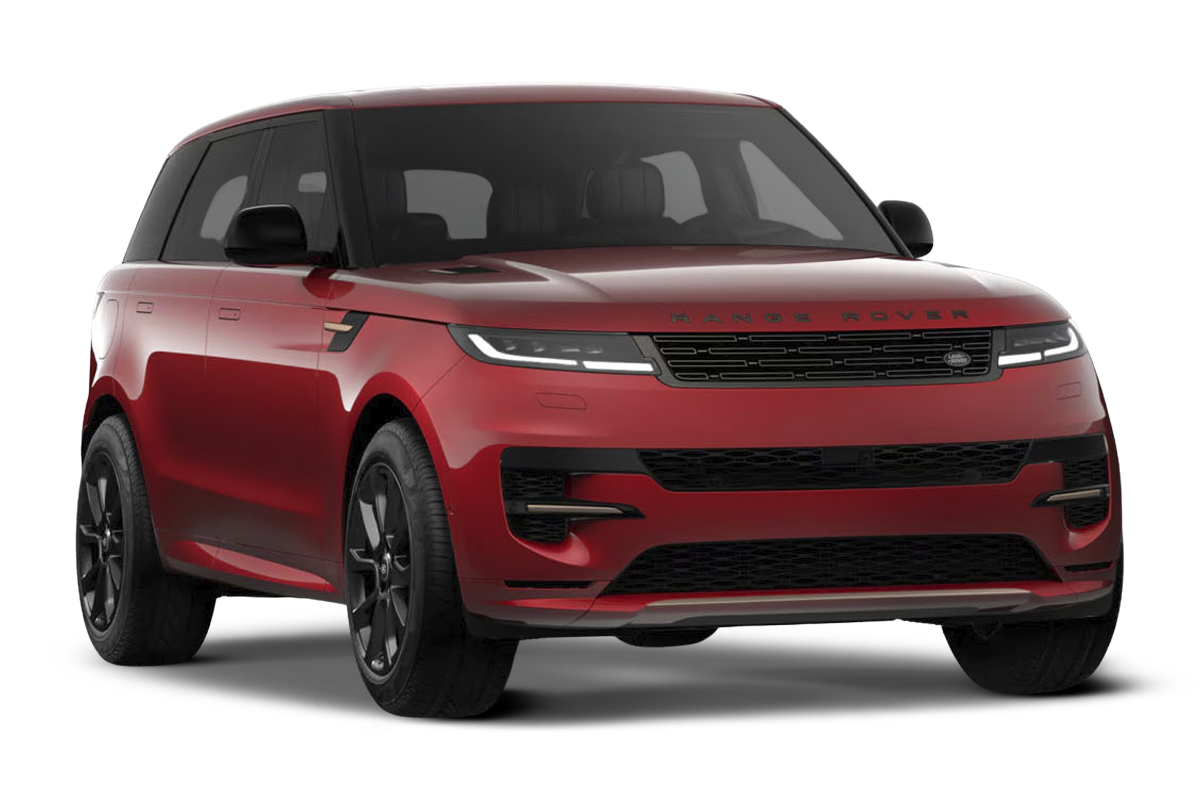
If you’re a company car driver with an eye on BIK tax efficiency, there are two plug-in hybrids (PHEVs) – the P460e and a P550e. Both come with the 3.0-litre six-cylinder petrol engine, plus an electric motor and 31.8kWh (usable capacity) battery.
When we tested a P460e it logged 0-60mph in 5.3sec, while a BMW X5 xDrive50e managed that run in 4.6sec – and felt a lot sprightlier off the line. But with 454bhp (combined power) the P460e still feels brisk enough for us to choose it over the more powerful, but pricier, P550e.
Both PHEVs officially do up to 72 miles on battery power alone, which is an excellent range and farther than the X5 xDrive50e can claim. And they have a maximum charging speed of 50kW (much quicker than the X5 PHEV) for 0-80% charge in 40 minutes; 0-100% takes five hours from a 7kW home EV charger.
The Range Rover Sport PHEVs pull up to 3,000kg, which is an impressive towing weight for a plug-in hybrid, while the petrols and diesels all pull up to 3500kg.
Is it agile and is the ride comfortable?
Generally, the Sport’s ride is impressive. The air suspension is a little firmer than the full-size Range Rover’s, so you’re more aware of any real humdinger potholes, but it’s still more supple than a BMW X5. And compared with the bigger Range Rover, the Sport’s tighter body control means it settles sooner after a bump, and doesn’t sway or wallow around as much on cambered roads.
Avoid the expensive Stormer handling pack, though. It features a more aggressive set-up (called Dynamic Air Suspension) that makes the ride unnecessarily abrupt at times. And, if you can, avoid the biggest wheel diameters, too. Although the Sport still rides well on 22in or even 23in alloy wheels, as with any car, smaller wheels will generally improve ride quality.
The air suspension has four ride-height settings. Lowering the car fully makes getting in and out easier, and allows you to fit into more multi-story car parks. If you raise the suspension all the way up, the Sport will tackle seriously lumpy terrain. A barrage of tech also bolsters its mud-plugging credentials, including clever four-wheel drive, adaptive Off-Road Cruise Control, Hill Descent Control and Wade Mode. The Sport genuinely will travel much farther into the wilderness than most of its luxury SUV rivals.
Standard four-wheel drive also helps with traction on slippery roads, and the Sport feels more stable and agile than its full-size Range Rover brother. But despite its name, we’d stop short of calling it truly sporty. A BMW X5 or Porsche Cayenne offers more grip and tighter body control, and they shrink around you when you start to pick up the pace. By contrast, the Sport feels heavier, more ponderous along a snaking road, and its steering, while accurate, doesn’t offer a huge amount of feedback.
While that’s all true if you’re pushing hard, driven at a steady pace the Sport is a dead-easy car to handle. And, around town, the rear-wheel steering (standard on the P635 and P550e) makes this big car feel remarkably agile in tight spots.
The Range Rover Sport SV is way more spry. It comes with 6D Dynamic air suspension, which is lower and firmer. That all but eliminates body lean in bends, and pitch and dive when accelerating or braking. If you add the carbon-ceramic brakes it stops well, too. However, while it’s the best-handling Range Rover Sport by far, the Aston Martin DBX and Lamborghini Urus are more engaging sports SUVs.
Is it quiet and how easy is it to drive smoothly?
There’s a little wind noise on motorways but it’s limited to a gentle flutter around the door mirrors and front pillars. And there’s very little road noise, even with bigger wheels and tyres fitted. On versions with an upgraded sound system, you even get active noise-cancelling, which uses microphones to monitor unwanted noise, then cancel it out with ‘white noise’ played through the speakers. It all conspires to make the Range Rover Sport one of the quietest cars in its class.
That also applies to its engines. The diesels are delightfully hushed and remain super-smooth even when pushed hard, but the PHEVs are next-level quiet. In electric mode, with the petrol engine switched off, they’re almost completely silent. The SV, conversely, is all about producing noise: its V8 provides a properly entertaining, muscle-car soundtrack.
The eight-speed automatic gearbox is also superb in the petrol and diesel models, delivering serene gear changes. It’s slightly less successful with the PHEVs, though, but only because there’s a delay when you put your foot down, followed by a sudden rush of pace once the combined power sources come alive.
It’s also worth mentioning that when we tested the P460e, the braking felt a little odd: after releasing the foot brake, there was a second's delay before the regenerative braking disengaged completely. But otherwise, and as with all Range Rover Sports, the pedal is consistently weighted so when you apply the brakes they stop you smoothly.
"Using Adaptive Off-Road Cruise Control, I found negotiating challenging terrain was straightforward and safe, while the four-wheel steering was helpful when manoeuvring this huge SUV on or off road." – Steve Huntingford, Editor

Interior
The interior layout, fit and finish
Strengths
- +Great driving position
- +Responsive infotainment software
- +Build quality feels really solid in the main
Weaknesses
- -Very few physical buttons
What does the interior look like and is it well made?
If we’re honest, it’s a shame Range Rover ditched almost all the physical buttons with the Sport. That doesn’t aid usability (more on that later) but it does give the interior a modern, clean, and minimalist look.
In terms of quality, the Sport’s interior impresses. It feels sturdy, and has high-end feel throughout to rival the X5. Most of the materials match the more expensive Range Rover, which is great given the jump in price between the two models. And we love the attention to detail, from the stitching on the leather upholstery to the numerous gloss black, wood and chrome inlays.
Entry-level S trim comes with leather seats. SE trim has softer Windsor leather, and Autobiography versions have an even higher-grade, ‘semi-Aniline’ leather. Other nice touches, depending on the trim, include a suede headlining, illuminated aluminium door tread plates, aluminium pedals, ambient interior lighting, and illuminated seatbelt buckles, which are dead easy to spot at night.
There are some minor let-downs, such as the action of the gear selector. As you rock it between drive and reverse the mechanism’s lightweight action doesn’t quite match the car’s premium billing; the foam material used to cover the gear selector feels a little low-rent, too. So while the quality is definitely good, it’s elements like those that separate the Sport from higher-end – and, it must be said, more expensive – rivals, like the Bentley Bentayga.
Is the driving position comfortable and is it easy to see out?
The Range Rover Sport rides 20mm lower than a full-size Range Rover but, even so, the driving position is still loftier than the majority of cars on the road. What’s more, there’s a logical relationship between the placement of the steering wheel, seat and pedals, so you feel at ease behind the wheel.
The steering wheel adjusts electrically for rake and reach, and the front seats, which are heated, have 12-way powered adjustment on S trim, and 20-way adjustment if you go for the SE. The front seats in Autobiography models have 22-way electric adjustment, ventilation and a massage function.
Being picky, the basic contours of the front-seat cushions didn’t immediately feel as comfortable to some of our testers as the excellent seats in the Volvo XC90, but that’s as much about body shape as anything else. And with a bit of tweaking, we all decided that the Range Rover Sport’s front seats are agreeably comfortable on long journeys.
The Range Rover Sport SV’s ‘Body and Soul’ front seats are more heavily bolstered and come with built-in vibrating transducers, so you can feel music from the stereo through your body. Land Rover says they also help with well-being, reducing stress and increasing alertness behind the wheel. That all sounds jolly good but, in our opinion, they could do with a little more lateral support to hold you upright during hard cornering.
The high and commanding driving position is matched by good visibility. As long as you don't drop the driver's seat too low you can see down to the bonnet to the nose of the car, which is helpful in tight parking spots. The door mirrors are big, and the rear windows offer a good view around the rear – although not quite as good as the full-size Range Rover or the XC90, with their taller rear glass areas.
All Sports come with all-round parking sensors and a 360-degree camera. Autobiography trim adds with a rear-view mirror that, at the flick of a switch, becomes a digital screen showing a camera image from the back of the car. It lets you see what’s behind even if the boot is loaded to the roof; it’s optional lower down the range.
S trim is fitted with regular LED headlights and automatic main beams. SE trim comes with adaptive LED headlights, which can stay on main beams without dazzling other road users. There’s an improved version of the adaptive lights, with more LED pixels for greater light control, available as an option.
Are the dashboard and infotainment system easy to use?
We touched upon the lack of physical buttons earlier, and having so few of them does make the Range Rover Sport trickier to operate while you’re driving than, say, the Land Rover Defender, which has big, chunky, climate-control knobs and buttons. The only physical buttons in the Sport are the window switches and the steering wheel buttons, which, among other things, configure the 13.7in digital driver's display behind the steering wheel. The screen is crisp, with clear graphics, and a useful level of customisation to choose what you want it to show.
Next to the driver’s display, in the middle of the dashboard, is the 13.1in infotainment touchscreen. Most of the car’s features are operated through this. We’ve bemoaned already the lack of physical buttons in the Sport – we much prefer the BMW X5’s rotary controller that works its infotainment system – but, on the plus side, the Sport’s touchscreen is positioned within easy reach of the driver and responds swiftly to inputs. Its resolution is also impressive, and while there are a few sub-menus to dig through, it’s not a tricky set-up to navigate once you know your way around. An optional Rear Seat Entertainment pack adds similarly crisp, 11.4in screens to the back of the front seats.
Wireless Android Auto and Apple CarPlay are standard, so you can use your phone’s apps rather than the Land Rover system if you prefer. You also get voice activation and a wireless charging pad for your phone, and all Sports come with a Meridian stereo. The basic one has 400-watts and 15 speakers, while Autobiography trim ups that to a 3D surround-sound system with 800-watts and 19 speakers. If that's not enough to bring high-fidelity happiness, there's a mega-pricey upgrade that nets you 1,430-watts and, wait for it…29 speakers.
"In the main, I find it hard to fault the Range Rover Sport's interior – it looks and feels as impressive as you'd expect in a luxury SUV, bar one or two minor details." – Steve Huntingford, Editor

Passenger & boot space
How it copes with people and clutter
Strengths
- +Spacious for passengers
- +Electrically reclining rear seats aid comfort
- +Useful boot capacity
Weaknesses
- -Some rivals have even bigger boots
- -No sliding rear seat limits versatility
How much space does it have for people?
As you might expect, given its size, the Range Rover Sport provides generous space for long-legged people up front, and there’s plenty of elbow room as well. There's fractionally less headroom than there is in a full-size Range Rover, but you’d have to be sporting a beehive hairdo to notice.
Storage space is good. There are two cupholders in the centre console, two gloveboxes, and a big cubby under the front centre armrest (if you add the Comfort Pack that cubby is refrigerated). The only minor gripe is the door pockets are quite slim.
Rear leg room is as good as it is in the bigger Range Rover, and fine for at least four tall adults, but the BMW X7 and Volvo XC90 offer even more space to stretch your legs. The Sport’s slightly sloping roofline means rear head room is a wee bit less than some of its rivals, too, but it's far from stingy: six-footers are able to sit up straight with room to spare underneath the panoramic roof. If your passengers fancy a snooze, the back seats recline electrically for added comfort.
While the previous-generation Sport was available with seven seats, the latest model is a five-seater only. If you need space for more than five on board, take a look at the Range Rover LWB, or see our guide to the best seven-seaters.
How much room does it have for luggage?
The boot is big enough for even the most profligate shopping trip, with no reduction in space if you opt for a PHEV model. We managed to fit in nine carry-on suitcases below the parcel shelf, matching the number we fitted into the BMW X5 PHEV and Lexus RX. Need even more space? Then check out the XC90; we crammed 10 carry-on cases in the back of that.
Handily, you can change the height of the car's air suspension using two buttons at the side of the boot, so if you have a hefty parcel, you can drop the ride height to make life easier. A powered tailgate is standard, and you can flip up part of the boot floor: this creates a picnic seat when the tailgate’s open, or a divider to stop items sliding around while you’re driving.
The powered rear seats split and fold in a 60/40 configuration, with a ski hatch in the middle for long, thin loads. The Sport's rear seats don't slide back and forth to make the boot bigger, though; that’s a feature that rivals like the XC90 offer.
"The Range Rover Sport's electrically reclining rear seats make the life feel even more luxurious for those in the back, but they do feel frustratingly slow to power down when you want the rear seats folded flat for extra boot space" – Steve Huntingford, Editor

Buying & owning
Everyday costs, plus how reliable and safe it is
Strengths
- +Lots of standard equipment
- +Strong resale values
- +PHEVs’ excellent electric range
Weaknesses
- -Relatively pricey cash buy
- -Thirsty petrol engines
- -Lexus offers a longer warranty
How much does it cost and what equipment do you get?
There’s no getting around it: the Range Rover Sport is an expensive car, costing a good deal more than some luxury SUVs, like the Audi Q7 and Volvo XC90. But it’s only a few thousand more than the BMW X5, and cheaper than the Porsche Cayenne. It also costs much less than the full-fat Range Rover. It should its value just as well as its big brother, too, and in terms of resale values, it outperforms most of the cars we’ve just mentioned. So as a long-term buy, it's a pretty good bet.
Both diesels will average around 30mpg, which isn’t bad going for a big, heavy SUV, and it’s one of the reasons our favourite engine is the D300 – especially for private buyers. The plug-in hybrid (PHEV) P460e is the best option for company car drivers, because the excellent battery range drops it into a low BIK tax bracket – lower than the X5 and the Lexus RX 450h+. The only thing to bear in mind is fuel economy when the PHEV’s battery isn’t charged: we averaged 23.6mpg in the P460e using mainly the petrol engine. If you get that much from the mighty SV you’ll be doing well, though, and it’ll drink like a fish if you make use of all of its performance.
What equipment do you get? Loads, which is where the Sports recuperates good will considering its list price. For starters, buyers can have a half-day training session covering the car's off-road capabilities, but the what else you get depends on which of the five main trim levels you choose, which are S, SE, Dynamic SE, Autobiography and SV.
Entry-level S is a great pick if you're happy with the D250 diesel. It comes with 20in wheels, keyless entry, two-zone climate control, leather interior, adaptive cruise control, powered tailgate, panoramic roof, power-folding door mirrors, keyless entry, heated steering wheel, heated windscreen. And that’s on top of the bits we’ve already covered, such as air suspension, LED headlights, 12-way electrically adjustable and heated front seats, all-round parking sensors, surround-view camera, plus all the infotainment gubbins. It’s just a shame it’s not available with the more powerful engines, including our favourite D300.
That’s why the SE is our pick: you can have it with the fabulous D300 diesel. And you get bigger 21in wheels, 20-way electrically operated front seats and heated rear seats. Dynamic SE just adds styling touches to the SE package, such as dark grey wheels, black brake calipers, darker interior trim finishers and a black roof lining.
Above that, Autobiography comes with a whole host more goodies, such as 22in wheels, heated and ventilated rear seats, four-zone climate control, soft-close doors, plus the 22-way electrically operated massaging front seats and the upgraded sound system we mentioned earlier – but it is eye-wateringly expensive.
The flagship and fast SV is even more expensive (but still considerably cheaper than a Lamborghini Urus S) and comes with 23in wheels, more aggressive exterior styling, bespoke suspension, and Body and Soul sports front seats. Carbon-ceramic brakes and carbon-fibre wheels are available as options.
Is it reliable, and how long is the warranty?
It’s no secret that Land Rover has a generally woeful reliability record. And it was one of the worst-performing manufacturers, yet again, in our 2026 What Car? Reliability Survey. It ended up coming 26th out of 30 car makers included – way below the likes of BMW and Lexus.
But that’s the brand as a whole, and the latest Range Rover Sport did rather better. In fact, it came out as the second most-reliable luxury car in our survey.
If something does go wrong you’re covered by a three-year, unlimited-mileage warranty, which can be extended at a cost. That’s par for the course and doesn’t come close to the 10-year/ 100,000-mile warranty you get with the Lexus RX – if you service it as required at a Toyota service centre.
How safe is it, and is it easy to steal?
In 2022, the Range Rover Sport was awarded the full five stars for overall safety by Euro NCAP. It’s very safe, then, but it’s worth noting that the Lexus RX offers slightly better crash protection to adults in the front seats. We should also point out that while the X5 has a five-star overall rating, too, it was tested in 2018 when the tests were less stringent. The Cayenne and XC90 were tested so long ago that their NCAP ratings have since expired.
Standard safety equipment with the Sport is high, and includes automatic emergency braking (AEB), lane-departure warning, rear cross-traffic alert, Hill Descent Control, blind spot monitoring and rear-seat Isofix mounts.
And versions come with a standard alarm, immobiliser and tracker (with a 12-month subscription) as standard, but we’d suggest investing in a faraday pouch for the remote fob – there have been lots of cases of Land Rovers (and other keyless-entry cars) being stolen from driveways by thieves picking up the keyless signal from a fob placed near the front door.
"I’ve had a Range Rover Sport D350 on long-term test, which averaged just over 30mpg. In some respects that’s nothing to brag about, but for a 2.5-tonne SUV, it’s actually not bad." – Steve Huntingford, Editor
Buy it if...
– You don’t mind diesel: the D300 is punchy, smooth and efficient
– You want an uber-commanding driving position
– You need an SUV that can genuinely go off-road
Don't it if...
– You need seven seats
– You want luxury SUV motoring on a budget
– You need the roomiest luxury SUV available
For all the latest reviews, advice and new car deals, sign up to the What Car? newsletter here

FAQs
The Range Rover Sport's starting price is just over £76,000, which is cheaper than a full-size Range Rover but more than a BMW X5 or Porsche Cayenne. The flagship SV is vastly more expensive, costing the same as a Lamborghini Urus S. For the latest prices see our Land Rover deals page.
The SV (which stands for Special Vehicle) is the fastest and most expensive version of the Range Rover Sport. It has a bespoke suspension set-up and a lower ride height, plus a 626bhp 4.4-litre V8 petrol engine, the P635. Land Rover says the SV can accelerate from 0-62mph in 3.9sec and, where it's safe and legal to do so, on to a top speed of 180mph.
According to Land Rover, the Range Rover Sport can wade in water up to 850mm deep and is available with a Wade Mode and Wade Sensing systems designed to make progress easier and safer. To go deeper, you'll need a Land Rover Defender on air suspension, a full-size Range Rover or a Land Rover Discovery.
No. Although Sport is in its name, most versions of the Range Rover Sport are competent on the road rather than sports-car like. That said, the performance-focused SV variant has very impressive handling, control and acceleration for a big and heavy luxury SUV.
| RRP price range | £76,350 - £165,045 |
|---|---|
| Number of trims (see all) | 8 |
| Number of engines (see all) | 3 |
| Available fuel types (which is best for you?) | diesel, petrol plug-in hybrid, petrol |
| MPG range across all versions | 0 - 390 |
| Available doors options | 5 |
| Company car tax at 20% (min/max) | £721 / £837 |
| Company car tax at 40% (min/max) | £1,442 / £1,675 |

