Best executive cars 2026 – top saloons tested and rated, plus the one to avoid
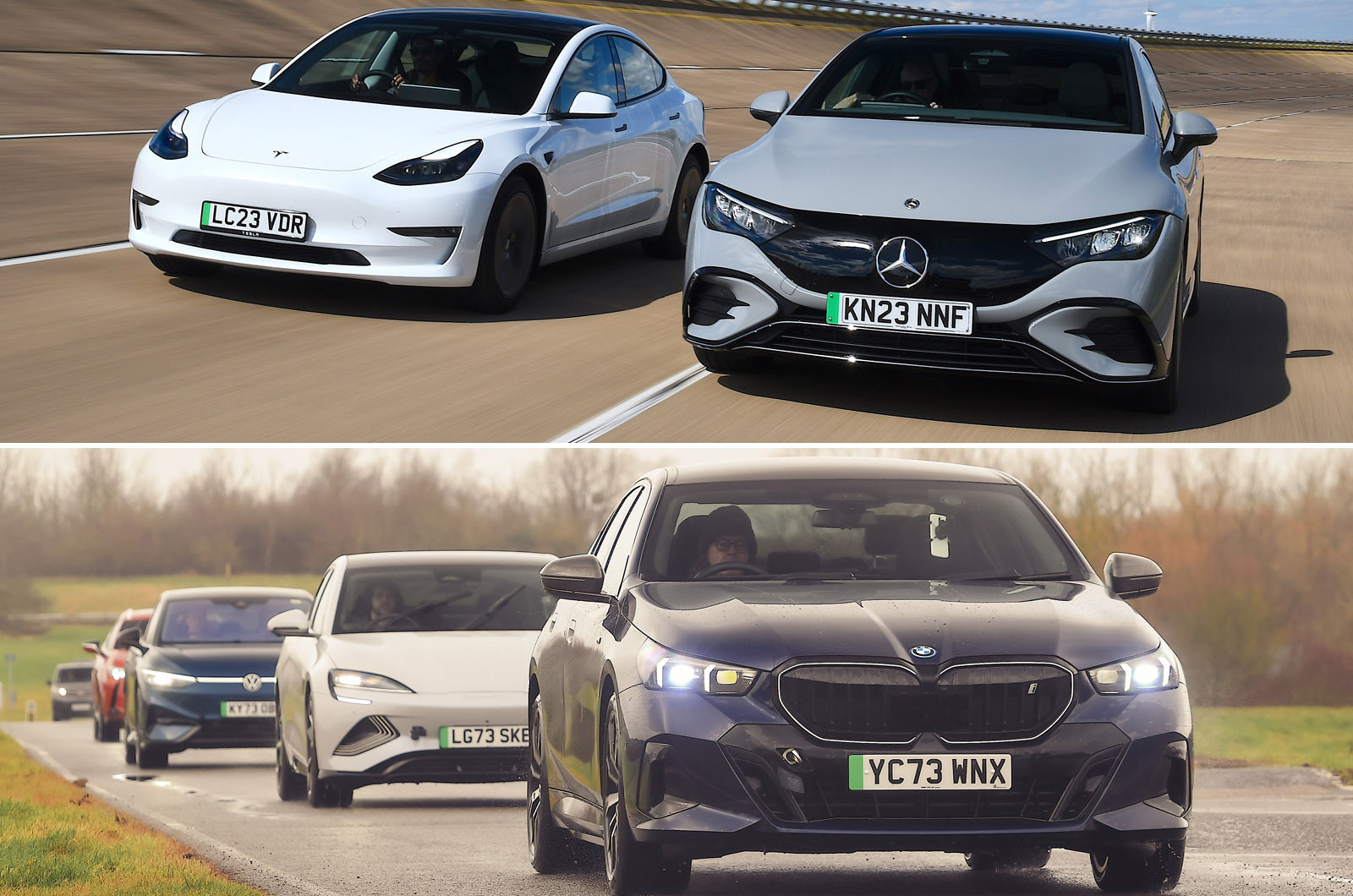
Life in the executive car park has never looked more diverse. Gone are the days when most executive saloons only came from three brands; instead, these days, there are far more options at far more price points. New brands like BYD and MG are mixing with old favourites such as Audi, BMW and Mercedes, and all the while Tesla has been muscling in on the act too.
It's not only the badges which have changed in your corporate car park, but also what you choose to power your executive car. Diesel is no longer the order of the day, and as well as petrol power, there are also a growing number of plug-in hybrid and electric options. And for savvy company car drivers looking to take advantage of substantial Benefit-in-Kind tax savings, the latter are well worth looking at.
Our expert team of road testers have spent hundreds of hours behind the wheel of every new executive car, assessing them both on public roads, and back-to-back against key rivals at our private test track. The result of all that testing is the list you see here, where we've ranked the best executive cars.
As well as showing you how to take advantage of the best PCP and leasing deals, we've also named the executive model which we think you should avoid. And if you're interested in learning more about any of the cars talked about here, just follow the links. Plus, you can learn more about how we rate and test cars in our dedicated feature.
Best executive cars to buy now – and how to get the best deal
| Make and model | List price from | Rating | PCP deals | Leasing deals |
| Tesla Model 3 | £37,990 | 5 | Best PCP deals | Best leasing deals |
| Mercedes CLA | £38,715 | 4 | Best PCP deals | Best nearly new deals |
| Mercedes E-Class | £61,545 | 4 | Best PCP deals | Best nearly new deals |
| MG IM5 | £39,450 | 4 | Best PCP deals | Best leasing deals |
| BMW 3 Series | £41,925 | 4 | Best PCP deals | Best leasing deals |
The best executive cars for you
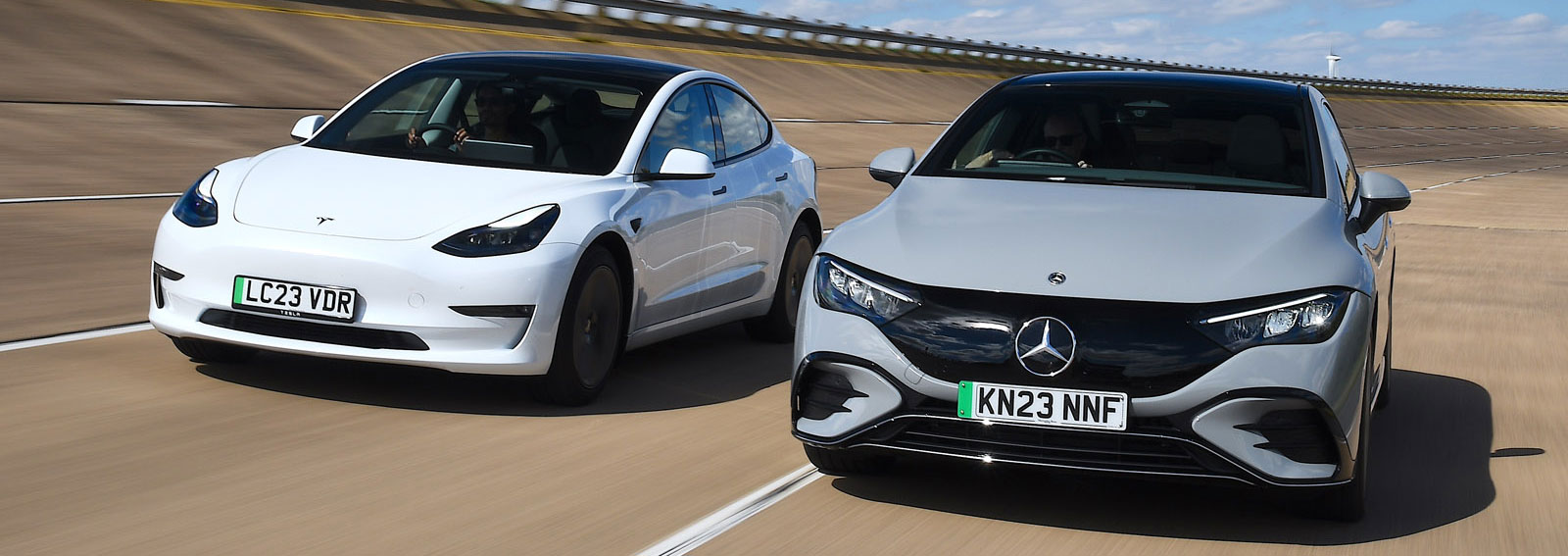
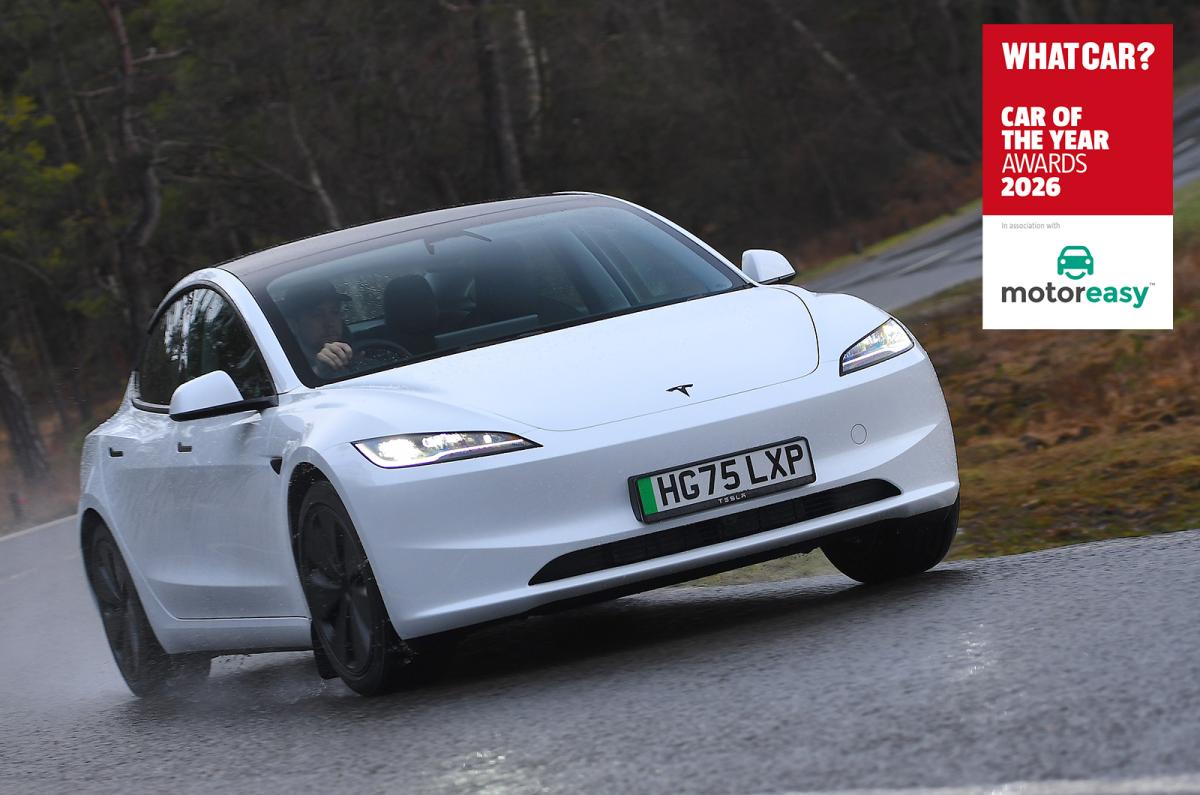
The Tesla Model 3 is perhaps the go-to choice for many drivers in this market, and it's easy to see why. As well as being good to drive and reasonably practical, buying a Model 3 gives you preferential access – and cheaper rates – at Tesla's Supercharger charging stations, which are both fast and reliable.
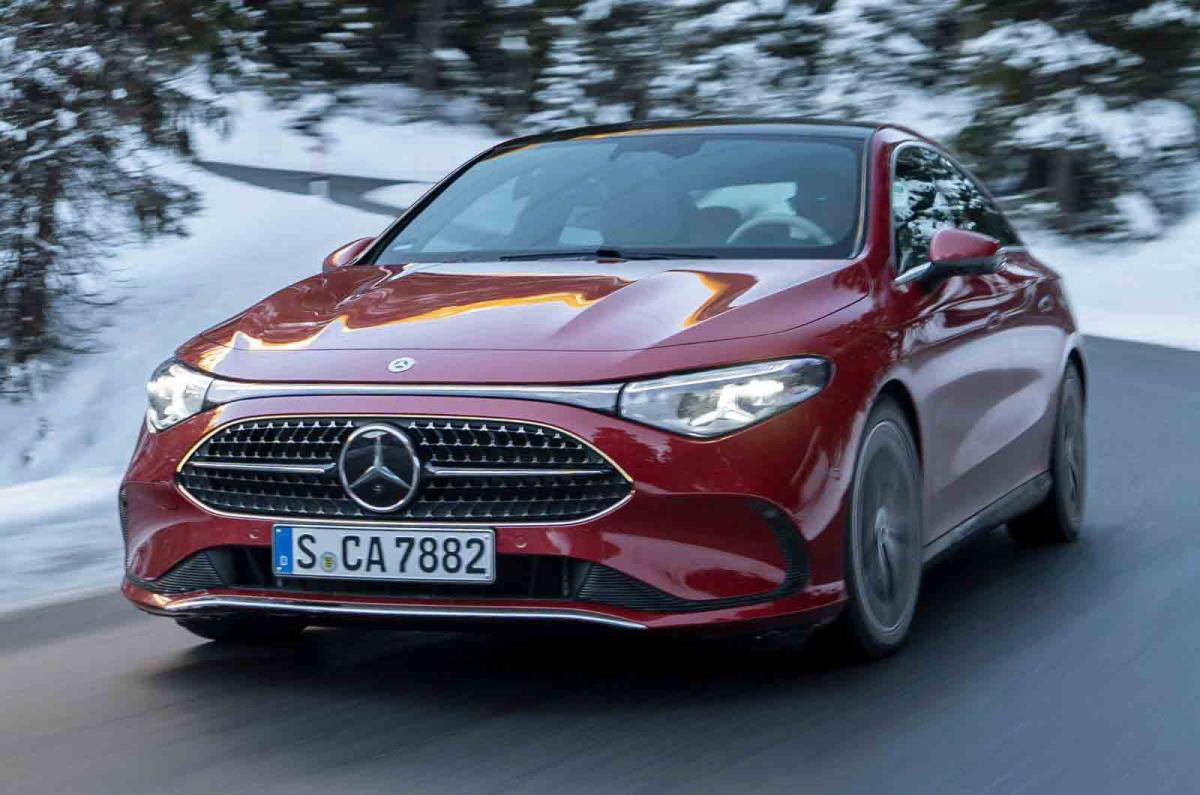
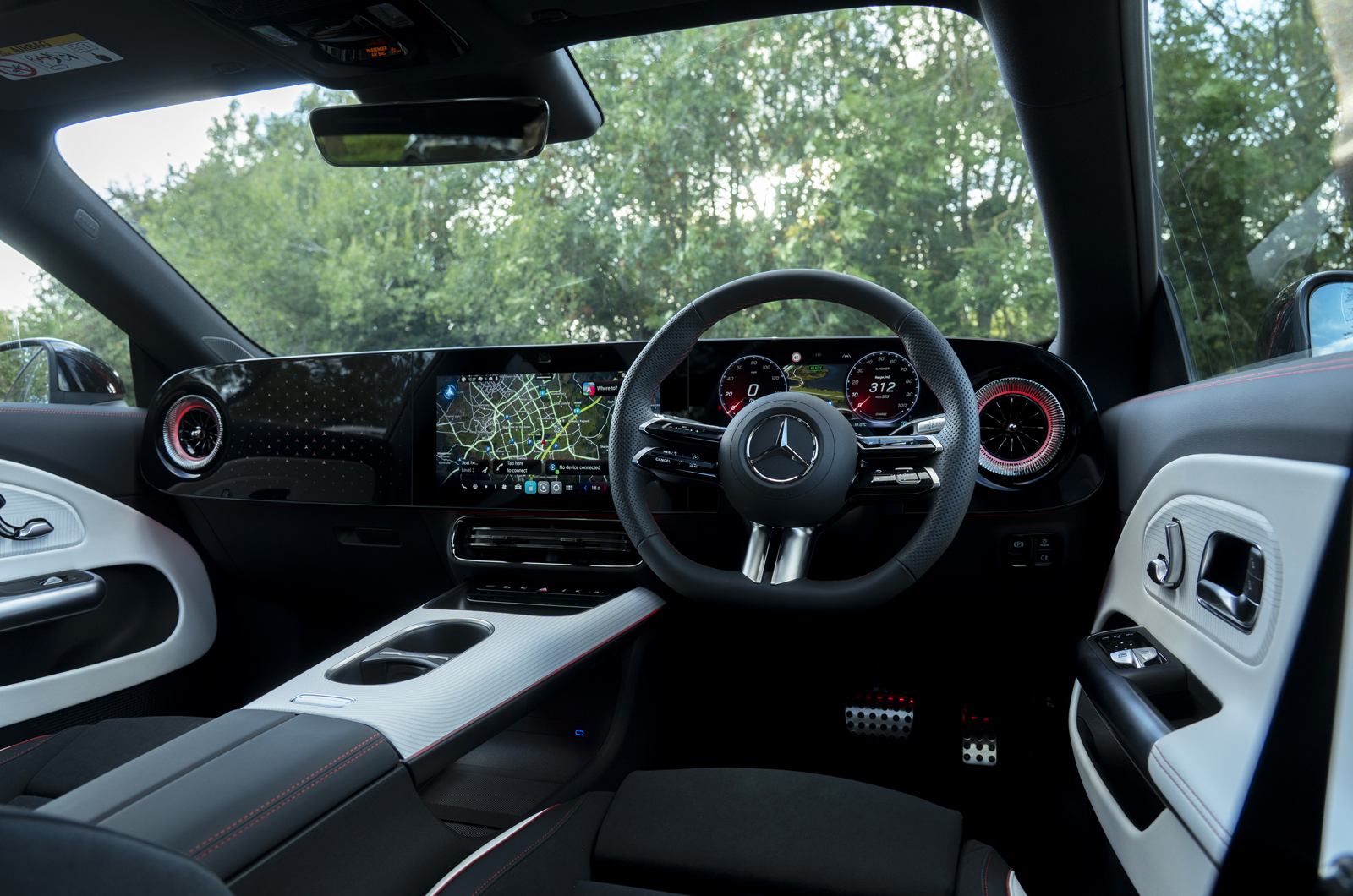
If you want something a bit more premium, then the latest Mercedes CLA is well worth considering. Offering a long range and excellent mile-munching comfort, it's a stylish choice that's sure to turn heads in the office car park.
Or for those who aren't yet ready to go electric, there's the Mercedes E-Class. This comfortable and luxurious saloon is the traditional choice here, but even so, it's available with plug-in hybrid power, so you can still take advantage of tax savings compared with cars powered exclusively by petrol or diesel.
The 2026 What Car? Reliability Survey is live, tell us about your car now


Strengths
- Fast and reliable charging via Tesla's Supercharger network
- Long range between charges
- Surprisingly practical
Weaknesses
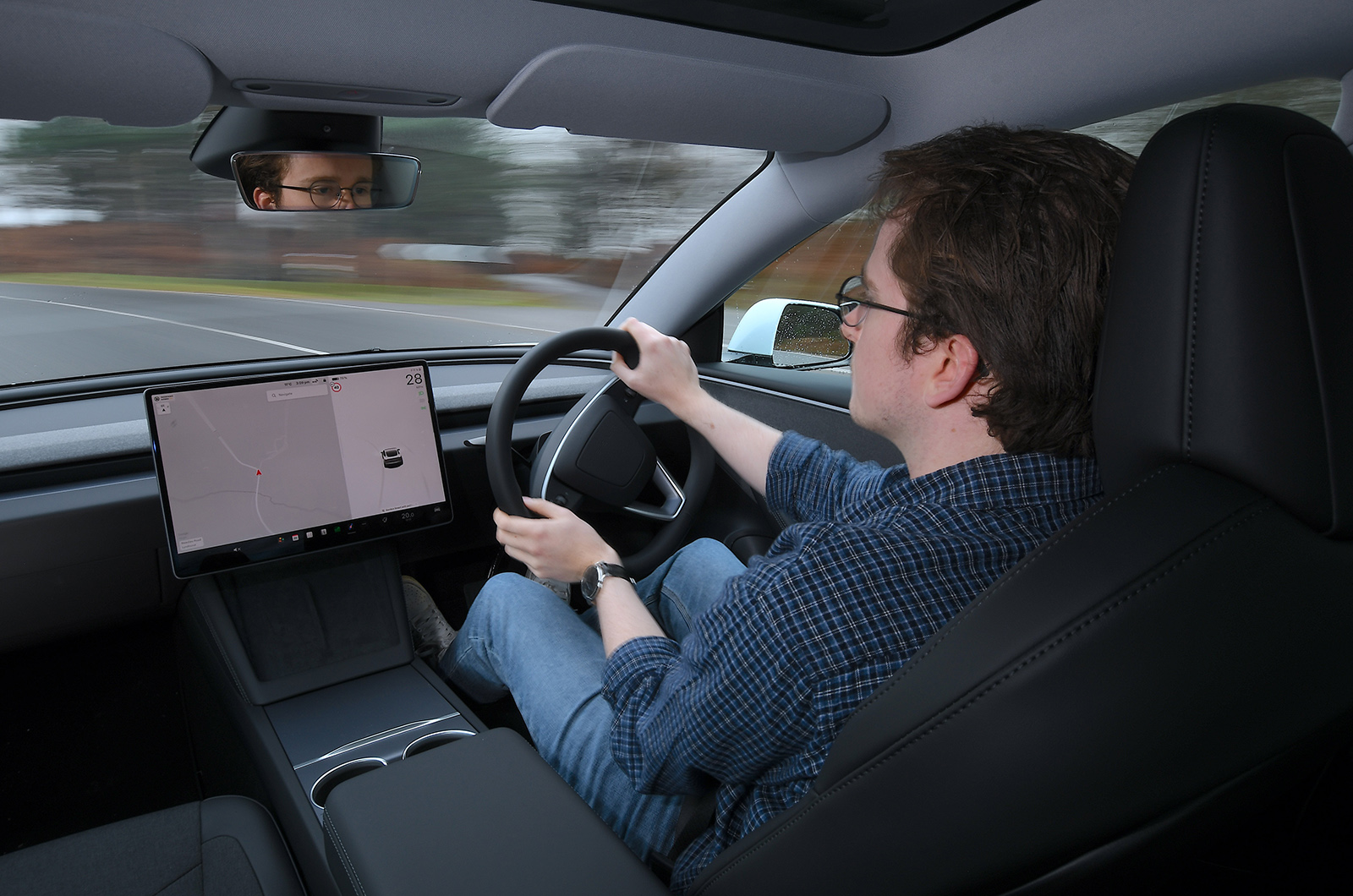
- Fiddly interior controls
- Handling not as entertaining as the best petrol-powered rivals
- Windscreen pillars can hamper visibility
The Tesla Model 3 is a recurring member of the best-selling cars club, and its popularity is well earned. Indeed, if you're in the market for a new executive car and can charge up at home or at work, we'd suggest taking a good look at one and seeing if it can work for you.
Key to the appeal of the Model 3 is that it's not just a great electric car – it's a great all-rounder which just happens to be electric. Even in Standard Range form, the Model 3 is officially capable of travelling up to 318 miles between charges, while the Long Range model which we recommend ups that figure to 436 miles – more than enough for the needs of most drivers.
That range, as well as the Tesla's 0% C02 emissions, allows the car to sit in the lowest Benefit-in-Kind tax rating. You'll pay just 3% to drive one as a company car in the 2025/26 tax year, rising to 4% in 2026/27, and 5% in 2027/28.
The Model 3 is also a spacious choice, and a couple of taller rear passengers won't feel like they're hemmed in. Indeed, the Tesla's tall rear windows and broad glass roof make it feel airier than the rival BMW i4.
That the Model 3 also undercuts several key rivals as a cash purchase only enhances its appeal, and even in Long Range form, it's still seriously well priced by the standards of electric executive cars. And don't forget that buying one alos gives you preferrential access to the Tesla Supercharger network, which is expanding all the time.
Every Model 3 is covered by a four-year, 60,000-mile warranty on most components, while the battery and drive unit are covered for up to eigth years or up to 120,000 miles, depending on the version you choose. In the 2025 What Car? Reliabilty Survey, Tesla finished in a respectable seventh place out of 30 car makers, while the Model 3 itself finished in eighth position out of 19 electric cars.
"The latest Model 3 has seen a real uptick in interior quality. We particularly like the use of fabric on the doors and dashboard." – Will Nightingale, Reviews Editor
Read our in-depth Tesla Model 3 review


What is What Car? best price?
The What Car? best price shows you the cheapest way to buy your new car, whether it's by choosing an in-stock car through our partner Autotrader or placing a factory order.
Available now from: £37,990
RRP from: £37,990
About our price indicator
What Car? indicative Personal lease example (subject to status)
62.5kWh Standard Saloon 4dr Electric Auto RWD (208 ps)
| Expected annual mileage | 5000 |
| Term months | 48 |
| Deposit months | 12 |
| Monthly payment | £338.58 |
| Initial payment | £4,062.96 |
Step-by-step
Leasing works a bit like a long-term rental. You drive it, but you don’t own it.
- Choose your car, pick your terms and apply for lease credit online
- Pay monthly rental payments for your chosen term length
- Drive it, enjoy it, then give it back at the end
What you get
When you lease with Autotrader you get all of this:
- Full manufacturer’s warranty
- Road tax and roadside assistance included
- No admin fees
- Free returns within 30 days*

- Lower total monthly cost than PCP/HP
- No balloon payments
- Road tax included
Strengths
- Long range between charges
- Comfortable ride
- Competitively priced yet well equipped
Weaknesses
- No 400V charging at launch
- Tight rear space
- The top-spec hybrid costs over £50k
Taking on the Tesla Model 3 in its home market was always going to be a difficult task, so the fact that the CLA comes a close second here is a very worthy acheivement. Indeed, in some cases the CLA actually bests its stablemate – in 250+ form, for example, it can travel a little further on a charge, with an official range of 484 miles.
The Tesla fights back by being quicker to 62mph, and having a bit more grip through the corners, but the CLA is remarkably competent. Its ride, although firmer than the Tesla, does a good job of soaking up lumps and bumps, while the accurate and light steering makes placing the Mercedes exactly where you want it a doddle.
The CLA will certainly dazzle you inside, where its duo of large screens give real wow factor. Look a little closer, though, and the material quality and finish isn't quite up to the same standard as in the Tesla.
Every version is well equipped, too, with 18in alloy wheels, faux leather trim and heated front seats, so you don't need to spend money on a higher trim level. While we don't have bespoke reliability data for the latest CLA yet, we can tell you that Mercedes asa bran placed 22nd out of 31 brands in our 2025 Reliability Survey, which put it way below BMW and Tesla.
At least every CLA comes with a three-year, unlimited mileage warranty. That's the minimum we'd expect, and plenty of manufacturers offer more extensive cover.
"I'm pretty tall, and found getting into and out of the CLA's rear seats a bit of an issue, because the door openings are rather narrow. And once you're back there, there isn't an abundance of room for longer trips." – Darren Moss, Deputy Editor
Read our in-depth Mercedes CLA review
What is What Car? best price?
The What Car? best price shows you the cheapest way to buy your new car, whether it's by choosing an in-stock car through our partner Autotrader or placing a factory order.
Available now from: £35,730
RRP from: £38,715
Our pick: 2.0 E300e 25.4kWh AMG Line (Premium) G-Tronic Euro 6 (s/s) 4dr
Strengths
- Spacious and sumptuous interior
- Impressive infotainment system
- PHEV's class-leading electric range
Weaknesses
- No air suspension or rear-wheel steering in UK
- E200 is not particularly sprightly
- Boot space in PHEV is compromised
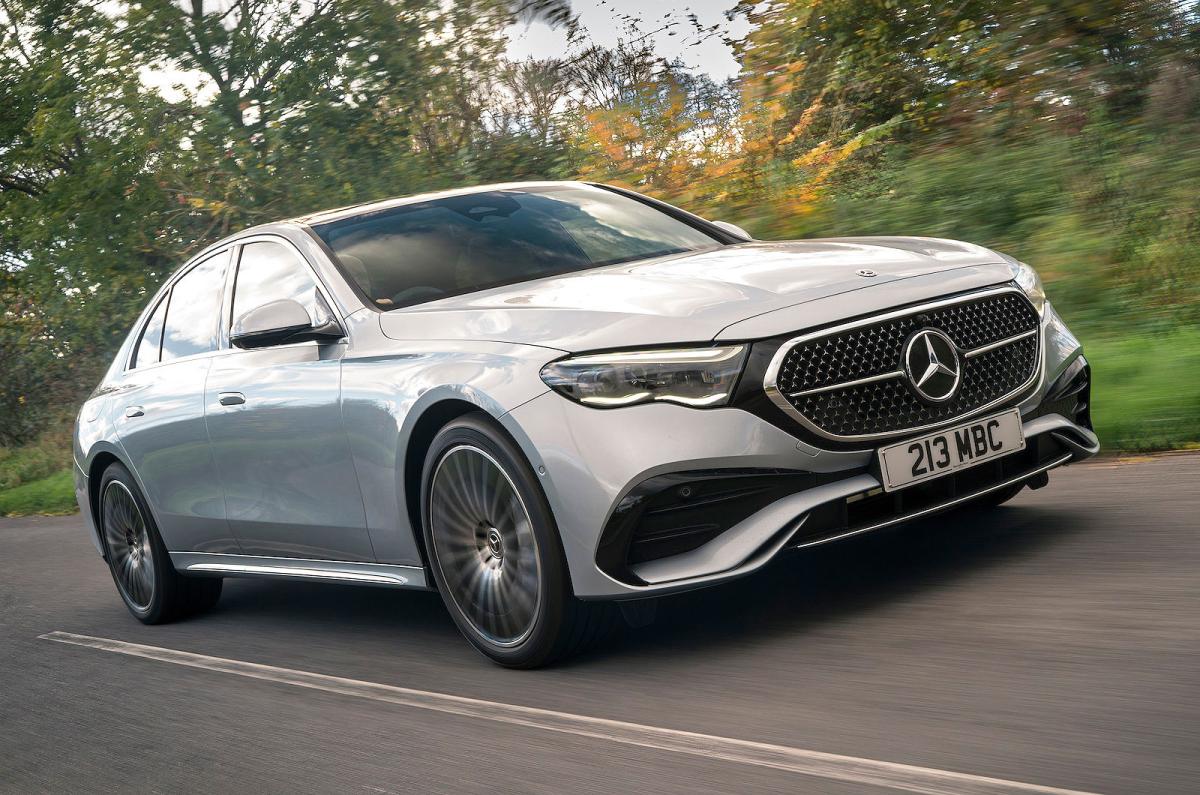
The Mercedes E-Class name is synonymous with the executive car and the traditional company saloon, and this latest version helps to build on that.
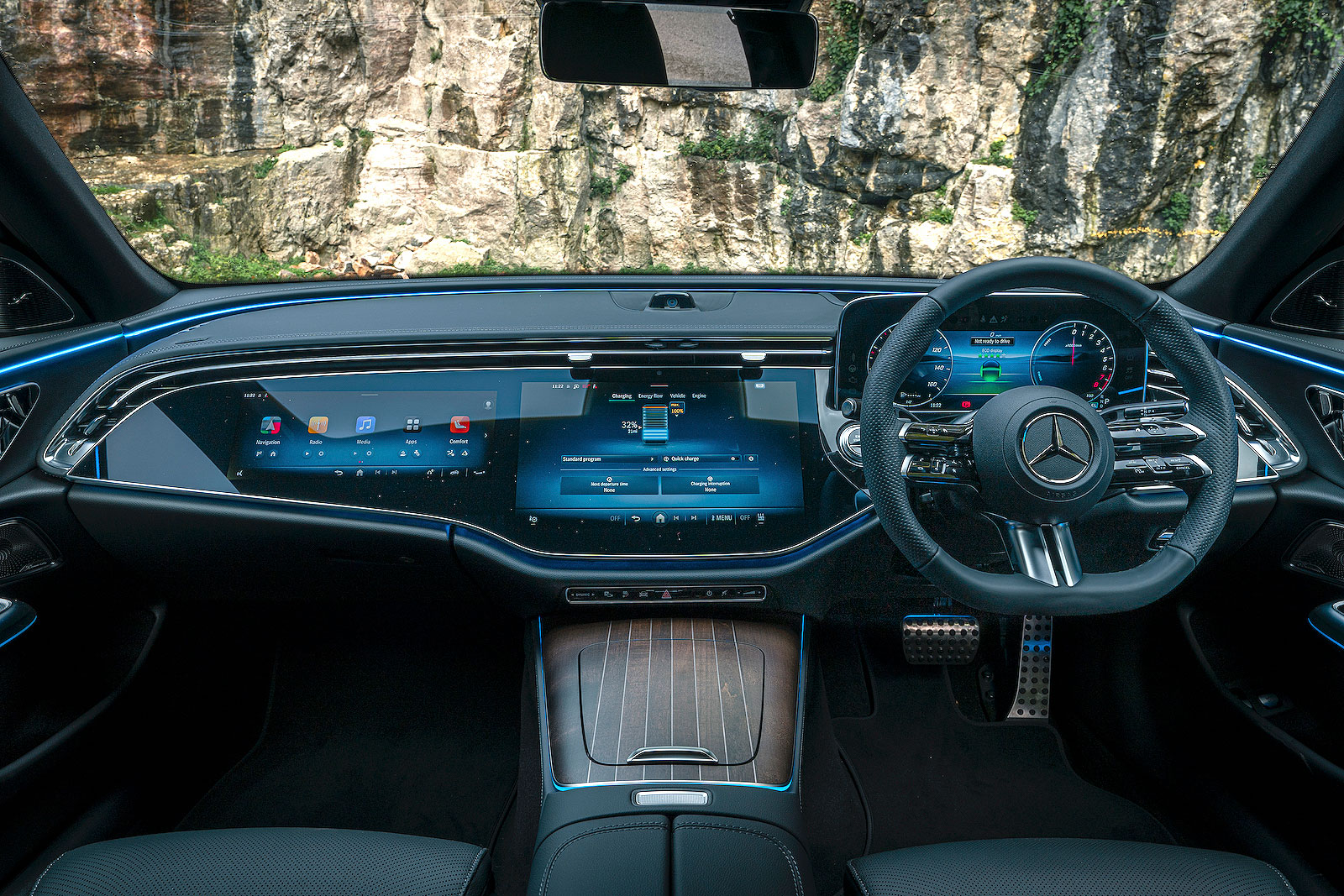
Indeed, the latest E-Class is slightly bigger than its predecessor, so the interior is noticeably more spacious. In the front and back seats there's plenty of head, leg and shoulder room for you to get comfortable. There's also plenty of tech inside to keep your passengers occupied, with all versions offering the ability to download third-party apps such as TikTok or Zoom through the infotainment system.
Despite the Tesla Model 3 being better for Benefit-in-Kind tax ratings, the E-Class – specifically in E300e form – is the best executive car if you're not ready to go electric. Being a plug-in hybrid (PHEV), it comes with a large 24.1kWh battery and an electric motor, which means you can travel a 72 miles officially on electric-only power. That's significantly farther than the PHEV versions of its closest rival, the BMW 5 Series.
There's no getting away from the fact that the E-Class is quite a pricey proposition, even the entry-level E200 version will cost you more to put on your driveway as a cash purchase than the Audi A6 or 5 Series. And if you go for the PHEV version as a private buyer, the cost hikes are considerable.
It's too early to tell whether the latest E-Class will be a reliable proposition,since it was too new to appear in our most recent Reliability Survey. However, Mercedes as a brand didn't do particularly well, coming in 22nd out of 30 car makers.
"High-spec models get an extra display for the front passenger; it can run social media apps and take photos, and has a special filter to make sure it's not visible from the driver’s seat." – Steve Huntingford, Editor
Read our in-depth Mercedes E-Class review
What is What Car? best price?
The What Car? best price shows you the cheapest way to buy your new car, whether it's by choosing an in-stock car through our partner Autotrader or placing a factory order.
Available now from: £53,170
RRP from: £56,670
Our pick: 100kWh Long Range Saloon Auto 5dr
Strengths
- Extremely fast charging and good range
- Smart interior and well equipped
- Comfortable and quiet
Weaknesses
- MG's poor reliability record
- Smaller boot than Model 3
- Visibility isn't great
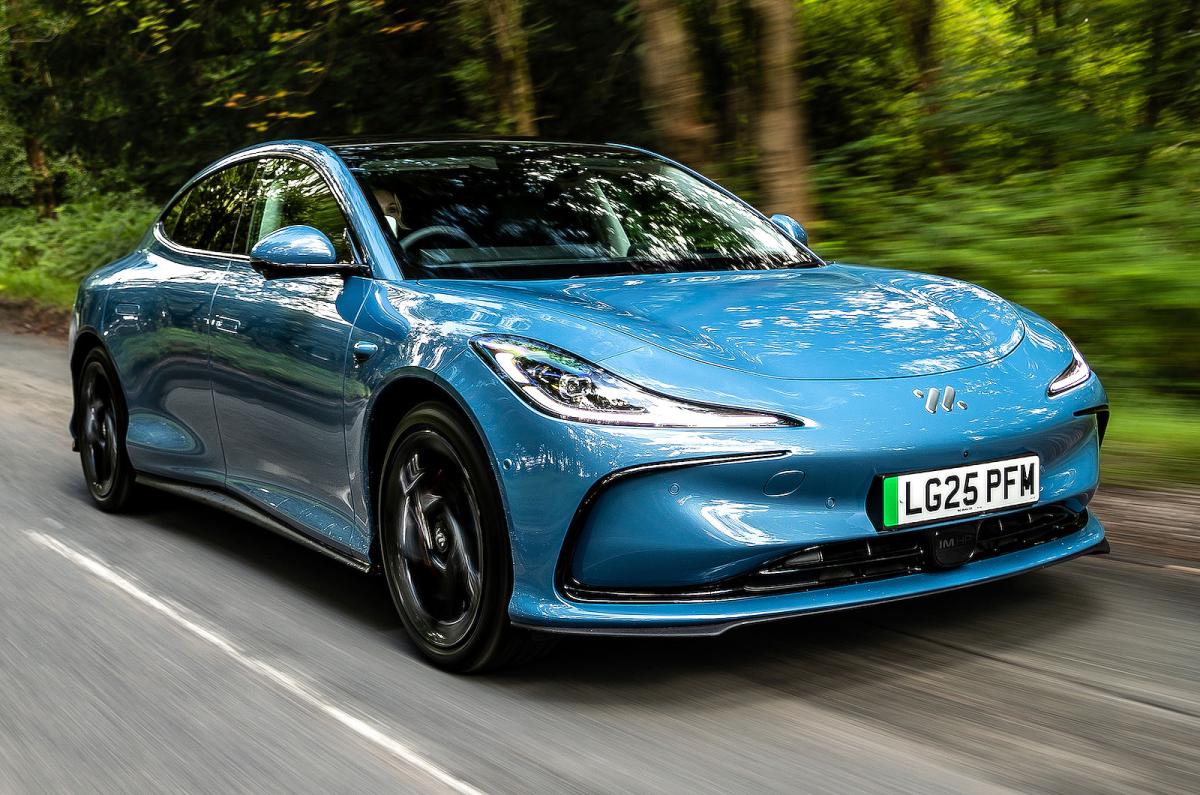
This might not look like a traditional MG, and indeed the IM badge won't be familiar to most buyers, but look beyond that and you'll see a confident executive car which could make you stand out in the corporate car park. Your fleet manager will certainly like it, not only because it's electric, which means it qualifies for the lowest Benefit-in-Kind tax bands, but also because it undercuts key rivals including the BYD Seal and Polestar 2 on price. What about the Model 3? Well, the IM5 costs roughly the same as that car.
It's worth noting that discounts mean that what you see in the sales brochure is rarely the price you'll pay – indeed, at the time of writing discounts of up to £8300 were available. And that's far more palatable for a non-premium car.
The Standard Range, Long Range and Performance names of the IM5 line-up could have been lifted from Tesla's playbook, and they're pretty self-expanatory. We think the Long Range model is the one to go for, this gives you a larger battery than Standard Range models, and allows you to officially travel for up to 441 miles before needing to plug in. That's a few less than the Model 3 can manage, but still enough for the needs of most buyers.
Front space is decent, but room for those in the back isn't as good as it is in the Tesla – and both cars are better than the rather cramped rear seats in the Mercedes CLA.
The IM5 scored a full five stars for safety when it was tested by Euro NCAP in 2025, even though the Model 3 was slightly better at protecting occupants in the event of a side impact. Sadly, MG finished rock bottom as a brand in our 2025 Reliability Survey, but at least you get up to seven years and 80,000 miles of warranty cover.
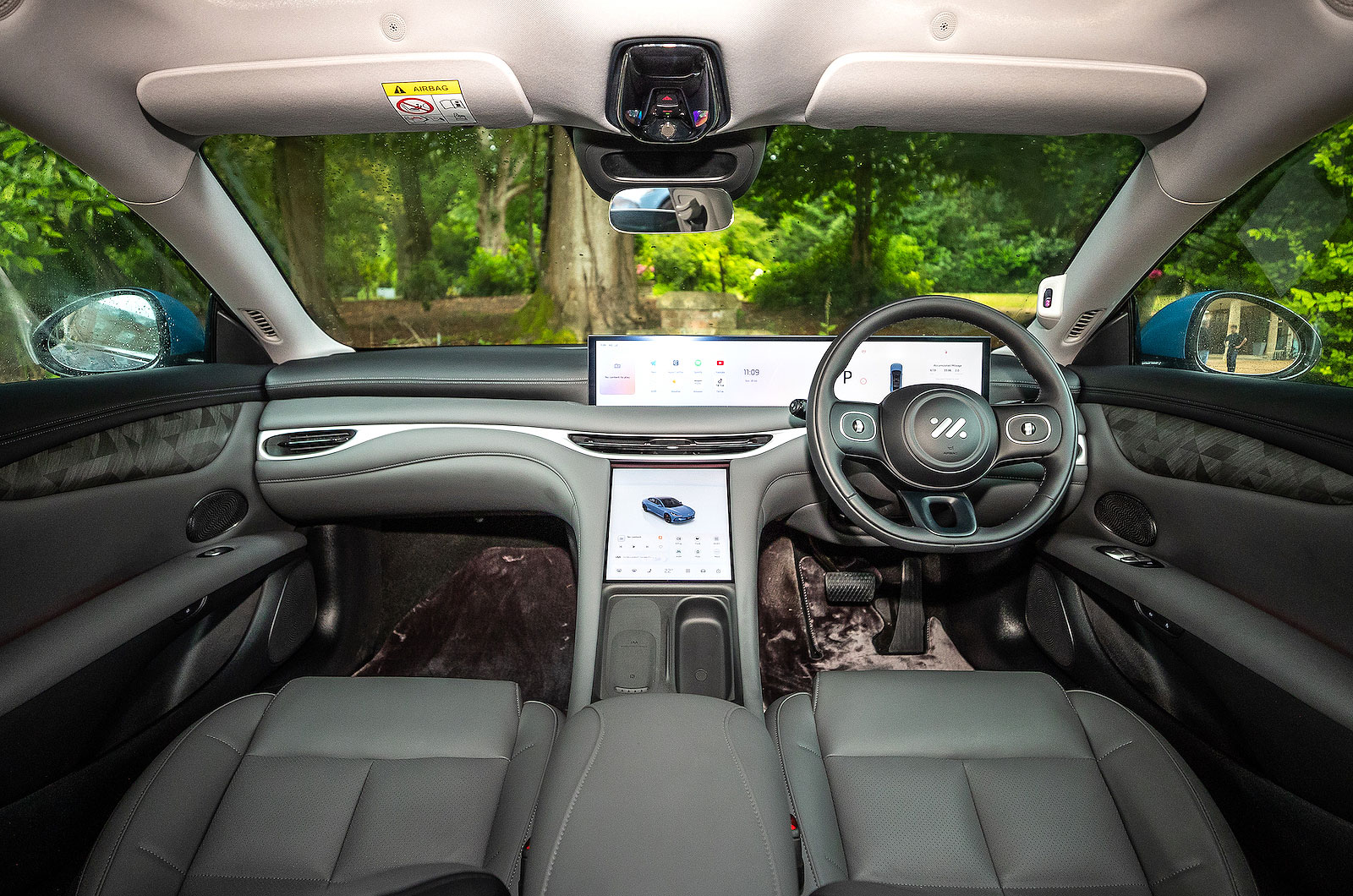
"I like listening to music while I drive, so the IM5's 20-speaker sound system, including four speakers in the roof lining, got put to good use when I drove it." – John Howell, Deputy Reviews Editor
Read our in-depth MG IM5 review
What is What Car? best price?
The What Car? best price shows you the cheapest way to buy your new car, whether it's by choosing an in-stock car through our partner Autotrader or placing a factory order.
Available now from: £30,999
RRP from: £39,950
About our price indicator
What Car? indicative Personal lease example (subject to status)
75kWh Standard Range Saloon 5dr Electric Auto (295 ps)
| Expected annual mileage | 5000 |
| Term months | 48 |
| Deposit months | 12 |
| Monthly payment | £359.11 |
| Initial payment | £4,309.32 |
Step-by-step
Leasing works a bit like a long-term rental. You drive it, but you don’t own it.
- Choose your car, pick your terms and apply for lease credit online
- Pay monthly rental payments for your chosen term length
- Drive it, enjoy it, then give it back at the end
What you get
When you lease with Autotrader you get all of this:
- Full manufacturer’s warranty
- Road tax and roadside assistance included
- No admin fees
- Free returns within 30 days*
- Lower total monthly cost than PCP/HP
- No balloon payments
- Road tax included
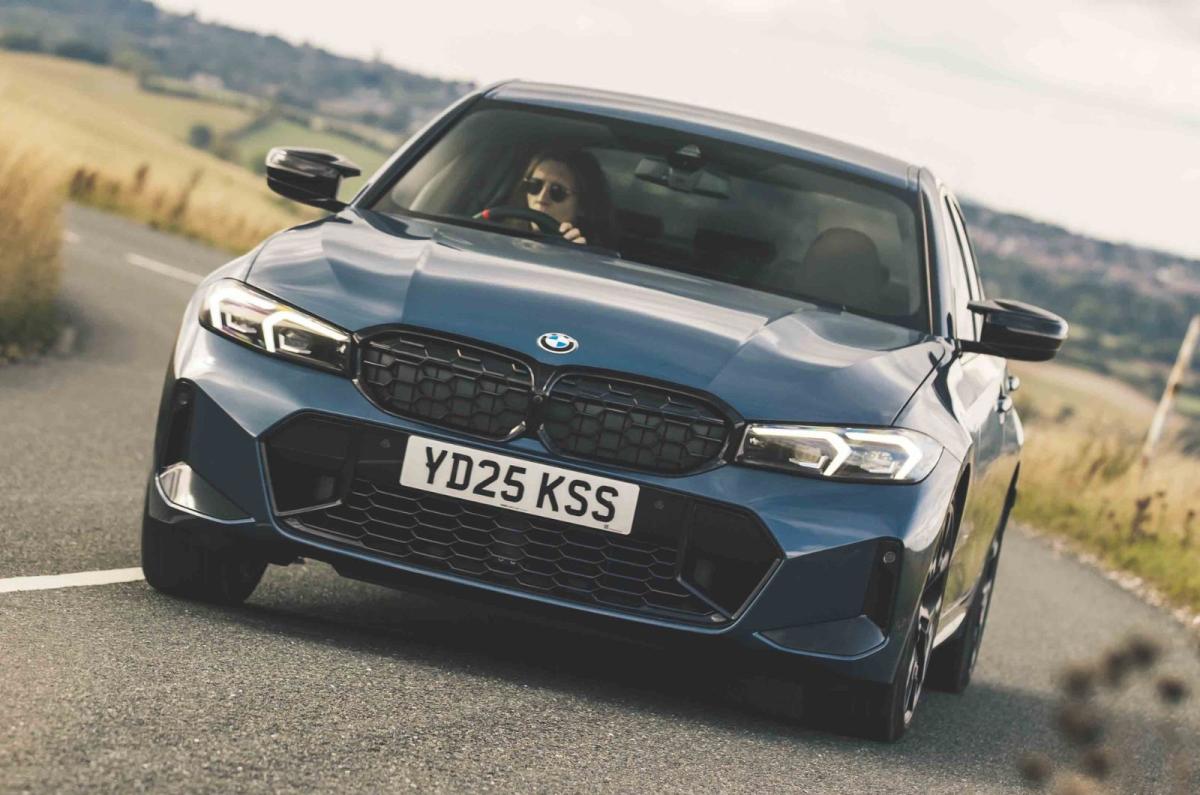
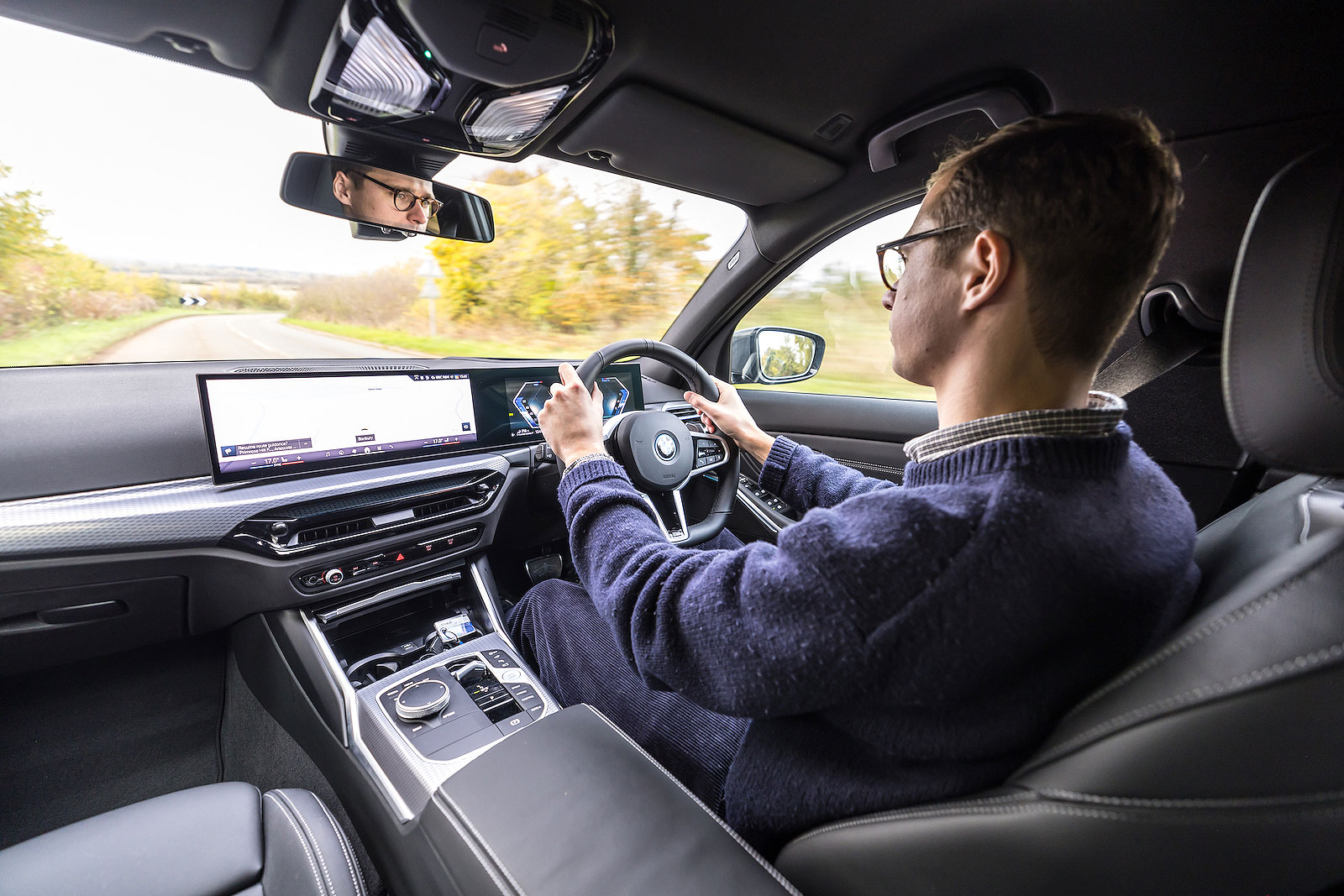
Our pick: 2.0 320i M Sport Auto Euro 6 (s/s) 4dr
Strengths
- Brilliant fun to drive
- Class-leading infotainment system
- Great range of engines
Weaknesses
- Ventilation controls less user-friendly than before
- You’ll want to add options – and they’re pricey
For many, the 3 Series remains the de facto executive car and company car saloon, and it's easy to see why. The latest version is the best-steering BMW of recent times and matches that with stellar body control and plenty of grip, yet still manages to serve up good ride comfort and relaxing refinement.
Our preferred version of the 3 Series is the 330e plug-in hybrid (PHEV). It offers strong performance and a decent official electric-only range of up to 37 miles, while promising lower running costs than non-hybrid versions. It won't surprise you to learn that the 330e will be the cheapest version for company car drivers to run, thanks to its lower Benefit-in-Kind tax rating, though the rival Mercedes C300e is even cheaper.
The interior of the 3 Series feels solid and well made (although it’s not quite a match for the Audi A4), and it gets one of the best infotainment systems in the business.
Sport is the cheapest of the 3 Series' trim levels, but it comes with a good amount of kit including 17in alloy wheels, LED headlights and three-zone air conditioning. We can see why a good number of buyers go for M Sport, though, with its larger 18in alloy wheels, more aggressive bumpers and firmer suspension. We'd recommend adding adaptive suspension from the options list, because this gives the 3 Series a much plusher ride than any of the passive alternative setups.
In our 2025 Reliability Survey, BMW as a brand finished in an impressive sixth place, but while petrol-engined versions of the 3 Series proved to be particularly reliable, diesel-engined models lagged a bit behind, with reliability ratins of 98% and 94% respectively. Every 3 Series comes with a three-year warranty with no mileage limit, and you can extend the cover for an extra cost if you intend to keep the car for longer.
"In its move to modernise the interior, BMW has swept away some buttons on the dashboard. All the climate control functions are now on the touchscreen – a clear backwards step for usability." – Will Nightingale, Reviews Editor
Read our in-depth BMW 3 Series review
What is What Car? best price?
The What Car? best price shows you the cheapest way to buy your new car, whether it's by choosing an in-stock car through our partner Autotrader or placing a factory order.
Available now from: £37,995
RRP from: £41,945
About our price indicator
What Car? indicative Personal lease example (subject to status)
2.0 320i M Sport Saloon 4dr Petrol Auto Euro 6 (s/s) (184 ps)
| Expected annual mileage | 6000 |
| Term months | 60 |
| Deposit months | 12 |
| Monthly payment | £481.57 |
| Initial payment | £5,778.84 |
Step-by-step
Leasing works a bit like a long-term rental. You drive it, but you don’t own it.
- Choose your car, pick your terms and apply for lease credit online
- Pay monthly rental payments for your chosen term length
- Drive it, enjoy it, then give it back at the end
What you get
When you lease with Autotrader you get all of this:
- Full manufacturer’s warranty
- Road tax and roadside assistance included
- No admin fees
- Free returns within 30 days*
- Lower total monthly cost than PCP/HP
- No balloon payments
- Road tax included
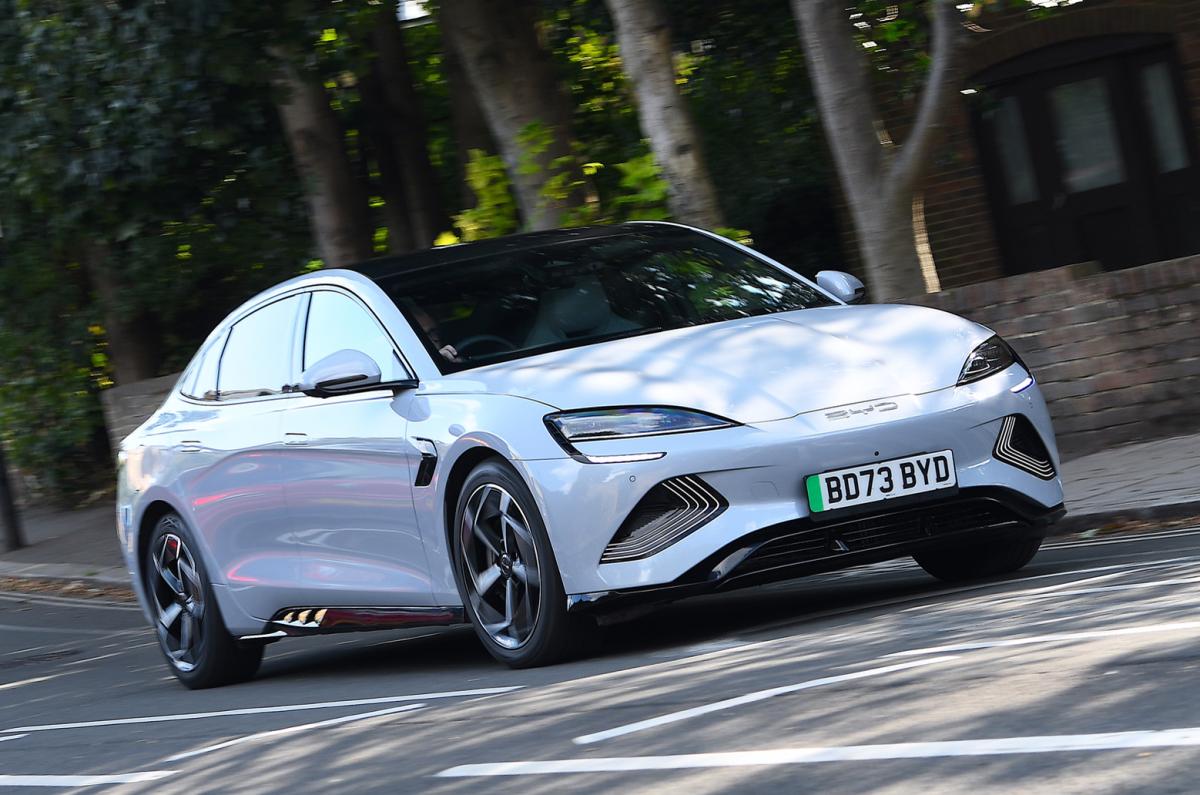
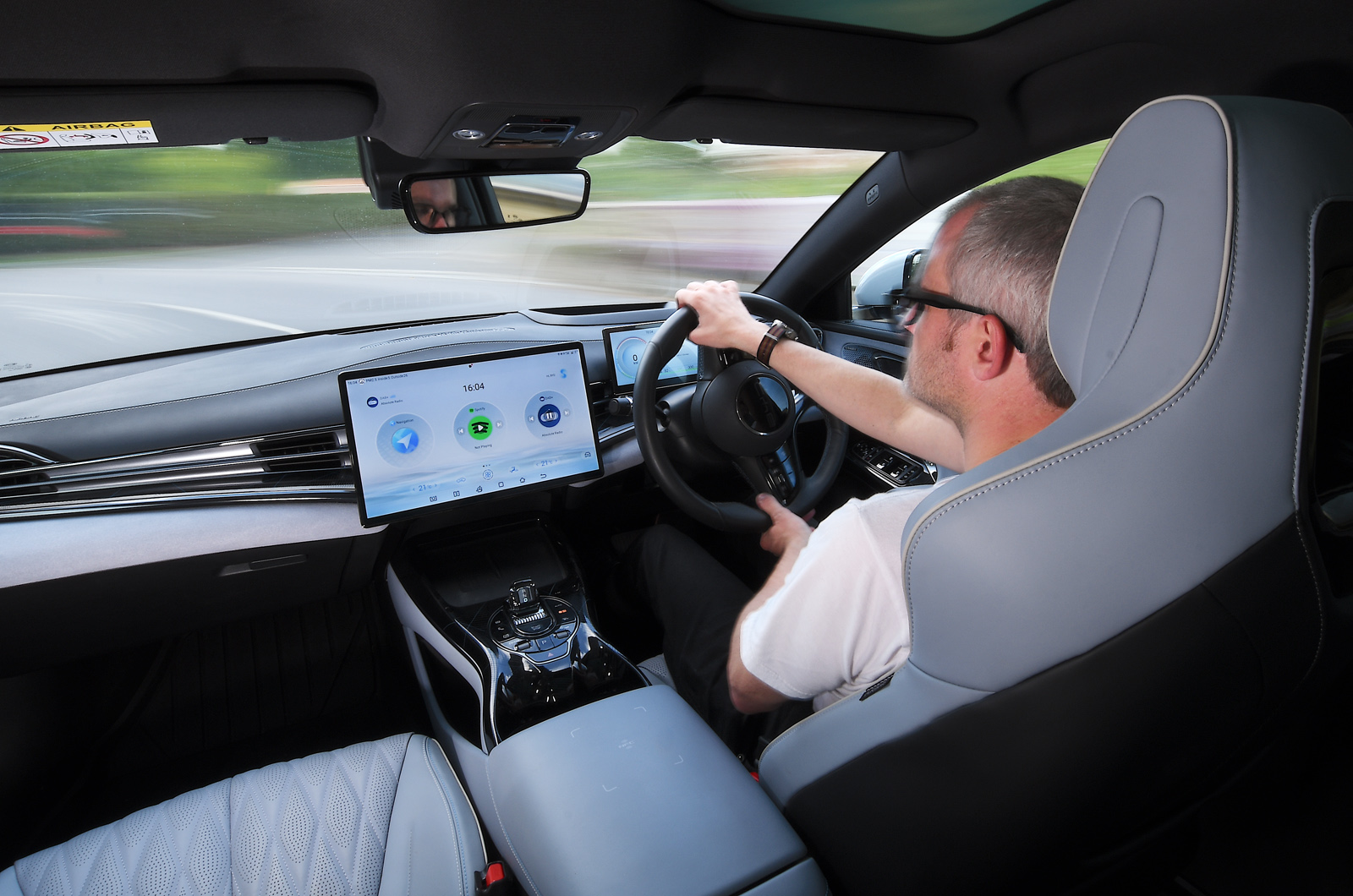
Our pick: 82.5kWh Design Auto 4dr
Strengths
- High-quality interior
- Lots of standard equipment
- Mostly comfortable ride
Weaknesses
- Road noise on coarse surfaces
- Rear seats could be more supportive
- Slower charging rate than rivals
The BYD Seal is one of the most convincing electric cars yet from a Chinese brand, with a long range, decent performance and an interior show-stopper.
Let's start with the inside, because it's there that you'll find the Seal's party piece – an infotainment screen which can switch between portrait and landscape orientation, meaning you can watch your favourite movie on Netflix while you charge, before switching over to the sat-nav to get you home.
Speaking of charging, the Seal's 150kW charging rate is competitive, and means a 10-80% top-up could take as little as 40 minutes if you find a powerful enough charger. Not that you should need to charge up very often, mind, because with an official range of 354 miles in our recommended Design form, you'll be able to tackle long trips with ease.
The Seal's boot has 400 litres of storage space, which is more than some electric rivals but lags behind the Tesla Model 3 and VW ID 7. Still, we managed to fit seven carry-on suitcases inside it in our tests, which should suit the needs of most families.
"I dislike messing around with dirty charging cables, so I'm grateful that the Seal has a front boot which I can use to store them." – Steve Huntingford, Editor
Read our in-depth BYD Seal review
What is What Car? best price?
The What Car? best price shows you the cheapest way to buy your new car, whether it's by choosing an in-stock car through our partner Autotrader or placing a factory order.
Available now from: £36,805
RRP from: £45,730
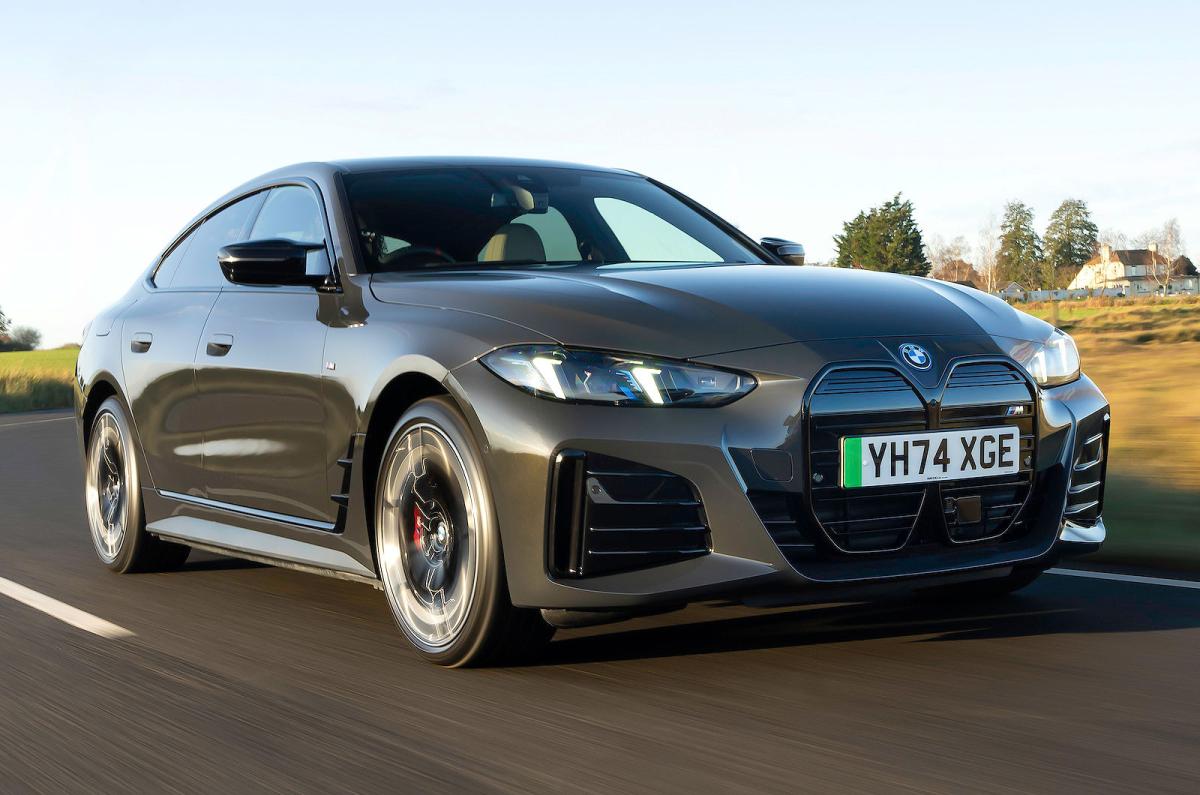
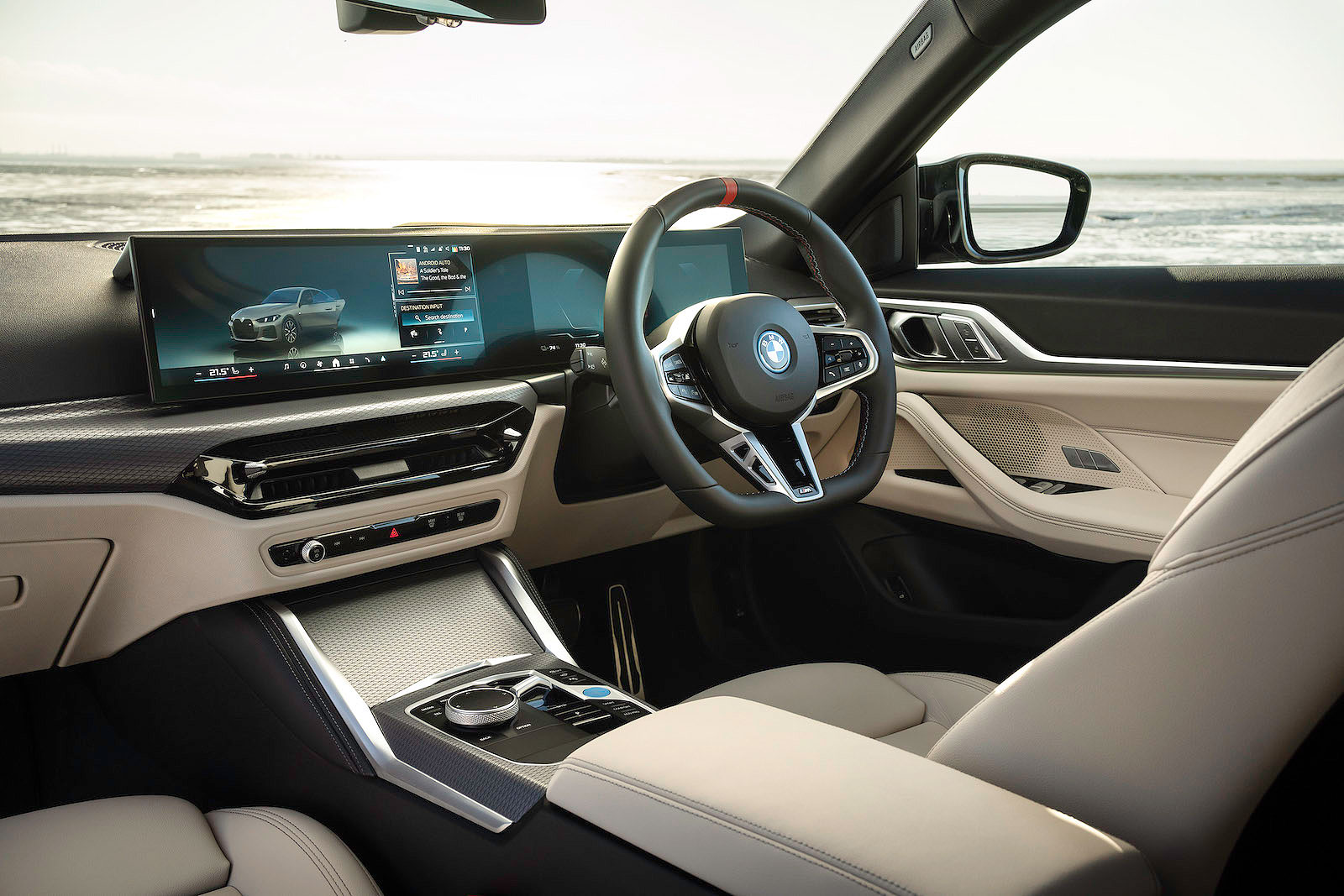
Our pick: 40 83.9kWh M Sport Gran Coupe Auto eDrive 5dr
Strengths
- Brilliant performance
- Impressive official range
- Class-leading infotainment
Weaknesses
- Relatively expensive to buy outright
- M50 not as sharp as Tesla Model 3 Performance
- BMW lacks Tesla’s world-beating charging infrastructure
BMW's i4 electric car is fast, comfortable and very hushed at high speeds. Our preferred version is the eDrive40 model, which offers an impressive official range of 367 miles.
Whichever version you go for, the i4 is great to drive and smart inside, making it a compelling alternative to a Tesla Model 3. It’s also a good choice if you prioritise practicality, with its hatchback boot opening and 40/20/40 split folding rear seats.
If you cover a lot of motorway miles, it’s worth bearing in mind that the Model 3 has the i4 pipped, because it grants you access to a significantly better charging network in the form of Tesla's Superchargers – although these days, you can pay to access much of the network with a non-Tesla car.
Being a fully electric car, the i4 benefits from the lowest Benefit-in-Kind taxes, meaning running one as a company car should be very cheap.
"The i4’s front seats have the most side bolstering than those in a Tesla Model 3 or BYD Seal, but you have to pay extra for electric adjustment and lumbar support." – Dan Jones, Senior Reviewer
Read our in-depth BMW i4 review
What is What Car? best price?
The What Car? best price shows you the cheapest way to buy your new car, whether it's by choosing an in-stock car through our partner Autotrader or placing a factory order.
Available now from: £50,995
RRP from: £51,370
About our price indicator
What Car? indicative Personal lease example (subject to status)
M60 83.9kWh Gran Coupe 5dr Electric Auto 4WD (601 ps)
| Expected annual mileage | 5000 |
| Term months | 60 |
| Deposit months | 12 |
| Monthly payment | £1,051.77 |
| Initial payment | £12,621.24 |
Step-by-step
Leasing works a bit like a long-term rental. You drive it, but you don’t own it.
- Choose your car, pick your terms and apply for lease credit online
- Pay monthly rental payments for your chosen term length
- Drive it, enjoy it, then give it back at the end
What you get
When you lease with Autotrader you get all of this:
- Full manufacturer’s warranty
- Road tax and roadside assistance included
- No admin fees
- Free returns within 30 days*
- Lower total monthly cost than PCP/HP
- No balloon payments
- Road tax included
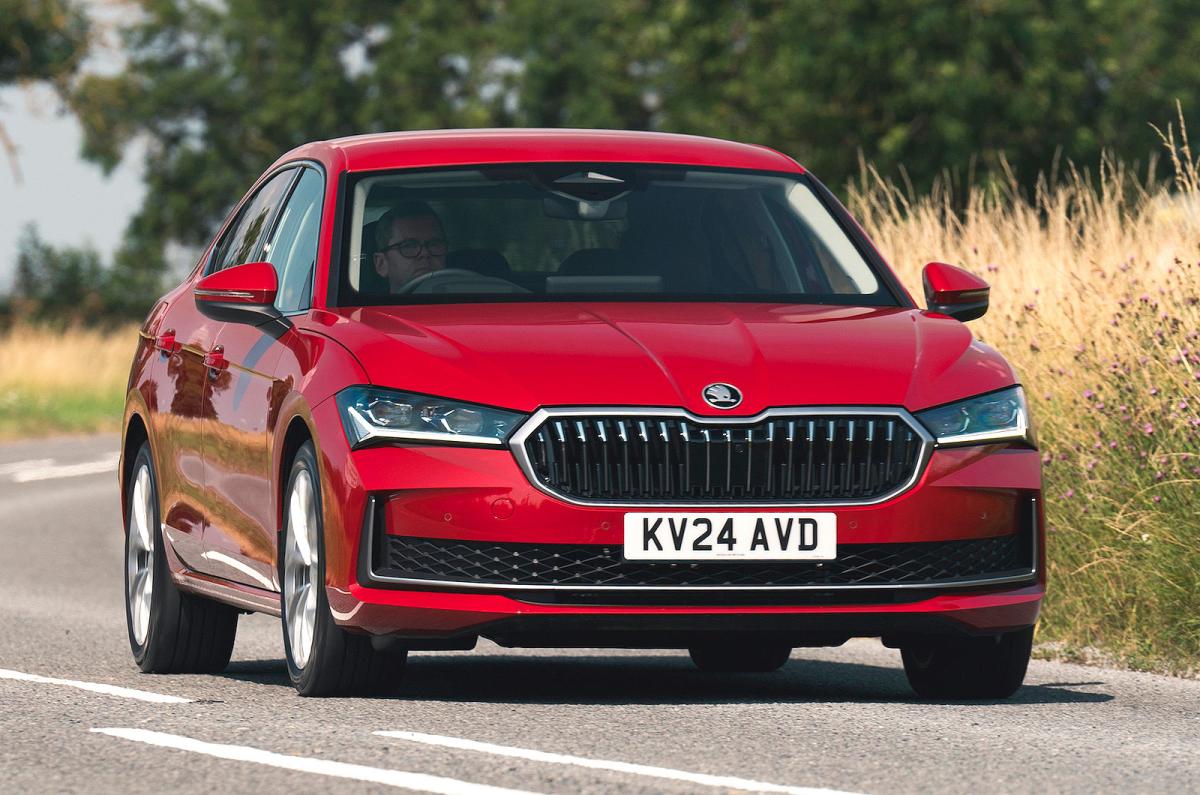
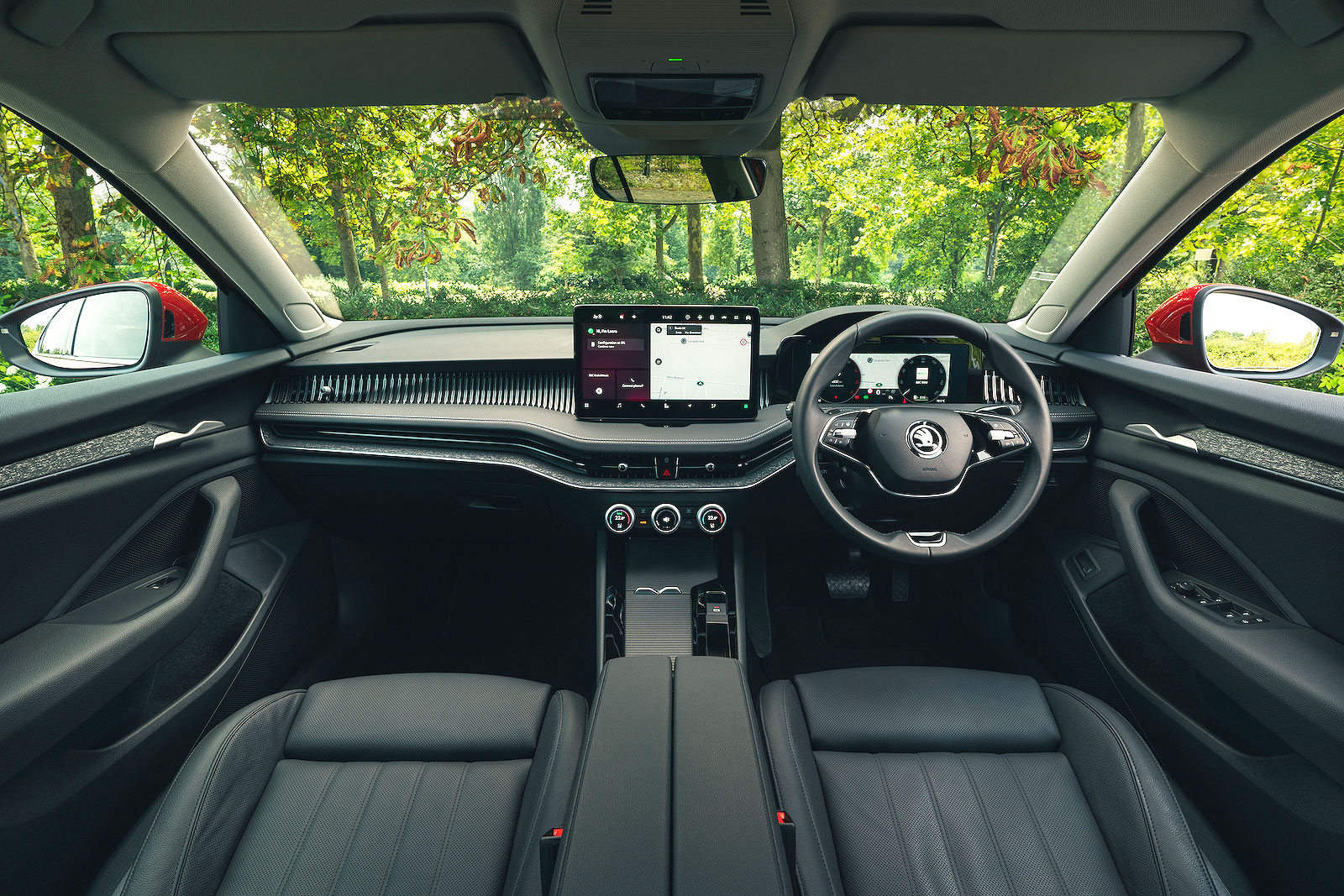
Our pick: 1.5 TSI e-TEC MHEV SE Technology DSG Euro 6 (s/s) 5dr
Strengths
- Vast interior and boot space
- Exceptional value for money
- Very generously equipped
Weaknesses
- Some rivals are more fun to drive
- Sluggish dual-clutch automatic gearbox
- No plug-in hybrid currently offered
Calling a car the Superb gives it a lot to live up to, but Skoda's executive car is fully deserving of its moniker.
It's comfortable, well made, generously equipped and great value for money. It’s also very spacious in the back seats (few cars this side of the Mercedes S-Class can match it), and the boot is massive.
It also gets a good range of engines, including petrol and diesel variants, although we think the 148bhp 1.5-litre petrol (badged as the 1.5 TSI 150) is the best option.
With there being no fully electric option, the Superb isn't among the cheapest executive cars on Benefit-in-Kind company car tax. That said, we remain hopeful that a plug-in hybrid variant will arrive soon, and that will likely become the go-to choice for fleet drivers.
"Both the hatchback and estate versions of the Superb have a handy storage cubby on each side of the boot opening. However, there’s a big drop down from the sill to the boot floor in the hatch." – George Hill, Used Cars Writer
Read our in-depth Skoda Superb review
What is What Car? best price?
The What Car? best price shows you the cheapest way to buy your new car, whether it's by choosing an in-stock car through our partner Autotrader or placing a factory order.
Available now from: £30,995
RRP from: £36,800
About our price indicator
What Car? indicative Personal lease example (subject to status)
2.0 TDI SE Technology Hatchback 5dr Diesel DSG Euro 6 (s/s) (150 ps)
| Expected annual mileage | 5000 |
| Term months | 60 |
| Deposit months | 12 |
| Monthly payment | £380.42 |
| Initial payment | £4,565.04 |
Step-by-step
Leasing works a bit like a long-term rental. You drive it, but you don’t own it.
- Choose your car, pick your terms and apply for lease credit online
- Pay monthly rental payments for your chosen term length
- Drive it, enjoy it, then give it back at the end
What you get
When you lease with Autotrader you get all of this:
- Full manufacturer’s warranty
- Road tax and roadside assistance included
- No admin fees
- Free returns within 30 days*
- Lower total monthly cost than PCP/HP
- No balloon payments
- Road tax included
Our pick: 40 83.9kWh Sport Edition Auto eDrive 4dr
Strengths
- Tidy handling
- Excellent refinement
- Well built and spacious interior
Weaknesses
- An expensive private buy
- You'll want to add some options
- Range and efficiency are good rather than great
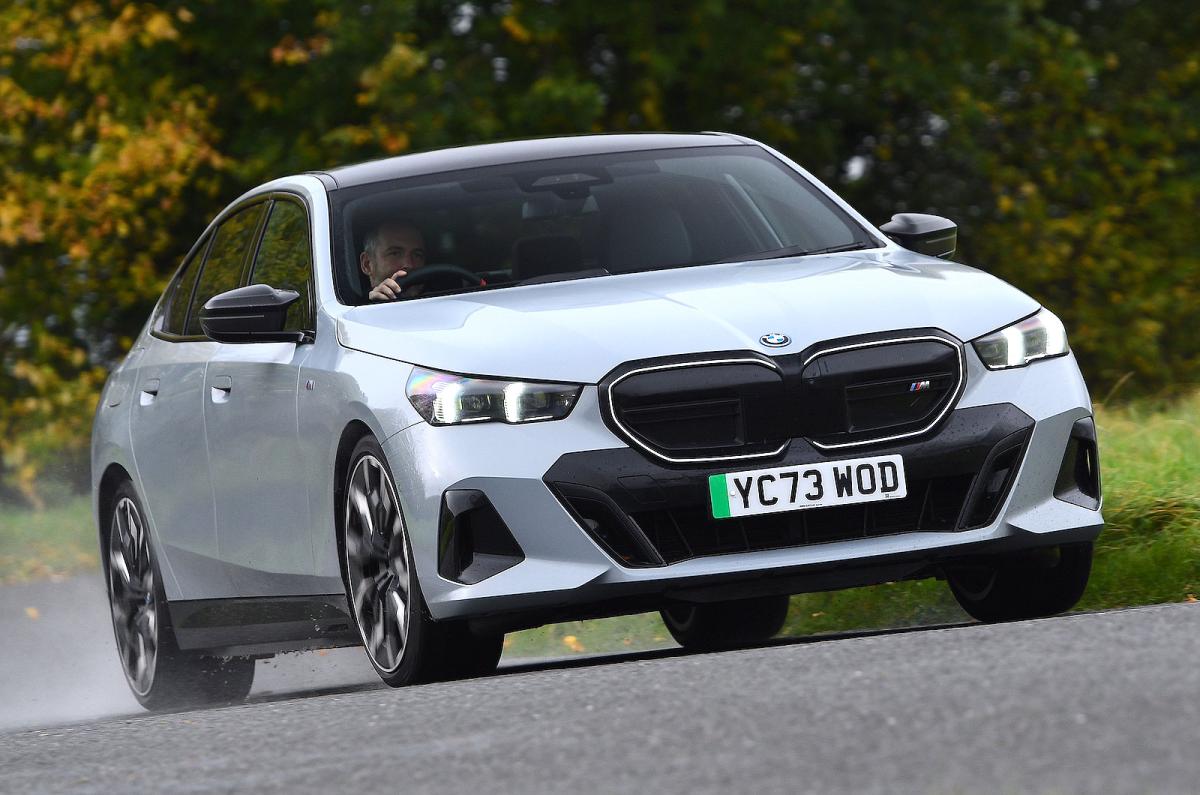
It may have a different name, but the i5 is a fully electric version of the new BMW 5 Series saloon.
That's evident by the fact that the two cars have very similar styling. As you might expect, though, it's a different underneath; the i5 is available with single or dual-electric motors and an 81.2kWh battery.
Out of the two versions, the single motor version (eDrive40) is our favourite; it provides quick performance, hushed driving manners and a long official range of 349 miles (although the Mercedes EQE can travel farther). Being based on the same underpinnings as the BMW i7, the i5 also offers a good balance of ride comfort and handling, and it tops the EQE in this regard.
No matter which version of the i5 you go for, it will qualify for the advantageous Benefit-in-Kind tax ratings associated with electric cars. In the 2025/26 tax year, you'll pay 3%, rising to 5% in the 2027/28 tax year.
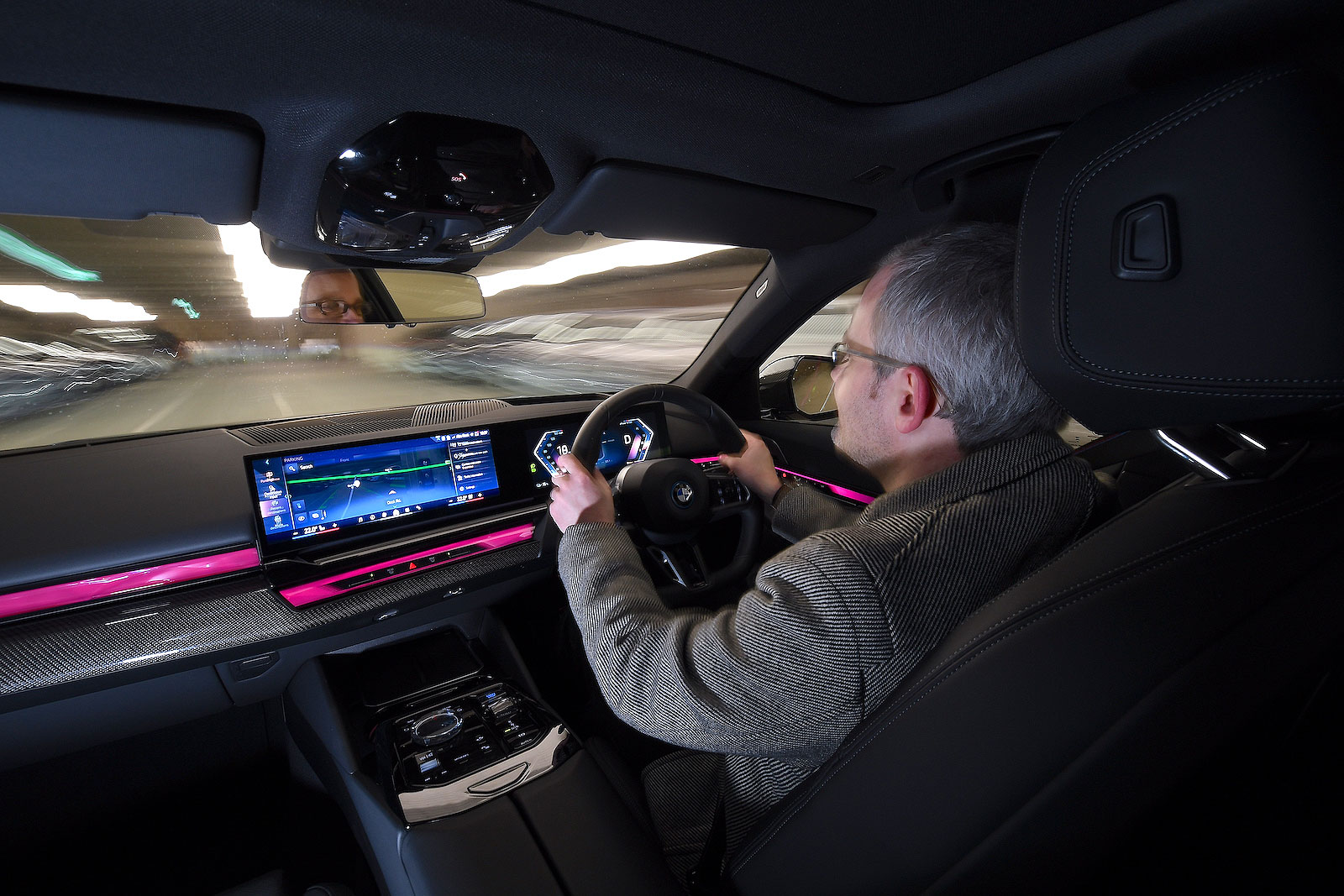
We're also particularly fond of the i5's interior, which has a range of plush materials and a good infotainment system. If it weren't so expensive, it would be higher up this list.
"The i5's touch-sensitive ‘interaction bar’ features haptic controls that are surprisingly easy to use. It’s used to adjust various functions, plus it lights up to tell you that the car is charging, for example, or warn you not to open your door in front of a cyclist." – Lawrence Cheung, New Cars Editor
Read our in-depth BMW i5 review
What is What Car? best price?
The What Car? best price shows you the cheapest way to buy your new car, whether it's by choosing an in-stock car through our partner Autotrader or placing a factory order.
Available now from: £57,289
RRP from: £67,795
About our price indicator
What Car? indicative Personal lease example (subject to status)
40 83.9kWh M Sport Pro Saloon 4dr Electric Auto eDrive (22kW Charger) (340 ps)
| Expected annual mileage | 5000 |
| Term months | 48 |
| Deposit months | 12 |
| Monthly payment | £721.03 |
| Initial payment | £8,652.36 |
Step-by-step
Leasing works a bit like a long-term rental. You drive it, but you don’t own it.
- Choose your car, pick your terms and apply for lease credit online
- Pay monthly rental payments for your chosen term length
- Drive it, enjoy it, then give it back at the end
What you get
When you lease with Autotrader you get all of this:
- Full manufacturer’s warranty
- Road tax and roadside assistance included
- No admin fees
- Free returns within 30 days*
- Lower total monthly cost than PCP/HP
- No balloon payments
- Road tax included
Strengths
- Long range between charges
- Great safety rating
- Comfortable ride
Weaknesses
- Fiddly touchscreen controls
- Less dynamic than rivals
- Pricier than rivals
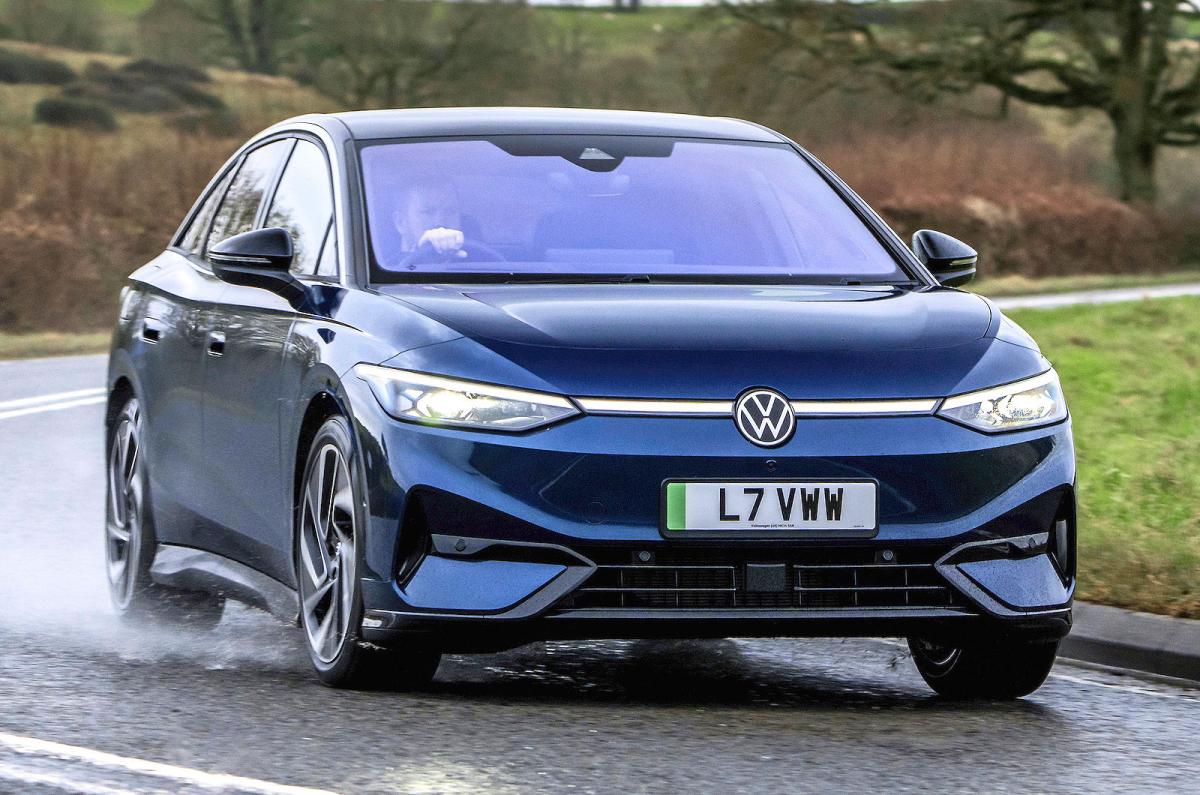
Volkswagen's take on the electric executive car offers some seriously long legs – indeed, even entry-level Pro models have an official range of up to 379 miles between charges, which is more than the standard Tesla Model 3 can manage. Go for the Pro S, and that figure increases to 436 miles, which means you might only charge the VW up every week.
In any case, like the other electric cars on this list, the ID 7 should be very cheap to run as a company car, since its low C02 emissions and long range means it sits in the lowest Benefit-in-Kind tax ratings.
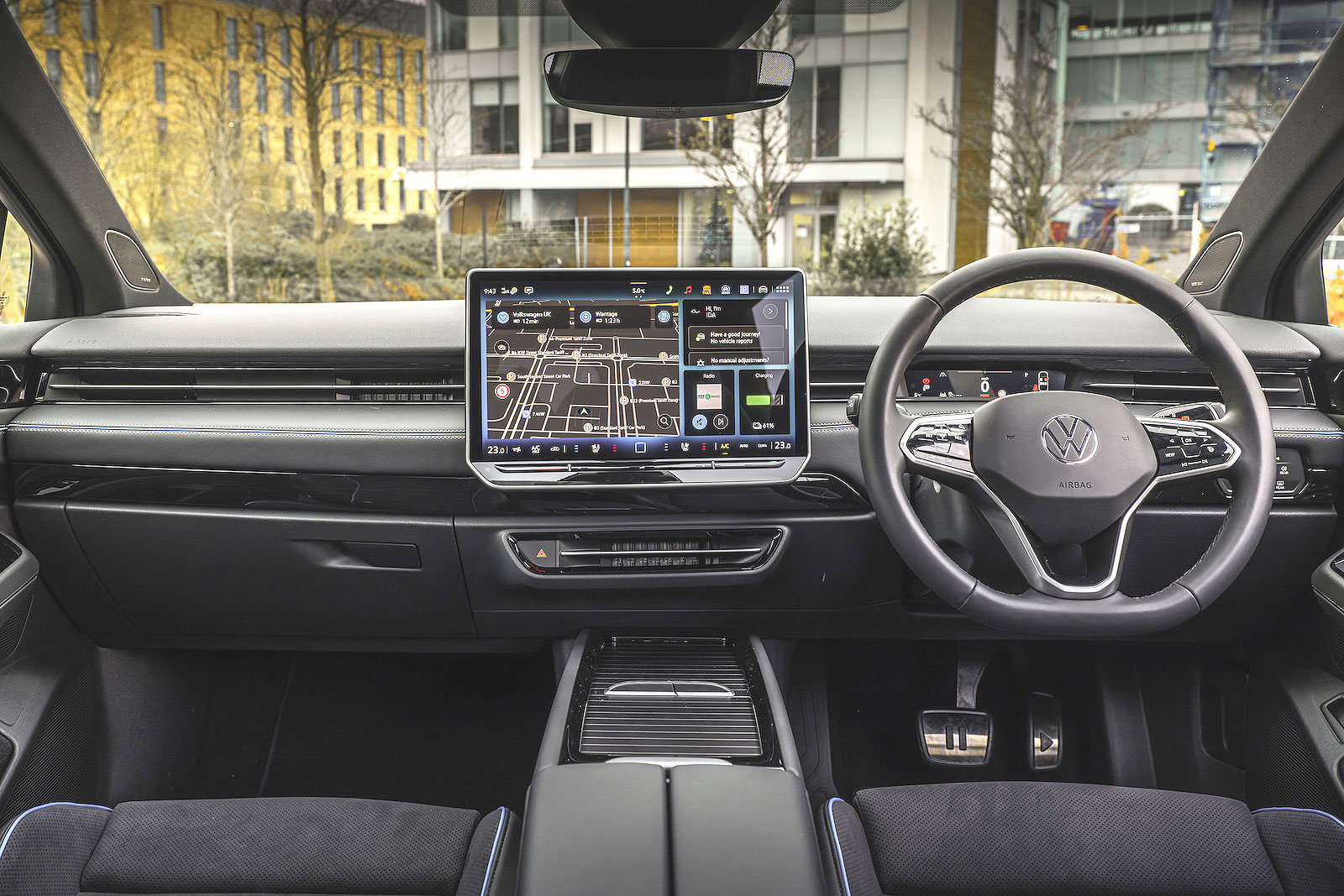
There's a pleasing mix of materials on show inside the ID 7, ranging from vegan leather on the seats to suede inserts on the doors. Your passengers will appreciate the high-end feel, but also the sheer space on offer, because the ID 7 is a huge car. Indeed, three adults can sit comfortably on its rear bench, which isn't something you could say about every car on this list.
If you're buying the ID 7 as a cash purchase, then it's worth noting that it will cost you more than some rivals, most notably the BYD Seal or Tesla Model 3, but you can also regularly pick up handy discounts.
Volkswagen as a brand hasn't done especially well in our most recent Reliability Surveys, so it's good news that you get a three-year warranty to cover the ID 7 – albeit one which is capped at 60,000 miles.
"I drove an ID 7 for more than 15,000 miles in 2025, and I found it to be an exceptional long-distance cruiser. If you're able to go electric and want to take advantage of the cheap tax which comes with running one, I'd urge you to do so." – Stuart Milne, Digital Editor
Read our in-depth Volkswagen ID 7 review
For all the latest reviews, advice and new car deals, sign up to the What Car? newsletter here
What is What Car? best price?
The What Car? best price shows you the cheapest way to buy your new car, whether it's by choosing an in-stock car through our partner Autotrader or placing a factory order.
Available now from: £43,530
RRP from: £51,445
About our price indicator
What Car? indicative Personal lease example (subject to status)
Pro 77kWh Match Plus Fastback 5dr Electric Auto (286 ps)
| Expected annual mileage | 5000 |
| Term months | 60 |
| Deposit months | 12 |
| Monthly payment | £533.09 |
| Initial payment | £6,397.08 |
Step-by-step
Leasing works a bit like a long-term rental. You drive it, but you don’t own it.
- Choose your car, pick your terms and apply for lease credit online
- Pay monthly rental payments for your chosen term length
- Drive it, enjoy it, then give it back at the end
What you get
When you lease with Autotrader you get all of this:
- Full manufacturer’s warranty
- Road tax and roadside assistance included
- No admin fees
- Free returns within 30 days*
- Lower total monthly cost than PCP/HP
- No balloon payments
- Road tax included
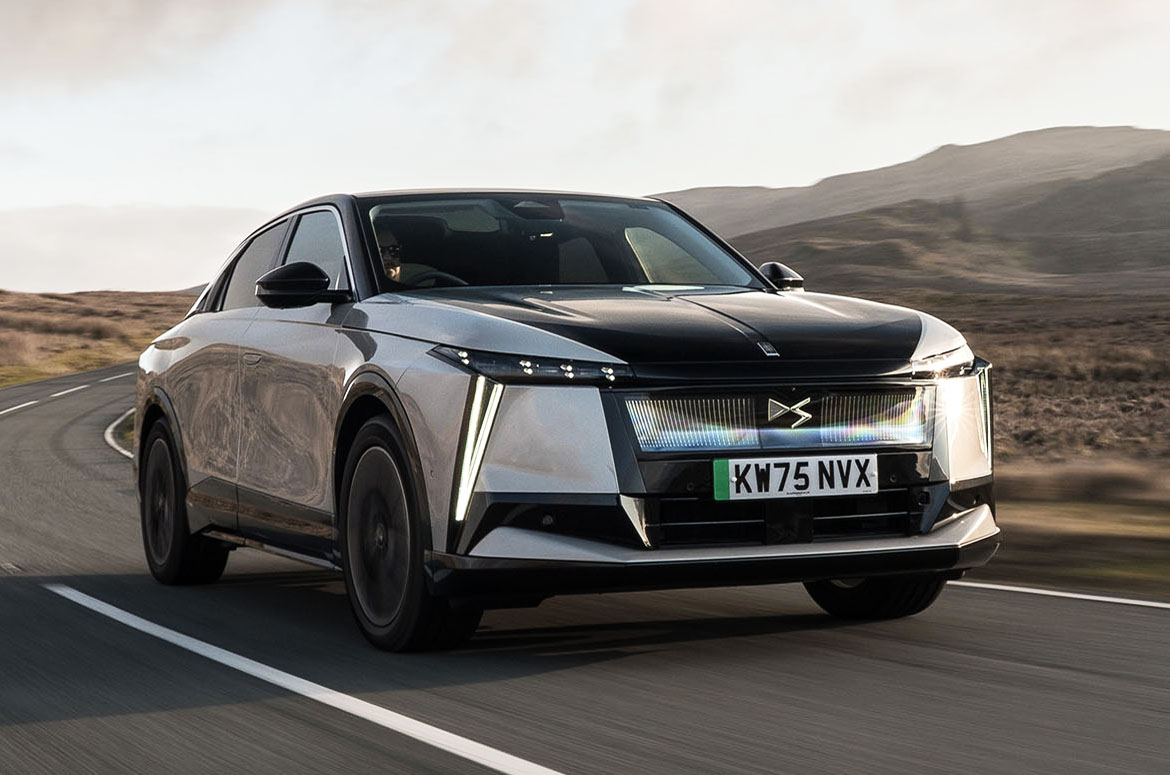
And the executive car to avoid...
How to choose the best executive car
The executive car park has never been more complicated. Not only are there now more brands than ever to choose from, but there are more power sources and more shapes and sizes to consider too.
Fear not, however, because we’re here to help. And here we’ll run through some of the key considerations to help you find your perfect executive car.
Do you want petrol, diesel, plug-in hybrid or electric power?
The good news is that there are executive car options for whichever fuel you might want to choose. However, as we’ll cover in more detail below, it pays to consider whether an electric car or plug-in hybrid car could work for you. There are growing numbers of electric car options within the executive car market, and most offer the kind of range and efficiency which could mean you only have to charge up a couple of times per week.
If you do decide to go for an electric or plug-in hybrid car, of course, you’ll benefit from being able to top it up at home from a home EV charger, since doing so would allow you to take advantage of lower energy tariffs.
If you’d rather stick with petrol or diesel power – and we’d only suggest the latter if you’ll be covering thousands of miles per month – then it’s worth looking for an engine which offers enough punch to make overtaking on faster roads easy, yet offers reasonable fuel economy. It’s also worth deciding whether you want a manual or automatic gearbox, with most company car drivers opting for the latter.
Do you pay company car tax?
If you’re a company car driver and pay Benefit-in-Kind (BIK) tax, then it’s worth thinking seriously about an electric car, because choosing one can dramatically lower your tax bill.
Indeed, while some petrol-engined models can attract a tax liability of up to 37% of the list price, electric cars currently attract a bill far less than that. Indeed, even though the liability for electric cars is set to increase by 1% each year until 2027, and by 2% each year thereafter until 2029, the overall liability still represents a significant tax saving compared with a petrol or diesel model.
If you’ve already determined that electric power won’t work for you, then consider whether a plug-in hybrid car might. While such vehicles attract a higher BIK value than pure electric models, you’ll still end up paying less than you would for a car powered solely by petrol or diesel.
How much do you care about badge appeal?
One of the big reasons for choosing an executive car is, well, to showcase that you’re an executive. And that means you might wish to stand out in the corporate car park.
Traditionally, that meant choosing from an established premium brand, but restricting your search to those three brands today might make you miss out on something even better.
These days, for example, we’d argue that Tesla should definitely be considered a premium brand, and the Tesla Model 3 certainly deserves a spot on your shortlist if you’ve decided that electric power can work for you.
If you’re looking for something a little left-field, then consider that Alfa Romeo, Hyundai, Kia and even Skoda make models which look and feel like premium products with appealing price tags.
Will you be spending a lot of time on the motorway?
If the answer to this question is ‘yes’, then you’ll want a car which prioritises a comfortable ride over agile handling, since you won’t predominantly be driving on roads which would allow you to experience the latter.
On your test drive, be sure to drive on a motorway or dual carriageway so you can experience what the car is like at those speeds. Is it quiet and smooth? Does it soak up lumps and bumps well? And does it have enough power to make overtaking easy, even on faster roads?
If you’ll be covering lots of motorway miles you might also want to look for an executive car which includes the latest safety and driver assistance technology. Adaptive cruise control can help to take the stress out of long journeys by keeping you a set distance from the car in front, for example, while lane-keeping assistance will warn you if you stray outside of your lane.
Do you have any parking issues?
One of the reasons why buyers flock to SUVs is their taller driving positions, which help you to see more of the car when you park. Because you’ll be sitting lower down in an executive car, you might miss out on that extra visibility. You might also not be used to driving such a large car, especially if you’re coming from a small or family car, so it’s worth seeing how easy your new executive car will be to park.
Fortunately, most executive cars come with tech designed to help avoid embarrassing car park scrapes. Parking sensors will give an audible alert whenever you’re getting too close to something in front or behind you, and may even be accompanied by a graphic on the car’s infotainment screen giving a visual representation of how far you are away from an object.
Many executive cars will go further, however, with a reversing camera projecting a real-time view of what’s behind you onto the car’s infotainment screen. This may also be accompanied by graphics showing where the wheels are going, and where the rear of the car is. Your car might expand on this by having multiple camera angles to choose from, a 3D image showing several camera angles stitched together, or a so-called ‘bird’s eye’ view of the car as if you were above it.
Should I buy an executive car
Buy one if:
- You want a lower driving position of an SUV
- You spend lots of time on the motorway
- You can take advantage of low BIK savings
Don’t buy one if:
- You want to sit high up
- You need to carry seven people
- You have trouble parking
How we choose the best executive cars
Every new executive car is driven by our experienced test team, both in isolation and back to back with key rivals. And we take our own performance, noise, efficiency and interior measurements instead of relying on official figures.
This thorough testing enables us to tell buyers which models are worth considering, and which are best to steer clear of. But while we assess every executive car in 16 areas, we don’t give these equal weighting. Instead, we ask readers about their priorities as part of an annual survey.
The most important buying preferences for executive car drivers are:
Interior quality – an important factor for 70% of executive car buyers
Most executive cars are sold by premium brands, and that brings an expectation of quality that the best models need to live up to. We therefore consider how plush the materials used look and feel, comparing each model with its rivals, and making sure that there’s no drop in standards when you look lower down or move to the back seats.
What’s more, we try all of the controls to see how well damped they are, and consider how robustly constructed the interior is.
Comfortable driving position – an important factor for 60% of executive car buyers
Executive car drivers often spend a lot of time behind the wheel, so it’s hardly surprising that they value being able to get – and stay – comfortable. We assess this by first checking that the seat, steering wheel and pedals all line up as they should; if anything is offset, there’s a good chance that it could lead to aches and pains on a long drive.
We also make sure that there’s enough space for tall drivers, and that the range of seat and steering wheel adjustment on offer is wide enough to suit people of all sizes. If a car doesn’t have adjustable lumbar support, it will be downgraded.
However, there’s no substitute for actually spending time driving, so our testers also cover hundreds of miles in every executive car to assess how comfortable the seat and seating position is.
Ride comfort – an important factor for 58% of executive car buyers
Those hundreds of miles behind the wheel also give us a lot of time to assess ride comfort, with us trying each executive car on all types of road that you’ll find in the UK. We consider how well the car deals with bumps and potholes, and how settled it feels over patched-up surfaces.
And don’t think that soft suspension automatically results in a high rating; if you’re bounced up and down over undulating roads, or the heads of your passengers are tossed from side to side, points are deducted.
Our testing doesn’t end there, though. We assess every aspect of executive cars, all the while comparing them with rivals. You can read more about this in our how we test cars feature.