Volkswagen Golf GTI review
Category: Hot hatch
The Golf GTI blends usability with vigorous hot-hatch performance – especially in GTI Clubsport guise


What Car? says...
If you asked 10 people to name a hot hatch, we reckon at least eight of them would come back with the Volkswagen Golf GTI as the answer.
It's an icon of the genre, and has been blending everyday usability with a healthy dose of driving excitement for around 50 years. That said, the eighth-generation (Mk8) Golf GTI never quite hit the sweet spot. Sure, it was fun to drive, but it also suffered from some frustrating quirks – namely a fiddly infotainment system and an interior that fell below VW’s usual standards for quality.
However, the one you can buy today is known as the GTI Mk8.5, with a mid-life update bringing a new touchscreen, a smarter interior, and a small bump in power for its turbocharged engine. There’s also the sharper, more focused GTI Clubsport version and the limited-run Edition 50 that may appeal to those who plan to take their car on track.
The hot hatch class has taken a bit of a hit lately, with rivals, such as the Ford Focus ST and Honda Civic Type R, dropping like flies. Nevertheless, for Golf GTI money, there's still the Cupra Leon and Skoda Octavia vRS. If you’re willing to stretch the budget, there are also more hardcore options, including the BMW M135, the Mercedes-AMG A45 S, Toyota GR Yaris or even VW’s own Golf R.

So does the VW Golf GTI still hold the crown, or have newer, fresher hot-hatch rivals stolen its thunder?
What’s new?
- June 2025 - Edition 50 celebrates the GTI’s half-century and is the most powerful model to-date with 321bhp. Revised suspension, bespoke trim and an optional Performance Pack are among other highlights
- August 2024 - GTI Clubsport goes on sale with 296bhp, a bespoke adaptive suspension mode and a grip-enhancing limited-slip differential
Performance & drive
What it’s like to drive, and how quiet it is
Strengths
- +Comfortable ride by class standards
- +Quiet cruiser
- +More powerful versions feel as quick as the R
Weaknesses
- -No manual gearbox option
- -Standard GTI doesn’t feel that fast
The previous VW Golf GTI marked the end of the manual gearbox era, and sadly, that hasn’t changed here. Still, the seven-speed dual-clutch DSG automatic gearbox is snappy and does a fine job of keeping things smooth in daily driving.
When the mood strikes, you can take matters into your own hands with the paddles mounted behind the wheel. It’s only during low-speed manoeuvres that the DSG occasionally shows a bit of hesitation.
All versions come with a turbocharged 2.0-litre engine and even the GTI version packs 261bhp – a welcome 19bhp bump over its predecessor. That’s reflected in its 5.9sec sprint from 0-62mph, which isn’t far behind a similarly priced Cupra Leon VZ1 300. If you want more punch, both the Clubsport and Edition 50 feel more potent across the rev range. However, if it’s sheer pace you're after, the four-wheel drive VW Golf R makes a stronger case, which we review separately.
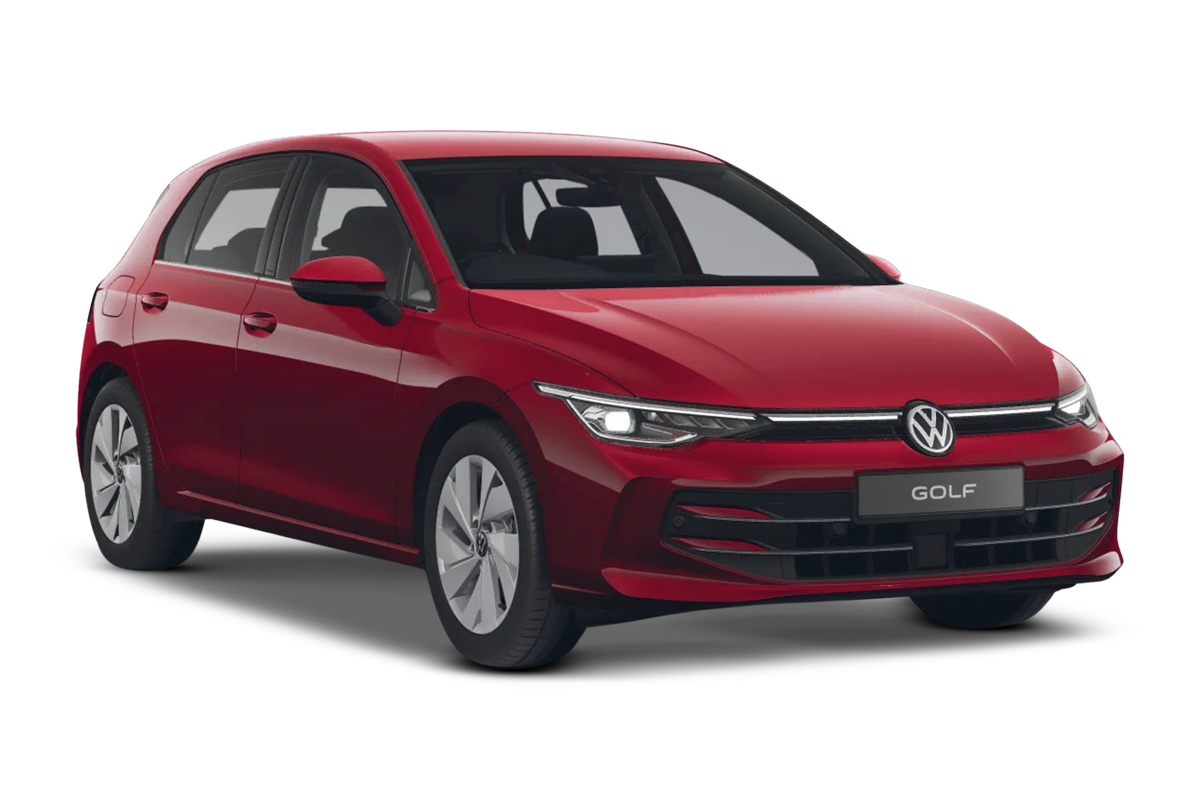
When the road starts to twist, the Golf GTI remains a confidence-inspiring companion, with no shortage of grip and well-balanced handling. It’s not a demanding car to hustle, whether you’re pressing on or taking it easy. However, because of that, some may find the standard GTI is a much more grown-up proposition – some drivers chasing old-school hot-hatch thrills may find it a bit too sedate.
So what should you do if you want a bit more fun? Well, the Clubsport is the answer. It's sharper, more focused and eager to tackle bends, thanks to a 15mm lower ride height, adaptive suspension and an electronic front differential that helps you claw your way out of corner exits. Then there’s the Edition 50, which goes even further if you add the optional Performance Pack, which lowers the suspension by another 5mm, has an even stiffer setup and adds grippier semi-slick tyres.
Adaptive suspension is also available on the standard GTI as an option and allows you to fine-tune the softness to your liking using the infotainment screen. We’ve only driven the GTI with it fitted and while the ride can become a little choppy, it’s still comfy by hot hatch standards - it remains more pliable than most of the Golf GTI’s more hardcore rivals when you’re cruising.
The Clubsport and Edition 50’s ride is firmer, but the upside is that it's better damped, which means the suspension movements are more controlled. In Nürburgring mode – a more forgiving alternative to Race – you can really attack twisty, undulating roads with confidence. We wouldn’t be surprised if these versions are every bit as fast as the heavier, four-wheel drive Golf R in dry conditions.
And the sound? Well, that’s a bit of a mixed bag. The GTI offers a deep, gravelly engine growl that ramps up as you switch modes, but there’s no doubt it’s a digitised sound pumped through the speakers. From the rear, the exhaust note is mostly absent and you need to go for the optional Akrapovic exhaust system to subtly add some genuine aural theatre.
There’s a moderately low amount of road noise, especially when compared with both the Mercedes-AMG A35 and A45 S, and the Toyota GR Yaris. There’s also very little wind noise, making the GTI one of the more comfortable long distance cruisers in the class.
“I'd argue that the Golf GTI Clubsport is the sweet spot in the fast Golf range. It feels much quicker than the regular GTI but is more delicate and involving than the R.” – Dan Jones, Senior Reviewer

Interior
The interior layout, fit and finish
Strengths
- +Good driving position
- +Decent infotainment system
Weaknesses
- -No physical controls
- -Rivals have plusher interiors
The driver’s seat in the VW Golf GTI is bolstered to hug you in place during quick cornering. It can be adjusted for height and lumbar support, and there’s plenty of reach adjustment to the steering wheel. We also love that the pedals are placed ideally in line with the wheel and seat.
The Golf GTI’s large windows and relatively slim windscreen pillars make it easy to see straight ahead and to the side. The rear pillars are fairly chunky, but given that all GTIs get front and rear parking sensors, and a rear-view camera as standard, you shouldn’t find slotting into a tight parking space too stressful.
You’ll be able to see loads at night, thanks to adaptive matrix LED headlights coming as standard, allowing you to keep full beam on at all times without dazzling other drivers.
All good so far, then, but now we come to the GTI's usability. The dashboard has no physical buttons and some touch-sensitive controls to adjust the interior temperature and volume, along with a few shortcuts to certain menus. They make small changes needlessly distracting on the move, and we much prefer the physical controls you get in the Mercedes-AMG A45 (or A35) and the Toyota GR Yaris.
Luckily, VW has listened to its customers and brought back physical buttons on the steering wheel. They’re much less fiddly than the touch-sensitive ones they replace, removing the risk of changing settings accidentally. It’s a change that the Golf R doesn’t get.
Infotainment is displayed through a 12.9in touchscreen display on the dashboard. VW’s latest infotainment software is more intuitive than it once was, with fewer menus and the ability to add custom shortcuts at the top of the screen.
You can also control the car’s systems by using the voice assistant, which gets help from AI tool Chat GPT, but we’ve had varied levels of success. Standard features also include DAB radio, Bluetooth, sat-nav, wireless Apple CarPlay and Android Auto smartphone mirroring, and wireless phone-charging.
The Golf GTI's interior quality is a mixed bag. It's not up to the high standards set by previous GTIs, with a lot of cheaper-feeling plastics more liberally scattered about, but then it remains plusher than the Toyota GR Yaris and doesn’t feel as brittle as the Mercedes-AMG A35 and A45 S. The BMW M135 is better overall.
“The GTI’s interior is subtly different to other Golfs, which is great if you’d rather not shout about it being the go-faster version. I like the optional suede-like material on the steering wheel on the Edition 50, though, which makes a big difference” – Lawrence Cheung, New Cars Editor

Passenger & boot space
How it copes with people and clutter
Strengths
- +Decent rear seat space
- +Plenty of storage cubbies
Weaknesses
- -Rivals have bigger boots
There's loads of space in the front of the VW Golf GTI. The interior is broad so you sit with breathing room between you and your passenger, and there's more than enough head and leg room to accommodate someone tall.
There's lots of storage space, with compartments and cupholders in the front for pretty much every need, plus a decent-sized glovebox and door bins to boot.
The latest VW Golf has dropped behind the leaders for rear-seat space, so the Audi S3, Cupra Leon and the Mercedes-AMG A45 will offer rear passengers more space to lounge about in.
Mind you, having rear doors means the Golf GTI is immediately more usable than the three-door-only Toyota GR Yaris, and, unlike that rival, you can at least fit two tall adults in the back. There just isn’t a surplus of space – and even less if you want to squeeze a third person in the middle seat.
Head round to the back and the Golf GTI offers 374 litres of boot space. That's fine, but not mammoth by the standards of some hot hatches. It'll fit a pushchair but will struggle to fit a set of golf clubs lengthways. Unlike the Leon or Golf R, there’s no estate car version of the Golf GTI.
In our suitcase tally test, a VW Golf swallowed five carry-on suitcases under its parcel shelf – one less than the Cupra Leon and Mercedes A-Class. You do get a height-adjustable boot floor for added flexibility, plus 60/40 split-folding rear seatbacks and a ski hatch, to create extra room when required.
“The magic of the Golf GTI is that it's as practical as any VW Golf. I’ve had no problems fitting my family in here with all our shopping.” – Dan Jones, Senior Reviewer

Buying & owning
Everyday costs, plus how reliable and safe it is
Strengths
- +Fairly slow depreciation
- +Well equipped
- +Relatively fuel efficient
Weaknesses
- -Expensive for the performance on offer
- -Golf R is a more complete package
The previous-generation VW Golf GTI was very much positioned as an attainable hot hatch with a premium image, while the more powerful, range-topping VW Golf R had the responsibility of fighting more expensive rivals that chased deadline-grabbing performance figures.
Well, times have changed, and while the Golf GTI is one of the cheapest hot hatches, it still has a list price costing more than £40,000. That means it’s slightly less than the Cupra Leon VZ1 and Golf GTI Clubsport. Head down the PCP finance route and the monthly costs are more palatable. Again, it’s not a huge leap up to the Clubsport, but the Edition 50 costs significantly more, especially if you add the optional Performance Pack.
The GTI will likely be slightly cheaper to fuel – officially managing around 40mpg and drops incrementally for the pricier models, down to around 35mpg for the Volkswagen Golf R. In fact, in the world of hot hatches, the GTI is pretty efficient and will sip its fuel better than any rival. It’s also quite affordable to service and has a fairly slow predicted depreciation rate.
Equipment levels are pleasingly high. The GTI comes with 18in alloy wheels, twin exhausts, adaptive cruise control, three-zone air conditioning, heated front sports seats, privacy glass and keyless entry and start. Going for the GTI Clubsport adds unique styling, a front differential and a couple of other driver-focused features. Edition 50 adds 19in wheels, a black roof and logos on the door mirrors and rear spoiler.
As a brand, VW finished in a disappointing 24th place out of 30 car makers in the 2025 What Car? Reliability Survey. That’s a couple of places below Audi and Mercedes, while Cupra and Toyota finished near the top. You get a three-year, 60,000 mile warranty with the VW Golf GTI, which is pretty standard for the class. The Cupra Leon comes with a longer five-year, 90,000 mile cover.
In terms of safety kit, the Golf GTI gets automatic emergency braking (AEB), lane-keeping assistance, a driver fatigue monitor, traffic-sign recognition and something called Car2X. That allows all cars fitted with the same feature – not just VWs – to share information on traffic conditions and hazards so you get an earlier warning.
The VW Golf was retested by Euro NCAP in 2025 and managed to retain its full five-star safety rating. It showed an improvement in protecting vulnerable road users, but for those sitting inside, it actually could have performed better. The driver’s chest could be better protected in both frontal and side impacts.
“As hot hatches go, the Golf GTI should be pretty inexpensive to run thanks to its efficient engine. I’ve seen more than 35mpg on longer cruises.” – Dan Jones, Senior Reviewer
Buy it if…
- You want a hot hatch that’s relatively easy to commute in
- You want a mix of performance and good fuel economy
- You want the option to choose from a range of versions to suit your taste
Don’t buy it if…
- You want a manual gearbox option
- You’re hoping the standard GTI will be exciting enough
- You want a hot hatch that visually stands out from the crowd
For all the latest reviews, advice and new car deals, sign up to the What Car? newsletter here

FAQs
Not in its latest – Mk8.5 – generation. You'll need a regular VW Golf or the top-of-the-range VW Golf R if you want an estate car.
We think so. A hot hatch should be exciting and the Clubsport fulfils that role better. The Edition 50 is even better but the leap up in cost is less convincing.
The VW Golf R is not only more powerful and quicker than the GTI but also more fun in the wet courtesy of a rear-biased four-wheel-drive system. Of course, the R costs more than the GTI, but it’s worth looking at a PCP finance because it can be competitive against pricier GTIs. You can check prices on our New Car Deals pages.
| RRP price range | £28,910 - £48,250 |
|---|---|
| Number of trims (see all) | 11 |
| Number of engines (see all) | 4 |
| Available fuel types (which is best for you?) | petrol hybrid, petrol plug-in hybrid, petrol |
| MPG range across all versions | 34.4 - 256.8 |
| Available doors options | 5 |
| Company car tax at 20% (min/max) | £290 / £3,316 |
| Company car tax at 40% (min/max) | £580 / £6,631 |

