Dacia Duster review
Category: Small SUV
The Duster is a great-value small SUV that's now available with new hybrid engines


What Car? says...
You may remember the TV advert for the Dacia Duster not too long ago, which borrowed Queen’s iconic hit song ‘Another One Bites the Dust’ and tweaked its lyrics to say ‘Another drives the Duster’.
Well, it turns out they were on to something, because the brand’s small SUV has proved to be a big hit with customers. Millions have been sold worldwide, and around 1000 Dusters a day roll off the production line.
Dacia Duster vs MG ZS video review
But what accounts for the Duster's success? Put simply, it’s competitively low price. However, while it easily undercuts most of its direct small SUV rivals, there is a growing list of competitors that are also able to give buyers a lot of car for their money. This includes the Jaecoo 5 and MG ZS, as well as the slightly larger, family SUV-sized Omoda 5.
So, is the Dacia Duster a worthy rival to the best small SUVs – including the Ford Puma, Skoda Kamiq and VW T-Roc? And would we recommend buying one?
The What Car? Reliability Survey is live, tell us about your car now

What’s new?
- September 2025: Hybrid 155 engine replaces Hybrid 140 and mild hybrid 140 supersedes mild hybrid 130. Duster Cargo is a variant with hybrid 130 4x4, or Hybrid 155 engines
- September 2024: UK orders open. Choice of 1.0 TCe 100 Bi-Fuel, 1.2 TCe 130 mild hybrid 4x2 and 4x4, and 1.6 Hybrid 140 engines; Essential, Expression, Journey and Extreme trims
- November 2023: Fourth-generation Duster first shown
Performance & drive
What it’s like to drive, and how quiet it is
Strengths
- +Good range of engines
- +Comfortable ride
- +Predictable handling
Weaknesses
- -Pricier rivals are quieter
- -Not as good to drive as rivals
How fast is it and which engine is best?
There are two engine choices for the Dacia Duster, but the entry-level TCe 140 mild hybrid is probably all you need. We’ve yet to try it, but, based on the TCe 130 it replaces, we suspect it provides plenty of oomph. With an official 0-62mph time of 9.4sec, it’s quite a bit faster than an entry-level Renault Captur TCe 115.
You can also have the Duster as a full hybrid (badged Hybrid 155). That version has the same 1.8-litre hybrid petrol engine as the Dacia Bigster and can drive on electricity alone for short distances, switching to petrol power when you ask for a burst of acceleration. The Hybrid 155's straight-line pace is identical to the TCe 140's.
Earlier Dusters were available with a four-wheel-drive version of the mild hybrid petrol and a TCe 100 Bi-Fuel, which could run on petrol or LPG - however both of these are no longer available.
Is it agile and is the ride comfortable?
Previous Dusters shared parts with older Renault car models but the new Duster sits on the same platform as the latest Dacia Sandero and Renault Clio. As a result, the Duster rides comfortably as you drive along, feeling more settled than an MG ZS.
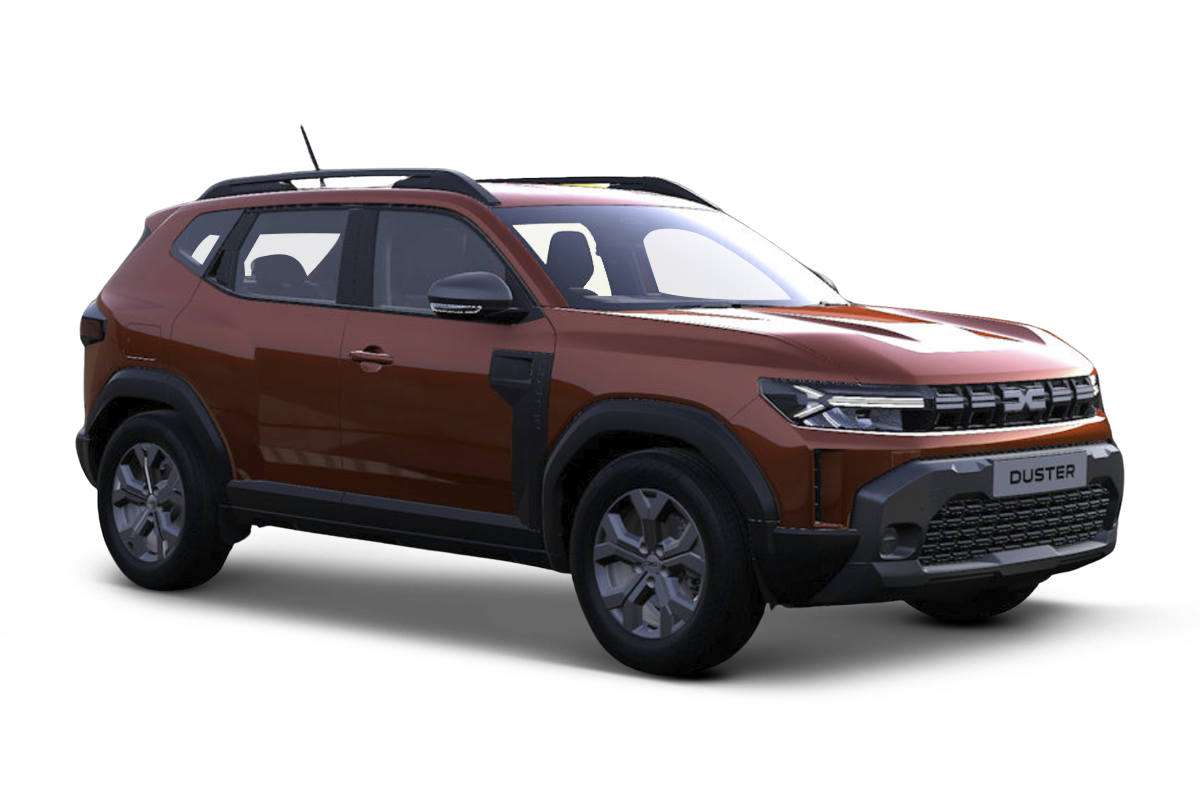
True, it can’t match the polish of the best-riding small SUVs (the VW T-Roc for example) but the Duster’s soft suspension and small wheels with high-profile tyres mean it’ll happily take the sting out of potholes and imperfections with less of a thud than a Jaecoo 5. We suspect the heavier Hybrid 155 will have slightly stiffer suspension to deal with the additional weight of the battery and fuel-saving tech, which should result in a slightly firmer ride.
Better still, the latest Duster's suspension is slightly stiffer than the previous-generation car's, which has helped to remove a lot of the side-to-side sway you’d feel on undulating roads.
The Duster handles predictably enough and manages body lean well, staying impressively upright through corners. Even so, it doesn’t have as much grip as tidier-handling rivals, and with lighter, less feelsome steering, it’s not as confidence-inspiring or fun to drive as a Ford Puma.
Is it quiet and how easy is it to drive smoothly?
Road and wind noise are more noticeable than in the Skoda Kamiq and T-Roc, but the Duster’s petrol engines are hushed to an acceptable level. Similarly, a T-Roc is even smoother to drive but the Duster’s engine transmits fewer vibrations than Dacias of the past.
The regular hybrid Duster (Hybrid 155) should provide an even quieter, smoother experience at low speeds when it’s running on electricity alone over short distances.
While the engine range has been revised, we suspect the six-speed manual gearbox you get with most Dusters is slick enough as you flick through the gears and its clutch is well weighted. We prefer it to the Hybrid’s six-speed automatic gearbox, which sometimes changes up or down at inopportune moments – although the shifts are smooth enough when it does change.
“The latest Dacia Duster is much nicer to drive than the previous generation. It’s smoother and quieter, while the ride and handling balance is much tidier.” – Lawrence Cheung, New Cars Editor

Interior
The interior layout, fit and finish
Strengths
- +Simple controls
- +Elevated driving position
- +Good forward visibility
Weaknesses
- -Interior plastics feel cheap
What does the interior look like and is it well made?
While the Duster’s interior is mostly made of hard, cheap-feeling plastic, it at least has some visual appeal with its rugged design and flashes of colour on the dash and doors. Go for top-spec Extreme and you get a copper finish on the air vents.
Plenty of rival small SUVs – including the Nissan Juke and Skoda Kamiq – have plusher interiors. Even the budget-focused MG ZS feels more upmarket inside.
None of that will be a problem if you simply view your Duster as a cost-effective family workhorse, and thankfully everything feels solidly screwed together.
Is the driving position comfortable and is it easy to see out?
The Dacia Duster’s driving position is relatively high up, giving you the feeling of being in a proper SUV. It’s easy to find a comfortable driving position, thanks to plenty of driver’s seat and steering-wheel adjustment. All we’d say is that adjustable lumbar support is only standard on top-level Extreme trim.
You get a good view forwards from the Duster’s elevated driving position and the fairly narrow windscreen pillars mean you get a clear view out at junctions. The view over your shoulder isn’t quite as good, but even entry-level Expression trim comes with rear parking sensors and a rear-view camera to make parking easy. Mid-level Journey upgrades the camera to a surround-view one, and adds front sensors as well.
All Dusters come with LED daytime running lights and front fog lights, but you can’t have full LED headlights.
Is the dashboard and infotainment system easy to use?
The Duster’s dashboard is very easy to use, with a row of physical air-con switches below the infotainment touchscreen. This makes it easier to use than the touchscreen controls found in the Ford Puma and Peugeot 2008.
All trims come with a 7.0in digital driver’s display, which is really crisp to look at and easy to navigate around. Mind you, it's not quite as versatile or configurable as the systems in some versions of the VW T-Cross and VW T-Roc.
Each Duster comes with a 10in touchscreen infotainment screen, DAB radio with Bluetooth, four speakers and a USB-C socket front and rear.
The touchscreen has a simple layout and sharp graphics, along with Android Auto and Apple CarPlay smartphone mirroring, but is let down by its sluggish response when you touch it.
The two top Duster trims, Journey and Extreme, add sat-nav and two extra speakers.
“The Dacia Duster's interior offers plenty of visual appeal, and everything I touched felt sturdy. However, the MG ZS gives you a much classier mix of materials.” – Dan Jones, Senior Reviewer

Passenger & boot space
How it copes with people and clutter
Strengths
- +Large boot capacity
- +Plenty of space for occupants
Weaknesses
- -Some rivals are more spacious
- -Limited rear-seat versatility
How much space does it have for people?
Getting in and out of the Dacia Duster is a breeze thanks to its tall, wide openings, and there’s a decent amount of head room up front. The front seats don't slide back very far, so long-legged occupants might struggle for space.
It’s not the best small SUV for storing stuff either. For example, the front cupholder is too shallow to put anything that might spill in, and you’ll only squeeze a half-litre bottle in each of the door pockets.
Even the central armrest is relatively small. Ultimately, the MG ZS trounces the Duster for storage, with proper cupholders and larger door bins.
The height of the Duster’s rear seats from the ground means you don’t have to bend down too much to help youngsters get in and out of their child seats but the sills are quite high to clamber over.
Thanks to the Duster’s high roof, even if you’re more than 6ft tall and sitting on the slightly raised middle seat, you won’t find your head grazing the roof lining.The MG ZS is more accommodating, but there’s still a generous amount of room for a pair of six-footers.
How much room does it have for luggage?
The Duster’s boot space is large by small SUV standards, with 517 litres of storage for a mild hybrid and 430 litres for the full hybrid. For comparison, the Nissan Juke has 422 litres while the Jaecoo 5 has a 480-litre boot.
Considering we managed to fit six carry-on suitcases into the Juke’s boot, we suspect you’ll have no issues fitting in all of your family’s holiday luggage, a fold-up buggy or loads of shopping.
The boot is a very practical shape – it's wide and high, with only a small lip to lift items over. All Dusters have a 60/40 split folding rear bench but that’s about the extent of their versatility. The VW T-Roc offers a large ski hatch behind the middle armrest, while the Skoda Karoq has a distinct advantage here because it’s available with Varioflex back seats that recline, slide, split 40/20/40 and can be removed altogether.
You can also fold the front passenger seat backrest forwards about 45 degrees to allow more space for extra-long loads. That’s not a common feature in the class, with the T-Roc also offering this functionality (although it folds flat).
“The Dacia Duster is one of the more practical small SUVs I've driven, offering a good amount of space in the back for six-foot passengers.” – Claire Evans, Consumer Editor

Buying & owning
Everyday costs, plus how reliable and safe it is
Strengths
- +Low list price
- +Hybrid model reduces fuel costs
- +Dacia has a good reliability record
Weaknesses
- -Not much in the way of options
- -Poor safety rating
How much does it cost and what equipment do you get?
As we mentioned earlier, the Dacia Duster is one of the cheapest small SUVs you can buy, with only the MG ZS undercutting it by a small margin. By comparison, a Jaecoo 5 and Renault Captur will cost slightly more. You’ll have to dig a lot deeper for a Ford Puma, Skoda Kamiq, or a Toyota Yaris Cross. The starting price for a VW T-Roc is almost £10k more.
Fuel economy should be decent. Just bear in mind that the difference between the official fuel economy figures of the Duster TCe 140 and the more expensive Hybrid 155 isn’t much. We'd opt for the TCe 140 because you’re unlikely to recoup the extra cost in fuel savings unless you do a lot of miles.
The Duster's entry-level Expression trim covers the basics well, with cruise control, air conditioning, 17in alloy wheels, front and rear electric windows and automatic windscreen wipers.
Above that you have Journey, which adds 18in alloys, climate control and keyless entry, while Extreme sits at the top of the line-up and brings some different interior styling along with heated front seats and a heated steering wheel.
Is it reliable, and how long is the warranty?
Dacia as a brand performed well in the latest What Car? Reliability Survey – it finished in 11th place out of the 30 manufacturers ranked. That’s level with Peugeot, with Toyota and Vauxhall finishing higher.
Every Duster comes with Dacia’s Zen warranty, which covers the car for up to seven years/75,000 miles if you service your car at an authorised dealer every year. That’s better than most rivals, although Toyota gives you 10 years with the same servicing stipulation.
How safe is it, and is it easy to steal?
The Duster received just three stars out of five for safety when it was tested by Euro NCAP, which is very disappointing. Its 70% rating for protecting adults in the front is poor, and its Vulnerable Road Users and Safety Assist scores are even worse, at 60% and 57% respectively.
The model does come with a reasonable amount of safety kit, including automatic emergency braking (AEB), traffic-sign recognition, lane-departure warning and lane-keep assist. Mid-level Journey trim adds blindspot monitoring.
Unlike in a lot of models, which require you to dive into their touchscreens in order to turn safety aids on and off, the Duster comes with a "my safety" button, which – once customised – allows you to quickly switch to your sensitivity preferences.
“Like some other Dacia car models, the Duster is available with a YouClip for clipping your phone or other items to the interior. I'd find it quite handy.” – George Hill, Used Car Writer
Buy it if...
- You’d like a small SUV that has lots of passenger space
- You’re looking for an affordable hybrid small SUV
- You need a small SUV with a big boot
Don’t buy it if…
- You’re after a small SUV with really agile handling
- You’d like a fully electric small SUV
- the Duster’s safety rating is a concern
For the latest reviews, advice and new car deals, sign up to the What Car? newsletter here

FAQs
Dacia is a subsidiary of Renault, so it does share some parts and knowledge with the French brand, but the Duster is built by Dacia in Romania.
If you want all the bells and whistles, go for Extreme trim. It comes with a heated steering wheel and heated seats, plus other kit.
| RRP price range | £21,845 - £27,595 |
|---|---|
| Number of trims (see all) | 3 |
| Number of engines (see all) | 2 |
| Available fuel types (which is best for you?) | petrol hybrid, petrol |
| MPG range across all versions | 52.3 - 61.4 |
| Available doors options | 5 |
| Company car tax at 20% (min/max) | £1,194 / £1,610 |
| Company car tax at 40% (min/max) | £2,388 / £3,221 |

