- NEW Hyundai Santa Fe review - the ULTIMATE seven-seat SUV? | What Car?
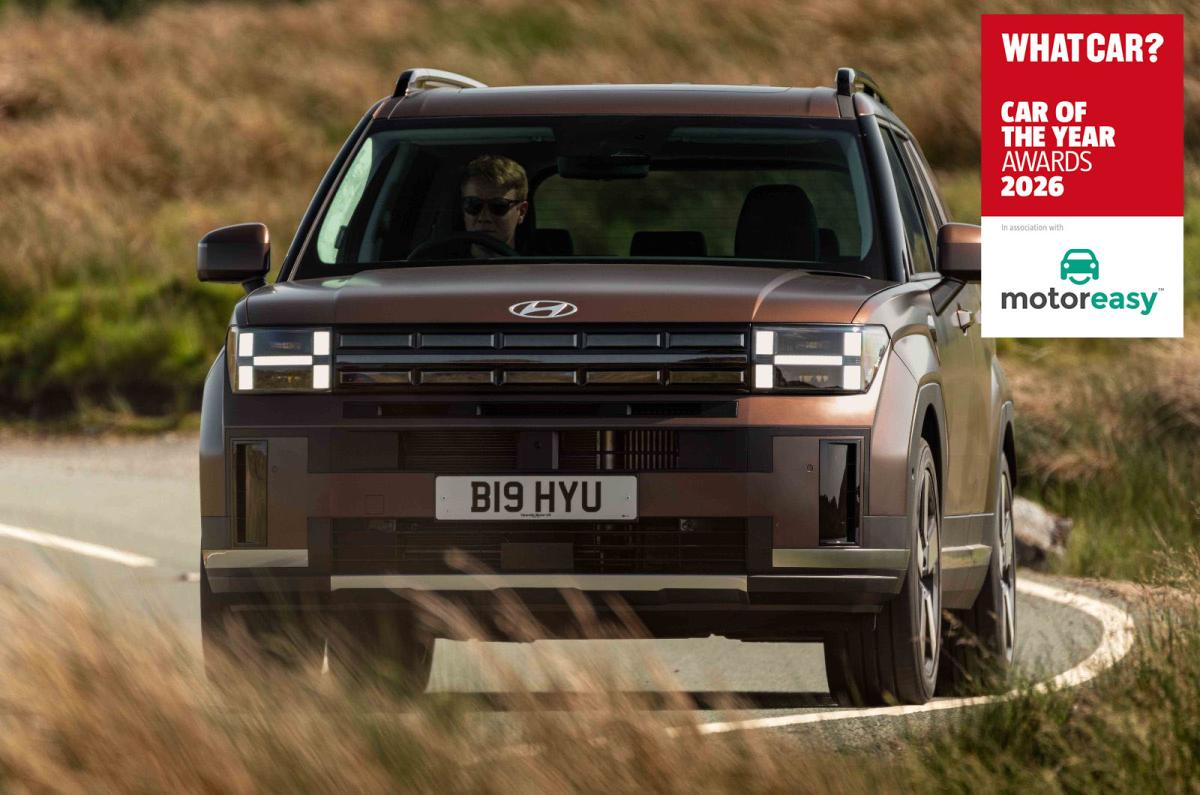
- Hyundai Santa Fe Car of the Year 2026
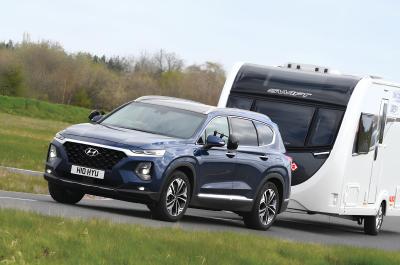
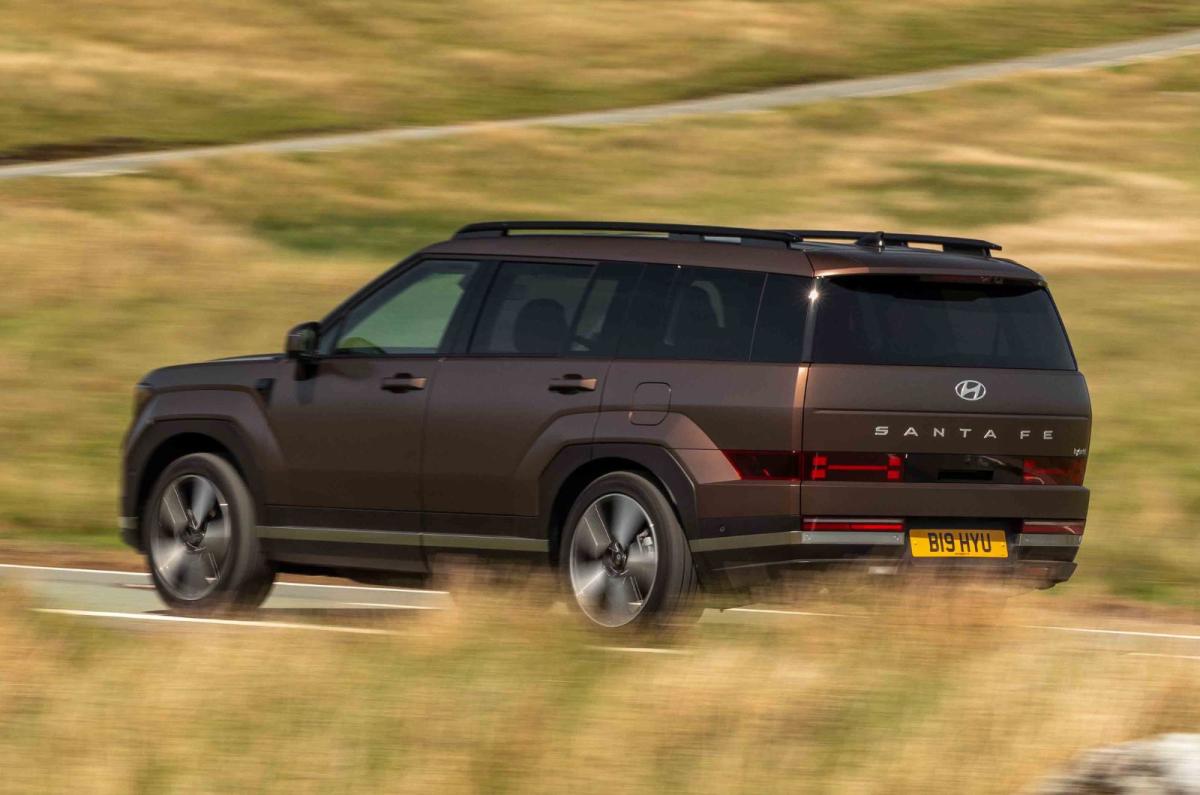
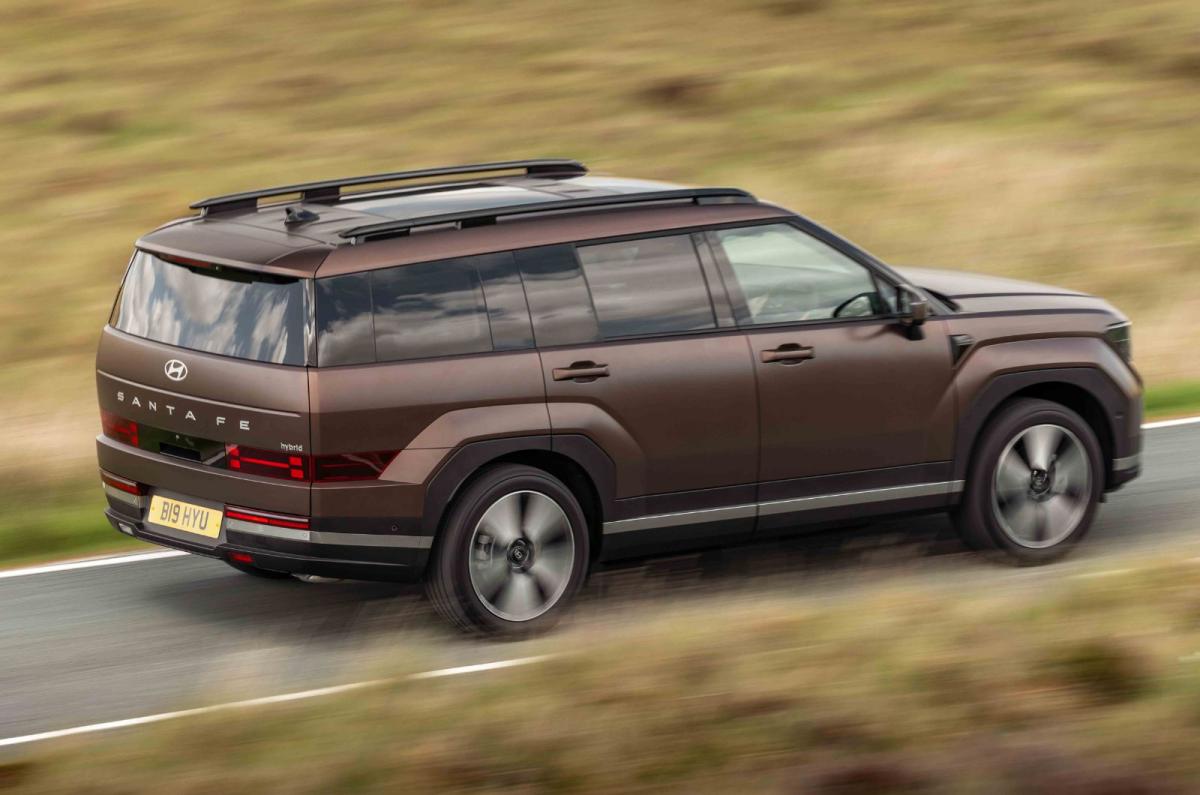
- Hyundai Santa Fe rear left driving
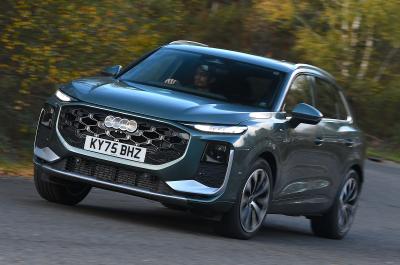
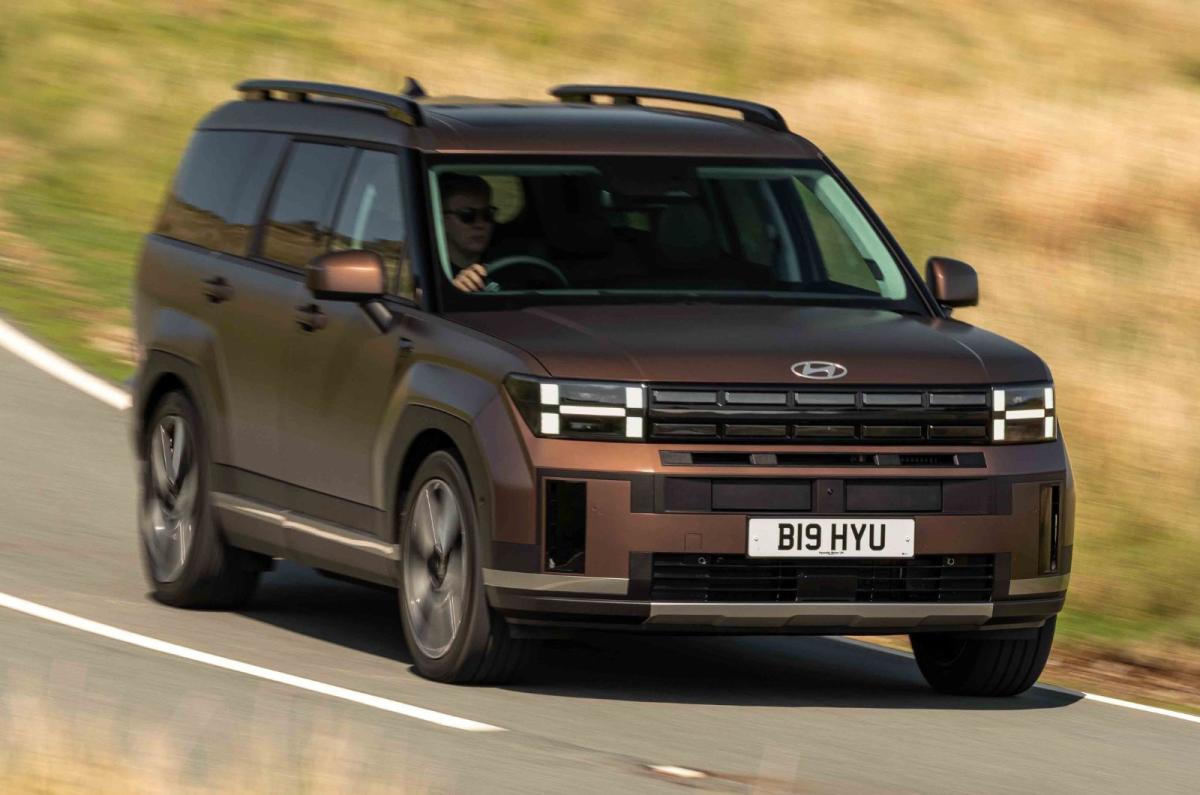
- Hyundai Santa Fe front right driving
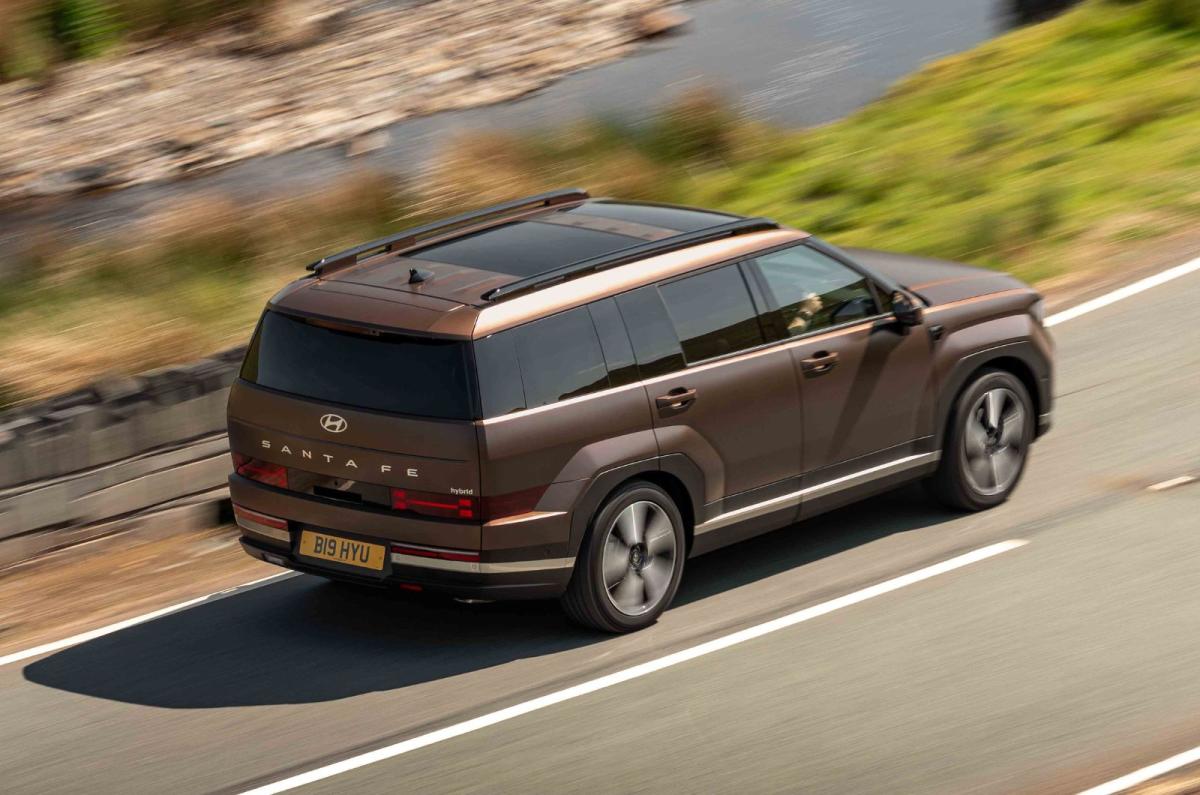
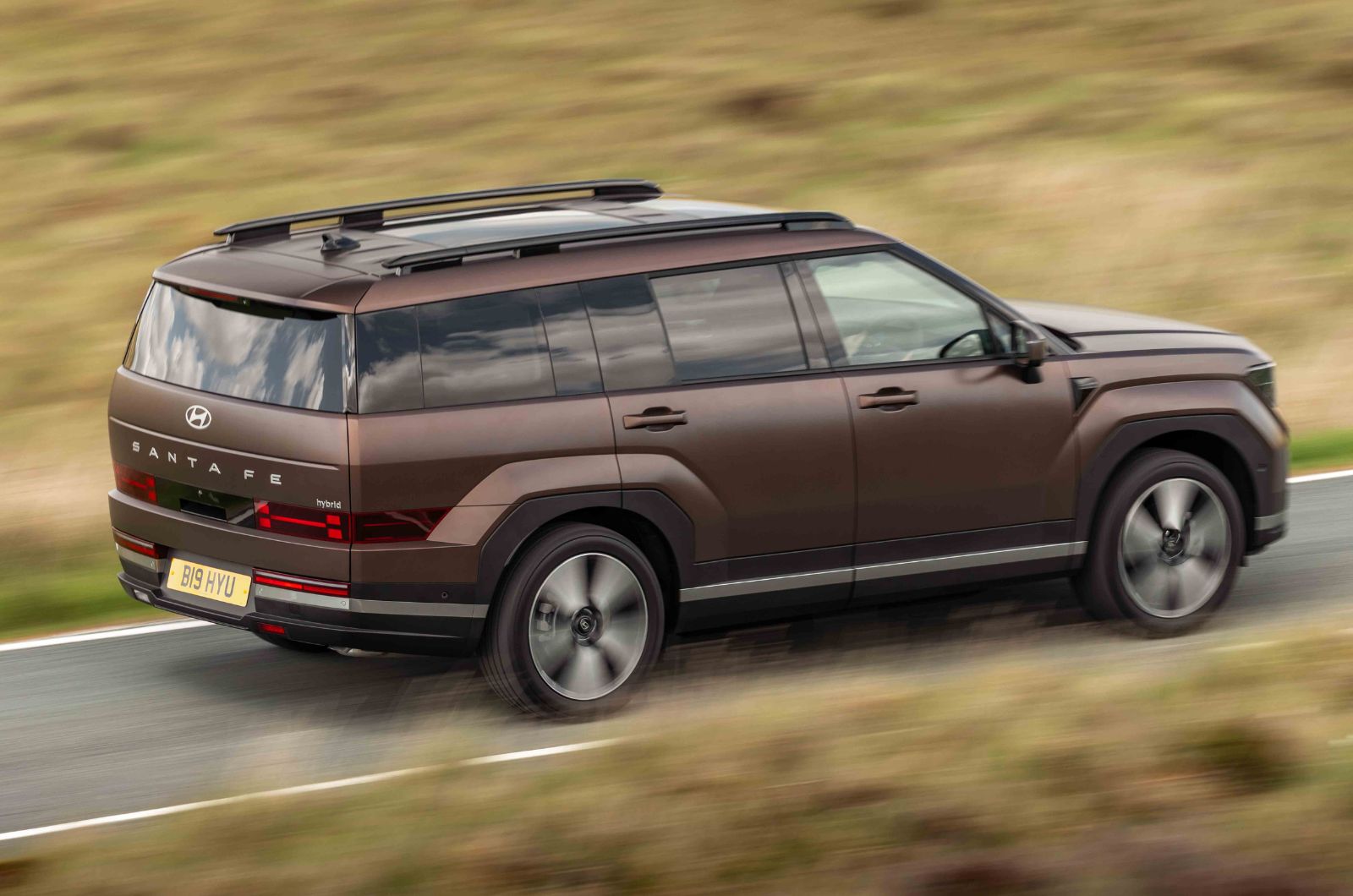
- Hyundai Santa Fe rear right driving
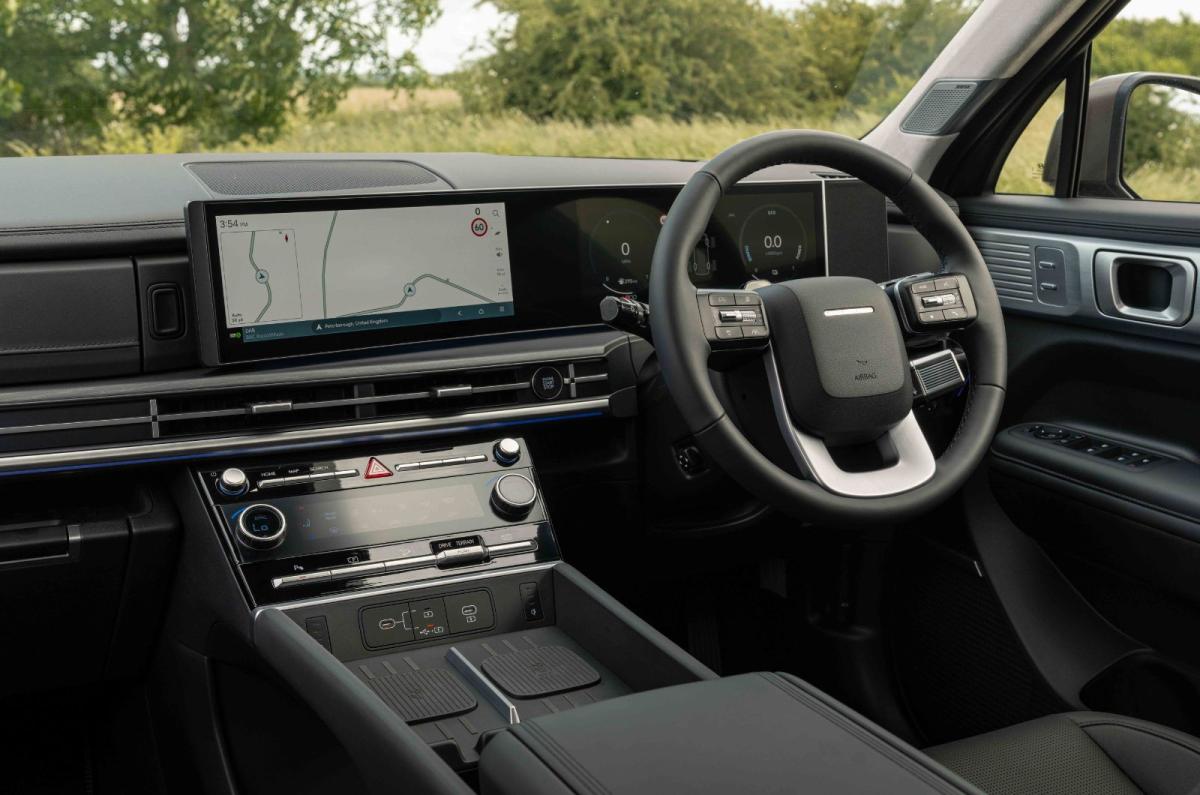
- Hyundai Santa Fe interior
- Hyundai Santa Fe interior details
- Hyundai Santa Fe interior details
- Hyundai Santa Fe interior details
- Hyundai Santa Fe interior details
- Hyundai Santa Fe interior
- Hyundai Santa Fe middle row
- Hyundai Santa Fe second and third row
- Hyundai Santa Fe rear static
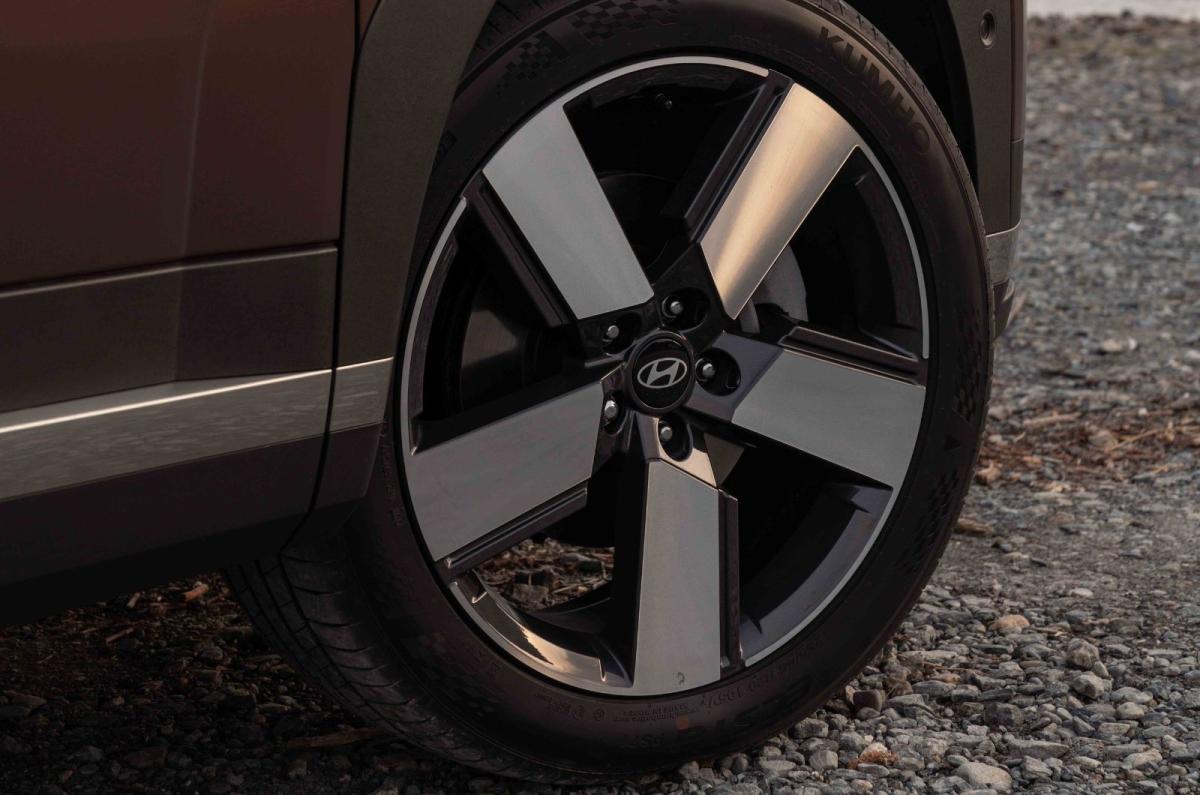
- Hyundai Santa Fe alloy wheel details
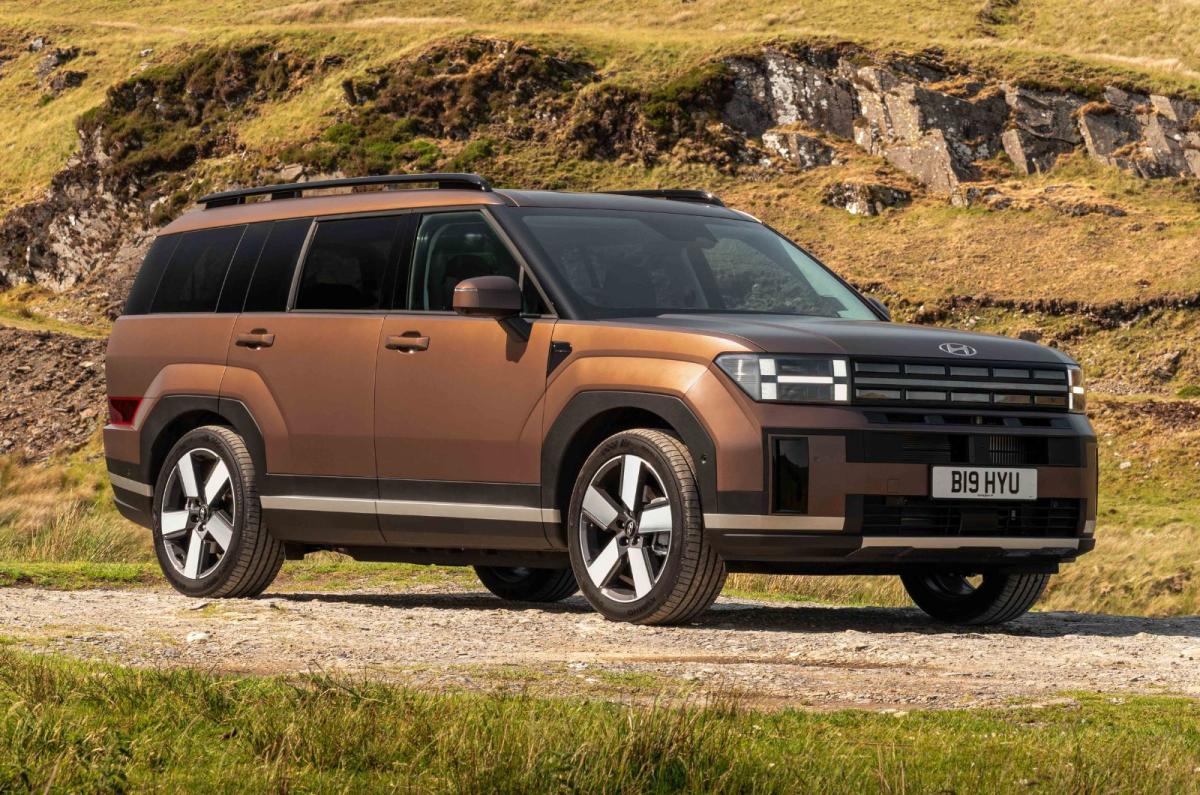
- Hyundai Santa Fe front static
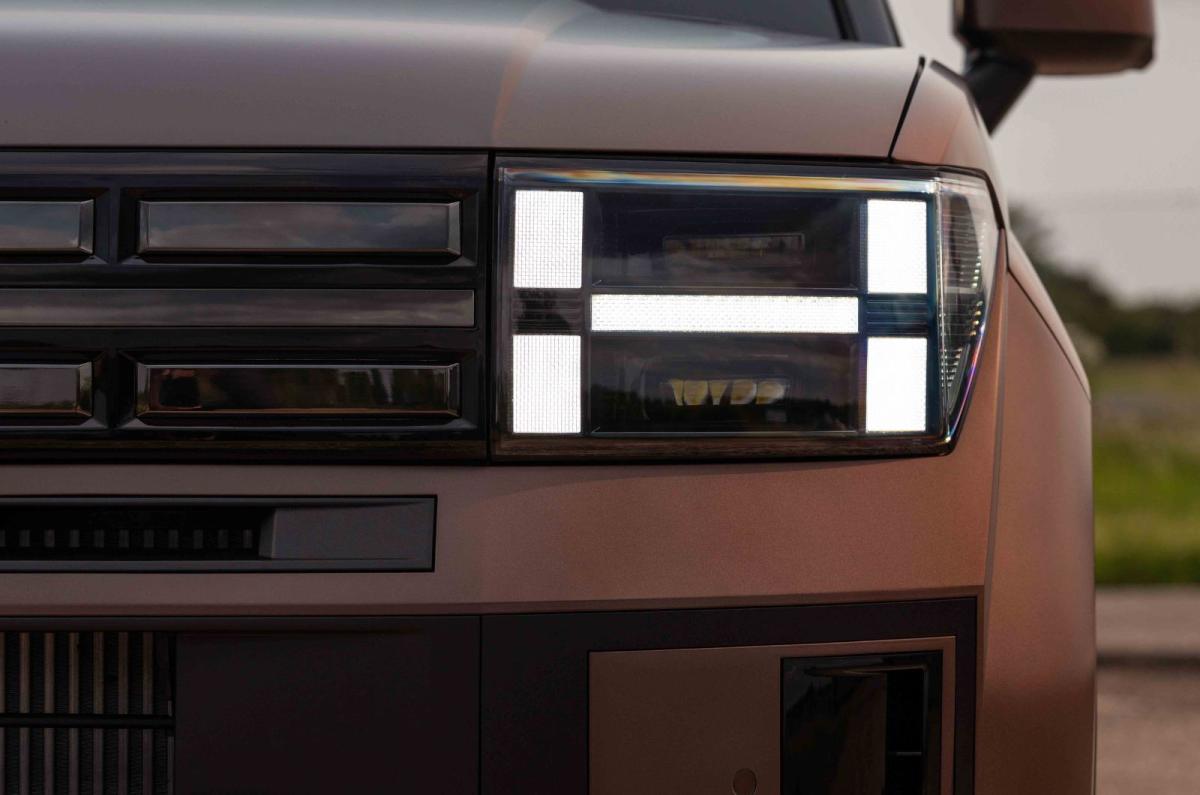
- Hyundai Santa Fe headlights
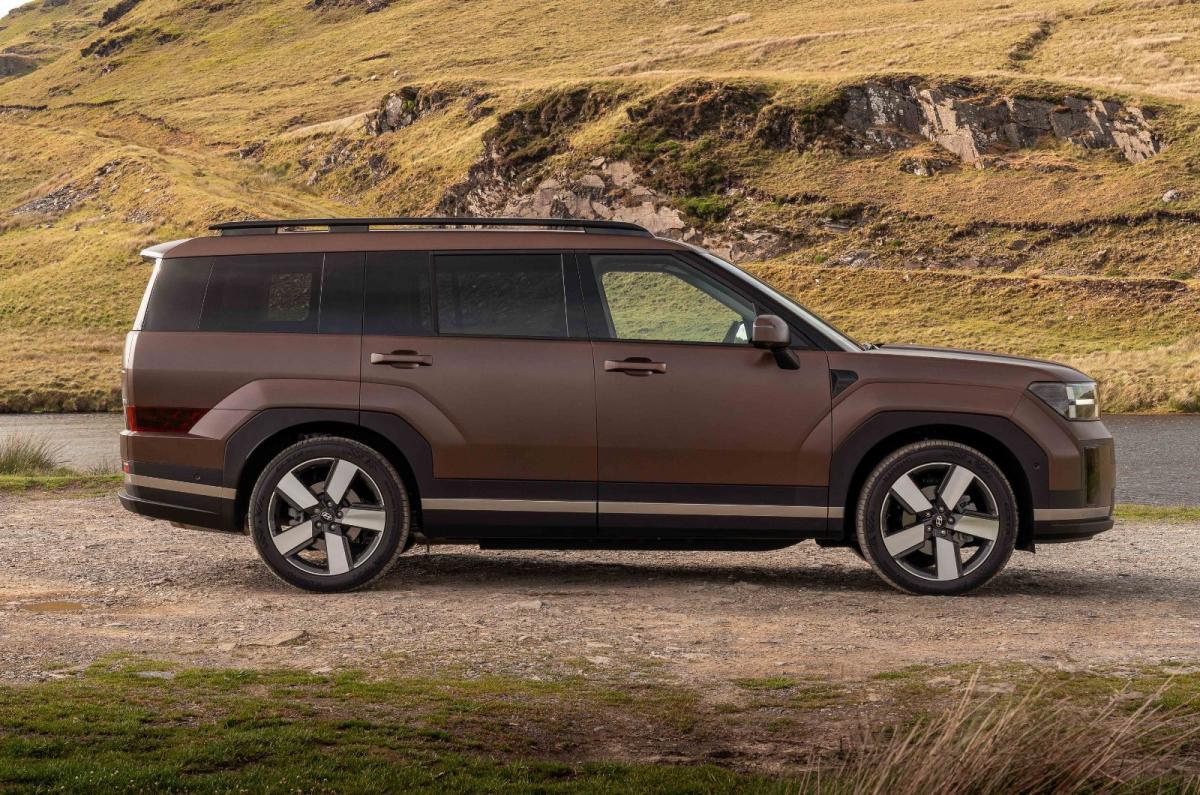
- Hyundai Santa Fe side profile static
- Used Hyundai Santa Fe 2018-2024 interior dashboard
- Used Hyundai Santa Fe 2018-2024 interior back seats
- Hyundai Santa Fe rear cornering
- Hyundai Santa Fe dashboard
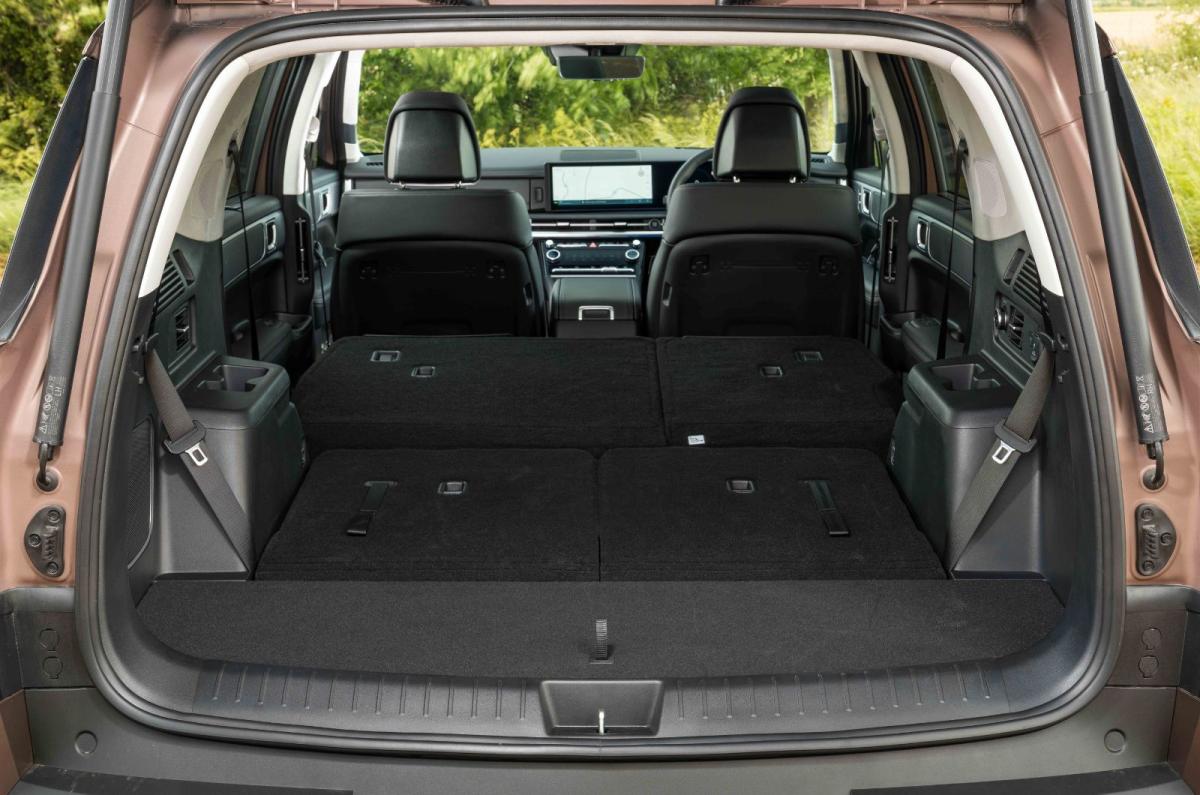
- Hyundai Santa Fe boot
- Hyundai Santa Fe rear driving



What is What Car? best price?
The What Car? best price shows you the cheapest way to buy your new car, whether it's by choosing an in-stock car through our partner Autotrader or placing a factory order.
Available now from: £42,890
RRP from: £49,140
About our price indicator
What Car? indicative Personal lease example (subject to status)
1.6 T-GDi 13.8kWh Ultimate SUV 5dr Petrol Plug-in Hybrid Auto 4WD Euro 6 (s/s) (7Seat) (288 ps)
| Expected annual mileage | 5000 |
| Term months | 36 |
| Deposit months | 12 |
| Monthly payment | £376.31 |
| Initial payment | £4,515.72 |
Step-by-step
Leasing works a bit like a long-term rental. You drive it, but you don’t own it.
- Choose your car, pick your terms and apply for lease credit online
- Pay monthly rental payments for your chosen term length
- Drive it, enjoy it, then give it back at the end
What you get
When you lease with Autotrader you get all of this:
- Full manufacturer’s warranty
- Road tax and roadside assistance included
- No admin fees
- Free returns within 30 days*

- Lower total monthly cost than PCP/HP
- No balloon payments
- Road tax included
Introduction
The Hyundai Santa Fe is aimed at those families who've grown out of five seats and need to fit a couple more people in the boot – or anyone who regularly lugs around lots of clobber.
Indeed, the Santa Fe is one of your best SUV options if it's maximum space you're looking for and you need a seven-seater. It's not much smaller than the Audi Q7 yet costs a lot less to buy, and has some clever practicality tricks up its sleeve to make family life that little bit easier.
What is What Car? best price?
The What Car? best price shows you the cheapest way to buy your new car, whether it's by choosing an in-stock car through our partner Autotrader or placing a factory order.
Available now from: £42,890
RRP from: £49,140
About our price indicator
What Car? indicative Personal lease example (subject to status)
1.6 T-GDi 13.8kWh Ultimate SUV 5dr Petrol Plug-in Hybrid Auto 4WD Euro 6 (s/s) (7Seat) (288 ps)
| Expected annual mileage | 5000 |
| Term months | 36 |
| Deposit months | 12 |
| Monthly payment | £376.31 |
| Initial payment | £4,515.72 |
Step-by-step
Leasing works a bit like a long-term rental. You drive it, but you don’t own it.
- Choose your car, pick your terms and apply for lease credit online
- Pay monthly rental payments for your chosen term length
- Drive it, enjoy it, then give it back at the end
What you get
When you lease with Autotrader you get all of this:
- Full manufacturer’s warranty
- Road tax and roadside assistance included
- No admin fees
- Free returns within 30 days*
- Lower total monthly cost than PCP/HP
- No balloon payments
- Road tax included
Once upon a time, the Santa Fe was available exclusively as a diesel. Times have changed, though, and Hyundai has now part-electrified the Santa Fe with a couple of hybrid petrol engines filling out the range.
There's a regular 'self-charging' hybrid (HEV) and a plug-in hybrid (PHEV). The HEV offers better fuel economy and lower CO2 emissions than a traditional petrol engine would, while the PHEV has a battery pack that can be charged up by plugging it into the mains, allowing pure electric motoring for an official 36 miles.
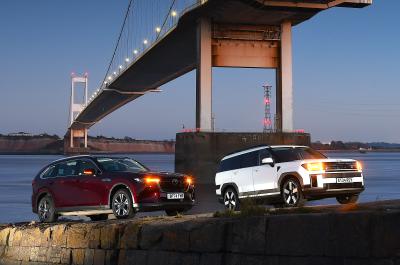
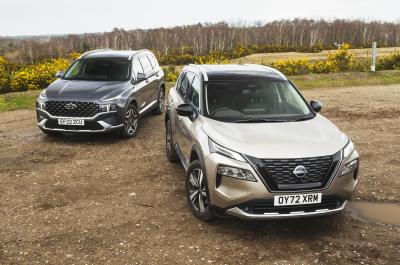
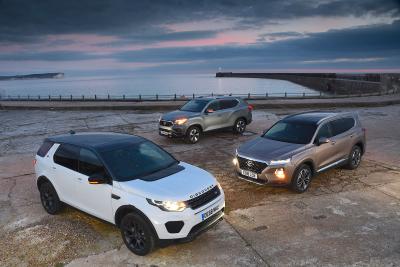
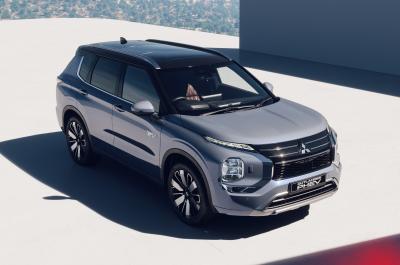
The Santa Fe's chief rivals include the Kia Sorento – a car that's actually very similar underneath – plus the slightly smaller Land Rover Discovery Sport and Peugeot 5008. You might also be considering the Nissan X-Trail and the Skoda Kodiaq.
So, how does the Hyundai Santa Fe square up against those cars, and other large SUVs that might have caught your eye? We’ll tell you all you need to know over the next few pages of this review, including what it's like to drive, how comfortable the interior is and whether or not it makes financial sense.
When you know which model of car you want to buy, we could save you thousands on the brochure price if you search for discounts on our free What Car? New Car Deals pages. They have some great new large SUV deals.
vjug

Pros
- Outstanding seven-seat practicality
- Comfortable and quiet at speed
- Long warranty
Cons
- PHEV’s underwhelming electric-only range
- Not the quickest or most agile seven seater
- Some rivals are even cheaper
Trims available
Performance & drive
What it's like to drive, and how quiet it is

Strengths
- Largely comfortable ride
- Easy to drive smoothly
- Impressive refinement
Weaknesses
- Not the most agile SUV
- Useful performance but there are quicker rivals
How fast is it and which engine is best?
The Hyundai Santa Fe HEV and PHEV both use a 1.6-litre petrol engine, an electric motor, and an automatic gearbox. And both versions are capable of 0-62mph in around 9.0secs – a respectable effort for a seven-seat SUV. The PHEV has slightly more power (250bhp vs 236bhp), but you’ll barely notice the difference.
Private buyers are best off with the cheaper HEV. It’s not really worth spending extra for the PHEV (you'll struggle to recoup the cash in fuel savings) unless you’re a company car driver. That's because the PHEV is officially capable of travelling 33 miles on electric power alone, putting it in a lower BIK tax band (13%).
Mind you, a fair few rival PHEVs are in lower tax bands because they have a longer electric range. For instance, the Skoda Kodiaq iV can officially travel up to 76 miles and, as a result, it’s in the 6% band.
Is it agile and is the ride comfortable?
Whichever version you pick, the Santa Fe is easier to drive than you might think given its size. The steering is accurate, allowing you to place the car instinctively on the road. Body lean is kept in reasonable check during cornering, albeit not to the same degree as the sportier Mazda CX-80.
It’s worth mentioning that the Santa Fe HEV feels slightly sharper than the PHEV around tight bends, which is unsurprising given the PHEV's bigger battery makes it heavier.
On a similar note, the lighter HEV rides better, too. It rides comfortably around town and the ride gets even smoother the faster you go. The PHEV doesn’t ride quite as well, but every Santa Fe rides more comfortably than the CX-80.
Is it quiet and how easy is it to drive smoothly?
While the ride is good you do hear the suspension working away on really rough roads, and when you accelerate hard the petrol engine becomes quite vocal.
When you're bumbling along at a more steady pace, though, the Santa Fe’s engine fades into the background and the hybrid system shifts unobtrusively between petrol and electric power.
There's very little wind and road noise at motorway speeds, which makes the Santa Fe a relaxing car for long journeys.
"The Santa Fe's high-speed ride is superb; add in its hushed cruising manners and I found it's great for long distances" – Will Nightingale, Reviews Editor
Interior
The interior layout, fit and finish
Strengths
- Great driving position
- Excellent visibility
- Smart interior
Weaknesses
- Mazda CX-80 feels even more upmarket inside
- Some fiddly touch-screen climate controls
What does the interior look like and is it well made?
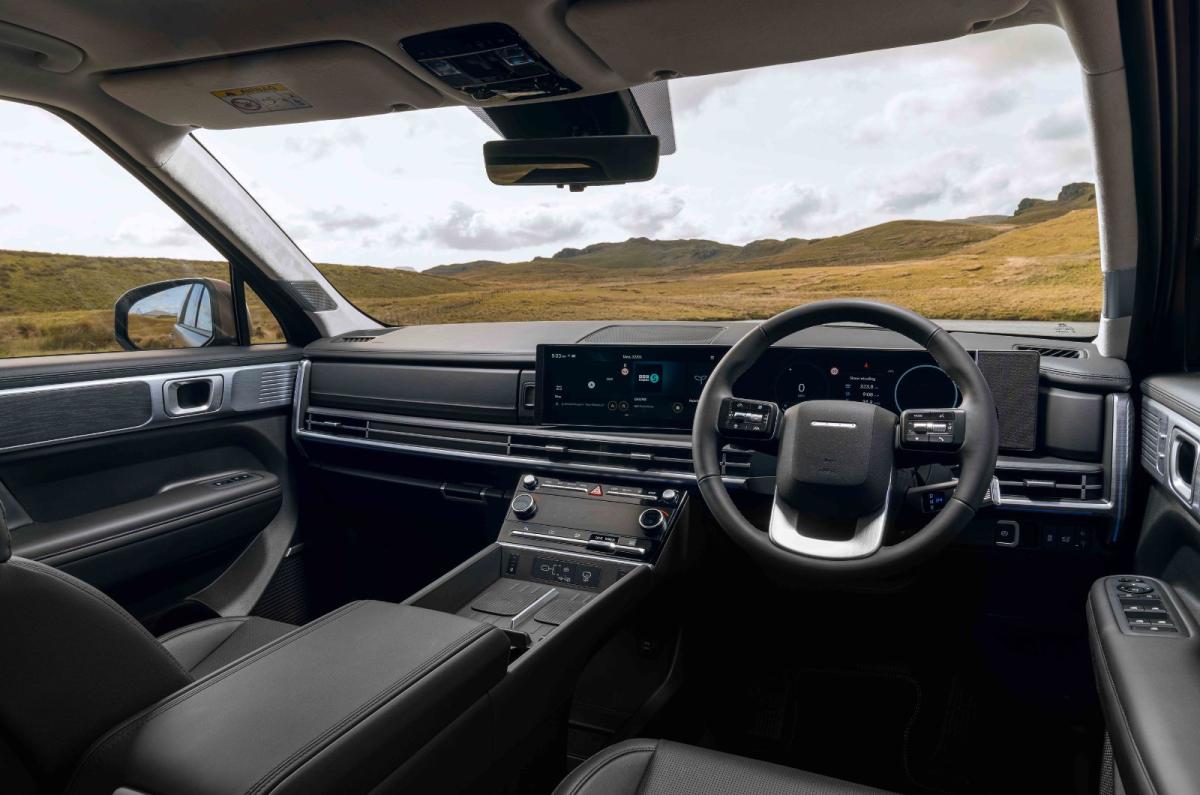
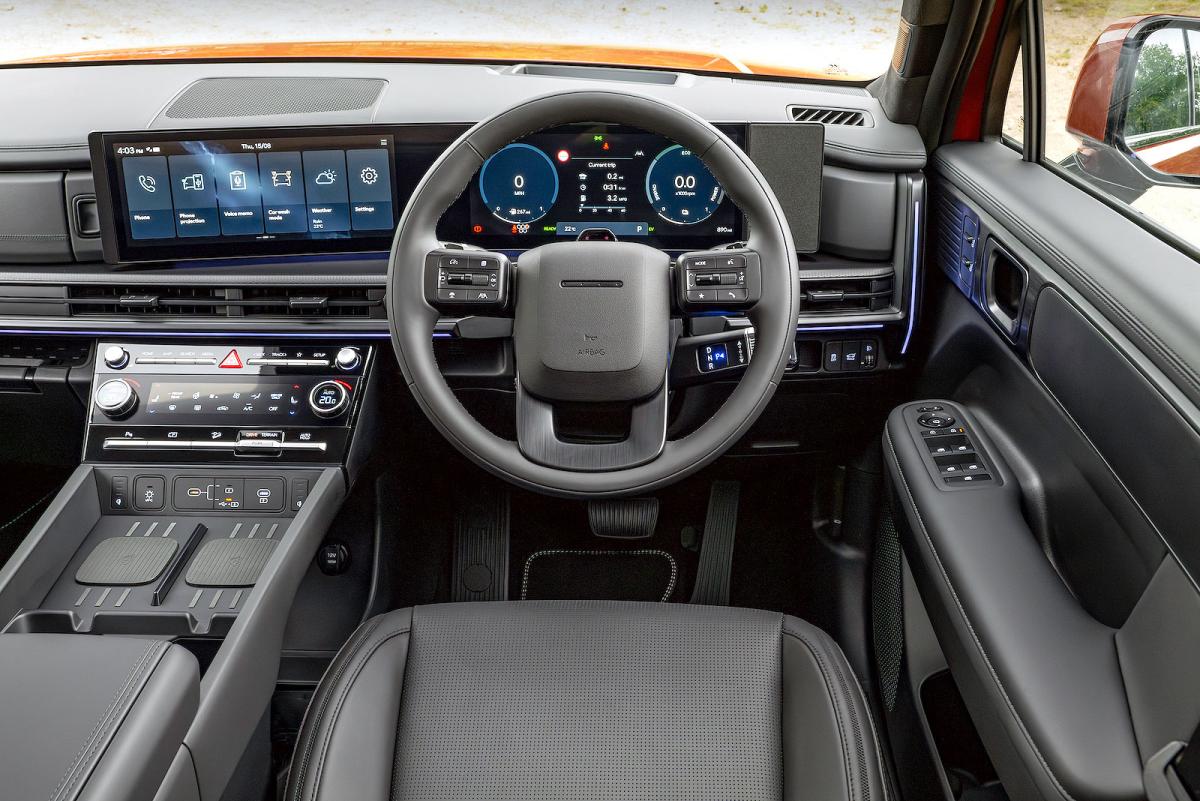
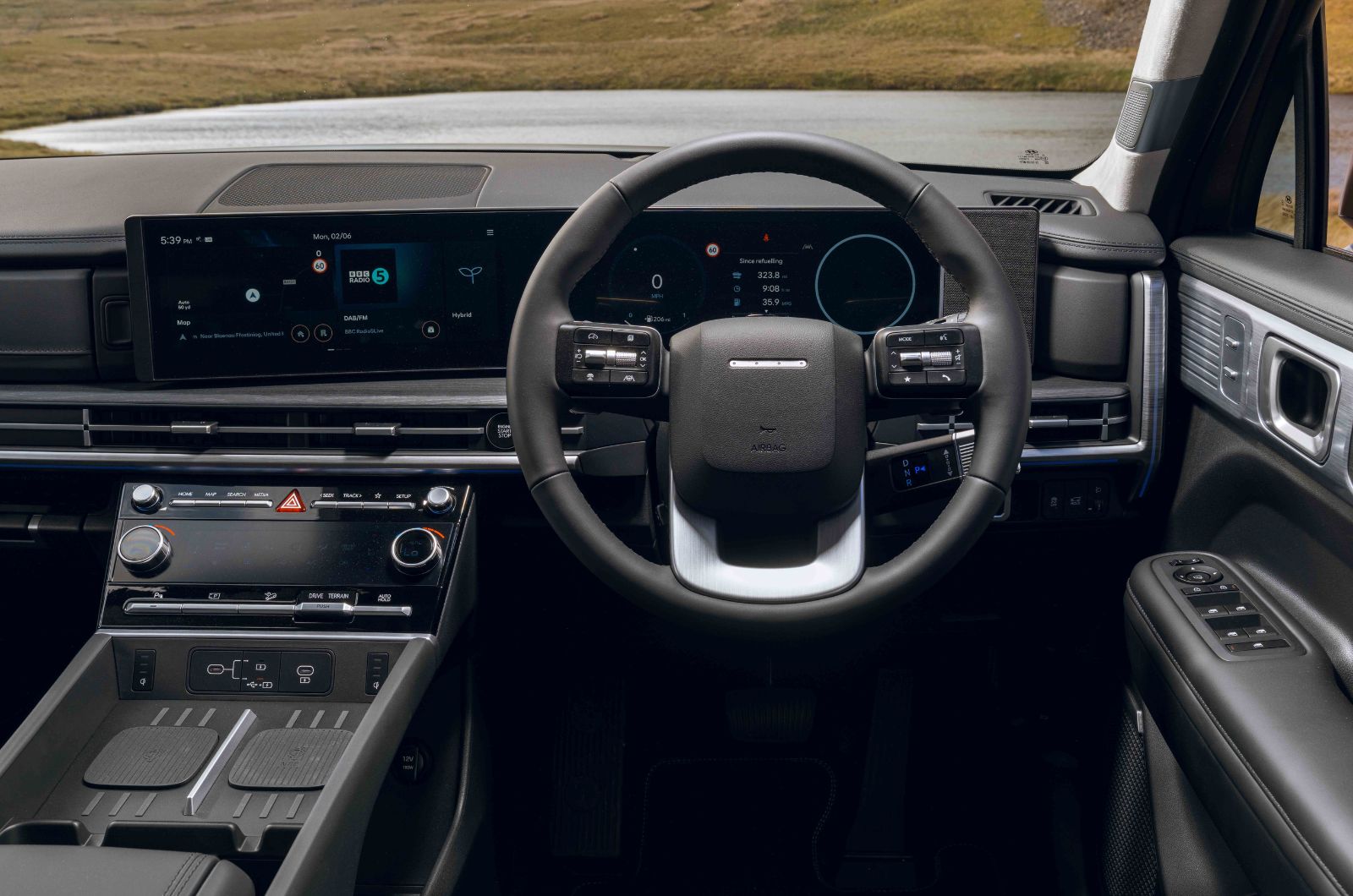
The Santa Fe’s interior is a classy, grown-up space that might remind you more of a Land Rover Defender than a Hyundai – or rather, of Hyundais of old. There’s a nice mix of materials and, while all trim levels come with a black interior as standard, you have multiple optional colour schemes to lighten the ambience.
Top spec Calligraphy trim adds in some even better materials, including Nappa leather seats, to make the Santa Fe feel even more premium.
The interior feels like it’s been screwed together sturdily, and overall the Santa Fe feels just as posh inside as the Peugeot 5008. The Mazda CX-80 pips them both with its even more premium feel, though.
Is the driving position comfortable and is it easy to see out?
The Hyundai Santa Fe's driving position is fantastic. There's plenty of steering wheel adjustment, and every version comes with electric front seats (including lumbar adjustment). Ultimate trim and above add a memory function, too.
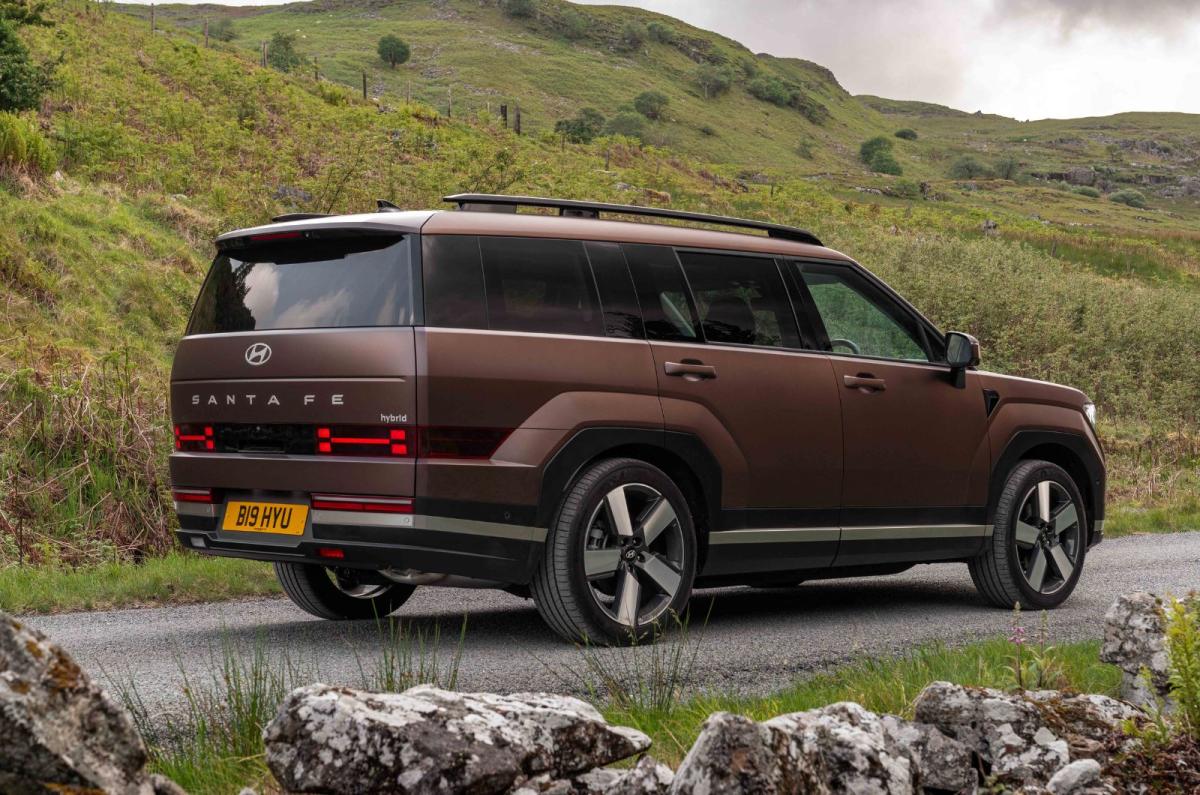
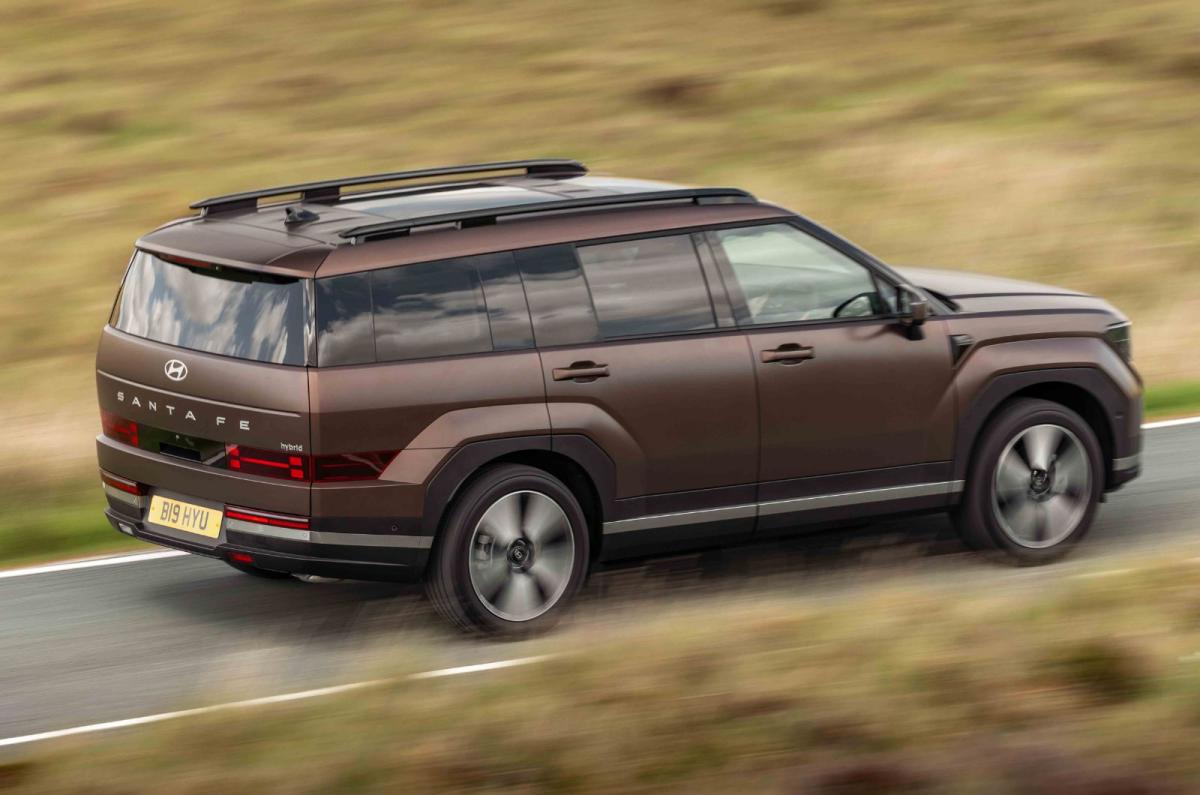
Another plus is how high up you sit. It gives you a terrific view of the road ahead and you can easily see where the bonnet ends, too. Large door mirrors let you see what's drawing up alongside the car, and the view out of the back is also decent. Where most rivals have thick and angled rear pillars, which limit your over-the-shoulder view, the Santa Fe's boxy rear, with big, square back windows, is a real plus.
Still, it’s good to have front and rear parking sensors and a reversing camera to help out, which are all standard across the range. If you opt for mid-range Ultimate trim that camera is upgraded to a surround-view camera and you get a system that’ll park the car for you.
Opting for one of those top two trims also adds a rear-view mirror that you can turn into a digital screen, showing a feed from a camera at the back of the car. It's handy in the event the rear window is obstructed, either by people or by something big in the boot.
Are the dashboard and infotainment system easy to use?
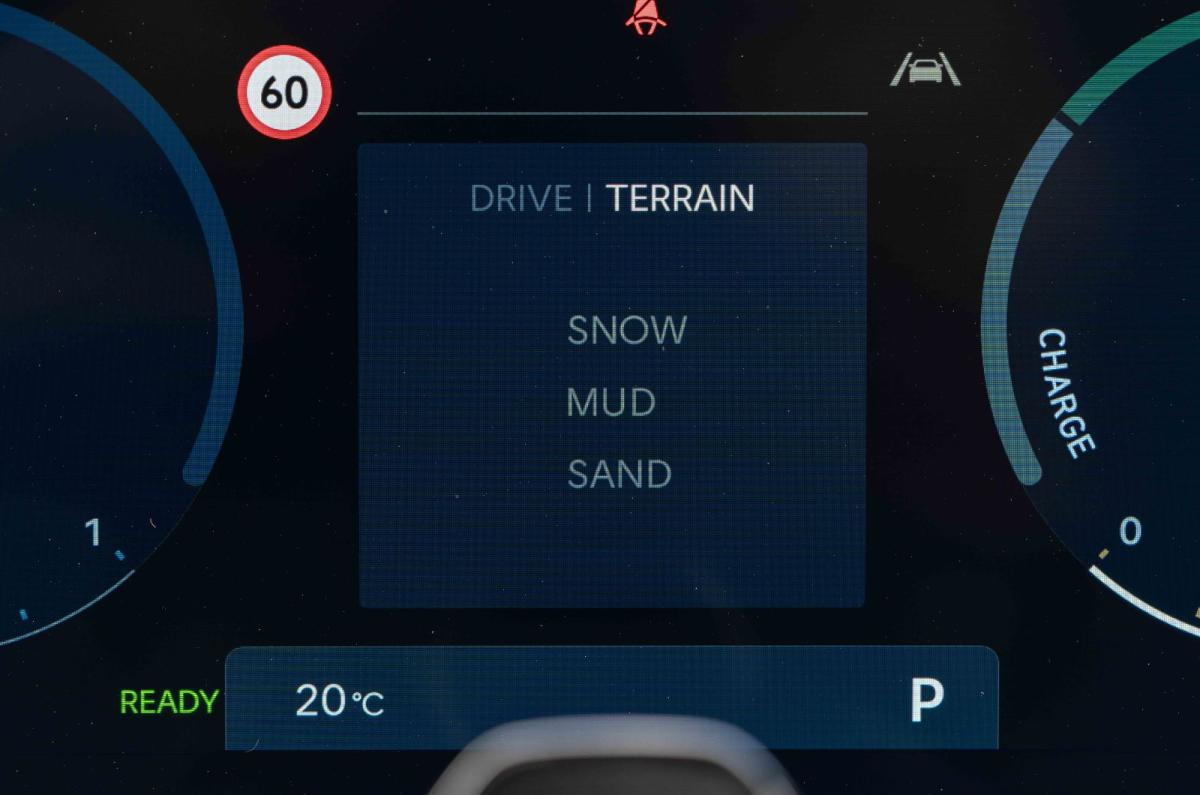
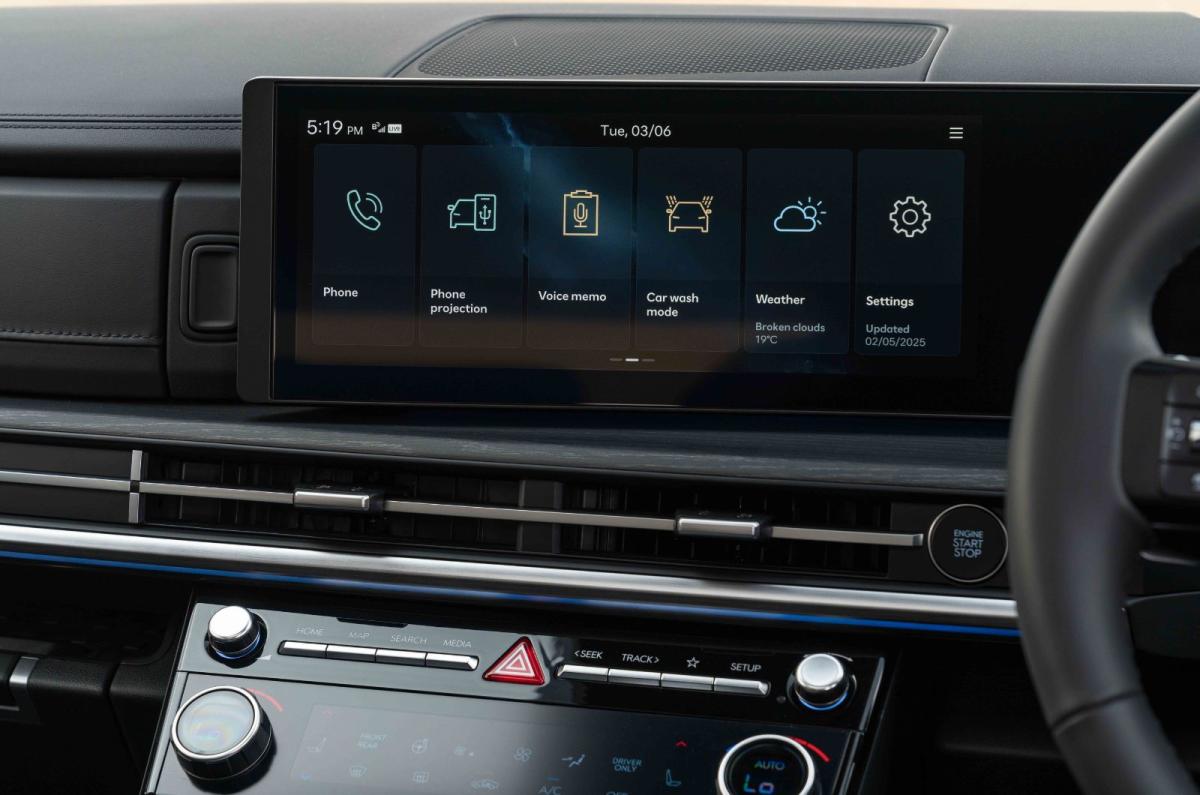
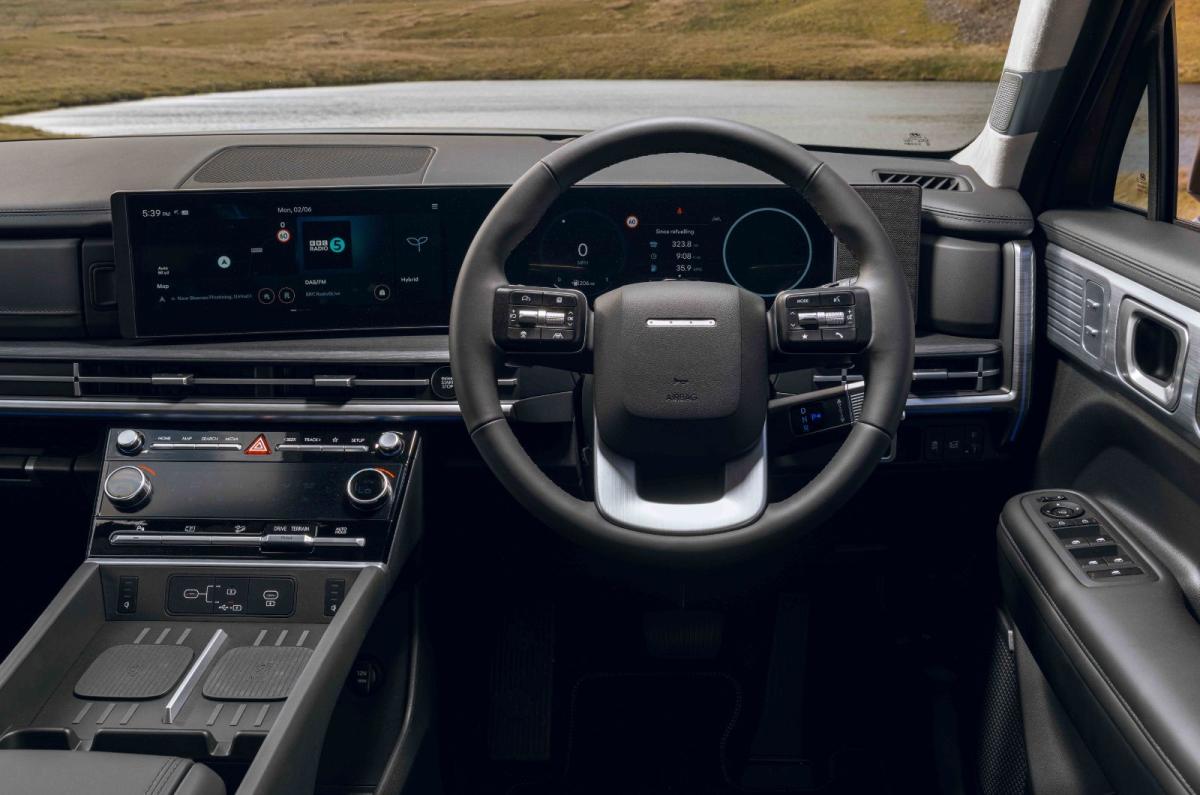
The Santa Fe has a pair of 12.3in screens, consisting of a digital driver’s display behind the steering wheel showing all your driving data, and an infotainment touchscreen to the left of it.
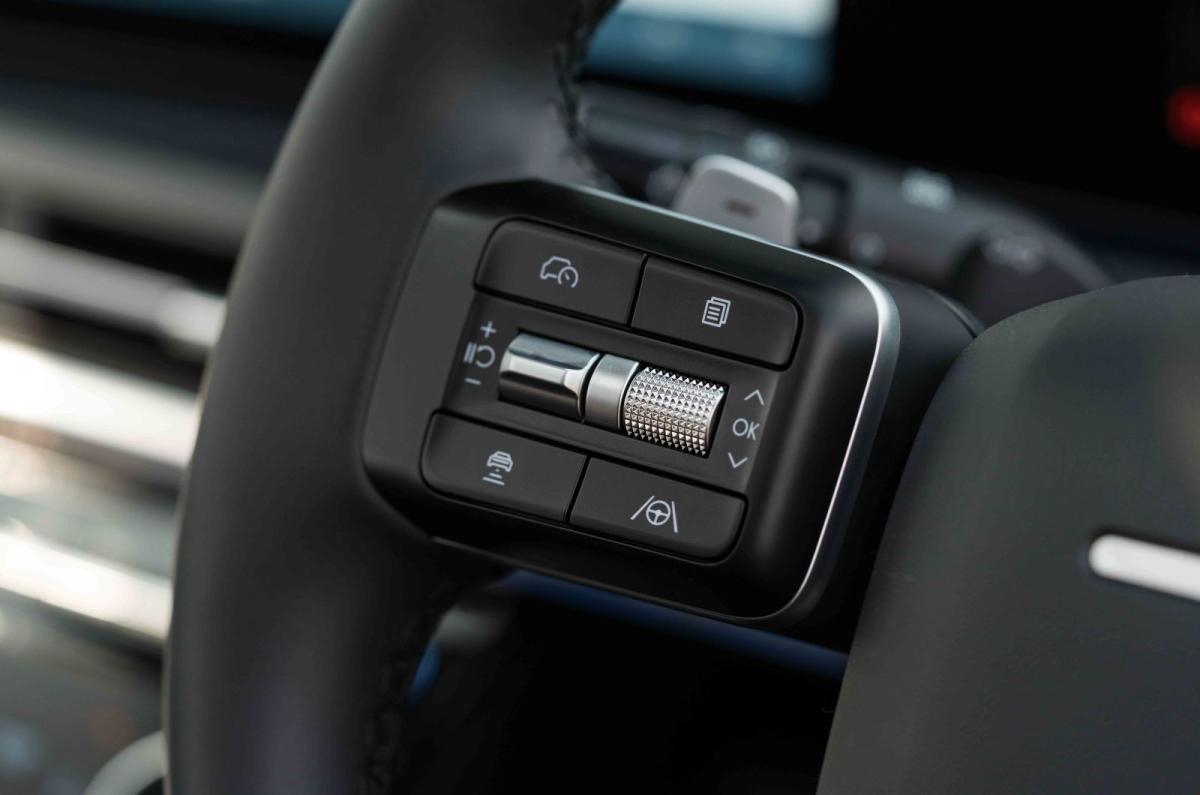
The infotainment system is user-friendly. There are physical shortcut buttons and the menus are easy to make sense of. What’s more, the graphics are sharp and the software reasonably responsive to inputs. Wireless Android Auto and Apple CarPlay are included as standard.
Sitting below the infotainment screen is a slim, 6.6in touchscreen for the climate controls. It's a bit fiddly using the touch icons while driving but, fortunately, the screen is flanked by physical dials for adjusting the temperature. You don't get any physical climate controls in the Peugeot 5008 – everything is crammed into its two touchscreens.
The Mazda CX-80 also goes big on easy-to-use physical controls, making it another one to recommend for user friendliness.
"Being such a big, chunky car, I thought the Hyundai Santa Fe might be a tad tricky to see out of. Fortunately, that’s not the case." – Lawrence Cheung, New Cars Editor
Passenger & boot space
How it copes with people and clutter
Strengths
- Fantastic passenger space, even in the third row
- Huge boot
- Loads of interior storage
Weaknesses
- Six-seat layout available only with top trim
How much space does it have for people?
There’s loads of room in the front of the Hyundai Santa Fe – not only for the driver and a passenger but also for storage. And when we say 'loads', we really mean it. You’ll find big cupholders, huge trays between the seats, and a large compartment under the front central armrest. Handily, the armrest has two-way opening so you can access it whether you're in the front seats or the second row.
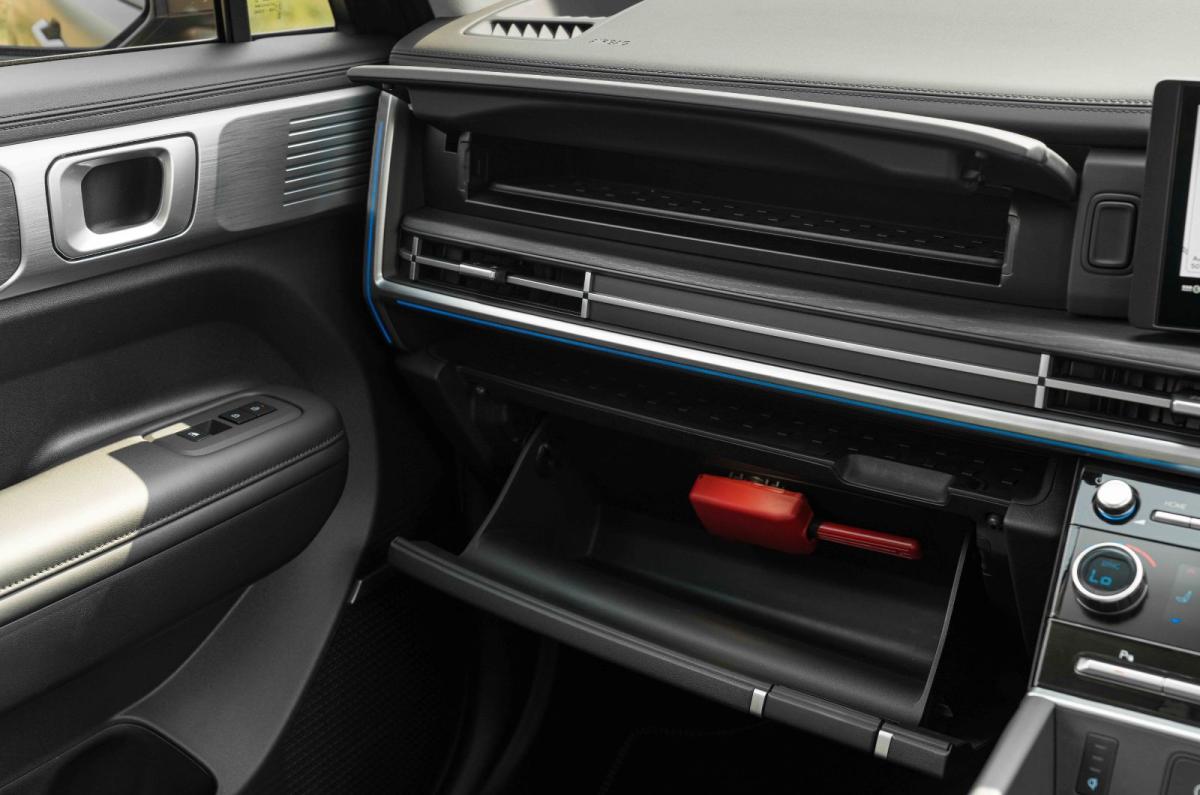
There’s also a second, smaller glovebox above the main one, which is a good size, and on top-spec Calligraphy models there's a second storage compartment in the dashboard that uses UV lighting to sterilise objects inside.
Calligraphy trim also gets Hyundai’s Relaxation Seats, which we first saw in the Hyundai Ioniq 5. They recline right back and have leg rests to help you relax if you’re ever sitting waiting for something – or someone – in your Santa Fe.
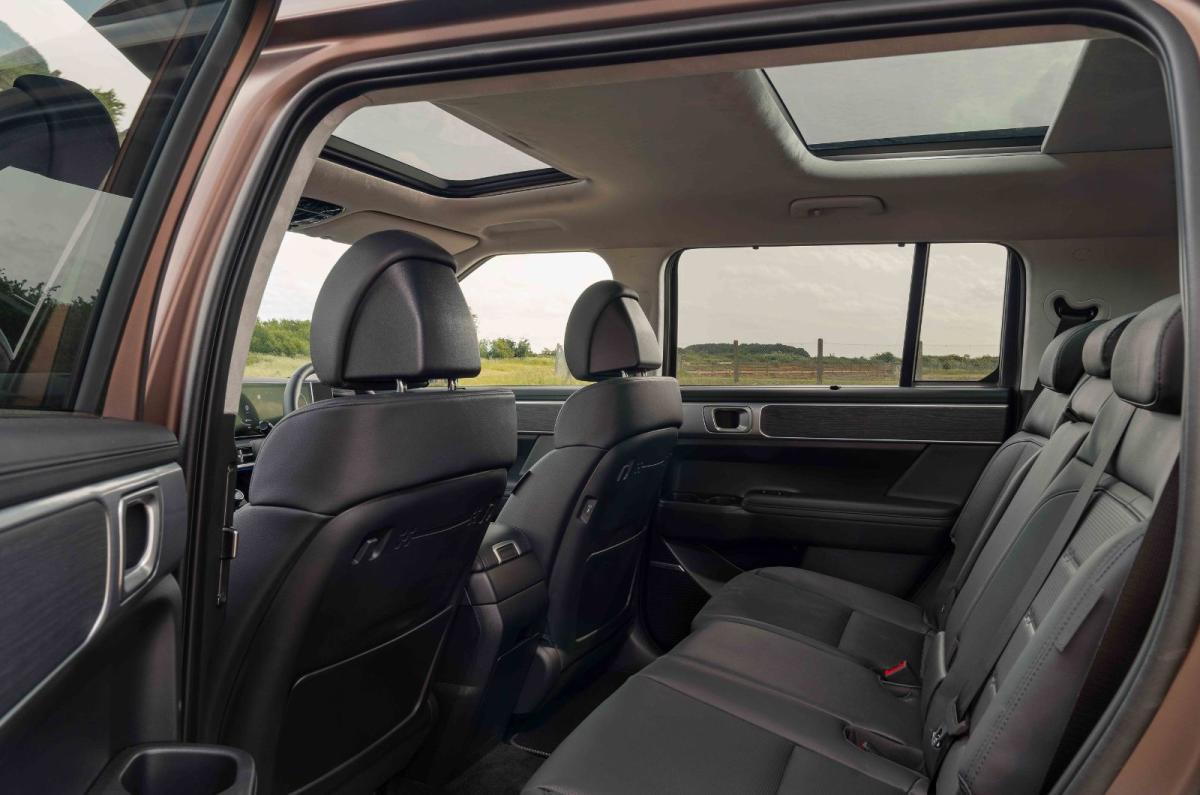
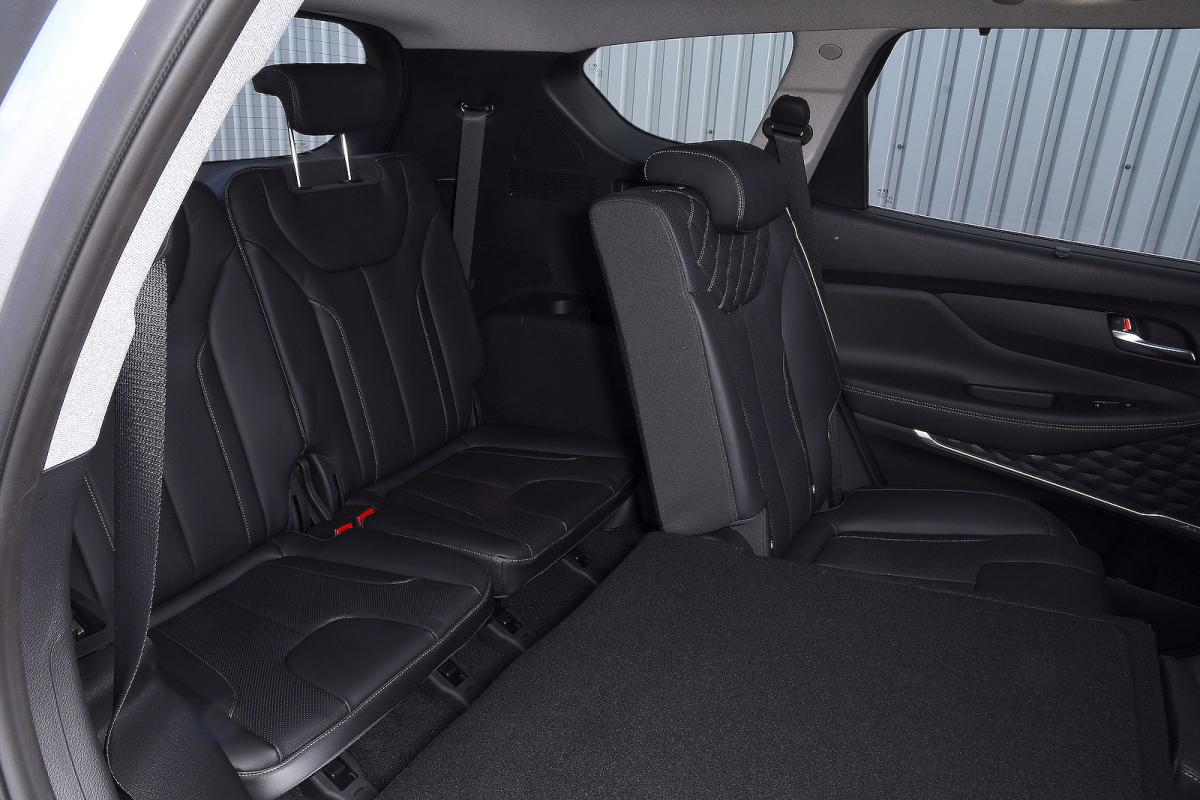
But it’s in the back where the Santa Fe really excels. For starters, access to the rear seats is fantastic. The rear doors are large and open wide, and it’s a simple process to slide the middle row forwards and climb into the third row of seats.
In the middle row the space is vast. There’s loads of head and leg room to allow six-footers to stretch out and relax, and you can slide and recline the middle row to improve comfort.
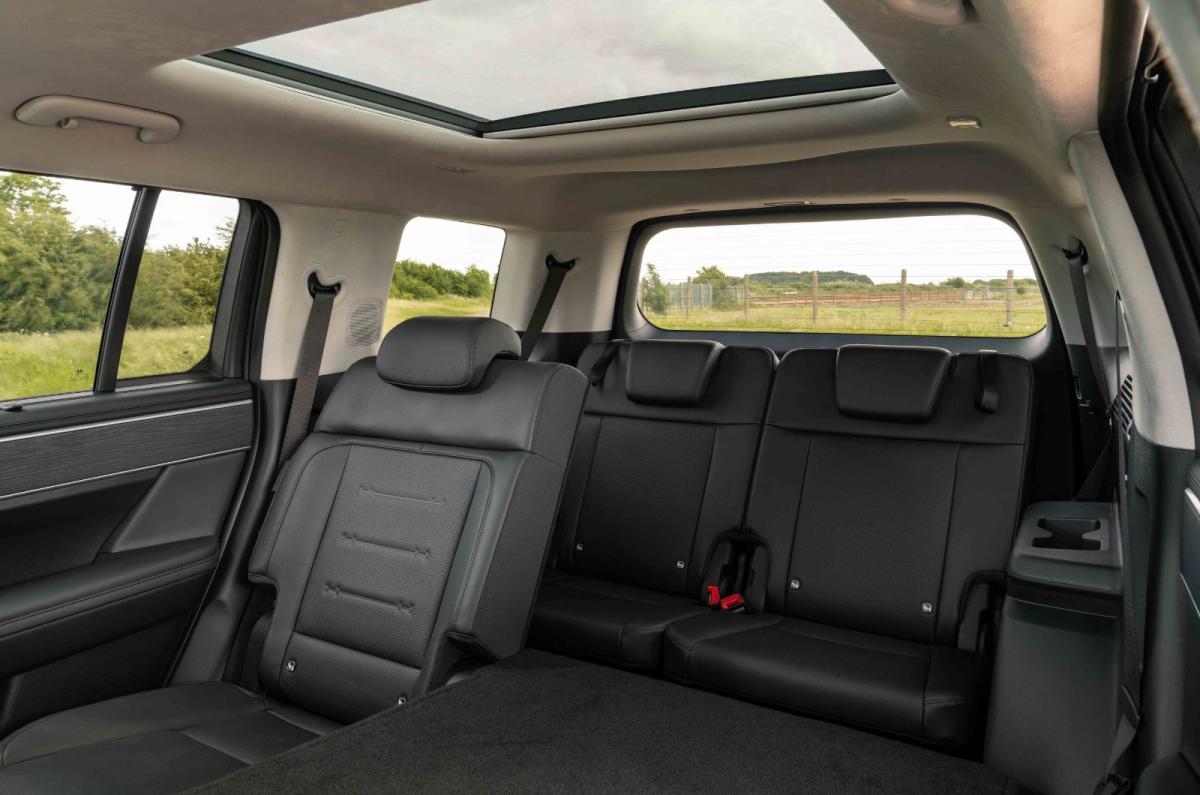
The Santa Fe is available as a seven-seater (three middle-row seats, two third-row seats). Alternatively, if you go for Calligraphy trim, you can opt for six seats (two seats in both the middle and third-row). In that case, you get large and comfortable ‘captain seats’ for all six occupants and a walkway down the middle of the car for easy access to the third row.
Even the third row is amazingly spacious relative to some seven-seaters that are available for similar money, including the Mazda CX-80 and Peugeot 5008. The Santa Fe's boxy styling means there's plenty of head room, and knee room isn't bad in the rear-most seats, either – especially if second-row guests are willing to slide (or tilt) their seats forward a bit.
How much room does it have for luggage?
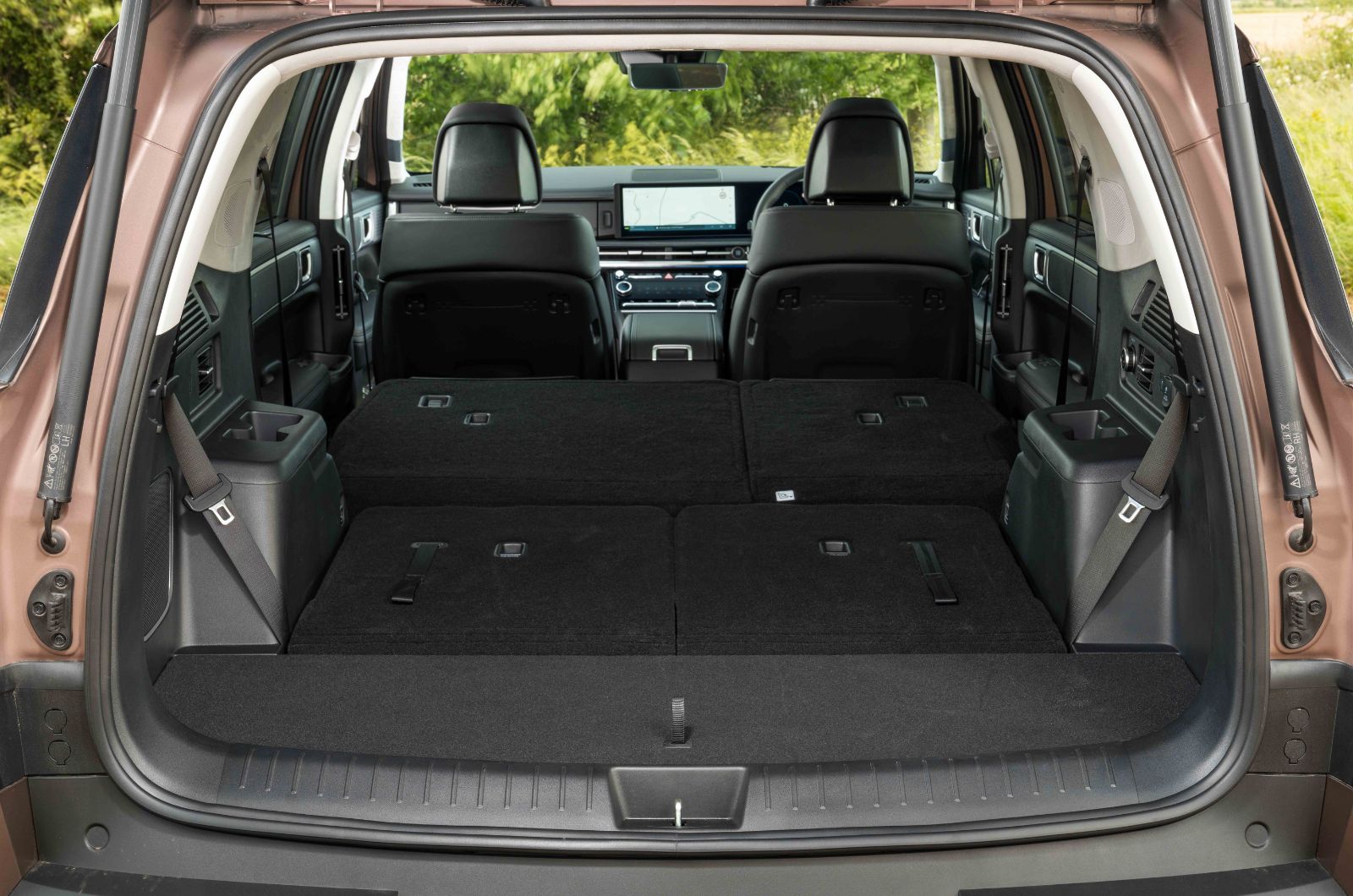
With the third row of seats folded flat, the Santa Fe's boot space is enormous: 628 litres is available in the HEV and 621 litres in the PHEV. Both of those figures exceed the amount offered by the Kia Sorento. If you want even more space, you can fold both the second and third row down, which pretty much turns the Santa Fe into a large van.
On top of that, the boot opening is incredibly wide and the load lip is low. In short, hauling things in and out of the boot is made as easy as possible.
"I’ve slept in the back of a Hyundai Santa Fe, and you’d have to be more than six feet tall to not fit comfortably." – Oliver Young, Reviewer
Buying & owning
Everyday costs, plus how reliable and safe it is
Strengths
- Long warranty
- Plenty of standard kit
- Impressive real-world fuel economy (HEV)
Weaknesses
- Some rivals, including the Peugeot 5008, are even
- PHEV costs more in BIK tax than some rivals
- Some versions miss out on a five-star NCAP rating
How much does it cost and what equipment do you get?
As we mentioned earlier, company car drivers will be better off financially with the Hyundai Santa Fe PHEV; the HEV sits in the highest BIK tax band. But some PHEV rivals (like the Skoda Kodiaq iV) have a longer electric range, and that drops them into an even lower BIK tax band.
The HEV is the better choice if you're purchasing privately because it's a lot cheaper and slightly better to drive. What’s more, while the ability to charge the PHEV at home and run on electricity might sound like a perk, the reality is that any fuel savings – compared to the HEV – will take a long time to overtake the extra cost of the PHEV. Indeed, during a 380-mile test on a mix of roads, the Santa Fe 2WD HEV averaged an impressive 39.6mpg.
Ways to buy
On the subject of charging the PHEV, it's a process that takes around 2hr 15min from a typical 7kW home wall box.
We reckon the Santa Fe's entry-level Premium trim makes the most sense. It’s well equipped, including 20in alloys, heated front seats, keyless entry, two-zone climate control, a wireless phone-charger, adaptive cruise control and a powered tailgate with hands-free opening.
Mid-range Ultimate trim pushes the price up by a few thousand pounds but adds plenty more kit, including a head-up display, ventilation for the front seats, heating for the outer middle-row seats, a second wireless phone charger, a premium Bose sound system and dual sunroofs.
The price jump to top-spec Calligraphy trim is smaller by comparison, but it only really gains black 20in wheels, some black detailing on the exterior, the ability to have six (rather than seven) seats and a UV sterilising box.
The two top trims push the Santa Fe towards the price territory of premium-badged alternatives, including the Land Rover Defender and Volvo XC90, so are less recommendable.
Is it reliable, and how long is the warranty?
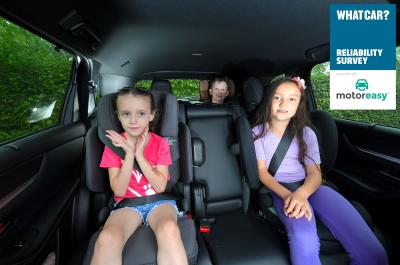
While the latest Santa Fe has yet to appear in our What Car? Reliability Survey, the previous version finished at the top of the seven-seater category, so that bodes well.
While the latest Santa Fe has yet to appear in our What Car? Reliability Survey, Hyundai performed well in the 2025 survey, finishing 14th out of 30 manufacturers in the overall brand league table. That's not as good as Citroen, Kia or Peugeot, but higher than both Seat and Skoda, and far better than Land Rover.
Giving you extra peace of mind is Hyundai's five-year/unlimited-mileage warranty. That’s a longer warranty than most – the typical duration is three years – although Kia offers seven years of cover on the Sorento, while Toyota's cover lasts up to 10 years if you use official dealerships for the servicing.
How safe is it, and is it easy to steal?
The Santa Fe's Euro NCAP safety rating depends on which trim you go for. Entry-level Premium trim misses out on some safety aids and scores four stars (out of five). However, if you pay extra for the optional SmartSense+ Pack (standard on Ultimate and Calligraphy trims) this boosts the rating up to five stars.
“The Santa Fe gets quite pricey if you want four-wheel drive and range-topping Calligraphy trim. That's why I think the hybrid (HEV) version in entry-level Premium trim makes the most sense.” – Will Nightingale, Reviews Editor
Buy it if...
- You want masses of space, including in the third-row seats
- You need a massive boot
- You're after a car that's both comfortable and quiet at speed
Don't buy if...
- You want the quickest 7-seat car
- You fancy the best-handling 7-seat car
- You want a PHEV with a really long electric range
For all the latest reviews, advice and new car deals, sign up to the What Car? newsletter here
Similarly priced cars


If you're interested in finding a Hyundai Santa Fe, or any of the other 7-seater cars mentioned here, head over to our Cars available now pages to find new cars listed for sale at great prices.
FAQs
Hyundai Santa Fe specifications
RRP price range
MPG range across all versions
Available fuel types (which is best for you? )
Available colours
Number of engines (see all)
Number of trims (see all)
Company car tax at 20% (min/max)
Company car tax at 40% (min/max)
What is What Car? best price?
The What Car? best price shows you the cheapest way to buy your new car, whether it's by choosing an in-stock car through our partner Autotrader or placing a factory order.
Available now from: £42,890
RRP from: £49,140
About our price indicator
What Car? indicative Personal lease example (subject to status)
1.6 T-GDi 13.8kWh Ultimate SUV 5dr Petrol Plug-in Hybrid Auto 4WD Euro 6 (s/s) (7Seat) (288 ps)
| Expected annual mileage | 5000 |
| Term months | 36 |
| Deposit months | 12 |
| Monthly payment | £376.31 |
| Initial payment | £4,515.72 |
Step-by-step
Leasing works a bit like a long-term rental. You drive it, but you don’t own it.
- Choose your car, pick your terms and apply for lease credit online
- Pay monthly rental payments for your chosen term length
- Drive it, enjoy it, then give it back at the end
What you get
When you lease with Autotrader you get all of this:
- Full manufacturer’s warranty
- Road tax and roadside assistance included
- No admin fees
- Free returns within 30 days*
- Lower total monthly cost than PCP/HP
- No balloon payments
- Road tax included
Cars available now
About the writer