Skoda Scala review
Category: Family car
The Scala is a spacious family car that represents fantastic value for money next to its rivals


What Car? says...
If you find the prices of new family cars mind-blowing – and not in a good way – the Skoda Scala could provide some welcome relief.
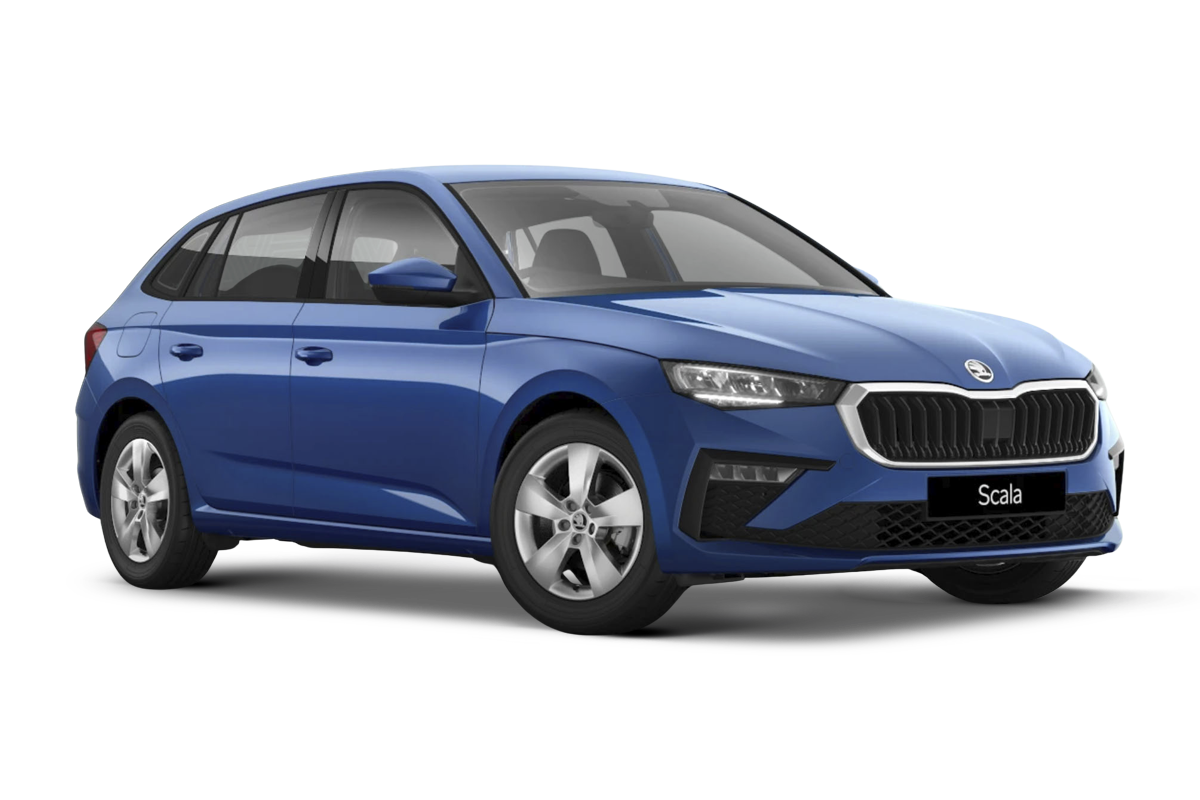
The Scala is refreshing because, while it's longer than a VW Golf, it has an attractively low price tag that costs less than its main rivals. Better still, the Scala has already received a mid-life update to help it remain competitive, with sharpened up looks and a mildly improved interior that upgraded the on-board tech.
With a choice of petrol engines and three familiar trim levels, there should be a Scala to suit a range of budgets, but is it good enough to compete with the best family cars, including the fun-handling Seat Leon, the impressively efficient Toyota Corolla and its VW Group stablemate, the Golf? And are you missing out on anything by not going for its bigger brother, the Skoda Octavia? Read on to find out...
What’s new?
- September 2024: Skoda ups value of Scala by adding more standard equipment to all trims
- September 2023: Scala facelifted, and gain an enhanced set of driver-assistance features

- July 2020: SE Technology trim offered as an incentive to business drivers. It comes with a 9.2in touchscreen infotainment system, wireless smartphone integration and charging, and parking sensors fore and aft
- January 2020: Scala gets a sporty edge in the shape of new Monte Carlo trim, which features black highlights and sports seats
- April 2019: Skoda opens order books for Scala hatch, a rival for the Ford Focus that features a choice of two petrol engines or one diesel. All models get air-con and LED lights as standard
Performance & drive
What it’s like to drive, and how quiet it is
Strengths
- +Comfier ride than most rivals
- +TSI 116 feels peppy enough
- +Feels relatively light on its feet
Weaknesses
- -Ford Focus is more fun
- -VW Golf is quieter
Engine, 0-60mph and gearbox
The Skoda Scala engine range starts with a 1.0-litre turbocharged petrol that's available in two states of tune: 94bhp (badged TSI 95) and 113bhp (TSI 116).
The TSI 95 – which comes with a five-speed manual gearbox – is fine, but can feel a little flat. We recommend the TSI 116 because it has enough low-end shove to easily keep up with the flow of traffic (0-62mph takes 9.5sec) and it provides the Scala with greater overtaking power. The TSI 116 also gets a six-speed manual gearbox.
If you have a bit more money to spend and are likely to carry a carload of people and luggage regularly, we can see the appeal of stepping up to the 148bhp 1.5 TSI 150 petrol. It's usefully swift and with an official 0-62mph time of 8.2secs, it just pips an equivalent VW Golf 1.5 TSI 150.
The five-speed manual gearbox you get with the TSI 95 and the six-speed one that comes with the TSI 116 offer a good, slick shift action. The optional automatic gearbox (available with the TSI 116 and 1.5 TSI 150) can be a bit slow to respond if you ask for a burst of acceleration.
Suspension and ride comfort
The Scala has softer, cushier suspension than most family cars, meaning you’re better isolated from bumps and potholes than the likes of the Seat Leon and Mazda 3. The most comfortable Scala is the SE Edition trim on its standard 16in wheels, but even the higher trims on larger wheels ride well.
Where the Scala slightly trips up is when it comes to a harsh surface or set of bumps. In being so relaxed, the Scala can feel a bit unsettled, subjecting you to a wafty, side-to-side motion at times. The Honda Civic, Mazda 3 and Seat Leon feel more tied down, staying flatter over such surfaces.

Handling
The Scala feels light on its feet and handles tidily enough to feel composed. There's a fair amount of body lean, but it helps that the Scala delivers more grip, come rain or shine, than the Mazda 3.
That said, a neutral grip balance that makes it feel safe and secure means it’s not as sharp or as playful as the best-in-class Seat Leon or Honda Civic. The Scala’s light steering responds predictably, but also lacks the precision to make it as good to drive as those rivals.
Noise and vibration
Under hard acceleration, the Scala's three-cylinder 1.0 TSI engines transmit gentle vibrations through the pedals and steering wheel, but they settle down once you’re up to speed. The four-cylinder 1.5 TSI 150 petrol is smoother and quieter.
With a manual gearbox the Scala is easy to drive in traffic, thanks to the predictable accelerator, brake and clutch actions. The automatic gearbox is mostly smooth in its shifts but can be a little jerky when you're parking.
You'll hear more suspension noise than you would in the quietest family cars, while higher levels of wind and road noise put the Scala even further behind the best. For more peace and quiet on the commute, consider a Toyota Corolla or a VW Golf.
“I was generally impressed by the Skoda Scala’s level of comfort but I wish the ride felt a little more tied down.” – Oliver Young, Reviewer
Interior
The interior layout, fit and finish
Strengths
- +Good visibility
- +Proper physical air-con controls
- +Great digital dials
Weaknesses
- -Harder plastics lower in the interior
Driving position and dashboard
The Skoda Scala gives you a wide range of steering-wheel adjustment, while the driver's seat gets adjustable height and lumbar support as standard. It’s a slight shame you can no longer get electrically adjustable seats at all. Mind you, some taller drivers might want the seat to go lower because it can leave you feeling a bit perched up.
All Scalas now come with a brilliant 10in digital driver’s display (called Virtual Cockpit), with crisp graphics, a range of layouts and plenty of configurability. It’s more versatile and user-friendly than what you get in a Toyota Corolla and Vauxhall Astra.
Skoda has sensibly decided to keep buttons and knobs for the Scala's climate controls, making it easier to use than those in the Peugeot 308, which integrates the temperature and fan speed into the infotainment touchscreen.
Visibility, parking sensors and cameras
Thanks to the Scala's relatively slim windscreen pillars, forward visibility is impressive. The rear pillars are thicker, but there's still enough glass to give you much better over-the-shoulder vision than many rivals – including the Vauxhall Astra and the Mazda 3 (with its enclosed rear end).
Rear parking sensors and a rear-view camera come as standard on all Scalas, but you have to opt for the Convenience Package or upgrade to mid-range SE L Edition trim to get front parking sensors.
All versions get ultra-bright LED dipped-beam headlights. On Monte Carlo Edition trim cars, they're matrix LEDs, which actively dim certain sections of the light pattern so they can be left on full beam without dazzling other drivers. You can pay extra to have matrix LEDs on the SE L Edition.

Sat nav and infotainment
The Scala has one of the best infotainment systems in the family car class. Every version now gets a 9.2in touchscreen with a logical menu layout and some touch-sensitive shortcut buttons.
It has sharper graphics than what you get in a Honda Civic and the system certainly beats the setup in the Peugeot 308 and Toyota Corolla for usability, although the Mazda 3 has a dial control that makes it even more user-friendly.
You get sat-nav, DAB radio, Bluetooth, and smartphone mirroring for Android Auto and Apple CarPlay as standard. This allows you to run your own preferred sat-nav apps and play your music from your mobile.
Quality
The Scala's interior has taken a step forward since its original launch. Many of the hard, scratchy plastics across the dashboard have been replaced with soft-touch materials and recycled fabrics.
With SE L Edition trim and higher, you get a Lodge interior with a plusher mix of materials. Build quality is generally good, too.
With all that said, if you go searching for flimsy plastics you will find them as you venture lower down. If you want a more luxurious interior, we’d point you in the direction of an Audi A3 or Mazda 3.
“A car’s interior can indicate where costs have been cut, but I didn’t find the Skoda Scala’s much – if at all – worse than those of pricier family cars.” – Lawrence Cheung, New Cars Editor
Passenger & boot space
How it copes with people and clutter
Strengths
- +Roomy in the front and rear
- +Lots of in-car storage space
- +Big boot
Weaknesses
- -Narrow in the front
- -Seats don't do anything clever
Front space
Even if you’re well over six feet tall, you won't feel your hair brushing the roof of the Skoda Scala, and the seats slide far enough back to accommodate long legs.
The main difference between the Scala and many family cars – including the Kia Ceed, the Mazda 3 and the larger Skoda Octavia – is that it's narrower in the front. That means you and your passenger might feel a bit more cosy.
Storage space for odds and ends is good, and includes generous front door pockets, a decent-sized glovebox, a cupholder in the centre console, a large drawer under the front seats and a sunglasses holder above the rear-view mirror. There's a small cubby in front of the gearlever, which doubles as the area for the wireless phone-charging pad in Monte Carlo Edition trim.
Rear space
Rear space is one of the Scala's greatest attributes. Leg and head room are exceedingly generous for the class – beating even the spacious Ford Focus – and is up there with the Seat Leon and the Octavia.
There’s plenty of foot space under the front seats, and the cushy headrests help your passengers kick back happily and relax. Although the interior is narrower than in some family cars, none of the Scala’s rivals are wide enough to fit three adults in the back without a modicum of shoulder rubbing.
There's space for oddments, with two map pockets and two door bins. A rear armrest is standard with SE L Edition and Monte Carlo Edition trims.

Seat folding and flexibility
The Scala’s rear seatbacks fold in a conventional 60/40 split. Unlike in the Skoda Octavia, there are no release levers in the boot. That means you have to walk round, open the rear doors and press the buttons at the top of the rear seats, instead of being able to drop the seats while you're at the boot opening.
If you want an electrically operated tailgate, you need to go for range-topping Monte Carlo Edition trim and add the Convenience Plus Package.
Boot space
With the rear seats in their upright positions, the Scala can take more luggage in its 467-litre boot than a VW Golf. We managed to fit seven carry-on suitcases below the parcel shelf, against six for the Honda Civic and five in the Peugeot 308, Vauxhall Astra and VW Golf.
That means the Scala's boot capacity will be plenty for most people. If you do need a bigger boot, consider the larger Octavia (or the Octavia Estate).
The Scala’s boot is a useful square shape and has plenty of bag hooks, while the load lip is manageably low if you put the optional (and recommended) adjustable boot floor in its higher setting. Doing that also smooths out the step left in the floor when you fold down the rear seats.
“Skoda often scores well for space and practicality, so I was expecting good things from the Scala. Those expectations were thankfully met.” – Oliver Young, Reviewer
Buying & owning
Everyday costs, plus how reliable and safe it is
Strengths
- +Low list price relative to rivals
- +Frugal petrol engines
- +Plenty of attractive and well-priced options
Weaknesses
- -Hybrid rivals are more efficient
- -So-so safety rating
Costs, insurance groups, MPG and CO2
The Skoda Scala remains one of the cheapest ways into a good family hatchback. If you stick with our recommended SE Edition trim level, it significantly undercuts an entry-level VW Golf by thousands.
Fuel economy is also a Scala strength when compared with other regular petrols. You can expect more than 40mpg in the real world from the 1.0 TSI 116, while the 1.5 TSI 150 shouldn't be significantly worse.
With its low P11D price and sensible CO2 emissions, the Scala is also a fairly cost-effective choice as a company car because the BIK tax rate is reasonably low. We say "fairly” because there are no hybrid, plug-in hybrid or electric versions of the Scala to really push down BIK tax.
Equipment, options and extras
Our recommended trim for the Scala is the entry-level SE Edition, which gives you all the basics. It includes 16in alloy wheels, dual-zone climate control, a leather-trimmed steering wheel and gear knob, a front centre armrest, cruise control, automatic lights and wipers and an auto-dimming rear-view mirror.
Mid-spec SE L Edition trim is worth considering if you fancy its bigger 17in wheels, heated front seats, keyless entry, ambient lighting and rear privacy glass.
Top-spec Monte Carlo Edition offers a sportier look, 18in wheels, sports front seats, a heated steering wheel and a panoramic sunroof.
All versions of the Scala come with Skoda's Simply Clever features. They include a parking ticket holder mounted on the windscreen pillar, an umbrella stowed in a compartment in the driver's door, an ice scraper and tyre tread depth gauge inside the fuel filler cap, and a fold-out funnel on the screen-wash tank.
“One of the Skoda Scala's biggest strengths is its competitive price, but even without that taken into account, it's a decent family car.” – Will Nightingale, Reviews Editor
Buy it if...
- You’d like a family hatchback that has lots of passenger space
- You’re just looking for a simple petrol-powered engine
- You need a family hatchback with a big boot
Don’t buy it if…
- You’re after a hatchback that’s fun to drive
- You’d like a more fuel efficient hybrid option
- You are looking for the quietest high speed cruiser
For all the latest reviews, advice and new car deals, sign up to the What Car? newsletter here

Reliability
In our latest What Car? Reliability Survey, the Scala finished in a strong ninth position out of 30 cars in the family car class. Its reliability rating of 95% just fell short of the Toyota Corolla and Honda Civic.
As a car brand, Skoda came 16th out of 30 manufacturers – above Ford, Seat and VW but below Hyundai, Mazda and Toyota. Mechanical faults are covered for three years, with unlimited mileage for the first two and up to 60,000 miles in the third.
That's comparable with most rivals, but is beaten by the five-year warranties offered by Renault and Hyundai, as well as the seven years Kia provides. Toyota will give you up to 10 years of warranty if you service your car at official dealerships.
Safety and security
Safety experts, Euro NCAP, gave the Scala a five star rating when it was crash tested back in 2019. However, its individual category scores aren't quite up there with the best family cars, such as the Mazda 3. The organisation found that the Scala represents a slightly higher risk of injury to adult and child occupants, as well as pedestrians, in an accident.
Standard safety kit on the Scala includes lane-keeping assistance, automatic emergency braking (AEB) with pedestrian detection, traffic-sign recognition and seven airbags. The airbag count is raised to nine with an additional driver’s knee bag and rear side airbags as part of the optional Safety Package.
For more, Monte Carlo Edition trim is available with the Assisted Drive Package, which adds adaptive cruise control and adaptive lane assist. Blindspot monitoring is also available as an option.
FAQs
No, the Scala is a family car designed to compete with the Seat Leon and VW Golf. The Skoda model range does include several SUVs however, such as the Elroq, Kamiq and Kodiaq.
If you like the look of the Scala, you might also want to look at family cars including the Mazda 3, the Vauxhall Astra and the VW Golf.
No. The Skoda Octavia is bigger, at 4,689mm in length, compared with 4,362mm for the Scala. While the Scala is not available as an estate car, you can buy a Skoda Octavia Estate.
| RRP price range | £24,035 - £32,385 |
|---|---|
| Number of trims (see all) | 3 |
| Number of engines (see all) | 2 |
| Available fuel types (which is best for you?) | petrol |
| MPG range across all versions | 49.6 - 55.1 |
| Available doors options | 5 |
| Company car tax at 20% (min/max) | £1,242 / £1,756 |
| Company car tax at 40% (min/max) | £2,485 / £3,512 |

