Volkswagen Polo review
Category: Small car
The Polo is one of the best small cars around, but rivals undercut it on price. So, should you buy one?


What Car? says...
The Volkswagen Polo has always been highly regarded, but for most of its life it's played second fiddle to its big brother. You know the one we’re talking about – the iconic Golf.
This latest Polo aims to change that, by growing in size and offering an even better drive than previous versions. Better still, you can add a classy, spacious interior and a range of petrol engines to that list of positives. It’s hardly surprising that it's a huge seller in its own right.
Aside from standing out from the VW Golf, it’s arguably more important that the Polo can go toe-to-toe with a seriously accomplished crowd of small car rivals. Indeed, it’ll have its work cut out if it’s going to come out on top against the very practical Honda Jazz, the sporty Seat Ibiza and the value-focused Skoda Fabia. There’s also the Renault Clio, which shares a lot of the Polo’s strengths, but with a much lower price tag.
So is the VW Polo still a contender among the best small cars out there? Read on to find out…
What’s new?

- June 2025: Special edition Polo 50 launched, with bespoke badges and wheels, plus its own exclusive Crystal Blue paint option
- July 2024: Black Edition trim joins the range, sitting above R-Line, featuring Matrix LED headlights, heated front seats and wireless smartphone charging

Performance & drive
What it’s like to drive, and how quiet it is
Strengths
- +One of the best-riding small cars
- +Composed on a twisty road
- +Good turbocharged engines
Weaknesses
- -Some rivals are more fun to drive
- -Automatic gearbox can be jerky at low speeds
How fast is it and which engine is best?
Our pick of the VW Polo’s engine line-up is the 1.0-litre TSI 95. With 94bhp, it offers a good amount of performance for the money and pulls away strongly enough from low revs. You’ll need to work the engine hard to overtake, but it’s still punchier than the Renault Clio TCe 90.
We think it makes the more powerful 1.0 TSI 115 – which has 114bhp – seem an unnecessary expense. While it feels a little stronger across the rev range, it’s not by a big enough margin to justify the jump up in price. It’s also only available with a seven-speed automatic gearbox. If you want the quickest Polo, you'll want the hot hatch version – you can read about that in our VW Polo GTI review.
We’d also advise you to avoid the entry-level 1.0-litre 80 engine. It doesn’t have a turbocharger so you’ll need to work it really hard to get any kind of decent acceleration, which can make journeys tiresome.
Is it agile and is the ride comfortable?
The Polo is one of the smoothest-riding small cars you can buy. Around town, it deals with pockmarked roads better than a Seat Ibiza, and even if you drive over a particularly nasty crater it stays surprisingly composed. Only the most comfort-focused versions of the Peugeot 208 and Skoda Fabia offer a smoother ride in its class.
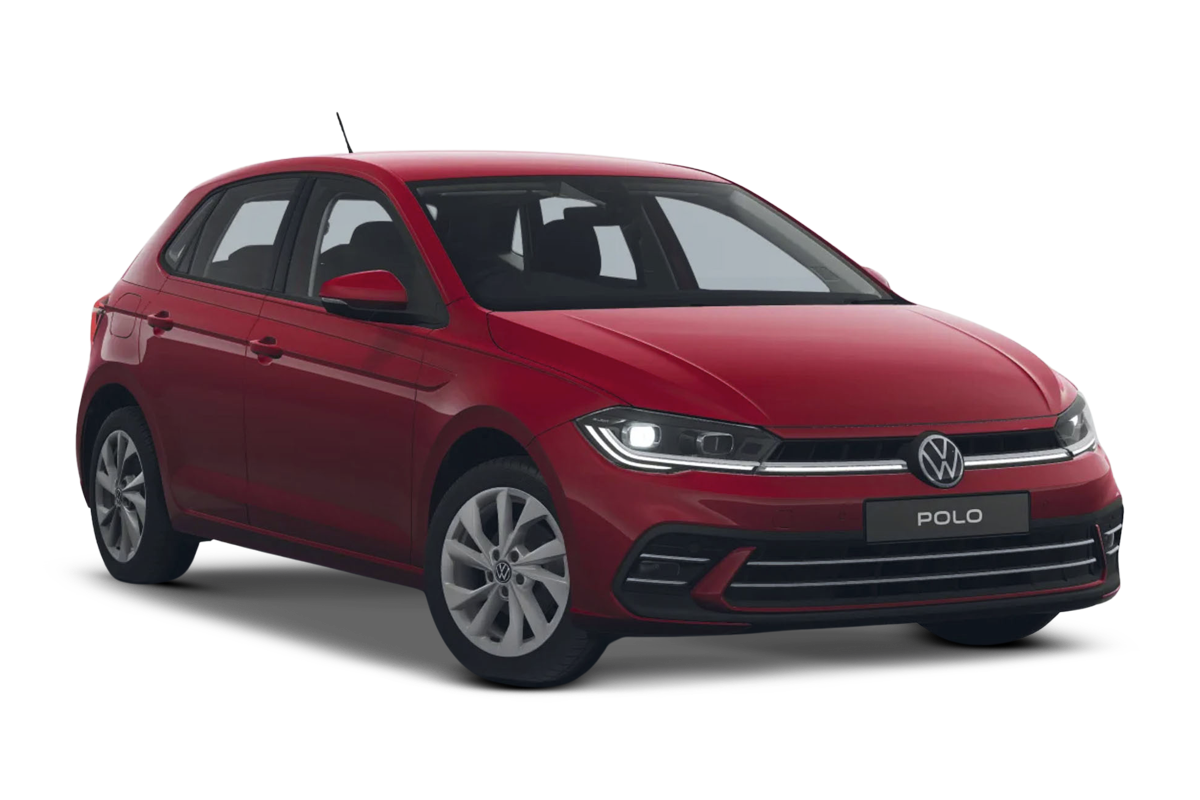
It’s a similar story when you venture on to a motorway. The Polo remains calm enough, with only a tiny amount of fidgeting over small imperfections (something pretty much all small cars are prone to). Indeed, on smoother stretches of road you could be mistaken for thinking you’re driving a family car.
If you really enjoy driving and want something fun and agile, you'll be better off looking at the Seat Ibiza, which gets firmer suspension, sharper steering and generally more playful handling. Or, of course, the Polo GTI.
That’s not to say the regular Polo isn’t competent enough. Through corners, it’s surefooted, with plenty of grip and more than enough steering weight to allow you to thread it confidently through bends, even at quite high speeds. It doesn’t stay quite as upright as the Ibiza when cornering, but it’s still better than the Fabia. In short, if you want something that’s composed and easy to drive you’ll be pretty happy.
Is it quiet and how easy is it to drive smoothly?
The Polo's engines make themselves heard when you're accelerating and you do feel some vibration filtering up through the pedals. That said, the Polo does a better job than most rivals of suppressing wind and road noise, although the Fabia is a fractionally quieter motorway cruiser.
The five-speed manual gearbox you get as standard with most Polo engines has quite a slick action, making it easy to drive smoothly. Alternatively, a seven-speed DSG automatic gearbox is standard with the TSI 115 and optional on the TSI 95. It’s pretty smooth as you’re driving along, changes gears quickly, but can be hesitant when pulling away from a standstill or when you need a sudden burst of power.
“The DSG auto gearbox you get on some Polos is a tad jerky at very low speeds but shifts smoothly the rest of the time. I'd definitely consider it if I was buying a Polo.” – Chris Haining, Sub-editor
Interior
The interior layout, fit and finish
Strengths
- +High quality interior
- +Good all-round visibility
Weaknesses
- -Fiddly touch-sensitive controls in some versions
- -Entry-level seats could do with more side support
What does the interior look like and is it well made?
The Polo has always been one of the smartest cars inside and that remains the same now, even if the margins aren’t as big as they used to be. There’s very few scratchy plastics and mostly soft-touch materials across much of the dashboard. Whichever trim you go for, you get a leather steering wheel and gearknob, giving it a more upmarket feel than the Skoda Fabia and Suzuki Swift.
That said, the Seat Ibiza isn’t far off and the Polo doesn’t feel quite as lavish as a Peugeot 208, which uses classier materials for an extra layer of luxury.
In many places, the Polo feels better put together than the pricier Audi A1; everything feels robust, with all the buttons, switches and stalks feeling solid and built to last.
Is the driving position comfortable and is it easy to see out?
You shouldn’t struggle to get comfortable in the VW Polo because all versions provide a generous amount of driver’s seat and steering-wheel adjustment. The standard seats fitted to Life models could do with a bit more side support – something you get from the sports seats in R-Line models.
An optional feature you have to pay a small premium for with entry-level Life and Match (and we'd recommend you do) is adjustable lumbar support - something that comes as standard on pricier trim levels.
Unlike the Peugeot 208, the Polo has relatively slender pillars both front and back, as well as tall, wide windows all around. With such an unobstructed view, you’ll find it straightforward to place the car on the road and see what’s approaching at roundabouts and T-junctions.
To help when parking, all Polos come with rear parking sensors but you’ll need to step up to Match trim if you want a rear-view camera. Meanwhile, if you’d like front parking sensors you’ll need to opt for one of the two top trims or add them as an option.
You get basic LED headlights on Life and Match models. R-Line adds automatic high beam assist, while Edition 50 and Black Edition trim upgrades them to matrix LED headlights, which automatically dim sections of the light pattern from other drivers to prevent you dazzling them when using high beam.
Is the dashboard and infotainment system easy to use?
The air-con controls depend on the trim you pick. Life and Match cars get more user-friendly physical controls, while R-Line trim and above get a more sophisticated dual-zone climate control system but with a slightly more fiddly touch-sensitive interface.
As standard, every Polo has an 8.0in infotainment touchscreen in the dashboard, with sat-nav included if you go for R-Line trim or above (it’s optional on lower trims). You get Android Auto and Apple CarPlay smartphone mirroring across the range, so you can display your favourite phone navigation app on the screen instead.
The touchscreen has high-quality graphics and responds quickly enough to your prods. To help you navigate the system with a little more ease, there are touch-sensitive shortcut buttons around the screen. You can upgrade to a bigger 9.2in version if you pay extra but you lose the physical dials that adjust the stereo volume and scroll down the menus, which makes those minor adjustments more fiddly.
All trim levels come with a fairly average six-speaker sound system. For better sound quality you can upgrade to include a subwoofer.
Go for R-Line trim and above and the driver gets a 10.25in digital driver’s display in place of conventional analogue dials for the rev counter and speedometer. The screen is sharp and easy to read, with plenty of information available from the trip computer in the centre. You can’t view a sat-nav map on here, but it’s still relatively sophisticated against most rivals.
“I wouldn't bother forking out for the 9.2in Discover Pro touchscreen upgrade. It's expensive and doesn't really improve usability.” – Will Nightingale, Reviews Editor

Passenger & boot space
How it copes with people and clutter
Strengths
- +Plenty of boot space
- +Generous front and rear space
Weaknesses
- -Honda Jazz’s rear seats are more versatile
- -Stereo upgrades steals some boot space
How much space does it have for people?
The VW Polo is among the roomiest small cars. Tall adults will have plenty of head room in the front, and if you slide the front seats back on their runners, there's more leg room than you’ll find in a Renault Clio or Toyota Yaris.
The Polo’s interior is broader than in the Clio and Peugeot 208, so there’s no danger of you rubbing shoulders with your front passenger. In fact, you’ll find more space than in older versions of the VW Golf.
You can cram quite a bit in the Polo's front door bins, the glovebox is a reasonable size and there’s a handy cubby in front of the gearlever that's ideal for stowing a wallet, smartphone and keys. Only the Honda Jazz offers notably more.
Rear space is pretty impressive too, with enough head and leg room for a pair of six footers to get comfortable. There might be a touch more leg room in the Ibiza, or a few centimetres more head room in the Fabia, but the differences are small.
Predictably, as with most small cars, sitting three adults side by side is a bit of a squeeze, but the Polo is still better than the Seat Ibiza. If you want more space for your rear passengers, look at the roomier Dacia Sandero and Honda Jazz.
When it comes to storage space in the back, each door has a generous-sized bin, and you'll find good-sized pockets on the backs of the front seats. There's no centre rear armrest though.
You get a height-adjustable front passenger seat on all Polos, and R-Line trim adds adjustable lumbar support.
How much room does it have for luggage?
At 351 litres, the Polo’s boot space is competitive against most rival small cars. It’s a good square shape and we managed to squeeze in five carry-on suitcases below the parcel shelf. As a result, you’ll easily be able to fit in a buggy or a decent weekly shop. For a bigger boot in a small car, take a look at the Skoda Fabia (that managed six suitcases).
The Polo edges ahead many rivals by having a height-adjustable floor that boosts versatility. If you lift the floor to its highest setting, you create a storage area underneath and it reduces the load lip at the boot entrance.
All Polos have 60/40 split folding rear seatbacks and there’s no ski hatch in its middle seat to help with loading long items through from the boot. In fairness, that’s the same as with most similarly-sized rivals.
For a more versatile small car you’ll need the Honda Jazz, which gets clever cinema-style flip-up seat bases.
“If you specify the optional audio system upgrade, the boot floor is permanently set in its highest setting to accommodate a speaker beneath, meaning you have less room for luggage. It's too much of a compromise for me.” – Steve Huntingford, Editor

Buying & owning
Everyday costs, plus how reliable and safe it is
Strengths
- +Lots of standard equipment
- +Strong resale values
- +Efficient engines
Weaknesses
- -More expensive to buy than some rivals
- -Warranty is nothing special
How much does it cost and what equipment do you get?
As a cash purchase, the VW Polo will cost you less than the Audi A1, Honda Jazz and Toyota Yaris, but more than most rivals, including the Renault Clio, Seat Ibiza and Skoda Fabia. The Dacia Sandero does undercut all of them, but with notable compromises.
The Polo is predicted to depreciate slower than most of its rivals, helping to keep PCP finance rates competitive.
Officially, our favourite Polo engine – the 1.0 TSI 95 – will manage around 55mpg (a little less for the automatic gearbox). However, if fuel efficiency is a priority, it's worth bearing in mind that the Jazz and Yaris will both return superior MPG figures thanks to their hybrid technology.
We’d go for the Polo's entry-level Life trim because it keeps costs down but still gets you a respectable amount of standard equipment. That includes 15in alloy wheels, air conditioning, cruise control, automatic windscreen wipers and heated door mirrors.
Upgrading to the mid-spec Match won’t cost you much more so we wouldn’t blame you for making the jump. That trim gets you 16in wheels, tinted rear windows and wireless phone-charging.
At the top of the range you have R-Line and Black Edition. They come with 16in and 17in alloys respectively, dual-zone climate control and a 10.3in digital driver's display. The main difference is that Black Edition adds matrix LED headlights, bespoke styling and is only available with the most powerful engine.
To celebrate 50 years of the Polo, VW has also added an Edition 50 trim level. It gets a bunch of extra equipment over the R-Line trim, including 17in wheels, keyless entry and a sunroof, but costs only a fraction more. It’s only available with the 1.0 TSI 95 engine and comes with an exclusive Crystal Ice Blue metallic paint option.
Is it reliable, and how long is the warranty?
The Polo did well in our latest What Car? Reliability Survey, finishing near the top of the small car category and sharing its position with the Kia Picanto. That’s above almost all of its rivals, including the Audi A1, Peugeot 208 and Skoda Fabia.
Volkswagen as a brand didn’t do anywhere near as well, placing in joint 24th place out of 30 among manufacturers. That puts it right alongside Ford but below the rest of its rivals, including Honda (which came 1st), Toyota, Peugeot, Dacia and Renault.
You get a three-year, 60,000-mile warranty as standard with every Polo, as well as the option of extending it to four or five years for a reasonable price.
That’s fairly par for the course, but Kia gives you a seven-year, 100,000-mile warranty, while Toyota gives a 10-year, 100,000-mile warranty if you service your car each year at an authorised centre.
How safe is it, and is it easy to steal?
The Polo was awarded the full five stars for safety by Euro NCAP when it was tested in 2022. Diving deeper into the results shows that it scored a fair bit better than the Seat Ibiza for protecting adults in the front.
You get a decent amount of standard safety equipment on the Polo, including automatic emergency braking (AEB), lane-keeping assistance, speed-limit recognition and a system that monitors driver drowsiness.
“In our real-world tests, the five-speed manual version of the 1.0 TSI 95 Polo averaged 46mpg, which is slightly better than the figures posted by the equivalent Ibiza and Fabia. So it shouldn’t cost you too much to run.” – Dan Jones, Senior Reviewer
Buy it if...
-You want a small car that’s quite spacious inside
-A good mix of handling and comfort is a priority
-You want an efficient small car
Don’t buy it if…
-Versatile rear seats are important to you
-You want a smooth automatic gearbox
-You’re after the cheapest small car
For all the latest reviews, advice and new car deals, sign up to the What Car? newsletter here

FAQs
Yes, the Polo is a great all-rounder that has strengths in pretty much every area. Some rivals are cheaper, but the Polo is always a great option.
Yes, the Polo is in the small car class but it has a good amount of interior space. In fact, among small cars, only the Dacia Sandero and Honda Jazz offer more interior space. The Polo also has one of the biggest boots in its segment.
While the Polo is a great all-rounder, its main disadvantages are its underpowered entry-level engine, fiddly touch-sensitive controls on top trim versions and VW’s rating in our 2025 What Car? Reliability survey.
The Polo is still very much on sale – in fact, it’s set to join the world of electric cars with the new VW ID Polo.
| RRP price range | £22,055 - £28,635 |
|---|---|
| Number of trims (see all) | 4 |
| Number of engines (see all) | 1 |
| Available fuel types (which is best for you?) | petrol |
| MPG range across all versions | 51.4 - 55.4 |
| Available doors options | 5 |
| Company car tax at 20% (min/max) | £1,133 / £1,990 |
| Company car tax at 40% (min/max) | £2,265 / £3,979 |

