Seat Ibiza review
Category: Small car
The Ibiza is closely related to the Skoda Fabia and VW Polo, but it’s positioned as the sporty option

What Car? says...
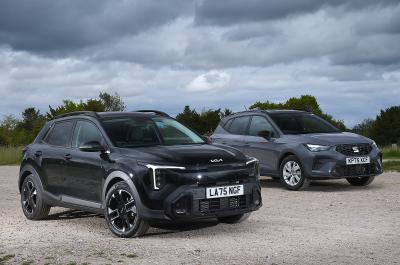
Southampton and Portsmouth are both densely populated cities, located on the south coast that have rich maritime histories. However, these shared qualities mean diddly squat on the football pitch, where their clubs have been arch enemies for decades. You could argue that the Seat Ibiza can relate to such rivalry.
You see, it has long shared underpinnings with the Skoda Fabia and Volkswagen Polo, meaning the trio are alike in many ways. Still, that doesn’t stop them from being fierce adversaries. And in order to try and get a leg up on those cars, as well as the wider small car class, the Ibiza has just been updated.
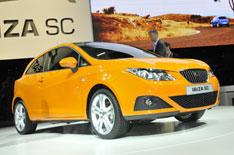
For 2026, it’s had a facelift – the second one since this generation of Ibiza first went on sale in 2017. The updates are fairly minor, though. They’re all cosmetic. On the outside, there’s a redesigned front bumper and grille, as well as slimmer LED headlights. Inside, the trim around the air vents is now transparent while FR trim gets new sports front seats.
Mechanically, the Ibiza goes unchanged, so the two engine options have been carried over from before. So, where does the Ibiza stand within the small car class?
What’s new?
- January 2026: The Ibiza gets refreshed bumpers, a reshaped front grille and slimmer LED headlights, along with new trim inside around the air vents and new sports front seats for FR trim
- November 2024: FR Black Edition launched with black paint applied to the 18in alloy wheels, plus a rear wing and side skirts for sportier looks
- January 2024: Ibiza Anniversary Limited Edition introduced to commemorate four decades of sale, featuring new equipment and colours, and distinctive alloy wheels
- May 2023: Marina Pack revealed, with a focus on using sustainable materials for the seat covers, trim and carpets
- November 2022: Ibiza received a five-star Euro NCAP safety rating
- April 2021: Facelifted fifth-generation Ibiza begins production, featuring 9.2in multimedia screen and improved safety tech
Performance & drive
What it’s like to drive, and how quiet it is
Strengths
- +Good performance
- +Confidence-inspiring handling
- +Composed ride
Weaknesses
- -Automatic gearbox can be slightly hesitant
- -Lots of road noise
- -Not the quickest small car
Engine, 0-60mph and gearbox
The Seat Ibiza’s engine range kicks off with a 1.0-litre, three-cylinder petrol engine, badged 1.0 TSI 95. It has 94bhp and, during our testing, we saw 0-60mph in a respectable 9.8sec – there’s a decent amount of shove low down in the rev range, too. The 1.0 TSI 95 is certainly capable of keeping up with traffic on motorways, just like the closely related Skoda Fabia and VW Polo. It’s our recommended engine.
For more performance, you’ll need to upgrade to the 1.0 TSI 115. It uses a similar 1.0-litre engine but with 113bhp. It feels marginally quicker. If that’s not enough, there are rivals that offer punchier performance, such as the Fabia Monte Carlo 1.5 TSI.
While the TSI 95 comes with a five-speed manual gearbox, the TSI 115 is available with either a six-speed manual or a seven-speed automatic. The manual gearboxes are slicker to use than the Peugeot 208’s, with light, precise, satisfying gearshifts. The auto box is a little sluggish to change down a gear when you need a burst of acceleration, but switching the drive mode to Sport livens up the response, or you can use the paddles on the back of the steering wheel to manually change gear.
Suspension and ride comfort
Most versions of the Ibiza ride bumps well, smoothing over imperfections more effectively than the Suzuki Swift. However, if comfort is your top priority, we'd recommend trying the even more supple Peugeot 208 and Skoda Fabia.
FR versions of the Ibiza get firmer sports suspension as standard. It's designed to improve cornering, and while it doesn't mean you wince over every pothole, you do feel more of bumps as they pass beneath the car.
FR Sport trim brings the largest wheels on offer, measuring 18in. That makes the ride even firmer – something to bear in mind before you’re seduced by the sporty looks.

Handling
Perhaps the most impressive thing about the Ibiza is how composed and sophisticated it is to drive. In fact, it’s the best-handling small car on sale.
The Ibiza’s steering is precise and communicative, more so than the steering in the Renault Clio. What’s more, there’s plenty of front-end grip and minimal body lean (especially if you opt for an FR trim). The Ibiza tackles a twisty country road really well, giving its driver plenty of confidence.
It’s so good to drive, even in its entry-level form, that we’re left wondering why there isn’t an Ibiza hot hatch on sale.
Noise and vibration
Road roar is an issue with the Ibiza – it’s noisier than the Fabia and Polo. Still, it’s not annoying or tiresome, and while wind noise creeps into play at motorway speeds, it’s still no deal breaker.
The Ibiza's 1.0 TSI engines are reasonably smooth, although you hear more of a buzz than in the Fabia when you put your foot down hard. The stop-start system could be smoother - there’s a bit of vibration from the 115 engine coughing into life on the automatic version - but it’s no worse than the Vauxhall Corsa Hybrid.
“I’ve yet to drive another small car that flows down a country road as well as the Ibiza does.” – Oliver Young, Reviewer
Interior
The interior layout, fit and finish
Strengths
- +Lots of adjustability in the driving position
- +Good infotainment system
- +Solid build quality
Weaknesses
- -Mini Cooper and Peugeot 208 feel classier
- -No adjustable lumbar support
Driving position and dashboard
If you like a fairly low-slung driving position, the Seat Ibiza will suit you better than many small cars, including the Suzuki Swift. The seat is supportive (especially in FR trims, with sports seats that have extra side bolstering). You’ll easily find a comfortable driving position, thanks to a good amount of seat and steering wheel adjustability.
It’s a shame you can’t get adjustable lumbar support in the Ibiza, but lower back support is reasonable without it.
The interior is laid out in a logical fashion. True, the air-con controls are positioned quite low down on the dashboard, but they’re clearly labelled and not too distracting to use while you’re driving. All Ibizas get an 8.0in digital driver’s display, while a larger 10.25in display that offers a wide range of layouts is optional.
Visibility, parking sensors and cameras
Fortunately, the Ibiza’s eye-catching looks haven’t come at the expense of visibility. Up front, the windscreen pillars don’t obstruct your view out too badly – even at junctions – and the front side windows are suitably tall and easy to see out of.
For extra reassurance, Seat gives you rear parking sensors as standard. FR trim adds front sensors and a rear-view camera.
To help you see where you’re going at night, full LED headlights now come as standard on all trims (cheaper versions previously had a dimmer Eco-LED system).

Sat nav and infotainment
All versions of the Ibiza come with an infotainment touchscreen – it measures 8.25in, while a larger 9.2in version is fitted on SE Technology trim and up. You have to go for the bigger screen to get built-in sat-nav, although a DAB radio, and Android Auto and Apple CarPlay smartphone mirroring come as standard across the range.
The smaller screen is nothing flashy, but it’s crisp enough and easy to get your head around. Still, the larger screen is noticeably sharper. It’s actually up there with some of the best infotainment systems in the small car class, the very best being the system in the Renault Clio.
Quality
The Ibiza’s dashboard is covered in a squidgy material that both looks and feels better than the scratchy plastic you often find on the dashboards of many small cars, including the Citroën C3, Dacia Sandero and Skoda Fabia. In all Ibizas, the steering wheel, handbrake lever and gear lever are trimmed in leather.
If you go for the FR Sport, there's also faux-suede upholstery and ambient lighting in the air vents, lifting the feel of the interior even further. The Mini Cooper and Peugeot 208 feel even classier inside, but not by a huge margin.
Regardless of trim level, everything inside the Ibiza feels well screwed together and all the buttons, switches and stalks operate in a reassuringly solid manner.
“I like a low driving position and that the Ibiza (unlike a lot of other small cars) caters for that very well.” – Dan Jones, Senior Reviewer
Passenger & boot space
How it copes with people and clutter
Strengths
- +Lots of space up front and in the back
- +Good amount of cubby spaces
Weaknesses
- -Skoda Fabia has an even bigger boot
- -No clever seating flexibility options
Front space
Even if you’re well over six feet tall, you won't feel your head brushing the roof, and the seats slide back far enough to accommodate anyone with long legs.
Shoulder room is better than in many small hatchbacks, making the Ibiza feel as roomy as some family cars.
The front door bins aren’t the biggest but they will take a large water bottle. There are also two cupholders between the front seats, along with a cubbyhole in front of the gearlever for your phone and keys. The glovebox is a decent size, too.
Rear space
Yes, the Ibiza is a small car in the grand scheme of things, but you might be surprised by how spacious it is in the back. There's considerably more leg room than you'll find in the rear of, for example, a Peugeot 208 or Vauxhall Corsa and matches the Skoda Fabia. A six-footer can sit behind another easily enough.

Seat folding and flexibility
All versions of the Ibiza come with 60/40 split folding rear seats, which is par for the course in the class. If you need greater seating flexibility, take a look at the Honda Jazz – its rear seat bases can be flipped up like those in a cinema.
Boot space
At 355 litres in volume, the Ibiza’s boot is one of the biggest in the small car class – there's almost as much room as there is in the super-spacious Renault Clio TCe 90 (391 litres) and Skoda Fabia (380 litres). We managed to fit an impressive five carry-on suitcases below the Ibiza’s parcel shelf.
If you need even more space, you can always fold down the rear seats, although doing so creates a fairly large step up from the main boot floor, which could make loading in long items awkward. (There's no height-adjustable boot floor option to give a level surface).
“While I appreciate that the Fabia is roomier overall, the Ibiza proved spacious enough to fit me and three friends without any discomfort.” – Oliver Young, Reviewer
Buying & owning
Everyday costs, plus how reliable and safe it is
Strengths
- +Well priced
- +Good fuel economy
Weaknesses
- -Poor reliability
- -Hyundai, Kia and Toyota give longer warranties
Costs, insurance groups, MPG and CO2
As a cash buy, the entry-level Seat Ibiza is about the same as the Skoda Fabia while the VW Polo costs more. The Honda Jazz and Toyota Yaris are even more expensive. On the flipside, the Renault Clio and Vauxhall Corsa are cheaper buys. Ibiza resale values are respectable rather than outstanding.
So far, we've put only the 1.0 TSI 95 through our real-world True MPG tests and it averaged an impressive 54mpg. Mild hybrid engines for the Ibiza are due to arrive in 2027, which should be even more economical.
Equipment, options and extras
The entry-level Ibiza SE gets a good list of kit as standard, including 16in alloys, air-conditioning, cruise control, powered door mirrors, metallic paint and an 8.25in touchscreen. We’d stick with it but you might want to consider SE Technology for its 9.2in touchscreen, as well as its keyless entry and start.
The FR First Edition trim is worth a good look if you value a slightly sportier appearance to go with its handling, with a more aggressive-looking bodykit, rear privacy glass, ambient lighting and 17in alloy wheels. It also gets dual-zone climate control and rain-sensing wipers. FR Sport trim adds bigger 18in wheels and microsuede upholstery but is too expensive to recommend.

Reliability
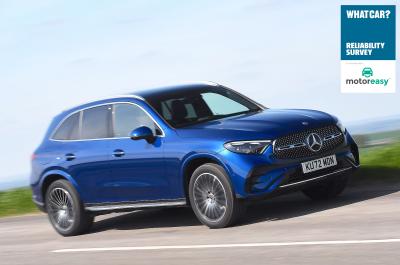
Previously, the Ibiza performed poorly in our What Car? Reliability Survey and finished at the bottom of the small car class. There haven’t been enough entrants in this year’s survey for an up to date result, but it’s a potential weak area that’s worth bearing in mind.
Seat as a brand achieved a slightly below average score, ranking 18th out of 30 manufacturers featured – above Renault and Volkswagen but below Vauxhall, Toyota, and Suzuki.
The standard Seat warranty period is three years or 60,000 miles, although this can be extended for a fee to four years, 75,000 miles or five years, 90,000 miles. It’s worth bearing in mind that Hyundai, Kia and Toyota offer longer warranties.
Safety and security
All versions of the Ibiza come with six airbags, tyre-pressure monitoring and automatic emergency braking (AEB). That helped it score the full five stars in its Euro NCAP safety test, although it’s important to note that the result is from 2022, when the tests were less stringent than they are today.
A tiredness recognition system is standard on all models to alert you if you become too drowsy, as is lane-keeping assistance. Every Ibiza can read road signs and display the speed limit on the driver’s display.
It’s a shame that an alarm isn’t standard on all Ibizas – you need to upgrade to FR First Edition or FR Sport.
“Much of the Ibiza's poor reliability score came from faulty touchscreens, which isn’t the worst thing to go wrong but will still be annoying and inconvenient.” – Claire Evans, Consumer Editor
Buy it if...
- You want the best handling small car on sale
- You appreciate a smart and easy to use interior
- You’re fine with purely petrol power
Don’t buy it if…
- You want fuel-efficiency that matches a hybrid rival
- You’re hoping for quick performance
- You want the most versatile rear seats
For all the latest reviews, advice and new car deals, sign up to the What Car? newsletter here
FAQs
The Seat Ibiza is a good small car, being great to drive, well priced and spacious inside. Its previous poor reliability record stops it from getting our full five-star verdict, though.
Yes, as small petrol cars go, the Ibiza is good on fuel. When we put the 1.0 TSI 95 version through our real-world True MPG tests, it averaged an impressive 54mpg. That being said, hybrid alternatives (the Honda Jazz and Toyota Yaris) are even more fuel efficient.
| RRP price range | £20,995 - £26,670 |
|---|---|
| Number of trims (see all) | 4 |
| Number of engines (see all) | 1 |
| Available fuel types (which is best for you?) | petrol |
| MPG range across all versions | 50.4 - 56.5 |
| Available doors options | 5 |
| Company car tax at 20% (min/max) | £1,113 / £1,384 |
| Company car tax at 40% (min/max) | £2,226 / £2,769 |