Best small SUVs 2026 and the one to avoid – tried and tested
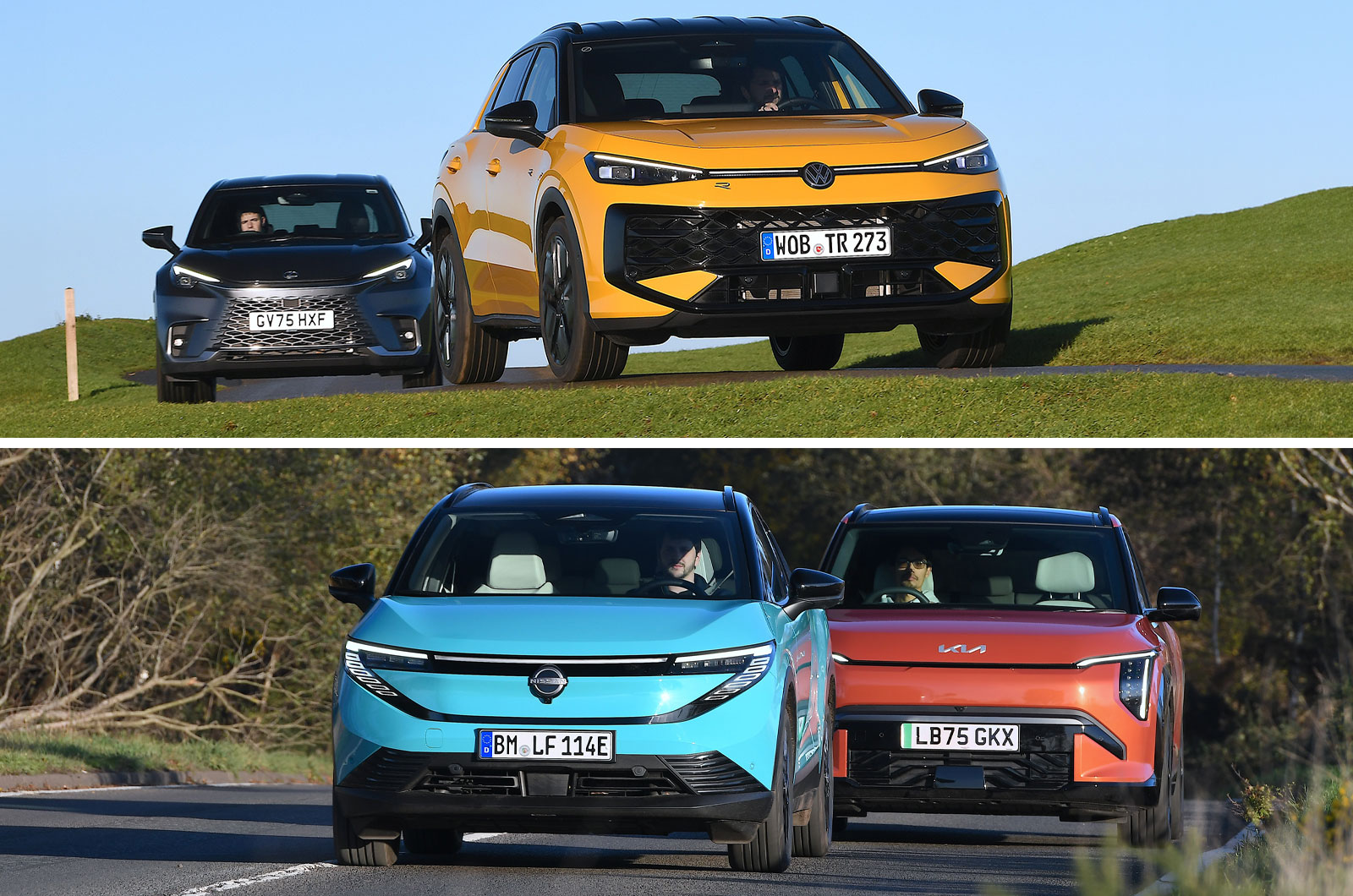
Sales of small SUVs are booming, and it’s easy to see why. With their raised driving positions, family friendly practicality and accessible prices, small SUVs are the de facto family car for many people. You’ll find petrol, hybrid and fully electric options in this class, as well as cars both from traditional brands and relative newcomers.
And with small SUVs proving to be so popular, it’s no surprise there’s plenty of choice. Indeed, very few manufacturers these days don’t offer a small SUV as part of their stable. There are an increasing number of electric SUVs on sale in this segment, too, with some being cheap enough to qualify for the Government's electric car grant.
Here, we’ll take you through our picks for the 10 best small SUVs on the market – and the one to avoid. Importantly, we’ll show you how to get the best PCP and leasing deals on each of them. Just follow the links to find out more.
Best small SUVs to buy now – and how to get the best deal
| Make and model | List price from | Rating | PCP deals | Leasing deals |
| Volkswagen T-Roc | £31,620 | 5 | Best PCP deals | Best leasing deals |
| Kia EV3 | £33,055 | 5 | Best PCP deals | Best leasing deals |
| Lexus LBX | £29,995 | 5 | Best PCP deals | Best leasing deals |
| Skoda Karoq | £28,650 | 5 | Best PCP deals | Best leasing deals |
| Renault 4 | £27,195 | 5 | Best PCP deals | Best leasing deals |
The best small SUVs for you
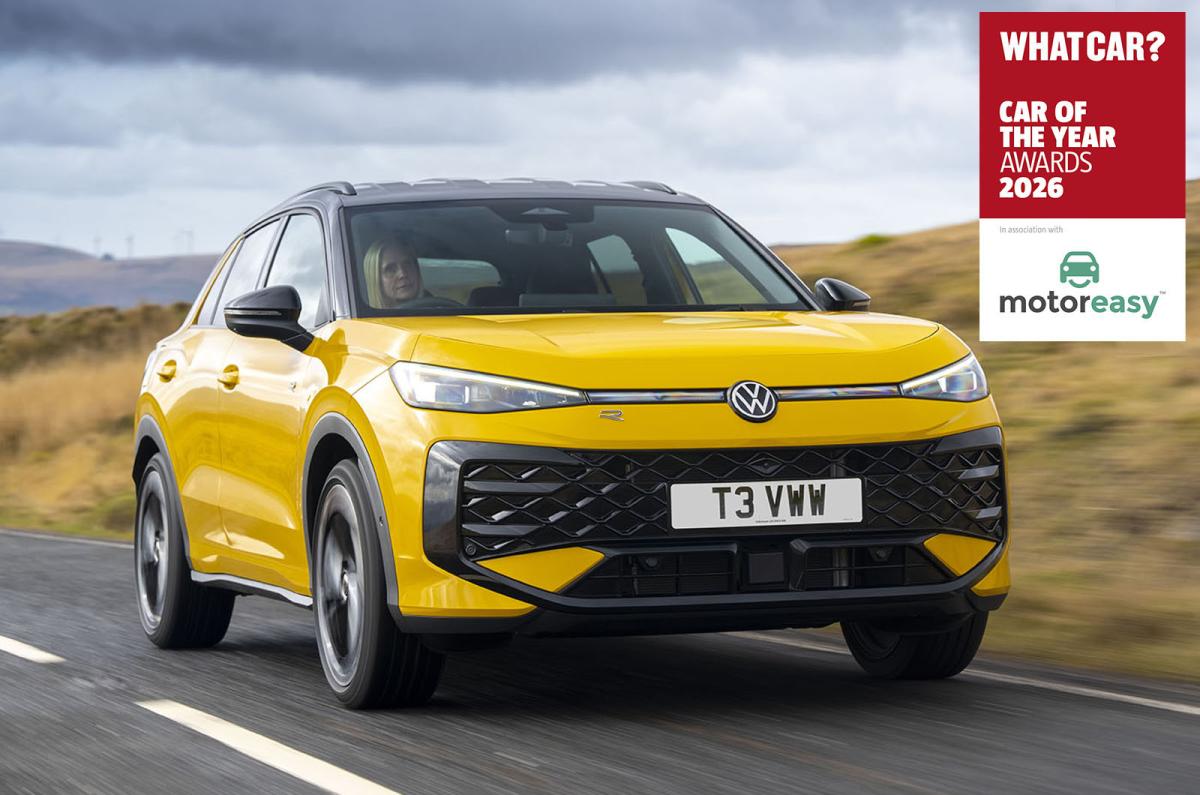
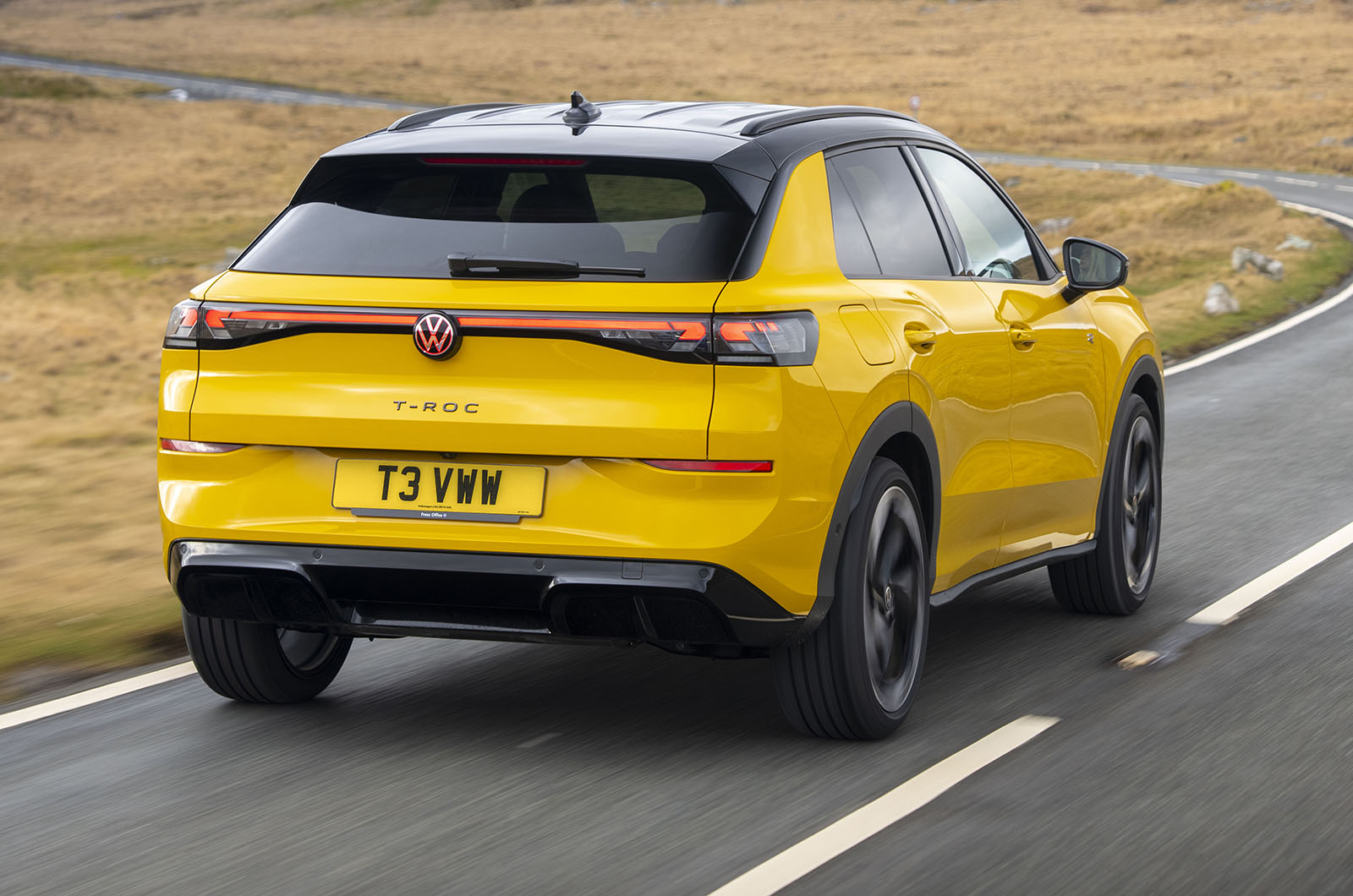
The Volkswagen T-Roc is our reigning champion in the small SUV market, thanks to a blend of attributes which include a comfortable ride, a good boot and a peppy range of petrol engines which benefit from mild hybrid electrical assistance. Just like the old T-Roc, it’s a lot of car for a price which, though premium, is still within reach for many.
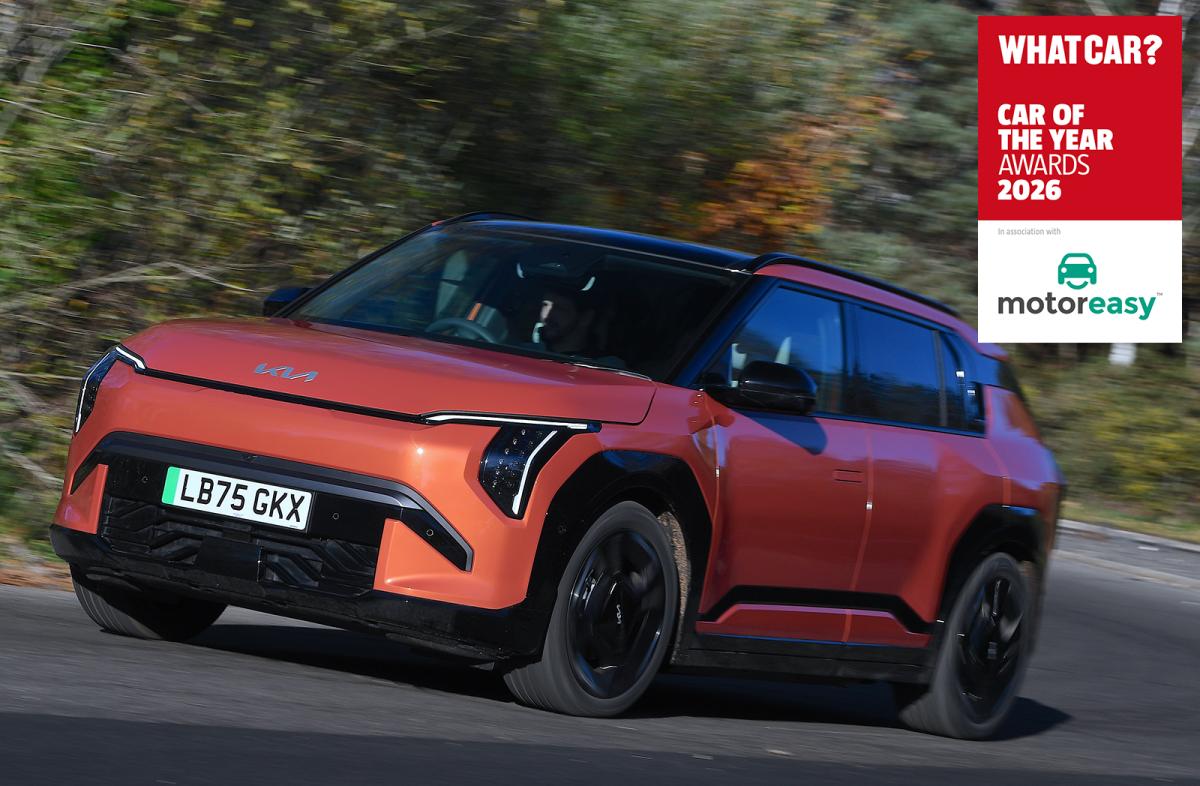
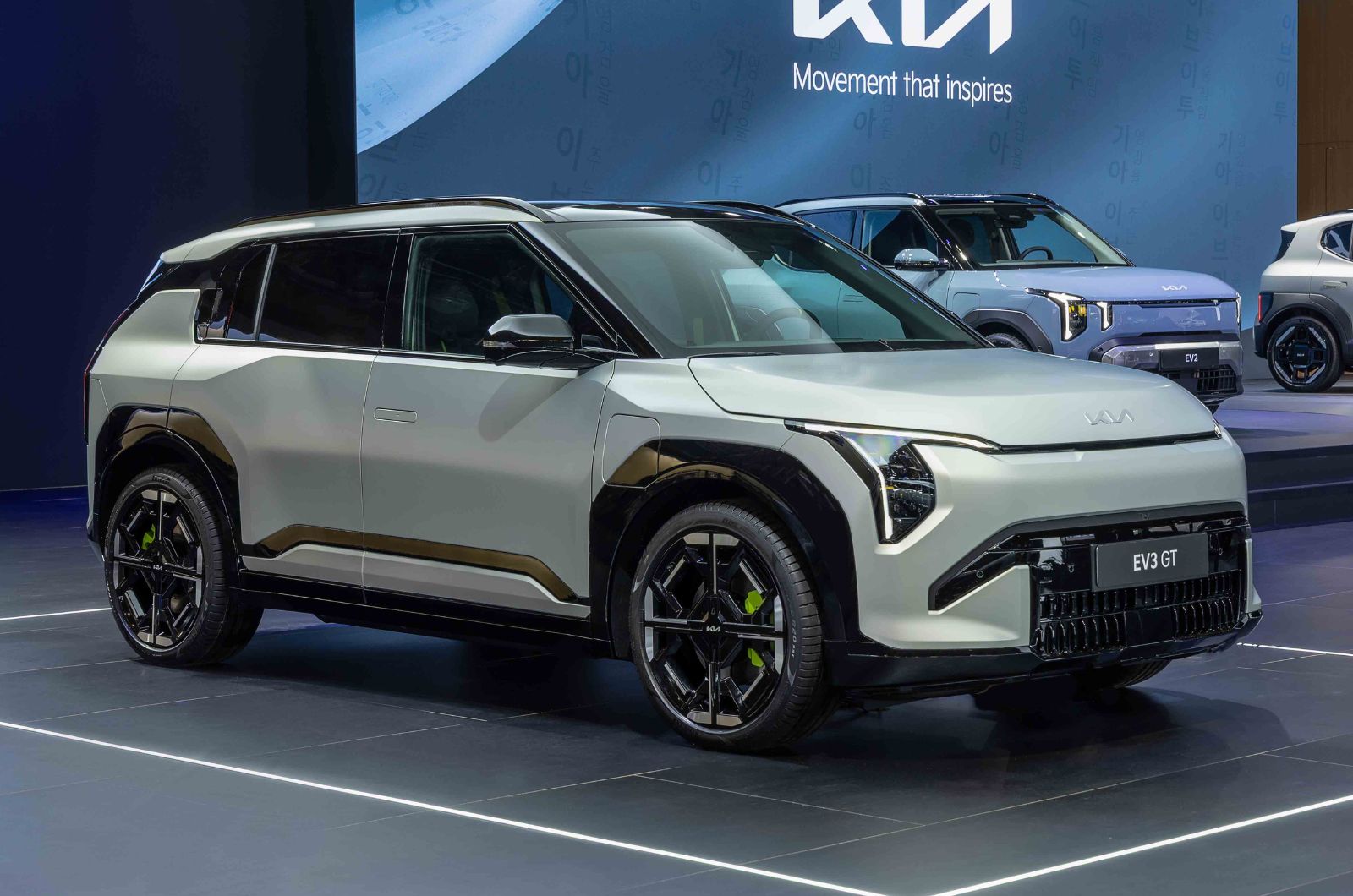
If you’re in a position to choose an electric small SUV – which makes especially good sense if you’re a company car driver, thanks to low Benefit-in-Kind tax ratings – then we’d recommend taking a look at the Kia EV3. It’s powerful, has a longer range than most rivals, and offers more space for your family and their luggage.
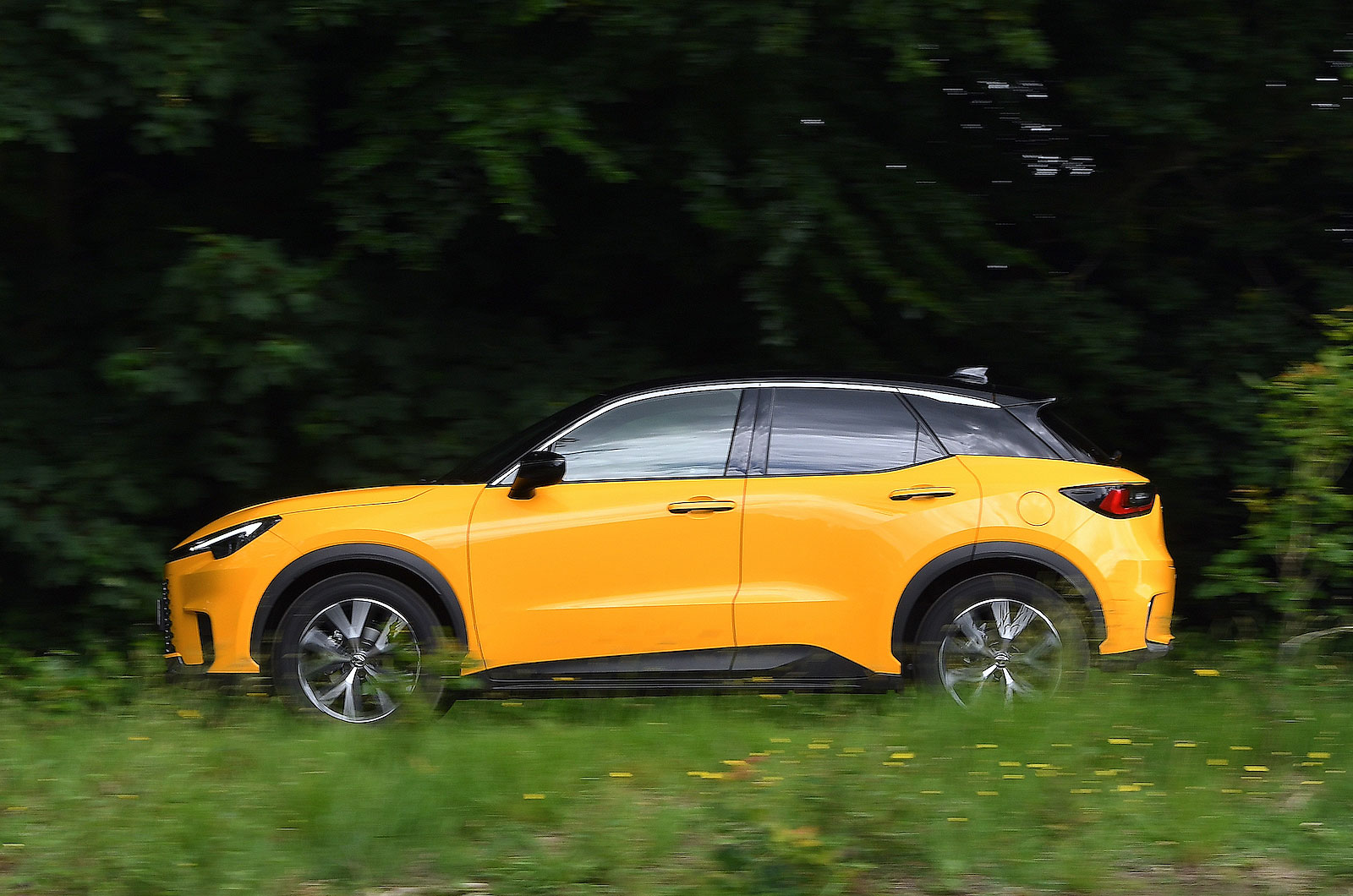
Or if you want something truly premium, then the Lexus LBX is hard to ignore. A former What Car? Car of the Year, the LBX’s interior is a cut above most rivals, featuring materials and finishes you’d normally expect to find on a far more expensive car. It’s good to drive and should be cheap to run, too.
The 2026 What Car? Reliability Survey is live, tell us about your car now


Strengths
- Comfortable ride and quiet on the motorway
- High-set driving position for a small SUV
- Good-size boot by class standards
Weaknesses
- Touch-sensitive interior controls can be fiddly
- Upper trims are costly
- Not as sharp to drive as some of its rivals
The previous Volkswagen T-Roc was one of our favourite options in the small SUV class, so this latest version had quite the challenge to live up to it. Fortunately, it does so and then some, resulting in what we think is the best small SUV you can buy.
At the moment, you can only have the T-Roc with mild-hybrid petrol power, put a pair of regular hybrid options will join the range later this year. It's the mid-range 148bhp petrol that's our favourite, because it delivers plenty of pep while keeping running costs sensible.
The T-Roc feels sure-footed through corners, and while it isn't as sharp to drive as the rival Ford Puma, it handles well enough. You can pay more for fancy adaptive suspension, we don't think there's any need to, because even on its standard setup the T-Roc does an excellent job of soaking up all of the lumps and bumps that you're likely to find on urban roads.
Being slightly longer than its predecessor, the latest T-Roc is even more spacious inside, meaning four tall adults will find they have room to stretch out on a long journey. And while the Dacia Duster has a slightly bigger boot on paper, we still managed to fit seven carry-on suitcases into the T-Roc's boot – more than enough for the needs of most families. The seats are impressively versatile, too, with a handy ski-hatch that's ideal for loading in longer items.
The latest T-Roc is too new to have featured as part of our annual What Car? Reliability Survey, but the old car was a strong performer in the small SUV class. You get a three-year, 60,000-mile warranty as standard, which is a bit of a way behind rival warranties offered by Kia and Toyota. Those last up to seven and ten years respectively.
"I was pleasantly surprised by how nice the entry-level T-Roc feels inside, with its padded fabric on the dash and door cards – it helps this small SUV to feel a cut above the competition." – Darren Moss, Deputy Editor
Read our in-depth Volkswagen T-Roc review


What is What Car? best price?
The What Car? best price shows you the cheapest way to buy your new car, whether it's by choosing an in-stock car through our partner Autotrader or placing a factory order.
Available now from: £26,954
RRP from: £31,635
About our price indicator
What Car? indicative Personal lease example (subject to status)
1.5 eTSI MHEV Life SUV 5dr Petrol Hybrid DSG Euro 6 (s/s) (116 ps)
| Expected annual mileage | 5000 |
| Term months | 36 |
| Deposit months | 12 |
| Monthly payment | £307.05 |
| Initial payment | £3,684.60 |
Step-by-step
Leasing works a bit like a long-term rental. You drive it, but you don’t own it.
- Choose your car, pick your terms and apply for lease credit online
- Pay monthly rental payments for your chosen term length
- Drive it, enjoy it, then give it back at the end
What you get
When you lease with Autotrader you get all of this:
- Full manufacturer’s warranty
- Road tax and roadside assistance included
- No admin fees
- Free returns within 30 days*

- Lower total monthly cost than PCP/HP
- No balloon payments
- Road tax included
Strengths
- Well-equipped for the price
- Long range (especially in the, er, Long Range)
- Comfortable ride
Weaknesses
- Rivals have more versatile rear seats
- Not very agile
- List price is higher than some rivals
Earlier this year we named the Kia EV3 as our Small Electric SUV of the Year, meaning that if going electric fits in with your lifestyle and budget, it's absolutely the car you should choose.
While you can pay for a Long Range model which offers an impressive 375 miles of range, we think the Standard Range version, with its 270-mile official range, will suit most people just fine. The single 201bhp electric motor which powers the front wheels offers plenty of punch, and allows for a 0-62mph sprint time of 7.5sec.
Most versions deal well with lumps and bumps around town, and although no version of the EV3 feels especially agile to drive, it does at least handle predictably so long as you don't put your foot down all the time.
It's also a cracking choice for your family, with more space for rear passengers than in the rival Jeep Avenger Electric or Mini Aceman. Plus, the boot is only slightly smaller than that of the Kia EV6 from the class above – in our tests, we managed to fit six carry-on suitcases below the load cover.
The EV3 benefits from a full five-star safety rating from the experts at Euro NCAP, and just like the rest of Kia's road cars, it's covered by a seven-year warranty as standard. The battery is covered for eight years, capped at 100,000 miles. Better still, our early data suggests that the EV3 should be a very reliable choice.
"I like having somewhere to store my charging cables, and in the EV3, that's in a dedicated storage area underneath the bonnet. That means I don't have to go rummaging for them in the main boot, which might be full of luggage." – Oliver Young, Reviewer
Read our in-depth Kia EV3 review
What is What Car? best price?
The What Car? best price shows you the cheapest way to buy your new car, whether it's by choosing an in-stock car through our partner Autotrader or placing a factory order.
Available now from: £31,495
RRP from: £33,055
About our price indicator
What Car? indicative Personal lease example (subject to status)
Standard Range 58.3kWh Air SUV 5dr Electric Auto (201 bhp)
| Expected annual mileage | 5000 |
| Term months | 48 |
| Deposit months | 12 |
| Monthly payment | £308.06 |
| Initial payment | £3,696.72 |
Step-by-step
Leasing works a bit like a long-term rental. You drive it, but you don’t own it.
- Choose your car, pick your terms and apply for lease credit online
- Pay monthly rental payments for your chosen term length
- Drive it, enjoy it, then give it back at the end
What you get
When you lease with Autotrader you get all of this:
- Full manufacturer’s warranty
- Road tax and roadside assistance included
- No admin fees
- Free returns within 30 days*
- Lower total monthly cost than PCP/HP
- No balloon payments
- Road tax included

Our pick: 1.5 VVT-iE Premium Plus E-CVT Euro 6 (s/s) 5dr
Strengths
- High-quality interior
- Efficient hybrid system
- Very well equipped
Weaknesses
- Slightly unsettled low-speed ride
- Tight rear seat space
- Rivals have a more intuitive infotainment system
We thought the Lexus LBX was so good back when it first launched in 2024 that we named it as our overall What Car? Car of the Year – and it remains one of the best cars of its kind.
Key to the LBX's lasting appeal is its ability to save you money. You see, it's a hybrid, meaning that it has an electric motor as well as a petrol engine, and can drive at lower speeds on electric power alone. And that adds up to upwards of 50mpg in real-world conditions, potentially saving you a small fortune at the pumps.
While it's not the most fun small SUV to drive, the LBX strikes a good balance between agility and comfort, while its ride does a good job of soaking up lumps and bumps in the road.
It's family friendly, too. A couple of tall passengers will be perfectly happy on the rear bench, while the boot should have no trouble in swallowing your holiday suitcases. It's worth noting, though, that the Volkswagen T-Roc can carry more still.
"Not only is the LBX’s interior beautifully screwed together, but it also features a more appealing mix of materials than any of its rivals. In our recommended Premium Plus model, for example, I like the squidgy leather which sits atop the dashboard." – Will Nightingale, Reviews Editor
Read our in-depth Lexus LBX review
What is What Car? best price?
The What Car? best price shows you the cheapest way to buy your new car, whether it's by choosing an in-stock car through our partner Autotrader or placing a factory order.
Available now from: £29,995
RRP from: £29,995
About our price indicator
What Car? indicative Personal lease example (subject to status)
1.5 VVT-iE Urban SUV 5dr Petrol Hybrid E-CVT Euro 6 (s/s) (136 ps)
| Expected annual mileage | 5000 |
| Term months | 36 |
| Deposit months | 12 |
| Monthly payment | £239.91 |
| Initial payment | £2,878.92 |
Step-by-step
Leasing works a bit like a long-term rental. You drive it, but you don’t own it.
- Choose your car, pick your terms and apply for lease credit online
- Pay monthly rental payments for your chosen term length
- Drive it, enjoy it, then give it back at the end
What you get
When you lease with Autotrader you get all of this:
- Full manufacturer’s warranty
- Road tax and roadside assistance included
- No admin fees
- Free returns within 30 days*
- Lower total monthly cost than PCP/HP
- No balloon payments
- Road tax included
Strengths
- Good to drive
- Excellent interior space
- Smart and sturdy-feeling interior
Weaknesses
- Seat Ateca is more fun to drive
- VarioFlex seats no longer standard
- No hybrid options
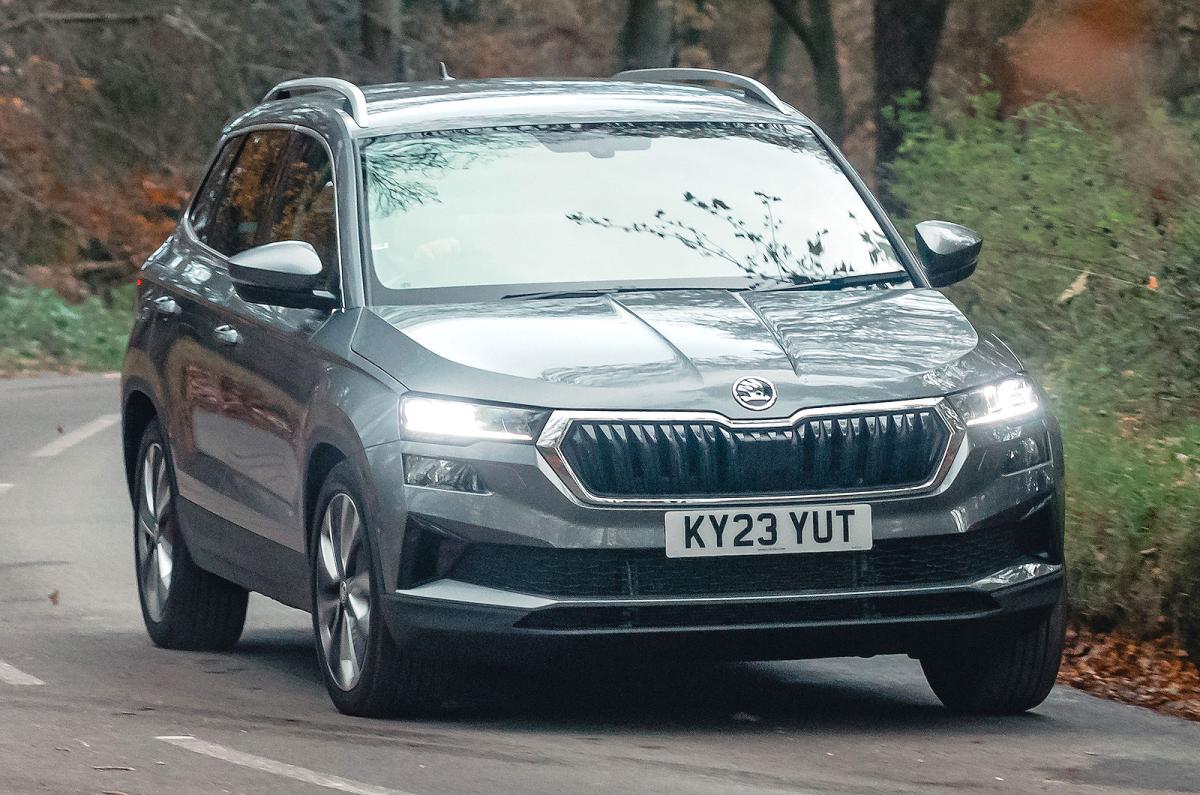
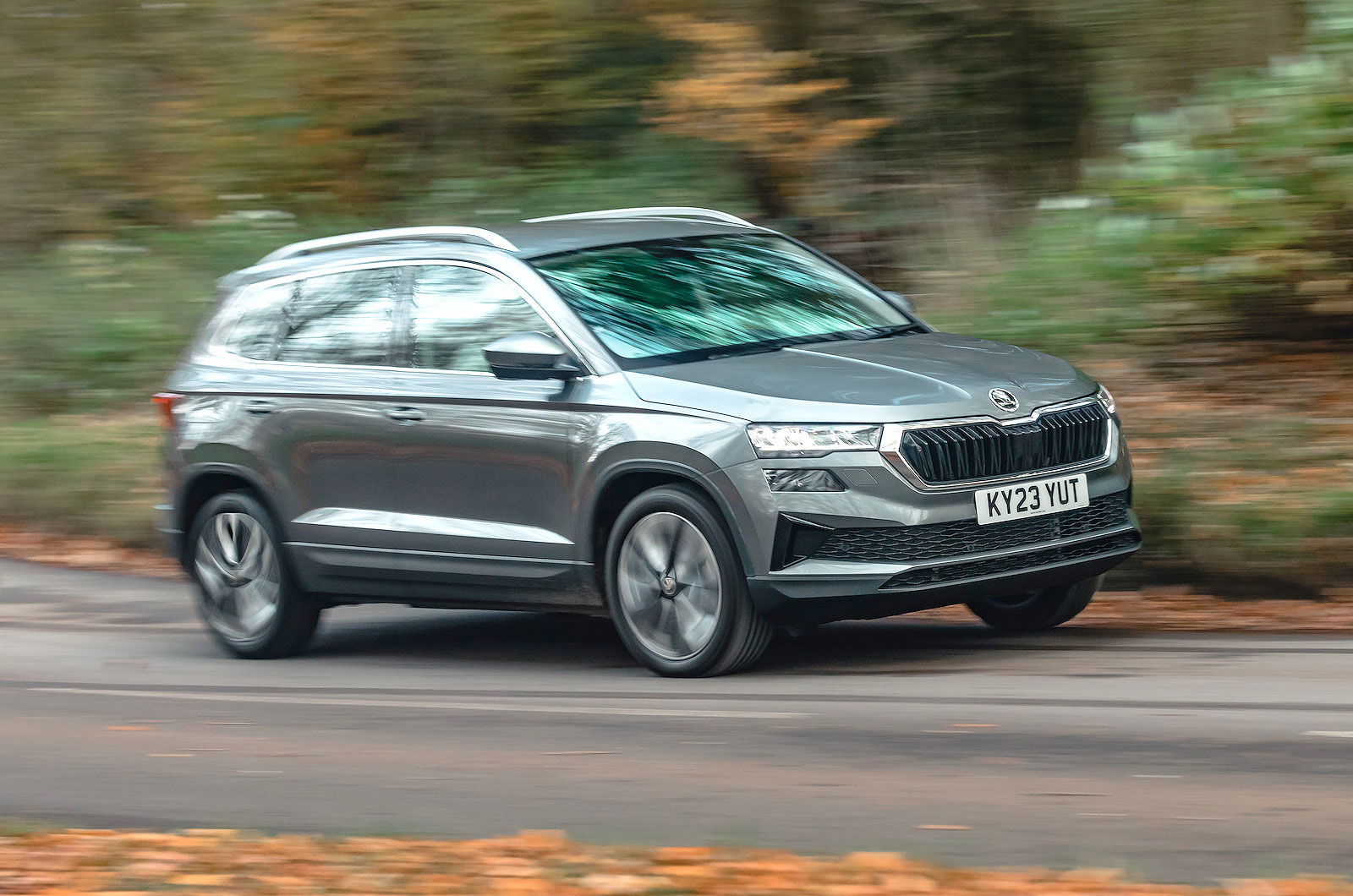
If you want to get the most bang for your buck from a small SUV, then the Skoda Karoq should be near the top of your shortlist.
Not only is the Karoq keenly priced against rivals, but it also comes loaded with kit. Indeed, even entry-level models give you 17in alloy wheels, dual-zone climate control and automatic lights and wipers. And upgrading to our preferred SE L Edition trim, with its larger wheels and more adjustable rear seats, won't cost much either.
Skoda's mid-range petrol engine, badged as the 1.5 TSI 150, is our pick of the range, because with 148bhp it never feels out of puff, yet it should still keep your running costs in check. As a bonus, the Karoq's ride is much more comfortable than that of the closely related Seat Ateca.
"One of the reasons why I'd recommend Karoq's SEL trim is because it brings Varioflex rear seats that can slide and recline independently of one another, and even be removed entirely." – Dan Jones, Senior Reviewer
Read our in-depth Skoda Karoq review
What is What Car? best price?
The What Car? best price shows you the cheapest way to buy your new car, whether it's by choosing an in-stock car through our partner Autotrader or placing a factory order.
Available now from: £24,222
RRP from: £30,960
About our price indicator
What Car? indicative Personal lease example (subject to status)
1.5 TSI ACT SportLine Edition SUV 5dr Petrol DSG Euro 6 (s/s) (150 ps)
| Expected annual mileage | 5000 |
| Term months | 36 |
| Deposit months | 12 |
| Monthly payment | £251.51 |
| Initial payment | £3,018.12 |
Step-by-step
Leasing works a bit like a long-term rental. You drive it, but you don’t own it.
- Choose your car, pick your terms and apply for lease credit online
- Pay monthly rental payments for your chosen term length
- Drive it, enjoy it, then give it back at the end
What you get
When you lease with Autotrader you get all of this:
- Full manufacturer’s warranty
- Road tax and roadside assistance included
- No admin fees
- Free returns within 30 days*
- Lower total monthly cost than PCP/HP
- No balloon payments
- Road tax included
Strengths
- Good to drive
- Tempting pricing
- Practical boot
Weaknesses
- Rear seats are tight for adults
- Some rivals have longer warranties
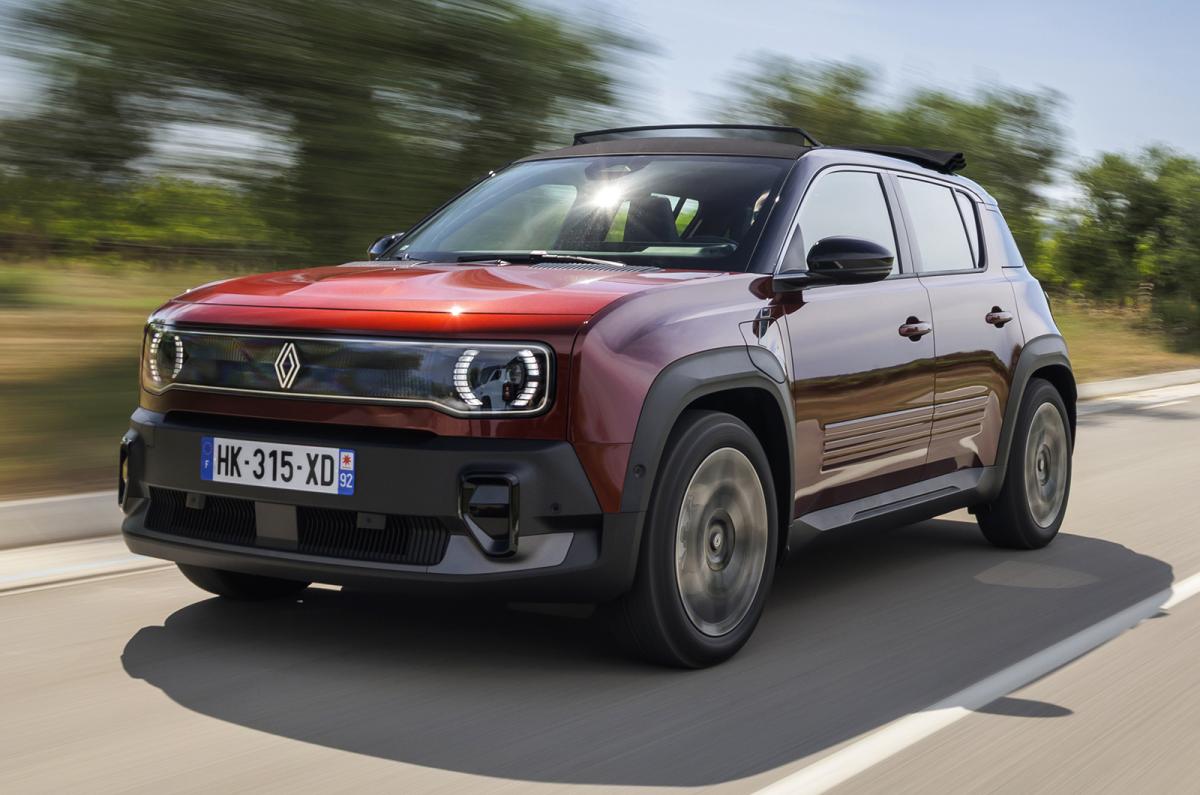
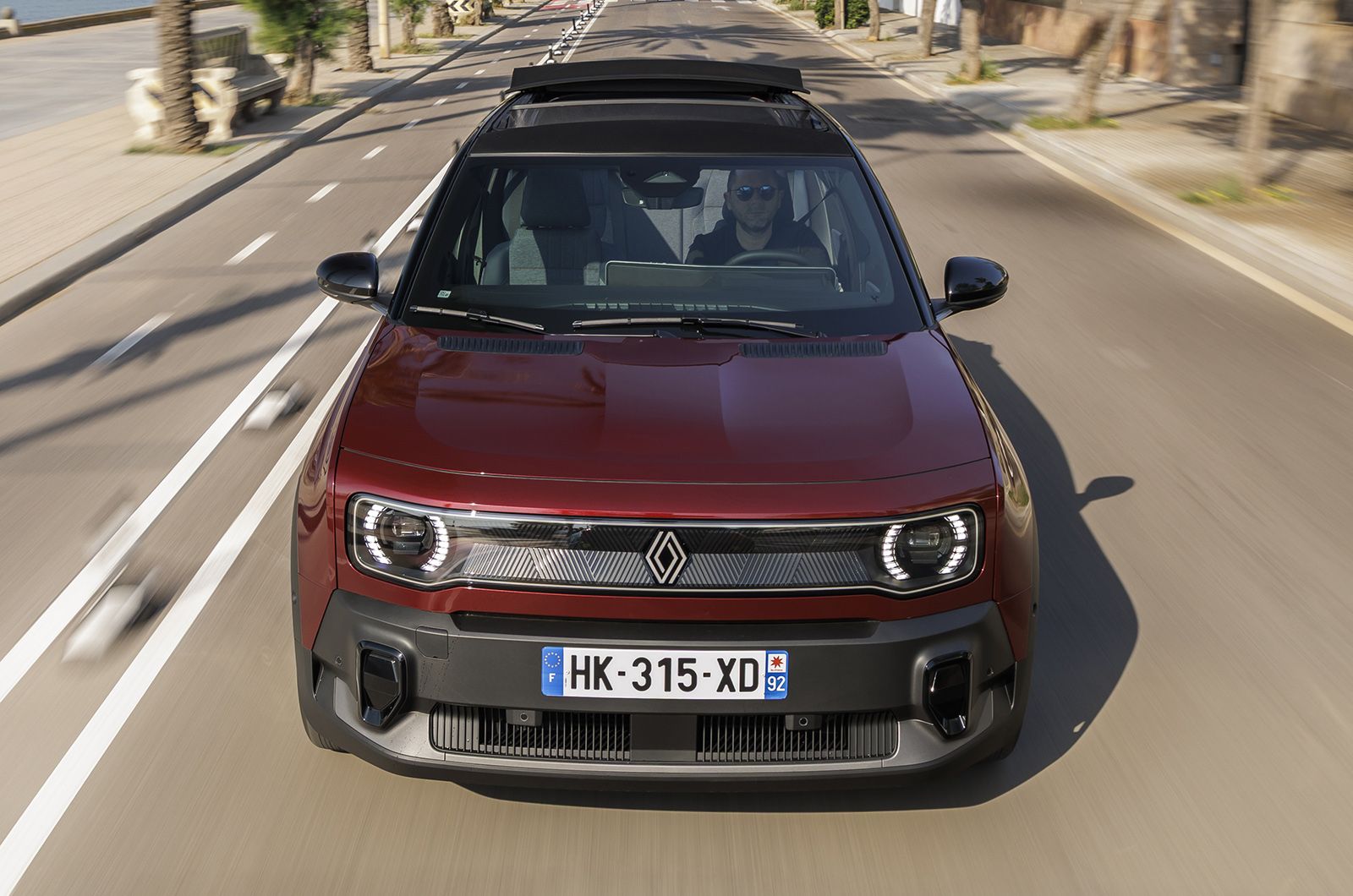
On the face of things, the Renault 4 had a relatively easy start in life, because it's largely based on a former What Car? Car of the Year, the Renault 5. And indeed, the 4 takes many of the things that we love about that car, and translates them onto a more practical SUV body. And while nobody is going to claim that the 4 is an ideal car in which to transport four lanky passengers, there are at least four decently-sized seats with good knee room – it's the room for your feet and your head which are at a premium.
Every Renault 4 comes with a 148bhp electric motor which drives the front wheels, and which draws its energy from a 52kWh (usable capacity) battery. The resulting official range is around 245 miles, and that's not as far as the rival Kia EV3 can manage. However, it's in the same league as a lot of other electric SUV rivals, including the Jeep Avenger electric and Ford Puma Gen-E.
A tight turning circle makes the 4 a doddle to drive around town, and although the ride is slightly firmer than we'd like at low speeds, it's supple enough to take the sting out of sharp edges and potholes.
"Leather might be associated with Range Rovers these days, but the original 1970 car actually had fabric upholstery, and the Evoque harks back to those days by giving you the option of plush wool seats." – Steve Huntingford, Editor
Read our in-depth Renault 4 review
What is What Car? best price?
The What Car? best price shows you the cheapest way to buy your new car, whether it's by choosing an in-stock car through our partner Autotrader or placing a factory order.
Available now from: £24,495
RRP from: £27,195
About our price indicator
What Car? indicative Personal lease example (subject to status)
comfort range 52kWh techno+ SUV 5dr Electric Auto (150 ps)
| Expected annual mileage | 5000 |
| Term months | 48 |
| Deposit months | 12 |
| Monthly payment | £247.42 |
| Initial payment | £2,969.04 |
Step-by-step
Leasing works a bit like a long-term rental. You drive it, but you don’t own it.
- Choose your car, pick your terms and apply for lease credit online
- Pay monthly rental payments for your chosen term length
- Drive it, enjoy it, then give it back at the end
What you get
When you lease with Autotrader you get all of this:
- Full manufacturer’s warranty
- Road tax and roadside assistance included
- No admin fees
- Free returns within 30 days*
- Lower total monthly cost than PCP/HP
- No balloon payments
- Road tax included
Our pick: 1.0 TSI SE Edition Euro 6 (s/s) 5dr
Strengths
- Remarkably roomy rear seats
- Huge boot by class standards
- Comfortable ride
Weaknesses
- No sliding or reclining rear seats
- Not especially well equipped
- Other small SUVs have higher driving positions
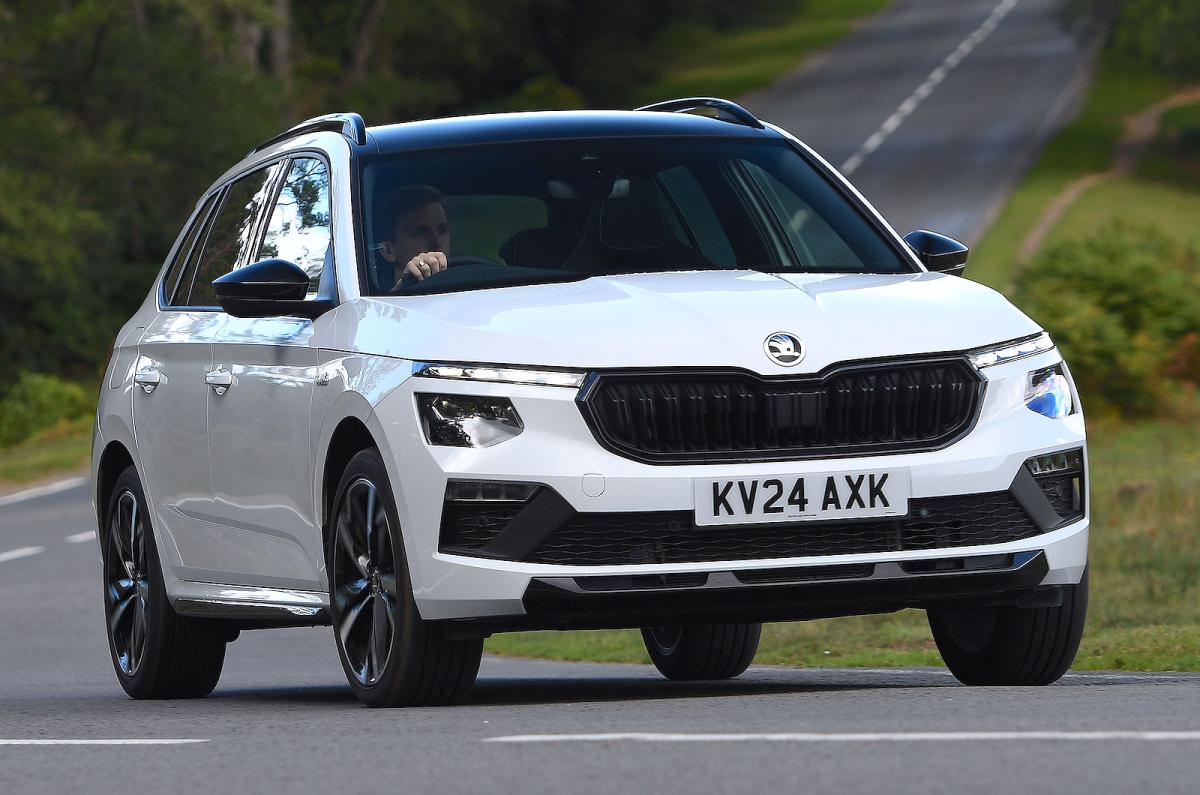
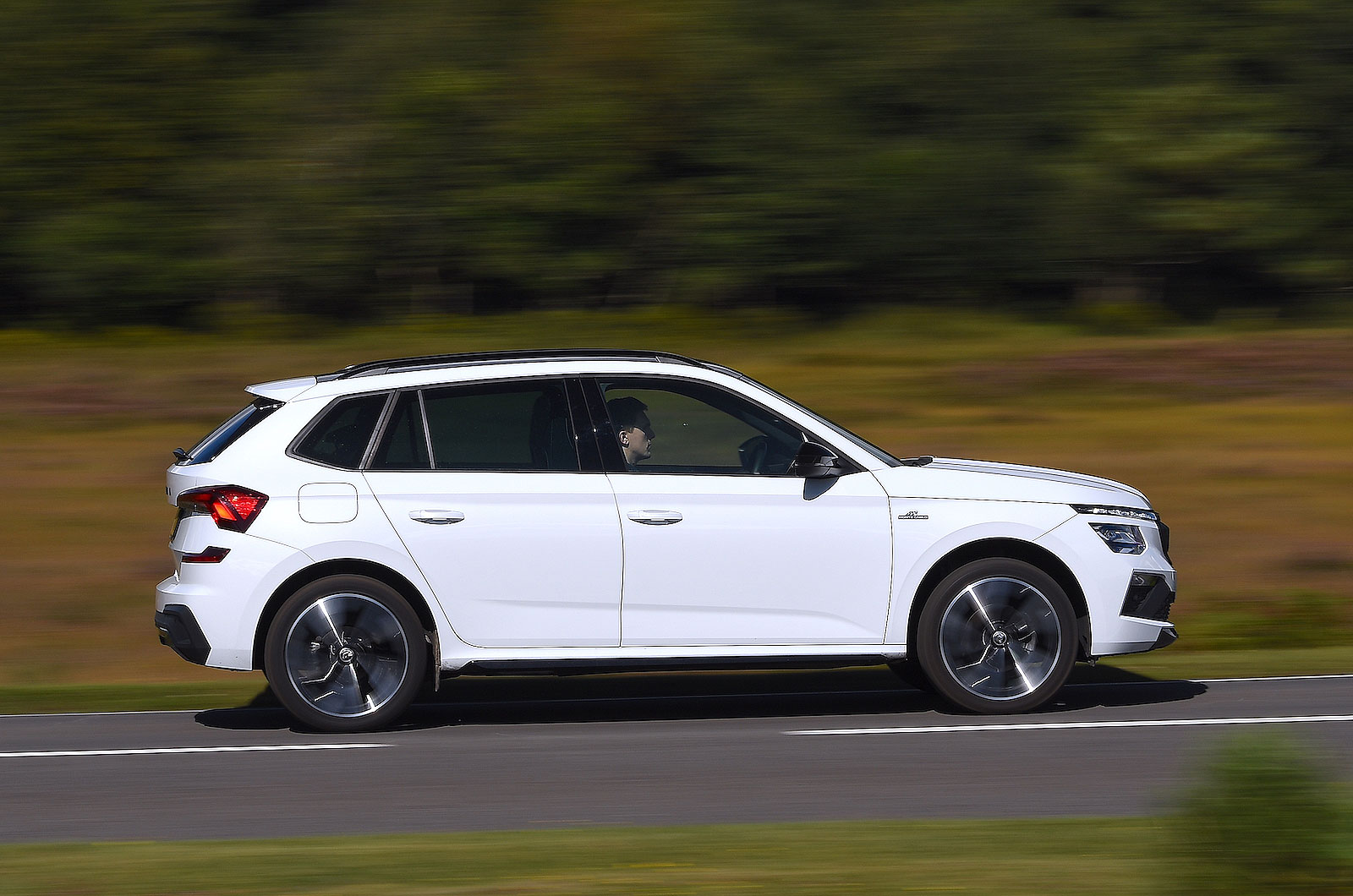
The Skoda Kamiq is a great all-rounder, offering a decent blend of all of the main attributes that small SUV buyers are looking for – even if it doesn't end up as our champion.
It's a great choice if you don't want to sit too high up, because you sit lower down in the Kamiq than you do in many other small SUVs. The driving position is good, and you get plenty of adjustment so getting comfortable shouldn't be a problem. Your passengers will have plenty of space to get comfy, too – there's noticably more leg room than there is in the Ford Puma, for example – and you can fit more into the Kamiq's boot than you can into the rival Lexus LBX or Nissan Juke.
It's the mid-range 113bhp 1.0-litre petrol engine that's our preferred choice in the Kamiq, where it brings the kind of flexible performance which makes driving a doddle, whether you're pootling around town or venturing onto faster roads.
The Kamiq is competitively priced among its small SUV rivals, and strong resale values should ensure that you get a decent amount of money back when you come to sell it on. While the Kamiq didn't do especially well in our 2024 Reliability Survey – finishing in 18th place out of 23 small SUVs – you do get a three-year, 60,000-mile warranty to cover any faults.
"I really enjoyed threading the Kamiq through tight urban streets, because it has a tighter turning circle and lighter steering than most rivals." – Lawrence Cheung, New Cars Editor
Read our in-depth Skoda Kamiq review
What is What Car? best price?
The What Car? best price shows you the cheapest way to buy your new car, whether it's by choosing an in-stock car through our partner Autotrader or placing a factory order.
Available now from: £19,990
RRP from: £25,535
About our price indicator
What Car? indicative Personal lease example (subject to status)
1.0 TSI Monte Carlo Edition SUV 5dr Petrol Manual Euro 6 (s/s) (116 ps)
| Expected annual mileage | 5000 |
| Term months | 36 |
| Deposit months | 12 |
| Monthly payment | £220.13 |
| Initial payment | £2,641.56 |
Step-by-step
Leasing works a bit like a long-term rental. You drive it, but you don’t own it.
- Choose your car, pick your terms and apply for lease credit online
- Pay monthly rental payments for your chosen term length
- Drive it, enjoy it, then give it back at the end
What you get
When you lease with Autotrader you get all of this:
- Full manufacturer’s warranty
- Road tax and roadside assistance included
- No admin fees
- Free returns within 30 days*
- Lower total monthly cost than PCP/HP
- No balloon payments
- Road tax included
Strengths
- Long expected ranges
- Competitive starting price
- Decent interior with Google-enhanced infotainment
Weaknesses
- Rear-seat headroom tight for adults
- Other rivals have a more polished ride and handling balance
- Poor brake pedal feel
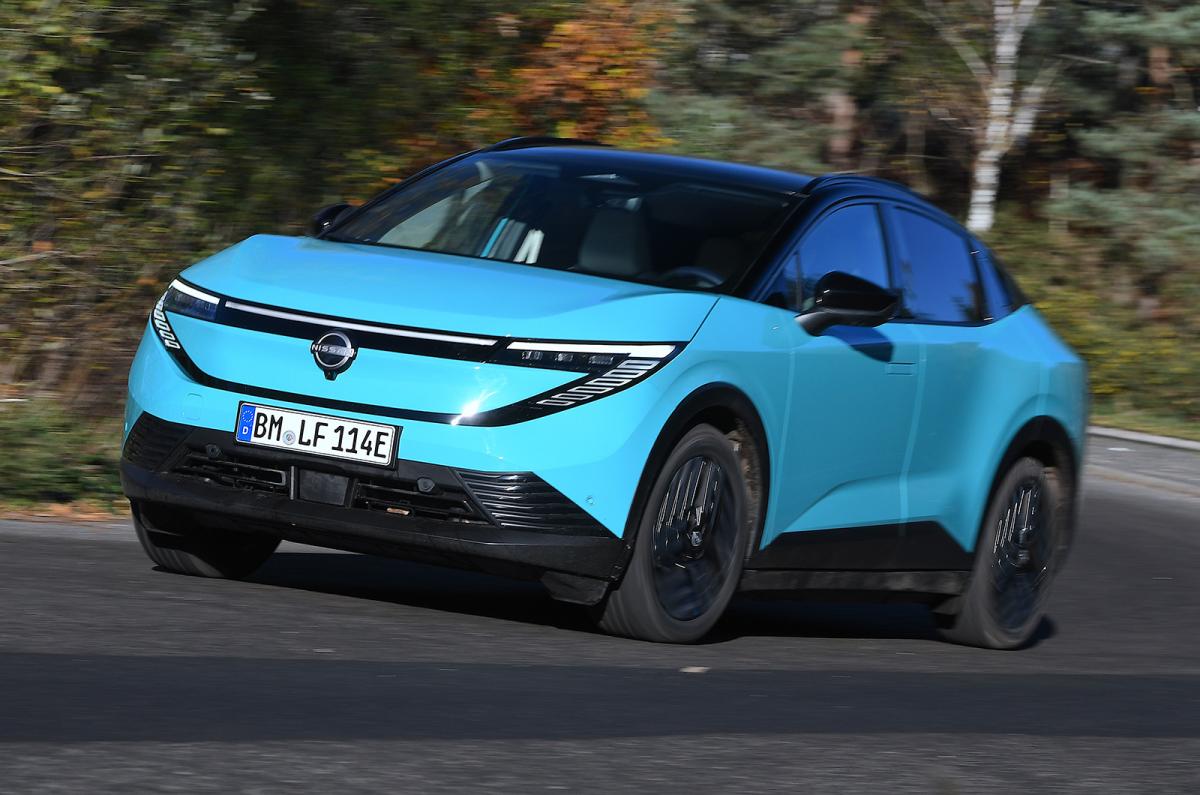
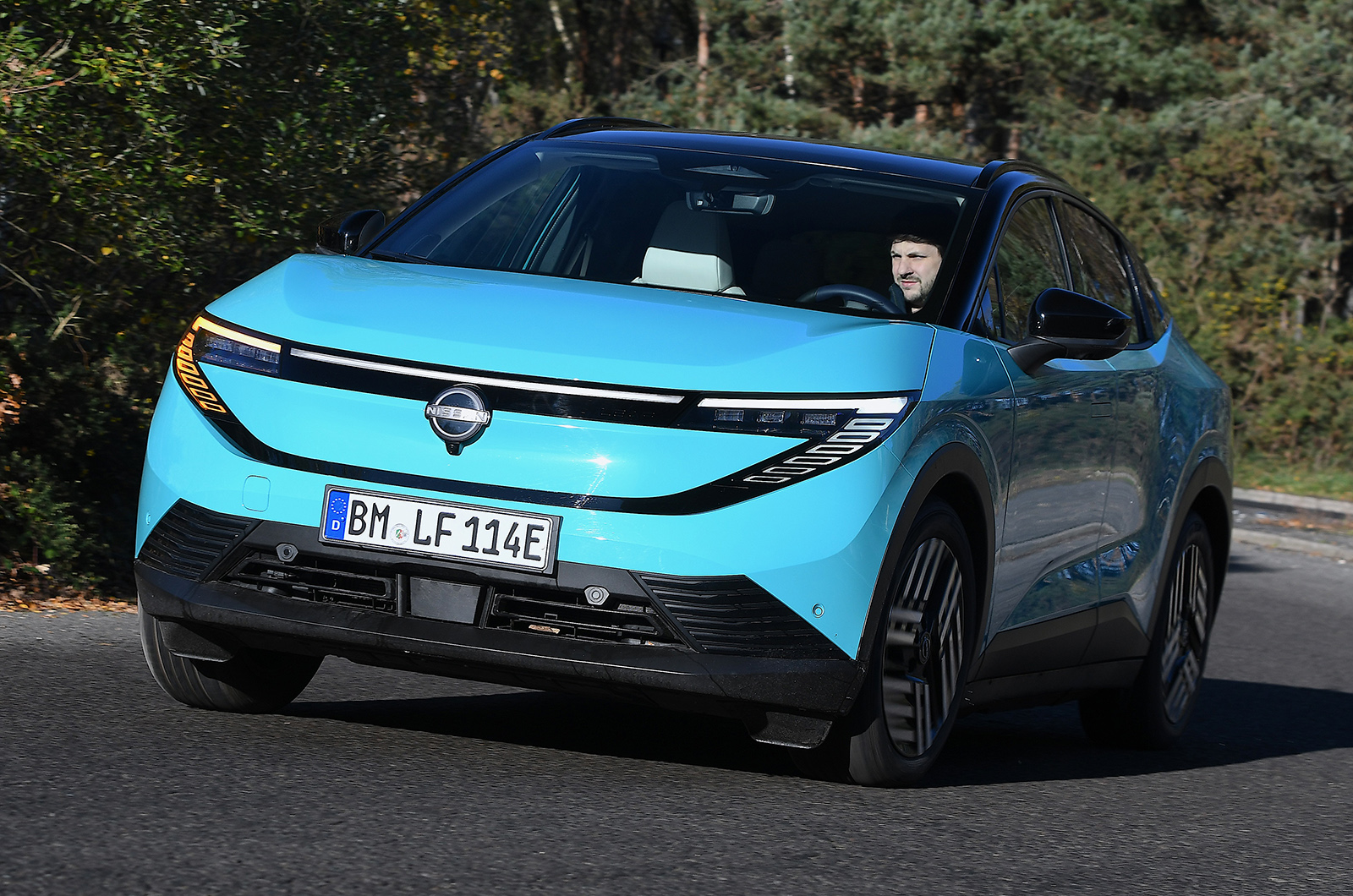
The original Nissan Leaf was one of the founding fathers of the modern electric car, but in more modern times began to look a little behind the curve compared with rivals. This new version, though, is bang up to date, and has morphed into a small SUV to appeal to a wider spectrum of potential buyers.
Where this Leaf keeps the philosophy of the original is with its tempting price. Although it'll cost you more as a cash purchase than the smaller Renault 4, it will also cost you less than equivalent versions of the Kia EV3 and Skoda Elroq, and that's before you take the Government's electric car grant into account. And no matter which version you go for, you get plenty of kit, with even entry-level Engage models coming with 18in alloy wheels, adaptive cruise control and a heat pump to warm the interior efficiently.
Every Leaf gets the same 75kWh battery which sends 215bhp to the car's front wheels. The result is a 0-62mph sprint time of 7.2sec, which is slightly faster than the Kia EV3 can manage. With an official range of 386 miles, the Leaf can travel further than any version of the EV3, Renault 4 or Elroq, which is good news for range-conscious buyers. But if you live in the city, a version with a smaller battery is arriving soon, offering around 270 miles and dropping the price even lower.
In terms of a warranty, every Leaf is covered under the brand's three-year, 60,000-mile warranty, with the battery itself covered for eight years or 100,000 miles, whichever comes sooner. Our latest discounts give you a hefty saving on the Leaf, with savings of up to £3754 available at the time of writing. That discount applies to the 75kWh Evolve model, but there are similarly tempting offers available across the range.
“Activating 'e-pedal' gives you a one-pedal driving mode, so when you lift off the accelerator the car comes to a complete stop – I found this useful around town, meaning I hardly had to touch the brakes myself.” – Dan Jones, Senior Reviewer
Read our in-depth Nissan Leaf review
What is What Car? best price?
The What Car? best price shows you the cheapest way to buy your new car, whether it's by choosing an in-stock car through our partner Autotrader or placing a factory order.
Available now from: £33,149
RRP from: £35,999
About our price indicator
What Car? indicative Personal lease example (subject to status)
75kWh Engage SUV 5dr Electric Auto (218 ps)
| Expected annual mileage | 5000 |
| Term months | 48 |
| Deposit months | 12 |
| Monthly payment | £271.15 |
| Initial payment | £3,253.80 |
Step-by-step
Leasing works a bit like a long-term rental. You drive it, but you don’t own it.
- Choose your car, pick your terms and apply for lease credit online
- Pay monthly rental payments for your chosen term length
- Drive it, enjoy it, then give it back at the end
What you get
When you lease with Autotrader you get all of this:
- Full manufacturer’s warranty
- Road tax and roadside assistance included
- No admin fees
- Free returns within 30 days*
- Lower total monthly cost than PCP/HP
- No balloon payments
- Road tax included
Our pick: 1.0 TSI Match Euro 6 (s/s) 5dr
Strengths
- Spacious, flexible interior
- Impressive for safety
- Good to drive
Weaknesses
- Fiddly climate control panel on higher trims
- Entry-level engine could be more flexible above town speeds
- Top-spec Style and R-Line trims are pricey
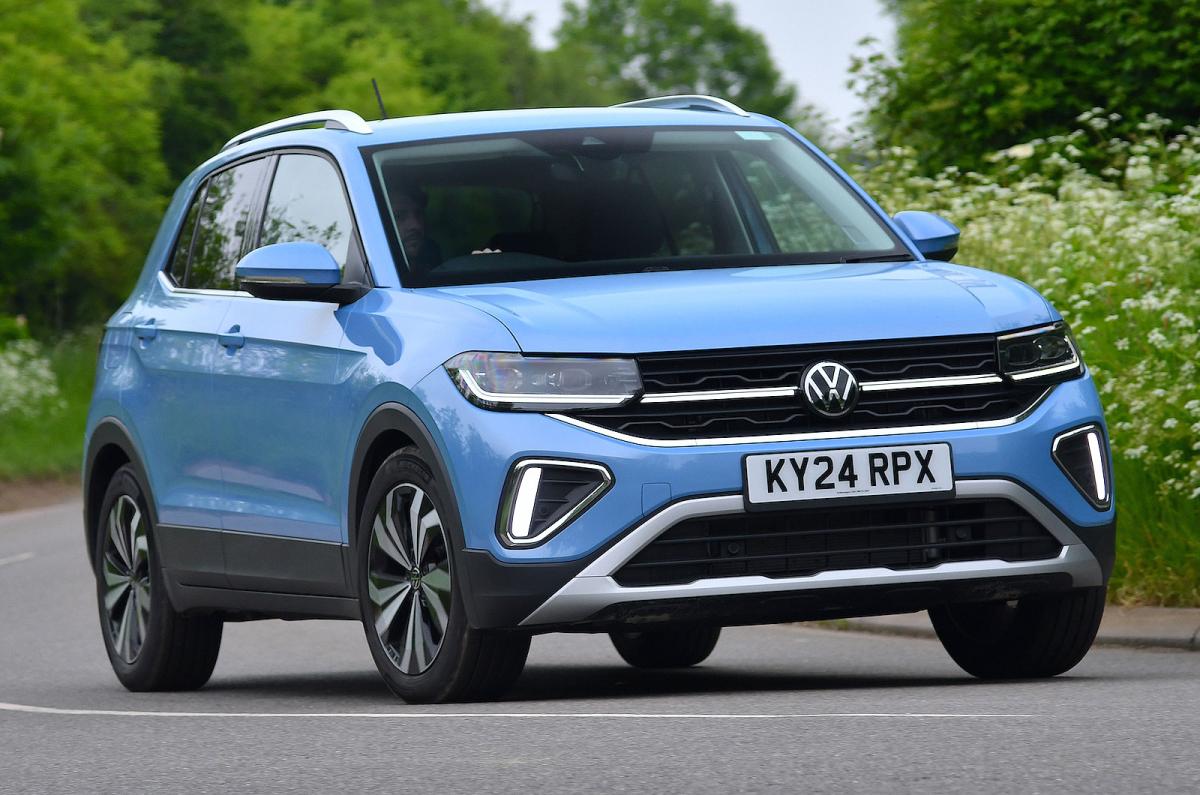
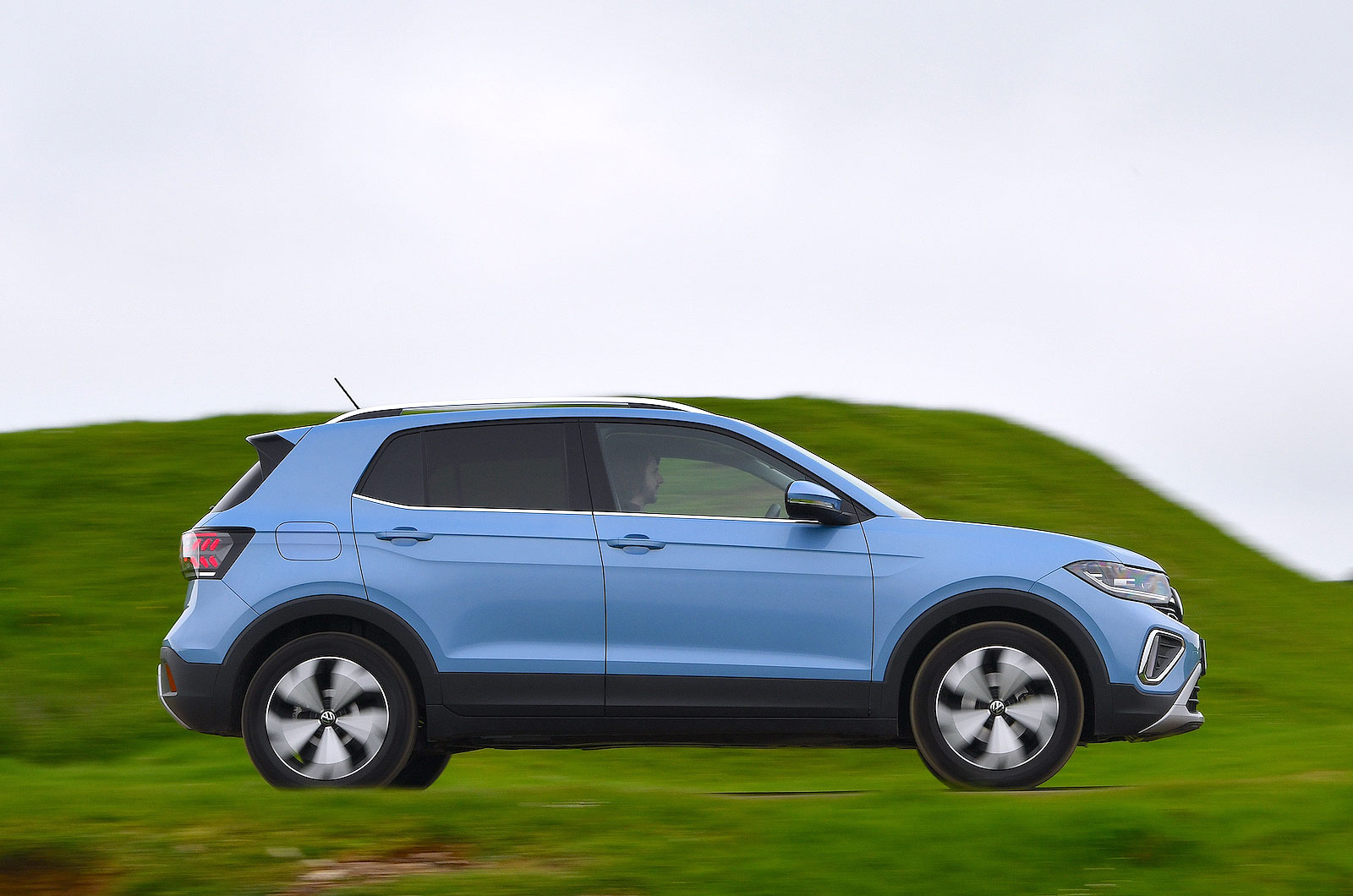
You might think that Volkswagen would be in danger of competing with itself, given that the T-Cross competes not only with the slightly larger Volkswagen T-Roc, but also with the brand's other small SUV, the Taigo, but in fact each has a slightly different niché – with the T-Cross being pitched as more of an urban companion.
Our preferred engine choice, the entry-level 1.0-litre petrol, has plenty of pep for town driving, though it is a little slower to get up to motorway speeds than the equivalent engine in the Ford Puma. The T-Cross rides pretty well compared with most other small SUVs, soaking up lumps and bumps easily, while its light steering makes it easy to weave and dodge around city traffic.
Despite its small size, there's a surprising amount of space in the T-Cross, and more head and leg room than you'll find in the Ford Puma or Nissan Juke. With the rear seats slid all the way back, there's 385 litres of available space in the boot, which we found was enough to take five carry-on suitcases. It's worth noting that some rival small SUVs offer more space, though.
Stick with the low trim levels to keep costs down, because the further up the range you go, the less financial sense the T-Cross makes. It should be a reliable choice, with the T-Cross finishing in seventh position out of 23 small SUVs in our 2024 Reliability Survey. And if anything does go wrong, you get a three-year, 60,000-mile warranty as standard, which is about typical for the class.
"I can imagine plenty of buyers being tempted by the 18in alloy wheels which are optional on some trim levels, but I think these make the ride overly firm. Instead, stick with the smaller 16in and 17in rims." – Darren Moss, Deputy Editor
Read our in-depth Volkswagen T-Cross review
What is What Car? best price?
The What Car? best price shows you the cheapest way to buy your new car, whether it's by choosing an in-stock car through our partner Autotrader or placing a factory order.
Available now from: £22,225
RRP from: £25,985
About our price indicator
What Car? indicative Personal lease example (subject to status)
1.0 TSI Match SUV 5dr Petrol Manual Euro 6 (s/s) (95 ps)
| Expected annual mileage | 5000 |
| Term months | 24 |
| Deposit months | 12 |
| Monthly payment | £168.90 |
| Initial payment | £2,026.80 |
Step-by-step
Leasing works a bit like a long-term rental. You drive it, but you don’t own it.
- Choose your car, pick your terms and apply for lease credit online
- Pay monthly rental payments for your chosen term length
- Drive it, enjoy it, then give it back at the end
What you get
When you lease with Autotrader you get all of this:
- Full manufacturer’s warranty
- Road tax and roadside assistance included
- No admin fees
- Free returns within 30 days*
- Lower total monthly cost than PCP/HP
- No balloon payments
- Road tax included
Strengths
- Great fun to drive
- Remarkable blend of performance and fuel economy
- Big and cleverly designed boot
Weaknesses
- Rear space is adequate rather than outstanding
- Interior quality could be better
- There are more comfortable and quieter rivals
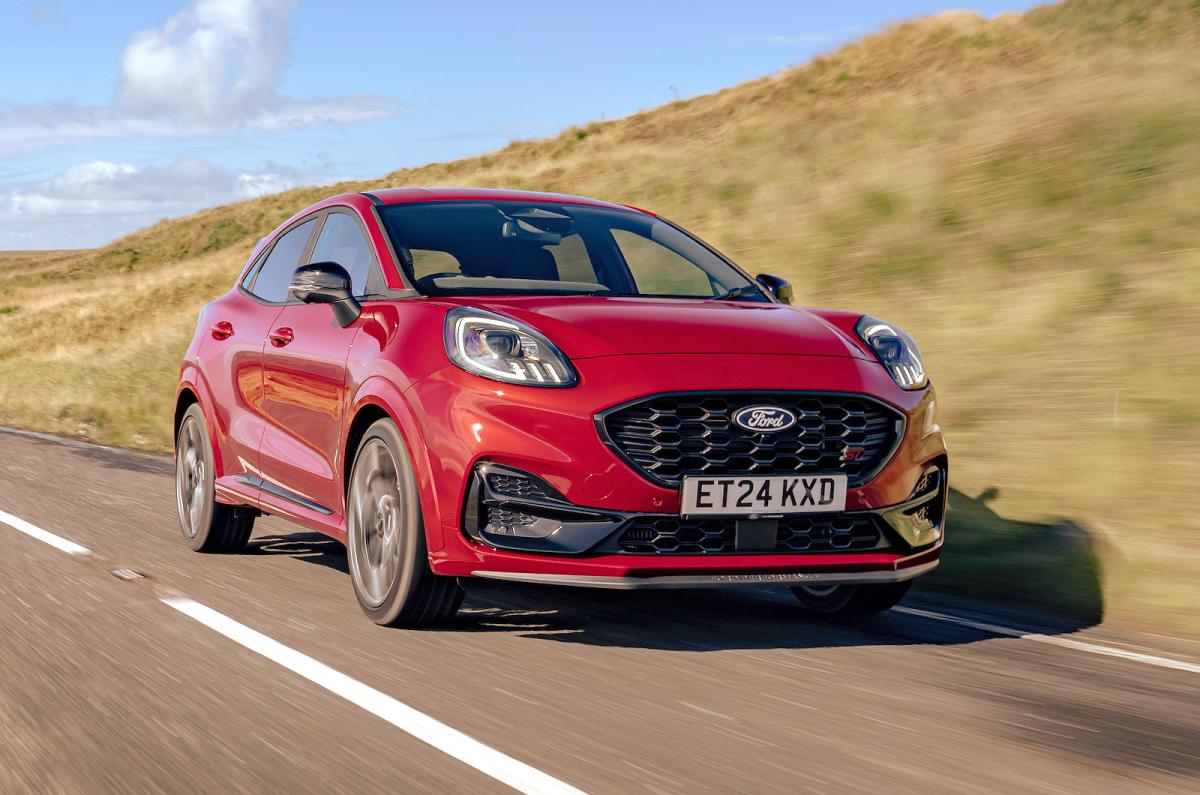
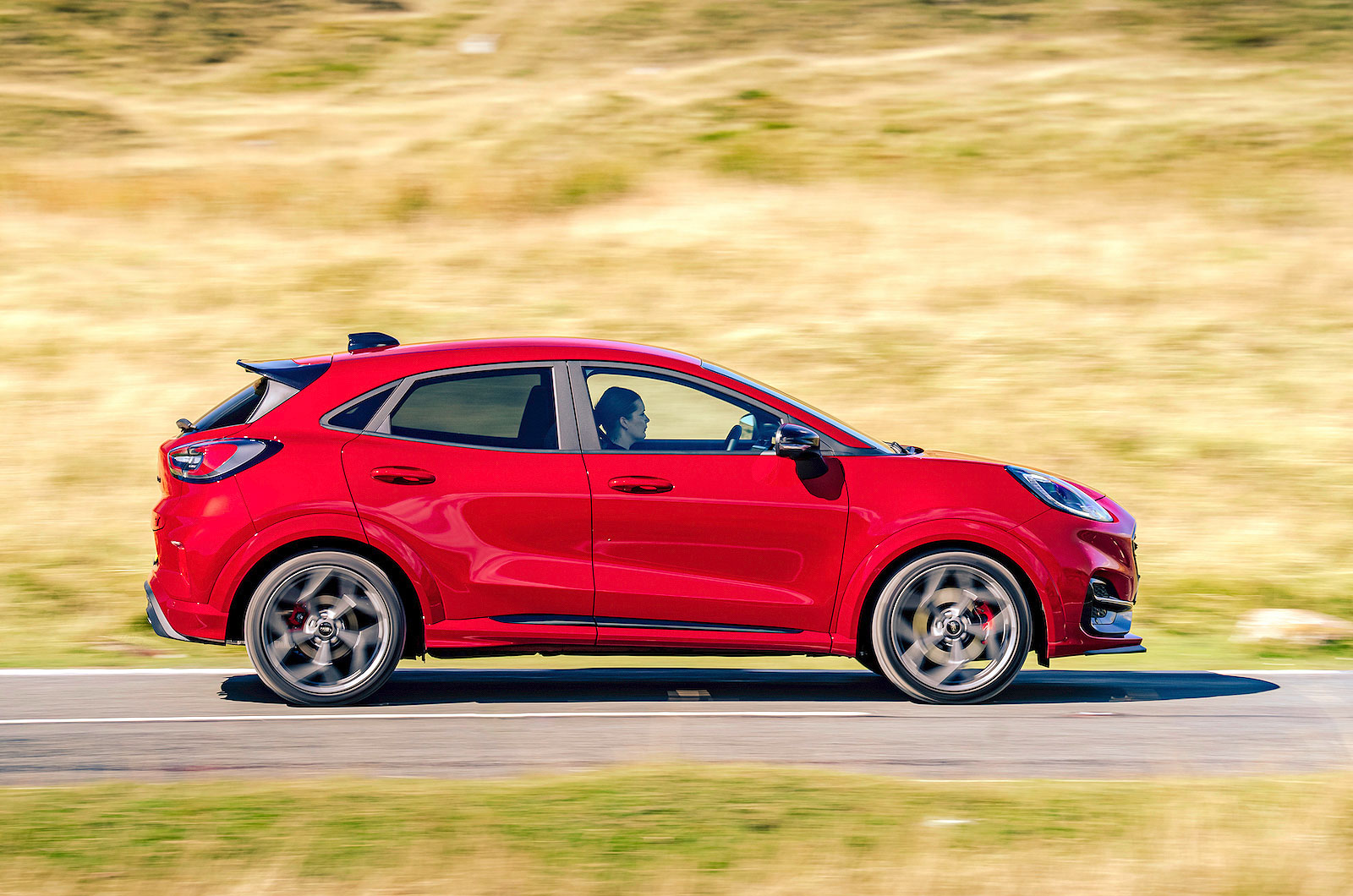
A former What Car? Car of the Year winner, the Ford Puma remains one of the best small SUVs to drive, offering the kind of nimble handling and bump-aborbing ride which means you'll want to thread it along a country road. Helping that feeling is the peppy yet frugal 1.0-litre petrol engine, which revs well and puts its power down smoothly.
The Puma is also a practical choice, with a big boot which can swallow six carry-on suitcases. That's one less than we managed to fit into the rival Skoda Kamiq and Volkswagen T-Roc, but still enough for the needs of most families. Likewise, while you're unlikely to hear many complaints from rear-seat passengers, it's worth noting that some rival small SUVs offer more knee-room. Where the Puma fights back is in its secret under-boot storage area, which can easily swallow your muddy boots or an extra bag – it also contains a plug so can be hosed down if things get a bit muddy.
You'll pay more to put a Puma on your driveway than you would for a Nissan Juke or Skoda Kamiq, but then again, that's partly because no trim is considered basic – even entry-level Titanium comes with luxuries including 17in alloy wheels, automatic climate control and a 12.8in digital driver's display.
While the Puma's disappointing 32nd-place finish in our latest Reliability Survey is cause for concern, it's good to know that all Pumas come with a three-year, 60,000-mile warranty as standard, and that can be extended up to 100,000 miles and five years for an extra charge.
"Our favourite petrol engine isn't just punchy, it's also frugal thanks to mild hybrid technology. I found it could return 45mpg without trying too hard." – Oliver Young, Reviewer
Read our in-depth Ford Puma review
What is What Car? best price?
The What Car? best price shows you the cheapest way to buy your new car, whether it's by choosing an in-stock car through our partner Autotrader or placing a factory order.
Available now from: £21,910
RRP from: £27,145
About our price indicator
What Car? indicative Personal lease example (subject to status)
1.0T EcoBoost MHEV Titanium SUV 5dr Petrol Hybrid Manual Euro 6 (s/s) (125 ps)
| Expected annual mileage | 5000 |
| Term months | 48 |
| Deposit months | 12 |
| Monthly payment | £268.24 |
| Initial payment | £3,218.88 |
Step-by-step
Leasing works a bit like a long-term rental. You drive it, but you don’t own it.
- Choose your car, pick your terms and apply for lease credit online
- Pay monthly rental payments for your chosen term length
- Drive it, enjoy it, then give it back at the end
What you get
When you lease with Autotrader you get all of this:
- Full manufacturer’s warranty
- Road tax and roadside assistance included
- No admin fees
- Free returns within 30 days*
- Lower total monthly cost than PCP/HP
- No balloon payments
- Road tax included
Our pick: 1.2 TCe MHEV Expression Euro 6 (s/s) 5dr
Strengths
- Cheap to buy and run
- Spacious boot
- 4x4 version is very capable off road
Weaknesses
- Some rivals are better to drive
- Lots of hard plastics inside
- Entry-level model is sparsely equipped
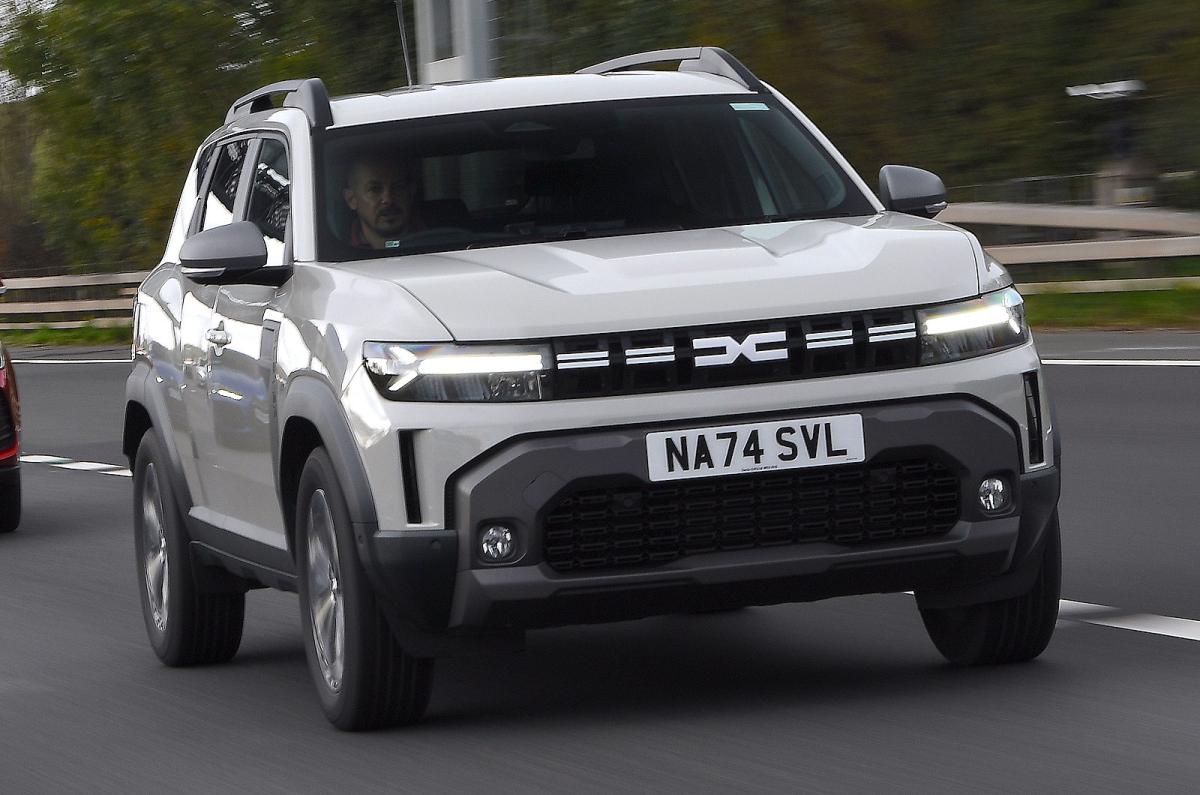
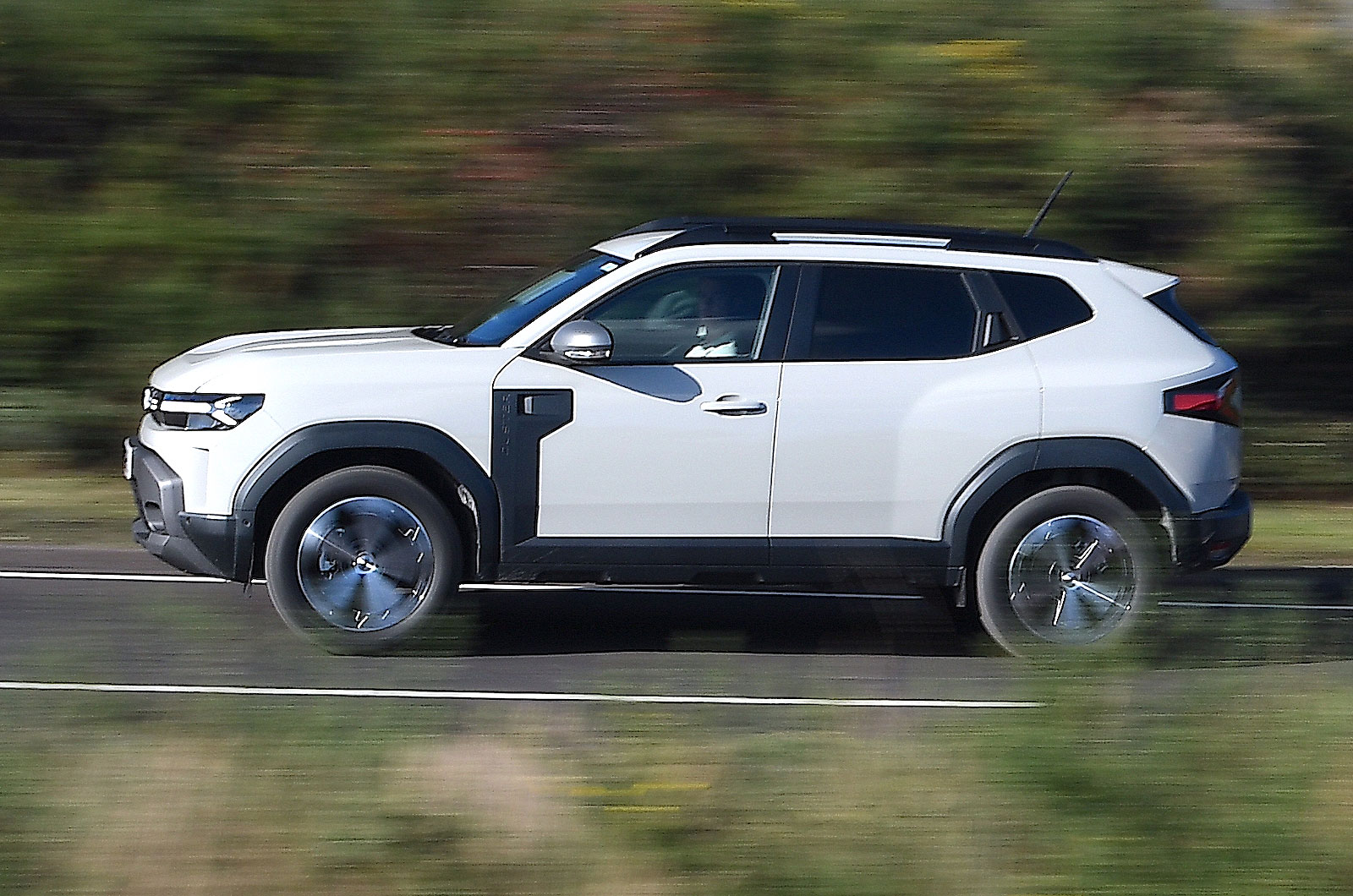
The Dacia brand is synonymous with building cars for smaller budgets, so as you'd hope, the Dacia Duster is one of the cheapest small SUVs you can buy, comfortably undercutting most small SUV rivals. And don't think that means you don't get any kit, because even entry-level Expression cars come with cruise control, air conditioning and 17in alloy wheels. In fact, we don't think there's much reason to venture further up the trim ladder.
You can choose between mild hybrid and full hybrid power in the Duster, and it's the former which we recommend. This setup includes a punchy petrol engine which can hit 62mph in 9.4sec, so it's quite a bit faster than the rival Renault Captur in entry-level form.
Thanks to new underpinnings shared with the latest Dacia Sandero and Renault Clio, the latest Duster rides comfortably, and feels more settled over broken surfaces than the rival MG ZS. And while the best small SUVs, such as the Volkswagen T-Roc, ride and handle with more aplomb, the Duster can happily take the sting out of potholes and the like.
Where the Duster feels like it's been built to a price is inside, where you'll find plenty of hard surfaces and not much design flourish. Still, if you view your small SUV as being a family workhorse, this approach makes a lot of sense. You get a good view out of the Duster, thanks to a high driving position.
Dacia as a brand performed well in the latest What Car? Reliability Survey, but in case something does go wrong, every Duster is covered for up to seven years or 75,000 miles if you get it serviced at an authorised dealer every year. That's better than the warranties you get from most rivals.
“Like some other Dacia car models, the Duster is available with a YouClip for clipping your phone or other items to the interior. I'd find it quite handy.” – George Hill, Used Car Writer
Read our in-depth Dacia Duster review
For all the latest reviews, advice and new car deals, sign up to the What Car? newsletter here
What is What Car? best price?
The What Car? best price shows you the cheapest way to buy your new car, whether it's by choosing an in-stock car through our partner Autotrader or placing a factory order.
Available now from: £21,335
RRP from: £21,845
About our price indicator
What Car? indicative Personal lease example (subject to status)
1.2 TCe MHEV Expression SUV 5dr Petrol Manual Euro 6 (s/s) (140 ps)
| Expected annual mileage | 5000 |
| Term months | 48 |
| Deposit months | 12 |
| Monthly payment | £260.62 |
| Initial payment | £3,127.44 |
Step-by-step
Leasing works a bit like a long-term rental. You drive it, but you don’t own it.
- Choose your car, pick your terms and apply for lease credit online
- Pay monthly rental payments for your chosen term length
- Drive it, enjoy it, then give it back at the end
What you get
When you lease with Autotrader you get all of this:
- Full manufacturer’s warranty
- Road tax and roadside assistance included
- No admin fees
- Free returns within 30 days*
- Lower total monthly cost than PCP/HP
- No balloon payments
- Road tax included
And the small SUV to avoid...
How to choose the best small SUV
As the name suggests, small SUVs tend to combine the tough looks and elevated seating that are commonly associated with SUVs, with much more compact and manageable proportions. But at what point does an SUV stop being ‘small’?
Well, at What Car?, we consider an SUV that’s 4.4 metres long or shorter to be small. However, that still covers a huge variety of models: everything from the Mini Aceman, which is about the same size as a Volkswagen Polo, to the Skoda Karoq, which is almost a metre longer.
So, to help you decide which model is right for you, we’d suggest you ask yourself the following questions.
How small is too small?
A major reason for choosing an SUV – even a small one – is practicality. So, think about your lifestyle and how much space you really need.
Even the most compact of SUVs should have enough room in their boots for your groceries. However, if you need to carry around a pushchair or enough luggage for a family holiday, you’ll want to look at the larger models in this class.
Similarly, while all small SUVs can seat at least four people, only the bigger models will comfortably accommodate tall adults in their back seats.
What sort of roads will you mostly be driving on?
The smallest SUVs are often among the easiest cars of any sort to park, because they combine their dinky dimensions with short overhangs and good visibility.
That said, even bigger models in this class can be very easy to manoeuvre. For example, the Kia EV3 has a turning circle of just 10.4 metres, whereas a Polo requires 10.6 metres.
The downside of going for one of the smaller cars is that they tend to feel less settled at higher speeds. So, if you regularly drive out of town, bigger might be better.
How high do you want to sit?
Another major reason for choosing an SUV is because you like an elevated driving position. However, if this is something you value, it’s worth remembering that choosing one of the bigger small SUVs won’t automatically leave you sitting higher.
In a Skoda Kamiq you sit barely any higher than you do in a conventional family hatchback, whereas the Volkswagen T-Roc feels like a proper SUV from behind the wheel, despite actually being slightly shorter.
So, make sure you read the interior section of our reviews before deciding which small SUV to buy.
What sort of engine would suit you best?
Like most modern cars, small SUVs come in petrol, hybrid and fully electric forms, with each having their merits.
If you don’t cover a lot of miles, a petrol can still make a lot of sense because these are generally cheapest upfront.
With a hybrid it will take you quite a while before you’re quids in, but you will be able to run on electric power for short bursts around town – or quite a few miles if you go for a plug-in hybrid – while still having the reassurance of a petrol engine.
Or, if you can charge at home, you might want to consider going fully electric, given that you’ll be able to top-up cheaply overnight.
How important is safety to you?
There are plenty of small SUVs that have been awarded a five-star rating by the safety experts at Euro NCAP. However, if you want one of the cheapest models in the class, chances are you’re going to have to compromise in this area.
The Dacia Duster, for example, received only three stars out of five when it was tested in 2024, after scoring 70% for adult occupant protection and 57% for Safety Assist.
By comparison, the five-star rated Toyota C-HR (tested the same year) scored 85% and 79% respectively. But then, that car is quite a bit pricier, whether you’re buying outright or on PCP finance.
Should I buy a small SUV?
Buy one if:
- You prefer a high driving position
- You want low running costs
Don’t buy one if:
- Driving fun is your top priority
- You have a big family
How we choose the best small SUVs
Through ongoing testing and reassessment, our list of the best small SUVs is continually updated and is the definitive guide to the very best you can buy.
Our verdicts are also informed by our annual reader survey, through which more than 20,000 drivers provide us with unique insights into what’s really important to them when they choose a new car.
As a result, while we look at every aspect of small SUVs during our testing, we place particular emphasis on the following factors:
Reliability – an important factor for 69% of small SUV buyers
More than 20,000 readers contributed to the latest What Car? Reliability Survey, and this exclusive data underpins the reliability rating that we give each small SUV.
Comfortable driving position – an important factor for 66% of small SUV buyers
Here, we ensure that the steering wheel, seat and pedals align comfortably, and that there’s a wide range of adjustment. Seat support is considered, and we use laser technology to measure the height of the seat from the road. We also rate the ergonomics of the dashboard, including major controls for functions such as the infotainment and air-con.
Standard equipment – an important factor for 55% of small SUV buyers
Our testers assess equipment fitted as standard and as optional extras, then make comparisons with rival models. Models with features fitted across the range receive higher marks than if you have to pay extra for it, or if those features are available only on more expensive versions.
Our comprehensive testing regime doesn’t end there. Our how we test cars feature outlines the dozens of tests, measurements and assessments which every car goes through before being given a What Car? rating.