BMW 3 Series review
Category: Executive car
The 3 Series is a near-flawless executive car that's brilliant to drive and available as a plug-in hybrid


What Car? says...
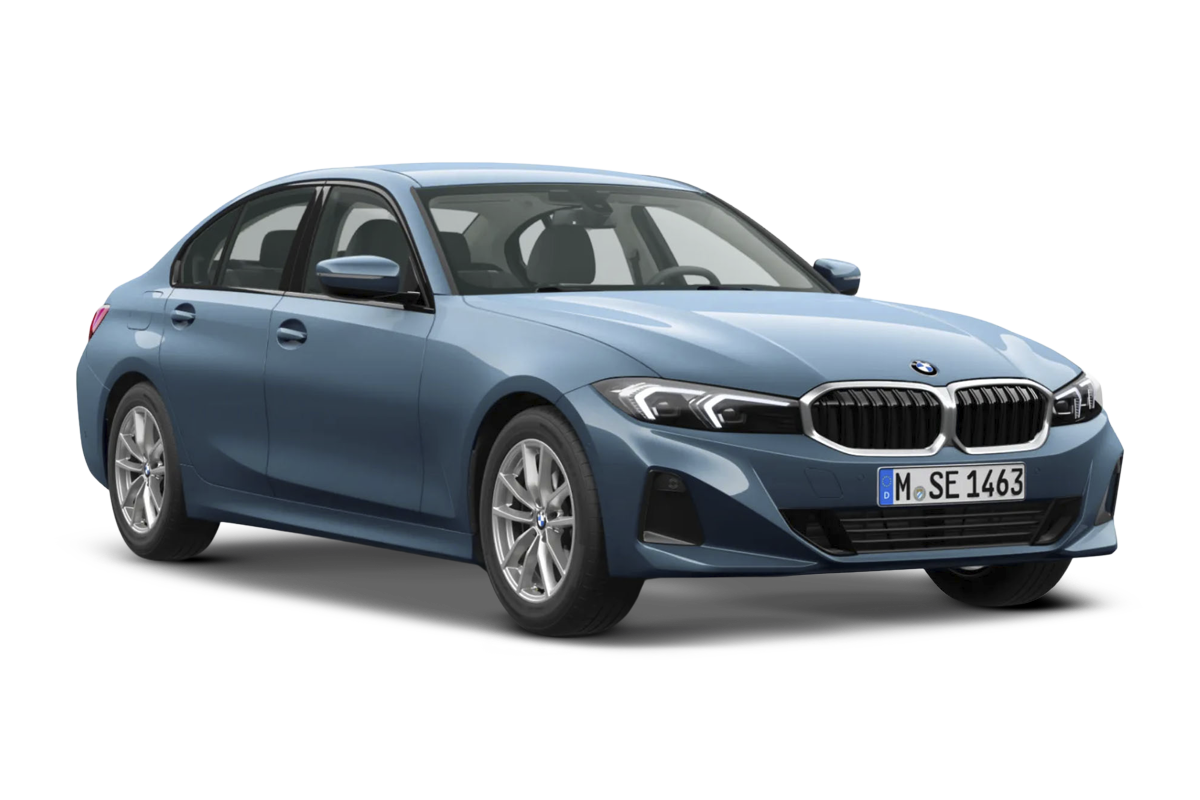
The BMW 3 Series has always done the business for business people – and this latest version is no exception. It's a sporty rear-wheel-drive executive car that's available with a tax-efficient plug-in hybrid setup and all the latest tech.
The 3 Series has moved with the times in other ways too. As part of its recent mid-life facelift, the seventh-generation model we're reviewing here has gained some subtle styling updates – but lost its diesel engines. You can still choose from a range of strong petrol options to suit most tastes, one with four-wheel drive (which BMW calls xDrive).
Once you've factored in all the infotainment goodies and safety equipment you get as standard, the 3 Series looks like it's in with a shot at topping our best executive cars list.
BMW 3 Series video review
Let's not be too hasty though – there are a few other models that give it a run for its money, starting with the 3 Series' long-standing rival, the Mercedes C-Class. You might also be considering the great-value Skoda Superb or – if an electric car works for you – the Tesla Model 3.

Read on to find out how we rate the BMW 3 Series in all the important areas...
What's new
- January 2026 – New M Sport Pro variant brings 19in alloy wheels, red brake callipers, adaptive LED headlights and dark exterior features – first deliveries in April 2026
- September 2025 – New 386bhp power output for M340i xDrive engine, meaning it now completes a 0-62mph sprint in 4.3sec
Performance & drive
What it’s like to drive, and how quiet it is
Strengths
- +Fun to drive
- +Good range of engines
- +M340i sounds great
Weaknesses
- -Inconsistent brake feel on BMW 330e
- -No diesel option
Engine, 0-60mph and gearbox
Diesel was once a key ingredient for executive cars but today petrol, hybrid and electric power takes up much more of the limelight. As such, the BMW 3 Series is no longer offered as a diesel.
The engine line-up now starts with the excellent 181bhp 320i petrol. It's perky enough for most situations, including overtaking on country roads, and its rev-happy nature sits well with the 3 Series' sporty character. Officially, it can go from 0-62mph in 7.4sec, and we think it's the best choice for private buyers.
The 288bhp 330e plug-in hybrid (PHEV) is the one to go for if you pay company car tax. It’s powered by a petrol engine and electric motor for a 0-62mph time of 5.9sec, and its official electric-only range is up to 62 miles – just short of the Mercedes C300e (68 miles).
If you want more performance or four-wheel drive, there's the range-topping six-cylinder petrol version, the M340i. It has 386bhp and chops the 0-62mph sprint down to a blistering 4.3sec. If that’s still not fast enough, you’ll want to check our BMW M3 review.
Suspension and ride comfort
There are various suspension options for the 3 Series, and even the softest (fitted to Sport trim versions) is set up more for poise and control than wafty comfort. You subtly feel bumps as they pass below the car, more than you do in the best versions of the Mercedes C-Class.
The suspension is even firmer in M Sport trim, but it’s so well controlled that it feels calmer than the softer (and occasionally floaty) C-Class, especially when you compare the BMW 330e PHEV with the Mercedes C300e.
M Sport and M340i models are available with adaptive suspension, and it's worth adding if you can because it lets you stiffen or soften the ride at the touch of a button. In Comfort mode it makes the 3 Series even calmer to drive around town and it's very smooth on A-roads and motorways. It’s not too pricey and also includes variable steering, a system that sharpens up the response at low speeds to make it easier to manoeuvre.

Handling
Every 3 Series handles well, but versions with non-adjustable M Sport suspension have the best cornering skills. The stability and control through corners and across uneven roads is sublime. Mid-corner bumps are shrugged off with ease, remaining more composed than the C-Class. The optional adaptive M Suspension is ever so slightly behind in terms of absolute control but is still very good.
The 3 Series' steering is another strength. It's well-weighted and quick to react, plus it lets you know exactly how much grip is available. Once you're used to its immediate response, you find yourself placing the car's nose just where you want it.
The 330e is the heaviest 3 Series, so perhaps unsurprisingly, it’s the least agile. That said, it still handles very tidily and is by far the sportiest PHEV in the executive car class. It's better even than a Mercedes CLE 300e Coupé.
Noise and vibration
There's not much wind noise in the 3 Series at motorway speeds, but road noise (especially with the M340i, which has run-flat tyres) is slightly more pronounced than in a C-Class. Suspension noise (again, not helped by the stiffer sidewalls of the run-flat tyres) is noticeable over bumps, although it doesn’t thump as much as in a Tesla Model 3.
The six-cylinder engine in the M340i sounds sweet, while the four-cylinder petrol engine in the 320i and 330e have a perfectly acceptable tone. The 330e's hybrid system works well, with the engine kicking in smoothly when driving in Hybrid mode and with less of a delay than in a Mercedes C300e.
The brake pedal is progressive on most 3 Series models except the 330e. In that version it feels a bit spongy at low speeds because it activates a regenerative braking system that harvests energy to top up the battery. Even so, it's more confidence-inspiring than the brakes of many PHEVs (including the C300e), and of course you get no engine noise when the 330e is running on electricity alone.
“I found that in Electric mode, the plug-in hybrid BMW 330e's performance was reduced slightly but I could drive at motorway speeds on electric power alone.” – Dan Jones, Senior Reviewer
Interior
The interior layout, fit and finish
Strengths
- +Comfortable driving position
- +Brilliant infotainment system
- +Good interior quality
Weaknesses
- -Poor rear visibility
- -No physical climate controls
- -Lumbar support is optional
Driving position and dashboard
The driver’s seat in the BMW 3 Series is supportive and holds you in place very well when you're cornering quickly. It’s a shame that, as with most BMW car models, you pay extra for adjustable lumbar support, even on the top-spec models. It's not that pricey, though, and definitely worth adding. With a steering wheel that moves extensively up and down and in and out, plus lots of seat-height adjustment, you won't struggle to get comfortable.
In fact, as you sit there with a large, well-padded armrest for each elbow, you might think "perfect" sums up the 3 Series’ driving position – and it would, if the pedals weren’t offset slightly to the right. The same is true of the Mercedes C-Class.
The 3 Series' dashboard lay-out is very good for the most part. It makes functions simple to use, but it’s a shame that adjusting the climate controls now requires you to use the infotainment touchscreen (rather than more user-friendly physical controls it previously had).
The 12.3in digital driver's display is clear and shows lots of information, but some drivers might find the steering wheel blocks the upper part of the screen. The optional Technology Pack adds a head-up display.
Visibility, parking sensors and cameras
Forward visibility is great thanks to fairly slim windscreen pillars, but like most saloons, the 3 Series has chunky rear pillars and you can’t see the end of the boot in the rear-view mirror. Luckily, you get front and rear parking sensors, a rear-view camera and BMW's Parking Assistant system, which can identify a suitable space and steer you into it.
There's an optional 360-degree camera as part of the Parking Assistant Plus pack that offers multiple views around the car, but the image flits from one camera position to the next as you get closer to objects. That's quite distracting when you're a few centimetres away from an imposing wall – it would be more helpful if the image stayed consistent.
The 3 Series has high-intensity LED headlights as standard. You can upgrade them to adaptive units, which are ultra-bright and adjust their beams to avoid dazzling other drivers.

Sat nav and infotainment
All 3 Series trim levels feature a pin-sharp 14.9in infotainment touchscreen. Standard features include sat-nav, Bluetooth, a DAB radio, Android Auto and Apple CarPlay smartphone mirroring, and subscription-based connected services that provide internet access. The optional Comfort Pack adds wireless phone-charging and ambient interior lighting.
You can control the infotainment system using a rotary iDrive controller between the front seats, which is far less distracting than prodding the touchscreen when you're driving. It's one of the main reasons we prefer the 3 Series' infotainment to the touchscreen-only set-up in the Mercedes C-Class and most other executive cars.
There are lots of menus and submenus to sift through, but the BMW software is more responsive than the C-Class’ system.
Quality
In the main, the 3 Series' interior materials feel plush. However, some areas – such as the gear selector and the plastic around it – don't feel particularly pleasant. The plastic chrome around the air vents also look and feel a little low-rent.
It’s our job to be picky, of course, and that's just what we’re being. The 3 Series still beats most executive cars for overall interior quality, including the Alfa Romeo Giulia, the Mercedes C-Class and the Tesla Model 3.
“I really like the driving position in the BMW 3 Series. You sit low down and the infotainment screen is angled towards the driver, which helps to give it a sporty feel.” – Neil Winn, Deputy Reviews Editor
Passenger & boot space
How it copes with people and clutter
Strengths
- +Good boot size
- +Useful 40/20/40 split-folding back seats
- +Plenty of interior storage
Weaknesses
- -Lumbar support is optional
- -Skoda Superb is more spacious
- -PHEV model loses lots of boot space
Front space
There’s more leg room up front in the BMW 3 Series than you’ll find in the Mercedes C-Class. We’re talking a couple of centimetres at the most, but that might be worth having if you’re really leggy. Anyone tall shouldn’t need to worry about the amount of head room, and the 3 Series’ interior is generously wide, so there's also room to stretch out sideways.
Storage space is pretty good, with a big glovebox and a useful cubby under the centre armrest. You also get partitioned door bins that help prevent loose items from rolling around.
Rear space
The 3 Series has more rear head room, leg room and all round space than the C-Class. It's better for fitting three adults side by side, with a good amount of shoulder room.
However, the executive car class also includes the whopping great Skoda Superb – and the 3 Series can't match that for rear space.

Seat folding and flexibility
Regardless of which 3 Series you go for, the standard manually adjustable front passenger’s seat doesn’t have adjustable lumbar support. You can, though, add that and electric front-seat adjustment for a reasonable price.
All versions come with versatile 40/20/40 split folding rear seatbacks as standard, which is much more convenient than the 60/40 split you’ll find on a lot of rivals, including the Superb. You can fold down the seats using handy levers in the boot.
Boot space
The 3 Series has a very decent amount of boot space by saloon standards. It's slightly bigger than the C-Class’ boot, and the load bay is a usefully square shape, making it relatively easy to slide in bulky objects. If you need more space, you can fold down the rear seats – or consider the estate car version, the BMW 3 Series Touring.
The 3 Series' boot can manage a set of golf clubs or a few suitcases. If you want a non-estate car with an even bigger boot and are prepared to sacrifice the premium badge, check out the vast Skoda Superb.
It's worth noting that the 330e PHEV sacrifices roughly a third of its boot space to accommodate the battery. The space that's left is pretty shallow, but it’s a usefully square shape and its 375-litre capacity is still slightly more than a C300e’s 360 litres.
“I’m 6ft 2in and I can just about sit behind my driving position in the back of the BMW 3 Series, with enough head room and leg room to spare. If you regularly carry back-seat passengers, the Skoda Superb is a better option.” – George Hill, Used Cars Writer
Buying & owning
Everyday costs, plus how reliable and safe it is
Strengths
- +Good reliability record
- +Five-star safety rating
Weaknesses
- -Options are expensive
Costs, insurance groups, MPG and CO2
The BMW 320i is priced slightly below the Mercedes C-Class but above the Tesla Model 3, and its resale values are predicted to be strong by executive car standards. Meanwhile, the 330e is on a par with the Mercedes C300e. You can expect a 3 Series to retain a similar amount of its value over three years to the C-Class.
The least expensive 3 Series to run as a company car is the 330e PHEV because its low official CO2 emissions keep it in the lower BIK tax bands. The Mercedes C300e’s longer battery range means it costs a bit less in BIK tax, while a fully electric car such as the BMW i4 will be much cheaper.
The BMW 330e is officially capable of excellent fuel economy, but you'll need to charge it up regularly to achieve that. A full charge should take about two and a quarter hours using an 11kW home EV charger.
The 320i petrol is reasonably economical for a car of its type. Officially, it can average 43.5mpg, which is slightly less than the 45.6mpg the mild hybrid Mercedes C200 can manage.
Equipment, options and extras
Sport is the cheapest 3 Series trim level, but it still comes with a good amount of kit, including 17in alloy wheels, LED headlights, heated front seats, three-zone air-conditioning, cruise control and BMW’s excellent iDrive infotainment system.
Stepping up to M Sport introduces 18in alloy wheels, black exterior detailing, more aggressive-looking bumpers for a sportier look, firmer M Sport suspension, and Sensatec (faux leather) and Alcantara trim for the seats. We recommend M Sport, ideally with the optional adaptive suspension. It gives the 3 Series a much plusher ride than any of the passive suspension set-ups, and is well worth the money.
The range-topping M340i has its own bespoke M styling, as well some extra performance upgrades (such as a limited-slip differential, which helps improve cornering). It also gets electrically adjustable front seats with driver memory and ambient interior lighting.
“I think it’s a shame the BMW 3 Series isn’t as well equipped as non-premium rivals. If you want wireless phone-charging or adjustable lumbar support, for example, you have to pay extra. In a Skoda Superb, those features are standard.” – Stuart Milne, Digital Editor
Buy it if…
- You enjoy expertly judged, fun handling
- You want petrol or plug-in hybrid power
- You’d like a high quality interior
Don’t buy it if…
- You want a diesel 3 Series (they’ve been discontinued)
- You like soft-riding cars
- You’re averse to pricey optional extras
For all the latest reviews, advice and new car deals, sign up to the What Car? newsletter here

Reliability
BMW as a brand managed an impressive sixth place finish out of 30 car brands in our 2025 What Car? Reliability Survey. That's behind Mini (in second place) but far ahead of Audi and Mercedes (joint 22nd).
Petrol 3 Series models did really well, with a 98% reliability rating placing it near the top of the executive car class. Diesel versions were a bit weaker, but the 94% rating is still solid. The 330e plug-in hybrid came in with the lowest score of the bunch, with its 87.6% rating putting it towards the bottom of the class.
The 3 Series comes with a three-year warranty with no mileage cap, which is good for the class because many rivals have a mileage limit. You can extend the warranty for an extra cost if you intend to keep the car for longer. The PHEV battery in the 330e is covered for six years (capped at 60,000 miles between years three and six).
Safety and security
The 3 Series landed a five-star safety rating from Euro NCAP in 2019, although it’s tricky to compare it against newer cars because the tests have become more stringent since then.
All versions come with a healthy roster of active and passive safety systems. The list includes automatic emergency braking (AEB), lane-departure warning and traffic-sign recognition. There are also two option packs, the Driving Assistant and Driving Assistant Professional, adding even more kit – although they're not cheap.
FAQs
The 3 Series is more enjoyable to drive with a better interior than the Mercedes C-Class and for many buyers it will be a better choice (hence its five-star What Car? rating). The C-Class has a comfier ride and is slightly quieter, so if comfort is your priority, you might prefer it. For more options see our best executive cars page.
A new 3 Series costs from around £40,000 in the UK (or £42,000 for the BMW 3 Series Touring). That's a lot more than a Skoda Superb, similar to a Tesla Model 3 and a bit less than a Mercedes C-Class. You can find the latest prices and offers on our New Car Deals pages.
For private buyers, we think the BMW 320i is the best choice, but if you're looking for a company car, the BMW 330e plug-in hybrid is more cost-effective. We recommend going for M Sport trim and ticking the options box for adaptive suspension (to get the best ride).
We class the 3 Series (and the BMW 5 Series) as executive cars but most people would consider them fairly luxurious. The brand's main luxury models are the BMW 7 Series and BMW X7.
| RRP price range | £41,945 - £66,475 |
|---|---|
| Number of trims (see all) | 4 |
| Number of engines (see all) | 3 |
| Available fuel types (which is best for you?) | petrol, petrol plug-in hybrid, petrol hybrid |
| MPG range across all versions | 39.8 - 117.7 |
| Available doors options | 4 |
| Company car tax at 20% (min/max) | £657 / £4,421 |
| Company car tax at 40% (min/max) | £1,314 / £8,842 |

